

{"cover":"Professional landscape format (1536×1024) hero image featuring bold text overlay 'Surveyor Capacity Planning: Managing the 2026 Market Recovery Surge' in extra large 72pt white sans-serif font with dark shadow and semi-transparent navy overlay box, positioned in upper third center. Background shows dynamic scene of chartered surveyor with tablet and laser measuring device inspecting modern residential property, with subtle overlay of rising graph lines and calendar icons showing 2026. Foreground includes clipboard with survey checklist and architectural plans. Color scheme: navy blue, white, orange accents for urgency. High contrast, professional editorial quality, magazine cover aesthetic with depth of field effect.","content":["Landscape format (1536×1024) editorial image showing split-screen composition: left side displays diverse team of surveyors in modern office planning session around large wall-mounted capacity planning board with color-coded scheduling system, sticky notes, and workload distribution charts; right side shows individual surveyor conducting on-site building inspection with modern equipment. Include visible calendar showing Q2-Q4 2026 timeline, staffing matrix with headcount numbers, and technology devices (tablets, drones). Professional business aesthetic with natural lighting, charts showing upward transaction volume trends, and sense of organized preparation for increased demand.","Landscape format (1536×1024) detailed infographic-style image showcasing technology integration in surveying practice: central focus on large touchscreen display showing digital workflow management dashboard with real-time job tracking, automated scheduling algorithms, and capacity utilization metrics at 85-90%. Surrounding elements include surveyor using mobile app for field data collection, drone conducting aerial survey visible through window, cloud storage icons, AI-assisted report generation interface, and integration symbols connecting different software platforms. Modern tech aesthetic with blue and green color scheme, data visualization elements, progress bars, and efficiency indicators. Professional office environment with natural light.","Landscape format (1536×1024) strategic planning concept image showing surveyor firm leadership team in contemporary boardroom conducting capacity planning session: large table with laptops, multiple screens displaying staffing models, outsourcing partnership diagrams, training program schedules, and quality assurance frameworks. Wall displays show market recovery projections for 2026 with rising transaction volume graphs, regional demand heat maps for London and Surrey areas, and service delivery timelines. Include visible elements: workforce planning spreadsheet, technology investment roadmap, client satisfaction metrics dashboard, and strategic partnership agreements. Professional corporate aesthetic with warm lighting, collaborative atmosphere, forward-thinking visual tone."]"}
The UK property market is showing clear signs of recovery in early 2026, and surveying firms across London and the South East are facing an immediate challenge: how to handle the surge in demand without compromising service quality. With new buyer enquiries improving from a net balance of -21% in December 2025 to -15% in January 2026, and forward expectations reaching a remarkable +35% net balance for the next 12 months, the message is clear—transaction volumes are accelerating rapidly.[1] For chartered surveyors, this presents both an opportunity and a capacity crisis that requires strategic planning, smart technology adoption, and innovative staffing solutions.
Surveyor Capacity Planning for 2026 Market Recovery: Managing Workload Surge as Transaction Volumes Accelerate is no longer a theoretical exercise. Firms that fail to prepare risk losing market share, burning out staff, and delivering substandard reports during this critical recovery phase.

Key Takeaways
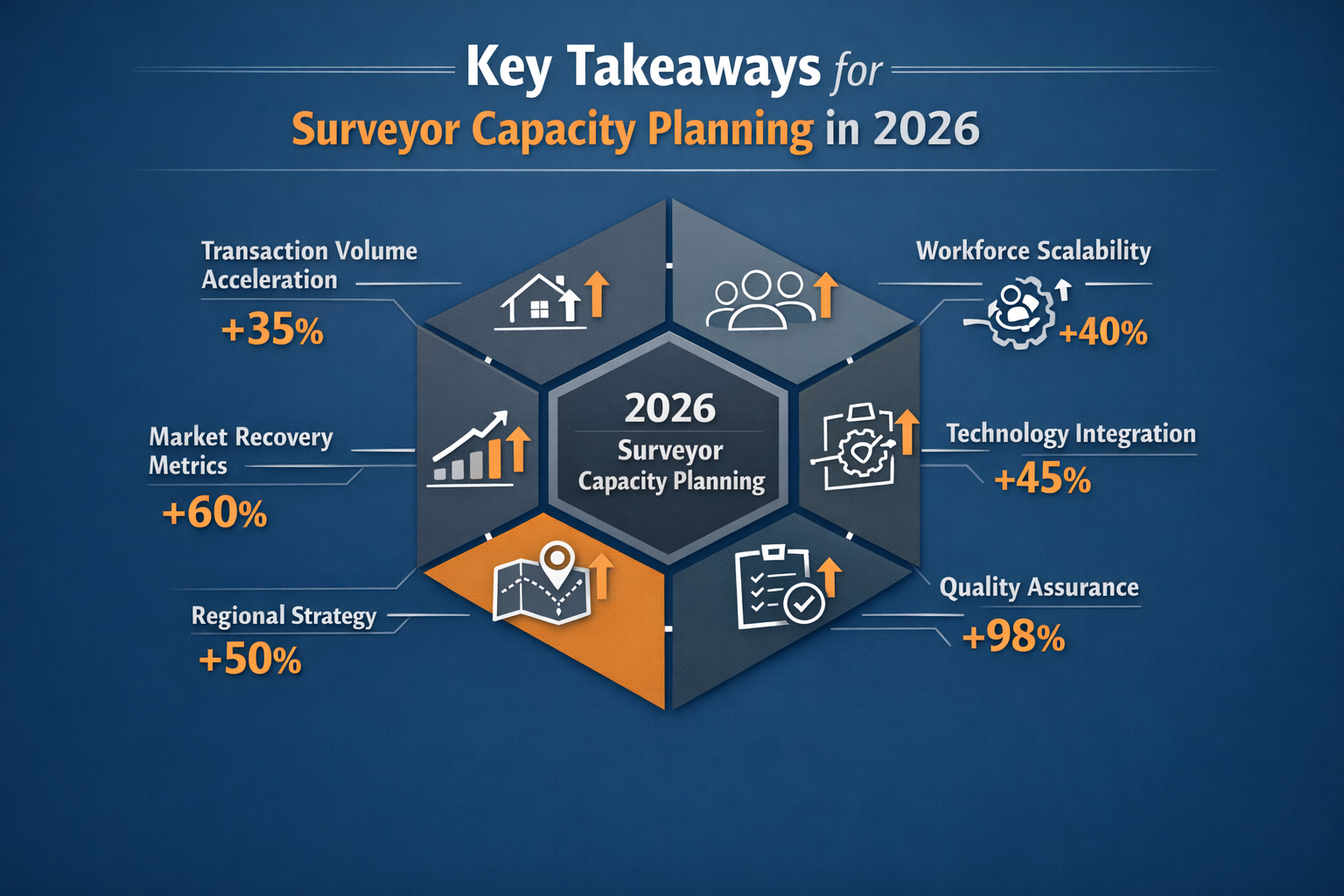
- Market recovery is confirmed: Buyer enquiries are improving month-over-month, with 12-month forward expectations at +35%, signaling sustained transaction growth through 2026.[1]
- Capacity constraints are immediate: The construction sector needs 500,000 new workers in 2026, with workforce skills and retention as top concerns—surveying faces similar pressures.[3]
- Technology integration is critical: Digital workflow management, automated scheduling, and data-sharing platforms are essential for handling increased workload efficiently.[3]
- Quality cannot be compromised: With RAAC, cladding issues, and latent defects dominating survey priorities, thorough inspections remain non-negotiable despite volume pressures.[1]
- Strategic staffing models win: Successful firms are combining permanent staff expansion, flexible contractors, outsourcing partnerships, and accelerated training programs.
Understanding the 2026 Market Recovery Context 📈
The property market landscape in 2026 looks fundamentally different from the challenging conditions of 2023-2024. Multiple indicators point toward sustained recovery:
Residential Market Momentum: The improvement in buyer enquiries from -21% to -15% within a single month represents the fastest positive shift since mid-2025. More importantly, the +35% net balance for 12-month forward expectations suggests that both buyers and sellers anticipate continued market strengthening.[1]
Commercial Investment Surge: Commercial real estate investment activity is forecast to increase by 16% in 2026, reaching $562 billion—nearly matching pre-pandemic annual averages.[4] This translates directly into increased demand for building surveys across all property types.
Sector-Specific Dynamics: Different property sectors are experiencing varied recovery patterns:
| Sector | 2026 Outlook | Survey Demand Impact |
|---|---|---|
| Residential | Strong recovery with rising transactions | High volume increase across all survey levels |
| Data Centers | 26% projected growth following 32% in 2025[2] | Specialized technical surveys in high demand |
| Industrial | Flight to quality—newer assets preferred[4] | Complex surveys for modern facilities |
| Office | Mixed—prime space scarce, secondary declining[4] | Selective demand with emphasis on quality assessment |
| Retail | Moderate recovery with location-dependent performance | Steady baseline with specific hotspots |
This recovery creates immediate pressure on surveying capacity. Firms that operated with lean teams during the downturn now face the challenge of rapidly scaling operations to meet demand—particularly in high-activity regions like West London, Surrey, and Central London.
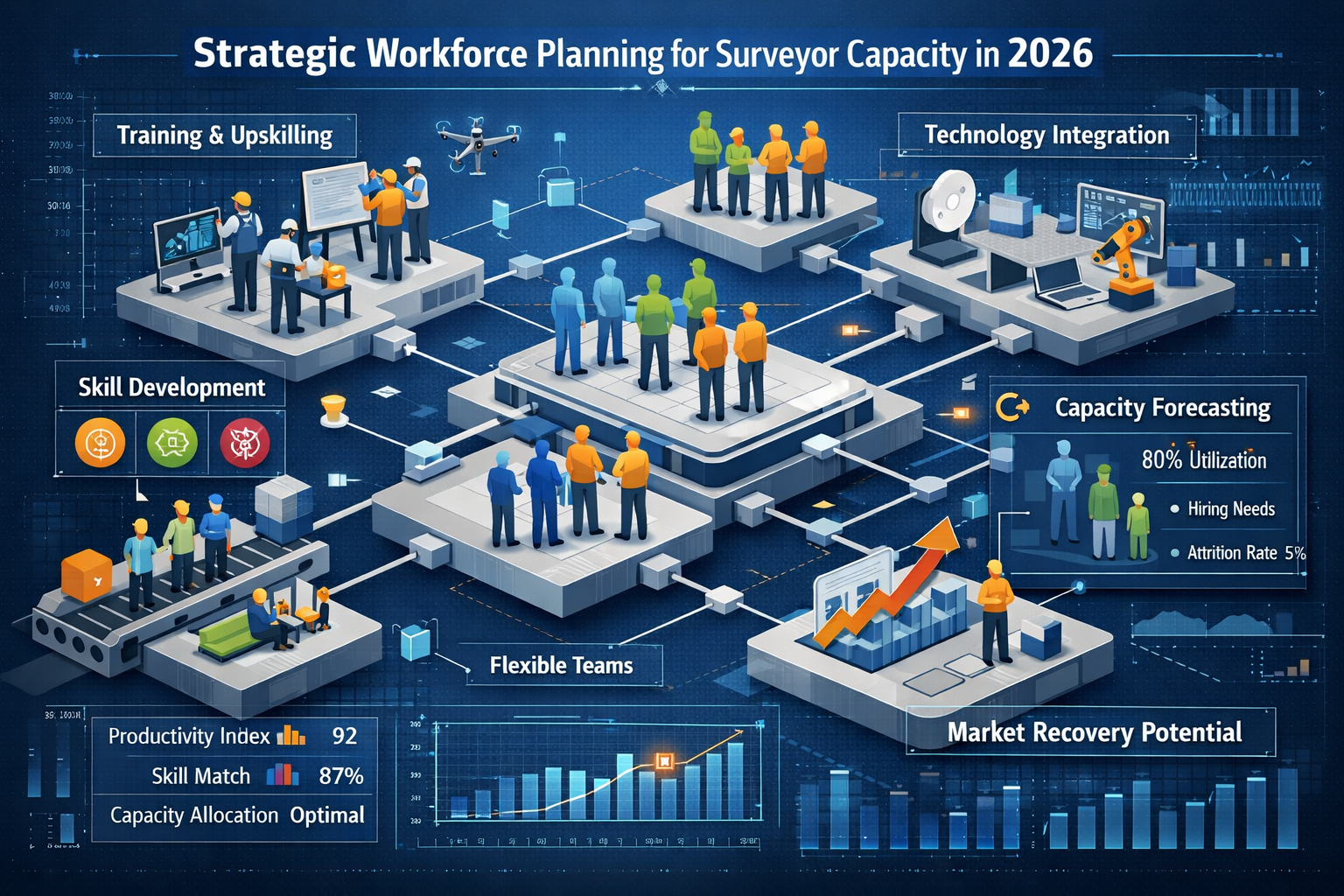
Strategic Workforce Planning for Surveyor Capacity in 2026
Assessing Current Capacity and Demand Projections
Effective Surveyor Capacity Planning for 2026 Market Recovery: Managing Workload Surge as Transaction Volumes Accelerate begins with honest assessment. Surveying firms need to:
Calculate Current Utilization Rates: Most established surveyors can complete 3-4 comprehensive Level 3 building surveys per week, including site visits, report writing, and client consultations. Understanding your team's current workload percentage (ideally 75-85% to allow flexibility) establishes your baseline.
Project Forward Demand: With transaction volumes expected to increase 15-20% through 2026 based on market indicators, firms should model scenarios for:
- Conservative growth (15% increase)
- Expected growth (20% increase)
- Optimistic growth (25-30% increase)
Identify Bottlenecks: Common capacity constraints include:
- Senior surveyor availability for site inspections
- Report writing and quality review time
- Administrative support for scheduling and client communication
- Specialist expertise for complex issues (RAAC, cladding, structural concerns)
Multi-Tier Staffing Models 👥
The most successful surveying practices in 2026 are implementing flexible, multi-tier staffing approaches:
Permanent Core Team Expansion: Hiring additional RICS-qualified surveyors remains the gold standard but requires 3-6 months lead time for recruitment and onboarding. Firms should begin recruitment immediately for positions needed in Q3-Q4 2026.
Associate Surveyor Networks: Building relationships with qualified associate surveyors who work on a contract basis provides flexibility. These professionals can handle overflow work during peak periods without the fixed costs of permanent employment.
Graduate Training Programs: Accelerated training programs for graduate surveyors can create a pipeline of qualified professionals. While graduates require supervision initially, they can handle simpler surveys and assist with report preparation, freeing senior surveyors for complex cases.
Administrative Support Scaling: Often overlooked, adequate administrative support is crucial. Scheduling coordinators, report administrators, and client liaison staff can significantly increase surveyor productivity by handling non-technical tasks.
Regional Partnerships: For firms serving multiple locations—such as Kingston, Richmond, and Guildford—establishing partnerships with local surveyors can provide capacity without geographic constraints.
"The construction sector will need half a million new workers in 2026 to meet demand, with workforce skills, hiring, and retention cited as the top concerns by contractors."[3]
This workforce challenge extends directly to surveying. Firms must compete for limited qualified professionals while maintaining quality standards.
Training and Upskilling Initiatives
Rapid capacity expansion requires accelerated but thorough training:
Specialized Technical Training: With RAAC, cladding issues, and latent defects dominating survey priorities in 2026,[1] all surveyors need current knowledge of these critical areas. Regular training sessions, case study reviews, and expert consultations ensure consistency.
Technology Proficiency: New hires and existing staff need training on digital tools, mobile survey applications, drone technology, and report generation software to maximize efficiency.
Mentorship Programs: Pairing junior surveyors with experienced professionals accelerates skill development while maintaining quality standards. Structured mentorship with clear progression milestones helps retain talent.
Cross-Training for Flexibility: Training surveyors to handle multiple survey types (Level 2, Level 3, specialist surveys) provides operational flexibility during demand fluctuations.
Technology Integration for Capacity Optimization 💻

Surveyor Capacity Planning for 2026 Market Recovery: Managing Workload Surge as Transaction Volumes Accelerate cannot succeed without embracing technology. The construction industry has identified integration of existing technology, data sharing, and employee buy-in as top priorities for improving performance in 2026.[3]
Digital Workflow Management Systems
Modern surveying practices require sophisticated workflow management:
Automated Scheduling and Assignment: Intelligent scheduling systems can optimize surveyor routes, minimize travel time, and automatically assign jobs based on surveyor expertise, location, and current workload. This can increase daily survey capacity by 15-20%.
Real-Time Capacity Monitoring: Dashboard systems showing current utilization rates, upcoming commitments, and available capacity enable managers to make informed decisions about accepting new instructions and resource allocation.
Client Portal Integration: Self-service client portals for booking, document upload, and report delivery reduce administrative burden and improve client experience while freeing staff for higher-value activities.
Mobile Field Applications: Tablet-based survey applications allow surveyors to complete reports on-site, capture photos with automatic organization, and record observations in structured formats—reducing post-inspection report writing time by 30-40%.
Data Collection and Report Generation Tools
Efficiency gains come from streamlining the survey-to-report pipeline:
Template-Based Report Systems: Standardized report templates with conditional logic ensure consistency while reducing writing time. Pre-populated sections for common findings accelerate completion without sacrificing thoroughness.
Voice-to-Text Technology: Modern voice recognition allows surveyors to dictate observations during inspections, dramatically reducing post-visit documentation time.
Photo Management Systems: Automated photo organization, annotation tools, and integration with report sections eliminate the time-consuming task of manually sorting and inserting images.
Quality Assurance Automation: Automated checks for completeness, consistency, and required elements catch errors before final review, reducing revision cycles.
Specialized Survey Technology
Advanced technology enables surveyors to handle complex cases more efficiently:
Drone Surveys: Aerial inspection technology allows comprehensive roof and high-level assessments without scaffolding or access equipment, saving time and cost while improving safety.
Thermal Imaging: Infrared cameras quickly identify insulation deficiencies, moisture ingress, and heating system issues that would otherwise require extensive investigation.
Moisture Meters and Detection Equipment: Advanced moisture detection technology provides objective data about damp issues, supporting more accurate diagnosis and recommendations.
3D Scanning and Modeling: For complex properties or construction and condition surveys, 3D scanning creates detailed records and enables remote review by specialists.
Implementation Challenges and Solutions
Technology adoption faces real obstacles:
Employee Buy-In: Surveyors accustomed to traditional methods may resist new technology. Success requires demonstrating clear benefits, providing comprehensive training, and involving staff in technology selection decisions.
Integration Complexity: Multiple software platforms often don't communicate effectively. Prioritize integrated systems or invest in API connections that enable seamless data flow.
Initial Investment: Technology requires upfront capital investment. However, the efficiency gains typically provide ROI within 6-12 months through increased capacity without proportional staff increases.
Data Security: Client information security is paramount. Ensure all systems comply with GDPR requirements and implement robust cybersecurity measures.
Quality Assurance During High-Volume Periods ✅
The fundamental challenge of Surveyor Capacity Planning for 2026 Market Recovery: Managing Workload Surge as Transaction Volumes Accelerate is maintaining quality while increasing throughput. This is particularly critical given the heightened focus on RAAC, cladding issues, and latent defects in 2026.[1]
Non-Negotiable Quality Standards
Certain quality elements must never be compromised:
Thorough Site Inspections: Adequate time for comprehensive property inspection remains essential. Rushing site visits to increase daily capacity inevitably leads to missed defects and professional liability exposure.
Critical Issue Identification: Properties with urgent or dangerous building issues require immediate identification and clear communication. High-volume periods cannot compromise this fundamental responsibility.
RAAC and Cladding Assessment: Given the prominence of these issues in 2026, every relevant property requires careful evaluation. Understanding when to recommend specialist investigation is crucial.
Environmental Issues: Contamination, flooding risk, and environmental hazards require consistent evaluation regardless of workload pressures.
Asbestos Considerations: Properties built before 2000 require appropriate asbestos awareness and recommendations.
Quality Control Frameworks
Systematic quality assurance prevents standards erosion:
Peer Review Processes: Implementing mandatory peer review for all reports before issuance catches errors and ensures consistency. Rotating reviewers prevents familiarity bias.
Quality Metrics Tracking: Monitor key indicators including:
- Average inspection time per property type
- Report completion time from inspection to delivery
- Client satisfaction scores
- Complaint and revision rates
- Identification rates for critical defects
Standardized Checklists: Comprehensive inspection checklists ensure no areas are overlooked during high-pressure periods. Digital checklists with mandatory completion provide audit trails.
Continuous Professional Development: Regular case study reviews, lessons learned sessions, and technical updates keep the entire team current on best practices and emerging issues.
Client Feedback Integration: Systematic collection and analysis of client feedback identifies quality issues early and drives continuous improvement.
Managing Surveyor Workload and Wellbeing
Sustainable capacity expansion requires attention to surveyor wellbeing:
Reasonable Workload Limits: Even during peak periods, surveyors should not consistently exceed 4-5 comprehensive surveys per week. Overwork leads to burnout, errors, and staff turnover.
Adequate Recovery Time: Schedule buffer periods between intensive inspection days for report writing, research, and administrative tasks.
Mental Health Support: The pressure of identifying serious defects and making recommendations affecting major financial decisions creates stress. Providing access to professional support demonstrates commitment to staff wellbeing.
Recognition and Compensation: During high-volume periods, ensure surveyors receive appropriate recognition and compensation for increased productivity.
Strategic Approaches to Surveyor Capacity Planning for 2026 Market Recovery
Outsourcing and Partnership Models
Strategic partnerships extend capacity without proportional overhead:
White-Label Partnerships: Established firms can partner with qualified surveyors in adjacent regions to handle overflow work under their brand, maintaining client relationships while accessing additional capacity.
Specialist Referral Networks: For complex cases requiring specialist expertise—structural engineering, construction law advice, or expert witness reports—having established referral relationships ensures clients receive appropriate service without delay.
Administrative Outsourcing: Third-party providers can handle scheduling, client communication, report formatting, and administrative tasks, allowing surveyors to focus exclusively on technical work.
Technology Service Providers: Rather than building in-house technology capabilities, partnering with specialized providers for drone surveys, 3D scanning, or thermal imaging can be more cost-effective and provide access to latest equipment.
Regional Capacity Distribution
For firms operating across multiple locations, strategic geographic distribution optimizes capacity:
Hub-and-Spoke Models: Establish primary offices in high-demand areas like Chiswick, Epsom, and Putney with satellite coverage extending to surrounding regions.
Cross-Regional Deployment: During peak periods in specific areas, deploy surveyors from less busy regions to balance workload. Digital scheduling systems make this coordination seamless.
Local Market Expertise: While cross-regional deployment provides flexibility, ensure surveyors have adequate local knowledge about regional construction types, common defects, and market conditions.
Pricing Strategy and Demand Management
Strategic pricing can help manage capacity constraints:
Dynamic Pricing Models: During peak demand periods, premium pricing for expedited service can moderate demand while providing additional revenue to fund capacity expansion.
Service Tier Differentiation: Offering different service levels—standard turnaround versus express service—allows clients to self-select based on urgency while optimizing surveyor scheduling.
Retainer Relationships: Establishing retainer agreements with solicitors, estate agents, and corporate clients provides predictable workflow that can be scheduled efficiently.
Off-Peak Incentives: Offering modest discounts for flexible scheduling during traditionally slower periods helps smooth demand fluctuations.
Long-Term Capacity Planning
Beyond immediate 2026 needs, sustainable capacity planning requires longer-term vision:
Workforce Development Pipeline: Establishing relationships with universities, offering internships, and creating graduate training programs builds future capacity while enhancing industry reputation.
Technology Investment Roadmap: Systematic technology upgrades and integration projects should follow a multi-year plan aligned with capacity goals and budget constraints.
Market Intelligence Systems: Continuous monitoring of market indicators, competitor activity, and client feedback enables proactive rather than reactive capacity adjustments.
Scenario Planning: Developing contingency plans for various market scenarios—continued strong growth, plateau, or downturn—ensures agility regardless of market direction.
Regional Considerations for London and South East Practices
Surveyor Capacity Planning for 2026 Market Recovery: Managing Workload Surge as Transaction Volumes Accelerate varies significantly by region:
High-Demand Urban Areas: Locations like Barnes, Hammersmith, and Ealing experience consistent high transaction volumes requiring permanent capacity rather than flexible scaling.
Commuter Belt Regions: Areas such as Leatherhead, Esher, and Twickenham see more seasonal variation, benefiting from flexible staffing models.
Expanding Markets: Regions like Berkshire and Sussex may experience above-average growth as buyers seek value outside traditional hotspots.
North London Dynamics: Areas including Harrow and North London generally have different property characteristics requiring specific expertise.
South East London: South East London and Bromley markets continue developing with mixed property types requiring versatile surveyor capabilities.
Understanding regional differences in property types, common defects, transaction volumes, and client expectations enables more precise capacity planning and resource allocation.
Measuring Success and Continuous Improvement 📊
Effective capacity planning requires ongoing measurement and adjustment:
Key Performance Indicators
Monitor these critical metrics:
Capacity Utilization: Target 75-85% utilization for sustainable operations with flexibility for peaks
Average Turnaround Time: From instruction to report delivery, benchmarked against industry standards
Client Satisfaction Scores: Regular feedback collection and analysis
Surveyor Productivity: Average surveys completed per week by surveyor level
Quality Metrics: Revision rates, complaint frequency, peer review findings
Financial Performance: Revenue per surveyor, profitability by service type
Staff Retention: Turnover rates and exit interview insights
Technology Adoption: Usage rates for digital tools and efficiency gains achieved
Regular Review Cycles
Implement structured review processes:
Weekly Operations Reviews: Brief check-ins on current capacity, upcoming commitments, and immediate adjustments needed
Monthly Performance Analysis: Detailed review of all KPIs with trend analysis
Quarterly Strategic Reviews: Assessment of capacity planning effectiveness, technology ROI, and strategic adjustments
Annual Planning: Comprehensive review of market conditions, competitive positioning, and long-term capacity strategy
Adaptation and Agility
The market recovery trajectory may not follow a straight line. Successful firms maintain agility through:
Flexible Contracts: Employment arrangements that can scale up or down based on sustained demand changes
Modular Technology: Systems that can expand capacity without complete replacement
Cross-Training: Versatile staff capable of handling multiple roles and survey types
Financial Reserves: Maintaining adequate working capital to fund rapid expansion when needed
Conclusion: Positioning for Sustainable Growth Through 2026
The 2026 market recovery presents a defining moment for surveying practices across the UK. With buyer enquiries improving month-over-month and 12-month forward expectations reaching +35%,[1] the surge in transaction volumes is not speculation—it's happening now. Surveyor Capacity Planning for 2026 Market Recovery: Managing Workload Surge as Transaction Volumes Accelerate separates thriving practices from those that struggle to capitalize on this opportunity.
The path forward requires simultaneous action on multiple fronts:
Immediate Actions (Next 30 Days):
- Assess current capacity utilization and identify bottlenecks
- Begin recruitment for permanent positions needed in Q3-Q4
- Implement or upgrade digital workflow management systems
- Establish quality assurance frameworks to protect standards during growth
- Review pricing strategy and service tier offerings
Short-Term Priorities (Next 90 Days):
- Build associate surveyor networks for flexible capacity
- Launch or expand graduate training programs
- Complete technology integration projects for efficiency gains
- Establish strategic partnerships for specialist services and overflow work
- Implement comprehensive KPI tracking and reporting systems
Long-Term Strategic Initiatives (6-12 Months):
- Develop multi-year workforce development pipeline
- Create comprehensive technology roadmap aligned with capacity goals
- Build market intelligence systems for proactive planning
- Establish regional hub-and-spoke models for geographic coverage
- Invest in staff development, wellbeing, and retention programs
The firms that successfully navigate this capacity challenge will emerge stronger, more efficient, and better positioned for sustained growth. Those that maintain quality while scaling operations will build reputations that endure beyond the current recovery cycle.
The market is recovering. Transaction volumes are accelerating. The question is not whether demand will increase—it's whether your practice is ready to meet it. Strategic capacity planning, smart technology adoption, quality-focused processes, and sustainable staffing models provide the foundation for success.
Start planning today. The surge is already here, and the practices that act decisively now will capture the opportunities that define the next phase of market growth. Whether you operate in West London, across Surrey, or throughout the South East, the principles of effective capacity planning remain consistent: prepare thoroughly, implement systematically, measure continuously, and adapt intelligently.
The 2026 market recovery rewards those who are ready. Make sure your practice is among them.
References
[1] Building Survey Priorities In 2026 Market Recovery Raac Cladding And Latent Defects For Stabilising Prices – https://nottinghillsurveyors.com/blog/building-survey-priorities-in-2026-market-recovery-raac-cladding-and-latent-defects-for-stabilising-prices
[2] January 2026 – https://www.aia.org/resource-center/consensus-construction-forecast/january-2026
[3] Future Construction Technology Trends Contractor Survey – https://www.trimble.com/blog/trimble/en-US/article/future-construction-technology-trends-contractor-survey
[4] Us Real Estate Market Outlook 2026 – https://www.cbre.com/insights/books/us-real-estate-market-outlook-2026