

{"cover":"Professional landscape format (1536×1024) hero image featuring bold text overlay 'RICS Home Buying Reform Proposals 2026: Building Surveys Become Mandatory' in extra large 72pt white sans-serif font with dark shadow effect, positioned in upper third center. Background shows split composition: left side displays modern chartered surveyor in high-vis vest inspecting residential property with digital tablet and laser measure, right side shows elegant Victorian terraced houses and contemporary homes representing UK housing market. Overlay elements include subtle RICS logo watermark, document icons, and reform timeline graphics. Color scheme: deep navy blue, white, professional teal accents, with semi-transparent gradient overlay ensuring text readability. Magazine cover quality, editorial photography style, sharp focus, professional lighting, conveying authority and transformation in property surveying industry.","content":["Detailed landscape format (1536×1024) infographic showing transformation of UK home buying process timeline comparison. Split screen design: top half labeled 'Current Process 2025' shows fragmented timeline with buyer arranging survey after offer acceptance, multiple delays, fall-throughs indicated by red X marks. Bottom half labeled 'Reformed Process 2026' displays streamlined upfront survey system with green checkmarks, seller-commissioned building survey at listing stage, faster transaction flow. Include icons of house, surveyor clipboard, calendar, document stack, and clock symbols. Professional color coding: red for old system pain points, green for new efficiency gains. Clean infographic style with percentage statistics overlays showing reduction in fall-through rates and transaction times. Modern corporate aesthetic with RICS branding elements.","Detailed landscape format (1536×1024) photograph of busy chartered surveying office environment showing increased workload preparation for 2026 reforms. Scene depicts multiple surveyors at workstations with dual monitors displaying building survey reports, thermal imaging software, and scheduling calendars filled with appointments. Foreground shows senior surveyor training junior staff member on RICS Level 3 survey protocols, pointing at structural defect photographs on large display screen. Background includes wall-mounted planning boards with workflow charts, staff recruitment posters, and 2026 reform implementation timeline. Office features modern professional interior with glass partitions, survey equipment storage visible including damp meters and laser levels. Bright natural lighting, professional corporate photography, conveys preparation, growth, and industry adaptation.","Detailed landscape format (1536×1024) conceptual business illustration showing strategic preparation checklist for surveying firms. Central image features professional clipboard with visible checklist items including 'Expand surveyor capacity', 'Implement digital reporting systems', 'Develop seller-focused services', 'Update quality assurance protocols'. Surrounding the clipboard are visual elements: graduated surveyor figures representing recruitment, digital tablet showing survey software interface, calendar highlighting 2026 implementation date, training certification badges, and upward trending graph showing projected survey demand increase. Include subtle architectural blueprint background pattern and property silhouettes. Color palette: professional blues, greens, and grays with gold accent highlights for key action items. Clean, modern business infographic style with three-dimensional depth and professional corporate aesthetic."]

The UK property market stands on the brink of its most significant transformation in decades. As 2026 approaches, the RICS Home Buying Reform Proposals 2026: How Building Surveys Become Mandatory and Transform the Buying Process promises to revolutionize how properties change hands across England and Wales. For chartered surveyors, estate agents, and homebuyers alike, these reforms represent a fundamental shift from the current fragmented system to a streamlined, transparent process where property condition assessments become mandatory upfront requirements rather than optional afterthoughts.
The proposed changes aim to address long-standing inefficiencies in the UK housing market, where approximately one-third of property transactions currently fall through, often after buyers discover unexpected defects through late-stage surveys. By mandating seller-commissioned building surveys before properties reach the market, the reforms seek to reduce transaction failures, protect buyers, and create unprecedented demand for professional surveying services.
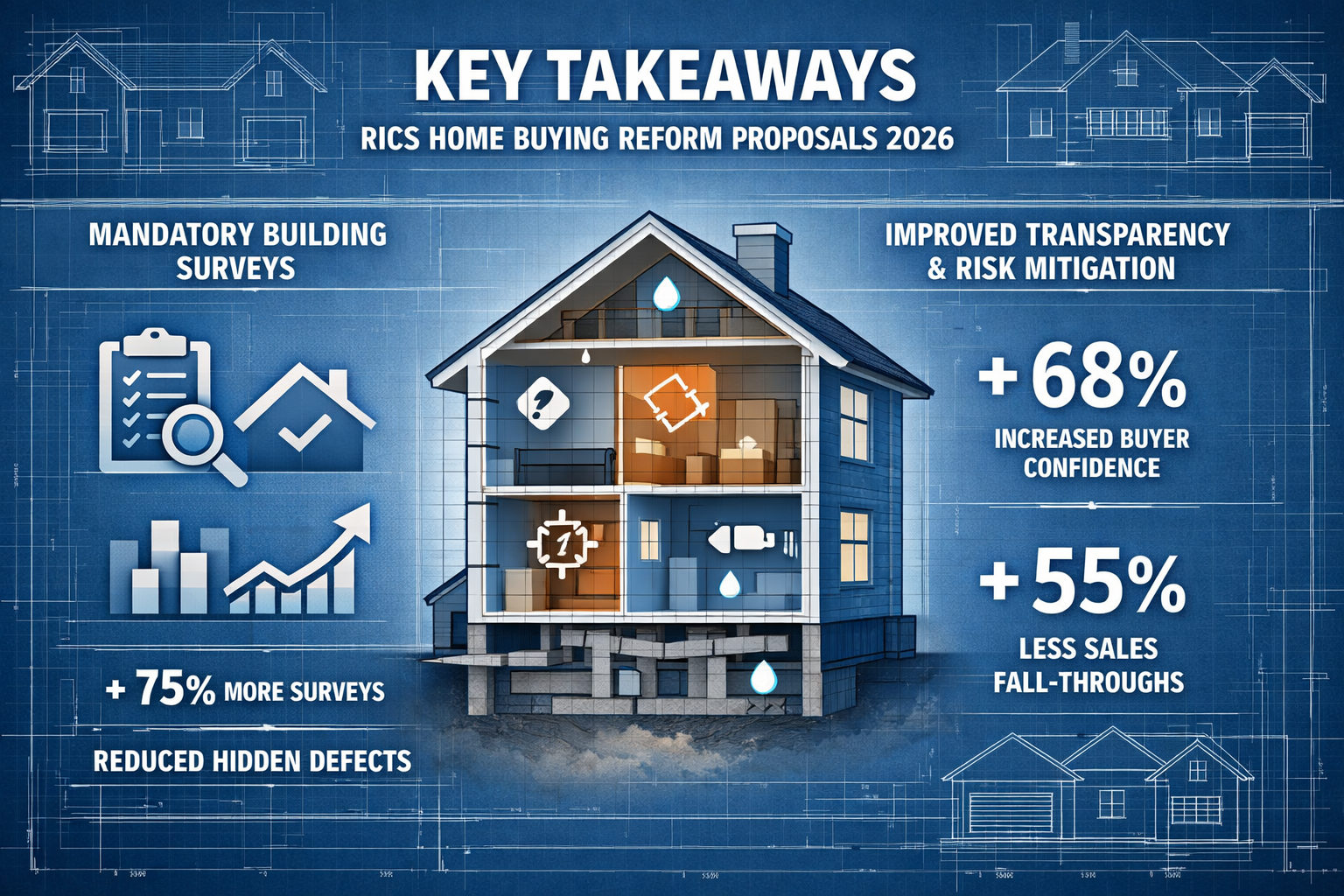
Key Takeaways
- 🏠 Mandatory upfront surveys will require sellers to commission professional building assessments before listing properties, fundamentally changing the traditional buying timeline
- 📈 Surveyor workloads will increase dramatically as every property sale requires a pre-listing survey, creating significant capacity challenges for chartered surveying firms
- ⚡ Transaction speeds should improve with property condition information available from day one, reducing fall-through rates and buyer uncertainty
- 💼 Surveying firms must prepare now by expanding capacity, updating workflows, and developing new seller-focused service offerings to meet 2026 implementation deadlines
- 🔍 Quality standards become critical as mandatory surveys shift from buyer-requested assessments to seller-commissioned documents that influence marketing and pricing strategies
Understanding the RICS Home Buying Reform Proposals 2026
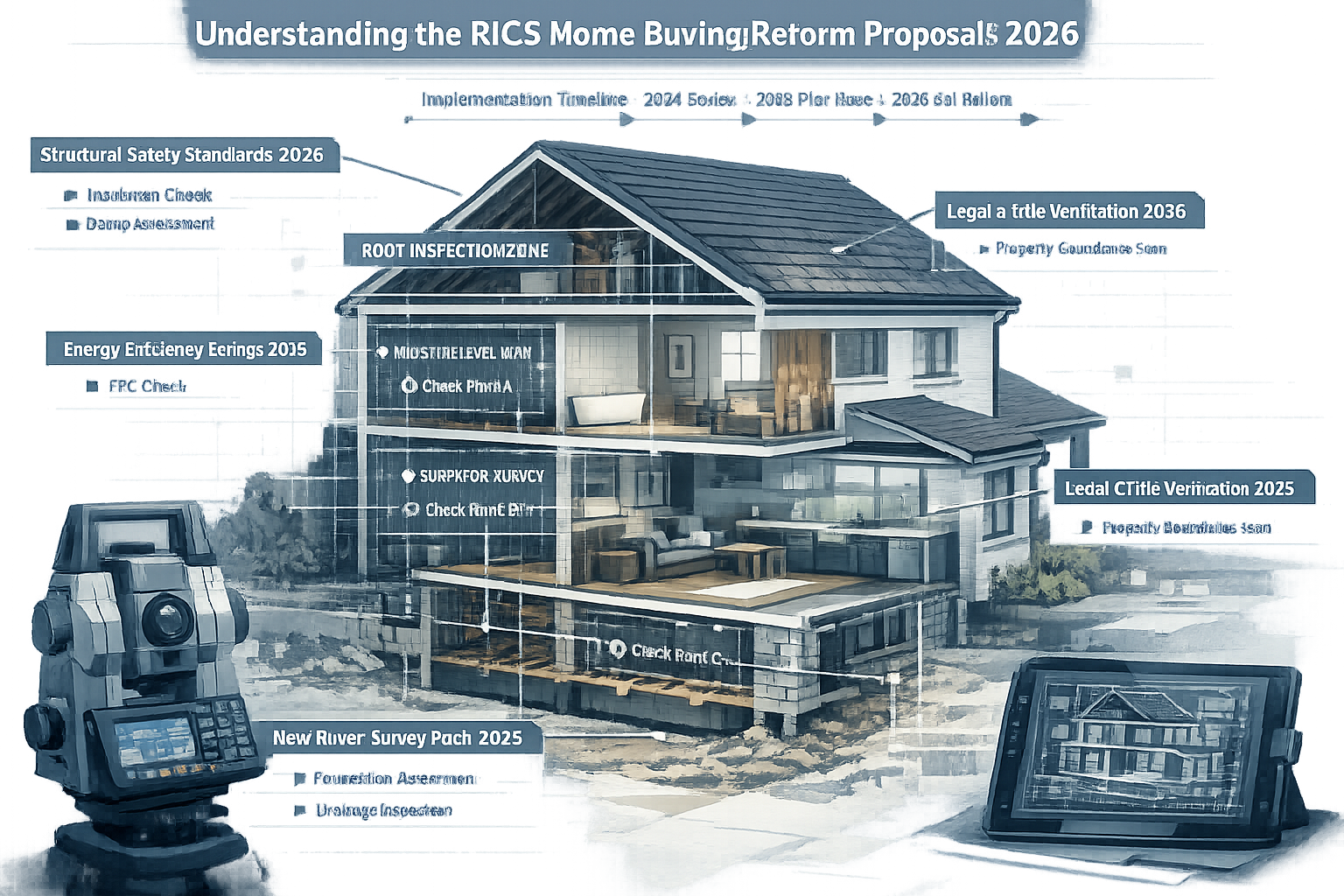
The RICS Home Buying Reform Proposals 2026 represents a collaborative effort between the Royal Institution of Chartered Surveyors, government policymakers, and industry stakeholders to modernize England and Wales' property transaction process. At its core, the reform package introduces mandatory property condition assessments that sellers must obtain before marketing their properties.
The Current System's Shortcomings
Under the existing framework, homebuyers typically arrange building surveys only after making offers and entering into preliminary agreements. This creates several critical problems:
- Late-stage surprises: Structural defects discovered weeks into the process often lead to renegotiations or complete transaction collapses
- Wasted costs: Buyers invest in legal fees, mortgage applications, and surveys for properties they ultimately abandon
- Information asymmetry: Sellers possess knowledge about property conditions that buyers lack during initial negotiations
- Prolonged timelines: The average UK property transaction takes 12-16 weeks, significantly longer than comparable markets
What the 2026 Reforms Will Change
The reform proposals mandate that sellers commission a standardized building survey before listing their property for sale [2]. This upfront assessment must be:
✅ Conducted by RICS-qualified chartered surveyors
✅ Completed using standardized reporting templates
✅ Made available to all prospective buyers from initial viewing
✅ Updated if the property remains unsold beyond a specified timeframe
This shift transforms building surveys from buyer-initiated due diligence into seller-provided disclosure documents, fundamentally altering the information landscape of property transactions.
How Building Surveys Become Mandatory Under the 2026 Framework
The mandatory survey requirement represents the most significant operational change within the RICS Home Buying Reform Proposals 2026: How Building Surveys Become Mandatory and Transform the Buying Process. Understanding the implementation mechanics is essential for surveying professionals preparing for the transition.
Survey Level Requirements and Standards
The reforms specify that mandatory pre-listing surveys must meet minimum standards equivalent to the current RICS Level 2 (HomeBuyer Report) for standard properties, with Level 3 (Full Building Survey) requirements for:
- Properties built before 1900
- Buildings with significant alterations or extensions
- Properties with known structural issues
- Homes constructed using non-standard methods
- Listed buildings and properties in conservation areas
| Property Type | Required Survey Level | Typical Cost Range |
|---|---|---|
| Standard modern home (post-1980) | Level 2 HomeBuyer Report | £400-£800 |
| Pre-1980 conventional construction | Level 2 HomeBuyer Report | £500-£900 |
| Pre-1900 or altered properties | Level 3 Full Building Survey | £800-£1,500 |
| Large period properties | Level 3 Full Building Survey | £1,200-£2,500+ |
| New build properties | Modified Level 2 with snagging | £600-£1,200 |
Implementation Timeline and Compliance
According to industry sources, the phased implementation will begin in early 2026 [2]:
Phase 1 (Q1 2026): Voluntary adoption period with incentives for early compliance
Phase 2 (Q3 2026): Mandatory requirement for all residential sales above £500,000
Phase 3 (Q1 2027): Full mandatory compliance across all price brackets
This graduated approach allows the surveying industry to build capacity while testing systems and workflows before universal application.
Who Pays for Mandatory Surveys?
Under the reform proposals, sellers bear the cost of commissioning the mandatory pre-listing survey. This represents a significant shift in financial responsibility, with estimated total costs to sellers ranging from £400-£2,500 depending on property characteristics.
However, this upfront investment potentially benefits sellers through:
- Faster sales with reduced fall-through rates
- Stronger negotiating positions when defects are transparently disclosed
- Reduced overall transaction costs by eliminating multiple buyer-commissioned surveys
- Market differentiation for well-maintained properties
For buyers, the reforms eliminate the risk of paying for surveys on properties they don't ultimately purchase, though they retain the right to commission additional specialist assessments if desired.
Transform the Buying Process: Operational Impacts and Timeline Changes
The RICS Home Buying Reform Proposals 2026: How Building Surveys Become Mandatory and Transform the Buying Process will fundamentally restructure the property transaction timeline, creating both opportunities and challenges for all participants.
The New Transaction Timeline
Traditional Process (Pre-2026):
- Property listed → 2. Buyer views → 3. Offer made → 4. Offer accepted → 5. Buyer arranges survey → 6. Survey reveals issues → 7. Renegotiation or withdrawal → 8. Completion (if successful)
Reformed Process (Post-2026):
- Seller commissions survey → 2. Property listed with survey report → 3. Buyer views with full condition knowledge → 4. Informed offer made → 5. Offer accepted → 6. Streamlined legal process → 7. Faster completion
This restructured timeline is projected to reduce average transaction times from 12-16 weeks to 8-10 weeks [2], with fall-through rates declining from approximately 30% to an estimated 15-18%.
Impact on Buyer Decision-Making
With comprehensive property condition information available from initial viewings, buyers can:
🔍 Make informed offers based on actual property condition rather than assumptions
💰 Factor repair costs into their initial bids, reducing post-offer renegotiations
⚖️ Compare properties on a like-for-like basis using standardized survey reports
🎯 Focus resources on properties genuinely suitable for their needs and budgets
This transparency particularly benefits first-time buyers who often lack experience identifying property defects during viewings. Understanding what to look out for when buying an old house becomes easier when professional assessments are readily available.
Changes for Estate Agents and Sellers
Estate agents will need to adapt their practices significantly:
- Pre-listing consultations must include survey commissioning guidance
- Marketing materials will incorporate survey findings and condition ratings
- Pricing strategies must account for disclosed defects and required repairs
- Vendor preparation becomes more extensive, potentially including pre-sale remediation
Sellers face new strategic decisions about whether to address identified defects before marketing or price properties to reflect "as-is" conditions. Properties with favorable survey reports may command premium pricing, while those with significant issues must be competitively priced to attract buyers willing to undertake renovations.
Legal and Conveyancing Implications
Solicitors and conveyancers will experience workflow changes as mandatory surveys reduce but don't eliminate due diligence requirements:
- Reduced survey-related delays as condition information exists from day one
- New liability considerations regarding survey accuracy and seller disclosure obligations
- Standardized documentation streamlining the exchange process
- Continued need for specialized assessments (environmental, legal, party wall considerations)
The reforms complement rather than replace traditional conveyancing, with legal professionals maintaining essential roles in title verification, contract negotiation, and completion procedures.
How the RICS Home Buying Reform Proposals 2026 Will Transform Building Surveyor Workloads
Perhaps no professional group faces greater impact from the RICS Home Buying Reform Proposals 2026: How Building Surveys Become Mandatory and Transform the Buying Process than chartered building surveyors themselves. The shift to mandatory pre-listing surveys creates both unprecedented demand and significant operational challenges [2].
Projected Demand Increases
Industry analysts estimate that mandatory survey requirements will increase annual surveying demand by 200-300% during the initial implementation years [2]. This dramatic surge stems from:
- Every property sale requiring a survey (currently only 60-70% of buyers commission surveys)
- Upfront timing meaning surveys occur before properties reach market rather than after offers
- Repeat surveys for properties remaining unsold beyond validity periods
- Higher survey levels required for older and non-standard properties
For context, approximately 1.2 million residential property transactions occur annually in England and Wales. Under the new framework, this translates to a similar number of mandatory building surveys, compared to an estimated 700,000-850,000 currently commissioned by buyers.
Capacity and Resource Challenges
Meeting this demand surge presents substantial challenges for surveying firms:
Workforce Constraints: The UK currently has approximately 8,000 practicing RICS-qualified residential building surveyors. Serving 1.2 million annual surveys requires significant capacity expansion through:
- Accelerated recruitment and training programs
- Increased use of graduate surveyors under supervision
- Extended working hours and weekend availability
- Geographic rebalancing to match property market concentrations
Quality Maintenance: Rapid capacity expansion risks quality dilution unless firms implement robust:
- Standardized training protocols
- Quality assurance review processes
- Continuing professional development requirements
- Peer review and mentoring systems
Understanding what types of building surveys are there and ensuring consistent application of standards becomes critical when scaling operations.
Workflow and Technology Adaptations
Surveying firms must modernize operations to handle increased volumes efficiently:
Digital Reporting Systems: Paper-based reports become impractical at scale. Investment in:
- Cloud-based survey software with mobile data capture
- Template libraries ensuring consistency and compliance
- Automated report generation with quality checkpoints
- Digital delivery platforms for instant client access
Scheduling Optimization: Managing how long a building survey takes becomes crucial when coordinating hundreds of appointments. Advanced scheduling systems must:
- Optimize surveyor routes and minimize travel time
- Balance workload across team members
- Accommodate seller availability and property access requirements
- Build in buffer time for complex or larger properties
Specialized Equipment: Increased survey volumes justify investment in:
- Thermal imaging cameras for insulation and moisture detection
- Drones for roof and chimney inspections
- Moisture meters and electrical testing equipment
- Laser measuring tools for accuracy and efficiency
New Service Models and Client Relationships
The shift from buyer-commissioned to seller-commissioned surveys fundamentally changes client relationships:
Seller-Focused Services: Surveyors must develop expertise in:
- Pre-listing property assessments with improvement recommendations
- Defect prioritization helping sellers decide what to repair before marketing
- Repair cost estimation supporting pricing strategies
- Follow-up surveys after remediation work
Estate Agent Partnerships: Building relationships with estate agencies becomes essential for:
- Preferred surveyor panel appointments
- Streamlined referral processes
- Integrated marketing of surveyed properties
- Coordinated listing timelines
Transparency and Impartiality: Despite seller commissioning, surveyors must maintain:
- Independence and objectivity in assessments
- RICS ethical standards and professional obligations
- Balanced reporting that serves both seller disclosure and buyer protection
- Clear communication about survey scope and limitations
Preparation Strategies for Surveying Firms Ahead of 2026 Implementation
Forward-thinking chartered surveying practices are already implementing preparation strategies to capitalize on opportunities within the RICS Home Buying Reform Proposals 2026: How Building Surveys Become Mandatory and Transform the Buying Process [2].
Strategic Workforce Planning
Recruitment Initiatives:
- Partner with universities offering surveying programs for graduate recruitment pipelines
- Offer apprenticeship schemes combining practical experience with professional qualifications
- Recruit experienced surveyors from related disciplines (building control, construction management)
- Consider part-time and contract surveyors for flexibility during demand peaks
Training and Development:
- Invest in comprehensive onboarding programs for new surveyors
- Provide specialized training on common defects in older homes
- Develop expertise in emerging issues (energy efficiency, climate resilience, modern construction methods)
- Create mentoring relationships pairing experienced and junior surveyors
Retention Strategies:
- Competitive compensation packages reflecting increased demand
- Career progression pathways and professional development support
- Work-life balance initiatives preventing burnout during high-volume periods
- Recognition programs celebrating quality and client satisfaction
Technology Investment Priorities
Survey Software Platforms:
Evaluate and implement comprehensive digital solutions offering:
- Mobile-first data capture during site inspections
- Standardized templates ensuring RICS compliance
- Photo annotation and floor plan integration
- Automated report generation with customization options
- Client portals for report delivery and access
Business Management Systems:
- Customer relationship management (CRM) for client tracking
- Scheduling and dispatch optimization
- Financial management and invoicing automation
- Performance analytics and quality monitoring
Marketing and Client Acquisition:
- Professional website showcasing services and expertise
- Online booking systems for seller convenience
- Digital marketing targeting estate agents and property sellers
- Content marketing establishing thought leadership
Operational Excellence and Quality Assurance
Standardized Processes:
Develop comprehensive procedures covering:
- Initial client consultation and scope definition
- Site inspection protocols and safety procedures
- Report writing standards and review requirements
- Quality control checkpoints and peer review
- Client communication and feedback collection
Quality Management:
- Implement ISO 9001 or equivalent quality management systems
- Regular internal audits of survey quality and consistency
- Client satisfaction measurement and continuous improvement
- Compliance monitoring ensuring RICS standards adherence
Risk Management:
- Professional indemnity insurance adequate for increased volumes
- Clear terms of engagement defining scope and limitations
- Robust complaints handling procedures
- Regular review of emerging risks and liability trends
Market Positioning and Service Development
Differentiation Strategies:
- Specialize in specific property types (period properties, new builds, flats)
- Geographic focus building local market expertise
- Premium services offering enhanced reporting or faster turnaround
- Value packages combining surveys with related services
Complementary Services:
Consider expanding offerings to include:
- Pre-sale property condition consultations
- Defect remediation project management
- Energy Performance Certificate (EPC) assessments
- Specialist investigations (damp, structural, timber)
- Post-remediation verification surveys
Partnership Development:
Build strategic relationships with:
- Estate agency networks for referral agreements
- Property developers and house builders
- Solicitors and conveyancers
- Mortgage lenders and financial advisors
Financial Implications and Market Opportunities
The RICS Home Buying Reform Proposals 2026 creates significant financial implications across the property market, with particular opportunities for well-positioned surveying firms.
Revenue Projections for Surveying Practices
Based on projected demand increases and current pricing structures, individual surveying firms could experience:
Small Practices (1-3 surveyors):
- Current annual surveys: 200-400
- Projected 2027 surveys: 500-1,000
- Revenue increase: 150-250%
- Investment required: £30,000-£75,000 (technology, training, marketing)
Medium Practices (4-10 surveyors):
- Current annual surveys: 800-2,000
- Projected 2027 surveys: 2,000-5,000
- Revenue increase: 150-250%
- Investment required: £100,000-£250,000 (additional staff, systems, facilities)
Large Practices (10+ surveyors):
- Current annual surveys: 2,000+
- Projected 2027 surveys: 5,000-15,000+
- Revenue increase: 150-300%
- Investment required: £250,000+ (significant expansion, automation, regional offices)
Pricing Strategies in the New Market
Mandatory surveys create different pricing dynamics than the current buyer-commissioned model:
Seller Sensitivity: Sellers paying upfront may be more price-conscious than buyers already committed to purchases, potentially creating:
- Downward pricing pressure in competitive markets
- Demand for economy survey options
- Package deals combining surveys with estate agency services
Value Differentiation: Opportunities exist for premium pricing through:
- Faster turnaround times (48-72 hours vs. standard 5-7 days)
- Enhanced reporting with repair cost estimates and prioritization
- Digital delivery with interactive features
- Comprehensive property files including historical data
Volume Discounts: Estate agents and developers may negotiate:
- Preferred rates for multiple property referrals
- Annual volume agreements
- Integrated service packages
Investment Returns and Growth Planning
Firms investing strategically in 2026 preparation can expect:
Short-term (2026-2027):
- Initial investment costs reducing profit margins
- Rapid revenue growth as mandatory requirements take effect
- Market share gains for early movers with capacity and quality
Medium-term (2028-2030):
- Stabilized market with normalized pricing
- Efficiency gains from established processes and technology
- Expanded service offerings generating additional revenue streams
Long-term (2030+):
- Mature mandatory survey market with steady demand
- Consolidation opportunities as smaller firms struggle with compliance
- International expansion potential as other markets consider similar reforms
Challenges and Considerations for Industry Stakeholders

While the RICS Home Buying Reform Proposals 2026: How Building Surveys Become Mandatory and Transform the Buying Process offers substantial benefits, several challenges require careful navigation.
Surveyor Liability and Professional Standards
Mandatory surveys increase liability exposure for chartered surveyors:
Dual Stakeholder Interests: Seller-commissioned surveys serve both:
- Sellers seeking favorable presentations supporting marketing
- Buyers relying on accurate condition assessments for decision-making
This creates potential conflicts requiring clear professional boundaries and RICS ethical compliance.
Increased Claims Potential: Higher survey volumes statistically increase:
- Professional negligence claims
- Disputes over missed defects
- Liability for consequential losses
Surveyors must ensure adequate professional indemnity insurance and maintain rigorous quality standards.
Market Transition Challenges
The implementation period will create temporary market disruptions:
Supply Bottlenecks: Initial surveyor capacity constraints may cause:
- Delayed property listings while sellers await surveys
- Increased survey costs during peak demand periods
- Geographic disparities with rural areas particularly affected
Seller Resistance: Some property owners may resist:
- Upfront survey costs before guaranteed sales
- Disclosure of defects potentially reducing sale prices
- Additional administrative requirements and delays
Buyer Adaptation: Education required helping buyers:
- Understand mandatory survey scope and limitations
- Recognize when additional specialist surveys remain necessary
- Navigate negotiating house prices based on survey findings
Regulatory and Compliance Considerations
Successful implementation requires:
Clear Standards: Definitive guidance on:
- Minimum survey scope and reporting requirements
- Surveyor qualification and experience standards
- Survey validity periods and update triggers
- Enforcement mechanisms and penalties for non-compliance
Consumer Protection: Safeguards ensuring:
- Survey quality and independence
- Accessible complaint and redress mechanisms
- Transparent pricing and service standards
- Protection against conflicts of interest
Market Monitoring: Ongoing assessment of:
- Reform effectiveness in reducing fall-throughs
- Transaction time improvements
- Consumer satisfaction and market confidence
- Unintended consequences requiring policy adjustments
Conclusion
The RICS Home Buying Reform Proposals 2026: How Building Surveys Become Mandatory and Transform the Buying Process represents the most significant transformation of the UK property market in generations. By shifting building surveys from optional buyer-initiated assessments to mandatory seller-commissioned requirements, these reforms promise to create a more transparent, efficient, and reliable property transaction system.
For chartered building surveyors, the reforms present both unprecedented opportunities and substantial challenges. Firms that prepare strategically—expanding capacity, investing in technology, developing seller-focused services, and maintaining rigorous quality standards—will be positioned to capitalize on dramatic demand increases while contributing to improved market outcomes.
The transition period through 2026-2027 will test the industry's adaptability and resilience. Success requires coordinated effort among surveyors, estate agents, solicitors, policymakers, and consumers, all working toward the shared goal of a property market that serves buyers and sellers more effectively.
Actionable Next Steps
For Surveying Firms:
✅ Conduct capacity assessments identifying gaps between current capabilities and projected 2026 demand
✅ Develop recruitment and training plans to expand surveyor workforce
✅ Invest in digital survey platforms and business management systems
✅ Build relationships with estate agents and property professionals
✅ Review professional indemnity insurance ensuring adequate coverage
For Property Sellers:
✅ Budget for mandatory survey costs when planning property sales
✅ Consider pre-listing property improvements addressing potential survey findings
✅ Engage RICS-qualified surveyors for preliminary assessments
✅ Work with estate agents experienced in reformed transaction processes
For Homebuyers:
✅ Familiarize yourself with which building survey you need for different property types
✅ Understand that mandatory seller surveys don't eliminate the option for additional buyer-commissioned assessments
✅ Learn to interpret survey reports and what's in a Level 3 survey
✅ Factor survey findings into offer strategies and negotiation approaches
The countdown to 2026 has begun. Those who prepare thoughtfully and act decisively will shape the future of UK property transactions for decades to come.
References
[1] What Sort Of Survey Should I Have – https://hoa.org.uk/advice/guides-for-homeowners/i-am-buying/what-sort-of-survey-should-i-have/
[2] Homebuying Process Reforms 2026 How Mandatory Upfront Surveys Will Transform Building Surveyor Workloads – https://nottinghillsurveyors.com/blog/homebuying-process-reforms-2026-how-mandatory-upfront-surveys-will-transform-building-surveyor-workloads
[3] Surveying The 2026 Buy To Let Boom Building Survey Protocols For Institutional Landlord Investments – https://nottinghillsurveyors.com/blog/surveying-the-2026-buy-to-let-boom-building-survey-protocols-for-institutional-landlord-investments