

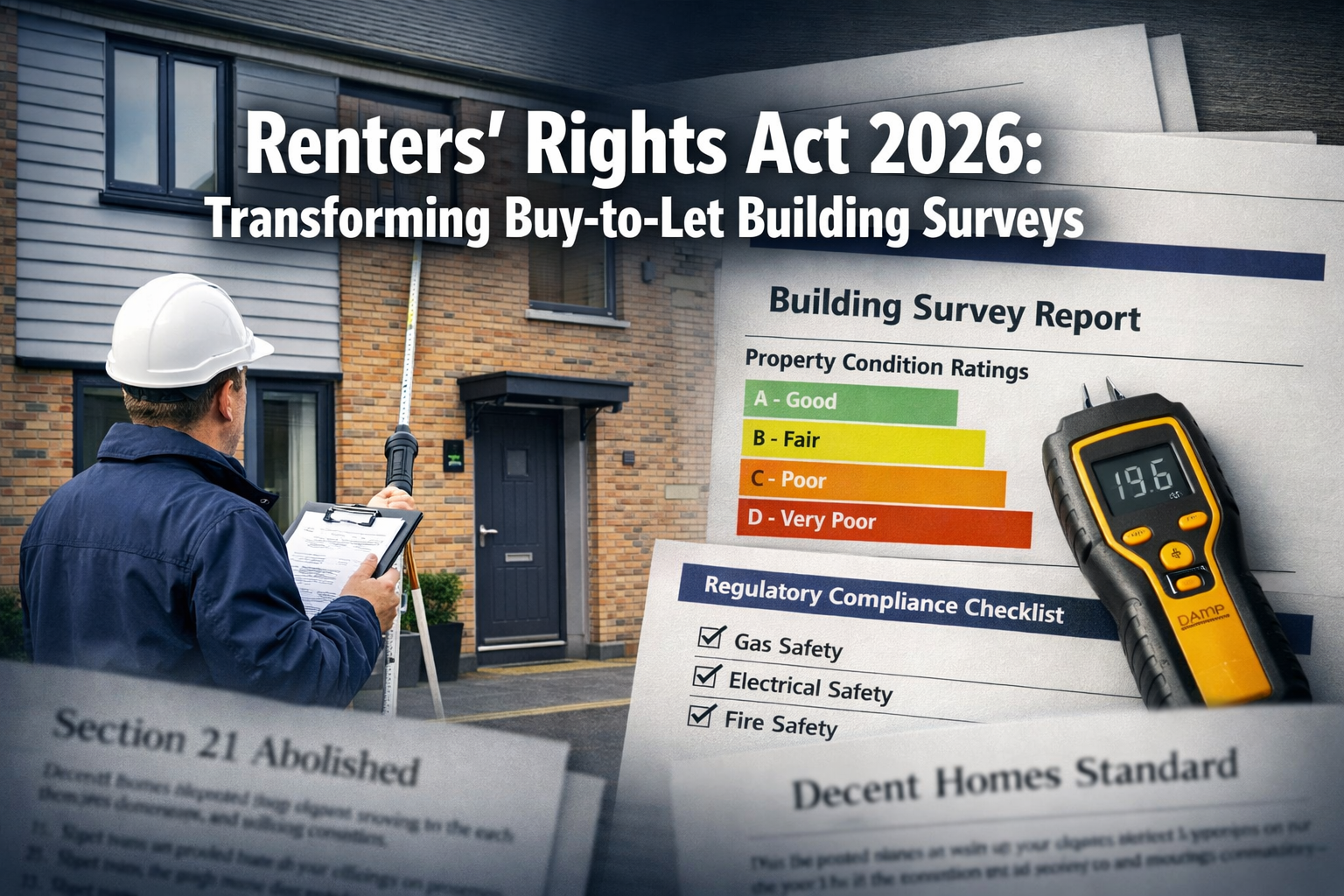
From 1 May 2026, the UK rental market enters a new era. The Renters' Rights Act 2026 fundamentally transforms residential tenancy law, abolishing Section 21 no-fault evictions, mandating stricter property standards, and introducing unprecedented enforcement mechanisms. For building surveyors, chartered valuers, and property professionals, understanding the Renters' Rights Act 2026 and Its Impact on Buy-to-Let Building Surveys: What Landlord Valuers Must Assess is no longer optional—it's essential for protecting client investments and ensuring regulatory compliance.
This seismic shift requires institutional and private landlords to reassess their property portfolios through a completely different lens. Building surveys must now evaluate not just structural integrity and market value, but also compliance with the expanded Decent Homes Standard, Awaab's Law timelines, and emerging enforcement risks that carry penalties up to £40,000[2][3].
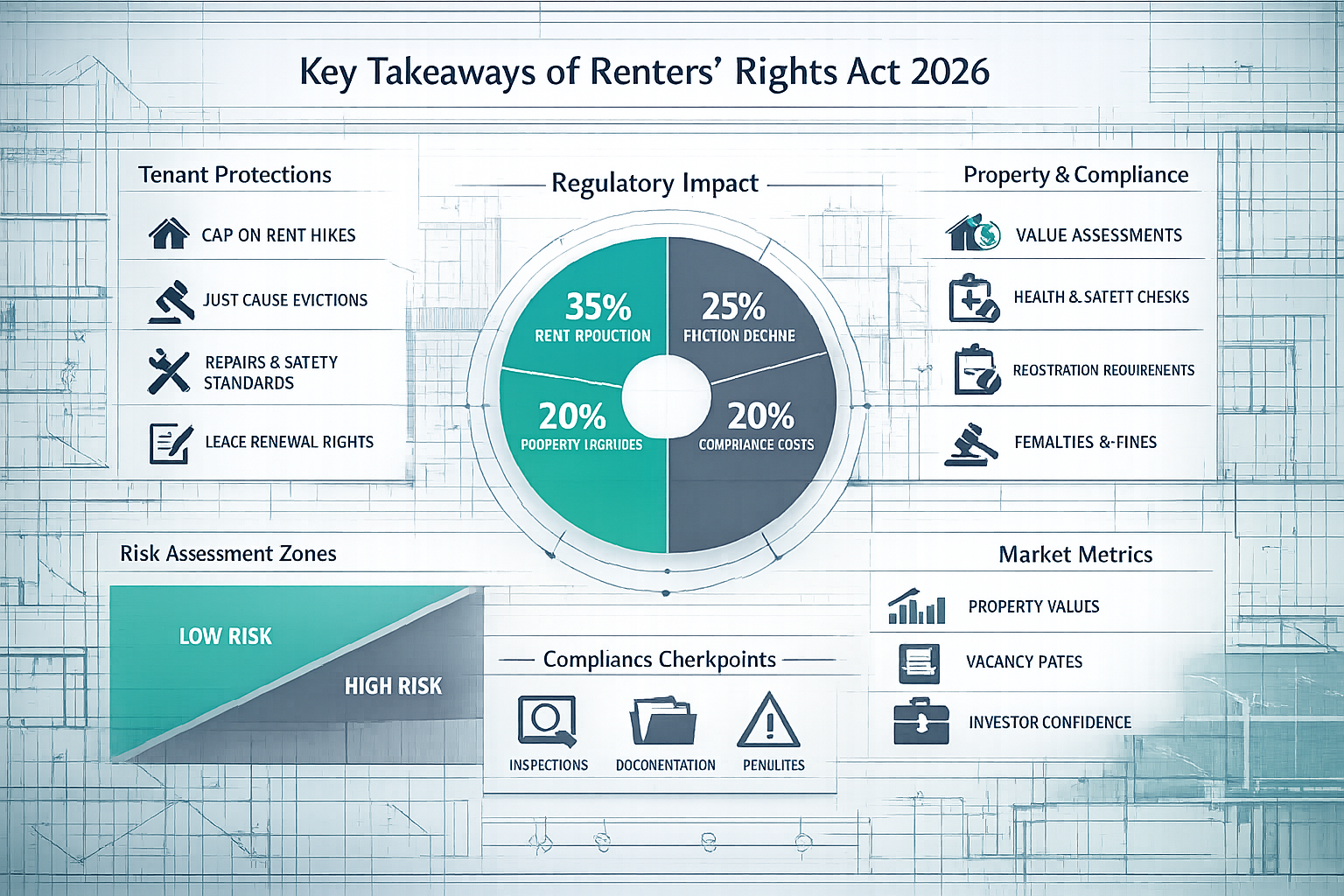
Key Takeaways
✅ Section 21 abolition from 1 May 2026 eliminates no-fault evictions, making property condition and compliance documentation critical for legitimate possession grounds[2]
✅ Decent Homes Standard extension to private rentals introduces mandatory condition thresholds with local authority fines up to £7,000 and prosecution penalties reaching £40,000[2][3]
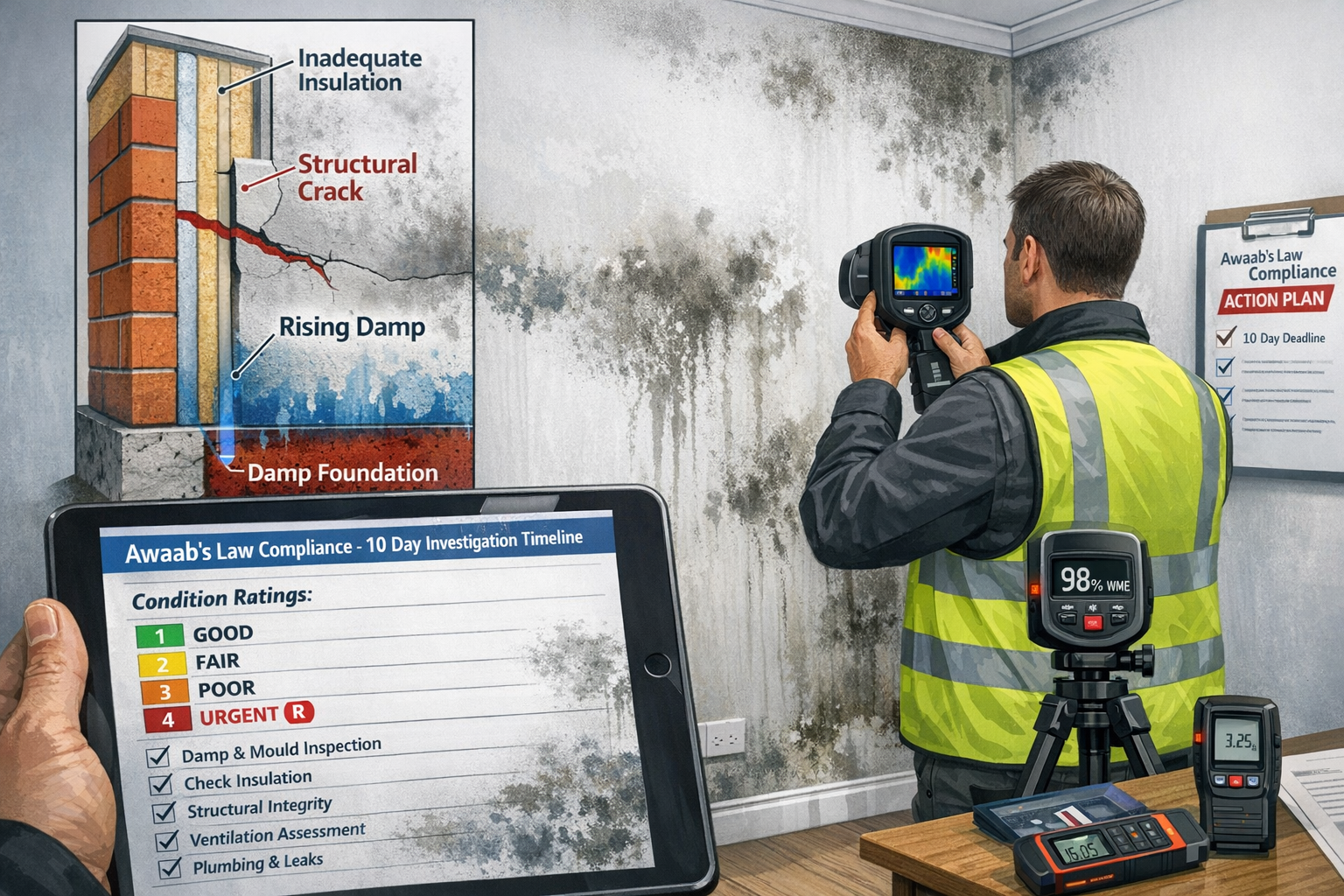
✅ Awaab's Law imposes strict 10-day investigation timelines for damp and mould reports, requiring surveyors to identify moisture risks proactively[3]
✅ Building survey protocols must expand beyond traditional structural assessments to include regulatory compliance audits, remediation cost forecasting, and enforcement risk evaluation
✅ Landlord valuers need updated assessment frameworks that quantify compliance costs, potential penalty exposure, and impact on investment yields under the new regulatory regime
Understanding the Renters' Rights Act 2026: Core Provisions Affecting Property Assessment
The Renters' Rights Act 2026 represents Parliament's most comprehensive reform of private rental legislation in decades. For property professionals conducting building surveys, the Act introduces multiple compliance layers that directly impact valuation methodology and risk assessment protocols.
Section 21 Abolition and Possession Ground Documentation
The abolition of Section 21 no-fault evictions fundamentally changes the landlord-tenant relationship[2]. Without this mechanism, landlords can only regain possession through specific grounds outlined in the Act. This shift places enormous emphasis on property condition documentation.
Building surveyors must now assess properties with the understanding that any future possession claim may require evidence of:
- Legitimate repair requirements that tenants have refused access to remedy
- Substantial refurbishment plans requiring vacant possession
- Property sale intentions with documented evidence
Property condition reports become legal evidence rather than simple advisory documents. A comprehensive Level 3 building survey provides the detailed documentation necessary to support legitimate possession grounds should disputes arise.
Decent Homes Standard Extension to Private Rentals
Previously applicable only to social housing, the Decent Homes Standard now extends to all private rental properties[2][3]. This introduces four core requirements that surveyors must assess:
- Current statutory minimum standards – Properties must meet the Housing Health and Safety Rating System (HHSRS) requirements
- Reasonable state of repair – Structure and exterior must be maintained, with heating and plumbing systems less than 30 years old
- Modern facilities – Adequate kitchen and bathroom provisions meeting contemporary expectations
- Effective heating and insulation – Efficient heating systems and appropriate thermal performance
Non-compliance carries significant penalties: local authorities can impose fines up to £7,000, while prosecution for serious breaches can result in penalties reaching £40,000[2][3]. For landlord valuers, these enforcement risks must be quantified within investment appraisals.
Awaab's Law: Mandatory Damp and Mould Investigation Timelines
Named after two-year-old Awaab Ishak who died from prolonged mould exposure, Awaab's Law introduces strict timelines for investigating and remedying hazardous damp and mould[3]. Landlords must:
- Investigate reported damp and mould within 10 days
- Commence remediation within prescribed timeframes
- Provide alternative accommodation during serious remediation works
For building surveyors, this requirement demands proactive identification of moisture risks during property assessments. Understanding what causes moisture in buildings becomes critical for predicting compliance costs and potential tenant claims.
Rent Control Provisions and Property Investment Viability
The Act introduces several rent control measures that affect property valuation[1]:
- Ban on rent bidding – Landlords cannot solicit or accept offers above advertised rent
- Two-month notice periods for rent increases with justification requirements
- Prohibition on advance rent payments beyond one month's deposit
These provisions compress rental income flexibility, requiring valuers to adopt more conservative yield projections when assessing buy-to-let investment potential.
Mandatory Rental Database and Ombudsman Scheme
From late 2026, all landlords must register with a mandatory Rental Database and join an approved Ombudsman Scheme[2]. This creates a permanent compliance record that follows properties and landlords, making historical condition issues more transparent to prospective tenants and enforcement authorities.
Building survey reports may become part of this permanent record, emphasizing the importance of accurate, defensible assessments that can withstand regulatory scrutiny years after completion.
Renters' Rights Act 2026 and Its Impact on Buy-to-Let Building Surveys: New Assessment Protocols
Traditional building surveys focused primarily on structural integrity, defect identification, and repair cost estimation. The Renters' Rights Act 2026 and Its Impact on Buy-to-Let Building Surveys: What Landlord Valuers Must Assess requires expanded protocols that integrate regulatory compliance evaluation into every property assessment.
Enhanced Structural and Fabric Assessment
While core structural evaluation remains fundamental, surveyors must now explicitly assess compliance with Decent Homes Standard criteria. This requires detailed examination of:
Building envelope integrity:
- External wall condition and weatherproofing effectiveness
- Roof covering age, condition, and expected remaining lifespan
- Window and door condition, security, and thermal performance
- Damp-proof course effectiveness and signs of penetrating moisture
Internal fabric condition:
- Wall, ceiling, and floor surface condition
- Evidence of historic or active moisture penetration
- Structural movement indicators that could affect habitability
- Fire safety provisions including escape routes and detection systems
A comprehensive full building survey provides the depth of investigation necessary to identify compliance gaps before acquisition.
Mandatory Damp and Mould Risk Assessment
Awaab's Law elevates damp and mould assessment from advisory to mandatory compliance evaluation[3]. Surveyors must now:
Conduct comprehensive moisture surveys:
- Electronic moisture meter readings at multiple locations
- Thermal imaging to identify cold spots and insulation deficiencies
- Ventilation adequacy assessment in bathrooms, kitchens, and bedrooms
- Condensation risk evaluation based on property characteristics
Identify causation factors:
- Building defects causing water ingress (failed flashings, damaged gutters, cracked render)
- Inadequate ventilation provisions
- Thermal bridging and insulation deficiencies
- Tenant behavior factors versus building defects
Quantify remediation requirements:
- Immediate repairs to eliminate water ingress
- Ventilation improvements (mechanical extract, positive input systems)
- Insulation upgrades to reduce condensation risk
- Estimated costs and implementation timelines
Properties with identified damp and mould risks require detailed remediation specifications within survey reports, enabling landlords to budget accurately and demonstrate proactive compliance.
Mechanical and Electrical Systems Evaluation
The Decent Homes Standard requires heating and plumbing systems less than 30 years old and in reasonable working order[3]. Building surveyors must assess:
Heating systems:
- Boiler age, condition, and efficiency rating
- Radiator adequacy for property size
- Controls functionality (thermostats, programmers, thermostatic radiator valves)
- Annual service history and remaining expected lifespan
Electrical installations:
- Consumer unit age and type (modern RCD protection required)
- Visible wiring condition and installation standards
- Electrical Installation Condition Report (EICR) status and findings
- Socket and lighting provision adequacy
Plumbing systems:
- Water supply pipe materials and condition
- Drainage effectiveness and maintenance requirements
- Sanitary ware condition and functionality
- Hot water system type, capacity, and efficiency
Surveyors should recommend specialist mechanical and electrical inspections where systems appear aged or deficient, ensuring comprehensive compliance documentation.
Energy Performance and MEES Compliance
While technically separate legislation, Minimum Energy Efficiency Standards (MEES) intersect with Decent Homes Standard requirements. Properties must achieve at least EPC rating E, with future upgrades to C anticipated[3].
Building surveys should evaluate:
- Current EPC rating and validity
- Cost-effective improvement opportunities
- Barriers to achieving higher ratings (solid wall construction, listed building constraints)
- Impact of required improvements on property value and rental yield
Understanding the relationship between EPC ratings, MEES, and building surveys helps landlords prioritize improvement investments strategically.
Kitchen and Bathroom Facilities Assessment
Modern facilities requirements under Decent Homes Standard mandate adequate kitchen and bathroom provisions[3]. Surveyors must evaluate:
Kitchen facilities:
- Adequate food preparation surfaces and storage
- Functional cooking appliances
- Appropriate sink and drainage
- Overall condition and age of installations
Bathroom facilities:
- Adequate bathing facilities (bath or shower)
- WC provision appropriate to property size
- Wash basin with hot and cold water
- Condition, functionality, and privacy provisions
Properties with outdated or inadequate facilities require upgrade cost estimates within survey reports, enabling accurate investment appraisals.
Fire Safety and Means of Escape
While primarily addressed through separate fire safety regulations, building surveys should identify obvious fire safety deficiencies:
- Inadequate means of escape, particularly in HMOs
- Missing or inadequate smoke and carbon monoxide detection
- Fire door deficiencies in converted properties
- Combustible cladding or materials in common areas
Identifying these issues during acquisition surveys prevents costly post-purchase remediation and potential enforcement action.
What Landlord Valuers Must Assess Under the Renters' Rights Act 2026: Risk-Adjusted Valuation Methodology
The Renters' Rights Act 2026 and Its Impact on Buy-to-Let Building Surveys: What Landlord Valuers Must Assess extends beyond physical property condition to comprehensive risk evaluation and financial modeling. Chartered surveyors conducting valuations for buy-to-let investors must integrate regulatory compliance costs and enforcement risks into their assessments.
Compliance Cost Quantification
Traditional valuation methodology deducted repair costs from market value to determine adjusted purchase price. Under the new regime, valuers must quantify:
Immediate compliance costs:
- Decent Homes Standard remediation works
- Damp and mould elimination measures
- Heating and electrical system upgrades
- Kitchen and bathroom modernization
Ongoing compliance costs:
- Annual gas safety certificates
- Electrical installation condition reports (every five years)
- Energy Performance Certificate renewals
- Mandatory property licensing fees
- Ombudsman scheme membership costs
Contingency reserves:
- Emergency damp and mould response capacity (10-day investigation requirement)
- Unexpected repair obligations discovered during tenancies
- Legal costs for possession proceedings without Section 21
These costs should be presented as both capital requirements and annualized operating cost increases, enabling investors to assess impact on cash flow and yield.
Enforcement Risk Assessment
Non-compliance carries significant financial penalties that must be factored into risk-adjusted valuations[2][3]:
Penalty exposure quantification:
- Local authority civil penalties: up to £7,000 per breach
- Prosecution fines: up to £40,000 for serious offenses
- Rent repayment orders: up to 12 months' rent refundable to tenants
- Banning order implications for serious or repeat offenders
Probability-weighted risk modeling:
| Compliance Issue | Penalty Range | Estimated Probability | Risk-Adjusted Cost |
|---|---|---|---|
| Decent Homes breach | £7,000 | 15% | £1,050 |
| Awaab's Law violation | £7,000-£40,000 | 8% | £1,880 |
| Licensing breach | £5,000-£30,000 | 10% | £1,750 |
| Total Risk Exposure | £4,680 |
This risk-adjusted cost should be deducted from investment value or factored into required yield calculations.
Rental Income Projection Adjustments
Rent control provisions affect income projections[1]:
Conservative rental growth assumptions:
- Two-month notice periods for increases limit responsiveness to market changes
- Justification requirements may constrain increases below market rates
- Tenant challenges through Ombudsman scheme may delay or reduce increases
Void period extensions:
- Without Section 21, possession proceedings for legitimate grounds take longer
- Estimated void periods should increase from traditional 4-6 weeks to 8-12 weeks
- Legal costs for possession proceedings should be factored into operating budgets
Rent bidding prohibition:
- Properties in high-demand areas lose premium pricing opportunities
- Rental income projections should use advertised rates without bidding premiums
These adjustments typically reduce gross rental yields by 0.5-1.5 percentage points, significantly impacting investment returns.
Portfolio Risk Concentration Analysis
For institutional landlords with multiple properties, valuers should assess portfolio-level compliance risks:
Property age and condition distribution:
- Concentration in pre-1950s properties with higher compliance costs
- Properties with known damp and mould histories
- Aging heating and electrical systems requiring replacement
Geographic enforcement variation:
- Local authority enforcement priorities and resource levels
- Regional property condition trends
- Selective licensing scheme coverage
Tenant demographic risk factors:
- Properties housing families with young children (higher Awaab's Law sensitivity)
- Areas with active tenant advocacy organizations
- Historical complaint and enforcement patterns
Portfolio concentration risks may justify valuation discounts or trigger recommendations for strategic disposals.
Investment Viability Threshold Analysis
Given increased costs and reduced income flexibility, valuers must establish minimum viability thresholds for buy-to-let investments:
Minimum net yield requirements:
- Traditional 5-6% gross yields may be insufficient
- Post-compliance net yields should exceed 4% to justify investment risk
- Properties below threshold should be valued on alternative use basis
Capital appreciation requirements:
- Income compression requires stronger capital growth prospects
- Properties in low-growth areas may no longer justify buy-to-let investment
- Alternative use values (owner-occupation, conversion, redevelopment) may exceed investment value
Exit strategy evaluation:
- Section 21 abolition complicates exit timing
- Properties requiring substantial compliance investment may be difficult to sell to other landlords
- Valuation should consider marketability to owner-occupiers as alternative purchaser pool
This comprehensive approach ensures valuations reflect true investment risk under the new regulatory framework.
Specialist Survey Recommendations
Valuers should recommend additional specialist investigations where building surveys identify areas of further investigation:
Structural engineering assessments:
- Significant structural movement or defects
- Complex remediation requirements
- Underpinning or major structural repair needs
Damp and timber specialists:
- Extensive damp penetration or timber decay
- Complex moisture issues requiring specialist diagnosis
- Remediation specification and cost estimation
Mechanical and electrical specialists:
- Aging or deficient heating systems
- Electrical installations requiring comprehensive assessment
- Energy efficiency improvement specifications
Environmental specialists:
- Asbestos identification and management (properties built before 2000)
- Contaminated land concerns
- Flood risk assessment and mitigation
Recommending appropriate specialists demonstrates professional diligence and ensures clients receive comprehensive risk assessment. For properties requiring asbestos building surveys or evaluation of environmental issues, specialist input is essential.
Strategic Implications for Different Landlord Categories
The Renters' Rights Act 2026 affects different landlord types distinctly, requiring tailored survey and valuation approaches.
Institutional and Corporate Landlords
Large portfolio holders face:
Systematic compliance audits:
- Portfolio-wide condition surveys to identify compliance gaps
- Prioritized remediation programs based on risk assessment
- Standardized property management protocols ensuring consistent compliance
Enhanced due diligence:
- Comprehensive building surveys for all acquisitions
- Detailed compliance cost modeling before purchase
- Integration of regulatory risk into investment committee decision-making
Professional management infrastructure:
- Dedicated compliance officers and systems
- Proactive maintenance programs preventing compliance breaches
- Robust tenant communication protocols for repair reporting
Institutional investors benefit from economies of scale in compliance management but face reputational risks from any enforcement action.
Private Individual Landlords
Smaller landlords with one to five properties face:
Higher proportional compliance costs:
- Fixed costs (Ombudsman membership, licensing) represent larger percentage of income
- Limited ability to spread specialist survey costs across portfolios
- Reduced negotiating power with contractors for remediation works
Exit considerations:
- Many may choose to sell rather than invest in compliance
- Valuations should consider both continued letting and owner-occupier sale scenarios
- Property renovations that add value may improve marketability to either buyer type
Professional advice dependency:
- Greater reliance on building surveyors and valuers for compliance guidance
- Need for clear, actionable survey reports with prioritized recommendations
- Importance of understanding building survey timeframes for transaction planning
Build-to-Rent Developers
Purpose-built rental developments benefit from:
Design-stage compliance integration:
- New builds meeting Decent Homes Standard by design
- Modern systems eliminating aging infrastructure risks
- Reduced damp and mould risk through contemporary construction standards
Valuation premiums:
- Compliance-ready properties command premium valuations
- Reduced operating cost uncertainty attracts institutional investment
- Lower enforcement risk improves risk-adjusted returns
However, developers must ensure construction quality meets long-term compliance requirements, making RICS building surveys essential even for new properties.
Practical Implementation: Survey Report Requirements and Documentation Standards
To support landlords navigating the Renters' Rights Act 2026, building surveyors must enhance report content and documentation standards.
Comprehensive Condition Rating Systems
Survey reports should include explicit condition ratings aligned with Decent Homes Standard criteria:
Rating scale:
- ✅ Compliant – Meets Decent Homes Standard, no immediate action required
- ⚠️ Marginal – Approaching end of serviceable life, monitor and budget for replacement
- ❌ Non-compliant – Fails Decent Homes Standard, immediate remediation required
Element-by-element assessment:
- Structure and fabric
- Heating systems
- Electrical installations
- Plumbing and drainage
- Kitchen facilities
- Bathroom facilities
- Damp and mould risk factors
- Energy efficiency
This structured approach enables landlords to prioritize remediation investments systematically.
Remediation Specification and Cost Estimation
For identified deficiencies, survey reports must provide:
Detailed remediation specifications:
- Scope of works required to achieve compliance
- Performance standards to be met
- Materials and installation methods recommended
- Compliance verification requirements (testing, certification)
Itemized cost estimates:
- Materials costs
- Labor costs
- Professional fees (design, certification, project management)
- Contingency allowances
- Total estimated investment required
Implementation timelines:
- Urgent works requiring immediate attention (safety hazards, Awaab's Law compliance)
- Short-term works (within 6-12 months)
- Medium-term works (1-3 years)
- Long-term budget provisions (3-5 years)
This information enables landlords to develop compliant maintenance strategies and accurate financial planning.
Photographic and Diagnostic Evidence
Enhanced documentation standards should include:
Comprehensive photographic records:
- External elevations from multiple angles
- Internal room-by-room coverage
- Close-up images of specific defects
- Thermal imaging showing insulation deficiencies and moisture risks
- Moisture meter readings documentation
Diagnostic test results:
- Electronic moisture meter readings at multiple locations
- Electrical installation test results
- Heating system efficiency measurements
- Ventilation performance assessments
This evidence base supports future compliance demonstrations and defends against tenant complaints or enforcement action.
Regulatory Compliance Summary
Survey reports should include a dedicated compliance summary section:
Decent Homes Standard compliance statement:
- Overall compliance assessment (compliant/non-compliant)
- Specific criteria failures identified
- Remediation requirements to achieve compliance
- Estimated total compliance investment
Awaab's Law risk assessment:
- Damp and mould risk rating (low/medium/high)
- Causation factors identified
- Preventative measures recommended
- Emergency response capability requirements
MEES and EPC status:
- Current EPC rating
- Compliance with minimum standards
- Recommended improvements
- Estimated costs and yield impact
Enforcement risk evaluation:
- Overall risk rating (low/medium/high)
- Specific compliance gaps creating enforcement exposure
- Recommended priority actions
- Estimated penalty exposure if unaddressed
This summary enables landlords and their advisors to make informed risk management decisions.
Future-Proofing Buy-to-Let Investments: Long-Term Considerations
Beyond immediate compliance, surveyors and valuers should consider emerging trends affecting buy-to-let viability.
Anticipated Regulatory Evolution
The Renters' Rights Act 2026 likely represents the beginning rather than the end of rental sector reform:
Probable future developments:
- Decent Homes Standard criteria tightening over time
- Minimum EPC rating increases (C or B likely by 2030s)
- Enhanced accessibility requirements for aging population
- Stricter fire safety standards following building safety reforms
- Expanded local authority licensing schemes
Survey implications:
- Properties meeting only minimum current standards face obsolescence risk
- Higher-specification properties command valuation premiums
- Adaptive capacity (ability to accommodate future upgrades) becomes key valuation factor
Climate Change and Resilience Requirements
Environmental pressures will drive additional property standards:
Flood risk and drainage:
- Properties in flood-prone areas face insurance and marketability challenges
- Sustainable drainage systems may become mandatory
- Climate adaptation measures (flood barriers, permeable surfaces) add costs
Overheating and cooling:
- Climate change increases overheating risk in poorly designed properties
- Mechanical cooling may become expected, increasing energy costs
- Passive design features (shading, ventilation) become more valuable
Energy efficiency trajectory:
- Net zero policy objectives drive ever-higher efficiency standards
- Properties difficult to upgrade (solid walls, no loft space) face value impairment
- Renewable energy integration (solar PV, heat pumps) becomes standard expectation
Surveyors should assess climate resilience and adaptation capacity as part of long-term investment viability analysis.
Demographic and Market Shifts
Changing tenant expectations and demographics affect property requirements:
Aging population:
- Accessibility features (level access, ground floor facilities) increase in importance
- Properties suitable for lifetime occupation command premiums
- Adaptation capacity for mobility aids and assistive technology
Remote working normalization:
- Adequate space for home offices becomes standard expectation
- High-quality broadband infrastructure essential
- Properties with dedicated workspace command rental premiums
Affordability pressures:
- Smaller, more affordable units maintain strong demand
- Larger family homes face tenant affordability constraints
- Location near employment centers and transport links increasingly critical
These factors should inform investment strategy and property selection, with surveys assessing suitability for evolving tenant needs.
Conclusion
The Renters' Rights Act 2026 and Its Impact on Buy-to-Let Building Surveys: What Landlord Valuers Must Assess represents a fundamental transformation of the private rental sector. From 1 May 2026, the abolition of Section 21, extension of Decent Homes Standard, and implementation of Awaab's Law create a new regulatory landscape that demands comprehensive, compliance-focused property assessment.
Building surveyors must expand traditional structural and defect evaluation to include detailed regulatory compliance audits, damp and mould risk assessment, and enforcement exposure quantification. Survey reports become legal evidence documents requiring enhanced documentation standards, photographic evidence, and explicit compliance statements.
Chartered valuers must integrate compliance costs, enforcement risks, and rental income constraints into risk-adjusted valuation methodology. Traditional valuation approaches that focused primarily on market comparables and structural condition no longer capture the full investment risk profile. Comprehensive financial modeling that quantifies compliance costs, penalty exposure, and yield compression is essential for protecting client interests.
Landlords face a stark choice: invest in compliance and professional property management, or exit the sector. Those who remain must adopt proactive maintenance strategies, engage qualified surveyors for regular condition assessments, and maintain comprehensive documentation demonstrating regulatory compliance.
Actionable Next Steps for Landlords and Property Professionals
📋 Commission comprehensive building surveys for all buy-to-let properties, existing portfolios, and prospective acquisitions using Level 3 full building survey standards
🔍 Conduct portfolio-wide compliance audits identifying Decent Homes Standard gaps, damp and mould risks, and aging systems requiring replacement
💰 Develop detailed remediation budgets with prioritized action plans addressing urgent compliance issues first
📊 Reassess investment viability for each property using risk-adjusted valuation methodology incorporating compliance costs and enforcement risks
⚖️ Engage specialist advisors including building surveyors, valuers, and legal professionals to navigate the new regulatory framework
📅 Establish proactive maintenance programs preventing compliance breaches rather than reacting to tenant complaints
🔄 Consider strategic portfolio adjustments disposing of properties with prohibitive compliance costs and reinvesting in compliant or easily upgradeable stock
The Renters' Rights Act 2026 creates winners and losers in the buy-to-let market. Professional, well-maintained properties with engaged landlords will thrive under the new regime. Neglected properties with reactive management will face enforcement action, financial penalties, and ultimately forced disposal. The difference between these outcomes lies in comprehensive property assessment, accurate compliance evaluation, and informed investment decision-making—precisely what expert building surveyors and valuers provide.
References
[1] Renters Rights Rent – theindependentlandlord.com
[2] The Renters Rights Act What S Changing What It Means For Landlords And How To Mitigate Risks – kennedyslaw.com
[3] Renters Rights Act Everything Guide – crownluxuryhomes.com
[4] Landlords Now To Fulfil New Legal Duty For Renters Rights Act – gov.uk
[5] Renters Rights Act Implementation Roadmap Now Published – hoganlovells.com