

Hidden damp problems cost UK property buyers an average of £15,000 to £30,000 in post-purchase remediation—defects that traditional single-visit surveys frequently miss. In 2026, the integration of real-time environmental sensors into Level 3 full building surveys is revolutionizing how surveyors detect moisture, air quality issues, and building performance defects before purchase completion. This technology-driven approach to Real-Time Environmental Sensors in Level 3 Building Surveys: Detecting Damp and Performance Issues Pre-Purchase provides buyers with continuous monitoring data rather than snapshot observations, fundamentally changing the evidence base for property valuations and negotiations.
The introduction of Awaab's Law in 2023, which mandates strict timeframes for addressing damp and mold hazards in social housing, has heightened awareness across all property sectors. Buyers now demand comprehensive evidence of building health, particularly regarding moisture ingress, condensation risk, and ventilation performance—issues that manifest differently across seasonal variations and occupancy patterns.
Key Takeaways
- Continuous monitoring through wireless sensor networks captures environmental fluctuations that single-visit surveys miss, providing 48-72 hours of humidity, temperature, and air quality data
- Evidence-based valuations supported by real-time data enable more accurate defect cost assessments and stronger negotiation positions for price reductions
- Awaab's Law compliance verification through environmental monitoring protects buyers from purchasing properties with hidden mold and damp hazards
- Technology integration in 2026 makes sensor deployment cost-effective and accessible for standard Level 3 surveys on period properties and complex buildings
- Pre-emptive defect detection identifies performance issues before they escalate into expensive structural problems requiring extensive remediation
Understanding Real-Time Environmental Sensors in Level 3 Building Surveys
What Makes Environmental Sensors "Real-Time"?
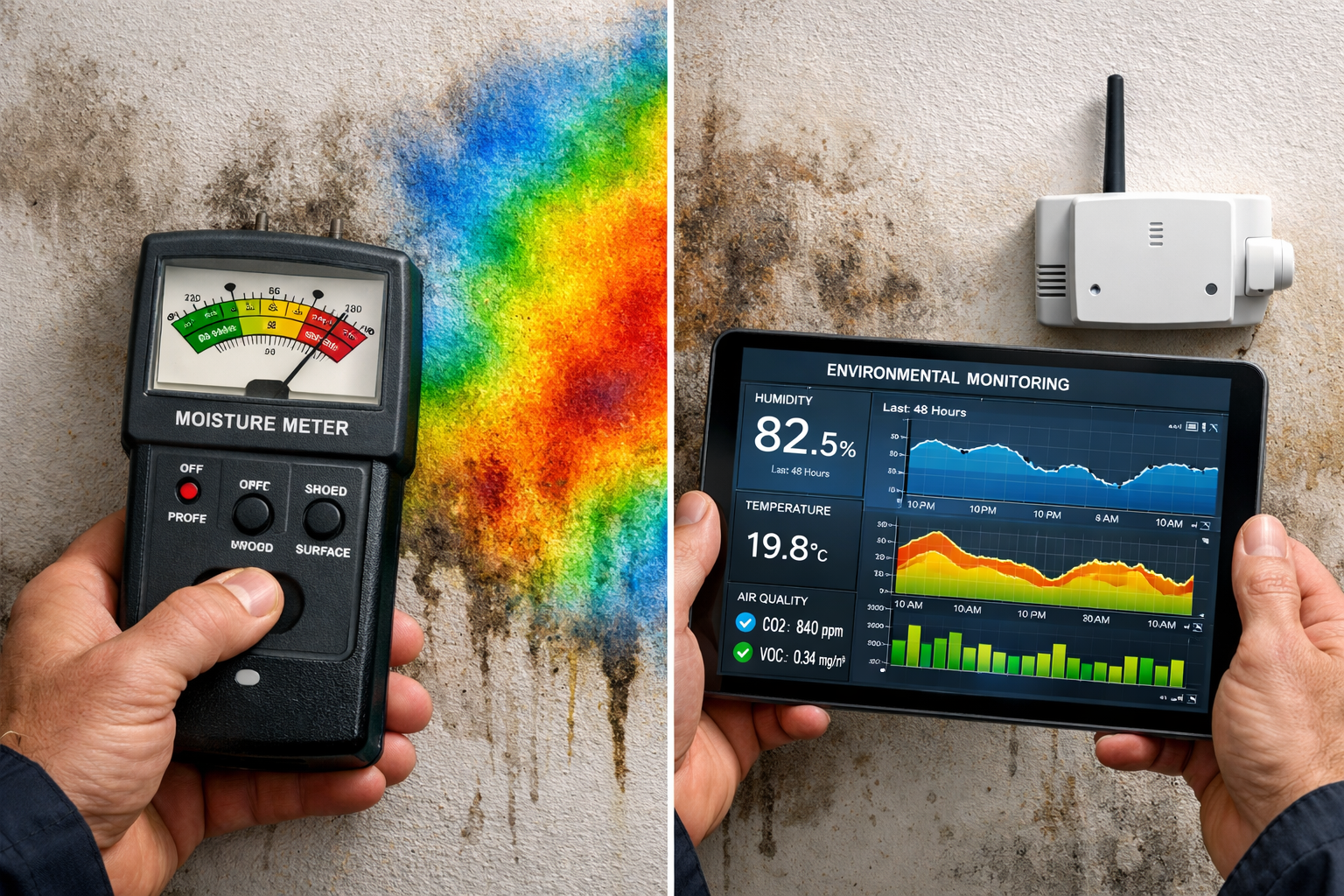
Real-time environmental sensors continuously measure and record multiple parameters simultaneously, transmitting data wirelessly to cloud-based platforms for instant analysis. Unlike traditional handheld moisture meters that provide single-point readings, these sensor networks capture:
- Relative humidity (RH%) at 5-minute intervals
- Temperature fluctuations across different building zones
- Air quality metrics including CO₂, VOCs, and particulate matter
- Dew point calculations indicating condensation risk
- Pressure differentials showing ventilation effectiveness
Research from Brown University demonstrates how continuous environmental monitoring provides insights that spot measurements cannot capture, particularly regarding temporal variations in building performance [4]. This approach has become the tipping point for professional property assessment in 2026, as the technology delivers actionable intelligence about building behavior under real-world conditions [2].
How Sensors Integrate with Traditional Level 3 Surveys
A Level 3 full building survey remains the most comprehensive pre-purchase inspection available, involving detailed examination of all accessible areas. The integration of environmental sensors enhances rather than replaces traditional surveyor expertise:
| Traditional Survey Components | Enhanced Sensor Integration |
|---|---|
| Visual inspection of damp evidence | 48-72 hour continuous humidity monitoring |
| Handheld moisture meter readings | Wireless sensor network across multiple zones |
| Thermal imaging at survey visit | Temperature tracking revealing thermal bridging patterns |
| Ventilation assessment observation | Air quality and CO₂ monitoring showing ventilation effectiveness |
| Condensation risk evaluation | Real-time dew point calculation and risk alerts |
Surveyors deploy sensor nodes during the initial site visit, allowing devices to collect data throughout the survey period. This extended monitoring period captures environmental conditions during different times of day and weather patterns, providing a more complete picture of building performance and potential issues.
The Technology Behind Modern Building Sensors
The environmental monitoring systems used in 2026 building surveys leverage several technological advances:
🔹 Wireless Mesh Networks: Sensors communicate with each other and central hubs without requiring property WiFi, ensuring deployment flexibility in vacant properties.
🔹 Multi-Parameter Sensing: Single compact devices measure humidity, temperature, air pressure, and air quality simultaneously, reducing equipment complexity.
🔹 Cloud Analytics: Automated algorithms identify anomalies, compare readings against healthy building benchmarks, and flag potential defects for surveyor attention.
🔹 Battery Longevity: Modern sensors operate for 6-12 months on single battery charges, though survey deployments typically last 2-4 days.
🔹 Calibration Accuracy: Professional-grade sensors maintain ±2% RH accuracy and ±0.3°C temperature precision, meeting RICS standards for building assessment.
IoT-based environmental monitoring has evolved significantly, with systems now capable of detecting subtle changes that indicate developing problems before visible damage occurs [5]. This predictive capability transforms surveys from reactive documentation to proactive risk assessment.
Detecting Damp and Performance Issues Pre-Purchase with Sensor Technology
Identifying Hidden Moisture Problems
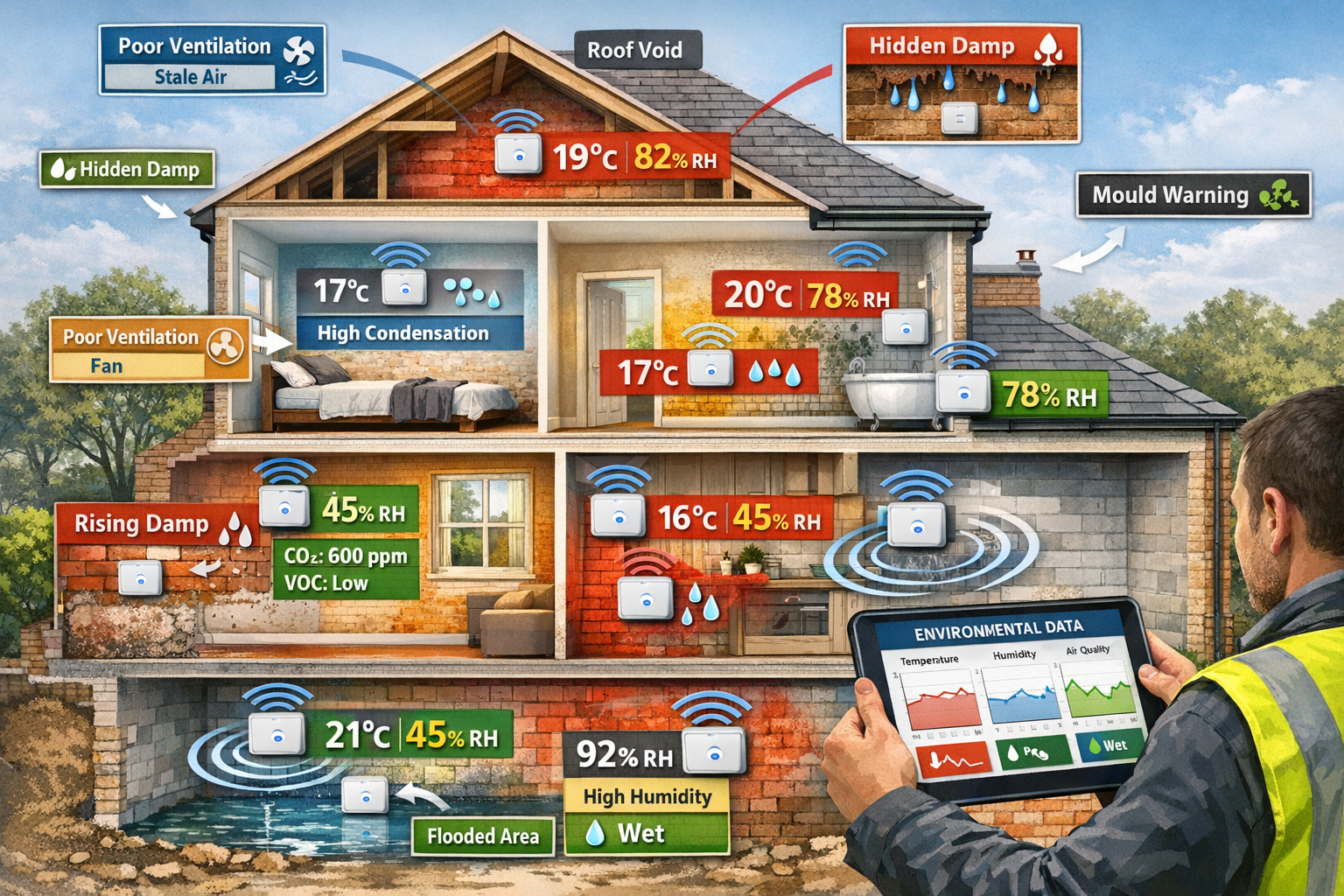
Damp represents one of the most expensive and damaging defects in UK properties, yet traditional surveys struggle to detect intermittent or concealed moisture issues. Real-time sensors address this limitation through continuous monitoring that reveals:
Rising Damp Indicators: Ground floor sensors showing consistently elevated RH% (above 70%) near wall-floor junctions, particularly in properties lacking damp-proof courses.
Penetrating Damp Patterns: Humidity spikes in specific zones during rainfall events, indicating defective pointing, failed flashings, or compromised roof coverings.
Condensation Hotspots: Areas where temperature drops below dew point during evening hours, creating conditions for surface condensation and mold growth.
Concealed Leaks: Gradual humidity increases in ceiling voids or behind fixtures suggesting slow plumbing leaks or roof penetration.
The environmental issues section of Level 3 surveys benefits enormously from this data, as surveyors can correlate sensor readings with visual evidence to determine defect severity and remediation urgency.
Awaab's Law Compliance and Mold Risk Assessment
Following the tragic death of two-year-old Awaab Ishak from prolonged mold exposure, Awaab's Law now requires social housing providers to address reported damp and mold within strict timeframes. While the legislation specifically targets social housing, the heightened awareness has influenced all property sectors, with buyers increasingly concerned about mold risks.
Real-time environmental sensors provide objective evidence regarding mold risk through:
- Sustained high humidity monitoring (RH% above 60% for extended periods)
- Poor ventilation detection via CO₂ accumulation and air stagnation
- Thermal bridging identification showing cold spots prone to condensation
- Seasonal variation tracking revealing winter condensation patterns
Properties showing sensor data indicating elevated mold risk face valuation adjustments reflecting remediation costs, which typically include:
✅ Ventilation system upgrades (£2,000-£8,000)
✅ Insulation improvements (£3,000-£15,000)
✅ Damp-proofing works (£1,500-£25,000 depending on extent)
✅ Mold remediation and redecoration (£500-£5,000)
This evidence-based approach to urgent or dangerous building issues protects buyers from purchasing properties with serious health hazards.
Thermal Performance and Energy Efficiency Verification
Beyond damp detection, environmental sensors reveal thermal performance defects that impact energy costs and occupant comfort:
Inadequate Insulation: Temperature sensors in roof spaces showing minimal thermal resistance, with internal temperatures closely tracking external conditions.
Air Leakage Points: Pressure differential monitoring identifying uncontrolled ventilation through gaps, cracks, and poor sealing.
Heating System Inadequacy: Temperature recovery rates after heating cycles indicating undersized or inefficient systems.
Thermal Bridging: Cold spots at structural junctions causing heat loss and condensation risk.
This data correlates directly with EPC ratings and future energy costs. Properties showing poor thermal performance through sensor data often justify price negotiations reflecting the £8,000-£25,000 cost of comprehensive insulation and heating upgrades. Understanding the relationship between EPC ratings and building surveys helps buyers assess long-term ownership costs.
Ventilation Effectiveness Analysis
Proper ventilation prevents condensation, removes pollutants, and maintains healthy indoor environments. Environmental sensors assess ventilation performance through:
CO₂ Monitoring: Elevated levels (above 1,000 ppm) indicate inadequate air exchange rates, particularly problematic in bedrooms and living spaces.
Humidity Dissipation Rates: Tracking how quickly RH% decreases after moisture-generating activities (cooking, bathing) reveals ventilation effectiveness.
Air Quality Metrics: VOC and particulate matter readings showing pollutant accumulation from building materials, furnishings, or external sources.
Pressure Relationships: Monitoring pressure differentials between rooms and outside indicating natural ventilation pathways and mechanical system performance.
Properties built or renovated with improved airtightness often suffer ventilation deficiencies unless mechanical ventilation with heat recovery (MVHR) systems were installed. Sensor data revealing these issues supports budgeting for repairs and restoration requirements.
Implementing Real-Time Environmental Sensors in Level 3 Building Surveys: Detecting Damp and Performance Issues Pre-Purchase
Sensor Deployment Protocols for Comprehensive Coverage
Professional deployment of environmental sensors follows systematic protocols to ensure comprehensive building assessment:
🎯 Strategic Placement Locations:
- Ground floor rooms near external walls (rising damp detection)
- Bathrooms and kitchens (condensation and ventilation assessment)
- Bedrooms (occupancy-related humidity and air quality)
- Roof spaces and loft areas (thermal performance and ventilation)
- Basements and cellars (moisture ingress monitoring)
- Behind large furniture or fixtures (concealed damp detection)
📊 Monitoring Duration:
Standard Level 3 surveys with sensor integration typically involve 48-72 hours of continuous monitoring, capturing at least one full day-night cycle and ideally including varied weather conditions. Extended monitoring periods (5-7 days) may be specified for properties with suspected intermittent issues or seasonal variations.
🔧 Installation Considerations:
Sensors must be positioned away from direct heat sources, windows, and doors to avoid skewed readings. Wireless mesh networks require strategic hub placement for reliable data transmission. Battery levels should be verified before deployment, and backup power options considered for extended monitoring periods.
Data Interpretation and Report Integration
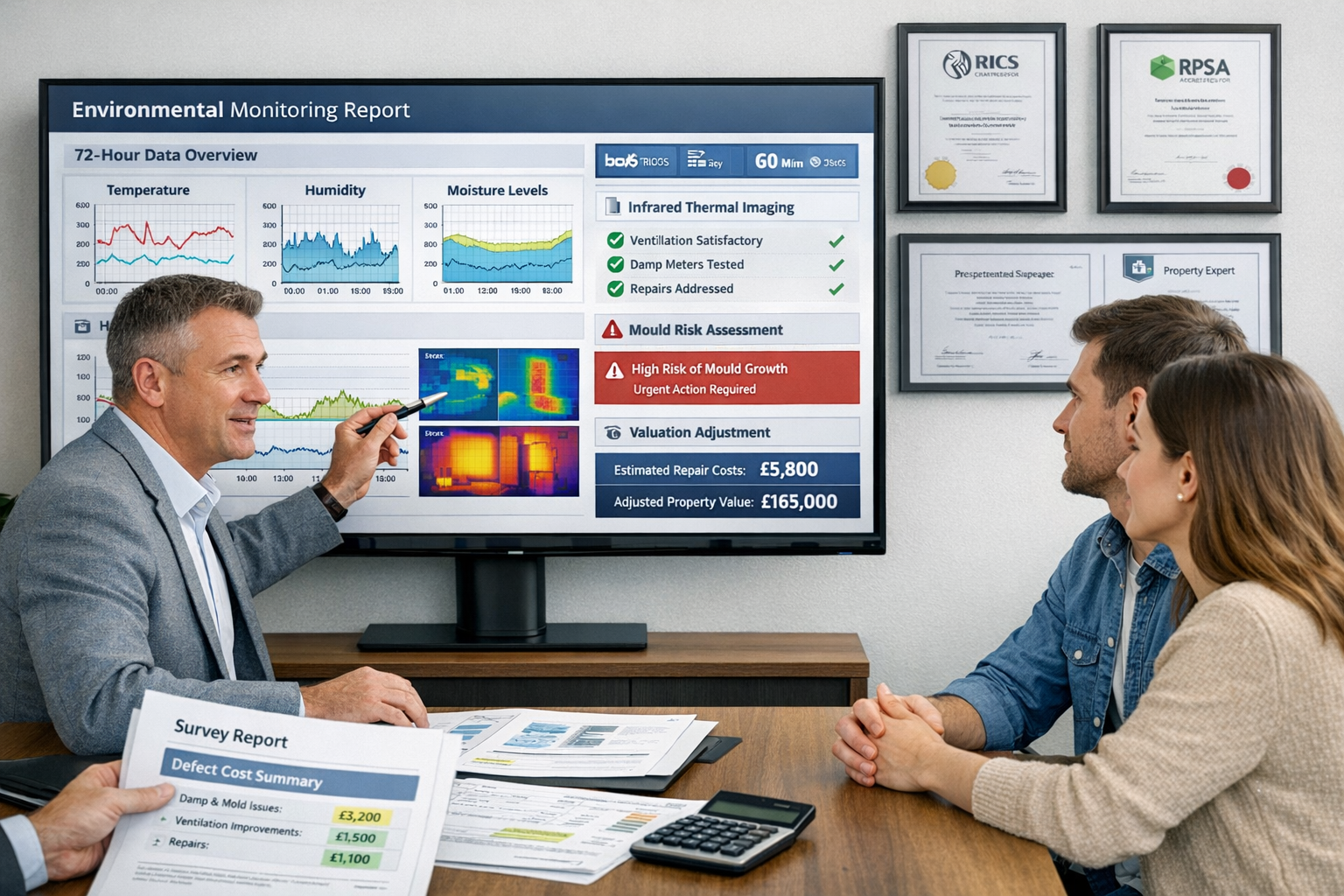
The value of sensor data depends entirely on expert interpretation within the broader survey context. Chartered surveyors analyze environmental monitoring results alongside traditional inspection findings to develop comprehensive assessments:
Baseline Comparison: Sensor readings are compared against healthy building benchmarks (typically 40-60% RH, 18-21°C temperature, CO₂ below 1,000 ppm) to identify deviations.
Temporal Pattern Analysis: Time-series graphs reveal daily cycles, weather correlations, and occupancy impacts that indicate specific defect types.
Spatial Variation Mapping: Comparing readings across different building zones identifies localized problems versus systemic issues.
Correlation with Visual Evidence: Sensor data confirming or contradicting visual observations helps determine whether apparent defects are active, historical, or seasonal.
Modern survey reports incorporate sensor data through:
- Executive summaries highlighting key environmental findings
- Time-series graphs showing humidity and temperature trends
- Heat maps visualizing problem zones across floor plans
- Risk assessments quantifying mold, condensation, and thermal performance concerns
- Remediation recommendations with cost estimates based on objective data
This evidence-based approach strengthens the construction and condition survey components of Level 3 reports, providing buyers with defensible negotiation positions.
Cost-Benefit Analysis for Buyers
The integration of environmental sensors into Level 3 surveys represents additional investment, but the cost-benefit calculation strongly favors adoption:
Typical Cost Additions:
- Sensor deployment and monitoring: £200-£400
- Extended data analysis and reporting: £150-£300
- Total additional cost: £350-£700
Potential Savings and Benefits:
- Average price reduction negotiated from sensor evidence: £5,000-£15,000
- Avoided post-purchase remediation surprises: £10,000-£30,000
- Reduced risk of purchasing uninhabitable properties: Priceless
- Objective evidence for mortgage valuation adjustments
- Peace of mind regarding building health and performance
For properties valued above £400,000, particularly period buildings or those with known risk factors, the £350-£700 investment delivers exceptional return through enhanced negotiating power and risk mitigation. Buyers can reference the average price reduction after survey to understand typical outcomes.
Choosing Surveyors with Sensor Capability
Not all surveying practices have adopted environmental sensor technology in 2026, despite its growing importance. Buyers should seek surveyors offering:
✅ Certified training in environmental monitoring interpretation
✅ Professional-grade equipment meeting RICS standards
✅ Comprehensive reporting integrating sensor data with traditional findings
✅ Experience with similar properties in your target area
✅ Clear methodology explaining sensor placement and duration
✅ Follow-up consultation to discuss findings and implications
When comparing surveying options, understanding the difference between Level 2 and Level 3 surveys helps clarify why comprehensive Level 3 assessments with sensor integration provide superior value for complex or older properties.
Regulatory and Professional Standards
The integration of environmental monitoring into building surveys operates within established professional frameworks:
RICS Standards: The Royal Institution of Chartered Surveyors provides guidance on appropriate technology use in building surveys, emphasizing that sensors supplement rather than replace professional judgment.
Data Accuracy Requirements: Environmental sensors used in professional surveys must meet calibration standards ensuring measurement reliability and repeatability.
Privacy Considerations: Sensor deployment in occupied properties requires owner consent and data protection compliance, with monitoring limited to environmental parameters rather than occupancy detection.
Report Disclaimers: Survey reports must clearly explain sensor methodology, monitoring duration, and limitations, ensuring buyers understand the evidence basis.
Environmental monitoring systems continue to evolve, with 2026 representing a tipping point where the technology has become sufficiently mature, affordable, and standardized for mainstream adoption in property surveys [2].
Future Developments in Building Survey Technology
The trajectory of environmental monitoring in building surveys points toward several emerging developments:
🔮 Artificial Intelligence Integration: Machine learning algorithms will increasingly analyze sensor data patterns, automatically identifying defect signatures and predicting future problems based on current conditions.
🔮 Extended Monitoring Services: Post-purchase sensor networks allowing homeowners to track building performance continuously, detecting developing issues before they become serious.
🔮 Integrated Sensor Platforms: Combining environmental monitoring with structural movement sensors, moisture probes, and acoustic monitoring for comprehensive building health assessment.
🔮 Blockchain Verification: Immutable records of sensor data providing tamper-proof evidence for legal disputes and insurance claims.
🔮 Augmented Reality Reporting: Survey reports overlaying sensor data onto 3D building models, allowing buyers to visualize problem areas interactively.
These developments will further enhance the value proposition of technology-enhanced building surveys, making Real-Time Environmental Sensors in Level 3 Building Surveys: Detecting Damp and Performance Issues Pre-Purchase the standard rather than the exception.
Conclusion
Real-Time Environmental Sensors in Level 3 Building Surveys: Detecting Damp and Performance Issues Pre-Purchase represents a fundamental advancement in property assessment methodology. By capturing continuous environmental data rather than relying solely on snapshot observations, sensor-enhanced surveys provide buyers with objective evidence of building performance, damp risks, and potential defects that traditional inspections frequently miss.
The integration of this technology addresses critical buyer concerns in 2026, particularly regarding Awaab's Law compliance, mold risks, and thermal performance. The £350-£700 investment in sensor-enhanced surveys delivers exceptional value through stronger negotiating positions, avoided remediation surprises, and peace of mind regarding building health.
Next Steps for Property Buyers
1. Specify sensor integration when commissioning your Level 3 survey, particularly for properties built before 1980 or showing any visual damp indicators.
2. Review sensor methodology with your surveyor before deployment, ensuring adequate coverage of risk areas and sufficient monitoring duration.
3. Request comprehensive data presentation including time-series graphs, spatial heat maps, and clear interpretation of findings within survey reports.
4. Use sensor evidence strategically during price negotiations, presenting objective data supporting valuation adjustments for identified defects.
5. Consider extended monitoring for properties with borderline findings, allowing seasonal variations or weather events to reveal intermittent issues.
The evolution of building survey technology empowers buyers with unprecedented insight into property condition and performance. By embracing environmental sensor integration within comprehensive Level 3 building surveys, purchasers can make informed decisions backed by objective evidence, protecting their investment and ensuring their future home meets health, performance, and comfort expectations.
For expert guidance on sensor-enhanced Level 3 surveys and comprehensive pre-purchase property assessment, contact experienced chartered surveyors who can tailor monitoring strategies to your specific property and concerns.
References
[1] How Brown Researchers Are Using Sensors To Understand The Environment In Real Time – browndailyherald.com
[2] Why 2026 Is The Tipping Point For Real Time Environmental Monitoring – eco-rentalsolutions.com
[3] Environmental Monitoring – mfe-is.com
[4] Flood Sensors Rhode Island – brown.edu
[5] Iot Based Environmental Monitoring – digi.com