

Approximately 11 million renters across England face a fundamental shift in their housing rights as of May 2026, when landlords can no longer enforce blanket "no pets" policies without justification[1]. This seismic change under the Renters' Rights Act 2026 transforms how property professionals must approach Pet Permissions Under Renters' Rights Act 2026: Building Survey Protocols for Assessing Pet-Related Property Damage Risks. Chartered surveyors now require systematic methodologies to evaluate properties for pet-related vulnerabilities, creating defensible documentation that satisfies both landlord protection needs and the new statutory reasonableness tests.
The implications extend far beyond simple policy adjustments. With landlords facing mandatory 28-day response deadlines and potential Ombudsman sanctions for unreasonable refusals, property condition assessments must evolve from basic inventory checks to comprehensive risk evaluations. This article outlines RICS-compliant protocols that enable surveyors to conduct thorough pre-tenancy inspections, identify genuine structural and material vulnerabilities, and provide landlords with evidence-based guidance for pet permission decisions.
Key Takeaways
- Mandatory consideration requirement: Landlords must assess each pet request individually within 28 days, with refusals requiring specific property-based justification rather than blanket policies[1][2]
- Survey protocol evolution: Level 3 building surveys must now incorporate pet damage risk assessments covering flooring resilience, wiring accessibility, door frame integrity, and material vulnerability ratings
- Documentation standards: Pre-tenancy baseline surveys require photographic evidence, material specifications, and condition scoring to establish defensible damage attribution frameworks
- Ombudsman enforcement: From May 1, 2026, unreasonable refusals may result in binding compensation orders, making robust survey evidence essential for landlord protection[1]
- Insurance alignment: Survey findings must integrate with landlord insurance requirements, as standard policies may exclude or limit pet-related damage coverage
Understanding Pet Permissions Under Renters' Rights Act 2026: The Legislative Framework
The Renters' Rights Act 2025, with implementation beginning May 2026, fundamentally restructures the legal relationship between tenants, pets, and rental properties[1]. This legislative shift eliminates the longstanding practice of categorical pet prohibitions, replacing it with a duty to reasonably consider requests.
The End of Blanket Pet Bans
Prior to this legislation, landlords routinely included "no pets" clauses in tenancy agreements without obligation to reconsider. Under the new framework, even properties advertised as "no pets" must accept and fairly evaluate tenant requests[2]. This represents a significant departure from established practice, requiring landlords to demonstrate specific, property-related reasons for any refusal.
Service animals receive absolute protection under the Act, with no circumstances permitting their exclusion[2]. This unconditional right extends beyond traditional guide dogs to include emotional support animals and other recognized assistance animals.
The 28-Day Assessment Window ⏰
Landlords face strict procedural requirements when receiving pet requests:
- Initial response deadline: 28 days from request receipt
- Extended timeline option: Additional 7 days if requesting further information about the pet's size, breed, age, or training credentials[1]
- Written response requirement: Consent or refusal must be documented in writing with specific reasoning
This compressed timeline necessitates rapid property assessment capabilities. Landlords cannot afford prolonged deliberation or delayed survey scheduling when facing statutory deadlines.
Valid Grounds for Refusal
The legislation establishes specific circumstances where refusal may be considered reasonable[1]:
| Refusal Ground | Assessment Criteria |
|---|---|
| Property Unsuitable | Size, layout, or configuration incompatible with specific animal type |
| Superior Lease Prohibition | Head lease or freeholder covenant explicitly prohibits pets |
| Overcrowding Risk | Animal would contribute to statutory overcrowding thresholds |
| Safety/Regulatory Compliance | Specific animal poses documented safety hazards or regulatory violations |
Critically, refusals must reference particular circumstances rather than general policy positions. A surveyor's detailed assessment becomes the foundation for demonstrating reasonableness[3].
Financial Protection Limitations
The Act prohibits landlords from charging additional pet deposits beyond the standard one month's rent cap[2]. This restriction eliminates a traditional risk mitigation tool, placing greater emphasis on accurate property condition documentation and insurance arrangements.
Landlords should review their insurance policies to ensure appropriate coverage for pet-related damage, as standard landlord insurance may contain exclusions or limitations[1]. Survey reports should explicitly note any property features that might affect insurability.
Building Survey Protocols for Pet-Related Property Damage Risk Assessment
Implementing Pet Permissions Under Renters' Rights Act 2026: Building Survey Protocols for Assessing Pet-Related Property Damage Risks requires structured methodologies that extend beyond standard Level 3 full building survey practices. Surveyors must develop specialized assessment frameworks that evaluate properties through the lens of pet-related vulnerability.
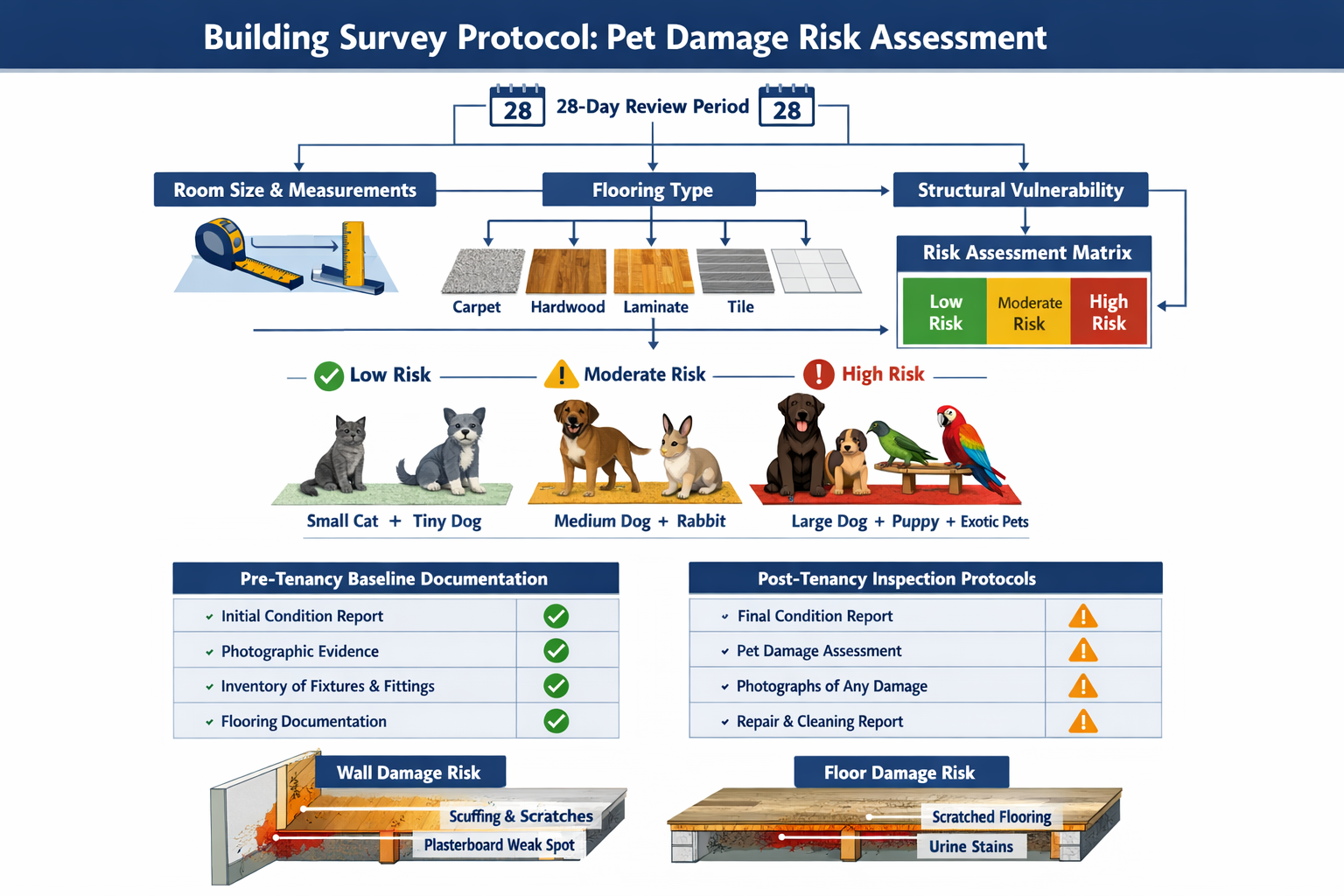
Pre-Tenancy Baseline Documentation
Establishing comprehensive baseline conditions proves essential for future damage attribution. This documentation must achieve forensic-level detail in areas most susceptible to pet-related wear.
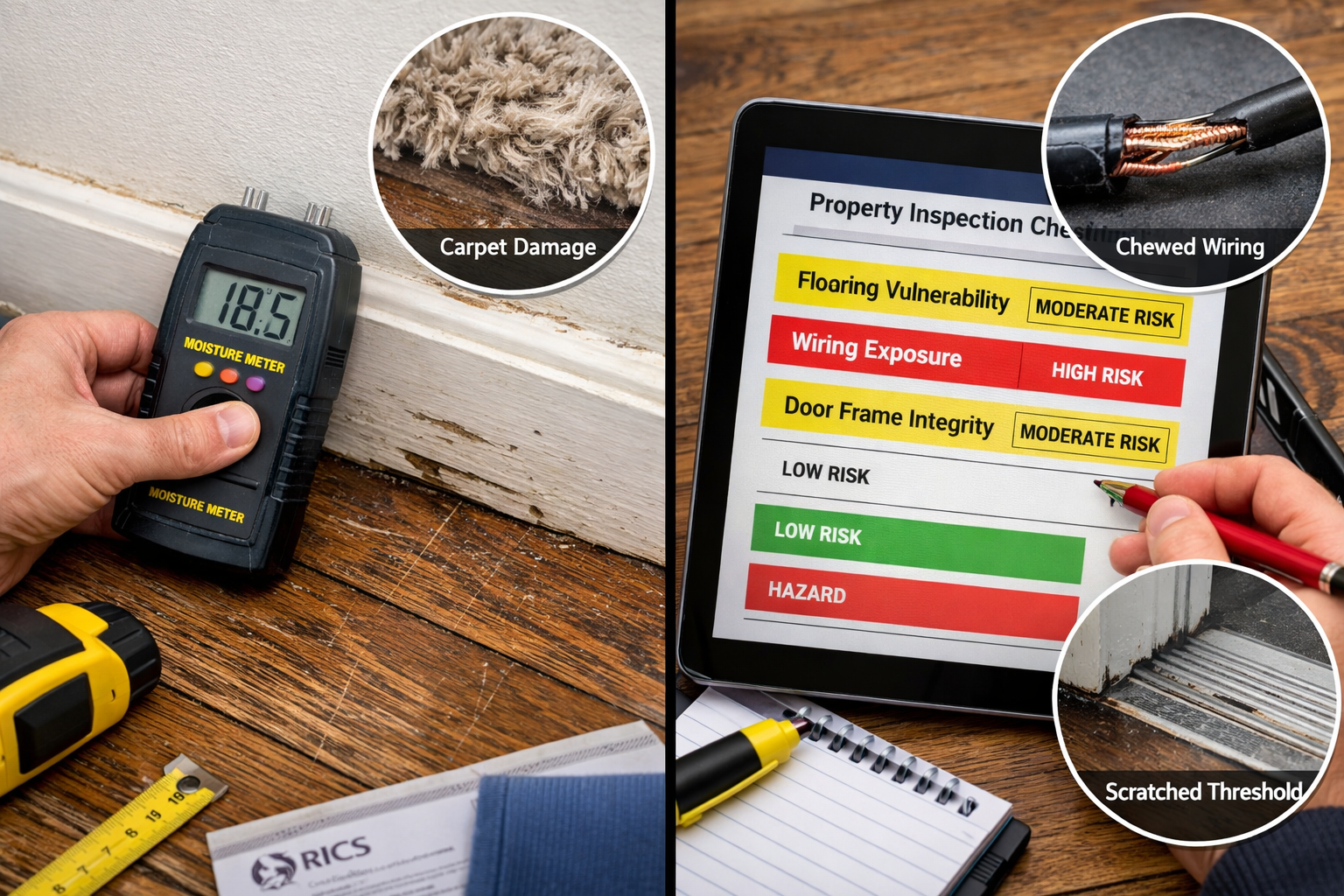
Flooring Assessment Protocol 🏠
Floor coverings represent the primary vulnerability zone for pet-related damage. Survey protocols should include:
- Material identification: Carpet type and quality grade, hardwood species and finish, laminate construction, tile composition and grout condition
- Existing condition scoring: Document scratches, stains, wear patterns, loose sections, or previous repairs with photographic evidence
- Vulnerability rating: Assign risk scores based on material resilience (e.g., engineered hardwood rates higher resistance than soft pine; commercial-grade carpet outperforms residential)
- Replacement cost estimation: Current market rates for like-for-like replacement of each floor covering
Professional surveyors should utilize building pathology expertise to distinguish pre-existing deterioration from potential future damage. This distinction becomes crucial in dispute resolution scenarios.
Door and Trim Inspection Framework
Doors, frames, and architectural trim suffer disproportionate impact from pet activity:
- Door surface examination: Document existing scratches, dents, or finish deterioration on both interior and exterior faces
- Threshold condition: Assess door bottom edges and threshold plates for wear or damage
- Frame integrity: Evaluate door jambs and casings for structural soundness and finish quality
- Hardware functionality: Test and document condition of handles, hinges, and closing mechanisms
Wiring and Cable Accessibility Review ⚡
Exposed wiring presents both damage risk and potential safety hazards:
- Baseboard cable routing: Identify any exposed telecommunications, television, or electrical cables along baseboards
- Appliance cord exposure: Document refrigerator, washing machine, and other appliance power cables that remain accessible
- Low-height outlets: Note electrical outlets positioned within 18 inches of floor level
- Safety compliance: Reference building regulation compliance testing standards for electrical installation adequacy
Room-by-Room Vulnerability Assessment
Different spaces present varying risk profiles based on typical pet access patterns and material specifications.
Living Areas and Bedrooms
- Carpet pile depth and density: Deeper, denser carpets resist matting and staining more effectively
- Wall surface finish: Washable paint or vinyl wallcoverings offer superior cleanability versus flat paint or paper wallcoverings
- Window treatment condition: Assess blinds, curtains, and hardware for existing damage and material durability
Kitchen and Utility Spaces
- Cabinet base condition: Lower cabinet kickplates and corners vulnerable to scratching and chewing
- Flooring water resistance: Evaluate whether kitchen flooring provides adequate moisture barrier against pet accidents
- Appliance gap accessibility: Measure and document spaces behind appliances where pets might access wiring or plumbing
Bathrooms
- Grout and sealant integrity: Compromised grout provides entry points for moisture from pet-related incidents
- Vanity base condition: Similar vulnerability to kitchen cabinets
- Ventilation adequacy: Proper ventilation reduces odor retention risk
Outdoor Spaces 🌳
For properties with gardens or patios:
- Fencing integrity: Assess boundary fencing for gaps, weak points, or areas requiring reinforcement
- Gate functionality: Test gate closures and latching mechanisms
- Surface condition: Document lawn, paving, or decking baseline condition
- Drainage adequacy: Evaluate whether drainage systems can handle increased waste material
Specialized Assessment Tools and Technologies
Modern survey technology enhances pet damage risk evaluation:
Moisture Detection Equipment
Moisture meters identify existing dampness that might indicate previous pet accidents or other water damage. Establishing baseline moisture readings in carpets, subflooring, and baseboards creates objective comparison points for future assessments.
Photographic Documentation Standards
Comprehensive photographic records should include:
- Wide-angle room views establishing overall condition
- Close-up detail shots of vulnerable areas (corners, thresholds, baseboards)
- Macro photography of existing damage or wear patterns
- Consistent lighting and perspective for comparison purposes
Premium drone surveys may prove valuable for properties with extensive gardens or complex roof structures where pets might cause damage.
Digital Annotation Systems
Modern survey software enables annotated floor plans with condition ratings, photographic references, and vulnerability scores attached to specific locations. This creates searchable, comprehensive documentation that supports both landlord decision-making and future dispute resolution.
Material Resilience Classification System
Developing standardized resilience ratings helps landlords understand relative risk levels:
Flooring Resilience Hierarchy (Most to Least Resistant)
- Ceramic or porcelain tile: Scratch-resistant, stain-resistant, easily cleaned
- Luxury vinyl plank (LVP): Good scratch resistance, waterproof, moderate cost
- Engineered hardwood: Moderate scratch resistance, refinishable, higher cost
- Laminate flooring: Poor moisture resistance, moderate scratch resistance
- Solid hardwood (soft species): Vulnerable to scratches, water-sensitive
- Commercial-grade carpet: Good stain resistance, durable construction
- Residential-grade carpet: Poor stain resistance, shows wear quickly
This classification system enables surveyors to provide landlords with objective vulnerability assessments rather than subjective opinions.
Implementing Pet Permissions Under Renters' Rights Act 2026: Practical Survey Protocols and Decision Frameworks
Translating legislative requirements and assessment methodologies into operational protocols requires structured decision frameworks that balance tenant rights with legitimate property protection concerns.
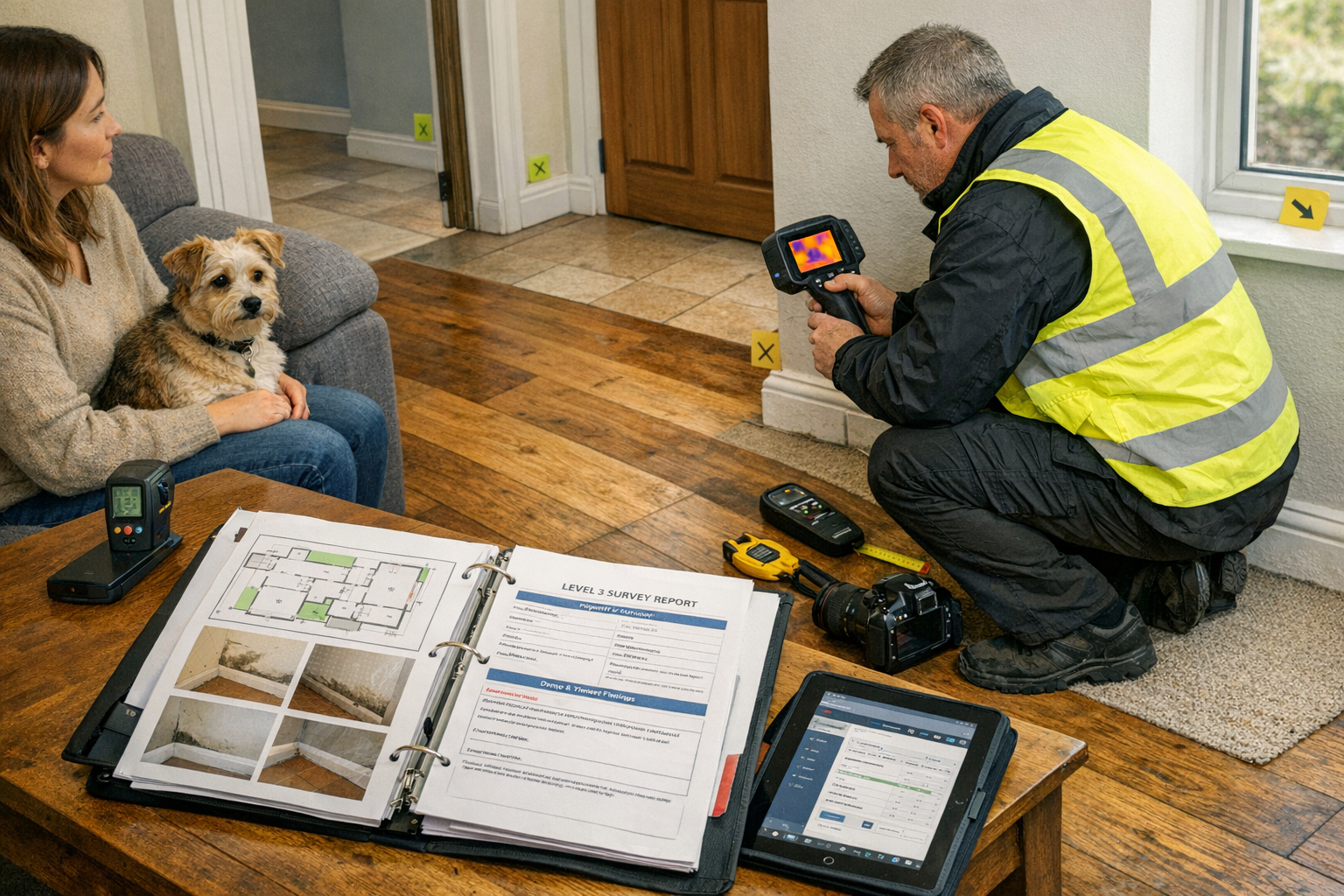
The Pet Request Evaluation Matrix
When landlords receive pet requests, surveyors should provide structured analysis across multiple dimensions:
Property Suitability Scoring
| Assessment Factor | High Suitability (3 points) | Moderate Suitability (2 points) | Low Suitability (1 point) |
|---|---|---|---|
| Floor Area | >100m² | 60-100m² | <60m² |
| Flooring Type | Tile/LVP throughout | Mixed resilient/carpet | Carpet throughout |
| Outdoor Access | Private garden | Shared garden/nearby park | No outdoor space |
| Floor Level | Ground floor | First/second floor | Third floor+ |
| Property Age | <10 years | 10-30 years | >30 years |
Pet Characteristics Assessment
The specific animal's characteristics significantly influence risk profiles:
- Size classification: Small (<10kg), medium (10-25kg), large (>25kg)
- Breed considerations: Some breeds exhibit higher activity levels or stronger chewing tendencies
- Age factors: Puppies/kittens require house-training periods; senior animals may have incontinence issues
- Training status: Documented training certificates reduce behavioral risk
Surveyors should note that breed-based discrimination may face legal challenges unless supported by specific property vulnerability evidence. For example, a large dog in a studio flat with delicate flooring presents demonstrable concerns, whereas the same dog in a ground-floor property with tile flooring and garden access may not[3].
Creating Defensible Refusal Documentation
When survey findings support refusal, documentation must establish clear causation between property characteristics and specific pet concerns. This protects landlords against Ombudsman challenges.
Essential Documentation Elements 📋
- Detailed property description: Room dimensions, floor coverings, layout constraints
- Specific vulnerability identification: "The property's original 1970s pine flooring throughout living areas shows existing wear and lacks protective finish, making it highly susceptible to scratch damage from large dog claws"
- Pet-specific risk analysis: "The requested 30kg Labrador's typical activity level and claw size present high probability of accelerated flooring deterioration"
- Photographic evidence: Current condition documentation supporting vulnerability claims
- Cost impact assessment: Estimated repair/replacement costs for identified vulnerable elements
- Alternative suggestions: Where possible, suggest modifications that might enable approval (e.g., tenant-funded floor protection installation)
This approach demonstrates the reasonableness requirement by showing property-specific analysis rather than blanket policy application[5].
Conditional Approval Frameworks
Many situations permit approval with reasonable conditions that mitigate identified risks:
Common Conditional Approval Structures
- Professional carpet cleaning requirement: Tenant commits to annual professional cleaning at tenancy end
- Damage deposit alternatives: While additional deposits are prohibited, tenants may voluntarily obtain pet damage insurance policies
- Access restrictions: Certain rooms (e.g., those with particularly valuable flooring) designated as pet-free zones
- Garden maintenance obligations: Tenant assumes responsibility for waste removal and lawn repair
- Regular inspection schedule: Agreement to periodic condition inspections (typically quarterly)
Surveyors should advise landlords that conditions must remain reasonable and proportionate. Overly burdensome requirements may themselves constitute unreasonable refusal[4].
Integration with Existing Survey Services
Pet damage risk assessment integrates naturally with established building survey services:
Pre-Tenancy Survey Enhancements
Standard pre-tenancy inventory services should now incorporate pet-specific assessment modules. This requires minimal additional time when conducted systematically but provides substantial additional value.
Mid-Tenancy Inspection Protocols
Where conditional approvals include periodic inspections, surveyors should maintain consistent documentation standards. Property inspection services can be adapted to include pet-specific condition monitoring.
End-of-Tenancy Damage Attribution
The baseline documentation established during pre-tenancy surveys becomes crucial for fair damage attribution. Surveyors must distinguish:
- Normal wear and tear: Expected deterioration from standard occupancy
- Pet-related wear: Accelerated deterioration attributable to pet presence but within reasonable expectations
- Excessive pet damage: Damage beyond reasonable expectations requiring tenant compensation
This three-tier classification system aligns with established dilapidation protocols while adapting to pet-specific scenarios.
Questions Surveyors Should Address During Assessment
When conducting pet damage risk surveys, surveyors should systematically address key evaluation questions. These align with broader building survey questioning frameworks while focusing on pet-specific concerns:
Structural and Material Questions 🔍
- What is the current condition and quality of all floor coverings?
- Are there existing damage patterns that might be exacerbated by pet activity?
- Does the property contain original or period features requiring special protection?
- Are there environmental issues (such as existing moisture problems) that pet activity might worsen?
- What is the accessibility of electrical wiring and other chewable materials?
Functional and Layout Questions
- Does the property layout provide adequate space for the requested pet size?
- Are there secure outdoor spaces or nearby facilities for pet exercise?
- Do door and window configurations allow safe pet containment?
- Are there shared spaces or common areas where pet access might create conflicts?
Regulatory and Insurance Questions
- Does the head lease or freeholder agreement contain pet restrictions?
- What are the current insurance policy terms regarding pet-related damage?
- Are there local authority restrictions on specific animal types?
- Does the property meet safety standards that pet presence might compromise?
Ombudsman Compliance and Evidence Standards
The Private Rented Sector Landlord Ombudsman, operational from May 1, 2026, will adjudicate disputes regarding unreasonable pet request refusals[1]. Understanding the evidence standards this body will likely apply helps surveyors provide appropriate documentation.
Anticipated Ombudsman Evaluation Criteria
Based on similar dispute resolution frameworks:
- Specificity: General concerns insufficient; evidence must reference particular property characteristics and specific pet attributes
- Proportionality: Refusal reasons must be proportionate to actual risk; minor vulnerabilities unlikely to justify refusal of small, well-trained animals
- Consistency: Landlords who approve some pet requests but refuse similar ones face heightened scrutiny
- Good faith: Evidence of genuine assessment rather than pretext for maintaining blanket ban
Surveyors should structure reports with these criteria in mind, providing landlords with documentation that withstands scrutiny.
Potential Remedies and Sanctions ⚖️
The Ombudsman possesses authority to:
- Require landlords to reconsider decisions
- Award compensation to tenants for unreasonable refusals
- Order remedial actions
- Publish decisions creating precedent guidance
Full enforcement powers are expected later in 2026 or 2027[1], but landlords should assume robust oversight from the outset.
Conclusion: Adapting Professional Practice for the New Regulatory Environment
The Renters' Rights Act 2026 fundamentally transforms how property professionals must approach pet permissions in rental properties. The shift from blanket prohibitions to case-by-case assessment creates both challenges and opportunities for chartered surveyors who develop robust Pet Permissions Under Renters' Rights Act 2026: Building Survey Protocols for Assessing Pet-Related Property Damage Risks.
Surveyors who implement systematic pre-tenancy assessment protocols position themselves as essential advisors in this new regulatory landscape. By providing landlords with detailed vulnerability analyses, defensible documentation, and evidence-based recommendations, property professionals protect their clients from both physical damage risks and regulatory sanctions.
The key principles for successful adaptation include:
✅ Systematic assessment methodologies that evaluate properties through pet-specific vulnerability lenses while maintaining RICS professional standards
✅ Comprehensive baseline documentation establishing objective condition records that enable fair damage attribution at tenancy end
✅ Balanced risk analysis that acknowledges legitimate landlord concerns while respecting tenants' new statutory rights
✅ Integration with existing services that enhances rather than disrupts established survey workflows
Actionable Next Steps
For Chartered Surveyors:
- Develop standardized pet damage risk assessment checklists and integrate them into existing Level 3 survey templates
- Invest in appropriate documentation technology (moisture meters, high-quality photography equipment, digital annotation software)
- Establish relationships with pet insurance providers and animal behavior specialists for referral purposes
- Create client education materials explaining the new legislative framework and survey protocol benefits
- Review professional indemnity insurance to ensure adequate coverage for pet-related assessment advice
For Landlords:
- Commission comprehensive pre-tenancy surveys for all properties before receiving pet requests
- Review insurance policies to understand pet-related damage coverage and exclusions
- Develop clear, property-specific pet policies based on survey findings rather than blanket prohibitions
- Establish relationships with surveyors experienced in pet damage risk assessment
- Document all pet request decisions with detailed reasoning supported by professional survey evidence
For Property Managers:
- Update tenant communication materials to reflect new pet request procedures and timelines
- Implement tracking systems ensuring 28-day response deadlines are consistently met
- Coordinate between landlords, tenants, and surveyors to facilitate efficient assessment processes
- Maintain centralized documentation repositories for baseline surveys and condition reports
- Monitor Ombudsman decisions as precedents develop to refine assessment approaches
The May 2026 implementation date represents not merely a compliance deadline but an opportunity to establish best practices that protect all stakeholders. Property professionals who proactively develop robust assessment methodologies will find themselves well-positioned to navigate this significant regulatory shift while delivering enhanced value to clients.
As the private rented sector adapts to accommodate the housing needs of pet-owning tenants, the role of professional surveyors becomes increasingly critical. Those who embrace this evolution with systematic protocols and evidence-based approaches will lead the industry through this transformative period.
References
[1] Renting With Pets – rentalbux.com
[2] The Right To Request Pets Under The Renters Rights Act – chaseevans.com
[3] Pet Friendly Tenancies How The Renters Rights Act 2025 Changes The Rules For Landlords – hunters.com
[4] New Pet Rules Under Renters Rights – secretpropertyclub.substack.com
[5] Pets In Rental Properties – nrla.org.uk