

As the UK property market experiences a 2-5% recovery in 2026, new build transactions are surging across recovering markets. However, this growth brings a critical challenge: managing Party Wall Surveys for 2026 New Build Snag Remediation: Managing Developer-Buyer Disputes. When boundary issues and construction defects intersect with party wall compliance, homebuyers and developers often find themselves in complex disputes that require expert surveyor mediation. Understanding how party wall legislation applies to snag remediation is essential for protecting property rights and ensuring satisfactory resolution. 🏘️
The intersection of new build snagging and party wall matters creates unique challenges in 2026. Unlike traditional party wall works where one owner initiates construction, snag remediation involves addressing developer-created defects that may affect shared boundaries. This dynamic shifts the typical party wall relationship and requires specialized knowledge to navigate effectively.
Key Takeaways
- Party wall surveys are essential when new build snags affect shared boundaries between properties, requiring formal notices under the Party Wall Act 1996
- Developer responsibility for snag remediation doesn't automatically exempt them from party wall procedures, creating potential dispute scenarios
- Early surveyor involvement can prevent escalation of boundary disputes, with typical party wall awards costing around £1,000[2]
- Documentation is critical for establishing defect timelines, protecting buyer interests, and supporting dispute resolution processes
- Professional mediation through chartered surveyors provides structured frameworks for resolving developer-buyer conflicts over boundary-related snags
Understanding Party Wall Surveys in New Build Contexts
What Makes New Build Party Wall Issues Different?
New build developments present unique party wall scenarios that differ significantly from traditional residential construction. When purchasing a newly constructed property, buyers often assume that all party wall matters have been properly addressed during the development phase. However, snag remediation work frequently reveals defects that require additional party wall consideration.
The Party Wall Act 1996 governs work on shared walls, boundaries, and excavations near neighboring properties[3]. In new build contexts, this legislation applies when:
- Remedial work affects the party wall structure between semi-detached or terraced properties
- Foundation repairs are required within three meters of an adjoining property
- Structural modifications are needed to correct construction defects
- Boundary disputes arise from misaligned walls or encroachments
The Role of Party Wall Surveyors in Snag Remediation
Party wall surveyors serve as impartial professionals who facilitate compliance with the Act and mediate between parties. In 2026 snag remediation scenarios, their role expands to include:
Assessment Functions:
- Documenting pre-existing conditions before remediation work begins
- Evaluating whether proposed snag fixes constitute notifiable party wall works
- Preparing condition schedules to protect all parties' interests
- Identifying potential boundary implications of remediation strategies
Mediation Responsibilities:
- Facilitating communication between developers and buyers
- Resolving disputes over responsibility for party wall procedure costs
- Ensuring compliance with statutory notice requirements
- Drafting party wall awards that protect both parties
According to industry data, party wall surveyor costs for 2026 range from £900-£2,700 depending on project complexity, with the Building Owner (typically the party conducting works) responsible for all reasonable costs[5]. For comprehensive guidance on building defects, review our building defects survey services.
Common Party Wall Issues in New Build Snag Lists
New build properties frequently exhibit specific party wall-related defects that require remediation:
| Defect Type | Party Wall Implication | Remediation Approach |
|---|---|---|
| Cracked party walls | Structural integrity concerns requiring notice | Underpinning or structural repairs with party wall award |
| Sound insulation failure | May require wall modifications | Installation of additional insulation layers |
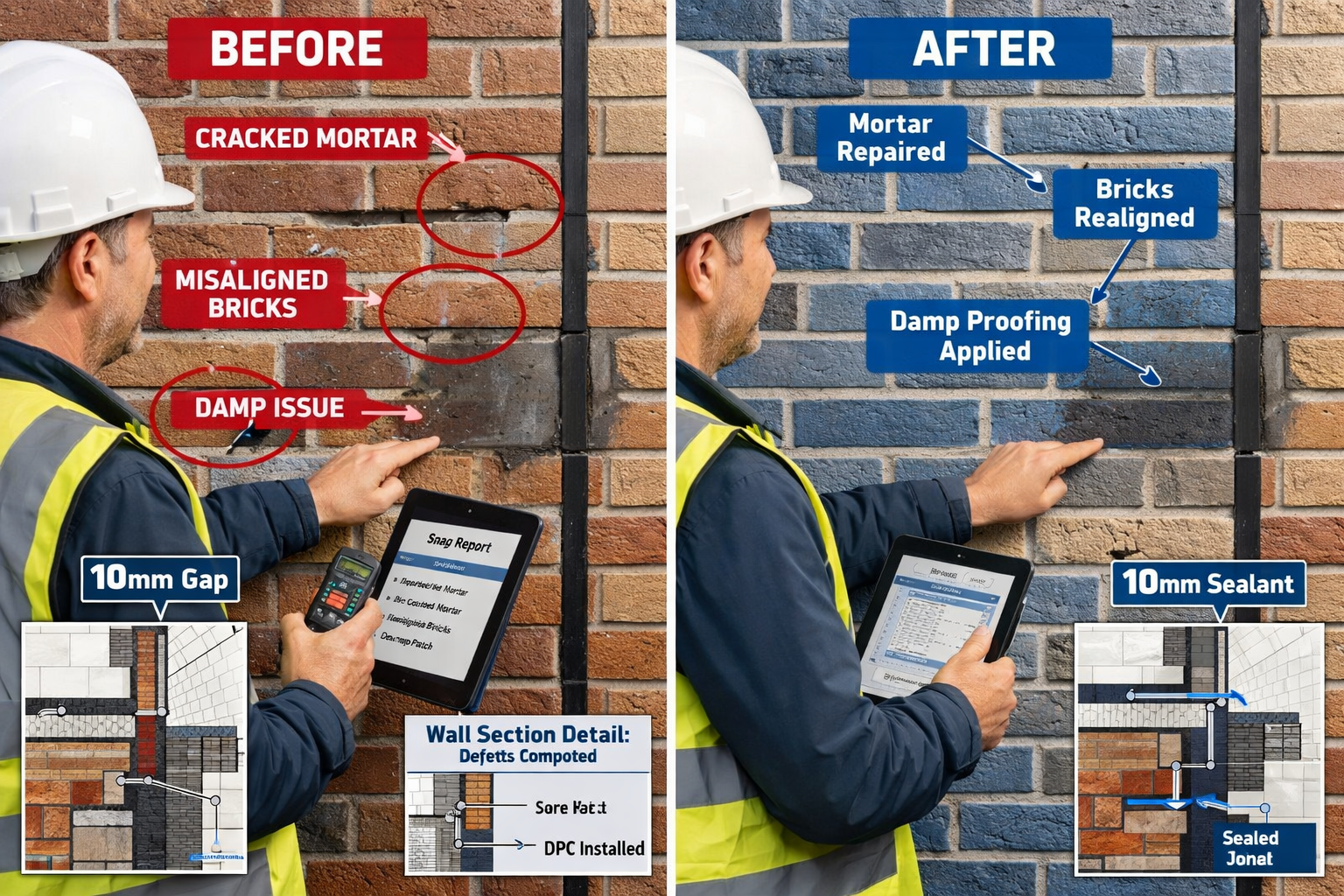
| Damp penetration through party walls | Potential for damage to both properties | Damp-proofing works with condition assessment |
| Misaligned party wall boundaries | Encroachment disputes | Surveyor-mediated boundary resolution |
| Inadequate fire resistance | Building regulation compliance issues | Upgrading fire barriers with formal notices |
Understanding these common issues helps buyers recognize when party wall procedures are necessary during snag remediation. For broader context on party wall disputes, professional guidance proves invaluable.
Managing Developer-Buyer Disputes Through Party Wall Frameworks
When Developers Resist Party Wall Compliance
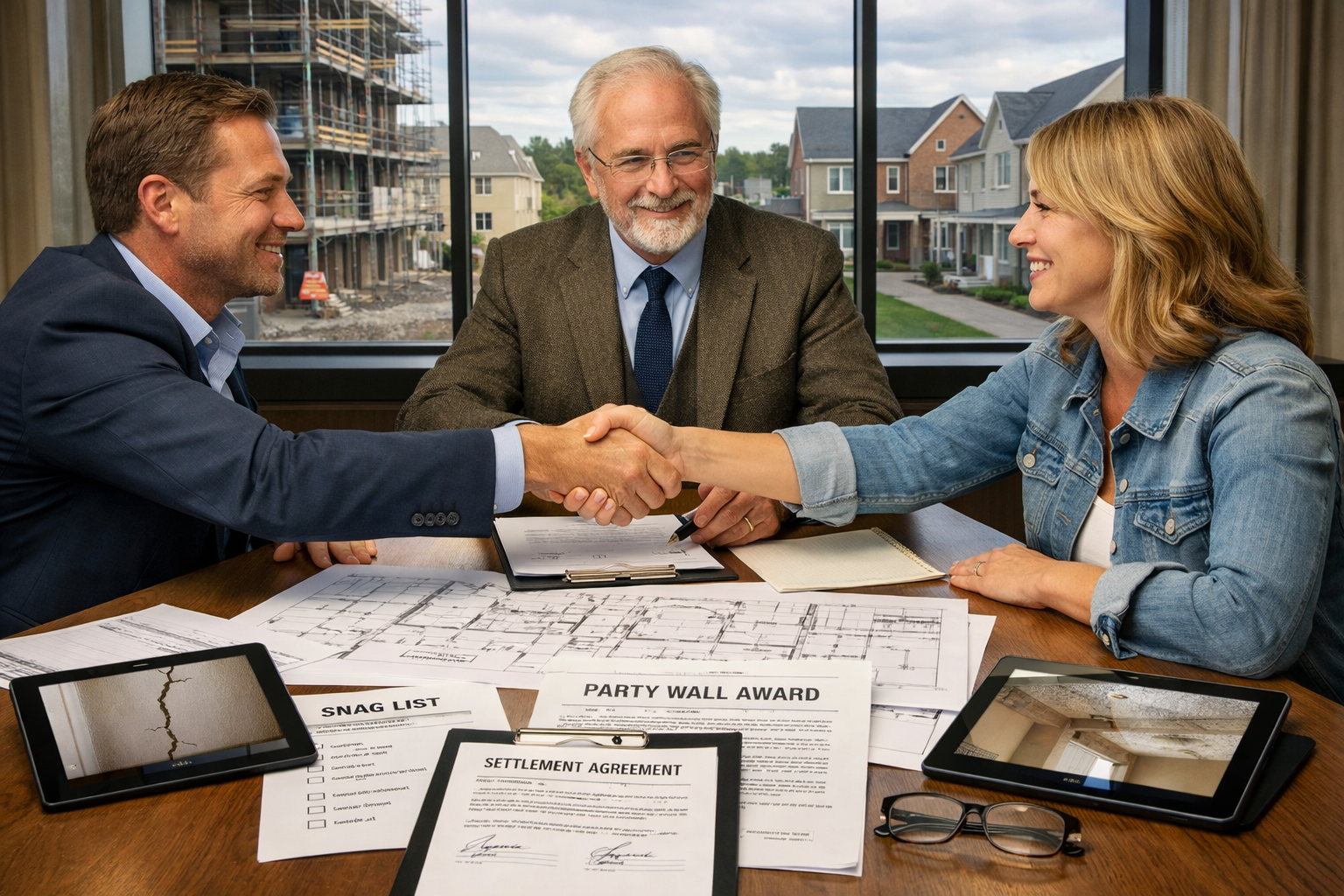
A significant challenge in 2026 involves developers who resist formal party wall procedures during snag remediation, often arguing that:
- Works are merely "repairs" not requiring notices
- Original construction approvals covered all necessary party wall matters
- Buyers should handle party wall procedures independently
- Remediation timelines don't accommodate statutory notice periods
These positions frequently lead to disputes that require professional intervention. The Party Wall Act 1996 is a civil matter between property owners, and local authorities are not normally involved[10]. This places the burden of enforcement on property owners themselves.
Establishing Developer Responsibility
Determining who bears responsibility for party wall procedures during snag remediation involves several considerations:
Legal Framework:
- Developers remain "Building Owners" under the Act when conducting remediation works
- The Act requires proper notices regardless of whether work addresses defects
- Failure to serve notices can result in legal action and injunctions
- Buyers have rights to appoint their own surveyors at developer expense
Contractual Considerations:
- New build warranties may specify dispute resolution procedures
- Purchase agreements might address party wall responsibility allocation
- NHBC or similar warranty provisions could impact dispute handling
- Developer obligations often extend beyond practical completion
"The Building Owner is typically responsible for all reasonable party wall surveyor costs, including fees for both the Building Owner's surveyor and the Adjoining Owner's surveyor when works are notifiable under the Act."[5]
Effective Dispute Resolution Strategies
Successfully resolving Party Wall Surveys for 2026 New Build Snag Remediation: Managing Developer-Buyer Disputes requires structured approaches:
1. Early Documentation 📋
- Compile comprehensive snag lists with photographic evidence
- Obtain independent building surveys identifying party wall concerns
- Document all communications with developers regarding defects
- Secure condition reports before any remediation commences
2. Professional Surveyor Engagement
- Appoint chartered surveyors experienced in both snagging and party wall matters
- Ensure surveyors understand new build warranty frameworks
- Request detailed assessments of whether defects require party wall notices
- Consider party wall awards to formalize agreements
3. Structured Communication
- Formally notify developers of party wall requirements in writing
- Reference specific Act provisions and defect implications
- Establish clear timelines for notice service and response
- Escalate through warranty providers if developers remain unresponsive
4. Alternative Dispute Resolution
- Engage third-party mediators before pursuing litigation
- Utilize warranty scheme dispute resolution services
- Consider adjudication for rapid determinations
- Explore settlement negotiations with surveyor facilitation
For complex cases requiring legal expertise, construction law advice provides essential support.
Cost Allocation in Dispute Scenarios
Understanding cost responsibilities helps manage expectations during disputes:
Typical Cost Structure:
- Party Wall Award preparation: £1,000 total average[2]
- Building Owner's surveyor: £900-£1,500 for straightforward cases[5]
- Adjoining Owner's surveyor: £900-£1,500 (Building Owner pays)[5]
- Complex dispute resolution: £2,000-£2,700+ for contentious matters[5]
When developers contest responsibility, buyers should:
- Maintain detailed cost records for potential recovery
- Understand that warranty claims may cover some surveyor fees
- Consider whether pursuing cost recovery justifies legal expenses
- Negotiate cost-sharing arrangements when appropriate
Practical Framework for Party Wall Surveys During 2026 Snag Remediation
Step-by-Step Process for Buyers
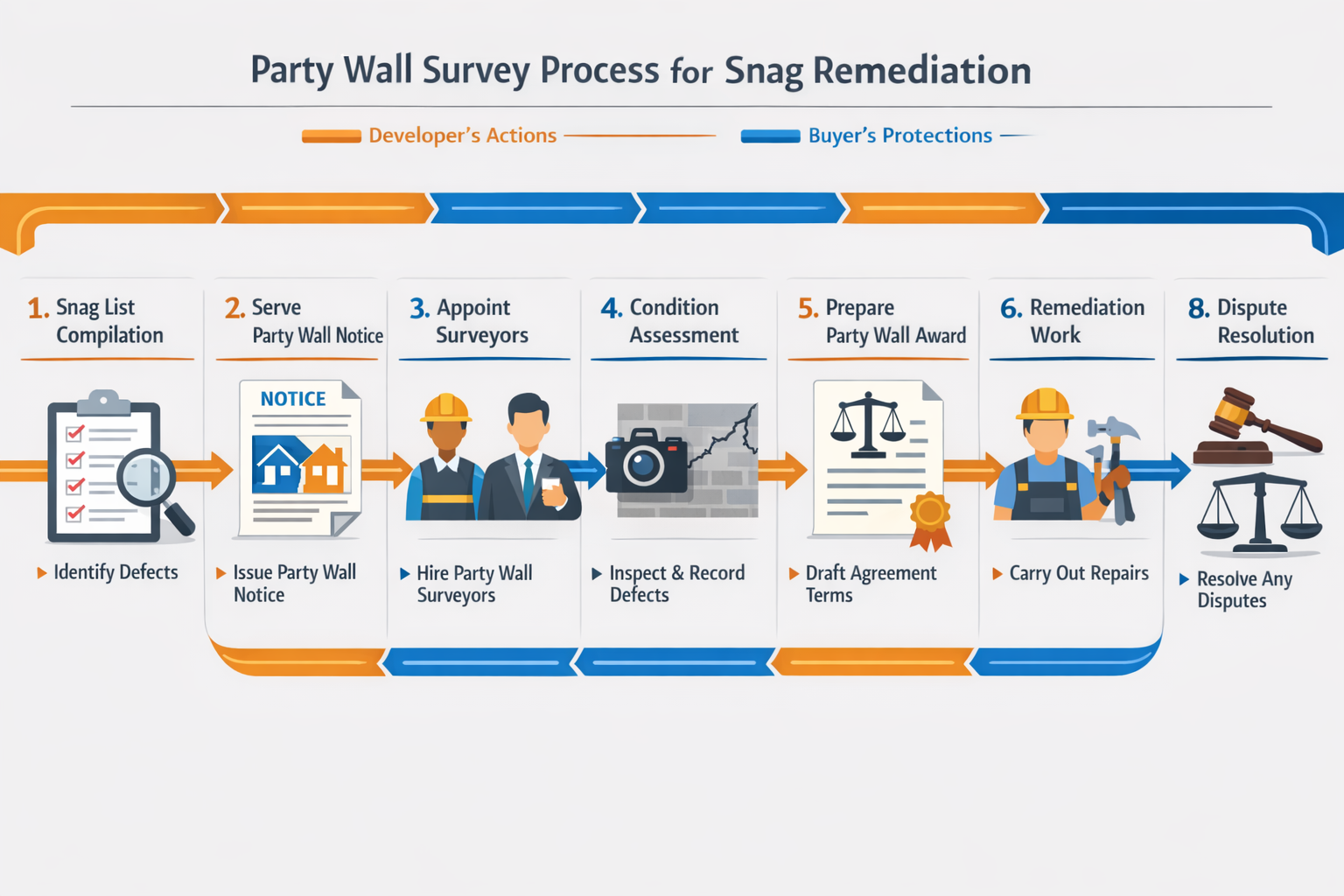
Navigating Party Wall Surveys for 2026 New Build Snag Remediation: Managing Developer-Buyer Disputes requires systematic approaches:
Phase 1: Initial Assessment (Weeks 1-2)
- Conduct thorough property inspection identifying all snags
- Determine which defects affect or involve party walls
- Review purchase documentation for party wall references
- Consult with chartered surveyors about notice requirements
Consider obtaining a Level 3 full building survey to identify all potential issues comprehensively.
Phase 2: Notice Preparation (Weeks 3-4)
- Engage party wall surveyor to prepare formal notices
- Serve notices on developers as "Building Owners"
- Provide detailed descriptions of required remediation works
- Allow statutory response periods (14 days for most notices)
Understanding common misconceptions about party wall agreements helps avoid procedural errors.
Phase 3: Award Negotiation (Weeks 5-8)
- Facilitate surveyor discussions about work scope and conditions
- Negotiate protective measures for adjoining properties
- Establish access arrangements and work schedules
- Finalize party wall award documentation
Phase 4: Work Execution and Monitoring (Weeks 9+)
- Ensure contractors comply with award conditions
- Conduct interim inspections during remediation
- Document work progress and any variations
- Complete final condition assessments
Developer Best Practices for Avoiding Disputes
Forward-thinking developers in 2026 can minimize party wall disputes through proactive measures:
Pre-Completion Strategies:
- Conduct comprehensive party wall assessments during construction
- Address potential boundary issues before handover
- Provide buyers with party wall documentation and condition reports
- Include clear party wall provisions in purchase agreements
Post-Completion Protocols:
- Establish dedicated snag remediation teams with party wall knowledge
- Respond promptly to buyer concerns about boundary-related defects
- Engage surveyors proactively when remediation requires notifiable works
- Maintain transparent communication throughout resolution processes
Risk Management:
- Budget for party wall costs in remediation reserves
- Train site managers on party wall compliance requirements
- Implement quality control measures to prevent party wall defects
- Develop standard operating procedures for dispute resolution
Regional Considerations Across UK Markets
The 2-5% market growth in 2026 affects different regions variably, influencing party wall dynamics:
High-Growth Areas:
- Increased new build activity in Southeast England and commuter belts
- Greater scrutiny of party wall compliance in competitive markets
- Higher surveyor demand leading to potential cost increases
- More sophisticated buyer awareness of party wall rights
Recovering Markets:
- Northern England and Midlands seeing renewed development
- Opportunities for establishing best practices in emerging markets
- Varying local surveyor availability affecting timelines
- Regional cost variations for party wall services
For location-specific expertise, consider consulting chartered surveyors in Hampshire or chartered surveyors in Berkshire depending on property location.
Technology and Documentation in 2026
Modern approaches to party wall surveys leverage technology for improved outcomes:
Digital Documentation:
- Photographic evidence with timestamp and location metadata
- 3D scanning for precise condition recording
- Cloud-based document management for all parties
- Digital signatures for award execution
Communication Platforms:
- Secure portals for surveyor-client communication
- Real-time updates on notice service and responses
- Collaborative platforms for multi-party negotiations
- Automated compliance tracking and deadline management
Analytical Tools:
- Building Information Modeling (BIM) for defect visualization
- Thermal imaging for identifying hidden party wall issues
- Structural analysis software for remediation planning
- Cost estimation tools for transparent fee structures
Preventive Measures and Long-Term Solutions
Pre-Purchase Due Diligence
Buyers can minimize party wall disputes by conducting thorough investigations before completing purchases:
Essential Inquiries:
- Request all party wall notices and awards from the development period
- Verify completion of party wall procedures with adjoining owners
- Obtain independent surveys identifying potential boundary issues
- Review building control approvals for party wall compliance
Understanding which building survey you need helps ensure appropriate due diligence levels.
Red Flags to Watch:
- Developers unable to provide party wall documentation
- Evidence of disputes with adjoining properties during construction
- Visible party wall defects during viewing appointments
- Rushed completion timelines suggesting inadequate procedures
Insurance and Warranty Considerations
Protecting against party wall-related snag disputes involves understanding coverage:
New Build Warranties:
- NHBC, Premier Guarantee, or similar schemes may cover certain party wall defects
- Structural issues affecting party walls typically covered for 10 years
- Dispute resolution services often included in warranty packages
- Limitations on coverage for boundary disputes versus structural defects
Legal Expenses Insurance:
- May cover costs of party wall dispute resolution
- Check policy terms for new build exclusions
- Consider specialist policies for property disputes
- Understand excess amounts and coverage limits
Industry Standards and Regulatory Developments
The 2026 landscape includes evolving standards affecting party wall practices:
Professional Standards:
- RICS guidance on party wall surveying continues to develop
- Increased emphasis on impartiality and conflict management
- Enhanced competency requirements for party wall surveyors
- Standardized fee structures improving transparency
Potential Regulatory Changes:
- Discussions around strengthening new build quality standards
- Proposals for mandatory pre-completion party wall certifications
- Enhanced consumer protection in developer-buyer relationships
- Integration of party wall compliance with building safety regimes
For insights into broader building survey standards, explore why RICS building surveys are essential.
Conclusion
Party Wall Surveys for 2026 New Build Snag Remediation: Managing Developer-Buyer Disputes represents a critical intersection of property law, construction quality, and consumer protection. As the UK property market recovers with 2-5% growth, the surge in new build transactions brings increased focus on proper party wall compliance during snag remediation. Understanding that party wall procedures remain necessary even when addressing developer-created defects empowers buyers to protect their interests effectively.
The key to successful dispute management lies in early professional engagement, comprehensive documentation, and structured communication frameworks. Party wall surveyors serve as essential mediators, providing impartial expertise that facilitates resolution while protecting all parties' rights. With typical party wall awards costing around £1,000[2] and surveyor fees ranging from £900-£2,700[5], the investment in proper procedures proves worthwhile compared to the costs and stress of unresolved disputes.
Actionable Next Steps
For buyers facing party wall issues during snag remediation:
- Document everything – Create comprehensive records of defects, communications, and conditions
- Engage chartered surveyors early – Don't wait until disputes escalate before seeking professional guidance
- Understand your rights – The Party Wall Act provides clear frameworks; familiarize yourself with its provisions
- Communicate formally – Use written notices and maintain professional correspondence with developers
- Leverage warranty schemes – Utilize dispute resolution services provided by NHBC and similar organizations
- Consider mediation – Explore alternative dispute resolution before pursuing costly litigation
For developers seeking to minimize disputes:
- Implement proactive party wall protocols during construction and remediation
- Budget appropriately for party wall compliance costs in project planning
- Train staff on party wall requirements and best practices
- Respond promptly to buyer concerns about boundary-related defects
- Engage surveyors early when remediation work may require notices
The recovering property market of 2026 presents opportunities for establishing higher standards in party wall compliance for new builds. By prioritizing proper procedures, transparent communication, and professional surveyor involvement, both developers and buyers can navigate snag remediation disputes effectively while protecting property values and relationships. 🏗️
For expert guidance on party wall matters and building surveys, consulting with qualified chartered surveyors ensures compliance, protects interests, and facilitates smooth dispute resolution in this complex area of property law.
References
[1] Party Wall Agreement – https://hoa.org.uk/advice/guides-for-homeowners/i-am-improving/party-wall-agreement/
[2] Party Wall Agreements What You Need To Know – https://www.fmb.org.uk/find-a-builder/ultimate-guides-to-home-renovation/party-wall-agreements-what-you-need-to-know.html
[3] Party Walls Building Works – https://www.gov.uk/party-walls-building-works
[4] Understanding Party Walls – https://www.oakfieldsurveyors.co.uk/party-wall/understanding-party-walls/
[5] Party Wall Surveyor Cost – https://hoa.org.uk/advice/guides-for-homeowners/i-am-improving/party-wall-surveyor-cost/
[6] The Party Wall Act Common Misunderstandings – https://www.peterbarry.co.uk/blog/the-party-wall-act-common-misunderstandings/
[7] Party Wall Act – https://southernbcp.co.uk/Homeowners/Party-Wall-Act
[8] Party Wall – https://wellingtonking.co.uk/party-wall/
[9] Party Wall Guide – https://www.squarepointsurveyors.co.uk/party-wall-guide/
[10] Party Wall – https://www.redbridge.gov.uk/planning-and-building/building-control/party-wall/