

Over 70% of loft conversion projects in England and Wales unknowingly trigger the Party Wall Act 1996 — and in Liverpool's surging 2026 property market, that figure is translating into a wave of disputes, delays, and costly legal complications for homeowners who failed to act early [6]. As affordability pressures push buyers toward older terraced and semi-detached stock across areas like Anfield, Wavertree, and Toxteth, the demand for rear extensions, loft conversions, and basement works has accelerated sharply. Understanding Party Wall Agreements in Liverpool's 2026 Property Boom: Surveyor Best Practices for Extension and Conversion Works is no longer a niche concern — it is a fundamental requirement for any building owner, neighbour, or chartered surveyor operating in the city's rapidly evolving construction landscape.
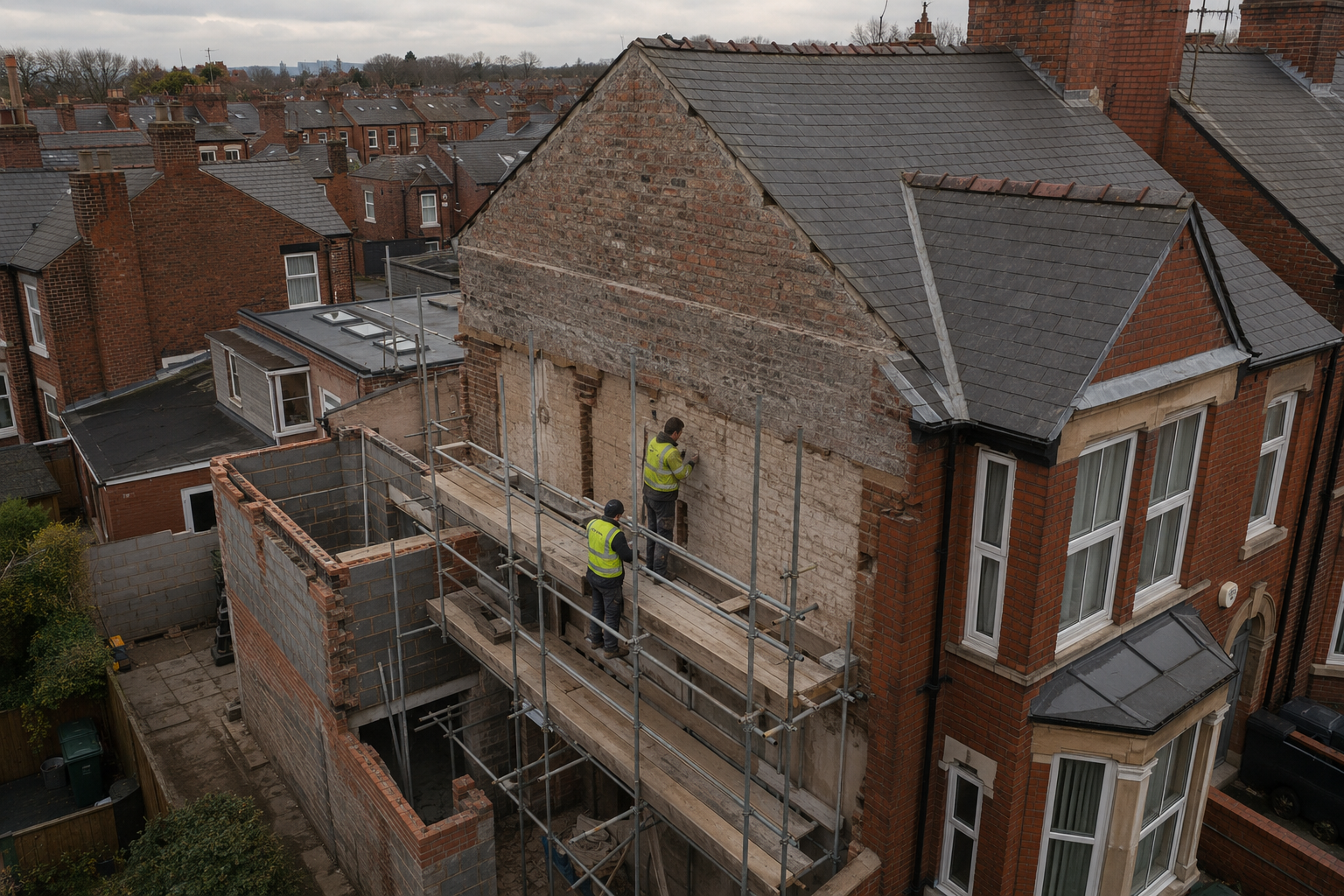
Key Takeaways
- The Party Wall etc. Act 1996 imposes strict notice obligations on building owners carrying out extensions, loft conversions, or excavation works near shared boundaries.
- Liverpool's 2026 construction market is experiencing steady tender price growth of 2-4%, making early party wall compliance even more critical to avoiding costly project delays [2].
- The RICS 8th Edition Party Wall Guidance, launched in April 2026, introduces updated notice templates, revised award drafts, and enhanced fee disclosure requirements that surveyors must implement immediately [1].
- When neighbours dissent, party wall surveyor costs can escalate to £1,500-£4,000 or more per neighbour, making proactive engagement the most cost-effective strategy [3].
- Surveyors must act with full statutory independence under the Act, balancing duties to their appointing party with obligations to resolve disputes fairly and professionally [7].
Liverpool's 2026 Property Boom and the Rise of Party Wall Disputes
Liverpool's housing market has undergone a structural shift in 2026. With property values in the city centre and inner suburbs rising steadily, homeowners are increasingly choosing to extend and convert existing properties rather than move. This "improve, don't move" trend is particularly pronounced across Liverpool's dense Victorian terraces, where semi-detached and mid-terrace houses share party walls with immediate neighbours on one or both sides.
According to a March 2026 report from Liverpool Chamber of Commerce, the city's construction market remains steady despite a broader national slowdown in project starts. Tender prices in the North West are projected to increase by 2% to 4% over the next 12 months, driven largely by persistent labour shortages and material cost pressures [2]. For homeowners planning extension or conversion works, this environment makes pre-construction compliance — including party wall procedures — more important than ever. Delays caused by disputed notices or improperly drafted awards can push projects into higher-cost tender windows.
The types of works most commonly triggering party wall obligations in Liverpool's 2026 market include:
- Rear single and double-storey extensions that require cutting into or building off a shared party wall
- Loft conversions involving structural modifications to party walls, including steel beam insertions and chimney stack alterations
- Basement conversions and excavations within three to six metres of a neighbour's foundations
- Garage conversions that involve works to a wall on or near the boundary line
For each of these project types, the Party Wall etc. Act 1996 sets out specific notice requirements, timelines, and procedures that building owners must follow before works commence [8].
Understanding the Legal Framework: What the Party Wall Act Requires
The Party Wall etc. Act 1996 creates a statutory framework governing works to shared walls, boundary walls, and excavations near neighbouring properties [8]. It applies across England and Wales and imposes obligations on the building owner — the party carrying out the works — to formally notify all adjoining owners before starting.
Three categories of notice apply under the Act:
| Notice Type | Trigger | Minimum Notice Period |
|---|---|---|
| Party Structure Notice | Works to a shared party wall or structure | 2 months |
| Line of Junction Notice | New wall built on or at the boundary | 1 month |
| Three Metre / Six Metre Notice | Excavation within 3m or 6m of neighbour's foundations | 1 month |
Once a notice is served, the adjoining owner has 14 days to respond. They may consent in writing, dissent and appoint their own surveyor, or fail to respond — in which case they are deemed to have dissented, triggering the surveyor appointment process automatically.
To understand your full rights and obligations under the legislation, the party wall rights guide from Prince Surveyors provides a thorough breakdown of what building owners and adjoining owners are each entitled to expect.
A common misconception is that planning permission or permitted development rights remove the need for party wall compliance. They do not. The Act operates entirely independently of planning law. For a fuller examination of misunderstandings that frequently delay projects, the five common misconceptions about party wall agreements resource is essential reading for both homeowners and professionals.
RICS 8th Edition Guidance: What Surveyors Must Do Differently in 2026
In April 2026, the Royal Institution of Chartered Surveyors launched a consultation for the 8th edition of its Party Wall Guidance, with immediate implementation expected across the profession [1]. This update represents the most significant revision to surveyor practice standards in several years and directly affects how party wall procedures are managed in Liverpool's active development market.

Key changes introduced by the 8th Edition include:
- Enhanced appendices providing clearer guidance on complex scenarios such as basement excavations and structural alterations
- Revised letters of appointment with updated fee disclosure requirements to ensure transparency from the outset
- Updated draft award templates that reflect contemporary construction methods and technical standards
- Stronger emphasis on surveyor independence, reinforcing that a party wall surveyor's statutory appointment is personal and independent of instructions from the appointing party [7]
Surveyors operating in Liverpool should treat the 8th Edition as an immediate audit trigger. Notice templates, award drafts, and fee disclosure documents should all be reviewed and updated to reflect the new standards before they are used on live projects.
The RICS is explicit that compliance with the Act alone is not sufficient. Ethical conduct, professional behaviour, and adherence to RICS Rules of Conduct are equally required [7]. Surveyors who act with bias toward their appointing party — whether building owner or adjoining owner — risk challenge under both the Act and professional disciplinary procedures [9].
"Once appointed under the Act, surveyors have a statutory duty to resolve disputes pursuant to section 10, in addition to their duties to their client." — RICS, Fair Principles for Party Walls [9]
This principle is especially important in Liverpool's 2026 market, where rising project volumes and tight timelines can create pressure on surveyors to favour speed over rigour. The agreed surveyor model — where a single surveyor acts for both parties — requires particular vigilance to maintain genuine impartiality.
Surveyor Best Practices for Extension and Conversion Works in Liverpool
Delivering effective party wall services in Liverpool's 2026 property boom requires a structured, proactive approach. The following best practices reflect both the updated RICS guidance and the specific conditions of the North West construction market.
Early Engagement and Notice Drafting
The single most effective action a building owner or their surveyor can take is to begin the party wall process early. Party structure notices require a minimum two-month lead time before works can start [5]. In a market where contractor availability is constrained and tender prices are rising, any procedural delay compounds cost.
Best practice for notice drafting in 2026 includes:
- Clearly identifying the works proposed with reference to approved drawings or specifications
- Confirming the correct legal description of the party wall or structure affected
- Using updated notice templates that comply with the RICS 8th Edition requirements [1]
- Serving notices by a method that creates a verifiable record — recorded post, hand delivery with acknowledgement, or email with read receipt where accepted
Where a project involves multiple adjoining owners — common in Liverpool's terraced streets — each owner must receive a separate, correctly addressed notice. Failure to serve any one adjoining owner can invalidate the entire process and expose the building owner to injunction risk.
For a detailed overview of the party wall surveyor services available to Liverpool homeowners and developers, Prince Surveyors offers specialist support across all notice types and award procedures.
Structuring the Party Wall Award
The party wall award is the formal document that authorises the works, sets out the conditions under which they may be carried out, and records the schedule of condition of the adjoining property before works begin. A well-drafted award protects both parties and reduces the risk of post-completion disputes about damage.
For extension and conversion works in Liverpool's older housing stock, awards should specifically address:
- Structural method statements for any works involving cutting into or loading a party wall
- Vibration and noise monitoring requirements, particularly for basement excavations
- Temporary support and propping arrangements during structural alterations
- Waterproofing specifications where basement or below-ground works are involved
- Working hours restrictions that reflect local authority requirements and neighbour welfare
- Insurance obligations for both the building owner and their contractors
For complex projects, the party wall awards service from Prince Surveyors provides expert award drafting that addresses the technical demands of modern construction methods.
Loft Conversions: A High-Risk Category in Liverpool
Loft conversions deserve particular attention because they are among the most common works undertaken in Liverpool's terraced housing stock and among the most frequently mismanaged from a party wall perspective. Research indicates that over 70% of loft conversion projects trigger the Act without the building owner being aware [6].
Common triggers specific to loft conversions include:
- Cutting into a party wall to insert steel beams supporting the new floor structure
- Raising the party wall to create additional headroom
- Modifying or removing a shared chimney stack
- Installing new roof structures that bear onto or alter a party wall
Homeowners are strongly advised to assess party wall obligations at the design stage, not after planning permission is granted. Early assessment allows notice periods to run concurrently with the planning process, avoiding delays [4].
The consequences of ignoring these obligations are serious. For a full account of the legal and financial risks, the consequences of ignoring the Party Wall Act article outlines what building owners face when they proceed without proper compliance.
Managing Costs and Neighbour Relationships
Understanding the Cost Structure
The cost of party wall compliance in 2026 varies significantly depending on whether neighbours consent or dissent.
| Scenario | Typical Cost Range |
|---|---|
| Neighbour consents in writing | £100 – £300 |
| Neighbour dissents — agreed surveyor | £800 – £1,500 |
| Neighbour dissents — two surveyors appointed | £1,500 – £4,000+ per neighbour |
Building owners are responsible for covering both their own surveyor's fees and the reasonable fees of the adjoining owner's surveyor [3]. In Liverpool's terraced streets, where a single project may adjoin two or three separate properties, costs can accumulate quickly if neighbours dissent.
The most cost-effective approach is proactive, respectful engagement before formal notices are served. Explaining the works, sharing drawings, and addressing concerns informally can significantly increase the likelihood of written consent and reduce the overall cost of compliance. For a detailed breakdown of surveyor fee structures, the cost of a party wall surveyor guide provides transparent pricing information.
When Neighbours Refuse or Dispute
Even with the best preparation, some neighbours will dissent or raise objections. The Act provides a clear framework for resolving these situations through the surveyor appointment process, and ultimately through a third surveyor if the two appointed surveyors cannot agree [8].

Surveyors should approach disputes with a problem-solving mindset rather than an adversarial one. The statutory framework exists to enable works to proceed — not to prevent them — while protecting the legitimate interests of adjoining owners. For guidance on what to do when a neighbour refuses to engage, the neighbour refuses party wall works resource outlines the procedural steps available to building owners.
Technical Considerations for Liverpool's Housing Stock
Liverpool's Victorian and Edwardian terraces present specific structural challenges that surveyors must account for in their awards and condition schedules.
Common technical issues in Liverpool's older housing stock:
- Shallow foundations in pre-1920s properties that are vulnerable to disturbance from excavation works
- Lime mortar construction in party walls that responds differently to vibration than modern cement-based structures
- Shared chimney breasts and stacks that require careful assessment before any loft conversion works
- Timber floor joists built into party walls that may be disturbed by structural alterations
- Damp and existing defects that must be carefully recorded in the schedule of condition to avoid post-works disputes
A thorough schedule of condition, supported by photographic evidence and ideally a drone survey for roof-level elements, is essential for any project involving Liverpool's older terraced stock. For complex structural assessments, structural engineering services can provide the specialist input needed to inform a technically robust party wall award.
Surveyors should also be aware that property development projects in Liverpool increasingly involve multiple units and complex ownership structures. For those working on larger schemes, property development valuation and advisory services can complement the party wall process with broader strategic input.
Conclusion
Party Wall Agreements in Liverpool's 2026 Property Boom: Surveyor Best Practices for Extension and Conversion Works represent a convergence of legal obligation, professional standards, and practical project management that no building owner or surveyor can afford to overlook. Liverpool's affordability-driven development surge is generating unprecedented demand for extension and conversion works across the city's historic terraced housing stock — and with that demand comes a corresponding rise in party wall obligations, disputes, and the need for expert guidance.
Actionable next steps for building owners:
- Assess party wall obligations at the design stage, before planning applications are submitted
- Serve notices early — at least two months before works are due to start for party structure notices
- Engage neighbours informally before serving formal notices to maximise the chance of written consent
- Appoint a qualified, RICS-accredited surveyor who is up to date with the 2026 8th Edition guidance
- Ensure the party wall award addresses the specific technical risks of Liverpool's older housing stock
Actionable next steps for surveyors:
- Audit all notice templates, award drafts, and fee disclosure documents against the RICS 8th Edition requirements immediately
- Maintain strict independence in all appointments, regardless of which party instructed the initial engagement
- Build technical depth in awards for loft conversions, basement works, and structural alterations
- Price transparently and communicate fee structures clearly from the outset to avoid disputes about costs
The party wall process, managed well, protects everyone. It enables ambitious projects to proceed, safeguards neighbours from uncompensated damage, and creates a documented record that supports both construction quality and future property transactions. In Liverpool's 2026 market, getting this right from the start is not just good practice — it is a competitive advantage.
References
[1] Rics 8th Edition Party Wall Guidance Post Consultation Changes And Immediate 2026 Implementation For Surveyors – canterburysurveyors.com
[2] Liverpool Construction Market Steady Despite Slower Project Starts According To New Report – liverpoolchamber.org.uk
[3] Party Wall Cost – dohertybuilders.co.uk
[4] The Party Wall Act And Loft Conversions What You Need To Know – aldsurveying.co.uk
[5] Party Wall Awards In 2026 Recovery Boom Surveyor Tactics For Rising Demand And Reform Compliance – canterburysurveyors.com
[6] Party Wall Act Triggers For Loft Conversions Notice Requirements And Surveyor Roles In 2026 – partywallsurveyorlondon.uk
[7] Party Wall Legislation And Procedure – rics.org
[8] Party Walls Building Works – gov.uk
[9] Fair Principles For Party Walls – ww3.rics.org