

Purchasing a brand-new home should be an exciting milestone, not the beginning of a costly battle with hidden defects. Yet thousands of buyers across the UK discover serious construction flaws within months of moving in—problems their developer's warranty never mentioned and sometimes refuses to cover. Understanding New-Build Snagging and Independent Surveys: Why Buyers Shouldn't Rely Only on the Developer's Warranty can save homeowners from expensive repairs and years of frustration.
The reality is stark: most new-build properties contain defects, ranging from cosmetic imperfections to serious structural issues that threaten safety and property value. While developers provide warranties and lenders arrange basic valuations, these safeguards often miss critical problems that only independent professional surveys can detect. This comprehensive guide reveals why relying solely on developer warranties is risky and how independent snagging inspections protect your investment.

Key Takeaways
- Developer warranties don't cover all defects: Standard warranties often exclude cosmetic issues and may dispute coverage for problems discovered after completion, making independent verification essential.
- New builds commonly contain defects: Construction speed and human error mean finding problems in new properties is extremely common, with professional surveys typically identifying 20-50+ issues per home.
- Independent surveys provide leverage: RICS-qualified surveyor reports carry significant weight when negotiating repairs, especially within the critical 30-day developer remediation window.
- Small defects escalate into major problems: Minor issues like small leaks or poor insulation can develop into expensive structural damage, damp, and mold if not caught early.
- Professional equipment detects hidden failures: Thermal imaging cameras and specialized testing reveal insulation gaps, air leakage, and building regulation violations invisible to the untrained eye.
Understanding Developer Warranties vs. Independent Building Surveys
What Developer Warranties Actually Cover
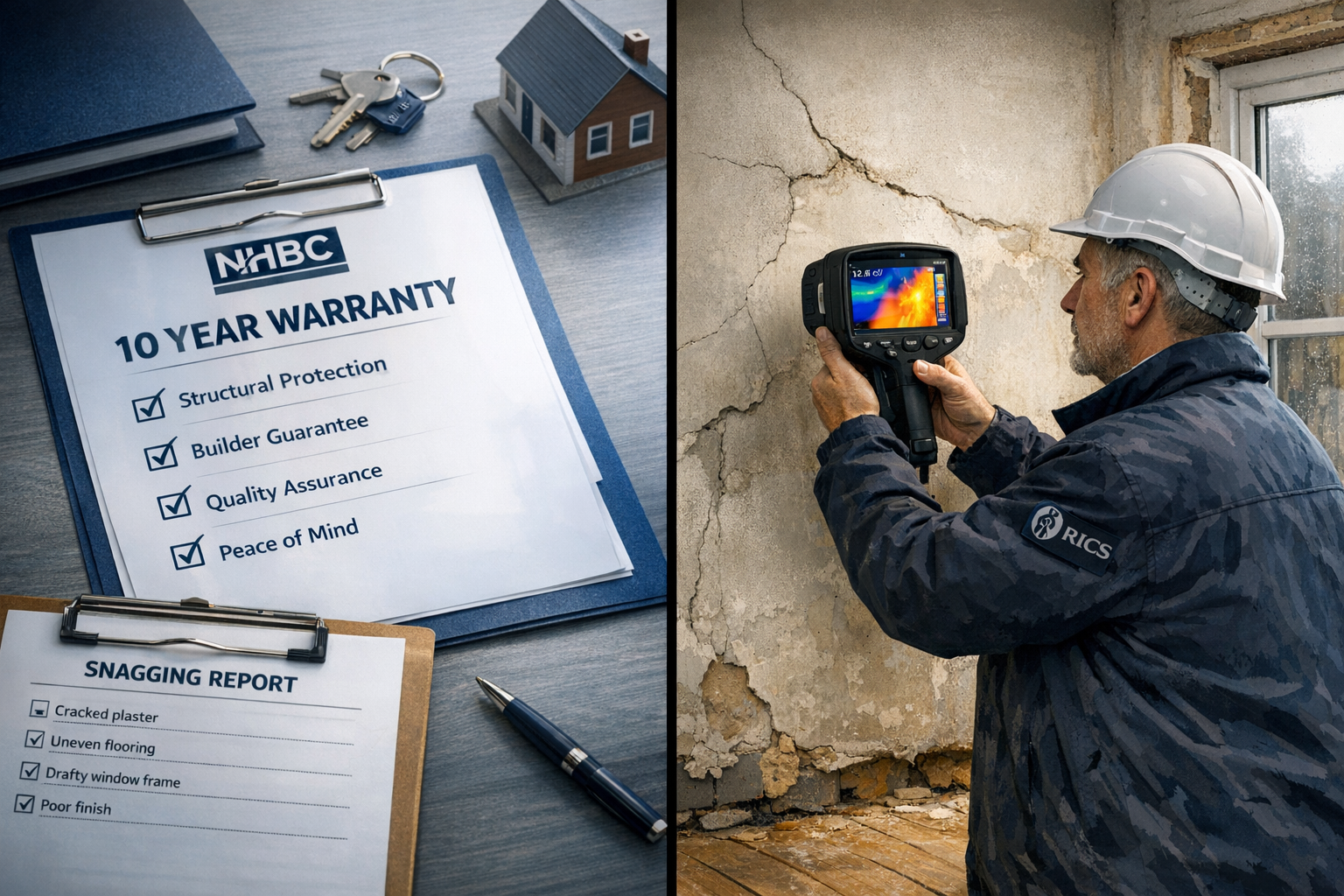
When purchasing a new-build property, developers typically provide a 10-year structural warranty through organizations like NHBC (National House Building Council) or LABC Warranty. These warranties sound comprehensive, but their coverage has significant limitations that buyers often discover too late.
Developer warranties generally operate on a tiered system:
| Warranty Period | Coverage Type | What's Included |
|---|---|---|
| Years 1-2 | Builder's defects warranty | Defects in workmanship and materials reported to the builder |
| Years 3-10 | Structural warranty only | Major structural defects affecting the property's stability |
| Throughout | Deposit protection | Protection if builder becomes insolvent before completion |
The critical gap? Cosmetic defects, minor construction errors, and building regulation violations often fall outside warranty coverage after the first two years. Even within the initial period, developers may dispute whether specific issues constitute "defects" requiring remediation [1].
The Role of Lender Valuations
Mortgage lenders arrange basic valuations before approving loans, but these assessments serve the lender's interests, not the buyer's. A lender's valuation confirms the property provides adequate security for the loan amount—nothing more.
These valuations typically involve:
- ✅ Brief external inspection
- ✅ Confirmation the property exists and matches the description
- ✅ Assessment of market value for lending purposes
- ❌ No detailed defect inspection
- ❌ No building regulation compliance checks
- ❌ No thermal efficiency testing
Buyers who assume lender valuations protect their interests often face unpleasant surprises after completion. For guidance on which building survey you actually need, independent professional advice proves invaluable.
Why Independent Snagging Surveys Matter
An independent snagging survey provides comprehensive inspection by qualified professionals with no connection to the developer or lender. These surveys identify both obvious and hidden defects before you complete the purchase or immediately after moving in.
Professional snagging inspections reveal:
- 🔍 Construction defects: Poor workmanship, incorrect installations, substandard materials
- 🔍 Building regulation violations: Non-compliance with current standards for insulation, ventilation, and safety
- 🔍 Cosmetic issues: Paint defects, scratches, poorly fitted fixtures requiring correction
- 🔍 Structural concerns: Foundation issues, roof problems, wall alignment defects
- 🔍 Energy efficiency failures: Inadequate insulation, thermal bridges, air leakage
According to industry data, new-build homes are constructed quickly, and coupled with inevitable human error, finding problems is virtually guaranteed—"chances are you will find problems" [2]. This reality makes independent verification not just advisable but essential for protecting your investment.
For those wondering about surveys on new-build properties, the evidence overwhelmingly supports obtaining professional inspection despite the property's age.
Common Defects Found in New-Build Properties That Warranties Miss
Structural and Construction Issues
Professional snagging surveys consistently uncover serious structural problems that developer warranties often overlook or dispute. These defects can compromise property safety and value while requiring expensive remediation.
Roofing problems rank among the most common yet serious defects. Surveyors frequently discover:
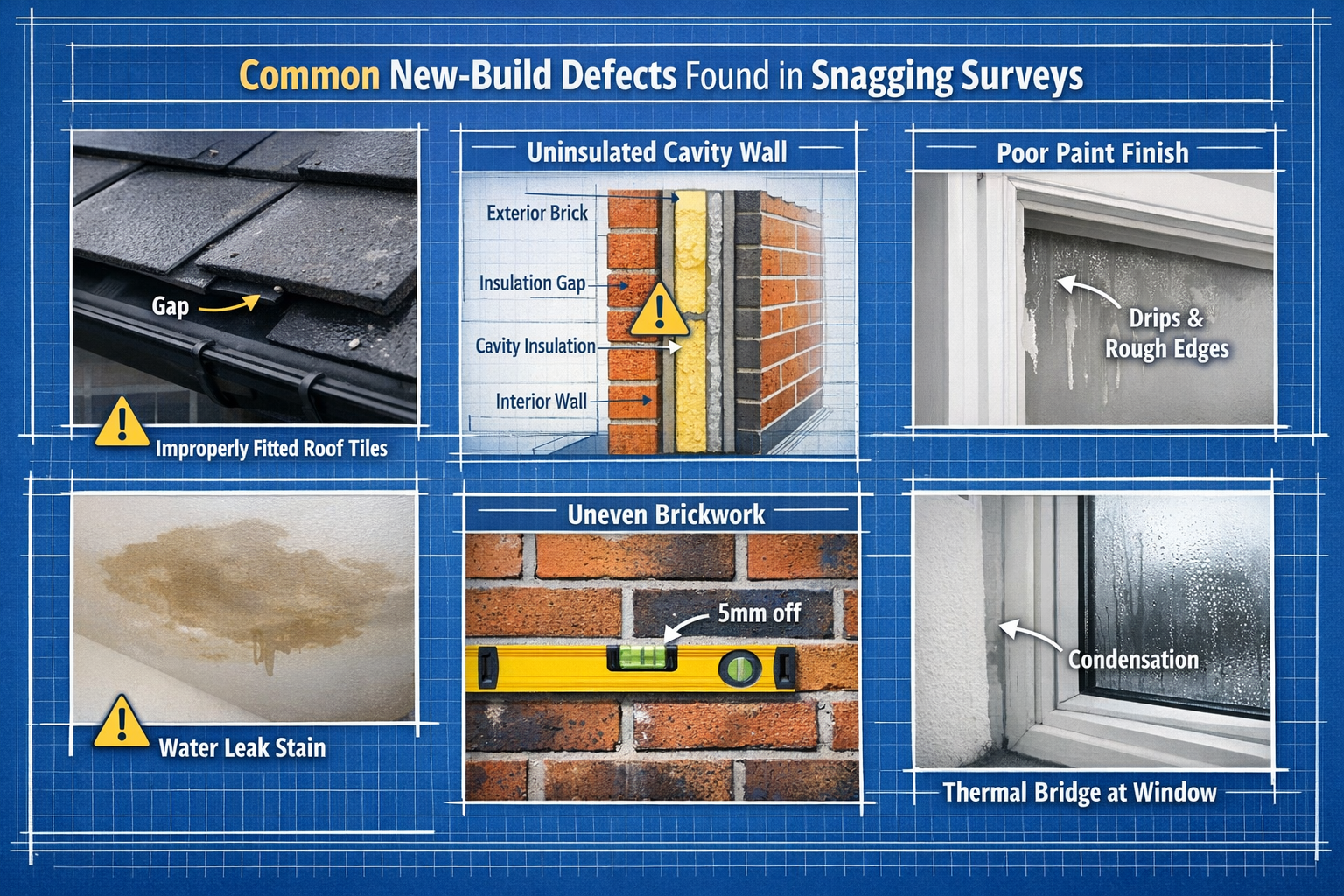
- Improperly fitted roof tiles with gaps allowing water ingress
- Inadequate roof ventilation leading to condensation and timber rot
- Missing or incorrectly installed flashing around chimneys and valleys
- Insufficient roof pitch violating building regulations
Foundation and structural wall issues include poor brickwork, misaligned walls, and inadequate support for load-bearing elements. A RICS-qualified surveyor's inspection reveals problems like thermal bridges, poor cavity wall insulation, and structural elements not meeting NHBC or LABC standards [4].
One particularly concerning example: a small leak from a water pipe in the tank can lead to damp, mold growth, and eventual ceiling failure if left undetected [1]. Such defects often start minor but escalate into major structural damage requiring thousands in repairs.
Energy Efficiency and Building Regulation Failures
Modern building regulations mandate specific energy efficiency standards, yet new builds frequently fail to meet these requirements. Thermal imaging cameras and air leakage testing reveal failures invisible during standard inspections [3].
Common energy efficiency defects include:
- Inadequate insulation: Mineral wool insulation not meeting the 270mm Building Regulation standard
- Thermal bridges: Cold spots where insulation gaps allow heat loss, particularly around windows and doors
- Air leakage: Gaps in building envelope reducing energy efficiency and increasing heating costs
- Ventilation problems: Insufficient or excessive ventilation affecting air quality and energy performance
These failures don't just increase energy bills—they can cause condensation, damp, and mold growth that damages the property and affects occupant health. Professional surveys using specialized equipment detect these issues before they become expensive problems [3].
For comprehensive property assessment, consider a Level 3 full building survey that examines all aspects of construction quality and compliance.
Cosmetic and Finishing Defects
While seemingly minor, cosmetic defects indicate poor workmanship and quality control. More importantly, developers must address these issues within warranty periods, but only if properly documented.
Typical cosmetic problems include:
- 🎨 Paint and decoration: Drips, uneven coverage, wrong colors, poor preparation
- 🚪 Doors and windows: Misalignment, gaps, poor sealing, damaged frames
- 🔧 Fixtures and fittings: Incorrectly installed kitchen units, bathroom fixtures, electrical outlets
- 📐 Flooring: Uneven surfaces, gaps, scratches, incorrect installation
- 🧱 Plasterwork: Cracks, uneven surfaces, poor finishing around edges
Professional surveyors document these defects with detailed photographic evidence, creating comprehensive reports typically delivered within 72 hours [4]. This documentation proves essential when requesting developer remediation.
Understanding what's included in a Level 3 survey helps buyers appreciate the thoroughness professional inspections provide compared to basic warranty coverage.
New-Build Snagging and Independent Surveys: Why Buyers Shouldn't Rely Only on the Developer's Warranty—The Strategic Approach
Timing Your Independent Survey
When you commission your snagging survey significantly impacts your ability to get defects remedied. The ideal timing balances practical access with maximum leverage over the developer.
Before legal completion offers the strongest negotiating position. Surveys conducted pre-completion allow the builder more time to remedy defects with less disruption to the buyer. However, most builders won't permit access before you legally own the property [4].
Within the first two months of occupation represents the recommended timeframe for most buyers. This timing provides:
- ✅ Full access to inspect all areas thoroughly
- ✅ Sufficient time within the developer's 30-day remediation window
- ✅ Evidence that defects existed at completion, not from occupant damage
- ✅ Opportunity to document issues before they worsen
Under the New Homes Quality Code, developers must address identified defects within 30 days of completion [3]. This makes early independent inspection critical for documenting issues while you have maximum leverage.
Pre-completion inspections, when available, have limitations and should be followed up with a full snagging survey after moving in [2]. This two-stage approach provides comprehensive protection.
Choosing a RICS-Qualified Surveyor
Not all snagging inspections offer equal value. RICS-qualified surveyors (members of the Royal Institution of Chartered Surveyors) provide reports that carry significantly more authority when requesting repairs from developers [5].
Key qualifications to seek:
| Credential | Why It Matters |
|---|---|
| RICS membership | Professional standards, insurance, accountability |
| New-build experience | Understanding of modern construction methods and regulations |
| Specialized equipment | Thermal imaging, moisture meters, air leakage testing capability |
| Comprehensive reporting | Detailed photographic documentation with priority ratings |
Professional surveyors use specialized equipment that untrained eyes miss, including thermal imaging cameras revealing insulation gaps and building regulation violations [3]. This technical capability separates professional surveys from informal inspections.
For expert assessment, consider building survey services from qualified professionals who understand both construction standards and developer remediation processes.
Understanding Survey Costs vs. Protection Value
Snagging surveys represent a small investment compared to the property purchase price, yet they identify potentially expensive structural problems before final sign-off.
Typical snagging survey costs start at £320 for smaller properties, with prices varying based on:
- Property size and type (flat, house, detached)
- Location and surveyor travel requirements
- Scope of inspection (basic snagging vs. comprehensive building survey)
- Additional testing (thermal imaging, air pressure testing)
Consider this cost-benefit analysis:
Survey investment: £320-£800
Typical defects found: 20-50+ issues
Potential repair costs if missed: £2,000-£15,000+
Protection value: Priceless peace of mind
A professional survey identifying just one major defect—such as inadequate roof insulation requiring £3,000 in remediation—pays for itself many times over [2].
For those concerned about costs, understanding the average price reduction after survey findings demonstrates how professional inspections protect financial interests.
Getting Defects Remedied: Your Action Plan
Once your independent survey identifies defects, follow this strategic approach to ensure developer remediation:
Step 1: Review the comprehensive report
Professional surveys provide detailed photographic documentation with defects categorized by severity. Prioritize structural and building regulation issues over cosmetic defects.
Step 2: Submit formal notification
Contact the developer in writing within the warranty period (typically within first two years). Include:
- Complete survey report from RICS-qualified surveyor
- Photographic evidence of each defect
- Reference to specific warranty terms requiring remediation
- Reasonable deadline for response (30 days under New Homes Quality Code)
Step 3: Document all communications
Maintain records of all correspondence, site visits, and agreed remediation schedules. This documentation proves essential if disputes escalate.
Step 4: Monitor remediation work
Ensure repairs meet professional standards. Consider having your surveyor reinspect completed work to verify proper remediation.
Step 5: Escalate if necessary
If the developer refuses reasonable remediation, escalation options include:
- Warranty provider complaint procedures (NHBC, LABC)
- New Homes Quality Board dispute resolution
- Legal action for breach of warranty terms
The authority of a RICS surveyor's report significantly strengthens your position throughout this process [5]. Developers take professional documentation more seriously than informal defect lists.
For properties requiring budgeting for repairs and restoration, professional surveys provide accurate cost estimates for negotiating with developers.

Beyond Snagging: Comprehensive Building Survey Options
When to Consider a Full Building Survey
While snagging surveys focus specifically on new-build defects, some properties benefit from more comprehensive inspection. A Level 3 full building survey provides the most detailed assessment available, examining every accessible aspect of the property.
Consider upgrading to a full building survey when:
- The new-build property has unusual construction methods or materials
- You're purchasing a new-build conversion (barn conversion, commercial-to-residential)
- The property has been completed for several years and may have developed issues
- You plan significant alterations or extensions requiring detailed structural understanding
- The property is high-value and justifies maximum due diligence
Full building surveys examine structural integrity, building regulation compliance, and provide detailed cost estimates for any necessary repairs. For those comparing options, understanding the difference between full building survey and homebuyer survey clarifies which level of inspection suits specific circumstances.
Specialized Survey Services
Beyond standard snagging inspections, specialized survey services address specific concerns:
Construction and condition surveys provide detailed analysis of building methods, materials, and structural performance. These prove valuable for construction and condition assessment of complex new-build projects.
Thermal efficiency surveys use advanced imaging to detect:
- Heat loss through walls, roofs, and windows
- Air leakage reducing energy performance
- Insulation gaps and thermal bridges
- Compliance with Building Regulation Part L (energy efficiency)
Defect diagnosis surveys investigate specific problems like damp, cracking, or structural movement, determining causes and recommending remediation.
For properties requiring additional expert advice, qualified surveyors coordinate with structural engineers, damp specialists, and other professionals as needed.
Protecting Your Investment: The Complete Strategy
Documentation and Evidence Collection
Professional snagging surveys provide comprehensive photographic documentation, but buyers should supplement this with their own records:
📸 Take dated photographs of all areas before and after moving in
📋 Keep all correspondence with developers, warranty providers, and surveyors
📝 Maintain a defect log noting when issues first appeared and any changes
🗂️ Organize warranty documents with clear understanding of coverage periods and exclusions
💾 Store digital copies of all documentation in multiple secure locations
This evidence proves invaluable if disputes arise or defects emerge later in the warranty period.
Understanding Your Rights
New-build buyers have significant legal protections beyond developer warranties:
Consumer Rights Act 2015: Properties must be built with reasonable skill and care, using satisfactory materials. Buyers can claim remediation or compensation for up to six years after purchase for serious defects.
New Homes Quality Code: Registered developers must provide clear warranty information, handle complaints fairly, and resolve disputes through independent dispute resolution.
Building Regulation compliance: Properties must meet current building regulations. Local authority building control can enforce compliance even after completion.
Understanding these rights empowers buyers to demand proper remediation when independent surveys reveal defects.
Long-Term Property Management
Independent surveys provide valuable baseline documentation for long-term property management:
- Maintenance planning: Understanding construction quality helps prioritize future maintenance
- Insurance purposes: Detailed property records support insurance claims if problems develop
- Resale value: Comprehensive survey documentation demonstrates property condition to future buyers
- Warranty claims: Professional reports support claims throughout the warranty period
For those managing multiple properties, understanding how often rental units should be inspected applies similar diligence principles to investment properties.
Real-World Impact: Case Examples
Case Study 1: Thermal Efficiency Failure
A young couple purchased a new-build semi-detached home in 2025, relying on the developer's 10-year warranty and NHBC certification. Within six months, they noticed unusually high heating bills and cold spots near windows.
An independent thermal imaging survey revealed:
- Cavity wall insulation only 180mm thick (90mm below Building Regulation standard)
- Significant thermal bridges around all window frames
- Air leakage through poorly sealed wall-roof junctions
- Total estimated remediation cost: £4,200
The developer initially disputed the findings, claiming the property met "acceptable standards." However, the RICS surveyor's detailed report with thermal imaging evidence and specific Building Regulation references forced the developer to acknowledge the defects and complete full remediation within the warranty period.
Lesson: Specialized equipment detects problems invisible to standard inspections, and professional documentation carries weight in disputes.
Case Study 2: Hidden Water Damage
A family moved into their new-build townhouse without commissioning an independent survey, assuming the NHBC warranty provided adequate protection. Eighteen months later, they discovered a ceiling stain in their main bedroom.
Investigation revealed a small leak from the loft water tank that had been present since construction. The undetected moisture caused:
- Extensive ceiling plaster damage requiring replacement
- Timber joist rot requiring structural repair
- Mold growth affecting air quality
- Total repair cost: £6,800
The developer argued the leak could have occurred after completion and disputed warranty coverage. Without baseline survey documentation, the family struggled to prove the defect existed from construction. They eventually settled for partial coverage, paying £2,400 out of pocket.
Lesson: Early detection through professional inspection prevents minor defects from escalating into major damage and provides evidence for warranty claims.
Conclusion: Making Informed Decisions About New-Build Protection
New-Build Snagging and Independent Surveys: Why Buyers Shouldn't Rely Only on the Developer's Warranty isn't just about finding defects—it's about protecting what's likely your largest financial investment. While developer warranties and lender valuations provide basic safeguards, they leave significant gaps that only independent professional surveys can fill.
The evidence is clear: most new-build properties contain defects ranging from cosmetic issues to serious structural problems. Construction speed, human error, and complex building regulations mean finding problems is virtually guaranteed. Developer warranties often exclude or dispute coverage for many of these issues, particularly after the initial two-year period.
Independent snagging surveys by RICS-qualified professionals provide:
✅ Comprehensive defect identification using specialized equipment
✅ Detailed photographic documentation strengthening warranty claims
✅ Professional authority that developers take seriously
✅ Early detection preventing minor issues from becoming major problems
✅ Peace of mind knowing your investment is thoroughly protected
Your Action Plan
Before completion:
- Commission a pre-completion inspection if the developer permits access
- Research RICS-qualified surveyors with new-build experience
- Budget £320-£800 for professional snagging survey
Immediately after moving in:
- Arrange comprehensive snagging survey within first two months
- Document all areas with dated photographs
- Review survey report and prioritize defects by severity
Upon receiving the survey:
- Submit formal notification to developer within 30-day window
- Include complete RICS surveyor report with photographic evidence
- Monitor remediation work and request reinspection if needed
For ongoing protection:
- Maintain comprehensive documentation throughout warranty period
- Understand your rights under Consumer Rights Act and New Homes Quality Code
- Don't hesitate to escalate disputes through proper channels
The relatively small investment in professional independent surveys provides protection worth many times the cost. In 2026's competitive property market, informed buyers who understand the limitations of developer warranties and the value of independent verification make better decisions and avoid expensive surprises.
Your new-build home should be a source of pride and security, not stress and unexpected repair bills. Professional snagging surveys ensure it meets that expectation from day one.
References
[1] Faqs Snagging – https://www.ipgl.uk/latest-updates/faqs-snagging
[2] Need Snagging List New Build Home – https://hoa.org.uk/advice/guides-for-homeowners/i-am-buying/need-snagging-list-new-build-home/
[3] 10 Things Your New Build Snagging Survey Should Include In 2026 – https://www.snagitltd.com/content-types/blog/10-things-your-new-build-snagging-survey-should-include-in-2026/
[4] New Build Snagging Surveys – https://andrewjamessurveyors.co.uk/new-build-snagging-surveys/
[5] Rics Snagging Survey – https://surveymatch.co.uk/rics-snagging-survey/