

Global deal values surged 36% between 2024 and 2025, yet overall transaction volumes increased by merely 1%—a stark indicator that the recovery isn't uniform across all market segments. [1] This K-shaped trajectory, characterized by megadeals dominating headlines while mid-market activity remains subdued, creates a unique challenge for building survey professionals in 2026. As lenders forecast increased survey volumes coinciding with improving market conditions through Q2-Q3 2026, surveying firms face a critical inflection point: scale operations strategically or risk losing market share to better-prepared competitors.
The Market Recovery and Transaction Volume Uplift: Building Survey Demand Surge Strategies for Q2-Q3 2026 represents more than just seasonal planning—it demands comprehensive operational transformation. With 61% of CEOs expecting GDP growth improvements in 2026 [1] and private equity take-privates accelerating by 9% month-over-month as of February 2026 [2], the conditions are aligning for a sustained uptick in property transactions requiring professional survey services.
Key Takeaways
- Megadeal concentration is driving value growth while mid-market transactions remain flat, requiring surveying firms to develop dual-track service strategies for different market segments
- Operational capacity planning must account for 20-35% volume increases projected for Q2-Q3 2026, with flexible resource allocation and technology integration as critical success factors
- Quality control protocols become non-negotiable during demand surges, with standardized processes and peer review systems protecting reputation and compliance
- Technology adoption separates market leaders from laggards, with digital tools enabling 40-60% efficiency gains in survey delivery timelines
- Strategic positioning in high-growth sectors (financial services, PE-backed acquisitions, public-to-private transactions) maximizes revenue capture during the recovery phase
Understanding the 2026 Market Recovery Landscape
The K-Shaped Recovery Phenomenon
The current market recovery exhibits distinctly uneven characteristics. While 111 megadeals above $5 billion were announced in 2025—a 76% increase from 63 transactions in 2024 [1]—the broader mid-market landscape tells a different story. Approximately 47,000 mid-market transactions showed flat year-over-year values in 2025, with confidence remaining selective and uneven across sectors. [1]
For building survey professionals, this bifurcation creates dual demand profiles:
📊 Large-Scale Commercial Transactions
- Complex due diligence requirements
- Multi-property portfolio assessments
- Compressed timelines with premium pricing
- Specialist expertise requirements (environmental, structural, compliance)
🏘️ Mid-Market Residential & Small Commercial
- Volume-driven business model
- Standardized survey protocols
- Price-sensitive clients
- Efficiency and turnaround speed critical
Understanding which segment your firm serves—or whether you'll pursue both—fundamentally shapes your Market Recovery and Transaction Volume Uplift: Building Survey Demand Surge Strategies for Q2-Q3 2026.
Regional Variations in Transaction Activity
Geographic concentration patterns significantly impact demand forecasting. European megadeals nearly doubled from 12 in 2024 to 20 in 2025, with nearly half concentrated in financial services. [1] Meanwhile, Asia-Pacific showed selective recovery with China experiencing 22% growth in deal volumes, though still below 2021 peaks. [1]
For UK-based surveying firms, the implications are clear:
✅ Financial services properties (banking, insurance) represent high-value opportunities
✅ Cross-border transactions require enhanced due diligence and specialized survey capabilities
✅ Regional market knowledge becomes a competitive differentiator, particularly in Central London and other high-transaction zones
Macro Indicators Supporting Q2-Q3 Surge
Several converging factors support the anticipated demand increase:
Interest Rate Environment: Central banks have shifted from aggressive easing to holding patterns, with 70% of banks that were cutting rates in 2025 now maintaining relatively high policy rates above pre-COVID levels in 2026. [3] This stabilization reduces transaction uncertainty.
Equity Market Momentum: J.P. Morgan Global Research forecasts double-digit gains across both developed and emerging markets for 2026, buttressed by robust earnings growth, lower rates, declining policy headwinds, and continued AI advancement. [3]
IPO Market Revival: Medline's $7.2 billion Nasdaq debut in December 2025 marked the largest IPO in nearly five years, signaling renewed investor appetite for large, high-quality assets. [1] This confidence cascades into broader property market activity.
Private Equity Activity: Financial sponsors are pursuing public-to-private transactions targeting companies with strong underlying assets, driving demand for comprehensive building survey assessments and valuations. [2]
Operational Scaling Strategies for Survey Demand Surge
Capacity Planning and Resource Allocation
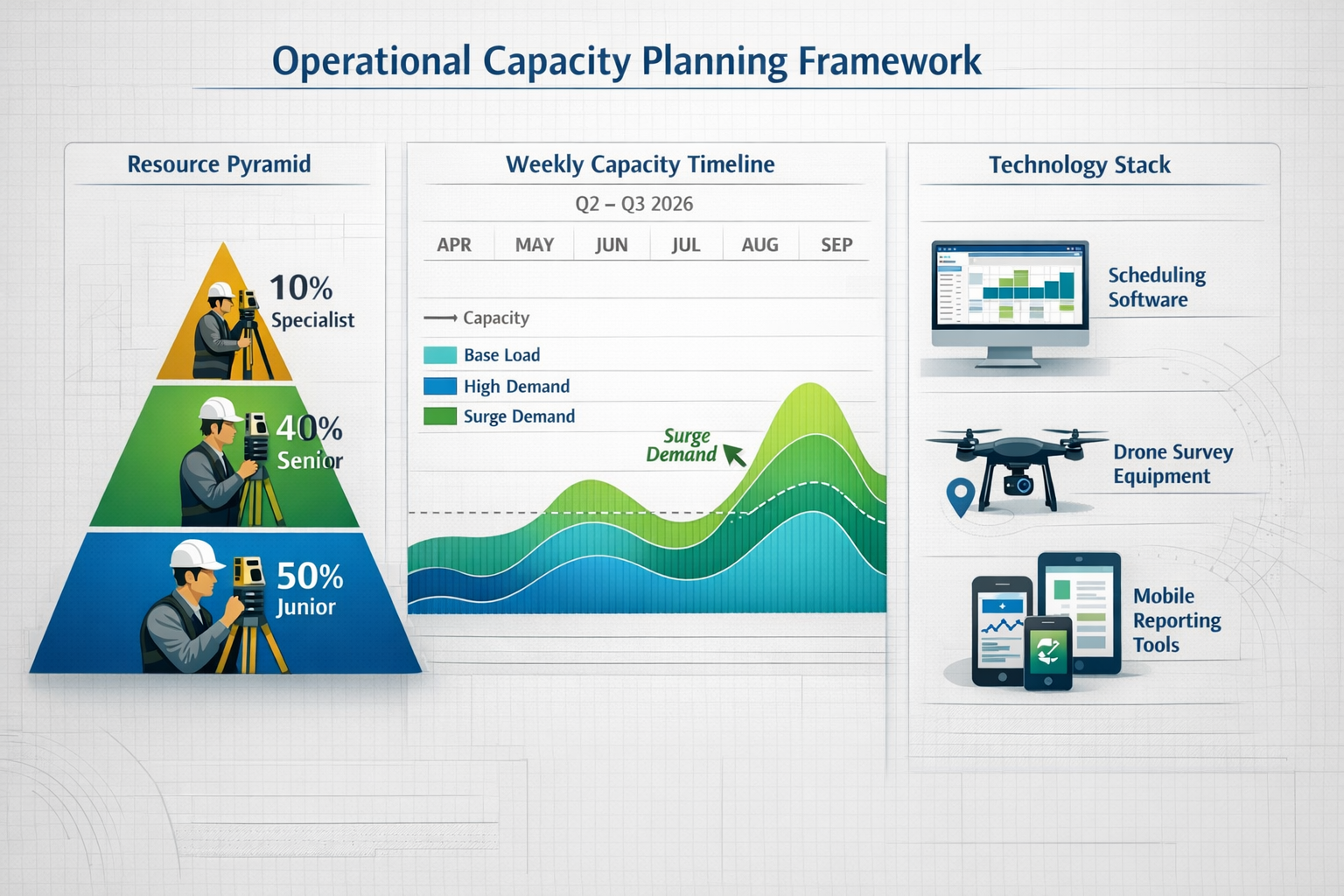
The foundation of successful Market Recovery and Transaction Volume Uplift: Building Survey Demand Surge Strategies for Q2-Q3 2026 lies in accurate capacity modeling. Survey firms must balance three competing priorities: maintaining quality standards, maximizing revenue capture, and avoiding unsustainable overextension.
Workforce Planning Framework
Skill Level Distribution (Recommended Ratios for Demand Surge):
- Senior Chartered Surveyors (15-20%): Complex commercial properties, expert witness work, quality assurance oversight
- Mid-Level Surveyors (40-45%): Standard Level 3 building surveys, residential properties, portfolio work
- Junior Surveyors/Trainees (20-25%): Assisted surveys, data collection, report preparation support
- Administrative Support (15-20%): Scheduling, client communication, report formatting, compliance documentation
During Q2-Q3 surge periods, consider:
💼 Flexible Staffing Models
- Associate surveyor networks for overflow capacity
- Part-time specialists for niche requirements (asbestos surveys, environmental assessments)
- Cross-training programs enabling surveyors to handle multiple property types
- Strategic partnerships with complementary firms for geographic coverage
Technology-Enabled Efficiency Gains
Digital transformation isn't optional for firms pursuing aggressive growth during the recovery. Technology investments deliver measurable ROI:
Survey Delivery Technology Stack:
| Technology Category | Efficiency Gain | Implementation Priority |
|---|---|---|
| Digital inspection tools (tablets, mobile apps) | 25-30% | ⭐⭐⭐ Critical |
| Drone survey capabilities | 40-50% (for roof/exterior) | ⭐⭐⭐ Critical |
| Automated report generation | 30-40% | ⭐⭐⭐ Critical |
| Client portal systems | 15-20% | ⭐⭐ High |
| Thermal imaging equipment | 20-25% (defect identification) | ⭐⭐ High |
| 3D scanning/BIM integration | 35-45% (complex properties) | ⭐ Medium |
Firms implementing comprehensive digital workflows report 40-60% reductions in survey-to-report turnaround times, directly increasing capacity without proportional staff increases.
Quality Control Protocols During High-Volume Periods
The greatest risk during demand surges is quality degradation. Reputation damage from rushed or inadequate surveys can take years to repair and undermines long-term business sustainability.
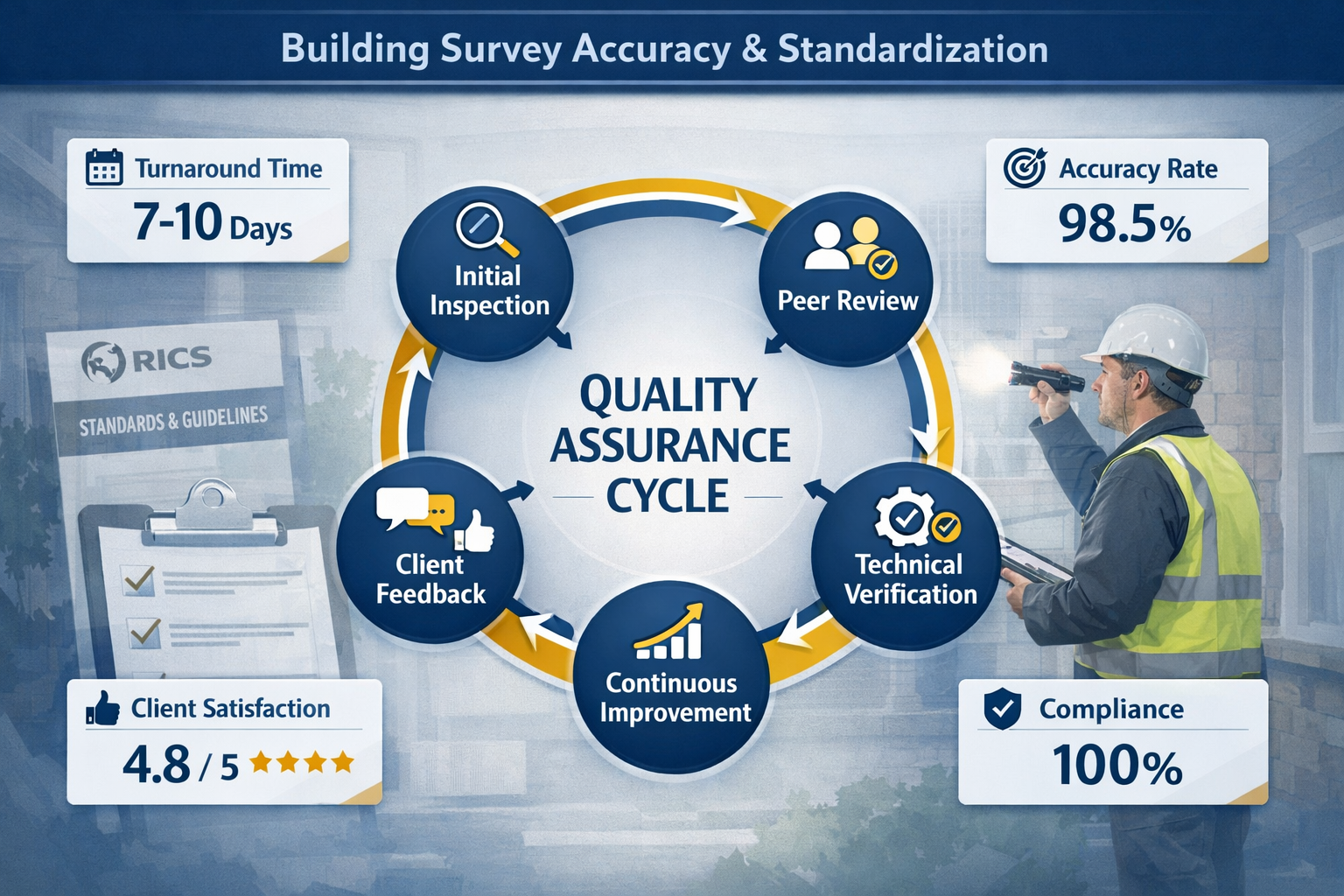
Non-Negotiable Quality Standards:
🔍 Standardized Inspection Checklists
- Property-type-specific templates ensuring comprehensive coverage
- Digital checklists with mandatory photo documentation
- Automated prompts for common defect areas
- Integration with RICS building survey standards
✅ Peer Review Systems
- 100% review for complex or high-value properties (>£2M)
- Random sampling (minimum 15%) for standard residential surveys
- Specialist review for technical issues (structural, environmental, materials assessment)
- Client feedback loops identifying recurring issues
📋 Compliance Documentation
- Professional indemnity insurance adequacy verification
- RICS CPD requirements tracking
- Health and safety protocols enforcement
- Data protection and GDPR compliance auditing
"Quality control isn't a constraint on growth—it's the foundation that makes sustainable scaling possible. Firms that compromise standards during surge periods inevitably face claim increases that wipe out short-term revenue gains." — Industry Quality Standards Report
Client Communication and Expectation Management
Transparent communication prevents dissatisfaction during high-demand periods. Consider implementing:
Tiered Service Offerings:
- Express Service (5-7 days): Premium pricing, limited availability
- Standard Service (10-14 days): Core offering, majority of volume
- Economy Service (21+ days): Budget-conscious clients, lower priority scheduling
Proactive Status Updates:
- Automated booking confirmations with timeline expectations
- Pre-survey client questionnaires gathering property information
- Post-survey preliminary findings calls (high-value properties)
- Digital delivery with explanation videos for complex findings
Understanding which building survey clients need helps tailor communication and service delivery appropriately.
Strategic Market Positioning for Q2-Q3 2026 Growth
Sector-Specific Targeting
Not all transaction growth is equal. Strategic firms focus resources on high-value, high-volume sectors aligned with macro trends.
Priority Sectors for 2026:
🏦 Financial Services Properties
With nearly half of European megadeals concentrated in banking and insurance [1], properties housing financial institutions represent premium opportunities. These transactions typically require:
- Enhanced due diligence protocols
- Regulatory compliance assessments
- Business continuity infrastructure evaluation
- Specialized valuation services
🏢 Private Equity Portfolio Acquisitions
PE take-privates accelerating 9% month-over-month [2] create demand for:
- Multi-property portfolio surveys
- Compressed timeline delivery
- Standardized reporting across properties
- Budgeting for repairs and restoration support
🏘️ Residential Market Recovery
While mid-market remains subdued, selective opportunities exist in:
- High-value residential (£1M+)
- Period properties requiring specialist knowledge
- New build snagging surveys
- Renovation projects requiring planning assessment
Geographic Expansion Strategies
Transaction volume varies significantly by region. Data-driven geographic targeting maximizes market capture:
High-Growth Markets:
- Central London: Financial services concentration, international investment
- Essex: Residential growth, commuter demand
- Hampshire: Mixed commercial/residential opportunity
- Hemel Hempstead: Commercial development corridor
Expansion Approaches:
- Virtual expansion: Technology-enabled service delivery without physical offices
- Strategic partnerships: Local surveyors providing geographic coverage
- Selective hiring: Regional specialists bringing client relationships
- Marketing localization: Area-specific content and SEO optimization
Pricing Strategy Optimization
Market recovery creates pricing power opportunities, but strategic sophistication matters:
Dynamic Pricing Framework:
📈 Demand-Based Adjustments
- Premium pricing (15-25% above standard) during peak demand weeks
- Volume discounts for portfolio work (5-15% depending on property count)
- Rush service premiums (30-50% for compressed timelines)
- Loyalty programs for repeat clients and referral sources
💰 Value-Based Pricing
- Property value tiers with corresponding survey pricing
- Complexity factors (age, size, condition, access challenges)
- Specialist service premiums (heritage properties, complex commercial)
- Comprehensive packages bundling survey with valuation or party wall services
Competitive Intelligence:
- Regular market rate monitoring across service areas
- Value proposition differentiation beyond price
- Premium positioning supported by technology, expertise, turnaround
- Transparent pricing reducing friction in sales process
Marketing and Lead Generation
Capturing surge demand requires proactive marketing investment ahead of Q2-Q3 peak:
Digital Marketing Priorities:
🔍 SEO and Content Marketing
- Property market recovery content targeting homebuyers and investors
- Location-specific landing pages for target markets
- Educational content on property market legislation changes
- Video content explaining survey processes and value
🤝 Referral Network Development
- Mortgage broker partnerships with co-marketing agreements
- Estate agent relationships with preferred surveyor status
- Solicitor networks for transaction pipeline visibility
- Financial advisor connections for investment property clients
📱 Paid Advertising
- Google Ads targeting transaction-related keywords
- Retargeting campaigns for website visitors
- Social media advertising in target geographic markets
- Display advertising on property portals
Risk Management and Business Continuity
Rapid scaling introduces operational risks requiring proactive mitigation:
Critical Risk Areas:
⚠️ Professional Liability Exposure
- Insurance adequacy review for increased volume and property values
- Claims history analysis identifying systematic issues
- Enhanced documentation protocols reducing liability
- Legal review of standard terms and conditions
⚠️ Cash Flow Management
- Payment terms optimization (deposits, staged payments)
- Accounts receivable monitoring and collection processes
- Working capital requirements for staff expansion
- Financial forecasting with scenario planning
⚠️ Reputation Protection
- Online review management and response protocols
- Client satisfaction surveys with issue escalation
- Professional standards compliance auditing
- Crisis communication planning for serious incidents

Technology Integration for Competitive Advantage
Digital Transformation Roadmap
Firms pursuing Market Recovery and Transaction Volume Uplift: Building Survey Demand Surge Strategies for Q2-Q3 2026 must treat technology as strategic infrastructure, not optional enhancement.
Phase 1: Foundation (Immediate Implementation)
- Mobile inspection applications replacing paper-based processes
- Cloud-based report generation with template standardization
- Client portal for digital delivery and communication
- Basic scheduling and resource management software
Phase 2: Optimization (Q2 2026 Target)
- Drone survey capabilities for premium services
- Thermal imaging equipment for enhanced defect identification
- Automated quality control checks within report generation
- CRM integration tracking client relationships and opportunities
Phase 3: Differentiation (Q3-Q4 2026)
- 3D scanning and BIM integration for complex properties
- AI-assisted defect identification from photo analysis
- Predictive maintenance modeling for commercial properties
- Virtual survey capabilities for preliminary assessments
Data Analytics for Business Intelligence
Survey firms generate extensive data that, properly analyzed, drives strategic decisions:
Key Performance Indicators:
- Survey volume by property type, value band, geography
- Revenue per surveyor identifying productivity opportunities
- Turnaround time by service tier and property complexity
- Client acquisition cost by marketing channel
- Repeat business rate indicating satisfaction and loyalty
- Claim frequency highlighting quality or communication issues
Predictive Analytics Applications:
- Demand forecasting by week/month enabling resource planning
- Pricing optimization based on demand patterns
- Marketing ROI analysis informing budget allocation
- Geographic expansion opportunity identification
Conclusion: Positioning for Sustainable Growth
The Market Recovery and Transaction Volume Uplift: Building Survey Demand Surge Strategies for Q2-Q3 2026 represents both significant opportunity and substantial operational challenge. Firms that approach this inflection point strategically—balancing capacity expansion with quality maintenance, investing in technology infrastructure, and positioning in high-value market segments—will capture disproportionate market share during the recovery phase.
The data is clear: transaction values are rising dramatically (up 36% globally [1], with large US transactions up 224% in value [2]), investor confidence is strengthening (61% of CEOs expect GDP growth improvement [1]), and private equity activity is accelerating (up 9% month-over-month [2]). These macro trends translate directly into increased demand for professional building survey services throughout Q2-Q3 2026.
Actionable Next Steps
Immediate Actions (Next 30 Days):
- ✅ Conduct capacity analysis determining maximum sustainable survey volume
- ✅ Audit current technology stack identifying critical gaps
- ✅ Review professional indemnity insurance adequacy for projected volumes
- ✅ Develop tiered service offerings with transparent pricing
- ✅ Implement digital inspection tools for immediate efficiency gains
Short-Term Initiatives (Q2 2026):
- 📊 Establish flexible staffing arrangements (associates, specialists, partnerships)
- 📊 Deploy comprehensive quality control protocols with peer review
- 📊 Launch targeted marketing campaigns in priority sectors and geographies
- 📊 Invest in drone survey capabilities and thermal imaging
- 📊 Build referral networks with mortgage brokers and estate agents
Medium-Term Strategy (Q3-Q4 2026):
- 🎯 Expand into high-growth geographic markets with proven demand
- 🎯 Develop specialist expertise in priority sectors (financial services, PE portfolios)
- 🎯 Implement advanced analytics for business intelligence and forecasting
- 🎯 Create comprehensive training programs supporting quality during scale
- 🎯 Establish thought leadership through content marketing and industry engagement
The firms that will thrive through this recovery aren't simply those that work harder—they're those that work smarter, leveraging technology, strategic positioning, and operational excellence to capture market share while maintaining the professional standards that sustain long-term success.
For building survey professionals, the question isn't whether Q2-Q3 2026 will bring increased demand—the macro indicators confirm it will. The question is whether your firm will be operationally prepared, strategically positioned, and technologically enabled to capitalize on this opportunity when it arrives.
References
[1] Trends – pwc.com
[2] M And A Activity Report – ey.com
[3] Market Outlook – jpmorgan.com