

Landlord instructions have plummeted 27% while rental demand continues to outstrip supply across most UK markets. Yet simultaneously, rents are projected to climb 20% over the next quarter in key regions. This paradox creates a critical inflection point for building surveyors: as property owners struggle to accurately value rental assets in volatile conditions, demand for expert valuation services has never been higher. Understanding how to leverage Lettings Market Shortage and Rent Growth: How Building Surveyors Can Position for High-Demand Valuations in 2026 represents not just an opportunity, but a strategic imperative for surveying professionals.
The rental landscape has transformed dramatically. National vacancy rates hit 7.3% in January 2026—the highest level in recent memory—while rent growth slowed to just 1.9% annually by February, the weakest performance since December 2020[2][3]. Yet beneath these headline figures lies extraordinary regional variation and emerging opportunities for surveyors who can navigate the complexity.
Key Takeaways
- Vacancy rates reached 7.3% nationally in early 2026, but extreme regional variation creates pockets of opportunity where surveyor expertise commands premium fees
- Landlord instructions down 27% while rental demand remains strong, creating urgent need for accurate valuations to guide investment decisions
- Building surveyors can position for high-demand valuations by specializing in rental yield analysis, market-specific expertise, and technology-enhanced assessment services
- BTL investors and institutional landlords increasingly require sophisticated valuation services that account for regulatory changes, EPC requirements, and localized market dynamics
- Premium service offerings including drone surveys, thermal imaging, and comprehensive condition assessments differentiate surveyors in competitive markets
Understanding the Current Lettings Market Dynamics in 2026
The rental market has entered uncharted territory. While overall vacancy climbed to 7.3%, the distribution reveals stark contrasts[2]. Luxury properties face 11.1% vacancy rates—nearly double the national average—as oversupply of premium units collides with tenant price sensitivity. Meanwhile, cities like Grand Rapids, Michigan maintain occupancy exceeding 99%, and Bridgeport, Connecticut records just 1.8% vacancy[2].
This bifurcation extends across property types. Single-family rental growth slowed to 2.6% year-over-year in February 2026, the weakest pace since 2015 and well below the pre-pandemic average of 4.4% annually[3]. Two-bedroom units have experienced 34 consecutive months of year-over-year rent declines as of March 2026[4]. Yet typical asking rents still stand at $1,895 nationally—17.5% higher than pre-pandemic 2019 levels[3].
Regional Variation Creates Valuation Complexity
Eight of the 50 largest US markets now post negative rent growth, including Austin (-2.4%), San Antonio (-1.6%), Tampa (-1.4%), and Denver (-1%)[3]. Austin exemplifies supply oversaturation with rents falling 6.3% while vacancy exceeds 10%[2]. Atlanta faces approximately 14% vacancy, transforming it into an extremely renter-friendly market[2].
This geographic fragmentation demands surveyors develop market-specific expertise. A valuation approach appropriate for tight markets like Grand Rapids becomes dangerously inaccurate when applied to oversupplied regions like Austin or Atlanta. Building surveyors who can demonstrate localized knowledge and data-driven analysis position themselves as indispensable advisors.
The "Accidental Landlord" Phenomenon
A late-2025 surge of homeowners unable to sell properties chose to rent them instead, adding unexpected single-family inventory to rental pools[3]. These "accidental landlords" often lack experience in rental valuation, property condition assessment, and yield optimization—creating immediate demand for professional surveying services.
For building surveyors, this represents a dual opportunity: conducting initial condition assessments for new landlords and providing ongoing valuation services as these properties enter the rental market. Offering comprehensive construction and condition surveys helps accidental landlords understand their property's true rental potential and necessary improvements.
How Building Surveyors Can Capitalize on Lettings Market Shortage and Rent Growth in 2026
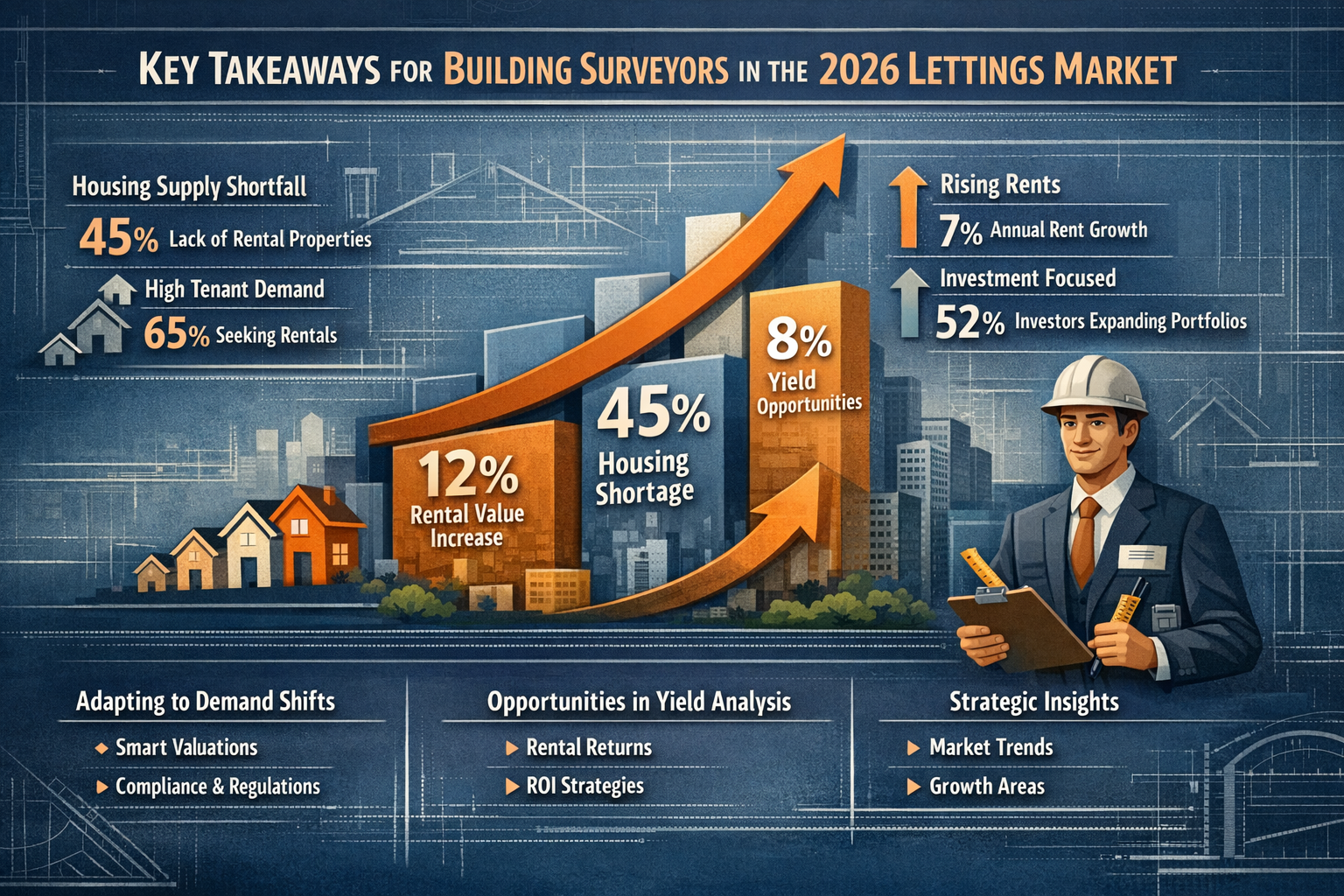
The convergence of reduced landlord instructions and persistent rental demand creates unprecedented opportunities for building surveyors who position themselves strategically. With 27% fewer landlord instructions yet sustained tenant demand, property owners face critical decisions requiring expert guidance. Surveyors who understand Lettings Market Shortage and Rent Growth: How Building Surveyors Can Position for High-Demand Valuations in 2026 can capture premium fees by delivering specialized services that directly address market uncertainties.
Developing Rental Yield Specialization
Traditional building surveys focus primarily on structural condition and defects. However, BTL investors and institutional landlords increasingly require rental yield analysis integrated into valuation services. This means:
- Comparative rental analysis using hyperlocal market data
- Yield optimization recommendations based on property improvements
- Regulatory compliance assessments including EPC ratings and MEES requirements
- Tenant demand profiling for specific property types and locations
Surveyors who incorporate these elements into comprehensive reports differentiate themselves from competitors offering standard condition assessments. Understanding EPC and MEES considerations becomes essential, as energy efficiency directly impacts rental valuations in 2026.
Leveraging Technology for Enhanced Valuations
Modern surveying technology enables more accurate and comprehensive valuations. Drone surveys provide detailed roof and exterior condition assessments without scaffolding costs, while thermal imaging reveals hidden defects affecting rental value. These technologies deliver:
✅ Faster turnaround times meeting urgent investor deadlines
✅ More comprehensive data supporting valuation conclusions
✅ Visual evidence that enhances report credibility
✅ Competitive differentiation in crowded markets
Offering premium drone surveys positions surveyors as technology-forward professionals capable of delivering insights competitors cannot match. This technological edge proves particularly valuable when assessing multi-unit properties or portfolios where efficiency directly impacts profitability.
Targeting Institutional Investors and Portfolio Landlords
While individual BTL investors represent steady business, institutional investors and portfolio landlords offer higher-value, recurring engagement opportunities. These clients require:
- Portfolio-wide valuation services assessing multiple properties simultaneously
- Market trend analysis informing acquisition and disposal strategies
- Risk assessment frameworks evaluating regulatory and market exposure
- Standardized reporting enabling cross-property comparison
Building relationships with institutional clients requires demonstrating capacity for large-scale projects and consistent quality. Developing expertise in commercial valuations alongside residential rental assessments broadens service offerings and increases client retention.
Creating Tiered Service Packages
Market segmentation demands varied service levels. Consider structuring offerings as:
| Service Tier | Target Client | Key Features | Price Point |
|---|---|---|---|
| Essential | Accidental landlords, single properties | Basic condition assessment, rental estimate | £ |
| Professional | Experienced BTL investors | Comprehensive survey, yield analysis, improvement recommendations | ££ |
| Premium | Portfolio landlords, institutions | Full valuation suite, ongoing advisory, technology-enhanced assessment | £££ |
This tiered approach ensures accessibility for entry-level clients while capturing premium fees from sophisticated investors. Each tier should clearly articulate value propositions aligned with client sophistication and property complexity.
Positioning Strategies for High-Demand Valuations Amid Lettings Market Shortage and Rent Growth

Successfully capitalizing on market opportunities requires deliberate positioning. Building surveyors must articulate unique value propositions that resonate with landlords navigating uncertain conditions. The key lies in demonstrating how expert valuation services directly impact investment returns and risk mitigation.
Establishing Market Authority Through Content and Education
Landlords facing 27% fewer peer instructions often lack reliable market intelligence. Surveyors who provide educational content addressing common concerns establish authority and attract qualified leads:
- Market analysis reports highlighting regional trends and vacancy patterns
- Webinars and workshops explaining valuation methodologies and regulatory changes
- Case studies demonstrating how accurate valuations improved client outcomes
- Blog content addressing specific landlord pain points
Creating resources like guides on which building survey landlords need or explaining differences between survey levels positions surveyors as trusted advisors rather than transactional service providers.
Building Strategic Partnerships
Collaboration amplifies reach and credibility. Consider partnerships with:
- Estate agents and letting agents who interact with landlords daily
- Mortgage brokers serving BTL investors requiring valuation services
- Property management companies overseeing rental portfolios
- Accountants and financial advisors counseling clients on property investments
These partnerships create referral networks that generate consistent business flow. Offering preferential rates or co-branded services incentivizes partners to recommend your services over competitors.
Emphasizing Speed and Reliability
In volatile markets, timing matters critically. Landlords evaluating whether to sell, hold, or acquire properties need rapid, reliable valuations informing time-sensitive decisions. Surveyors who guarantee:
- Fast turnaround times without sacrificing quality
- Clear communication throughout the assessment process
- Transparent pricing with no hidden fees
- Accessible support for follow-up questions
…differentiate themselves in markets where uncertainty drives urgency. Highlighting typical survey timeframes and setting realistic expectations builds trust and reduces client anxiety.
Addressing Regulatory Complexity
The rental sector faces increasing regulatory scrutiny. Landlords must navigate:
- EPC minimum standards affecting property rentability
- Electrical and gas safety certifications requiring regular updates
- Licensing requirements varying by local authority
- Tenant protection regulations impacting property management
Surveyors who integrate statutory considerations into valuation reports provide comprehensive guidance that extends beyond physical condition. This holistic approach addresses the full spectrum of factors affecting rental value and investment viability.
Leveraging Local Expertise
Despite national trends, rental markets remain intensely local. A surveyor with deep knowledge of specific regions commands premium fees by offering insights competitors cannot replicate. This localized expertise includes:
- Neighborhood-specific rental demand patterns
- Local authority planning and development trends
- Transportation and amenity developments affecting property values
- Competitive rental inventory and pricing dynamics
Marketing this geographic specialization attracts landlords seeking advisors who understand their specific market conditions rather than applying generic national frameworks.
Advanced Valuation Techniques for the 2026 Rental Market
The complexity of current market conditions demands sophisticated analytical approaches. Building surveyors who master advanced techniques deliver superior value and justify premium pricing.
Comparative Market Analysis with Granular Data
Traditional comparables analysis often relies on broad geographic areas and limited data points. Advanced approaches incorporate:
- Micro-location analysis examining rental performance block-by-block
- Property-specific amenity scoring quantifying features affecting rental value
- Seasonal adjustment factors accounting for temporal demand variations
- Tenant demographic matching aligning property characteristics with target renters
This granular approach produces more accurate valuations that withstand scrutiny from lenders, investors, and regulatory bodies.
Scenario Modeling for Investment Decisions
Rather than providing single-point valuations, sophisticated surveyors offer scenario analyses exploring various outcomes:
- Best case: Optimistic rent growth and high occupancy
- Base case: Most likely scenario given current trends
- Worst case: Continued rent decline and elevated vacancy
This framework helps landlords understand risk exposure and make informed decisions about property acquisition, improvement investment, or disposal. Including sensitivity analysis showing how valuations change with different assumptions demonstrates analytical rigor.
Incorporating Future Regulatory Impact
Upcoming regulatory changes significantly affect rental valuations. Surveyors should assess:
- EPC improvement costs to meet future minimum standards
- Fire safety requirements for multi-unit properties
- Decarbonization mandates affecting long-term property viability
- Tenant protection enhancements potentially limiting rent increases
Identifying areas requiring further investigation ensures clients understand full compliance costs before committing to investments.
Yield Optimization Recommendations
Beyond stating current value, proactive surveyors identify improvement opportunities that enhance rental yields:
- Cost-effective upgrades improving tenant appeal and justifying rent premiums
- Layout modifications maximizing usable space and rental potential
- Energy efficiency improvements reducing operating costs and improving EPC ratings
- Amenity additions differentiating properties in competitive markets
Quantifying expected yield improvements from specific investments transforms surveyors from reporters into strategic advisors. This consultative approach builds long-term client relationships and recurring revenue streams.
Building Long-Term Client Relationships in the Rental Valuation Market
Transactional engagements generate one-time fees. Long-term relationships create sustainable, profitable businesses. Building surveyors should focus on client retention strategies that maximize lifetime value.
Offering Ongoing Market Updates
Rental markets change rapidly. Providing clients with quarterly market updates keeps them informed and positions surveyors as ongoing advisors. These updates might include:
- Regional vacancy and rent growth trends
- Regulatory developments affecting rental properties
- Investment opportunity alerts for portfolio expansion
- Portfolio performance benchmarking against market averages
This regular communication maintains engagement between formal valuation assignments and creates natural opportunities for additional work.
Creating Annual Review Programs
Encourage clients to schedule annual property reviews reassessing valuations and identifying maintenance needs. This proactive approach:
- Generates predictable recurring revenue
- Identifies issues before they become expensive problems
- Demonstrates ongoing commitment to client success
- Provides opportunities to recommend additional services
Packaging annual reviews at discounted rates incentivizes commitment while ensuring steady business flow.
Expanding Service Offerings
As relationships mature, introduce complementary services addressing broader client needs:
- Insurance reinstatement valuations ensuring adequate coverage
- Property development advisory for portfolio expansion
- Acquisition due diligence for new investments
- Disposal strategies optimizing exit timing and pricing
This service expansion increases wallet share while deepening client dependency on your expertise.
Soliciting and Showcasing Testimonials
Social proof powerfully influences prospective clients. Systematically collect testimonials and case studies demonstrating successful outcomes. Focus on:
- Specific results: "Identified £15,000 in hidden defects preventing costly surprises"
- Client satisfaction: "Responsive, thorough, and invaluable for our investment decision"
- Expertise validation: "Unmatched knowledge of the local rental market"
Display these prominently on websites, proposals, and marketing materials to build credibility with prospects.
Overcoming Common Challenges in Rental Property Valuations
Even experienced surveyors encounter obstacles when valuing rental properties in volatile markets. Anticipating and addressing these challenges enhances service quality and client satisfaction.
Dealing with Limited Comparable Data
In rapidly changing markets or unique properties, finding truly comparable rentals proves difficult. Solutions include:
- Expanding geographic search parameters while adjusting for location differences
- Using regression analysis to quantify impact of specific property features
- Incorporating time adjustments to account for rapid market changes
- Consulting multiple data sources to validate findings
When comparables remain insufficient, clearly document methodology and assumptions, potentially sourcing additional expert advice to support conclusions.
Managing Client Expectations
Landlords often hold unrealistic valuation expectations based on outdated market conditions or emotional attachment. Address this through:
- Education about current market realities supported by data
- Clear explanation of valuation methodology building confidence in conclusions
- Scenario analysis showing factors that could improve valuations
- Regular communication throughout the assessment process
Setting realistic expectations early prevents disappointment and maintains professional relationships even when delivering unfavorable news.
Balancing Speed with Thoroughness
Clients want fast results, but rushing compromises accuracy. Manage this tension by:
- Establishing clear timelines during initial engagement
- Using technology to accelerate data collection without sacrificing quality
- Offering expedited services at premium pricing for urgent needs
- Communicating progress to reassure clients work is advancing
Understanding typical building survey timeframes helps set appropriate expectations aligned with service level and property complexity.
Addressing Access Limitations
Occupied rental properties present access challenges affecting inspection thoroughness. Mitigate through:
- Coordinating with tenants and property managers well in advance
- Conducting non-intrusive assessments where full access isn't possible
- Clearly documenting access limitations in reports
- Recommending follow-up inspections when tenancies end
Transparency about limitations protects professional liability while maintaining client trust.
Future-Proofing Your Surveying Practice for Evolving Rental Markets
The rental landscape will continue evolving. Building surveyors who anticipate trends and adapt proactively maintain competitive advantage.
Investing in Continuous Professional Development
Regulatory changes, market dynamics, and technological innovations require ongoing learning. Prioritize:
- RICS continuing professional development maintaining accreditation
- Specialized rental market training deepening expertise
- Technology skills development mastering new assessment tools
- Market research habits staying current on trends and data
This investment ensures services remain relevant and valuable as market conditions shift.
Building Data Assets
Proprietary market data becomes increasingly valuable as rental markets fragment. Systematically collect and analyze:
- Historical rental performance for properties surveyed
- Improvement cost and yield impact data from past recommendations
- Local market trends observed across client portfolios
- Regulatory compliance costs for various property types
This accumulated knowledge enables more accurate valuations and positions your practice as a market intelligence resource.
Developing Niche Specializations
As competition intensifies, specialists command premium pricing. Consider focusing on:
- Specific property types: HMOs, student housing, luxury rentals
- Geographic micro-markets: Particular neighborhoods or cities
- Client segments: Institutional investors, portfolio landlords, accidental landlords
- Service specializations: Yield optimization, regulatory compliance, acquisition due diligence
Deep expertise in narrow domains often proves more profitable than broad generalist positioning.
Embracing Sustainability and ESG Considerations
Environmental, social, and governance factors increasingly influence property valuations. Surveyors who understand:
- Energy efficiency impact on rental demand and values
- Decarbonization pathways for existing rental stock
- Social housing quality standards affecting portfolio valuations
- Governance frameworks for responsible property investment
…position themselves for emerging opportunities as ESG considerations become mainstream in rental property investment.
Conclusion
The rental market transformation underway in 2026 creates extraordinary opportunities for building surveyors who recognize and act on emerging demands. With landlord instructions down 27% yet persistent rental shortages in many markets, property owners urgently need expert guidance navigating valuation complexity. Understanding Lettings Market Shortage and Rent Growth: How Building Surveyors Can Position for High-Demand Valuations in 2026 means recognizing that traditional approaches no longer suffice.
Successful surveyors will differentiate through specialized rental yield expertise, technology-enhanced assessments, and market-specific knowledge that generic competitors cannot replicate. By offering tiered service packages addressing diverse client needs—from accidental landlords to institutional investors—surveyors capture opportunities across market segments.
The path forward requires strategic positioning: establishing authority through educational content, building referral partnerships, emphasizing reliability and speed, and addressing regulatory complexity comprehensively. Advanced valuation techniques including granular comparative analysis, scenario modeling, and yield optimization recommendations transform surveyors from reporters into strategic advisors commanding premium fees.
Long-term success depends on client relationship cultivation through ongoing market updates, annual review programs, and expanded service offerings that increase lifetime value. Anticipating common challenges—limited comparables, unrealistic expectations, access constraints—and developing systematic solutions enhances service quality and client satisfaction.
Actionable Next Steps
Building surveyors ready to capitalize on current market dynamics should:
- Audit current service offerings identifying gaps in rental-specific expertise and technology capabilities
- Develop specialized rental valuation packages with clear value propositions for different client segments
- Invest in technology including drone surveys and thermal imaging to enhance assessment capabilities
- Create educational content establishing market authority and attracting qualified leads
- Build strategic partnerships with estate agents, mortgage brokers, and property managers generating referral flow
- Implement client retention programs including quarterly updates and annual review packages
- Pursue continuing education in rental market analysis, regulatory compliance, and emerging technologies
The rental market's current volatility won't last forever. Surveyors who position themselves now as indispensable advisors will capture disproportionate market share and build sustainable competitive advantages lasting well beyond 2026's unique conditions. The question isn't whether opportunities exist—it's whether you'll seize them before competitors do.
For building surveyors ready to elevate their practice, the time to act is now. Start by conducting comprehensive Level 3 building surveys that integrate rental market analysis, leverage premium assessment technologies, and deliver insights that directly impact client investment returns. The rental market's transformation demands nothing less than a transformation in how surveying services are conceived, delivered, and valued.
References
[1] 2026 Rental Market Forecast – fergusonpm.com
[2] Us Rental Market Vacancy Rates Reach Record High In 2026 – noradarealestate.com
[3] February 2026 Rent Report 36167 – zillow.com
[4] March 2026 Rent – realtor.com
[5] Harvards 2026 Rental Housing Report Points To A Softer Market With A Deeper Affordability Crisis – novoco.com
[6] Six Takeaways Americas Rental Housing 2026 – jchs.harvard.edu