

Over 4.6 million leasehold homes exist in England alone — and in 2026, the rules governing how they are valued, disputed, and transferred are changing faster than at any point in the past century. For chartered surveyors, property valuers, and leaseholders navigating contentious ground rent claims, understanding the intersection of Leasehold Reform 2026: Building Survey Protocols for Valuation Adjustments in Ground Rent Disputes is no longer optional. It is a professional necessity.
The draft Commonhold and Leasehold Reform Bill, published for consultation with a deadline that closed on 24 April 2026, signals the most sweeping overhaul of English leasehold law in decades [3]. Ground rent caps, enfranchisement reforms, and the proposed ban on new leasehold flats are reshaping how surveyors approach every stage of a property assessment — from initial inspection to tribunal evidence.
This article provides a structured, practical guide for surveyors and property professionals who need to align their building survey protocols with the new legislative landscape.
Key Takeaways 📋
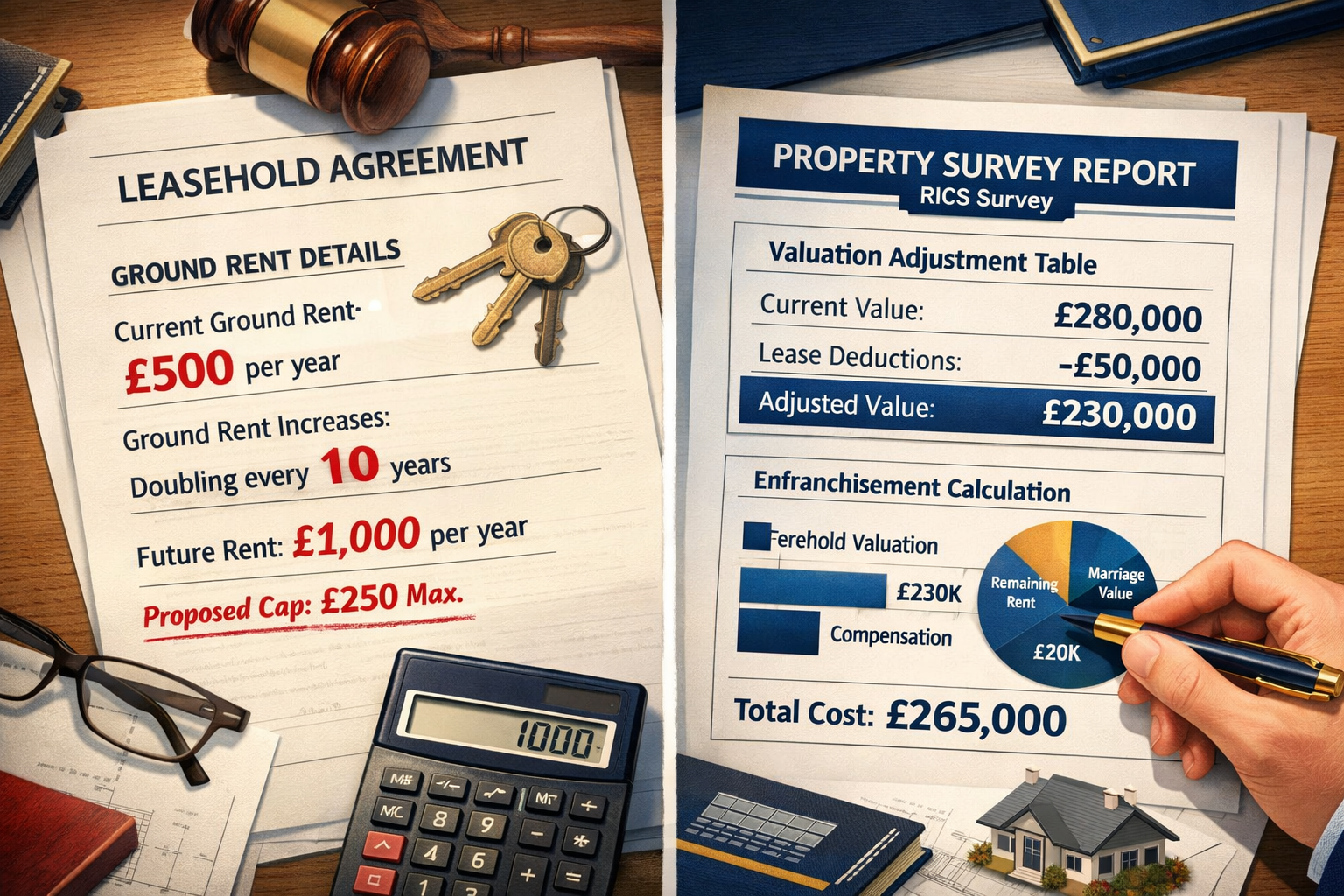
- Ground rents for pre-2022 leases will be capped at £250/year, converting to peppercorn after 40 years under proposed reforms [4].
- Leases granted after 30 June 2022 already carry zero ground rent under the Leasehold Reform (Ground Rent) Act 2022 [4].
- The draft Bill proposes banning new leasehold flats, mandating commonhold instead [3].
- Surveyors must now embed ground rent impact assessments into standard Level 3 building survey protocols.
- Non-payment enforcement thresholds for ground rent arrears will likely be set between £500 and £5,000 [3].
The Legislative Landscape Driving Leasehold Reform in 2026
What the Draft Bill Actually Proposes
The draft Commonhold and Leasehold Reform Bill represents a direct response to years of campaigning by leaseholder groups who faced escalating ground rents, onerous lease terms, and barriers to enfranchisement. Key proposals include:
| Reform Area | Current Position | Proposed Change |
|---|---|---|
| Ground rent (pre-2022 leases) | Variable, often escalating | Capped at £250/year, then peppercorn after 40 years [4] |
| New flat tenure | Leasehold permitted | Leasehold banned; commonhold mandated [3] |
| Enforcement threshold | Low; easy forfeiture risk | Arrears must exceed £500–£5,000 [3] |
| Post-2022 leases | Already peppercorn | No change needed [4] |
The government's consultation on restricting ground rent for existing leases closed in April 2026, with implementation of specific provisions potentially arriving in late 2028 [4]. However, surveyors should not wait for Royal Assent to begin adapting their protocols — tribunal panels and mortgage lenders are already factoring anticipated reforms into their decisions.
💬 "Reforms fundamentally alter how surveyors assess leasehold properties" — the shift is not merely administrative but touches the core of how market value is calculated and disputed. [2]
Pre-2022 vs Post-2022 Leases: A Critical Distinction
Understanding which leases fall under which regime is foundational to any ground rent dispute assessment:
- Leases granted before 1 July 2022: Subject to the proposed £250 cap and 40-year peppercorn conversion. These are the primary battleground for valuation disputes in 2026.
- Leases granted on or after 1 July 2022: Ground rent already abolished under the Leasehold Reform (Ground Rent) Act 2022. Surveyors should confirm this at the outset of any instruction [4].
Failing to identify which category a lease falls into is one of the most common — and costly — errors in leasehold valuation work today.
Building Survey Protocols for Valuation Adjustments in Ground Rent Disputes
Why Standard Survey Protocols Are No Longer Sufficient
A standard residential building survey was never designed to capture the financial implications of ground rent obligations. Yet in 2026, with disputes flooding the First-tier Tribunal (Property Chamber), surveyors are increasingly asked to provide evidence that goes far beyond structural condition.
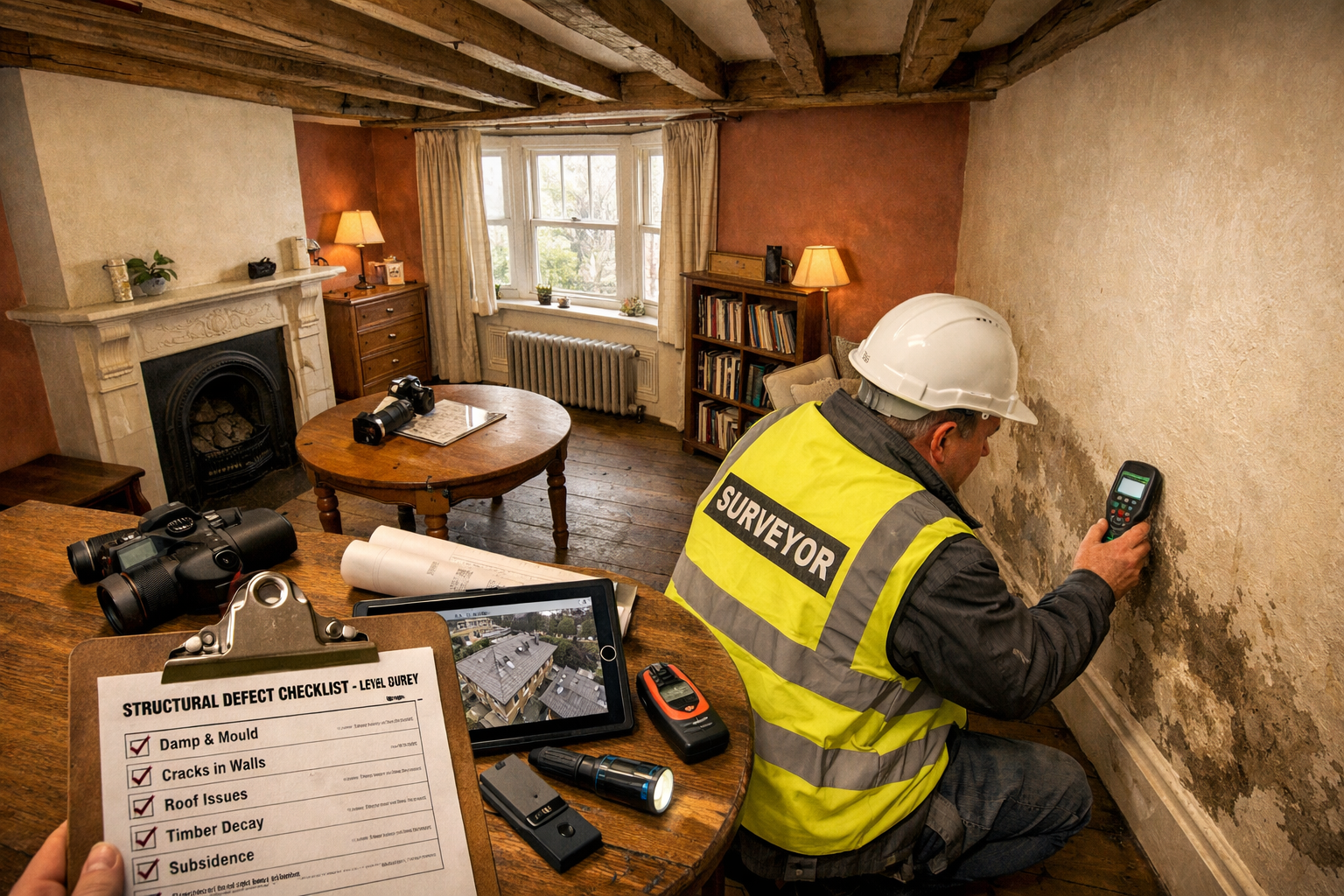
A Level 3 Full Building Survey now needs to incorporate specific leasehold valuation checkpoints if it is to serve as credible evidence in a ground rent dispute. Here is why:
- Mortgage lenders are devaluing or refusing to lend on properties with ground rents above the proposed £250 cap, even before legislation passes.
- Tribunal valuers require evidence of physical condition to determine whether building defects reduce the premium payable on lease extensions.
- Enfranchisement calculations under the Leasehold Reform, Housing and Urban Development Act 1993 (as amended) are directly affected by the property's physical state.
The Enhanced Survey Checklist for Ground Rent Disputes 🔍
Surveyors instructed in contentious leasehold matters should work through the following protocol:
Stage 1 — Lease Document Review (Pre-Survey)
- Confirm lease commencement date (pre- or post-1 July 2022)
- Extract current ground rent figure and review escalation clauses
- Identify any doubling or RPI-linked rent review provisions
- Note lease length remaining and calculate unexpired term
- Check for any existing Section 13 or Section 42 notices served
Stage 2 — Physical Condition Assessment
- Conduct a full Level 3 building survey covering all accessible areas
- Document all structural defects, damp, and roof condition issues
- Assess communal areas and shared services (relevant to service charge disputes)
- Record any urgent or dangerous building issues that affect value
- Use drone survey technology for roof and upper elevation inspection where access is restricted
Stage 3 — Valuation Adjustment Methodology
- Apply RICS Red Book valuation standards (VPS 3 and VPS 4)
- Calculate the capitalised ground rent value using the appropriate deferment and capitalisation rates
- Model the impact of the £250 cap on the freeholder's investment value
- Assess the marriage value implications for lease extensions under 80 years
- Prepare comparable evidence adjusted for ground rent burden
Stage 4 — Dispute-Ready Reporting
- Structure the report to RICS Expert Witness standards (PS 1 and PS 2)
- Clearly separate factual findings from professional opinion
- Attach photographic evidence indexed to specific valuation deductions
- Include a summary table of valuation adjustments with supporting rationale
Accessing Properties for Survey: Practical Considerations
One of the most common obstacles in leasehold dispute surveys is access. Freeholders may be uncooperative, and communal areas may require landlord consent. Understanding surveyor access rights and protocols is essential before accepting an instruction in a contentious matter.
Where access is denied or restricted, surveyors must document this clearly and note the limitations on their conclusions. Tribunals are generally unsympathetic to valuers who proceed without flagging access constraints.
Valuation Adjustments: How Ground Rent Reforms Change the Numbers

The Mathematics of the £250 Cap
The proposed £250 annual cap has a direct and calculable impact on freehold investment values. Consider a simple example:
Before reform: A ground rent of £500/year, capitalised at a yield of 5%, produces an investment value of £10,000.
After reform (£250 cap): The same ground rent capped at £250/year, capitalised at 5%, produces an investment value of £5,000 — a 50% reduction.
This is not a hypothetical. Surveyors providing independent property valuations in 2026 must reflect anticipated legislative changes where there is a reasonable prospect of those changes materialising. The RICS guidance on "special assumptions" is directly relevant here.
Enfranchisement Premium Calculations Under the New Framework
Lease extension premiums are calculated using a three-part formula:
- Ground rent capitalisation — the present value of future ground rent income lost by the freeholder
- Reversion value — the present value of the freeholder's right to recover the property at lease expiry
- Marriage value — the additional value created by extending the lease (shared 50/50 where the unexpired term is under 80 years)
Under the proposed reforms [1]:
- Ground rent capitalisation values will fall sharply once the £250 cap is applied
- Reversion values remain broadly unchanged
- Marriage value calculations become more significant for short leases
⚠️ Key risk for valuers: Underestimating the impact of the cap on ground rent capitalisation could result in a premium figure that is successfully challenged at tribunal.
Service Charges and the Broader Dispute Picture
Ground rent disputes rarely exist in isolation. Leaseholders challenging ground rent levels often simultaneously contest service charges, major works costs, and management fees. Surveyors should be aware that service charge management and ground rent collection practices are under equal scrutiny in 2026.
A building survey that identifies significant deferred maintenance or building problems and solutions in a block can directly support a leaseholder's case that service charges have been misapplied — or that the freeholder has failed in their repair obligations, affecting the property's value.
Comparable Evidence: Adjusting for Ground Rent Burden
When selecting comparable sales evidence, surveyors must now apply explicit adjustments for ground rent burden. A practical adjustment framework:
| Ground Rent Level | Lease Length | Suggested Value Adjustment |
|---|---|---|
| £0 (post-2022) | 125 years+ | No adjustment needed |
| £1–£250/year | 100+ years | Minimal adjustment (0–1%) |
| £251–£500/year | 80–100 years | Moderate adjustment (1–3%) |
| £500+/year | Under 80 years | Significant adjustment (3–7%+) |
These figures are indicative only. Every valuation must reflect the specific facts of the property, the lease terms, and current market evidence. Surveyors should document their adjustment rationale in full.
Tribunal Evidence and Expert Witness Standards in Ground Rent Cases
What Tribunals Expect from Surveyor Evidence in 2026
The First-tier Tribunal (Property Chamber) has become increasingly exacting in its requirements for expert surveyor evidence. Cases involving ground rent disputes under the evolving legislative framework demand:
- Clear methodology: Tribunals want to see how a valuation was reached, not just what the number is.
- Legislative awareness: Surveyors who fail to reference the draft Commonhold and Leasehold Reform Bill risk having their evidence dismissed as out of date.
- Proportionality: The level of detail in a report should match the financial stakes of the dispute.
For surveyors new to tribunal work, reviewing construction law advice resources can help frame evidence within the correct legal context.
Common Errors That Undermine Valuation Evidence
🚫 Errors to avoid:
- Using pre-reform ground rent figures without applying a special assumption for the cap
- Failing to inspect communal areas and noting this limitation
- Selecting comparable evidence without adjusting for ground rent burden
- Conflating the surveyor's role as expert witness with that of advocate
- Omitting a clear statement of the surveyor's overriding duty to the tribunal
Practical Steps for Surveyors and Leaseholders in 2026
For Surveyors: Updating Your Practice
- Review your standard terms of engagement to include explicit reference to leasehold reform considerations.
- Invest in CPD covering the draft Commonhold and Leasehold Reform Bill and its valuation implications.
- Update your report templates to include a dedicated "Leasehold and Ground Rent Assessment" section.
- Build a network of legal contacts — surveyors working in this space increasingly need to collaborate with specialist leasehold solicitors.
- Consider drone survey capability for blocks where roof and upper elevation access is restricted.
For Leaseholders: What to Demand from Your Surveyor
Leaseholders entering ground rent disputes should ensure their surveyor:
- ✅ Holds RICS membership and carries appropriate professional indemnity insurance
- ✅ Has specific experience in leasehold valuation and tribunal work
- ✅ Provides a written methodology explaining how the ground rent cap has been factored in
- ✅ Inspects the full property including communal areas (or documents why this was not possible)
- ✅ Delivers a report structured for use as expert evidence if required
Conclusion: Adapting to the New Leasehold Landscape 🏠
The convergence of legislative reform and rising leaseholder claims makes 2026 a pivotal year for building survey practice in England. The proposed £250 ground rent cap, the anticipated ban on new leasehold flats, and the tightening of enforcement thresholds are not distant policy proposals — they are already influencing tribunal decisions, mortgage lending, and property valuations right now [3][4].
Surveyors who adapt their protocols today will be better positioned to provide credible, defensible evidence in ground rent disputes. Those who continue to apply pre-reform methodologies risk producing valuations that are challenged, rejected, or — worse — that fail their clients at the most critical moment.
Actionable Next Steps
- 📋 Download and review the RICS guidance on the draft Commonhold and Leasehold Reform Bill [3]
- 🔍 Audit your current survey report templates against the enhanced checklist provided in this article
- 📞 Instruct a specialist surveyor for any leasehold property where ground rent exceeds £250/year or the unexpired lease term is under 80 years
- 📚 Monitor the government's consultation response — the formal reply to the April 2026 consultation will set the final direction of travel [1]
- ⚖️ Seek legal advice early if a Section 13 or Section 42 notice has been served, as the valuation date is fixed from that point
The leasehold reform journey is far from over. But with the right survey protocols, the right expertise, and a clear understanding of the evolving legislative framework, surveyors and leaseholders alike can navigate ground rent disputes with confidence.
References
[1] Modern Leasehold Restricting Ground Rent For Existing Leases – gov.uk
[2] Valuing Freehold Vs Leasehold Reforms In 2026 Surveyor Adjustments Post Latest Legislation Changes – nottinghillsurveyors.com
[3] Draft Commonhold Leasehold Reform Bill – ww3.rics.org
[4] Ground Rent – theindependentlandlord.com
[5] Future Changes – lease-advice.org