

Roughly 4.4 million UK homes were built between 1960 and 1980 — a period defined by rapid construction, experimental materials, and almost no thought given to energy performance. As the UK's decarbonisation agenda accelerates in 2026, these properties sit at the centre of a nationwide retrofit push. Yet the structural realities of post-war housing stock make upgrading them far more complex than many buyers, landlords, and lenders assume. Understanding how chartered surveyors should advise on retrofitting 1960s–1980s UK housing — covering common defects, structural limits and value impact — is now one of the most commercially and technically demanding areas of surveying practice.
Key Takeaways
- 1960s–1980s UK homes carry a distinct cluster of defects — corroded wall ties, asbestos, failed flat roofs, and outdated wiring — that must be identified before any retrofit begins.
- Non-standard construction types from this era can restrict mortgage eligibility and limit which retrofit interventions are structurally viable.
- Energy efficiency improvements can add at least 6% to a property's market value, but only when the underlying fabric defects are resolved first.
- Chartered surveyors must advise clients on planning permission requirements, asbestos management obligations, and the sequencing of works.
- A Level 3 Building Survey is the appropriate starting point for any property from this era before retrofit planning commences.
Why 1960s–1980s Housing Demands Specialist Surveyor Attention
The post-war building boom produced homes at speed. Local authorities and private developers alike relied on prefabricated systems, non-traditional construction, and materials that were new and largely untested at scale. Decades later, those same materials are failing — often in ways that are invisible without professional inspection.
Surveyors advising on this housing cohort must understand that retrofit is not simply a matter of bolting on insulation or swapping a boiler. The building fabric must be assessed first. As the EPC and MEES guidance for building surveys makes clear, energy performance improvements are only sustainable when the underlying structure is sound.
The Decarbonisation Context
The UK government's target to bring as many homes as possible to EPC Band C by 2035 has placed enormous pressure on the existing housing stock. Properties from the 1960s–1980s typically sit at EPC Band D, primarily because of uninsulated cavity walls and inefficient heating systems [3]. Landlords face Minimum Energy Efficiency Standards (MEES) obligations, and buyers are increasingly factoring running costs into purchase decisions.
This creates a dual challenge for chartered surveyors: they must identify what is wrong with a property structurally, and then advise on what retrofit interventions are realistically achievable within those structural constraints.
Common Defects Found in 1960s–1980s UK Housing Stock
Before any retrofit planning begins, a thorough structural assessment is essential [2]. The defects found in this era of housing are well-documented, but they interact with each other in ways that can significantly complicate upgrade works.
Cavity Wall Tie Corrosion
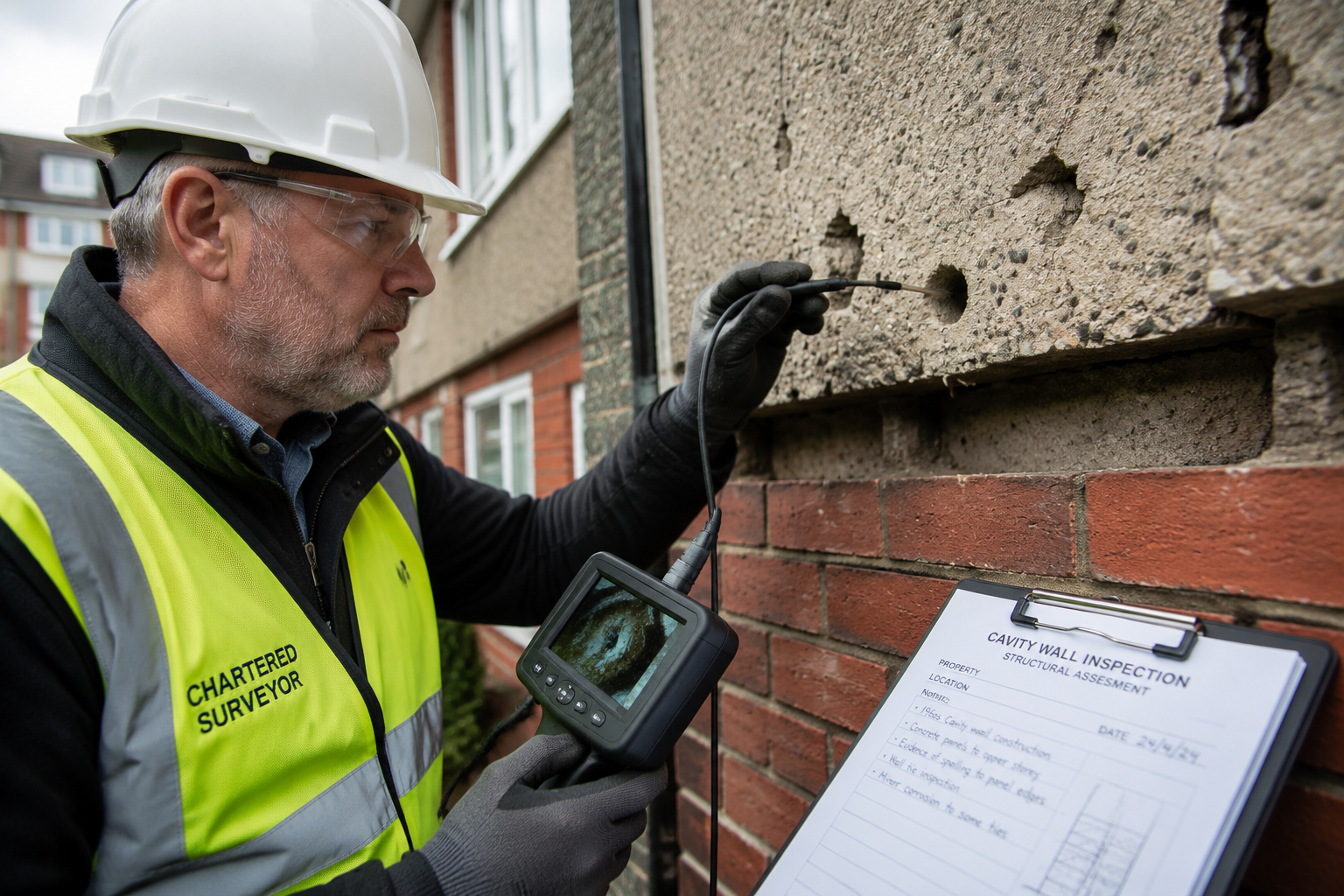
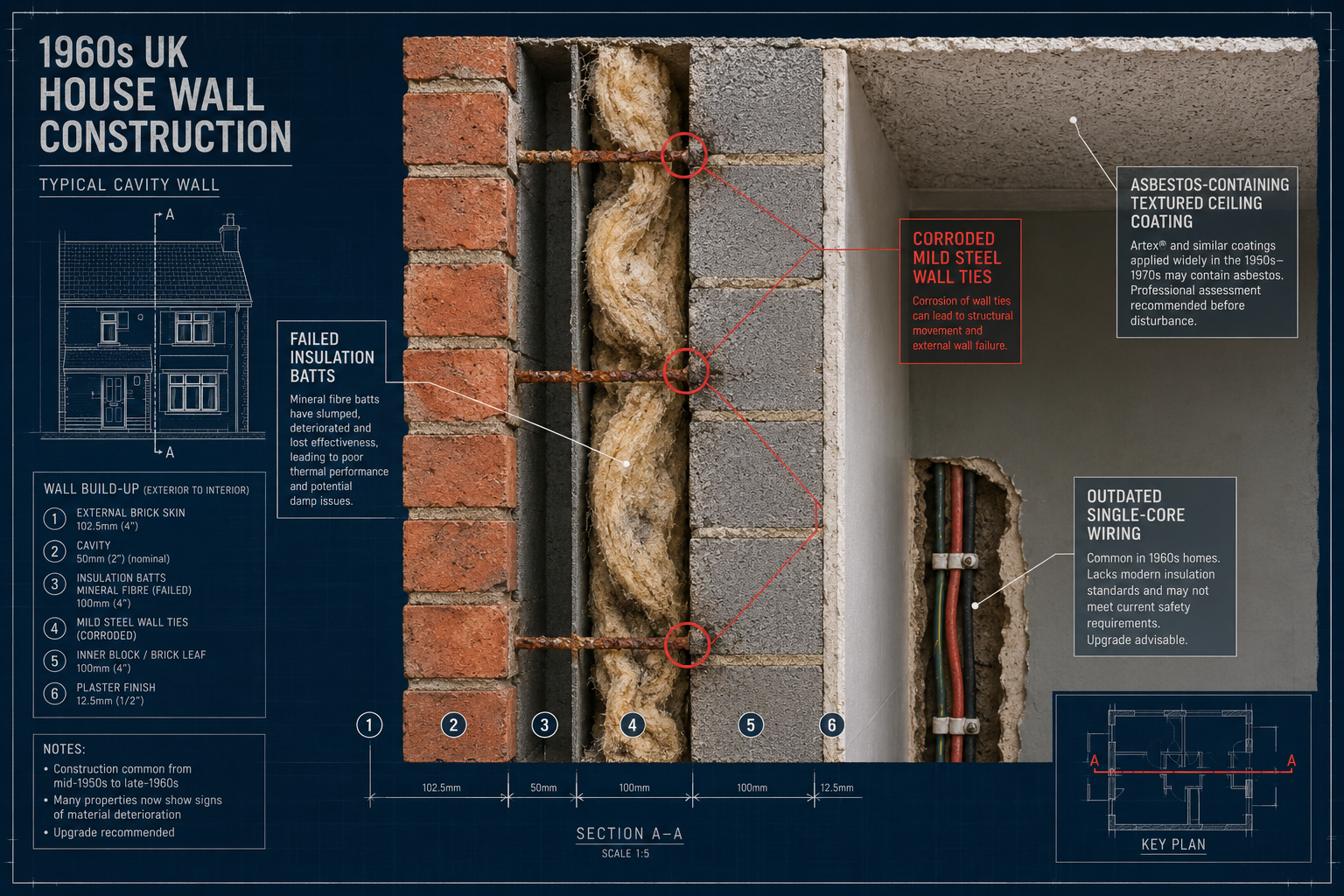
Many homes built between the 1960s and 1980s used mild steel wall ties in cavity wall construction. Over time, these ties corrode, expand, and crack the mortar beds — a process that can lead to serious structural instability if left unaddressed [2]. Surveyors should look for horizontal cracking at regular intervals in the outer leaf of brickwork, which is a classic indicator of tie failure.
Replacement costs for a typical semi-detached property range from £3,000 to £6,000 [2]. Critically, cavity wall insulation cannot be safely installed until wall tie condition is confirmed. Injecting insulation into a cavity with failing ties can mask the problem and accelerate moisture ingress.
Asbestos-Containing Materials
Asbestos was used extensively in construction until it was fully banned in the UK in 1999. In 1960s and 1970s properties, it is commonly found in:
- Textured coatings (Artex) on ceilings and walls
- Floor tiles and their adhesives
- Roof sheets, particularly on garages and outbuildings
- Pipe lagging and boiler flues [1]
Surveyors must flag the likely presence of asbestos-containing materials (ACMs) and advise clients that any disturbance during retrofit works — drilling for insulation fixings, removing ceilings for loft upgrades — requires a licensed asbestos survey and, where necessary, licensed removal. Failure to manage ACMs correctly carries both legal and health consequences.
Non-Standard Construction Types
A significant proportion of 1960s–1980s housing was built using non-standard methods. Common types include:
| Construction Type | Key Characteristics | Retrofit Considerations |
|---|---|---|
| Airey Houses | Precast concrete columns, no-fines infill | Mortgage restrictions; external cladding required |
| Wimpey No-Fines | Poured concrete walls, no cavity | Limited insulation options; thermal bridging risk |
| BISF (Steel Frame) | Steel frame, asbestos panels | Structural assessment critical before any works |
| Laing Easiform | In-situ concrete | Carbonation and spalling risk; specialist advice needed |
These construction types often affect mortgage eligibility, and lenders may require specialist reports before advancing funds [1]. Surveyors should identify the construction method early and communicate its implications clearly to buyers and lenders alike.
Flat Roofs with Failed Membranes
Flat roofs were extremely common on 1960s and 1970s extensions, garages, and some main roof sections. The original felt membranes have a lifespan of approximately 15–20 years, meaning most have been replaced at least once — and many are now failing again [1]. Blistering, ponding water, and cracked upstands are all signs of membrane failure. For detailed guidance on roof defects by type, the guide to pitched roof types and common defects provides useful context on what surveyors should be examining.
Outdated Electrical Installations
Electrical systems from this era frequently lack modern safety features. Residual Current Devices (RCDs) were not standard until much later, and wiring insulation degrades over time. A full rewire typically costs between £4,000 and £7,000 [2]. This is particularly relevant for retrofit projects involving heat pumps or solar PV, both of which place additional demands on the electrical installation.
Spalling Concrete and Carbonation
On properties with concrete facades, balconies, or structural elements, carbonation of the concrete can lead to corrosion of the reinforcement steel within. The resulting expansion causes spalling — chunks of concrete breaking away from the surface. This is a structural issue, not merely cosmetic, and requires specialist investigation before any external insulation system is applied [1].
Structural Limits: What Surveyors Must Communicate Before Retrofit Works Begin
Understanding how chartered surveyors should advise on retrofitting 1960s–1980s UK housing means being explicit about what the structure can and cannot support. Retrofit ambitions frequently outpace structural reality.
Load-Bearing Constraints
External Wall Insulation (EWI) systems add weight to the outer leaf of a building. On properties where the outer leaf is already compromised by wall tie failure or spalling, this additional load can be problematic. Surveyors should recommend that structural engineers assess load paths before EWI is specified.
Similarly, adding solar panels or a green roof to a flat roof structure requires confirmation that the existing joists can carry the additional dead load. Roofs from this era were not designed with these loads in mind.
Moisture and Ventilation Risks
One of the most commonly misunderstood risks in retrofitting older housing is interstitial condensation. When insulation is added to a building that previously breathed freely, the dew point moves within the wall construction. If the design is wrong, moisture accumulates within the fabric, leading to mould growth and structural decay.
Surveyors should advise clients that retrofit designs for 1960s–1980s housing must include a hygrothermal assessment — a calculation of how moisture will behave within the upgraded wall or roof construction. This is not optional; it is fundamental to avoiding long-term damage.
Planning Permission and Permitted Development
Many retrofit measures fall within permitted development rights, but not all. External wall insulation that changes the appearance of a property, solar panels on front elevations, and any works to properties in conservation areas or on listed buildings may require planning permission [4].
Surveyors should advise clients to check with their local planning authority before works commence. For properties with any historic significance, retrofit must be approached sensitively to preserve architectural character [7]. The construction law advice available through building survey services can help clients understand their obligations before committing to a programme of works.
Sequencing of Works
The order in which retrofit measures are implemented matters enormously. Surveyors should advise clients to follow this general sequence:
- Repair first — address structural defects, damp, and failing elements before any energy upgrade
- Improve the fabric — insulate walls, floors, and roofs
- Upgrade ventilation — ensure adequate fresh air supply as airtightness improves
- Replace heating systems — install heat pumps or upgraded boilers once the building is better insulated
- Add renewables — solar PV and battery storage are most effective in an already-efficient building
For a practical overview of how to approach property renovation in the right order, the guide to property renovation sequencing offers accessible guidance that aligns with surveying best practice.
Value Impact: How Retrofit Affects Property Prices and Lender Appetite
The commercial dimension of retrofit advice is increasingly important. Buyers, landlords, and investors want to know whether the cost of improvements will be recovered in value.
EPC Ratings and Market Value
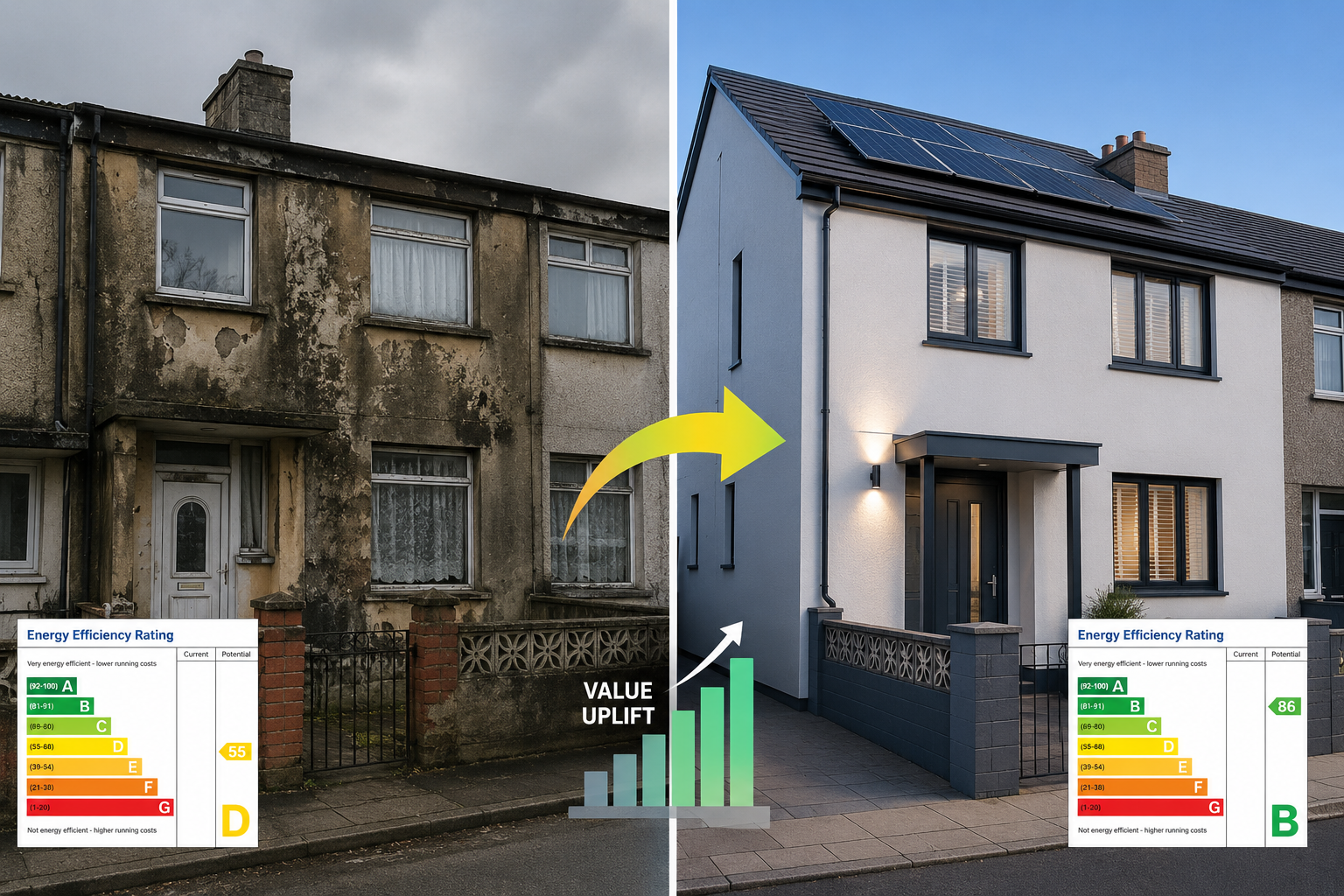
Energy efficiency improvements can increase a property's value by at least 6%, according to local authority retrofit guidance [5]. In 2026, with energy costs remaining elevated and EPC ratings increasingly visible in property listings, the market premium for well-rated homes is real and growing.
"A property upgraded from EPC Band D to Band B or C is not just cheaper to run — it is more attractive to a wider pool of buyers and lenders."
However, surveyors must be careful not to overstate value uplift in isolation. A property with a good EPC rating but unresolved structural defects will not achieve a premium. The average price reduction after survey data illustrates how defects identified at survey stage translate directly into negotiated reductions — often far exceeding the cost of the retrofit works themselves.
Lender Considerations
Mortgage lenders are paying closer attention to EPC ratings. Some lenders now offer preferential rates for properties at Band C or above (green mortgages), while others apply additional scrutiny to properties with very low ratings. Non-standard construction types compound this — a Wimpey No-Fines house with an EPC of E will face significant lender restrictions.
Surveyors advising landlords should note that MEES regulations already prohibit new tenancies in properties below EPC Band E, with further tightening expected. The financial case for retrofit is therefore not simply about value uplift — it is about maintaining the property's ability to generate rental income at all.
Insurance Reinstatement Costs
Retrofit works — particularly external wall insulation systems — can significantly increase the rebuild cost of a property. Surveyors should advise clients to update their buildings insurance sum insured following major retrofit works. An insurance reinstatement cost valuation ensures that the policy reflects the true cost of rebuilding the upgraded property, not just the pre-works value.
Health, Comfort, and the Whole-House Approach
Retrofit is not purely a financial or structural exercise. Improving the thermal performance of 1960s–1980s housing has direct health benefits. Cold, damp homes are linked to respiratory illness, cardiovascular problems, and poor mental health outcomes. Retrofitting reduces dampness and mould, improves air quality, and creates more stable internal temperatures [6].
Surveyors should communicate these benefits to clients, particularly where elderly or vulnerable occupants are involved. The health case for retrofit is often more persuasive than the financial case for households on tight budgets.
A whole-house approach — assessing the building as an integrated system rather than addressing individual elements in isolation — is the gold standard. This means considering how changes to one element affect all others: insulating walls without improving ventilation, for example, can worsen indoor air quality rather than improve it.
The Right Survey for 1960s–1980s Housing
Given the complexity of this housing cohort, a Level 2 Homebuyer Report is rarely sufficient. A Level 3 Full Building Survey is the appropriate product for any property from this era, particularly where retrofit works are planned or suspected. It provides the depth of investigation needed to identify hidden defects, assess construction type, and flag areas requiring specialist input before works begin.
Surveyors working across London and the South East — areas with high concentrations of 1960s–1980s housing stock — should be particularly alert to the defect patterns described above. Whether working in South East London, Bromley, or Ealing, the same structural challenges recur across this generation of housing.
Conclusion
Chartered surveyors occupy a critical position in the UK's retrofit journey. As the pressure to decarbonise 1960s–1980s housing stock intensifies, the profession's role extends well beyond identifying defects at point of sale. Surveyors must now advise buyers, lenders, and landlords on the structural limits of what can be achieved, the sequencing of works, the planning obligations involved, and the realistic value impact of improvements.
The actionable steps for surveyors advising on this housing cohort are clear:
- Commission a Level 3 Building Survey before any retrofit planning begins — it is the only product that provides sufficient depth for this era of construction.
- Identify the construction type early and communicate its implications for mortgage eligibility and retrofit options.
- Flag asbestos, wall tie corrosion, and electrical deficiencies as priority items that must be resolved before energy upgrade works commence.
- Advise on sequencing — repair the fabric before upgrading systems, and upgrade systems before adding renewables.
- Quantify the value impact honestly, including both the upside from improved EPC ratings and the downside risk from unresolved defects.
- Update insurance valuations following significant retrofit works to avoid underinsurance.
The homes built between 1960 and 1980 are not going anywhere. With the right professional guidance, they can be upgraded safely, sustainably, and in a way that genuinely improves their value and the lives of the people who live in them.
References
[1] Defect Risk Hotspots In 2026 UK Housing Stock What Building Surveyors Are Finding Most Often – nottinghillsurveyors.com
[2] Building Survey Defects In 1960s 1980s Housing Stock Identifying Hidden Issues Before Purchase – nottinghillsurveyors.com
[3] 1960s 1970s House – epcguide.co.uk
[4] Do You Need Planning Permission For Retrofitting – southoxon.gov.uk
[5] Retrofitting Introduction – wandsworth.gov.uk
[6] Retrofitting Existing Buildings – hackney.gov.uk
[7] Retrofitting Historic Buildings – westminster.gov.uk