

The Grenfell Tower tragedy fundamentally changed how the construction industry approaches fire safety in the UK. Nearly nine years later, building surveyors face an evolving landscape of regulations, compliance requirements, and professional responsibilities that continue to reshape the profession. Fire Safety Remediation Surveys Post-Grenfell: 2026 Compliance Updates for Building Surveyors represent critical knowledge for professionals navigating this complex regulatory environment.
As we move through 2026, building surveyors must stay ahead of significant legislative changes, enhanced competence requirements, and stricter enforcement timelines. The government's ongoing response to the Grenfell Tower Inquiry recommendations brings new obligations for cladding assessments, fire risk evaluations, and remediation oversight. Understanding these updates isn't just about compliance—it's about protecting lives and maintaining professional standards in an industry under intense scrutiny.
Key Takeaways
- 🔥 Fire risk assessor competence verification consultation scheduled for early 2026, with mandatory UKAS-accredited certification requirements expected between 2027-2029[2]
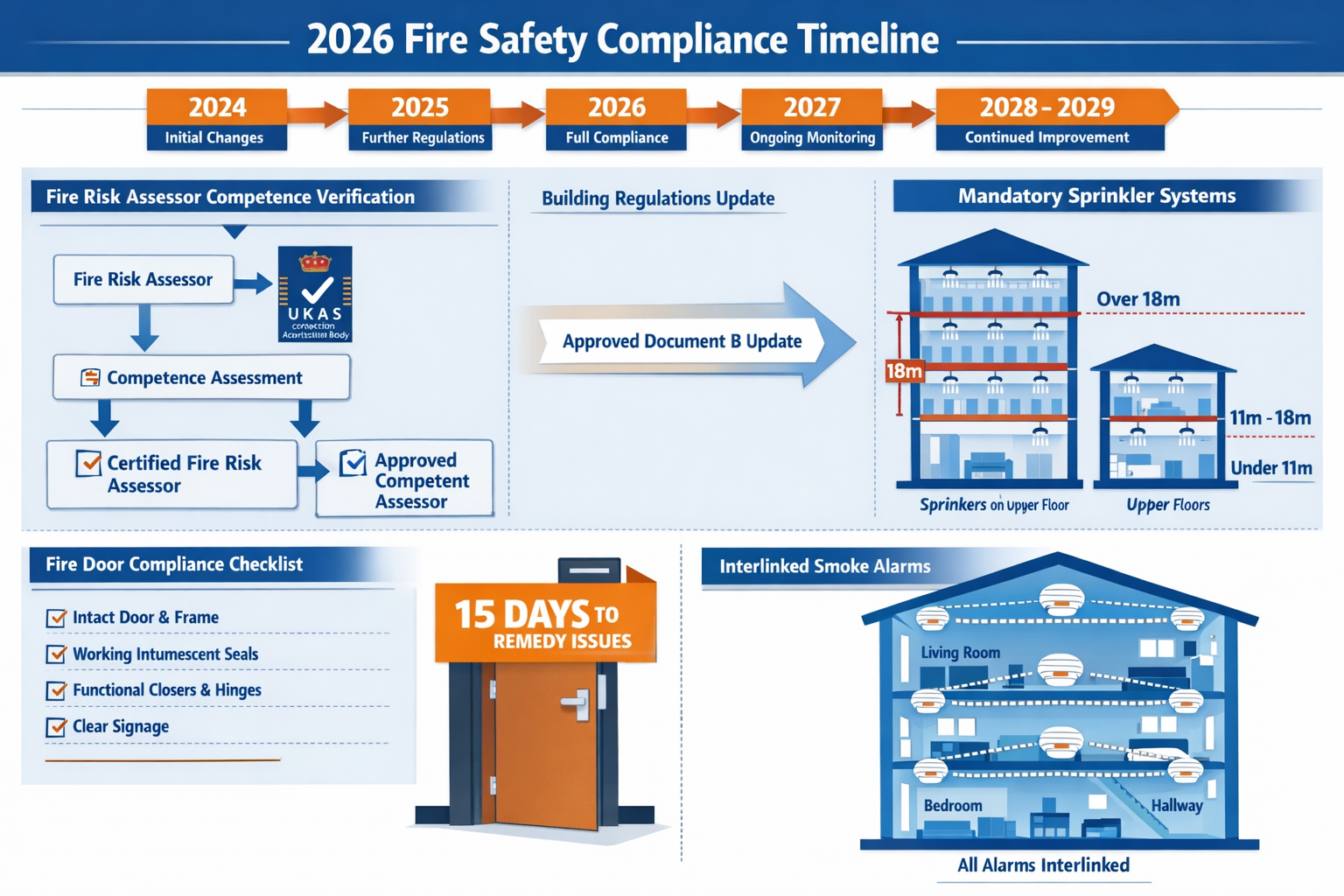
- 📋 Social landlords must fix fire hazards identified in remediation surveys within 15 days as of 2026, including mandatory fire door replacements[4]
- 🏢 Approved Document B updates expected in 2026 following the Building Safety Regulator's comprehensive review of Building Regulations guidance[2]
- 🔔 Interlinked smoke and heat alarms now mandatory in certain buildings with higher sensitivity standards across residential, office, and industrial properties[3]
- 📊 EWS1 forms and cladding assessments remain critical for building valuations, with surveyors playing a central role in ongoing remediation demands
Understanding Fire Safety Remediation Surveys Post-Grenfell: 2026 Compliance Updates for Building Surveyors
The landscape of fire safety remediation has transformed dramatically since the Grenfell Tower fire. Building surveyors now operate within a framework that demands heightened technical expertise, rigorous documentation, and accelerated response timelines.
The Evolution of Fire Safety Regulations
The Building Safety Act continues to drive substantial changes across the construction sector. In 2026, the government is conducting comprehensive activities to ensure the higher-risk building regime and current fire safety requirements operate effectively[1]. This includes reviewing system risks and implementation capacity to prevent regulatory overload while maintaining robust safety standards.
Key regulatory developments include:
- Enhanced scrutiny of building products and materials
- Stricter enforcement of fire door compliance
- Expanded sprinkler system requirements
- Mandatory evacuation planning protocols
- Comprehensive documentation requirements
The government has published a consultation on cracking down on unsafe and unregulated building products, with secondary legislation expected later in 2026[5]. This represents a fundamental shift toward greater accountability throughout the supply chain, from manufacturers to installers.
The Role of Building Surveyors in Fire Safety Compliance
Building surveyors have become central figures in the post-Grenfell regulatory landscape. Their responsibilities now extend far beyond traditional building inspections and surveys, encompassing:
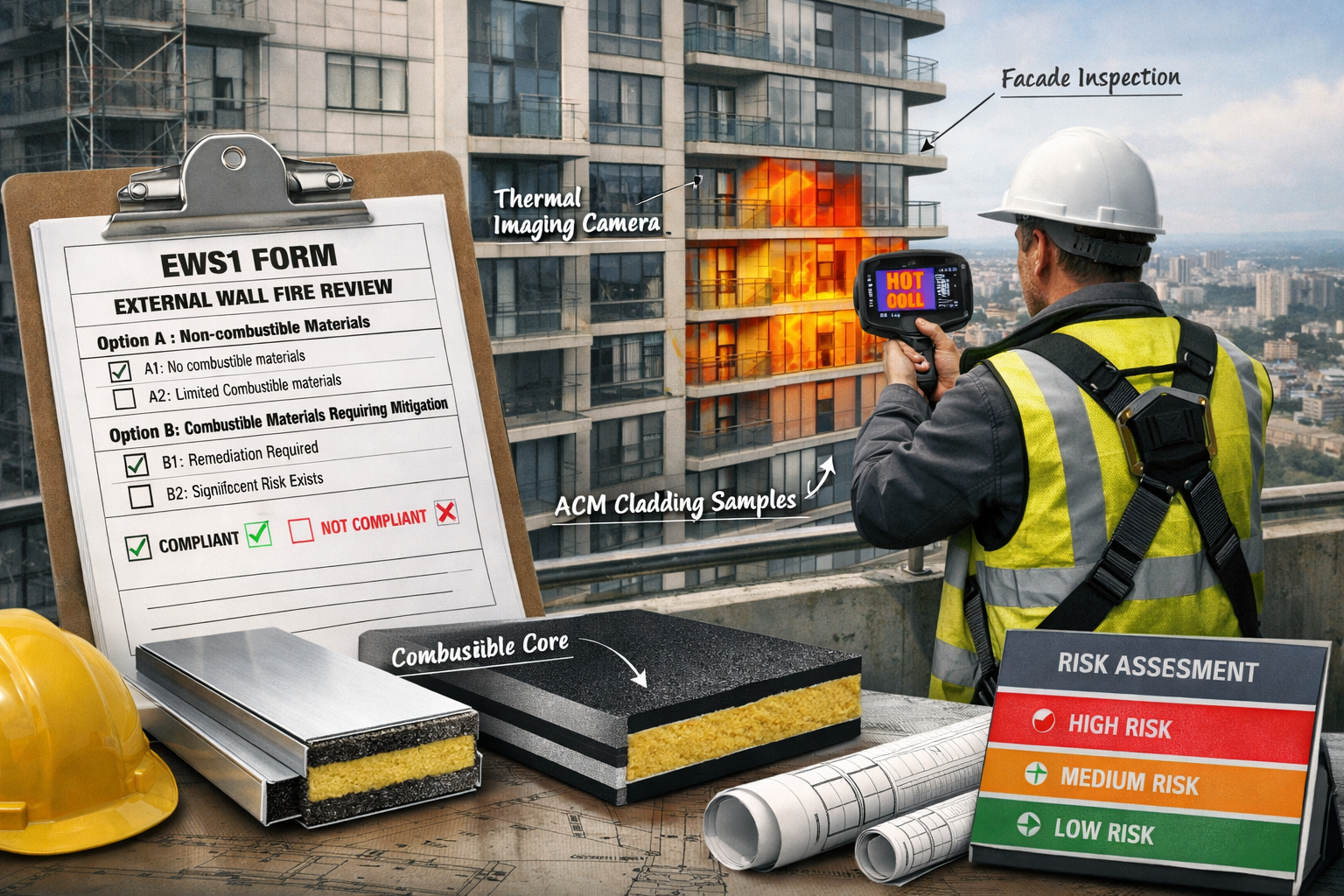
External Wall System Assessments: Surveyors must evaluate cladding materials, cavity barriers, and fire stopping measures with unprecedented precision. The EWS1 form process, while controversial, remains a critical component of building valuations and mortgage lending decisions.
Fire Risk Evaluation: Understanding fire spread mechanisms, compartmentation integrity, and evacuation route adequacy requires specialized knowledge. Professional building surveys now routinely incorporate fire safety assessments as standard practice.
Remediation Oversight: Surveyors often coordinate remediation projects, ensuring contractors implement solutions that meet current standards and address identified deficiencies comprehensively.
Cladding Checks and EWS1 Forms: Critical Requirements for 2026
The External Wall Fire Review (EWS1) process continues to evolve, with building surveyors playing an essential role in assessing building safety and enabling property transactions.
Understanding EWS1 Form Requirements
The EWS1 form provides a standardized assessment of external wall systems on buildings over 18 meters (or lower buildings with specific risk factors). While the form has faced criticism for creating market bottlenecks, it remains necessary for:
- Mortgage lending decisions on affected properties
- Building insurance underwriting and premium calculations
- Property valuations and market pricing
- Remediation prioritization by building owners and managing agents
Building surveyors conducting EWS1 assessments must hold appropriate professional qualifications and indemnity insurance. The upcoming competence verification requirements will further formalize these standards, with independent verification by UKAS-accredited Certification Bodies expected between 2027-2029[2].
Cladding Assessment Methodologies
Effective cladding assessment requires a systematic approach:
Visual Inspection: External examination of cladding materials, fixings, cavity barriers, and fire stopping. Surveyors should document material types, installation methods, and visible defects.
Documentation Review: Analysis of building plans, fire safety strategies, product certification, and installation records. Missing or inadequate documentation often indicates higher risk.
Material Testing: Where necessary, samples may require laboratory testing to confirm combustibility ratings and compliance with current standards. Recent warnings about zero-compression cavity barriers highlight the importance of verifying product specifications[8].
Risk Classification: Buildings are categorized based on height, occupancy type, cladding materials, and fire safety provisions. This classification determines remediation urgency and funding eligibility.
Valuation Implications for High-Risk Buildings
Properties with combustible cladding or unresolved fire safety defects face significant valuation challenges. Building surveyors must consider:
- Remediation cost estimates that can reach millions of pounds for large residential blocks
- Service charge implications for leaseholders facing interim safety measures
- Market stigma affecting demand and achievable prices
- Lending restrictions limiting the pool of potential buyers
When conducting property valuations, surveyors should clearly communicate fire safety risks and their impact on market value. Transparency helps clients make informed decisions and protects professional liability.
Fire Safety Remediation Surveys Post-Grenfell: 2026 Compliance Updates for Building Surveyors—New Standards and Timelines
The regulatory framework continues to tighten, with specific deadlines and enhanced standards that building surveyors must navigate carefully.
Accelerated Remediation Timelines
One of the most significant changes in 2026 affects social landlords, who must now fix fire hazards identified in remediation surveys within 15 days[4]. This includes:
- Fire door replacements when doors are identified as hazards
- Emergency lighting repairs affecting escape routes
- Fire alarm system deficiencies compromising detection capabilities
- Compartmentation breaches allowing fire and smoke spread
This accelerated timeline represents a substantial shift from previous compliance periods, requiring surveyors to prioritize findings effectively and communicate urgency to building owners and managing agents.
Enhanced Detection and Alarm Standards
Smoke and heat detectors now require higher sensitivity standards, with interlinked alarms mandatory in certain buildings[3]. This ensures immediate floor-by-floor alerting across:
- Residential buildings (particularly HMOs and purpose-built blocks)
- Office buildings with complex layouts
- Industrial sites with fire risk areas
Building surveyors should verify that alarm systems meet current standards during inspections, noting any deficiencies in their reports. The updated national guidance on fire control switches and lift keys, which went live on 23 October 2025, provides important reference material[1].
Expanded Sprinkler System Requirements
New guidelines mandate sprinkler installations in high-risk buildings including care homes, student housing, and taller residential blocks[3]. This expansion beyond previous requirements reflects growing recognition of sprinkler systems' effectiveness in controlling fires and protecting occupants.
When assessing buildings without sprinkler systems, surveyors should:
- Identify whether the building falls within the expanded requirements
- Estimate installation costs and feasibility
- Consider alternative compensatory measures where installation is impractical
- Document recommendations clearly in survey reports
Mandatory Evacuation Planning and Staff Training
Building managers must now maintain detailed evacuation procedures with regular drills, and staff training has become mandatory[3]. Regulatory bodies are increasing audits of evacuation documentation and training records, with potential penalties or closure notices for non-compliance.
Building surveyors conducting Level 3 building surveys should review:
- Evacuation route adequacy including width, signage, and emergency lighting
- Assembly point locations and capacity
- Personal Emergency Evacuation Plans (PEEPs) for vulnerable residents
- Staff training records demonstrating regular fire safety instruction
Upcoming Legislative Changes: What Building Surveyors Need to Know
Several significant regulatory developments will shape fire safety practice over the coming years, requiring surveyors to adapt their approaches and enhance their expertise.
Fire Safety Strategy Requirements (2029 Implementation)
Legislation to mandate fire safety strategies produced by registered fire engineers will be introduced in 2029[2]. While not immediately implemented, this represents a fundamental shift toward comprehensive, engineered approaches to fire safety.
The government is currently reviewing different options to achieve strengthened fire safety requirements without rushing statutory mandates, balancing safety, proportionality, and delivery considerations[1]. Stakeholder engagement with the Fire Engineers Advisory Panel, sector partners, and the National Fire Chiefs Council continues throughout 2026.
Implications for building surveyors:
- Increased collaboration with fire engineers on complex projects
- Greater emphasis on holistic fire safety strategies rather than isolated measures
- Enhanced documentation requirements for existing buildings
- Potential retroactive application to higher-risk buildings
Fire Risk Assessor Competence Requirements
A consultation on mandatory competence verification for fire risk assessors is scheduled for early 2026, with legislation expected between 2027-2029[2]. This will require independent verification by UKAS-accredited Certification Bodies, addressing a key accountability gap identified by the Grenfell Tower Inquiry[1].
Building surveyors conducting fire risk assessments should prepare for:
- Formal qualification requirements beyond current professional memberships
- Continuing professional development (CPD) in fire safety topics
- Independent competence verification through accredited bodies
- Enhanced professional indemnity insurance requirements
Approved Document B Updates
Recommendations to update Approved Document B (Fire Safety) are expected in 2026, alongside results of the Building Safety Regulator's broader review of Building Regulations guidance[2]. An expert panel of six members was appointed in July 2025 to guide this review.
These updates will likely address:
- External wall construction standards
- Compartmentation requirements
- Means of escape provisions
- Fire detection and alarm specifications
- Firefighting facilities
Building surveyors should monitor these developments closely, as updated guidance will affect both new construction and existing building assessments. Understanding when provisions apply retroactively versus prospectively is crucial for accurate survey reporting.
Building Products Regulation
The government's consultation on unsafe and unregulated building products will lead to secondary legislation later in 2026, with implementation as soon as Parliamentary time allows[5][9]. This crackdown addresses longstanding concerns about product testing, certification, and supply chain accountability.
Key areas of focus include:
- Stricter product testing and certification requirements
- Enhanced traceability throughout the supply chain
- Greater penalties for non-compliant products
- Improved market surveillance and enforcement
Building surveyors should verify product certifications carefully during inspections, recognizing that historical installations may include non-compliant materials. Recent warnings about zero-compression cavity barriers demonstrate the ongoing risks of substandard products[8].
Professional Standards and Best Practices for Fire Safety Surveys
Conducting effective fire safety remediation surveys requires technical expertise, systematic methodology, and clear communication. Building surveyors should adopt best practices that protect both public safety and professional liability.
Comprehensive Inspection Protocols
Pre-Survey Preparation: Review available documentation including building plans, previous survey reports, fire safety strategies, and product certifications. Understanding the building's history and construction type informs inspection priorities.
Systematic Inspection Approach: Follow a structured methodology covering:
- External wall systems and cladding materials
- Fire doors and compartmentation
- Fire detection and alarm systems
- Emergency lighting and signage
- Means of escape routes
- Firefighting facilities
- Cavity barriers and fire stopping
Documentation Standards: Maintain detailed records of inspections, maintenance, and identified deficiencies. Regulatory bodies increasingly conduct audits that can result in penalties for inadequate documentation[3].
Risk Assessment and Prioritization
Not all fire safety deficiencies present equal risk. Building surveyors should prioritize findings based on:
- Life safety impact: Deficiencies affecting means of escape or detection systems warrant immediate attention
- Fire spread potential: Compartmentation failures and combustible cladding enable rapid fire development
- Occupant vulnerability: Buildings housing vulnerable populations require enhanced protection
- Remediation feasibility: Some deficiencies can be addressed quickly, while others require complex projects
Clear risk categorization helps building owners allocate resources effectively and comply with accelerated remediation timelines.
Effective Communication with Stakeholders
Fire safety surveys often involve multiple stakeholders with varying technical knowledge. Building surveyors should:
Tailor communication to the audience, providing technical detail for professionals while explaining implications clearly for lay clients
Highlight urgent actions requiring immediate attention, distinguishing them from longer-term recommendations
Provide cost estimates for remediation works to support budgeting and decision-making
Explain regulatory context including applicable standards, enforcement timelines, and potential penalties
When conducting RICS building surveys, clear communication about fire safety findings helps clients understand risks and make informed decisions.
Continuing Professional Development
The evolving regulatory landscape demands ongoing professional development. Building surveyors should:
- Attend fire safety training courses and workshops
- Review updated guidance documents and technical standards
- Participate in professional forums and knowledge-sharing networks
- Maintain awareness of case law and enforcement actions
- Consider specialist fire safety qualifications
Learning materials for the updated national guidance on fire control switches and lift keys are expected to be completed before 31 March 2026, providing valuable reference material[1].
Practical Challenges and Solutions in Fire Safety Remediation
Building surveyors frequently encounter practical challenges when conducting fire safety assessments and overseeing remediation projects. Understanding common issues and effective solutions enhances professional effectiveness.
Access and Investigation Limitations
Challenge: Many fire safety features are concealed within walls, floors, and ceilings, making comprehensive assessment difficult without invasive investigation.
Solution: Use non-invasive techniques where possible (thermal imaging, borescopes) and recommend targeted invasive investigation where risks are highest. Clearly document limitations in survey reports to manage client expectations and professional liability.
Product Identification and Certification
Challenge: Identifying cladding materials and verifying product certifications, particularly in older buildings where documentation may be incomplete or missing.
Solution: Develop relationships with product manufacturers and testing laboratories. Consider material sampling and testing where visual identification is uncertain. Document assumptions clearly and recommend further investigation where necessary.
Funding and Cost Implications
Challenge: Remediation costs can be substantial, creating financial barriers for building owners and leaseholders.
Solution: Provide clear cost estimates and phasing options that prioritize life safety while managing financial constraints. Inform clients about available funding schemes and grants. Consider interim safety measures where full remediation is delayed.
Coordination with Multiple Professionals
Challenge: Fire safety remediation often requires coordination between surveyors, fire engineers, contractors, and regulatory authorities.
Solution: Establish clear communication protocols and document review processes. Clarify professional responsibilities and scope boundaries. Maintain regular project updates to ensure all parties remain informed.
The Future of Fire Safety Compliance: Preparing for 2027 and Beyond
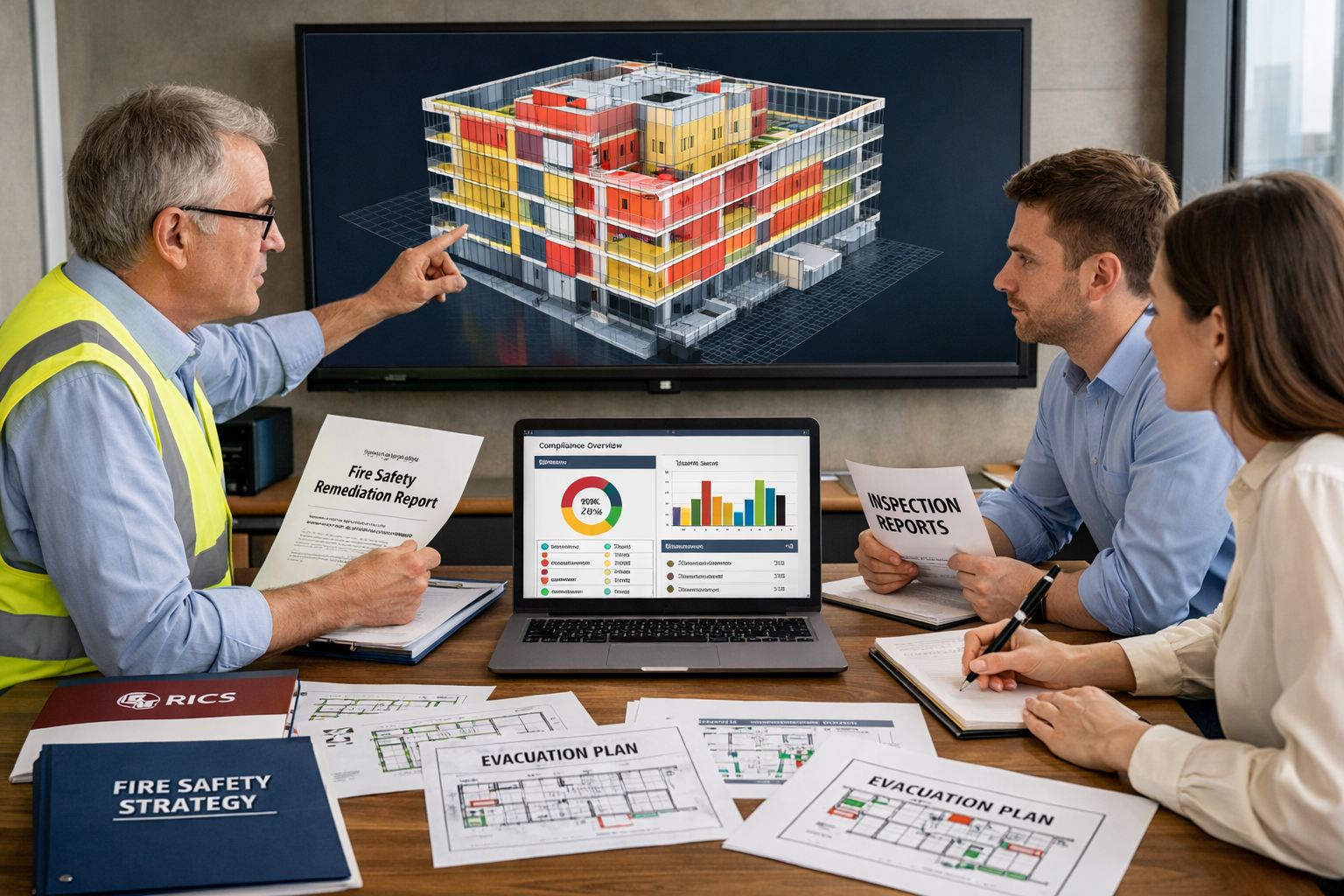
While 2026 brings significant regulatory developments, building surveyors should prepare for continued evolution of fire safety requirements in subsequent years.
Anticipated Regulatory Developments
2027-2029: Implementation of fire risk assessor competence verification requirements and potential introduction of mandatory fire safety strategies[2]
Ongoing: Continued refinement of the Building Safety Regulator's approach to higher-risk buildings, with lessons learned from initial implementation
Long-term: Possible expansion of the higher-risk building regime to additional building types or lower height thresholds
Technology and Innovation
Emerging technologies offer new opportunities for fire safety assessment and monitoring:
- Digital twins and BIM: Enhanced visualization of fire safety systems and compartmentation
- IoT sensors: Real-time monitoring of fire detection systems and building conditions
- AI-powered risk assessment: Automated analysis of building characteristics and fire risk factors
- Drone inspections: External wall assessment without scaffolding or rope access
Building surveyors should embrace technological innovation while maintaining professional judgment and expertise.
Professional Opportunities
The ongoing focus on fire safety creates significant opportunities for building surveyors who develop specialist expertise. Areas of potential specialization include:
- External wall system assessment and EWS1 certification
- Fire risk assessment and competence verification
- Remediation project management
- Expert witness services for fire safety disputes
- Training and education for other professionals
Surveyors who invest in fire safety expertise position themselves for professional growth in a market with sustained demand for specialist services.
Conclusion
Fire Safety Remediation Surveys Post-Grenfell: 2026 Compliance Updates for Building Surveyors represent both challenges and opportunities for the profession. The regulatory landscape continues to evolve, with accelerated remediation timelines, enhanced competence requirements, and stricter enforcement creating new obligations for building surveyors.
Success in this environment requires:
✅ Technical expertise in fire safety assessment, cladding evaluation, and building regulations
✅ Systematic methodology for comprehensive inspections and risk prioritization
✅ Clear communication with clients, stakeholders, and regulatory authorities
✅ Ongoing professional development to maintain current knowledge and specialist skills
✅ Ethical practice that prioritizes public safety and professional standards
The upcoming consultation on fire risk assessor competence verification in early 2026, expected updates to Approved Document B, and new building products regulations will further shape professional practice[2][5]. Building surveyors who prepare proactively for these changes will be best positioned to serve their clients effectively while maintaining the highest standards of public safety.
Next Steps for Building Surveyors
- Review current competence: Assess your fire safety knowledge and identify development areas
- Monitor regulatory updates: Subscribe to government consultations and industry publications
- Enhance professional networks: Connect with fire engineers, building control professionals, and specialist contractors
- Update survey methodologies: Incorporate new requirements into inspection protocols and reporting templates
- Consider specialist training: Pursue fire safety qualifications and certifications to enhance expertise
For comprehensive building surveys that address fire safety alongside structural and maintenance considerations, professional chartered surveyors provide essential expertise. Whether you need guidance on which building survey you need or specific fire safety assessments, working with qualified professionals ensures compliance and protects your interests.
The legacy of Grenfell Tower demands nothing less than unwavering commitment to fire safety excellence. Building surveyors carry significant responsibility in this mission, and the 2026 compliance updates provide a framework for delivering that commitment effectively.
References
[1] Annual Report February 2026 The Construction Industry – https://www.gov.uk/government/publications/grenfell-tower-inquiry-government-annual-report-february-2026/annual-report-february-2026-the-construction-industry
[2] Key Takeaways From The Third Grenfell Progress Report – https://www.bclplaw.com/en-US/events-insights-news/key-takeaways-from-the-third-grenfell-progress-report.html
[3] Fire Safety Regulations Whats New In 2026 – https://www.jensengroup.co.uk/fire-safety-regulations-whats-new-in-2026/
[4] The Key Changes In 2026 That You Need To Be Aware Of – https://selo.global/the-key-changes-in-2026-that-you-need-to-be-aware-of/
[5] Government Targets Unsafe Building Products – https://www.fsmatters.com/Government-targets-unsafe-building-products
[8] Fire Safety Warning Issued Over Zero Compression Cavity Barriers – https://constructionmanagement.co.uk/fire-safety-warning-issued-over-zero-compression-cavity-barriers/
[9] Government Cracks Down On Unregulated Building Products – https://housingdigital.co.uk/government-cracks-down-on-unregulated-building-products/