

nn
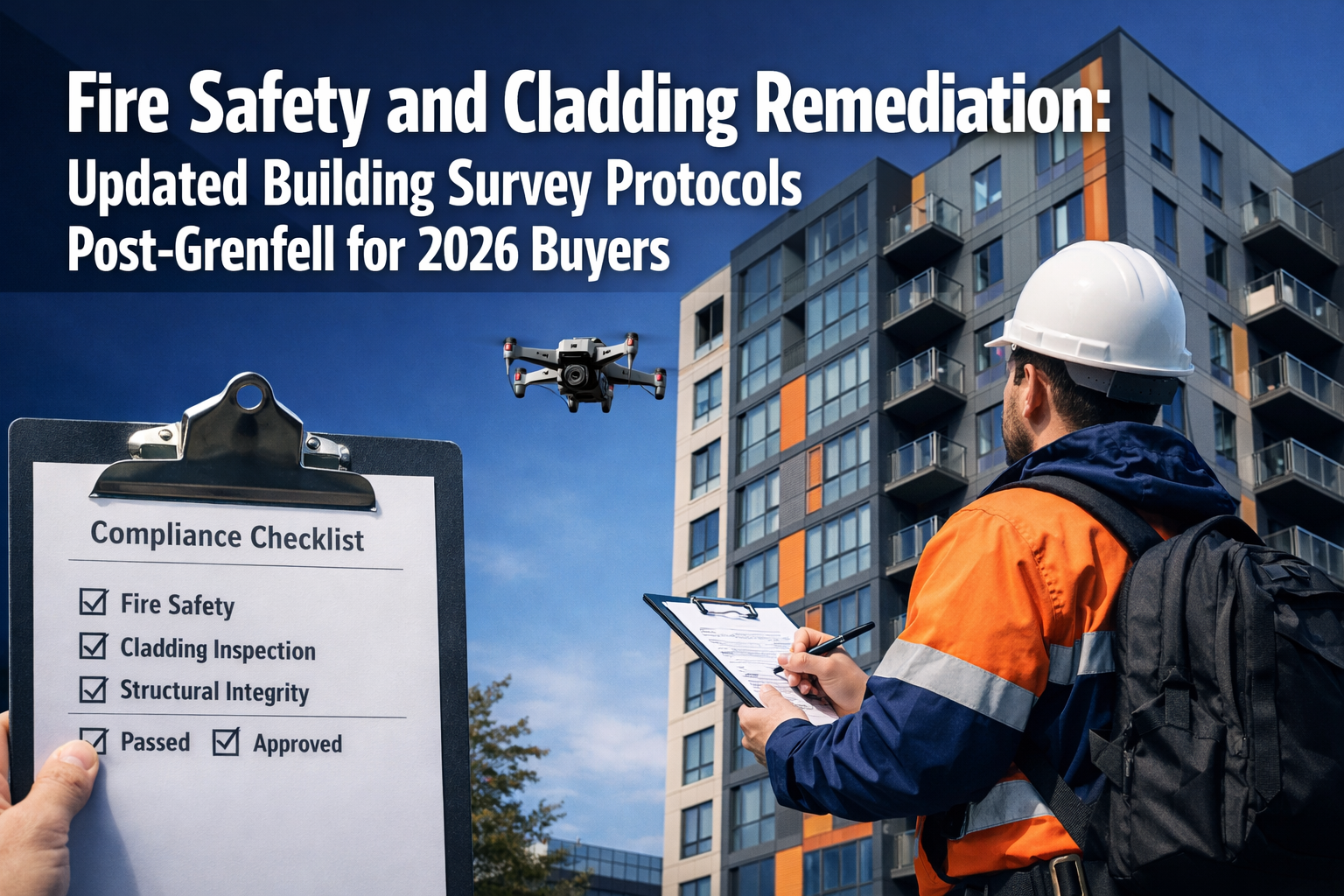
The tragic Grenfell Tower fire fundamentally changed how property buyers approach residential buildings in the UK. In 2026, purchasing a flat or apartment requires far more than traditional survey checks—it demands comprehensive fire safety assessments, cladding compliance verification, and detailed understanding of remediation obligations. Fire Safety and Cladding Remediation: Updated Building Survey Protocols Post-Grenfell for 2026 Buyers have evolved into structured risk assessment frameworks that protect purchasers from inheriting dangerous buildings and unexpected financial liabilities.
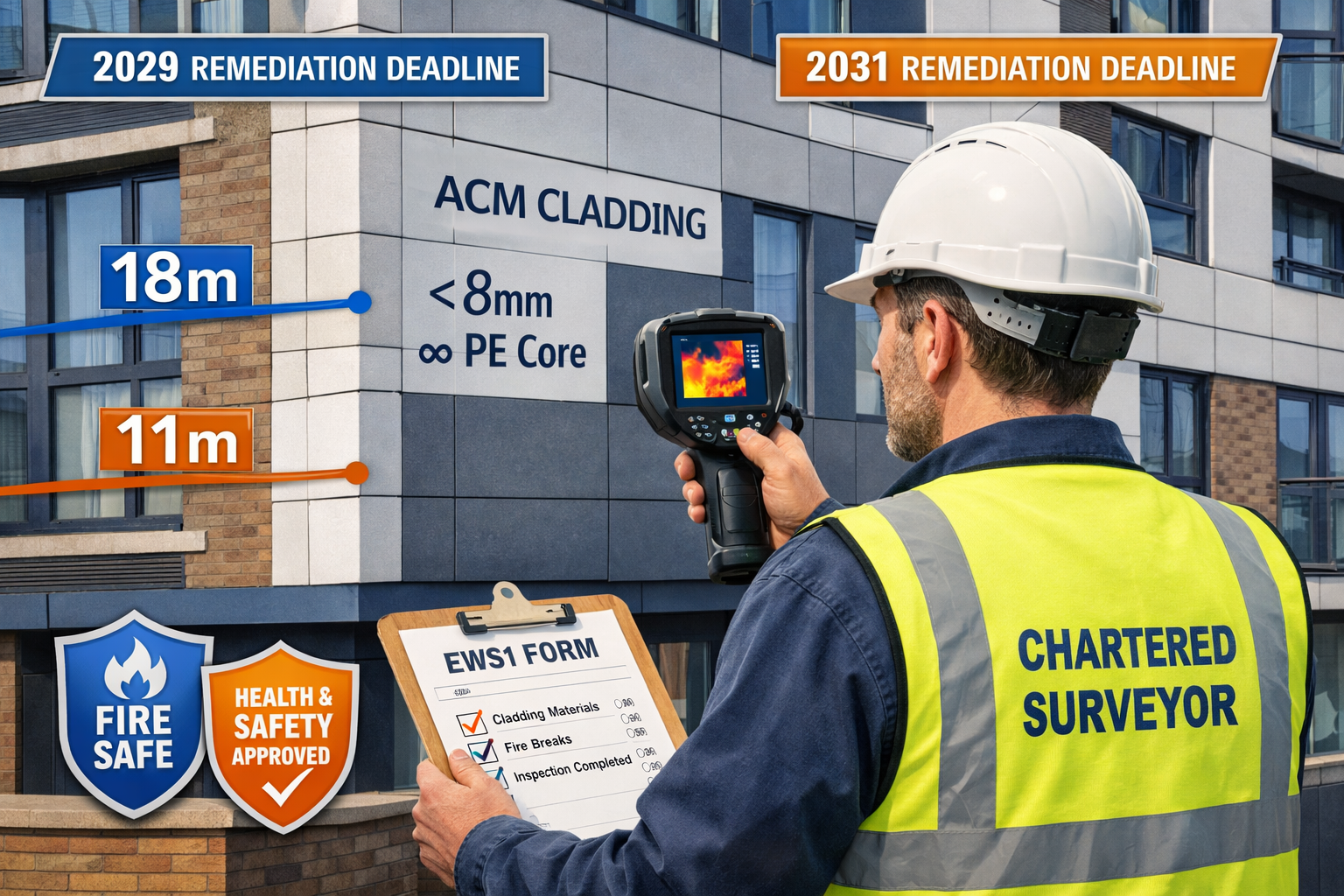
With new legislation mandating remediation deadlines of 2029 for buildings 18 metres and taller and 2031 for buildings between 11-18 metres, buyers must navigate complex compliance landscapes.[4] The stakes are extraordinarily high: approximately 5,570 residential buildings have been identified with unsafe cladding, yet an estimated 60% of buildings over 11 metres with dangerous materials remain unidentified.[1][3] This comprehensive guide examines how building survey protocols have transformed to address these critical safety concerns.
Key Takeaways
🔥 Mandatory remediation deadlines now require unsafe cladding removal by 2029 for taller buildings (18m+) and 2031 for mid-rise buildings (11-18m), with unlimited fines or imprisonment for non-compliance
📋 Structured survey protocols must now include specialist fire safety assessments, EWS1 forms, cladding material identification, and compliance verification as standard components
💰 Leaseholder protections shield qualifying residents from historical remediation costs under the Building Safety Act 2022, but buyers must verify building eligibility before purchase
🏗️ Only 35% of identified buildings (1,946 out of 5,570) have completed remediation works as of October 2025, meaning most buyers will encounter properties still requiring safety upgrades
⚖️ Building Safety Levy launches October 2026, raising £3.4 billion from developers over ten years to fund ongoing remediation efforts across England
Understanding the Post-Grenfell Regulatory Landscape
The aftermath of the Grenfell Tower tragedy created seismic shifts in building safety legislation. The Building Safety Act 2022 established comprehensive frameworks governing residential buildings, particularly those over 11 metres in height. These regulations fundamentally altered what constitutes adequate due diligence for property purchases.
Current Remediation Statistics and Timeline
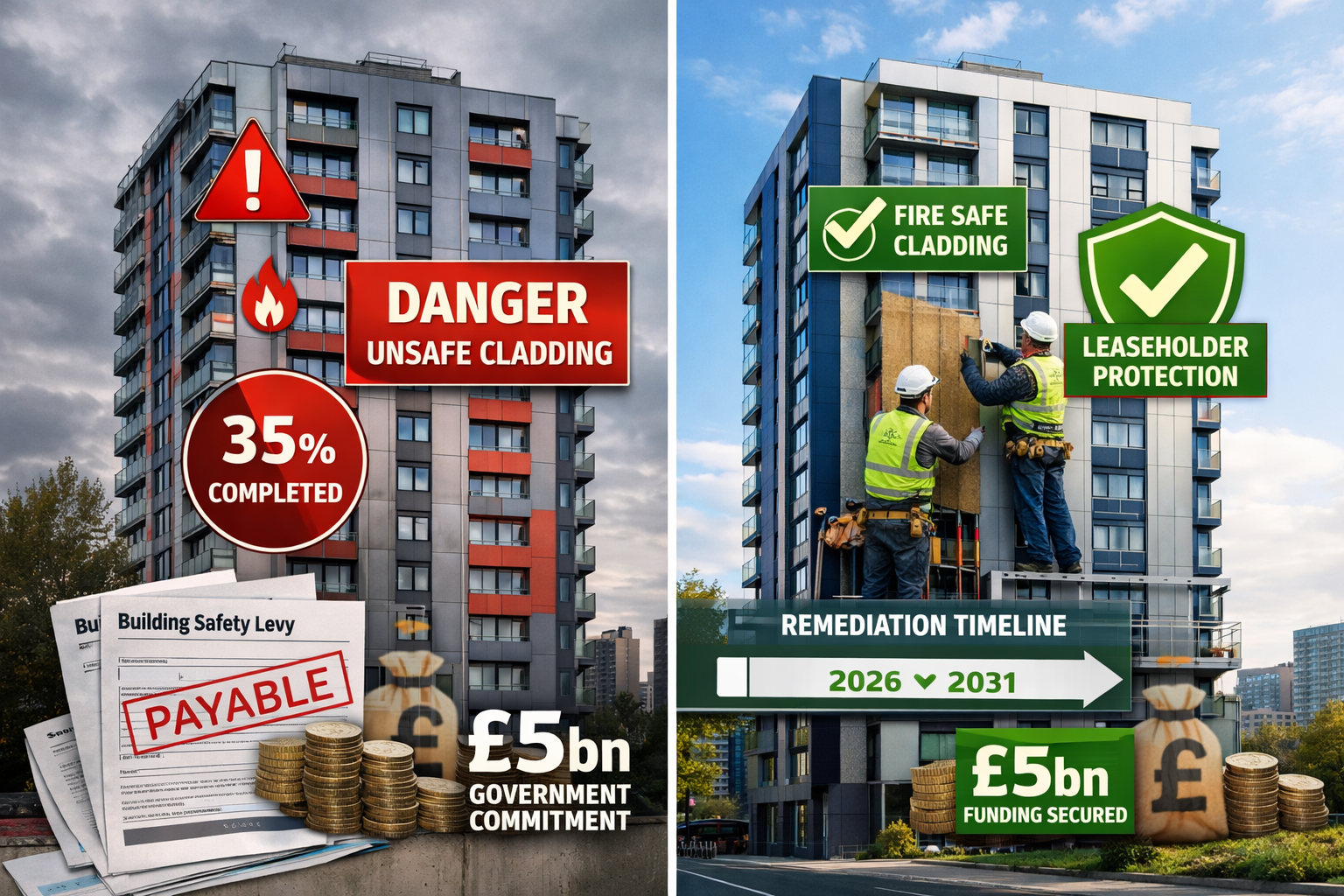
As of October 2025, government data reveals concerning progress gaps. Of the 5,570 residential buildings identified with unsafe cladding over 11 metres, only 49% (2,705 buildings) have started or completed remediation works.[1] More critically, just 35% (1,946 buildings) have fully completed the necessary safety upgrades.[1]
The National Audit Office estimates that approximately 60% of buildings over 11 metres with unsafe cladding remain completely unidentified.[3] This hidden risk pool represents thousands of properties where buyers may unknowingly purchase flats with undiscovered safety defects.
Legislative Deadlines and Enforcement
The new Remediation Bill establishes clear timelines:
- Buildings 18 metres and taller: Unsafe cladding remediation must be completed by 2029[4]
- Buildings 11-18 metres: Remediation deadline set for 2031[4]
- ACM cladding buildings: Work must commence by March 2025[3]
Enforcement mechanisms carry significant weight. Building owners failing to comply without reasonable excuse face unlimited fines or imprisonment.[4] This creates urgent pressure on freeholders and managing agents to accelerate remediation programmes.
Financial Framework and Funding
The government's £5 billion commitment announced in January 2023 provides substantial funding for remediation efforts.[2] Additionally, the Building Safety Levy coming into effect 1 October 2026 will apply to developers of new residential buildings in England, expected to raise £3.4 billion over ten years.[6]
A further £1 billion investment specifically targets social housing remediation, backed by partnerships with the social housing sector to accelerate work across England.[4]
Understanding these regulatory frameworks is essential for buyers commissioning comprehensive building surveys in 2026.
Fire Safety and Cladding Remediation: Updated Building Survey Protocols for 2026 Property Purchases
Modern building surveys have evolved far beyond traditional structural assessments. Fire Safety and Cladding Remediation: Updated Building Survey Protocols Post-Grenfell for 2026 Buyers now incorporate multi-layered safety verification processes that address combustible materials, fire resistance, evacuation routes, and regulatory compliance.
Essential Survey Components for Cladding Assessment
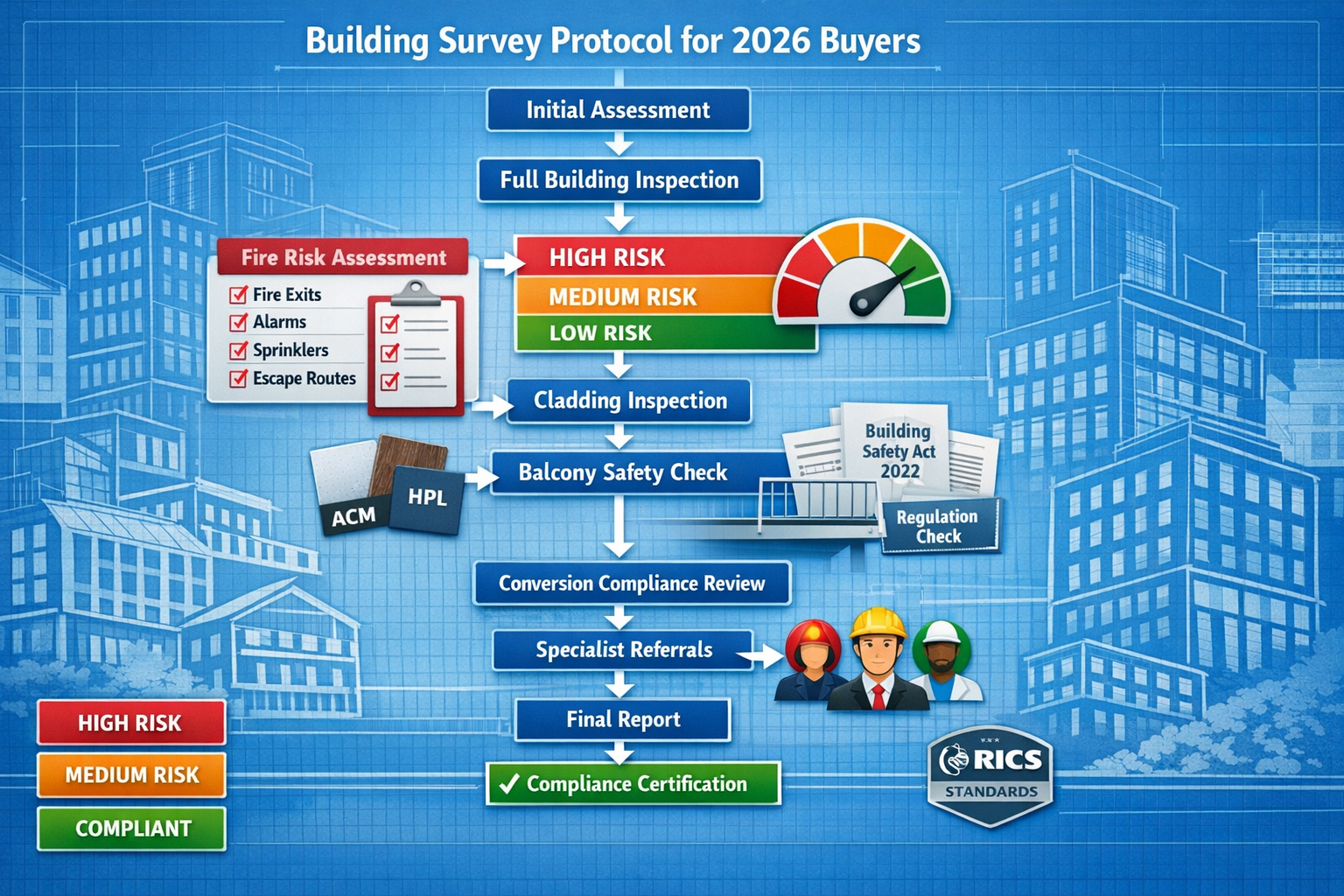
A comprehensive 2026 building survey must include:
1. External Wall System (EWS1) Form Verification
The EWS1 form remains the industry standard for certifying external wall safety on buildings over 18 metres (or over 11 metres with specific risk factors). Surveyors must:
- ✅ Verify current EWS1 certification status
- ✅ Confirm certification date and validity
- ✅ Identify any conditional passes requiring remediation
- ✅ Document buildings lacking EWS1 assessment
- ✅ Flag buildings with failed EWS1 assessments
Buildings without valid EWS1 forms typically face mortgage lending restrictions, making them difficult or impossible to finance through traditional lenders.
2. Cladding Material Identification and Testing
Surveyors must identify all external wall materials, with particular focus on:
| Material Type | Risk Level | Remediation Priority |
|---|---|---|
| ACM (Aluminium Composite Material) | Critical | Immediate (by March 2025) |
| HPL (High Pressure Laminate) | High | Priority remediation |
| Timber cladding | Variable | Assessment-dependent |
| UPVC/Vinyl | Medium-Low | Case-by-case evaluation |
| Brick/Stone | Low | Generally compliant |
Professional surveyors may recommend specialist testing through accredited laboratories to definitively identify material composition and fire performance characteristics.
3. Fire Risk Assessment Integration
Modern surveys incorporate fire risk assessment findings, evaluating:
- Compartmentation integrity: Checking fire barriers between flats and communal areas
- Fire doors: Assessing condition, certification, and proper installation
- Escape routes: Evaluating stairwell protection and emergency exits
- Fire detection systems: Verifying alarm coverage and maintenance
- Sprinkler systems: Documenting presence and functionality
4. Balcony and Attachment Safety
Post-Grenfell protocols specifically address balcony safety, a critical concern following several high-profile structural failures. Surveys must examine:
- Attachment methods to main building structure
- Material composition (timber, metal, composite)
- Load-bearing capacity and structural integrity
- Fire resistance ratings
- Compliance with current building regulations
Surveyors increasingly utilize drone surveys to safely inspect upper-level balconies and external features without requiring expensive scaffolding or access equipment.
5. Conversion and Alteration Compliance
Buildings that underwent conversion from commercial to residential use require enhanced scrutiny. Surveys must verify:
- Building regulation approval for conversion works
- Fire compartmentation appropriate for residential occupancy
- Means of escape compliant with residential standards
- Sound insulation meeting residential requirements
- Structural adequacy for residential loading
Many converted buildings, particularly former office blocks, present unique fire safety challenges that weren't adequately addressed during original conversion works.
Specialist Referral Protocols
Fire Safety and Cladding Remediation: Updated Building Survey Protocols Post-Grenfell for 2026 Buyers recognize that chartered surveyors cannot assess every technical aspect independently. Structured referral protocols now guide buyers toward appropriate specialists:
When to engage fire safety engineers:
- Buildings with complex fire protection systems
- Properties requiring detailed compartmentation analysis
- Situations where EWS1 assessment is needed
- Buildings with mixed-use occupancy
When to engage structural engineers:
- Balcony structural concerns
- Cladding attachment integrity questions
- Buildings showing signs of structural movement
- Properties requiring load capacity verification
When to engage building control specialists:
- Conversion compliance verification
- Building regulation compliance testing
- Retrospective approval requirements
- Completion certificate verification
Professional surveyors maintain networks of accredited specialists and provide clear guidance on which additional assessments buyers should commission based on survey findings.
Protecting Buyers: Compliance Checks and Legal Safeguards
The regulatory framework surrounding Fire Safety and Cladding Remediation: Updated Building Survey Protocols Post-Grenfell for 2026 Buyers extends beyond physical inspections into legal protections and compliance verification.
Leaseholder Protection Mechanisms
Recent Court of Appeal rulings have confirmed that leaseholders are protected from remediation costs for historical safety defects identified before the Building Safety Act 2022 came into force.[6] However, these protections come with important qualifications:
Qualifying leaseholders receive protection when:
- The building is over 11 metres or contains at least 5 storeys
- The leaseholder owns no more than 3 UK properties
- The property value falls below specified thresholds
- Defects existed before the Act's commencement
Non-qualifying leaseholders remain excluded from cost protections under current remediation plans.[3] This creates a two-tier system where some buyers inherit significant financial liabilities while others are shielded.
Pre-Purchase Legal Due Diligence
Buyers must instruct solicitors to conduct enhanced enquiries covering:
Building Safety Documentation
- Building Safety Case (for higher-risk buildings)
- Fire Risk Assessment current and historical
- Remediation plans and timelines
- Service charge budgets including remediation provisions
- Building Safety Manager appointment and contact details
Financial Liability Assessment
Solicitors should obtain:
- Section 20 consultation notices for major works
- Historical service charge accounts showing remediation costs
- Leaseholder loan agreements if applicable
- Freeholder remediation commitments in writing
- Developer liability acknowledgments under Building Safety Act
Insurance and Warranty Verification
Critical insurance checks include:
- Buildings insurance confirmation and premium levels
- Professional indemnity insurance for remediation contractors
- Latent defects insurance if available
- Warranty coverage for completed remediation works
Many buildings with cladding issues face dramatically increased insurance premiums or complete inability to obtain coverage, creating additional financial burdens for leaseholders.
Understanding Service Charge Implications
Remediation costs create significant service charge impacts. Buyers must understand:
Immediate cost implications:
- Increased interim service charges for waking watches
- Enhanced fire safety measures (additional alarms, signage)
- Professional fees for assessments and certifications
- Insurance premium increases
Long-term financial planning:
- Potential service charge increases of £5,000-£15,000+ annually during remediation
- Duration of works (typically 18-36 months for complex projects)
- Contingency provisions for unforeseen issues
- Post-remediation service charge normalization
Buyers should request detailed financial projections from managing agents before completing purchases. Professional surveyors can help interpret these projections and identify unrealistic assumptions.
Mortgage and Valuation Considerations
The cladding crisis fundamentally altered property valuations and mortgage availability. Buyers face:
Valuation challenges:
- Properties with unsafe cladding often valued at £0 by lenders
- EWS1 failures typically render properties unmortgageable
- Buildings awaiting assessment face valuation uncertainty
- Completed remediation may not immediately restore full value
Mortgage restrictions:
- Most mainstream lenders refuse applications without valid EWS1
- Higher deposit requirements (often 25-40%) for buildings with known issues
- Specialist lenders charging premium interest rates
- Limited product availability for affected properties
These factors make cash purchases significantly more common for properties with cladding concerns, as buyers cannot rely on traditional mortgage financing.
Negotiation Strategies Based on Survey Findings
Survey results revealing fire safety or cladding issues provide substantial negotiation leverage. Buyers can:
Request price reductions reflecting:
- Cost of remediation works (if buyer will be liable)
- Period of reduced property value and saleability
- Inconvenience and disruption during remediation
- Risk of unforeseen additional costs
Seek contractual protections including:
- Retention of funds until remediation completion
- Indemnities against future costs
- Warranties from sellers regarding disclosed information
- Conditional contracts tied to remediation milestones
Professional guidance on how to negotiate house price down after survey becomes particularly valuable when dealing with complex fire safety issues.
The Role of Professional Surveyors in 2026
Fire Safety and Cladding Remediation: Updated Building Survey Protocols Post-Grenfell for 2026 Buyers demand exceptional professional competence from chartered surveyors. The complexity of modern building safety assessment requires specialized knowledge and continuous professional development.
RICS Standards and Professional Requirements
The Royal Institution of Chartered Surveyors (RICS) has updated professional standards to reflect post-Grenfell realities. Surveyors conducting residential building surveys must:
- Maintain current knowledge of Building Safety Act requirements
- Understand EWS1 assessment processes and limitations
- Recognize high-risk cladding materials on visual inspection
- Identify situations requiring specialist referral
- Provide clear risk communication to clients
- Document findings with appropriate detail for decision-making
Professional indemnity insurance requirements have increased substantially, reflecting the higher stakes involved in fire safety assessments.
Levels of Survey and Appropriate Selection
Buyers must select appropriate survey levels based on building characteristics:
RICS Level 2 Survey (HomeBuyer Report)
Appropriate for:
- Modern buildings (post-2000) in good condition
- Low-rise properties (under 11 metres)
- Buildings with confirmed valid EWS1 certification
- Properties without visible external defects
Limitations:
- Less detailed external wall assessment
- May not identify hidden cladding issues
- Limited specialist recommendations
RICS Level 3 Survey (Full Building Survey)
Recommended for:
- All buildings over 11 metres regardless of age
- Properties with known or suspected cladding issues
- Converted buildings
- Properties lacking EWS1 certification
- Buildings showing visible external defects
A Level 3 Full Building Survey provides comprehensive assessment of building fabric, systems, and compliance issues essential for informed purchasing decisions.
Technology Integration in Modern Surveys
Advanced technology enhances surveyor capabilities:
Thermal imaging cameras detect:
- Insulation deficiencies
- Air leakage through external walls
- Hidden moisture penetration
- Thermal bridging issues
Drone technology enables:
- Safe inspection of high-level cladding
- Detailed photographic documentation
- Assessment of roof and upper-level features
- Reduced inspection costs compared to scaffolding
Moisture meters and sensors identify:
- Water penetration through cladding systems
- Condensation within wall cavities
- Potential fire barrier degradation
- Hidden defects not visible externally
Regional Considerations and Local Expertise
Building safety issues vary significantly by region. Buyers benefit from surveyors with local expertise:
London and major cities present:
- Higher concentration of high-rise buildings
- More complex ownership structures
- Greater prevalence of cladding issues
- Established remediation programmes
Buyers in areas like Camden, Chelsea, or Battersea particularly benefit from surveyors familiar with local building stock and common issues.
Regional markets including Hertfordshire, Buckinghamshire, and surrounding areas face:
- Different building types and construction methods
- Varying remediation progress
- Local authority interpretation differences
- Distinct market conditions affecting values
Coordinating Multi-Disciplinary Assessments
Complex buildings require coordinated assessment teams. Professional surveyors orchestrate:
Assessment sequencing:
- Initial building survey identifying concerns
- Specialist referrals based on findings
- Coordinated site visits minimizing disruption
- Integrated reporting providing coherent advice
- Prioritized recommendations for action
Communication management:
- Single point of contact for buyer
- Coordination between specialists
- Consolidated reporting
- Unified recommendations
- Clear cost implications
This coordinated approach ensures buyers receive comprehensive, actionable advice rather than fragmented specialist reports requiring interpretation.
Future Outlook: Building Safety Beyond 2026
The regulatory landscape continues evolving. Understanding likely developments helps buyers make informed long-term decisions.
Anticipated Regulatory Changes
Enhanced building control:
- Stricter oversight of conversion projects
- Mandatory registration for higher-risk buildings
- Digital building passports tracking safety information
- Increased enforcement powers for regulators
Extended remediation requirements:
- Potential expansion to buildings under 11 metres
- Additional materials beyond cladding (insulation, fire barriers)
- Retrospective sprinkler installation requirements
- Enhanced compartmentation standards
Developer accountability:
- Extended liability periods for building defects
- Mandatory warranties for new construction
- Increased financial penalties for non-compliance
- Criminal sanctions for serious safety breaches
Market Impact Projections
The cladding crisis will continue influencing property markets:
Price differentiation:
- Significant premiums for certified-safe buildings
- Persistent discounts for properties awaiting remediation
- Value recovery following successful remediation
- Location-specific variations in impact severity
Transaction volumes:
- Continued suppression in affected segments
- Cash buyer dominance for problem properties
- Gradual mortgage availability improvement
- Increased professional survey uptake
Remediation acceleration:
- Government pressure driving faster completion
- Improved contractor capacity and expertise
- Standardized remediation approaches
- Better cost predictability
Technological Advancements
Innovation will transform building assessment:
Digital building information:
- Centralized safety databases
- Blockchain-verified compliance records
- Real-time remediation tracking
- Automated risk assessment tools
Advanced inspection methods:
- AI-powered defect identification
- Robotic inspection systems
- Enhanced thermal and moisture detection
- Predictive maintenance algorithms
Improved materials:
- Next-generation fire-resistant cladding
- Self-monitoring building systems
- Enhanced fire suppression technology
- Sustainable safety solutions
Buyer Strategies for Long-Term Protection
Prudent buyers should:
Prioritize certified-safe buildings:
- Focus on properties with completed remediation
- Verify comprehensive safety documentation
- Confirm valid EWS1 certification
- Check insurance availability and costs
Build contingency reserves:
- Maintain emergency funds for unexpected costs
- Participate in sinking fund contributions
- Consider additional insurance coverage
- Plan for potential service charge increases
Stay informed:
- Monitor regulatory developments
- Maintain relationships with managing agents
- Participate in leaseholder forums
- Review building safety updates regularly
Engage professional advisors:
- Commission comprehensive surveys
- Instruct experienced solicitors
- Consult independent financial advisors
- Seek specialist input when needed
Practical Steps for 2026 Property Buyers
Implementing Fire Safety and Cladding Remediation: Updated Building Survey Protocols Post-Grenfell for 2026 Buyers requires systematic approach:
Pre-Viewing Research
Before viewing properties:
- Check building height using planning records or online databases
- Research building history including construction date and any conversions
- Review online forums for resident-reported issues
- Contact managing agents requesting fire safety documentation
- Verify EWS1 status before committing to viewings
This preliminary research prevents wasting time on unsuitable properties.
During Property Viewings
Observable red flags include:
🚩 Visible external cladding panels (particularly metallic or composite materials)
🚩 "Waking watch" personnel or fire safety notices
🚩 Scaffolding or remediation works in progress
🚩 Restricted balcony access or safety warnings
🚩 Excessive fire safety signage suggesting known issues
🚩 Evidence of recent external wall repairs or patches
Commissioning Appropriate Surveys
Survey selection criteria:
- Buildings over 18m: Always commission Level 3 survey with fire safety specialist
- Buildings 11-18m: Level 3 survey recommended, specialist assessment if concerns identified
- Converted buildings: Level 3 survey with construction law advice component
- Buildings under 11m: Level 2 may suffice unless visible concerns present
Timing considerations:
- Commission surveys immediately after offer acceptance
- Allow 2-3 weeks for comprehensive Level 3 surveys
- Schedule specialist assessments within survey period
- Coordinate with solicitor enquiries for efficiency
Interpreting Survey Results
Professional survey reports should provide:
Clear risk categorization:
- Critical issues: Immediate safety concerns requiring urgent action
- Significant defects: Important problems affecting value or usability
- Minor issues: Routine maintenance items
- Observations: Noted items not requiring immediate action
Actionable recommendations:
- Specific next steps for each identified issue
- Specialist referrals with contact details
- Cost estimates for remediation where possible
- Prioritization of recommended actions
Decision support:
- Clear advice on proceeding with purchase
- Negotiation points and suggested price adjustments
- Contingency recommendations
- Long-term maintenance considerations
Making Informed Decisions
Survey results inform three potential outcomes:
1. Proceed with confidence
- Building demonstrates comprehensive safety compliance
- Valid certifications in place
- No significant concerns identified
- Value represents fair market price
2. Proceed with negotiation
- Issues identified but manageable
- Price adjustment justified by findings
- Seller willing to address concerns
- Risk acceptable with appropriate protections
3. Withdraw from purchase
- Critical safety issues identified
- Seller unwilling to address concerns adequately
- Unquantifiable future liabilities
- Better alternatives available in market
Professional surveyors provide clear guidance supporting these decisions, but ultimate choice rests with buyers based on risk tolerance and financial capacity.
Conclusion
Fire Safety and Cladding Remediation: Updated Building Survey Protocols Post-Grenfell for 2026 Buyers represent fundamental shifts in property due diligence. The tragic lessons of Grenfell Tower have created comprehensive regulatory frameworks protecting future residents while imposing complex compliance requirements on building owners and challenging decisions for property purchasers.
With only 35% of identified buildings having completed remediation and 60% of affected buildings still unidentified, buyers face significant risks without proper professional guidance.[1][3] The mandatory remediation deadlines of 2029 and 2031 create urgency, but also uncertainty about which buildings will meet compliance requirements and what costs may arise during remediation processes.[4]
Modern building surveys must extend far beyond traditional structural assessments to incorporate fire safety verification, cladding compliance checks, specialist referrals, and comprehensive risk communication. Buyers who commission appropriate professional surveys, engage experienced legal advisors, and conduct thorough due diligence protect themselves from inheriting dangerous buildings and unexpected financial liabilities.
Actionable Next Steps for Buyers
Immediate actions:
✅ Research target buildings before viewing to identify potential cladding issues
✅ Commission Level 3 surveys for any building over 11 metres or with visible cladding
✅ Request EWS1 forms and fire safety documentation before making offers
✅ Engage experienced solicitors familiar with Building Safety Act requirements
✅ Verify leaseholder protections apply to your specific circumstances
During purchase process:
✅ Review all specialist reports carefully and ask questions about unclear findings
✅ Obtain detailed service charge projections including remediation cost provisions
✅ Confirm insurance availability and premium costs before exchange
✅ Negotiate price adjustments reflecting identified issues and future liabilities
✅ Build contingency funds for unexpected costs during ownership
Long-term ownership:
✅ Maintain relationships with managing agents and building safety managers
✅ Participate actively in leaseholder consultations and decisions
✅ Monitor regulatory developments affecting your building
✅ Keep comprehensive records of all safety documentation and remediation works
✅ Plan exit strategies considering potential future saleability challenges
The post-Grenfell regulatory environment demands unprecedented diligence from property buyers. Those who approach purchases with comprehensive professional support, thorough investigation, and realistic assessment of risks and costs position themselves for successful, safe homeownership. Those who cut corners or ignore warning signs expose themselves to potentially catastrophic financial and safety consequences.
The building safety revolution continues transforming UK property markets. Buyers who embrace rigorous survey protocols and compliance verification don't just protect their investments—they contribute to the broader mission of ensuring no one else experiences the tragedy that befell Grenfell Tower residents. In 2026 and beyond, professional building surveys aren't optional extras—they're essential safeguards in an increasingly complex and regulated property landscape.
References
[1] Progress Report Summary Update – https://www.gov.uk/government/publications/grenfell-tower-inquiry-government-progress-report/progress-report-summary-update
[2] Uk Announces Massive Cladding Remediation Mandate In Wake Of Grenfell Tower Inquiry – https://verticalurbanism.org/news-article/uk-announces-massive-cladding-remediation-mandate-in-wake-of-grenfell-tower-inquiry/
[3] Plans To Accelerate Cladding Remediation Unveiled – https://www.nrla.org.uk/news/plans-to-accelerate-cladding-remediation-unveiled
[4] New Law Will Require High Rise Cladding Remediation By 2029 – https://architecturaltechnology.com/resource/new-law-will-require-high-rise-cladding-remediation-by-2029.html
[6] New Regulation Shields Leaseholders From Cladding Costs – https://www.propertymark.co.uk/resource/new-regulation-shields-leaseholders-from-cladding-costs.html