

Social housing providers face unprecedented scrutiny as 2026 marks the implementation of Phase 2 regulations under Awaab's Law, bringing structural collapse and explosion hazards into the regulatory spotlight for the first time. With investigation timelines compressed to just 10 working days and remedial action required within 5 days, expert witnesses must now navigate a fundamentally transformed landscape where technical assessments directly influence enforcement outcomes, compensation claims, and landlord liability.[1][2] Understanding Explosion and Structural Collapse Hazards Under Awaab's Law: Expert Witness Strategies for PRS Dispute Resolution has become essential for surveyors, engineers, and legal professionals operating in housing disrepair cases.
This shift represents more than procedural change—it establishes a new standard of accountability where technical evidence quality determines dispute outcomes. Expert witnesses must now align their methodologies with RICS guidance while addressing the specific hazard categories and compressed timelines that define Phase 2 compliance.
Key Takeaways
- ⏱️ Phase 2 hazards (structural collapse, explosions, subsidence) require investigation within 10 working days and remedial action within 5 days from 2026
- 📋 Expert witnesses must provide written summaries within 3 working days of investigation completion to meet regulatory standards
- ⚖️ Non-compliance triggers enforcement orders, compensation payments, and potential rent loss for uninhabitable properties
- 🏢 While Awaab's Law targets social housing, principles increasingly influence Private Rented Sector (PRS) dispute resolution
- 🔍 RICS-compliant evidence standards now determine outcomes in ombudsman cases and tribunal proceedings
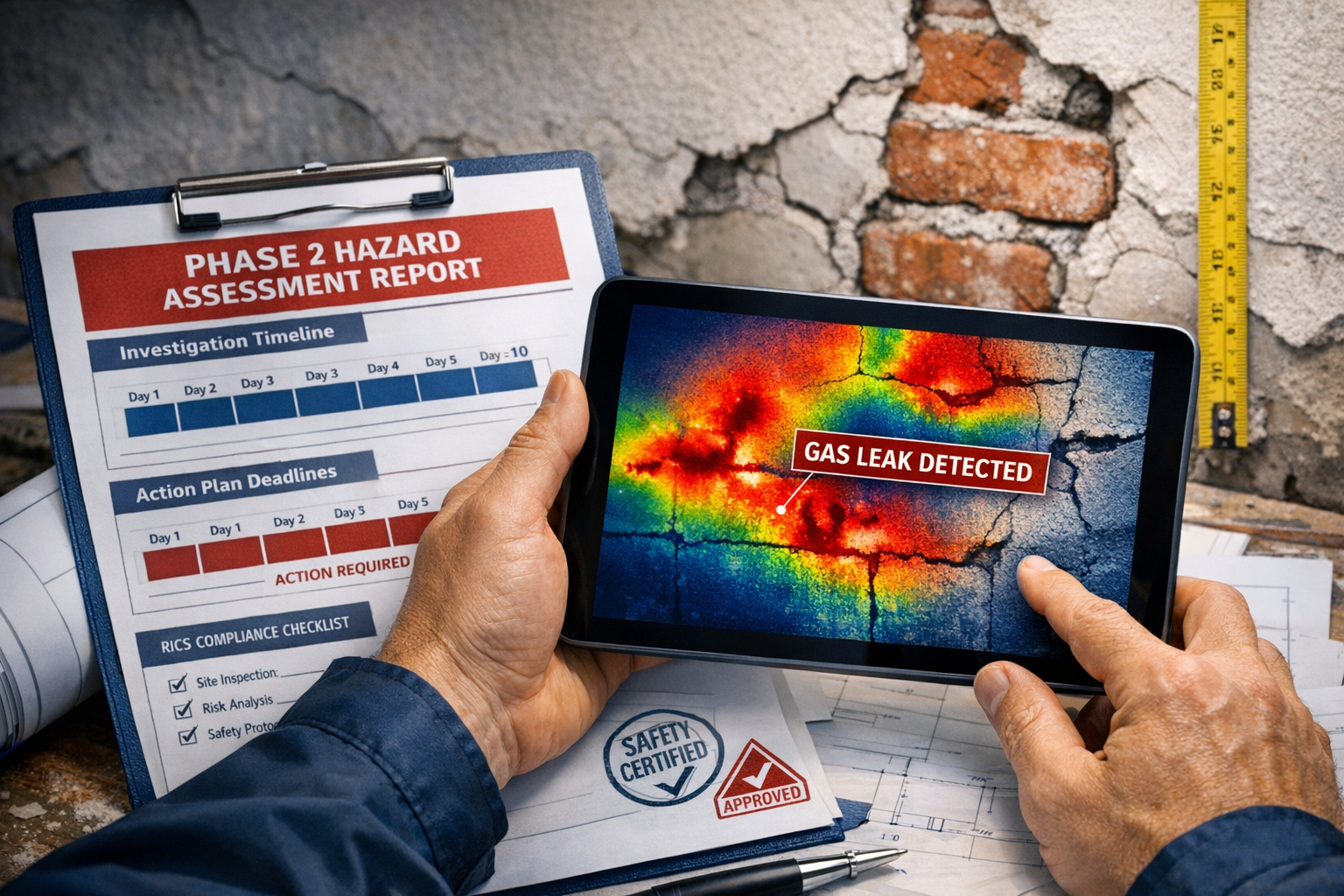
Understanding Phase 2 Hazards Under Awaab's Law
What Phase 2 Covers in 2026
Phase 2 regulations expand Awaab's Law beyond the initial focus on damp and mould to encompass critical structural and safety hazards. The specific categories now regulated include:[2][8]
- Structural collapse and instability
- Explosion risks (primarily gas-related)
- Subsidence and foundation failures
- Gas safety failures and carbon monoxide hazards
- Structural defects presenting immediate danger
These hazards represent the most severe threats to tenant safety, requiring immediate professional assessment when identified. Unlike Phase 1's focus on environmental health hazards, Phase 2 addresses catastrophic failure scenarios where delayed response could result in fatalities or major property damage.
Investigation and Action Timelines
The regulatory framework establishes rigid timelines that fundamentally alter how expert witness reports must be prepared and delivered:[1][3]
| Requirement | Timeline | Consequence of Non-Compliance |
|---|---|---|
| Initial Investigation | 10 working days | Enforcement order |
| Written Summary to Tenant | 3 working days after investigation | Legal cost liability |
| Remedial Action Start | 5 working days after investigation | Compensation claims |
| Complex Repairs Completion | Within 12 weeks | Rent loss if uninhabitable |
These compressed timeframes demand that expert witnesses maintain readiness to deploy rapidly while maintaining rigorous assessment standards. The 10-day investigation window allows minimal time for comprehensive structural analysis, requiring prioritized inspection protocols and immediate access to specialist equipment.
Enforcement and Penalties
Non-compliance carries significant consequences beyond traditional housing enforcement mechanisms. Social landlords face:[3]
- 🚫 Enforcement orders requiring immediate corrective action
- 💰 Compensation payments to affected tenants
- ⚖️ Legal cost coverage for tenant representation
- 🏠 Rent loss when properties become uninhabitable during repairs
The enforcement regime creates financial incentives for proactive hazard identification and rapid response, elevating the importance of accurate expert assessments that can withstand regulatory scrutiny.
Explosion and Structural Collapse Hazards Under Awaab's Law: Technical Assessment Requirements
Structural Collapse Risk Evaluation
Expert witnesses assessing structural collapse hazards must address multiple failure mechanisms simultaneously. The evaluation framework requires:[4]
Foundation Assessment:
- Subsidence indicators and differential settlement patterns
- Soil bearing capacity and drainage adequacy
- Historical movement evidence through crack monitoring
- Adjacent excavation impacts and party wall considerations
Load-Bearing Element Analysis:
- Beam and joist condition assessment
- Wall tie integrity in cavity construction
- Lintel adequacy over openings
- Column and support post evaluation
Material Deterioration:
- Concrete carbonation and reinforcement corrosion
- Timber decay and insect infestation
- Masonry mortar degradation
- Steel corrosion in structural elements
Surveyors conducting these assessments must reference structural engineering principles while maintaining awareness of the 10-day investigation constraint. This often necessitates preliminary risk categorization followed by targeted detailed analysis of high-risk elements.
Explosion Hazard Identification
Explosion risks in residential properties primarily stem from gas safety failures, though other sources require consideration:[2]
Gas-Related Hazards:
- Natural gas leaks from supply pipes or appliances
- LPG storage and distribution system failures
- Inadequate ventilation in boiler rooms
- Defective gas appliance installations
- Absence of carbon monoxide detectors
Secondary Explosion Sources:
- Combustible material storage in confined spaces
- Electrical system failures creating ignition sources
- Chemical storage incompatibilities
- Dust accumulation in poorly ventilated areas
Expert witnesses must coordinate with Gas Safe registered engineers when gas systems are implicated, ensuring that technical assessments meet both Awaab's Law timelines and gas safety regulatory requirements. The interdisciplinary nature of explosion risk assessment demands clear delineation of professional responsibilities within investigation reports.
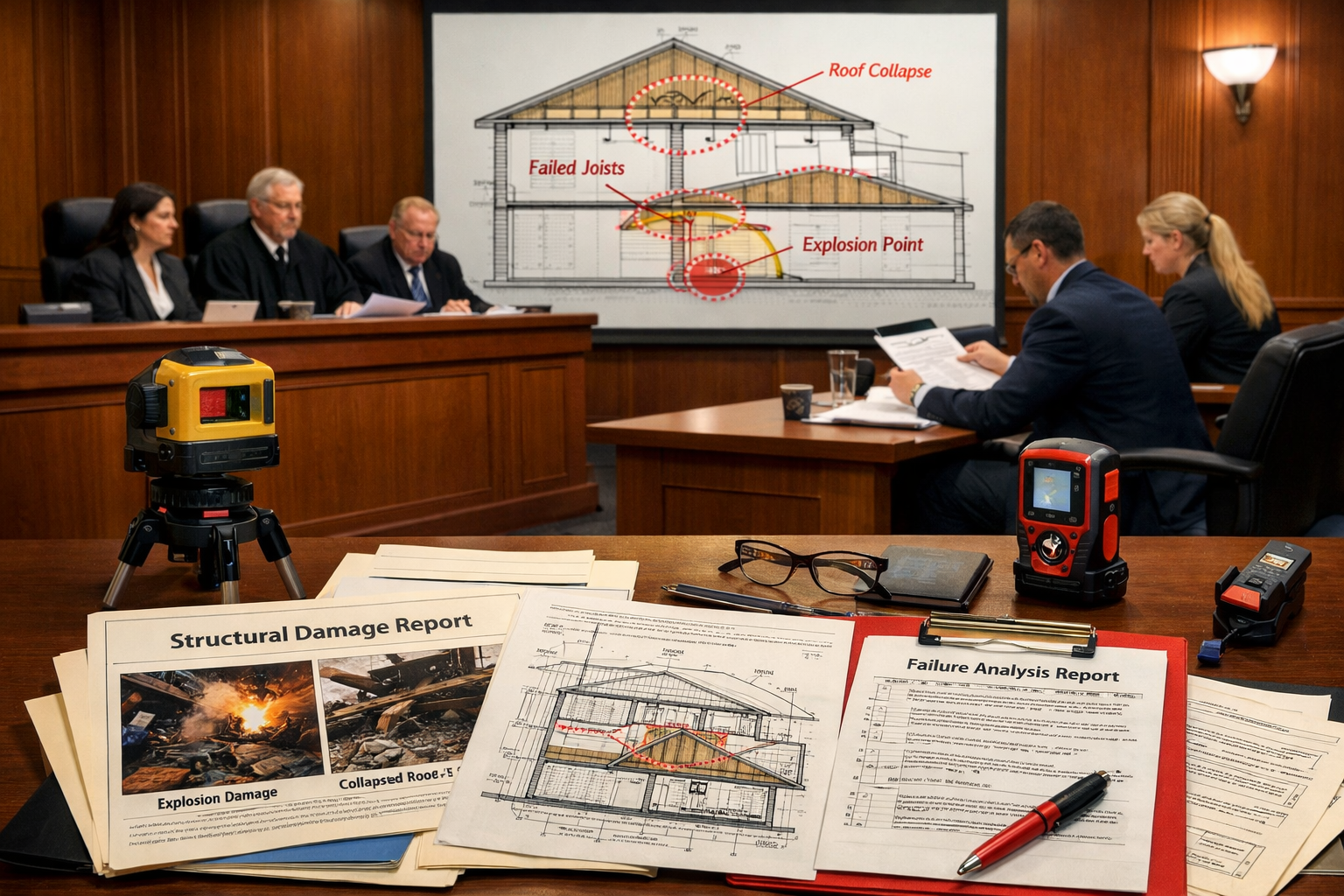
Expert Witness Strategies for PRS Dispute Resolution
RICS Standards and Professional Obligations
While Awaab's Law specifically targets social housing providers, its principles increasingly influence Private Rented Sector dispute resolution through ombudsman proceedings and tribunal cases. Expert witnesses operating in this space must adhere to RICS Practice Statement and Guidance Note on Surveyors Acting as Expert Witnesses, which establishes:[7]
Core Professional Duties:
- 📌 Primary duty to the tribunal or court, not the instructing party
- 📌 Objective analysis based on factual evidence and technical standards
- 📌 Clear statement of qualifications and experience relevant to the hazard type
- 📌 Identification of matters outside personal expertise
- 📌 Declaration of any conflicts of interest
The compressed timelines under Awaab's Law create tension between thorough investigation and rapid reporting. Expert witnesses must establish clear protocols for preliminary risk assessments that satisfy immediate regulatory requirements while reserving scope for supplementary detailed analysis when hazards prove complex.
Evidence Documentation Standards
Effective expert witness strategies for Explosion and Structural Collapse Hazards Under Awaab's Law: Expert Witness Strategies for PRS Dispute Resolution depend on meticulous evidence documentation that withstands cross-examination and regulatory scrutiny:[6]
Essential Documentation Elements:
-
Photographic Evidence
- Time-stamped images with scale references
- Multiple angles showing hazard context
- Close-up detail of defects and failure mechanisms
- Before/during/after documentation for progressive failures
-
Measurement Data
- Crack width measurements with comparator cards
- Level surveys documenting differential settlement
- Moisture readings in affected areas
- Gas detection readings with calibrated equipment
-
Historical Analysis
- Previous survey reports and maintenance records
- Building control approval documentation
- Tenant complaint chronology
- Weather data for subsidence correlation
-
Technical Calculations
- Load capacity assessments for structural elements
- Foundation bearing pressure calculations
- Ventilation adequacy for gas appliances
- Risk probability assessments
Expert witnesses should maintain detailed contemporaneous notes during site investigations, as these often prove crucial when investigation dates and observations are challenged during proceedings. The notes should record not only defects identified but also areas examined and found satisfactory, establishing the investigation's comprehensiveness.
Addressing the 10-Day Investigation Challenge
The 10-working-day investigation timeline represents the most significant practical challenge for expert witnesses under Phase 2 regulations.[1] Effective strategies include:
Rapid Deployment Protocols:
- Maintain pre-arranged access to specialist equipment (thermal imaging, gas detection, structural monitoring)
- Establish relationships with complementary specialists (structural engineers, gas engineers, geotechnical consultants)
- Develop standardized inspection checklists specific to Phase 2 hazard categories
- Implement mobile reporting systems enabling on-site documentation
Risk-Based Prioritization:
- Conduct immediate visual assessment to categorize hazard severity
- Prioritize investigation resources toward highest-risk elements
- Identify scenarios requiring emergency temporary works
- Establish clear thresholds for escalation to specialist consultants
Preliminary Reporting:
- Provide interim findings within the 3-day written summary requirement
- Clearly distinguish confirmed hazards from areas requiring further investigation
- Recommend immediate risk mitigation measures pending detailed analysis
- Reserve scope for supplementary reporting as complex issues emerge
When investigating common defects in older homes, expert witnesses should leverage historical knowledge of typical failure patterns to accelerate hazard identification while avoiding premature conclusions that subsequent detailed analysis might contradict.
Presenting Evidence in Ombudsman Proceedings
Housing ombudsman cases increasingly reference Awaab's Law principles even when investigating PRS properties, creating precedent for landlord accountability standards. Expert witnesses must adapt their evidence presentation to the ombudsman context:[4]
Effective Presentation Strategies:
✅ Clarity and Accessibility
- Avoid excessive technical jargon; explain concepts in plain language
- Use annotated photographs and diagrams to illustrate findings
- Provide executive summaries highlighting key conclusions
- Include glossaries defining essential technical terms
✅ Regulatory Context
- Reference specific Awaab's Law requirements and timelines
- Compare actual landlord response against regulatory standards
- Identify points of compliance and non-compliance
- Cite relevant building regulations and British Standards
✅ Causation Analysis
- Establish clear links between landlord actions/inactions and hazard development
- Distinguish pre-existing conditions from maintenance failures
- Assess whether earlier intervention could have prevented hazard escalation
- Quantify the impact of delayed response on hazard severity
✅ Remedial Recommendations
- Specify immediate temporary measures to eliminate imminent danger
- Outline permanent repair strategies with cost estimates
- Provide realistic timelines for remedial work completion
- Address whether properties should be evacuated during repairs
The ombudsman process typically allows for written submissions without oral testimony, making the clarity and completeness of written reports paramount. Expert witnesses should anticipate counterarguments and address potential weaknesses in their analysis proactively within the report.
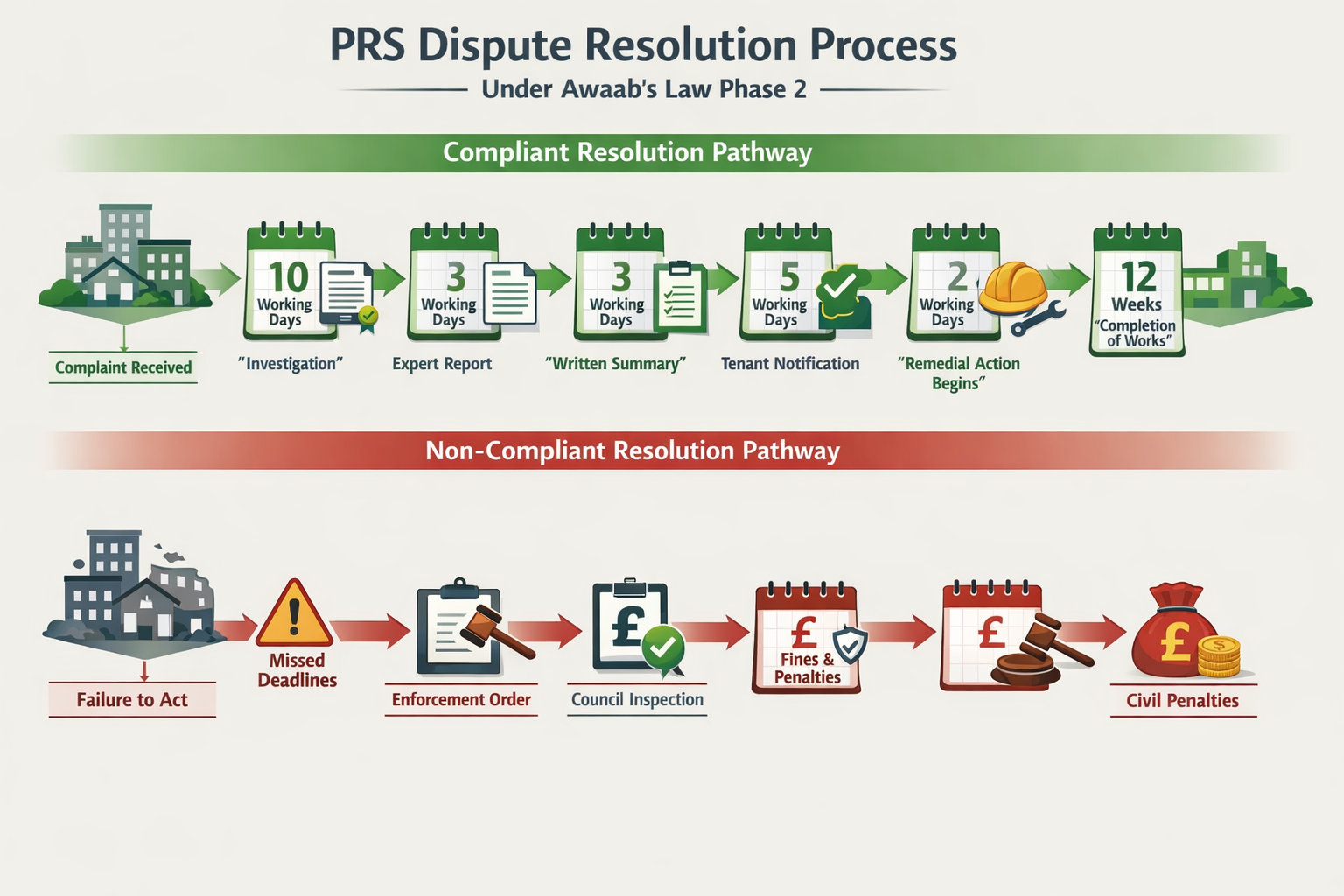
Integrating Awaab's Law Principles into PRS Practice
Applicability Beyond Social Housing
Although Awaab's Law formally applies only to social housing providers, its principles exert growing influence on Private Rented Sector standards through several mechanisms:[7]
Indirect Application Pathways:
- Ombudsman Precedent – Housing ombudsman decisions increasingly reference Awaab's Law timelines as benchmarks for reasonable landlord response, even in PRS cases
- Fitness for Habitation – Courts interpreting the Homes (Fitness for Human Habitation) Act 2018 consider Awaab's Law standards as evidence of contemporary safety expectations
- Professional Standards – Property management associations adopt Awaab's Law protocols as best practice guidance
- Insurance Requirements – Landlord insurance policies increasingly require compliance with Awaab's Law investigation timelines to maintain coverage
Expert witnesses operating in PRS disputes should therefore familiarize themselves with Awaab's Law requirements even when instructed on non-social housing cases. The regulatory framework provides a defensible standard for assessing whether landlord responses to structural and explosion hazards meet reasonable expectations.
Coordination with Building Surveyors
Effective expert witness work on Explosion and Structural Collapse Hazards Under Awaab's Law: Expert Witness Strategies for PRS Dispute Resolution often requires coordination with building surveyors who conduct initial property assessments. Key coordination points include:
Information Exchange:
- Review of original survey reports identifying potential hazards
- Clarification of survey scope and limitations
- Access to survey photographs and measurement data
- Discussion of observed defects requiring specialist investigation
Scope Delineation:
- Clear boundaries between general building survey and specialist structural assessment
- Identification of matters requiring structural engineer involvement
- Coordination of access arrangements to avoid duplicate tenant disruption
- Alignment of reporting timelines with regulatory requirements
Joint Reporting:
- Collaborative reports addressing both general building condition and specific hazards
- Cross-referencing between survey findings and specialist assessments
- Unified recommendations for remedial work sequencing
- Coordinated cost estimates for comprehensive repairs
Building surveyors conducting Level 3 surveys may identify potential Phase 2 hazards requiring immediate specialist referral. Expert witnesses should establish clear protocols for receiving such referrals and conducting rapid follow-up investigations within Awaab's Law timelines.
Addressing Subsidence and Foundation Issues
Subsidence represents a particularly complex Phase 2 hazard category, often requiring extended monitoring periods that conflict with Awaab's Law's compressed timelines.[8] Expert witness strategies must balance regulatory urgency with technical necessity:
Immediate Assessment Priorities:
- Identify active versus historic movement through crack pattern analysis
- Assess immediate structural stability and occupant safety
- Determine whether emergency temporary support is required
- Establish baseline measurements for ongoing monitoring
Monitoring Protocols:
- Install crack monitoring devices within the 10-day investigation window
- Establish monitoring frequency appropriate to risk level (weekly for high-risk scenarios)
- Coordinate with geotechnical specialists for soil investigation
- Correlate movement patterns with weather data and seasonal variations
Interim Reporting:
- Provide preliminary findings within 3-day written summary requirement
- Clearly state that definitive subsidence diagnosis requires monitoring period
- Recommend precautionary measures pending monitoring completion
- Establish review dates for monitoring data assessment
Expert witnesses should recognize that subsidence claims often involve insurance implications requiring coordination with loss adjusters and insurance engineers. The Awaab's Law framework may create tension with insurance investigation timelines, necessitating clear communication about regulatory obligations.
Practical Considerations for Expert Witnesses
Fee Structures and Engagement Terms
The compressed investigation timelines under Awaab's Law create practical challenges for traditional expert witness fee structures. Considerations include:
Rapid Response Premiums:
- Justification for expedited investigation fees reflecting 10-day constraint
- Retainer arrangements ensuring availability for urgent instructions
- Clear terms regarding preliminary versus detailed reporting fees
- Provisions for supplementary reports when initial investigations reveal complex issues
Scope Clarification:
- Detailed engagement letters specifying hazard categories to be investigated
- Clear boundaries regarding matters requiring specialist sub-consultants
- Agreement on reporting format and level of detail
- Terms addressing potential court or tribunal attendance
Quality Assurance Under Time Pressure
Maintaining rigorous quality standards while meeting Awaab's Law timelines requires systematic quality assurance protocols:
Internal Review Processes:
- Peer review of preliminary findings before written summary issuance
- Checklist verification ensuring all Phase 2 hazard categories addressed
- Cross-reference of photographic evidence with written descriptions
- Verification of calculation accuracy for structural assessments
Professional Indemnity Considerations:
- Confirmation that PI insurance covers Awaab's Law rapid response work
- Documentation of scope limitations imposed by investigation timeline
- Clear statement of assumptions underlying preliminary conclusions
- Reservation of right to modify findings based on supplementary investigation
Continuing Professional Development
The evolving regulatory landscape surrounding Explosion and Structural Collapse Hazards Under Awaab's Law: Expert Witness Strategies for PRS Dispute Resolution demands ongoing professional development:
Essential Knowledge Areas:
- Current Awaab's Law guidance and regulatory updates
- Recent ombudsman decisions establishing precedent
- RICS expert witness practice standards
- Gas safety regulations and coordination with Gas Safe engineers
- Structural assessment methodologies for rapid deployment
- Legal frameworks governing PRS landlord obligations
Expert witnesses should maintain awareness of property management best practices that inform reasonable landlord response standards, as these often form the benchmark against which expert opinions are evaluated in dispute resolution.
Case Study Applications
Structural Collapse Scenario
Background: Tenant reports sagging first-floor ceiling with visible cracks in a Victorian terrace conversion. Landlord instructs expert witness investigation under Awaab's Law Phase 2 protocols.
Investigation Approach (Days 1-10):
- Day 1: Site inspection identifying failed ceiling joists and inadequate support
- Day 2: Structural calculations confirming load capacity deficiency
- Day 3: Written summary to tenant identifying immediate risk and recommending room evacuation
- Days 4-8: Detailed investigation including opening up works to expose joist connections
- Day 9: Coordination with structural engineer for temporary support design
- Day 10: Final investigation report with permanent remedial strategy
Expert Witness Findings:
- Structural alteration (wall removal) conducted without building control approval
- Inadequate beam installation failing to support redistributed loads
- Progressive deflection over 18 months following alteration
- Imminent collapse risk requiring immediate temporary support
Outcome: Enforcement order issued requiring temporary support within 5 days and permanent structural repairs within 12 weeks. Tenant awarded compensation for alternative accommodation during works.
Gas Explosion Risk Scenario
Background: Multiple tenants report persistent gas odor in converted house of multiple occupation (HMO). Expert witness instructed to assess explosion risk.
Investigation Approach:
- Immediate gas detection survey identifying leak from corroded supply pipe
- Coordination with Gas Safe engineer for emergency isolation
- Assessment of ventilation adequacy in affected areas
- Review of gas safety certificate history revealing overdue inspections
- Documentation of tenant complaint chronology showing delayed landlord response
Expert Witness Findings:
- Gas leak concentration approaching lower explosive limit in confined space
- Inadequate emergency response to initial tenant reports
- Failure to conduct annual gas safety inspections as required
- Multiple ignition sources present (electrical switches, boiler pilot light)
- Immediate evacuation warranted pending pipe replacement
Outcome: Emergency prohibition order removing property from occupation. Landlord required to complete gas system replacement and obtain new safety certification before re-occupation. Significant compensation awarded to tenants for alternative accommodation and distress.
Conclusion
The 2026 implementation of Phase 2 regulations under Awaab's Law fundamentally transforms the landscape for Explosion and Structural Collapse Hazards Under Awaab's Law: Expert Witness Strategies for PRS Dispute Resolution. Expert witnesses must now operate within compressed 10-day investigation timelines while maintaining rigorous technical standards that withstand regulatory scrutiny and tribunal examination. The specific hazard categories—structural collapse, explosions, subsidence, and gas safety failures—each demand specialized assessment methodologies adapted to rapid deployment contexts.
Success in this evolving environment requires expert witnesses to develop systematic protocols for rapid hazard identification, maintain readiness for immediate deployment, and coordinate effectively with complementary specialists. The regulatory framework's emphasis on written summaries within 3 working days and remedial action within 5 days creates unprecedented urgency while elevating the consequences of assessment errors.
Although Awaab's Law formally applies only to social housing, its principles increasingly influence Private Rented Sector dispute resolution through ombudsman precedent and professional standards evolution. Expert witnesses operating across both sectors must therefore familiarize themselves with the regulatory requirements and adapt their evidence presentation to align with contemporary accountability expectations.
Actionable Next Steps
For expert witnesses seeking to optimize their practice for Awaab's Law compliance:
- Develop rapid deployment protocols including pre-arranged specialist relationships and equipment access
- Create standardized investigation checklists specific to Phase 2 hazard categories
- Establish clear engagement terms addressing expedited investigation fees and scope limitations
- Implement quality assurance processes ensuring rigorous standards under time pressure
- Maintain continuing professional development on regulatory updates and ombudsman precedent
- Review professional indemnity coverage to confirm Awaab's Law work is adequately insured
- Build interdisciplinary networks with structural engineers, gas engineers, and legal professionals
The regulatory transformation represented by Awaab's Law Phase 2 creates both challenges and opportunities for expert witnesses. Those who successfully adapt their methodologies to the new framework will find themselves well-positioned to provide high-value services in an increasingly regulated housing sector where technical evidence quality directly determines dispute outcomes.
For comprehensive support with expert witness services addressing structural hazards and building defects, professional surveyors offer specialized expertise aligned with current regulatory requirements and RICS standards.
References
[1] Awaabs Law Explained – firntec.com
[2] Awaabs Law Phase 2 What It Covers And What Housing Providers Should Be Doing Now – madetech.com
[3] Awaabs Law Comes Into Force What Does It Mean For Construction – trowers.com
[4] How Awaabs Law Is Changing Social Housing Standards Updated Guidance For Tenants – legalhd.co.uk
[6] Awaabs Law Legislation Requires Extra Clarity Capacity And Capability – ube.ac.uk
[7] Awaabs Law What To Expect – info.pennington.org.uk
[8] Awaabs Law Guidance For Social Landlords Timeframes For Repairs In The Social Rented Sector – gov.uk