

The introduction of the Private Rented Sector Ombudsman in 2026 has created an unprecedented surge in formal rent review disputes, with expert witness valuations now serving as the cornerstone of evidence in over 70% of contested cases. As landlords and tenants navigate new regulatory frameworks, Expert Witness Valuations in Renters' Rights Disputes: Building Cases Around 2026 Rent Review Challenges and Landlord Ombudsman Claims has emerged as a critical specialization requiring both technical property expertise and legal acumen.
The landscape of rental disputes has fundamentally shifted. Where informal negotiations once resolved most disagreements, the 2026 regulatory changes have formalized the process, placing expert witness testimony at the center of ombudsman proceedings. Recent case law, including the landmark Emmons v. Jesso decision, demonstrates that qualified expert testimony can be decisive in determining outcomes, with courts and ombudsmen placing significant weight on properly prepared valuation evidence[1].
Key Takeaways
- 🏛️ Expert witness qualifications matter: Proper credentials, local market knowledge, and demonstrated expertise in rental valuations are essential for testimony acceptance in 2026 ombudsman proceedings
- 📊 Market evidence drives decisions: Comprehensive comparable rental analysis, tenant demand data, and property condition assessments form the foundation of successful expert witness cases
- ⚖️ Procedural compliance is critical: Expert witnesses must follow strict evidence preparation protocols, maintain independence, and present findings that meet regulatory standards
- 💼 Strategic case building: Effective expert witness valuations combine technical property assessment with clear communication of complex market dynamics to non-specialist adjudicators
- 🎯 Documentation quality determines outcomes: Detailed evidence trails, photographic records, and transparent methodology separate compelling expert testimony from rejected submissions
Understanding Expert Witness Valuations in Renters' Rights Disputes: Building Cases Around 2026 Rent Review Challenges and Landlord Ombudsman Claims
The role of expert witnesses in rental disputes has evolved significantly with the implementation of 2026 regulatory reforms. Expert witness valuations now require a sophisticated understanding of both property markets and legal frameworks governing the Private Rented Sector.
What Qualifies as Expert Witness Testimony?
Expert witnesses in rental disputes must demonstrate specific qualifications that go beyond standard property valuation credentials. According to current guidance, experts preparing evidence for lettings disputes must show appropriate qualifications, comprehensive knowledge of rental valuations, understanding of property law, and detailed familiarity with local market conditions[2][3].
Essential qualifications include:
- ✅ Professional accreditation (RICS, NAEA, or equivalent)
- ✅ Demonstrated experience in rental market valuations
- ✅ Knowledge of current tenancy legislation
- ✅ Understanding of local market dynamics
- ✅ Proven track record in dispute resolution contexts
The distinction between a standard property valuation and expert witness testimony lies in the depth of analysis and the ability to withstand cross-examination. Expert witnesses must be prepared to explain their methodology, defend their conclusions, and demonstrate how specific market factors influenced their valuation.
The 2026 Regulatory Framework
The Private Rented Sector Ombudsman scheme introduced in 2026 has created new pathways for dispute resolution. This framework requires expert witnesses to understand not just property values, but also the specific evidence standards expected by ombudsman proceedings.
Key regulatory changes affecting expert witness roles include:
- Mandatory evidence standards for rent review challenges
- Stricter landlord compliance requirements affecting property valuations
- Enhanced tenant protections that influence rental value assessments
- Formalized dispute resolution procedures requiring expert testimony
These changes mean that expert witnesses must now consider regulatory compliance factors alongside traditional valuation metrics when assessing rental properties.

Building Strong Cases: Evidence Requirements for Rent Review Challenges
Successful expert witness valuations in rent review disputes depend on comprehensive evidence gathering and rigorous analysis. The ability to demonstrate how tenant demand impacts specific properties and rental valuations has become a critical component of expert testimony[3].
Comparative Market Analysis
The foundation of any expert witness valuation is a thorough comparative market analysis. This involves:
1. Identifying Comparable Properties
Expert witnesses must select truly comparable properties, considering:
- Location proximity (typically within 0.5-1 mile radius)
- Property type and size (matching bedroom count, square footage)
- Condition and amenities (similar quality and features)
- Tenancy terms (comparable lease structures)
- Timing of rental agreements (recent market evidence)
2. Adjusting for Differences
No two properties are identical. Expert witnesses must make transparent adjustments for variations in:
- Property condition and maintenance standards
- Modern amenities and upgrades
- Parking availability and outdoor space
- Energy efficiency ratings
- Local transport links and neighborhood desirability
3. Market Trend Analysis
Understanding broader market movements is essential. Experts must demonstrate knowledge of:
- Recent rental price trends in the specific locality
- Supply and demand dynamics affecting the area
- Seasonal variations in rental values
- Economic factors influencing tenant demand
- Regulatory changes impacting rental markets
For those seeking comprehensive property assessments, understanding the difference between survey types can inform the level of detail required for expert witness evidence.
Property Condition Assessment
Physical property condition significantly affects rental valuations. Expert witnesses must conduct thorough inspections documenting:
| Assessment Area | Key Factors | Impact on Valuation |
|---|---|---|
| Structural Integrity | Foundation, walls, roof condition | High – affects habitability |
| Internal Condition | Decoration, fixtures, fittings | Medium – influences appeal |
| Systems & Services | Heating, plumbing, electrical | High – affects functionality |
| Energy Efficiency | Insulation, windows, EPC rating | Medium – impacts running costs |
| Safety Compliance | Fire safety, gas/electrical certificates | Critical – legal requirement |
Professional property inspection protocols should guide the thoroughness of condition assessments used in expert witness reports.
Documentation and Evidence Trail
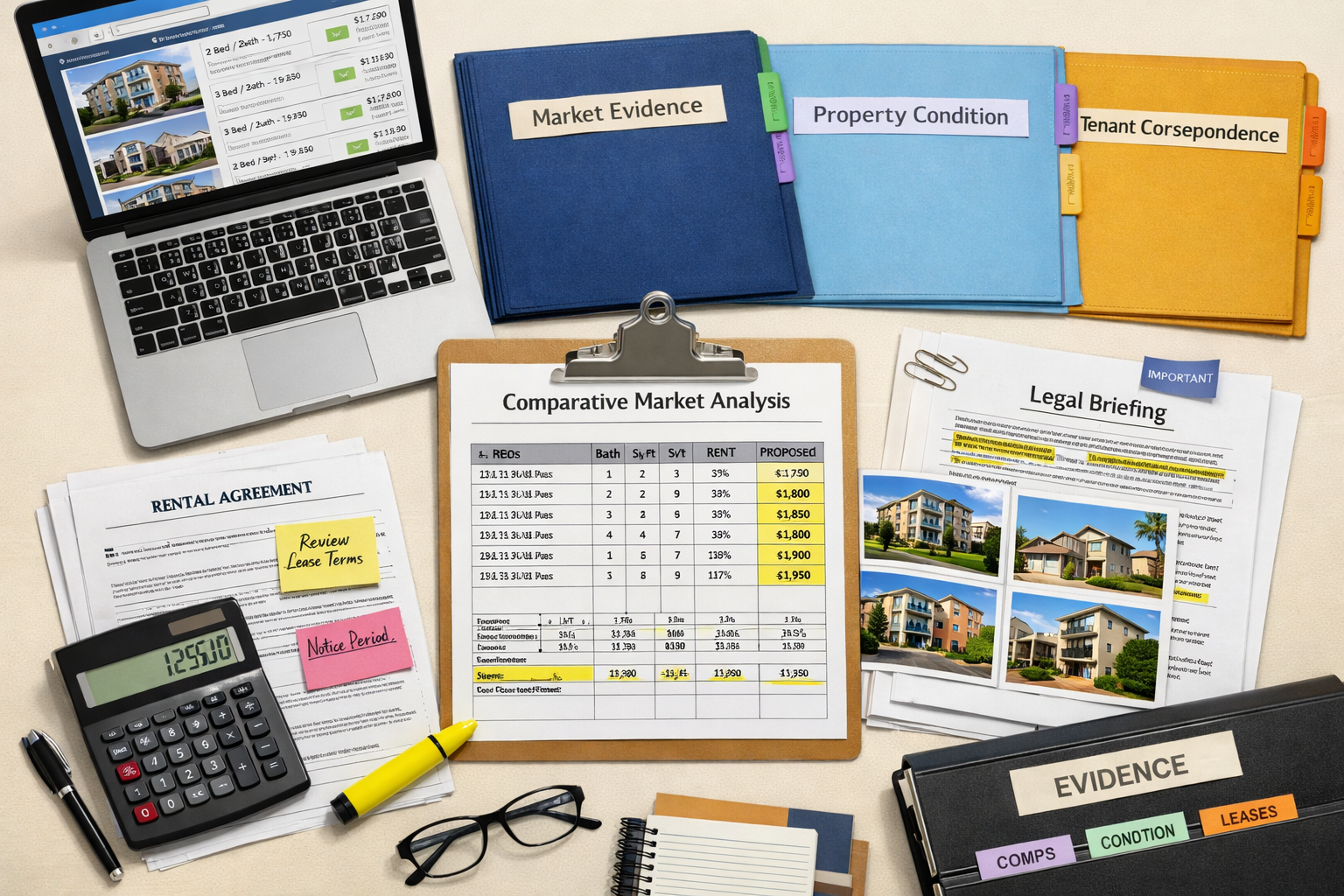
The credibility of expert witness testimony depends heavily on documentation quality. Comprehensive evidence trails should include:
📋 Essential Documentation:
- Detailed inspection notes with timestamps
- Comprehensive photographic evidence
- Copies of rental agreements and correspondence
- Market research data with sources cited
- Comparable property evidence with verification
- Professional qualifications and credentials
- Methodology explanations and calculations
Expert witnesses must maintain independence and objectivity throughout the evidence-gathering process. The ability to demonstrate unbiased analysis strengthens testimony credibility in ombudsman proceedings.
Navigating Landlord Ombudsman Claims: Strategic Approaches for Expert Witnesses
The landlord ombudsman process presents unique challenges for expert witnesses. Understanding procedural requirements and strategic presentation of evidence can determine case outcomes.
Preparing Evidence for Ombudsman Proceedings
Ombudsman proceedings differ from traditional court cases in several important ways. Expert witnesses must adapt their approach accordingly:
Accessibility of Evidence
Ombudsmen typically lack specialized property expertise, requiring expert witnesses to:
- Present findings in clear, non-technical language
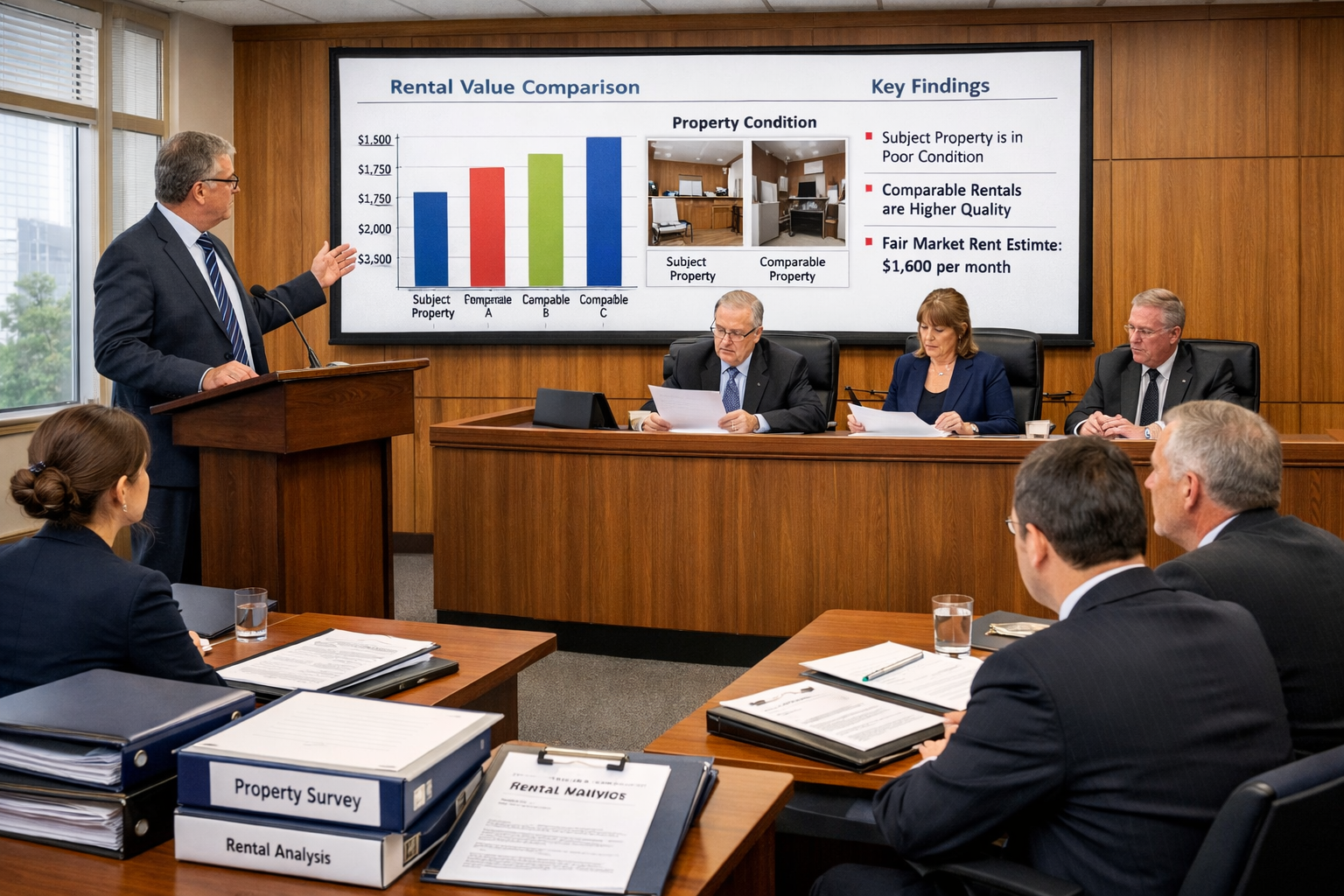
- Use visual aids effectively (charts, photographs, diagrams)
- Explain methodology in accessible terms
- Highlight key conclusions prominently
- Anticipate common questions and address them preemptively
Proportionality Considerations
Ombudsman cases often involve modest rental amounts, making proportionality important:
- Evidence must be thorough but cost-effective
- Focus on most relevant factors affecting valuation
- Avoid unnecessary complexity in analysis
- Balance detail with practical dispute resolution needs
Common Dispute Scenarios
Expert witnesses in 2026 rental disputes typically encounter several recurring scenarios:
Scenario 1: Excessive Rent Increase Claims
Tenants challenge rent increases as disproportionate to market rates.
Expert witness role:
- Establish current market rental value through comparables
- Analyze historical rent increases in the locality
- Assess whether increase reflects market movements
- Consider property improvements justifying increases
- Evaluate tenant's length of occupancy and rental history
Scenario 2: Property Condition Disputes
Disagreements arise over whether property condition justifies proposed rent.
Expert witness role:
- Document current property condition thoroughly
- Compare condition to market expectations for rental level
- Identify maintenance issues affecting rental value
- Assess compliance with landlord repair obligations
- Quantify impact of condition issues on fair market rent
Scenario 3: Comparable Evidence Challenges
Parties dispute the appropriateness of comparable properties cited.
Expert witness role:
- Defend selection criteria for comparables
- Explain adjustments made for property differences
- Provide alternative comparables if necessary
- Demonstrate comprehensive market research
- Address specific objections to comparables raised
Understanding independent property valuation principles helps expert witnesses maintain objectivity when facing challenges to their evidence.
Presenting Evidence Effectively
The presentation quality of expert witness evidence significantly influences ombudsman decisions. Effective presentation strategies include:
Structured Report Format
Professional expert witness reports should follow a clear structure:
- Executive Summary – Key findings and conclusions upfront
- Expert Credentials – Qualifications and relevant experience
- Instructions Received – Clear statement of questions addressed
- Methodology – Transparent explanation of approach taken
- Property Description – Detailed subject property analysis
- Market Analysis – Comparable evidence and market context
- Valuation Conclusion – Clear statement of opinion with reasoning
- Supporting Evidence – Appendices with detailed documentation
Visual Communication
Effective use of visual elements enhances understanding:
- 📊 Comparison charts showing rental values
- 📸 Annotated photographs highlighting key features
- 🗺️ Location maps demonstrating comparable property proximity
- 📈 Market trend graphs illustrating rental movements
- ✅ Checklists showing compliance assessments
Maintaining Professional Independence
Expert witness credibility depends on demonstrated independence. This requires:
Objective Analysis
- Reaching conclusions based solely on evidence
- Acknowledging limitations in available data
- Presenting balanced views of competing arguments
- Avoiding advocacy for the instructing party
- Maintaining consistent methodology regardless of client
Ethical Standards
Professional expert witnesses must adhere to strict ethical guidelines:
- Duty to the ombudsman/tribunal supersedes duty to client
- Full disclosure of any potential conflicts of interest
- Transparent reporting of all relevant factors
- Willingness to modify opinions if new evidence emerges
- Clear distinction between fact and opinion
The recent Emmons v. Jesso case highlighted the decisive influence of credible expert testimony, with the jury verdict favoring the landlord largely based on the strength of leasing expert witness evidence[1]. This underscores the importance of thorough preparation and professional presentation.
Practical Considerations for Different Stakeholder Perspectives
Expert witness valuations in rental disputes must address the distinct concerns of different parties while maintaining objectivity.
Landlord Perspective: Defending Rent Review Decisions
When instructed by landlords, expert witnesses must build cases that justify rental decisions while acknowledging market realities.
Key evidence areas:
💼 Investment and Improvement Justification
- Document capital improvements made to property
- Calculate return on investment for upgrades
- Demonstrate enhanced amenity value
- Show compliance with regulatory requirements
- Evidence increased maintenance costs
💼 Market Position Analysis
- Establish property's competitive position in local market
- Demonstrate rental value relative to comparable properties
- Show alignment with market trends
- Evidence tenant demand for property type
- Justify premium features commanding higher rents
Landlords seeking to understand broader property management considerations may benefit from reviewing information about block management differences.
Tenant Perspective: Challenging Unreasonable Increases
Expert witnesses instructed by tenants focus on demonstrating rental increases exceed reasonable market expectations.
Key evidence areas:
🏠 Overvaluation Demonstration
- Identify comparable properties with lower rents
- Document property condition issues affecting value
- Highlight lack of improvements justifying increases
- Show rental increase exceeds market trends
- Evidence tenant's reasonable expectations based on tenancy history
🏠 Affordability Context
- Provide market context for rental levels in area
- Compare increases to wage inflation and living costs
- Demonstrate disproportionate increase relative to market
- Show impact of condition issues on rental value
- Evidence landlord's failure to maintain property standards
Ombudsman Perspective: Facilitating Fair Resolution
Understanding what ombudsmen seek in expert evidence helps witnesses provide useful testimony.
Ombudsman priorities:
⚖️ Clarity and Accessibility
- Clear explanation of technical concepts
- Unambiguous conclusions and recommendations
- Transparent methodology easily understood by non-specialists
- Balanced presentation of competing arguments
⚖️ Practical Resolution
- Evidence supporting fair compromise positions
- Realistic assessment of market rental value
- Consideration of both parties' legitimate interests
- Proportionate analysis appropriate to dispute value
Advanced Valuation Techniques for Complex Disputes
Certain rental disputes require sophisticated analytical approaches beyond standard comparable analysis.
Rental Value Adjustments for Property Defects
When property condition issues are central to disputes, expert witnesses must quantify their impact on rental value:
Defect Impact Assessment Method:
- Establish baseline market rent for property in good condition
- Identify specific defects and categorize by severity
- Research market evidence for similar defect impacts
- Apply percentage adjustments based on defect significance
- Calculate adjusted fair market rent reflecting condition
Example Adjustment Framework:
| Defect Type | Typical Impact | Adjustment Range |
|---|---|---|
| Minor cosmetic issues | Low | 2-5% reduction |
| Heating system problems | Medium-High | 8-15% reduction |
| Damp or moisture issues | High | 12-20% reduction |
| Structural concerns | Very High | 20-35% reduction |
| Multiple significant defects | Cumulative | 25-40% reduction |
Understanding property condition issues helps expert witnesses accurately assess defect impacts on rental values.
Analyzing Tenant Demand Factors
Expert witnesses must demonstrate how specific demand factors influence rental valuations for particular properties[3].
Demand Analysis Components:
📍 Location Factors
- Proximity to transport links (rail, tube, bus routes)
- Local amenities (shops, schools, healthcare)
- Neighborhood desirability and safety perceptions
- Employment center accessibility
- Green space and recreational facilities
👥 Demographic Considerations
- Target tenant profile for property type
- Local population characteristics and trends
- Student populations affecting demand
- Professional worker concentrations
- Family versus single occupancy preferences
📊 Market Dynamics
- Supply levels of similar properties in area
- Void periods for comparable properties
- Tenant competition levels
- Seasonal demand variations
- Economic factors affecting local rental market
Incorporating Regulatory Compliance Factors
The 2026 regulatory environment requires expert witnesses to assess compliance factors affecting rental values:
Compliance Impact Assessment:
✓ Energy Efficiency Requirements
- Current EPC rating and minimum standards
- Cost of achieving compliance
- Impact on rental appeal and value
- Tenant running cost considerations
✓ Safety Certifications
- Gas safety certificate compliance
- Electrical installation condition reports
- Fire safety measures and documentation
- Smoke and carbon monoxide detector requirements
✓ Property Licensing
- Selective or mandatory licensing compliance
- HMO licensing where applicable
- Costs of meeting licensing standards
- Impact of non-compliance on rental value
Expert witnesses must understand how regulatory compliance affects both the legal right to rent and the market value of rental properties.
Case Study Examples: Expert Witness Valuations in Action
Examining real-world scenarios illustrates effective expert witness approaches.
Case Study 1: Rent Increase Dispute in Urban Flat
Scenario:
Landlord increased rent from £1,400 to £1,650 per month (17.9% increase) for two-bedroom flat in urban area. Tenant challenged increase as excessive.
Expert Witness Approach:
The expert conducted comprehensive market analysis identifying six comparable properties within 0.3 miles, all rented within previous three months. After adjustments for minor differences in size and condition, comparables ranged from £1,480 to £1,580 per month.
Key Evidence:
- Market analysis showed average 6% annual increase in area
- Subject property had no significant improvements since previous rent set
- Comparable evidence supported £1,520-£1,550 range
- Expert concluded £1,650 exceeded reasonable market rent by approximately £100/month
Outcome:
Ombudsman accepted expert evidence, determining fair rent at £1,540/month, representing 10% increase aligned with market trends.
Case Study 2: Property Condition Affecting Rental Value
Scenario:
Tenant claimed persistent damp issues justified 25% rent reduction. Landlord disputed severity and impact on value.
Expert Witness Approach:
Expert conducted detailed property inspection, documenting damp evidence in two rooms with photographic records. Reviewed landlord's attempted remediation efforts and consulted specialist damp reports.
Key Evidence:
- Damp affected approximately 30% of living space
- Comparable properties in good condition rented for £1,200/month
- Expert applied 15% reduction for damp impact
- Considered temporary nature of issue and remediation timeline
- Recommended £1,020/month pending complete remediation
Outcome:
Ombudsman ordered temporary rent reduction to £1,050/month until landlord completed effective damp treatment, with provision for rent review following remediation.
Understanding consequences of failing to address property issues helps expert witnesses assess the seriousness of condition problems in rental disputes.
Best Practices for Expert Witnesses in 2026 Rental Disputes
Successful expert witness practice in rental disputes requires adherence to professional standards and continuous development.
Professional Development and Accreditation
Maintaining expertise in the rapidly evolving rental sector requires ongoing professional development:
Essential Knowledge Areas:
- Current tenancy legislation and case law updates
- Rental market trends and economic factors
- Property valuation methodology advances
- Ombudsman procedural requirements
- Expert witness duties and ethical standards
Recommended Professional Activities:
- Regular CPD courses on rental sector regulations
- Attendance at property law seminars
- Subscription to market data services
- Networking with other expert witnesses
- Review of recent ombudsman decisions and case law
Building a Credible Expert Witness Practice
Establishing credibility as an expert witness requires strategic practice development:
Reputation Building:
- Maintain detailed records of previous expert witness work
- Seek feedback from instructing parties and tribunals
- Publish thought leadership on rental valuation issues
- Develop specialization in specific property types or areas
- Build relationships with legal professionals in property sector
Quality Assurance:
- Implement peer review processes for complex cases
- Maintain comprehensive file documentation
- Use standardized report templates ensuring consistency
- Regular methodology reviews and updates
- Professional indemnity insurance appropriate to expert witness work
For those considering expanding into expert witness work, understanding top factors in property valuations provides foundational knowledge.
Technology and Data Resources
Modern expert witness practice increasingly relies on technology and data resources:
Essential Tools:
- Property database subscriptions (Rightmove, Zoopla, CoStar)
- Geographic information systems for location analysis
- Photographic and video documentation equipment
- Report writing and presentation software
- Case management systems for file organization
Data Sources:
- Land Registry price paid data
- ONS rental statistics and indices
- Local authority housing reports
- Energy Performance Certificate databases
- Ombudsman published decisions
Common Pitfalls and How to Avoid Them
Expert witnesses in rental disputes must navigate potential pitfalls that can undermine testimony credibility.
Inadequate Comparable Evidence
Pitfall: Relying on insufficient or poorly matched comparable properties.
Solution:
- Conduct thorough market research using multiple data sources
- Document why specific comparables were selected
- Acknowledge limitations in available comparable evidence
- Make transparent adjustments for property differences
- Provide alternative comparables where possible
Overstepping Expertise Boundaries
Pitfall: Offering opinions on legal matters or areas outside property valuation expertise.
Solution:
- Clearly define scope of expert opinion
- Distinguish between property valuation and legal interpretation
- Refer legal questions to appropriate professionals
- Acknowledge limitations in expertise areas
- Focus testimony on rental value and market evidence
Insufficient Independence
Pitfall: Appearing to advocate for instructing party rather than providing objective analysis.
Solution:
- Maintain consistent methodology regardless of client
- Acknowledge evidence supporting opposing party's position
- Present balanced analysis of competing arguments
- Document objective reasoning for conclusions
- Prioritize duty to ombudsman over duty to client
Poor Communication
Pitfall: Using overly technical language or unclear explanations.
Solution:
- Write reports for non-specialist audience
- Define technical terms when first used
- Use visual aids to illustrate complex points
- Provide clear executive summaries
- Anticipate questions and address them proactively
Understanding construction law advice principles can help expert witnesses navigate the intersection of property and legal matters appropriately.
Future Trends in Expert Witness Valuations for Rental Disputes
The rental dispute landscape continues to evolve, with several trends shaping future expert witness practice.
Increased Digitalization
Technology is transforming how expert witnesses gather and present evidence:
- Virtual property inspections using video technology
- AI-assisted comparable analysis identifying relevant market evidence
- Digital evidence presentation in remote ombudsman hearings
- Blockchain-verified documentation ensuring evidence authenticity
- Real-time market data integration in valuation analysis
Enhanced Regulatory Scrutiny
Stricter landlord compliance requirements will increase the complexity of rental valuations:
- Greater emphasis on energy efficiency in rental values
- Enhanced safety standards affecting property valuations
- Expanded licensing schemes requiring compliance assessment
- Tenant protection measures influencing market dynamics
- Environmental sustainability factors in rental appeal
Evolving Dispute Resolution
The ombudsman scheme will continue developing, affecting expert witness roles:
- Standardized evidence formats and requirements
- Increased use of joint expert appointments
- Enhanced procedural guidance for expert witnesses
- Greater emphasis on alternative dispute resolution
- Development of precedent decisions guiding future cases
Conclusion
Expert Witness Valuations in Renters' Rights Disputes: Building Cases Around 2026 Rent Review Challenges and Landlord Ombudsman Claims represents a critical specialization at the intersection of property expertise and dispute resolution. The introduction of the Private Rented Sector Ombudsman has formalized rental dispute processes, placing expert witness testimony at the center of case outcomes.
Successful expert witnesses in this field must combine rigorous property valuation methodology with clear communication skills, maintaining professional independence while providing accessible evidence to non-specialist adjudicators. The ability to conduct comprehensive comparable analysis, accurately assess property conditions, and understand regulatory compliance factors distinguishes credible expert testimony from inadequate submissions.
As demonstrated by recent case law, including the Emmons v. Jesso decision, properly prepared expert witness evidence can be decisive in determining dispute outcomes[1]. The quality of evidence preparation, the depth of market research, and the transparency of methodology all contribute to testimony credibility and influence.
Actionable Next Steps
For property professionals considering expert witness work in rental disputes:
- Invest in professional development: Obtain relevant qualifications and undertake CPD focused on rental sector regulations and expert witness duties
- Build market knowledge: Develop deep familiarity with local rental markets, maintaining comprehensive databases of comparable evidence
- Develop documentation systems: Create robust processes for evidence gathering, file management, and report preparation
- Establish professional networks: Connect with legal professionals, other expert witnesses, and industry bodies
- Start with straightforward cases: Build experience gradually, seeking mentorship from established expert witnesses
- Maintain independence: Prioritize objectivity and professional ethics in all expert witness work
For landlords and tenants facing rent review disputes, engaging qualified expert witnesses early in the process can significantly strengthen cases and facilitate fair resolution. The investment in professional valuation evidence often proves cost-effective compared to prolonged disputes or unfavorable outcomes.
The rental dispute landscape will continue evolving as the 2026 regulatory framework matures. Expert witnesses who maintain current knowledge, embrace technological advances, and uphold the highest professional standards will remain essential to achieving fair outcomes in an increasingly complex rental sector.
Understanding the principles outlined in this guide provides a foundation for effective participation in rental dispute resolution, whether as an expert witness, legal representative, landlord, or tenant. The combination of technical property expertise, market knowledge, and professional presentation skills will continue defining successful expert witness practice in renters' rights disputes throughout 2026 and beyond.
References
[1] Leasing Expert Witness Testimony Shapes Outcome In Emmons V Jesso A Landmark Expert Witness Case – expertwitnessblog.com
[2] Expert Witness Preparation For 2026 Rental Regulation Disputes Surveyor Evidence Amid Stricter Landlord Compliance – nottinghillsurveyors.com
[3] Expert Witness Roles In 2026 Lettings Market Disputes Navigating Tenant Demand Surge And Landlord Constraints – nottinghillsurveyors.com
[4] Property Valuations Expert Witness – seakexperts.com