

When buyer demand swings from -29% to -15% within a single month, property valuations become battlegrounds. In 2026's volatile market environment, expert witnesses face unprecedented challenges defending their valuation methodologies in contested transactions. A property valued at £500,000 in January might face fierce dispute by March when market sentiment shifts dramatically, leaving buyers, sellers, and lenders locked in costly legal battles over what constitutes "fair market value."
Expert Witness Valuations Amid Market Sentiment Shifts: RICS Protocols for Dispute Evidence When Buyer Demand Fluctuates Rapidly has become essential knowledge for chartered surveyors navigating today's unpredictable property landscape. The Royal Institution of Chartered Surveyors (RICS) provides comprehensive frameworks that enable expert witnesses to present defensible, credible evidence even when market conditions change rapidly between valuation date and dispute resolution.
Key Takeaways
- 🎯 Rapid market sentiment shifts create valuation disputes requiring expert witnesses to defend methodologies using robust RICS protocols and comparable evidence
- 📋 RICS accreditation requirements include four training modules, ethics testing, and interview processes to ensure expert witness competency in volatile markets
- ⚖️ Civil proceedings standards mandate expert witnesses prioritize duty to tribunals over client interests, maintaining independence throughout dispute resolution
- 📊 Valuation date considerations become critical when buyer demand fluctuates rapidly, requiring clear documentation of market conditions at specific timepoints
- 🔍 Evidence presentation protocols demand comprehensive comparable analysis, market context documentation, and transparent methodology disclosure
Understanding Expert Witness Roles in Property Valuation Disputes
Expert witnesses serve a unique function in property disputes, fundamentally different from standard valuation work. While typical property valuations aim to establish market value for transactions or lending purposes, expert witness valuations must withstand rigorous cross-examination in legal proceedings.
The Distinction Between Advocate and Expert
Expert witnesses owe their primary duty to the court or tribunal, not to the party instructing them. This fundamental principle distinguishes expert testimony from advocacy. According to RICS standards, surveyors acting as expert witnesses must maintain complete independence, even when this conflicts with their client's desired outcome [2].
The expert's role encompasses:
- Objective analysis of property values based on market evidence
- Transparent methodology that can withstand professional scrutiny
- Balanced presentation of both supporting and contradictory evidence
- Professional integrity maintained throughout proceedings
- Clear communication of complex valuation concepts to non-specialists
When Market Sentiment Creates Disputes
Market volatility generates disputes in several common scenarios:
| Dispute Type | Market Trigger | Typical Timeline |
|---|---|---|
| Purchase price disagreements | Buyer demand drops post-contract | 2-4 months |
| Mortgage valuation challenges | Lender valuation below agreed price | 4-8 weeks |
| Divorce settlements | Market shift between separation and hearing | 6-18 months |
| Compulsory purchase compensation | Market decline during acquisition process | 12-36 months |
| Lease renewal disputes | Commercial market sentiment changes | 3-12 months |
When buyer demand fluctuates rapidly—as seen in 2026's market where sentiment improved from -29% to -15% in mere weeks—the gap between contract date valuations and completion date realities widens dramatically. Understanding what happens when home valuations fall short of offers becomes crucial for all parties involved.
RICS Accreditation and Standards for Expert Witnesses

The credibility of expert witness testimony depends heavily on professional qualifications and adherence to rigorous standards. RICS maintains specific accreditation requirements that ensure expert witnesses possess both technical competence and ethical grounding.
The Accreditation Pathway
Expert witnesses seeking RICS accreditation must successfully complete a comprehensive qualification process [4]:
-
Four Training Modules covering:
- Legal frameworks and court procedures
- Expert witness duties and responsibilities
- Evidence preparation and presentation
- Cross-examination techniques and responses
-
Ethics Test demonstrating understanding of:
- Professional conduct requirements
- Conflicts of interest identification
- Independence maintenance protocols
- Duty to tribunal versus duty to client
-
Interview Process assessing:
- Practical application of expert witness principles
- Communication skills under pressure
- Ethical decision-making capabilities
- Technical valuation competence
-
Reassessment Requirements for previously accredited experts to ensure continued competence in evolving market conditions
RICS Standards Governing Expert Witness Work
The RICS standard "Surveyors Acting as Expert Witnesses" specifically addresses civil proceedings before tribunals, courts, and arbitration panels [2]. This framework applies directly to property valuation disputes arising from market sentiment shifts.
Key protocol requirements include:
- 📝 Written evidence standards with complete methodology disclosure
- 🔍 Comparable evidence documentation showing market analysis depth
- 📊 Market context explanations addressing sentiment and demand fluctuations
- ⚖️ Balanced assessment of alternative valuation approaches
- 🎯 Clear opinion statements distinguishing fact from professional judgment
The RICS Valuation Standards (Red Book) provide the technical foundation for valuation methodologies [3]. When combined with expert witness protocols, these standards create a comprehensive framework for presenting defensible evidence during disputes.
Maintaining Independence During Instructions
Expert witnesses face particular challenges when market conditions shift between instruction and hearing dates. The RICS framework requires experts to:
- Update opinions if market evidence changes materially
- Disclose limitations in available comparable data
- Acknowledge uncertainty inherent in volatile markets
- Resist pressure to modify conclusions to favor instructing party
- Document all communications regarding opinion formation
For complex cases involving commercial valuations or property development scenarios, maintaining this independence becomes even more critical as financial stakes escalate.
Expert Witness Valuations Amid Market Sentiment Shifts: Evidence Preparation Protocols
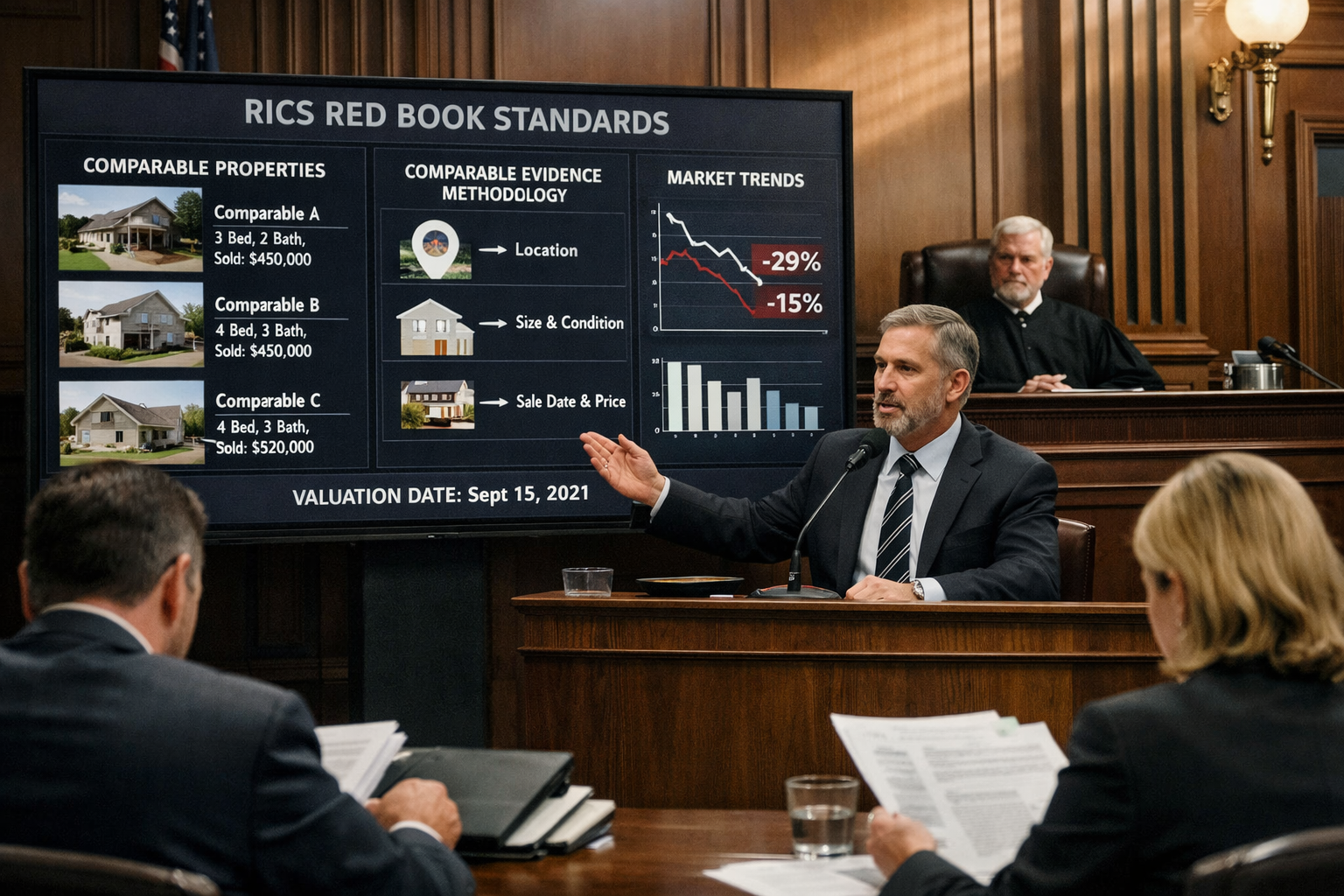
When buyer demand fluctuates rapidly, the quality and comprehensiveness of evidence preparation determines whether expert testimony withstands challenge. RICS protocols provide detailed guidance for assembling persuasive, defensible evidence packages.
Establishing the Valuation Date
The valuation date becomes the critical anchor point in disputes arising from market sentiment shifts. Expert witnesses must clearly establish:
- Specific date for which the valuation opinion applies
- Market conditions prevailing on that precise date
- Available evidence from that timepoint (not retrospective knowledge)
- Reasonable assumptions a valuer would make on that date
- Limitations in market data from the relevant period
Consider a scenario where a property was valued in January 2026 when buyer demand stood at -29%, but the dispute hearing occurs in April 2026 when demand has recovered to -15%. The expert must value based on January conditions, not April knowledge, while explaining the market context that existed at the valuation date.
Comparable Evidence Analysis
Robust comparable evidence forms the foundation of defensible expert witness valuations. The RICS framework requires:
Primary Comparables:
- ✅ Similar properties in the same locality
- ✅ Transactions completed near the valuation date
- ✅ Verified sale prices (not asking prices)
- ✅ Adjustment explanations for differences
- ✅ Market condition adjustments for timing differences
Secondary Evidence:
- 📈 Market indices showing demand trends
- 📊 Transaction volume data demonstrating liquidity
- 🏘️ Local market reports from the relevant period
- 💷 Mortgage lending data indicating buyer activity
- 📉 Days-on-market statistics showing market pace
When preparing evidence for building survey related disputes, experts must also consider property condition factors that influenced value at the specific valuation date.
Addressing Market Sentiment in Expert Reports
Expert witness reports must explicitly address market sentiment and buyer demand fluctuations. Effective reports include:
-
Market Context Section explaining:
- Overall economic conditions at valuation date
- Local market sentiment indicators
- Buyer demand metrics and trends
- Supply and demand balance
- Forward-looking market expectations at that time
-
Methodology Transparency detailing:
- Valuation approach selection rationale
- Comparable selection criteria
- Adjustment methodology and quantum
- Sensitivity analysis for key assumptions
- Alternative approaches considered and rejected
-
Opinion Formation clearly stating:
- Final value conclusion with range if appropriate
- Confidence level given market conditions
- Material uncertainties affecting reliability
- Factors that could alter the opinion
- Limitations in available evidence
Handling Rapidly Changing Markets
When market sentiment shifts rapidly between valuation date and dispute resolution, expert witnesses face additional complexity. RICS protocols require:
Retrospective Analysis Discipline:
- Value based on information available at valuation date
- Avoid hindsight bias from subsequent market movements
- Distinguish between actual market knowledge and retrospective interpretation
- Explain what a reasonable valuer would conclude at that time
Update Protocols:
- Notify instructing party if subsequent events materially affect opinion
- Provide supplementary reports if valuation date changes
- Address opposing expert's use of post-valuation date evidence
- Maintain consistency in methodology across time periods
Understanding the top factors examined during property valuations helps experts ensure comprehensive evidence coverage that anticipates cross-examination challenges.
Cross-Examination Preparation and Tribunal Presentation
The courtroom or tribunal environment tests expert witness credibility under pressure. Preparation for cross-examination separates competent valuers from effective expert witnesses.
Anticipating Challenge Areas
Opposing counsel typically target specific vulnerabilities in expert witness testimony:
🎯 Comparable Selection Challenges:
- Why specific comparables were included or excluded
- Adjustments made for property differences
- Timing adjustments for market movement
- Geographic boundaries for comparable search
🎯 Market Sentiment Interpretation:
- Evidence supporting demand fluctuation claims
- Alternative interpretations of market data
- Consistency with published indices
- Local versus national market trends
🎯 Methodology Questions:
- Alternative approaches and why rejected
- Professional judgment versus objective data
- Assumptions underlying the valuation
- Sensitivity to assumption changes
🎯 Independence Concerns:
- Communications with instructing party
- Pressure to modify opinions
- Fee arrangements and contingencies
- Previous relationship with parties
Effective Tribunal Communication
Expert witnesses must translate complex valuation concepts for non-specialist tribunal members. Effective communication strategies include:
- Plain language explanations avoiding unnecessary jargon
- Visual aids showing comparable locations, property features, and market trends
- Structured presentation with clear logical progression
- Concise responses directly addressing questions asked
- Professional demeanor maintaining composure under challenge
When disputes involve specialized areas like inheritance tax valuations or insurance reinstatement costs, experts must ensure technical accuracy while maintaining accessibility.
Navigating RICS Dispute Resolution Services
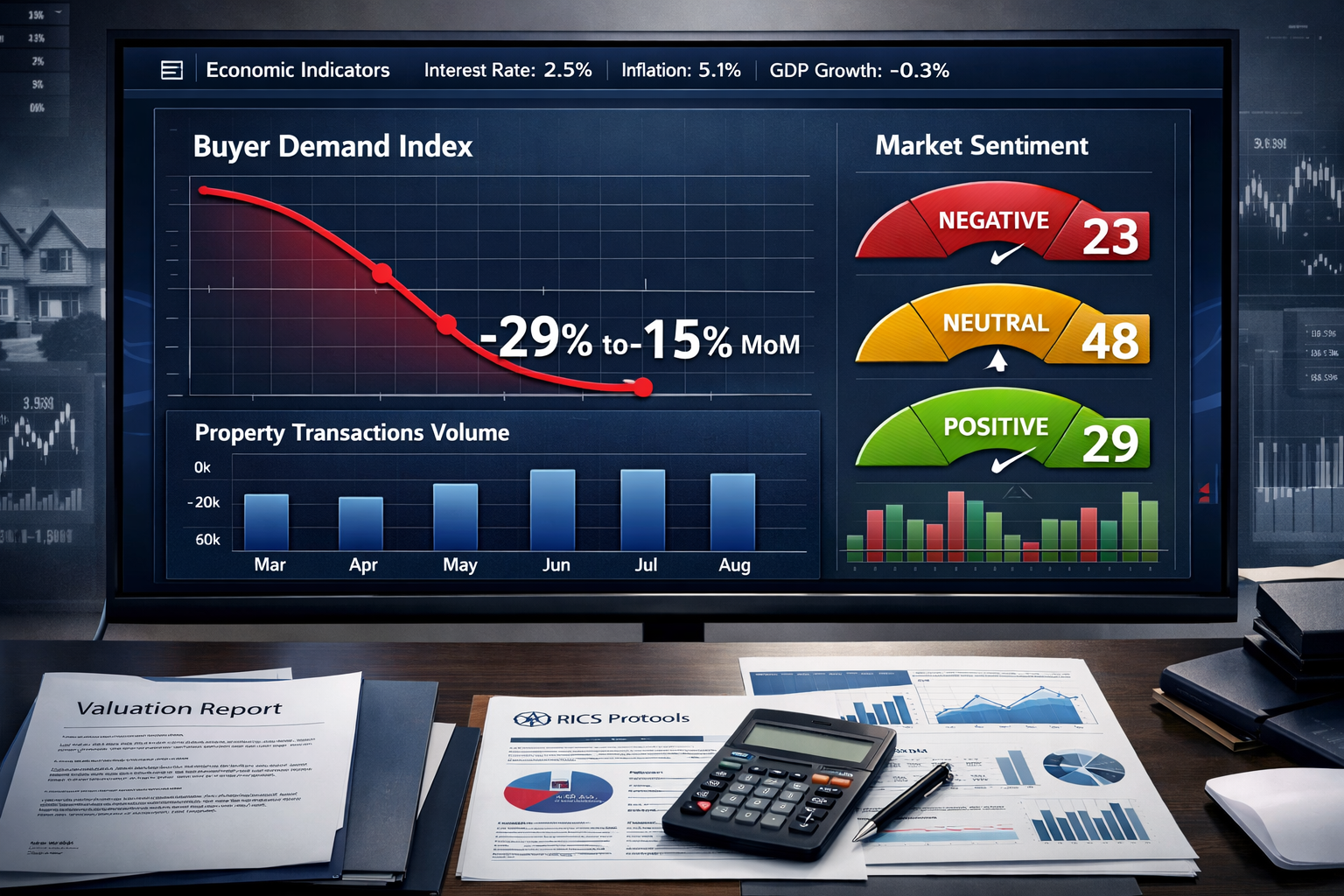
Beyond individual expert witness work, RICS operates comprehensive dispute resolution services that facilitate efficient resolution of valuation disputes.
RICS Dispute Resolution Service Functions
The RICS Dispute Resolution Service provides several mechanisms for resolving property disputes [4]:
- Expert Witness Nominations in specialist areas when parties cannot agree on appointments
- President of RICS Appointments for neutral expert selection
- Mediation Services facilitating settlement discussions
- Arbitration Administration for formal dispute resolution
- Expert Determination where binding decisions are required
Parties can contact the service at 020 7334 3806 or drs@rics.org for assistance with expert witness nominations and dispute resolution processes.
When to Engage Dispute Resolution Services
Early engagement with RICS dispute resolution mechanisms can prevent costly litigation:
| Scenario | Recommended Action | Typical Timeframe |
|---|---|---|
| Pre-litigation disagreement | Joint expert instruction | 4-8 weeks |
| Mediation opportunity | RICS mediation service | 6-12 weeks |
| Technical expert needed | RICS expert nomination | 2-4 weeks |
| Binding determination required | Expert determination | 8-16 weeks |
| Formal arbitration | RICS arbitration service | 12-24 weeks |
Understanding property market legislation changes helps parties identify when disputes require formal resolution versus negotiated settlement.
Best Practices for Expert Witnesses in Volatile Markets
The 2026 market environment, characterized by rapid sentiment shifts and fluctuating buyer demand, demands heightened diligence from expert witnesses. Best practices include:
Documentation Excellence
Contemporaneous records provide crucial evidence of market conditions:
- 📅 Date-stamped market research and analysis
- 📧 Email communications regarding comparable evidence
- 📊 Market reports and data from the valuation period
- 🗒️ File notes documenting decision-making processes
- 📸 Property photographs with metadata timestamps
Continuous Professional Development
Maintaining expertise in rapidly changing markets requires:
- Regular attendance at market briefings and seminars
- Subscription to market data services and indices
- Networking with active market participants
- Review of tribunal decisions and case law
- Technical skills updates in valuation methodologies
Ethical Vigilance
Market volatility increases pressure on expert witnesses to favor instructing parties. Maintaining ethical standards requires:
- Clear engagement terms establishing independence expectations
- Documented boundaries regarding opinion modification requests
- Transparent fee arrangements avoiding contingent compensation
- Conflict checks before accepting instructions
- Supervision protocols for junior staff involvement
Practical Case Studies: Market Sentiment Disputes
Case Study 1: Residential Purchase Dispute
Scenario: Buyer agreed £650,000 purchase price in December 2025 when demand was -29%. By completion in March 2026, demand improved to -15%, but lender valued property at £625,000.
Expert Witness Approach:
- Established December 2025 as valuation date per contract terms
- Assembled comparables from November-January period showing market weakness
- Documented buyer sentiment indicators from that timeframe
- Explained market recovery as post-valuation date event
- Supported £625,000-£640,000 range based on December conditions
Outcome: Settlement at £635,000 with shared costs, avoiding full litigation.
Case Study 2: Commercial Lease Renewal
Scenario: Landlord sought rent review based on improving market sentiment. Tenant argued valuation should reflect earlier weak market conditions.
Expert Witness Approach:
- Clarified rent review date per lease terms
- Analyzed commercial market sentiment at specific review date
- Distinguished between residential and commercial market timing
- Provided comparable lease transactions from relevant period
- Addressed different market recovery rates by sector
Outcome: Tribunal accepted expert evidence establishing market conditions at review date, resulting in moderate rent increase rather than landlord's higher claim.
Conclusion
Expert Witness Valuations Amid Market Sentiment Shifts: RICS Protocols for Dispute Evidence When Buyer Demand Fluctuates Rapidly represents essential competency for chartered surveyors operating in 2026's volatile property markets. When buyer demand swings dramatically—from -29% to -15% in mere weeks—the gap between contract valuations and market realities creates inevitable disputes requiring expert resolution.
The RICS framework provides comprehensive protocols ensuring expert witnesses can present defensible, credible evidence even amid rapid market changes. From rigorous accreditation requirements through detailed evidence preparation standards to ethical conduct expectations, these protocols protect both expert witness credibility and tribunal confidence in valuation evidence.
Key Success Factors
✅ Maintain absolute independence from instructing party interests
✅ Anchor valuations to specific dates with clear market context
✅ Document extensively to support opinion formation processes
✅ Communicate clearly translating technical concepts for non-specialists
✅ Update continuously regarding market conditions and professional standards
✅ Engage ethically resisting pressure to modify professional judgments
Actionable Next Steps
For chartered surveyors seeking to strengthen their expert witness capabilities:
- Pursue RICS accreditation through the four-module training pathway and ethics assessment
- Develop documentation systems capturing contemporaneous market evidence and decision-making processes
- Build comparable databases organized by location, property type, and time period for rapid evidence assembly
- Practice cross-examination through peer review sessions and mock tribunal exercises
- Establish clear engagement protocols with instructing parties defining independence boundaries
- Monitor market indicators systematically to support sentiment and demand fluctuation analysis
- Network with tribunal-experienced experts learning from practical case experiences
For property owners, buyers, and lenders facing valuation disputes in volatile markets, engaging RICS-accredited expert witnesses early in the dispute process provides the strongest foundation for credible evidence presentation and favorable resolution outcomes.
The intersection of professional valuation expertise, legal procedural knowledge, and ethical conduct creates effective expert witnesses capable of navigating even the most challenging market sentiment shifts. As 2026's property markets continue evolving, adherence to RICS protocols remains the cornerstone of defensible expert witness practice.
References
[1] Expert Witness Valuations In 2026s Stabilizing Market Rics Standards For Mortgage Disputes And Property Disagreements – nottinghillsurveyors.com
[2] Surveyors Acting As Expert Witnesses – rics.org
[3] Valuation Standards – rics.org
[4] Rics Register Of Accredited Expert Witnesses March 2026 – rics.org