

As the UK lettings market enters Q1 2026, expert witnesses face unprecedented challenges in defending rental valuations amid shifting tenant dynamics. With average UK private rents reaching £1,367 per month and tenant demand showing its weakest reading since April 2020[2], valuation disputes have intensified across courts and tribunals. Expert Witness Strategies for Lettings Market Valuation Disputes in Q1 2026: Defending Assessments Amid Tenant Demand Surges requires a sophisticated understanding of both market fundamentals and legal protocols to deliver court-ready assessments that withstand rigorous scrutiny.
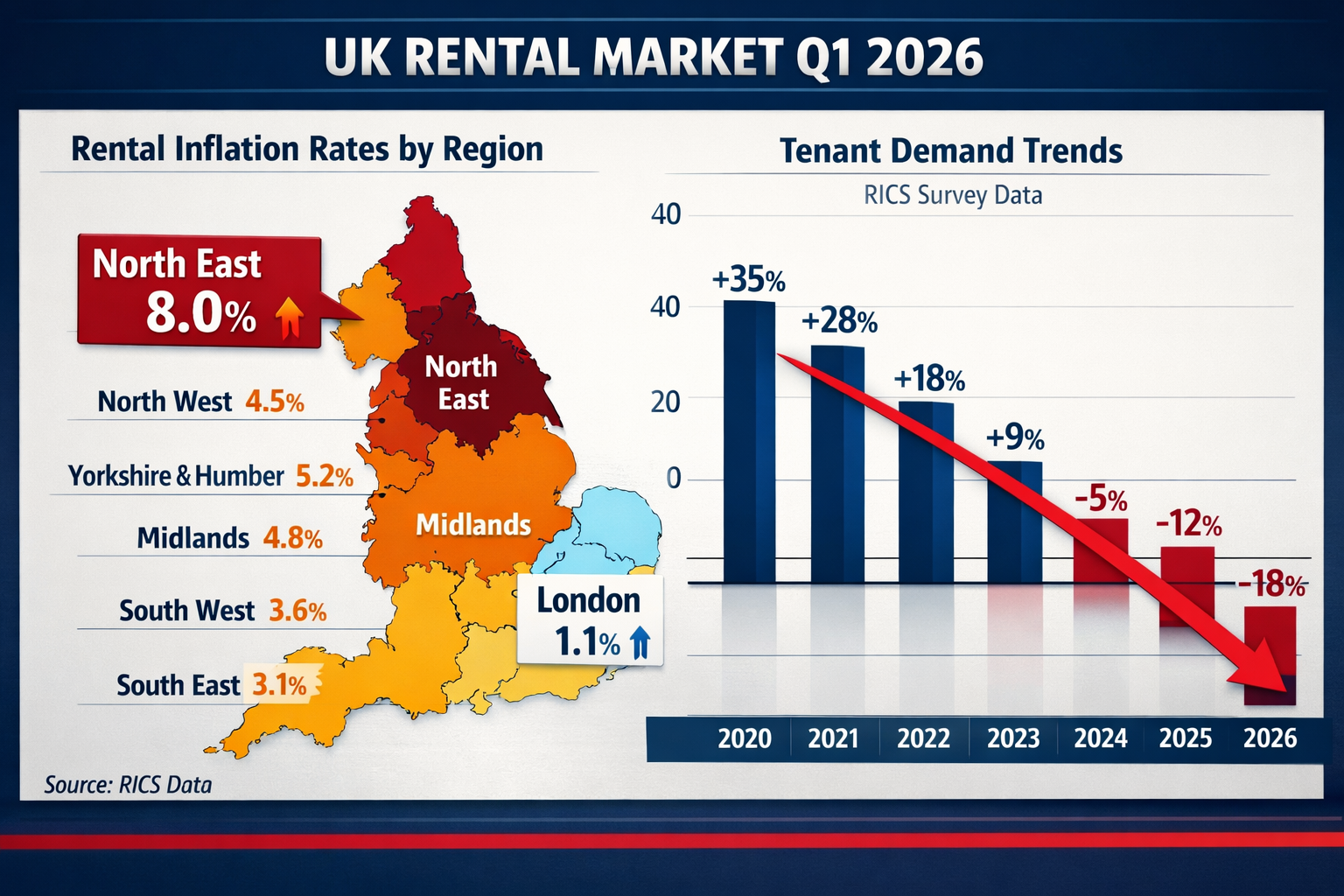
The current market presents a paradox: while rental growth has moderated to 3.5% year-on-year[3], regional variations create complex valuation scenarios. London's rental inflation sits at just 1.1%, while the North East experiences 8.0% growth[3], demanding nuanced approaches to comparable evidence selection and market analysis.
Key Takeaways
- Regional disparities in rental inflation (1.1% in London vs 8.0% in North East) require location-specific comparable evidence strategies for defensible valuations
- Declining tenant demand (net balance of +2% in February 2026) creates unique challenges in justifying rental assessments in tribunal proceedings
- RICS Red Book compliance and proper methodology documentation are essential foundations for expert witness credibility in lettings disputes
- Legislative uncertainty from the Renters' Rights Act implementation affects 25% of landlords' pricing strategies, impacting market evidence reliability
- Robust evidence hierarchies combining transactional data, listing evidence, and market intelligence strengthen expert witness positions in contested valuations
Understanding the Q1 2026 Lettings Market Landscape
Current Market Dynamics and Valuation Implications
The lettings market in early 2026 presents a unique set of circumstances that directly impact valuation disputes. Average UK private rents increased 3.5% in the 12 months to January 2026, representing a deceleration from the 4.0% recorded in December 2025[3]. This moderation signals a market transition that expert witnesses must carefully interpret when defending assessments.
Key market indicators affecting valuations include:
- 📊 Rental growth moderation: Slowing inflation rates require careful temporal analysis of comparables
- 📉 Weakening tenant demand: Net balance of +2% represents the lowest since pandemic onset[2]
- 🏘️ Constrained supply: Landlord instructions remain at -27% net balance[4]
- ⚖️ Legislative pressure: Renters' Rights Act implementation creating pricing uncertainty[1]
The supply-demand imbalance continues to influence rental values, though the relationship has become more nuanced. While landlord instructions remain subdued at a "firmly negative net balance of -27%"[4], tenant demand has simultaneously weakened, creating a less straightforward market dynamic than previous years' supply-constrained environments.
Regional Variations Creating Valuation Complexity
Perhaps the most significant challenge for expert witnesses in 2026 is the extreme regional variation in rental performance. London, traditionally a high-growth market, recorded the lowest rental inflation at just 1.1%, while the North East saw the highest at 8.0%[3]. This eight-fold difference demands sophisticated approaches to comparable selection and market area definition.
| Region | Rental Inflation Rate | Valuation Considerations |
|---|---|---|
| North East | 8.0% | Strong growth justifies premium assessments |
| National Average | 3.5% | Baseline for comparison |
| London | 1.1% | Requires careful justification of values |
Expert witnesses must demonstrate comprehensive understanding of these regional dynamics when preparing expert witness reports for tribunal proceedings. The geographic specificity of rental market performance means that national trends provide limited utility in defending individual property assessments.
Core Expert Witness Strategies for Lettings Market Valuation Disputes in Q1 2026
RICS Red Book Compliance and Methodological Rigor
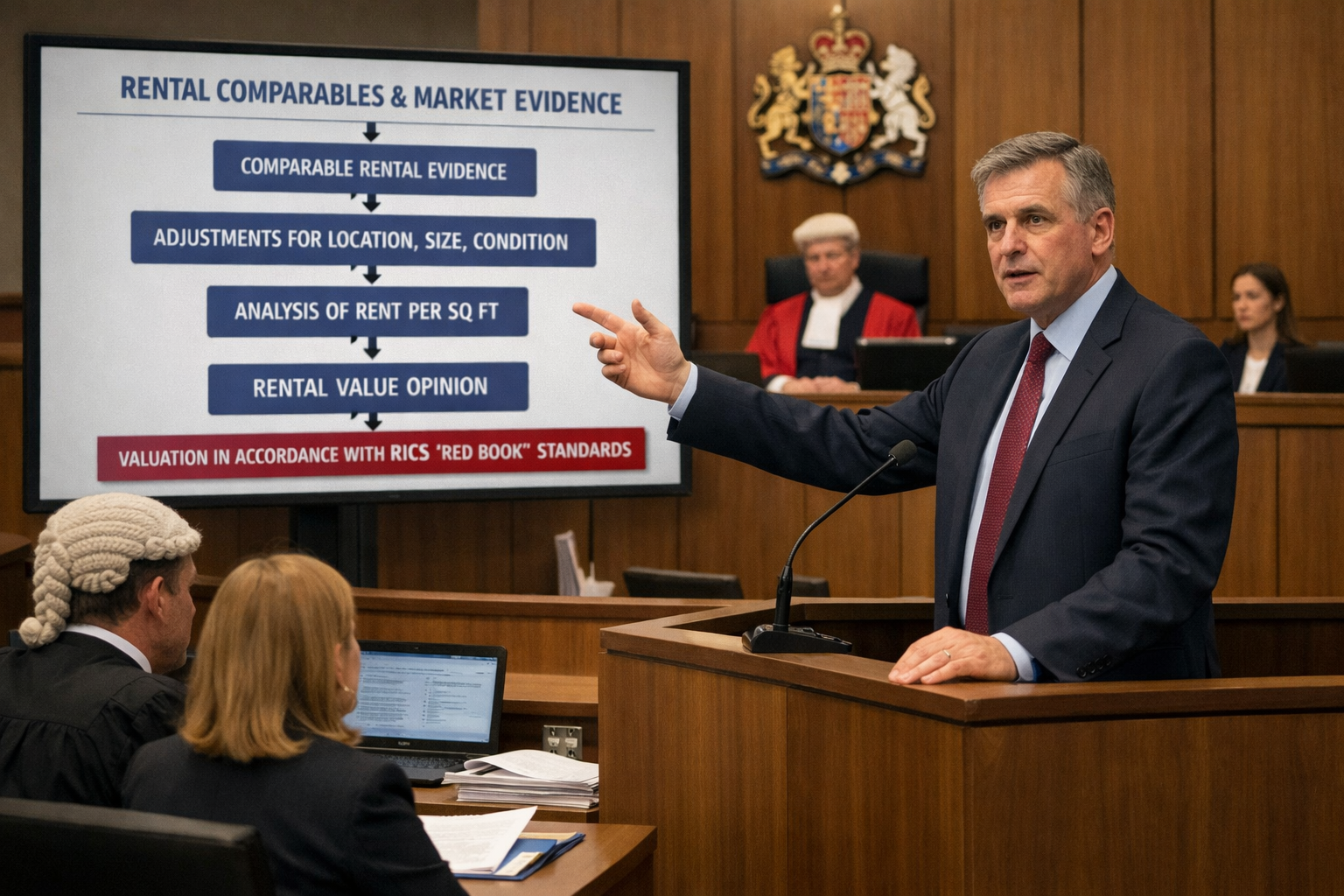
The foundation of any defensible lettings valuation lies in strict adherence to RICS Valuation – Global Standards (commonly known as the Red Book). Expert witnesses must demonstrate comprehensive compliance with these professional standards to establish credibility in dispute proceedings.
Essential Red Book requirements for lettings valuations include:
- Clear basis of value: Typically Market Rent (MR) defined as "the estimated amount for which an interest in real property should be leased on the valuation date"
- Assumptions and special assumptions: Explicitly stated, particularly regarding property condition, tenancy status, and market conditions
- Valuation approach: Comparative method using rental evidence from similar properties
- Inspection requirements: Physical inspection or clear statement if desktop valuation
- Independence and objectivity: Documented absence of conflicts of interest
When defending assessments in Q1 2026's volatile market, expert witnesses must pay particular attention to the valuation date. Given the rapid changes in tenant demand and rental growth rates, valuations conducted even three months apart may reach significantly different conclusions based on legitimate market movement rather than methodological differences.
The top considerations during property valuation extend beyond simple comparable analysis to encompass market context, property-specific characteristics, and temporal factors that influence rental potential.
Building Robust Evidence Hierarchies
Expert witnesses defending lettings valuations must construct a hierarchy of evidence that demonstrates comprehensive market analysis. In Q1 2026's complex market environment, this evidence pyramid becomes particularly critical.
Tier 1 Evidence (Strongest):
- ✅ Completed lettings (transacted) of comparable properties within 3-6 months
- ✅ Properties with similar specifications, location, and condition
- ✅ Arm's length transactions (not related parties)
- ✅ Verified through multiple sources (agent confirmation, tenancy agreements)
Tier 2 Evidence (Supporting):
- 📋 Current listings of comparable properties
- 📋 Rental yields from similar investment properties
- 📋 Agent market reports and rental assessments
- 📋 Historical rental progression for the subject property
Tier 3 Evidence (Contextual):
- 📈 Regional market statistics (RICS surveys, ONS data)
- 📈 Local authority housing market reports
- 📈 Demographic and employment trends affecting tenant demand
- 📈 Legislative changes impacting rental market dynamics
Given that landlord instructions remain subdued[4], expert witnesses may face challenges in identifying sufficient Tier 1 comparables. This scarcity demands rigorous documentation of search methodology and transparent explanation of any adjustments applied to less-than-perfect comparables.
Addressing Tenant Demand Fluctuations in Assessments
The February 2026 RICS survey revealed tenant demand at a net balance of +2%, described as "its weakest reading since April 2020"[2]. This dramatic shift from previous years' strong demand creates specific challenges for expert witnesses defending rental valuations.
Strategies for addressing demand fluctuations:
1. Temporal Analysis: Clearly distinguish between the valuation date market conditions and current conditions at the time of dispute. A valuation conducted in Q4 2025 reflects different demand dynamics than one from Q1 2026.
2. Forward-Looking vs. Retrospective: Clarify whether the valuation reflects current market rent (what a property would achieve if marketed today) or retrospective assessment (what it should have achieved at a historical date).
3. Demand Indicators Documentation: Reference objective demand metrics including:
- Days to let for comparable properties
- Viewing-to-application ratios
- Rental price reductions in the local market
- Void period trends
4. Supply Context: While demand has weakened, supply remains constrained with landlord instructions at -27%[4]. Expert witnesses must explain how this supply-demand balance affects achievable rents in the specific market segment.
"The expert witness must demonstrate not just what rents are being achieved, but why those rents are sustainable given the specific supply-demand dynamics of the local lettings market at the valuation date."
Defending Assessments Against Common Challenges in Expert Witness Strategies for Lettings Market Valuation Disputes in Q1 2026
Handling Comparable Evidence Disputes
The most frequent challenge in lettings valuation disputes centers on the selection and adjustment of comparable evidence. Opposing parties often present conflicting rental evidence, requiring expert witnesses to defend their comparable selection methodology rigorously.
Defending comparable selection:
Location Analysis: Define the market area with precision. In markets experiencing varied performance (such as London's 1.1% growth[3]), micro-location differences significantly impact rental values. Expert witnesses should:
- Define primary, secondary, and tertiary search areas
- Justify geographic boundaries based on tenant behavior and amenity access
- Document why certain comparables fall outside acceptable location parameters
Property Specification Matching: Systematically compare key characteristics:
- Floor area (square footage/square meters)
- Number of bedrooms and bathrooms
- Property type (flat, house, maisonette)
- Condition and specification level
- Outdoor space and parking
- Energy Performance Certificate (EPC) rating
Temporal Relevance: With rental growth at 3.5% annually[3], a comparable from 12 months prior requires approximately 3.5% upward adjustment. Expert witnesses must:
- Apply time adjustments based on documented market trends
- Reference regional rental indices for the specific location
- Explain adjustment methodology transparently
Adjustment Transparency: Every adjustment to comparable evidence must be quantified and justified. Vague statements like "adjusted for superior condition" lack the rigor required in dispute proceedings. Instead, expert witnesses should provide percentage or monetary adjustments with supporting rationale.
Navigating Legislative Uncertainty Impacts
The impending implementation of the Renters' Rights Act has created significant market uncertainty, with 25% of landlords planning rent increases within 6-18 months[1]. This legislative backdrop complicates valuation disputes as parties may disagree on whether to factor future regulatory changes into current assessments.
Expert witness approaches to legislative considerations:
Valuation Date Principle: RICS standards require valuations to reflect market conditions and knowledge available at the valuation date. Future legislative changes not yet implemented should generally not affect the assessment unless market participants demonstrably factor them into current pricing.
Market Sentiment Documentation: Where legislative changes affect current rental pricing (through anticipatory behavior), expert witnesses should document:
- Market commentary from letting agents regarding landlord pricing strategies
- Evidence of rent increases attributed to legislative concerns
- Tenant negotiating behavior influenced by anticipated regulatory changes
Distinguishing Market Rent from Regulated Rent: Expert witnesses must clearly articulate whether the valuation reflects:
- Market Rent: What a willing tenant would pay a willing landlord in an open market
- Regulated Rent: What rent is permissible under specific statutory frameworks
This distinction becomes particularly important when disputes involve rent review clauses or statutory rent determinations under various housing acts.
Countering Alternative Valuation Methodologies
In lettings disputes, opposing parties may present alternative valuation approaches that challenge the expert witness's assessment. Common alternative methodologies include:
Investment Method Challenges: Some parties argue rental values should be derived from property capital values and target yields. Expert witnesses should counter by:
- Emphasizing that rental values are determined by occupier demand, not investor yields
- Demonstrating that the comparative method (actual rental evidence) provides more reliable market rent assessments
- Acknowledging investment method as a cross-check rather than primary methodology
Affordability Arguments: Tenants may argue that rents exceed affordability thresholds. Expert witnesses must distinguish between:
- Market rent: What the market will bear based on supply and demand
- Affordable rent: A policy concept typically 80% of market rent in social housing contexts
- Individual affordability: Not a determinant of market value unless it affects demand across the entire market segment
Online Portal Reliance: Opposing parties increasingly cite Rightmove, Zoopla, or other portal data. Expert witnesses should:
- Acknowledge these as legitimate secondary sources
- Highlight limitations (asking prices vs. achieved rents, unverified data, sample bias)
- Demonstrate superior evidence quality through agent verification and transaction confirmation
The key to successful defense lies in demonstrating that the primary methodology follows established RICS protocols and produces results consistent with verifiable market transactions.
Advanced Techniques in Expert Witness Strategies for Lettings Market Valuation Disputes in Q1 2026

Quantitative Analysis and Statistical Validation
As lettings disputes become more sophisticated, expert witnesses increasingly employ quantitative techniques to strengthen their assessments and defend against statistical challenges.
Regression Analysis Applications: For portfolios or multiple property disputes, expert witnesses can employ regression models that:
- Quantify the impact of specific property characteristics on rental values (e.g., additional bedroom worth £X, parking adds £Y)
- Demonstrate systematic relationships between property features and achieved rents
- Provide statistical confidence intervals for valuation conclusions
Sample Size Considerations: When comparable evidence is limited (common given the -27% landlord instructions balance[4]), expert witnesses must:
- Acknowledge sample size limitations transparently
- Expand geographic or temporal search parameters with appropriate adjustments
- Explain why available comparables remain representative despite limited quantity
Outlier Treatment: Rental evidence may include anomalous transactions. Expert witnesses should:
- Identify statistical outliers using objective criteria (e.g., values beyond 2 standard deviations)
- Investigate reasons for outlier status (special circumstances, data errors)
- Document decisions to include or exclude outliers with clear justification
Incorporating Market Intelligence Beyond Transaction Data
While transaction evidence forms the core of lettings valuations, expert witnesses defending assessments in 2026 must integrate broader market intelligence to provide context and support conclusions.
Agent Consultation Documentation: Direct engagement with local letting agents provides valuable insights:
- Current demand levels for specific property types
- Typical time-to-let metrics
- Tenant negotiating behavior and price sensitivity
- Recent market shifts not yet reflected in transaction data
Expert witnesses should document these consultations formally, including agent names, firms, dates of contact, and specific intelligence gathered. This documentation demonstrates due diligence and provides supporting evidence for valuation conclusions.
Demographic and Economic Context: Q1 2026's weak tenant demand[2] likely reflects broader economic factors. Expert witnesses should reference:
- Local employment trends and major employer activities
- Population migration patterns (particularly relevant given regional variations)
- Student population changes for markets with significant student tenant bases
- Economic confidence indicators affecting household formation
Legislative Impact Assessment: With 25% of landlords planning rent increases due to legislative uncertainty[1], expert witnesses must analyze:
- How the Renters' Rights Act implementation timeline affects current market pricing
- Whether rental evidence reflects anticipatory pricing behavior
- The distinction between temporary market distortions and sustainable rental levels
This comprehensive market intelligence approach, when properly documented, significantly strengthens an expert witness's ability to defend valuations against challenges based on selective or incomplete evidence.
Cross-Examination Preparation and Testimony Excellence
The ultimate test of expert witness strategies occurs during cross-examination in court or tribunal proceedings. Preparation for this adversarial environment requires specific techniques tailored to lettings valuation disputes.
Anticipating Challenge Vectors: Expert witnesses should prepare for common cross-examination approaches:
Challenge 1: "You've cherry-picked favorable comparables"
- Defense: Present the complete search methodology, including all properties identified and clear criteria for inclusion/exclusion
- Evidence: Document search parameters, dates, sources consulted, and objective selection criteria
- Transparency: Acknowledge comparables that support lower valuations and explain why they're less relevant
Challenge 2: "Market conditions have changed since your valuation date"
- Defense: Distinguish between valuation date conditions (relevant) and subsequent changes (generally not relevant)
- Evidence: Reference RICS guidance on valuation date principle and retrospective valuations
- Concession: Acknowledge if asked to provide updated assessment, but maintain original valuation's validity for its date
Challenge 3: "Your adjustments to comparables are excessive/arbitrary"
- Defense: Provide detailed adjustment methodology with supporting evidence for each adjustment
- Evidence: Reference market data supporting adjustment percentages (e.g., premium for parking, discount for condition)
- Consistency: Demonstrate adjustments applied consistently across all comparables
Challenge 4: "You've ignored contradictory evidence"
- Defense: Demonstrate awareness of all relevant evidence, including that which supports alternative conclusions
- Evidence: Explain weight given to different evidence types and reasons for prioritizing certain sources
- Professional judgment: Articulate how professional expertise informs evidence weighting
Maintaining Credibility Under Pressure: The expert witness's demeanor and response style significantly impact how their evidence is received:
- ✅ Remain calm and professional regardless of questioning tone
- ✅ Answer only the question asked without volunteering unnecessary information
- ✅ Acknowledge limitations and uncertainties honestly
- ✅ Avoid advocacy for either party's position
- ✅ Speak clearly using accessible language while maintaining technical accuracy
- ✅ Reference your report when appropriate rather than relying on memory
The expert witness report serves as the foundation for testimony, and expert witnesses should be thoroughly familiar with every statement, figure, and conclusion it contains.
Specific Strategies for Q1 2026 Market Conditions
Addressing the Demand Decline Narrative
With tenant demand at its weakest level since April 2020[2], opposing parties in valuation disputes frequently argue that rental assessments should be reduced to reflect softening demand. Expert witnesses must develop sophisticated counterarguments that acknowledge market realities while defending appropriate valuations.
Demand vs. Transaction Evidence Distinction: Weak demand indicators don't automatically translate to lower achieved rents when supply remains constrained. Expert witnesses should:
- Differentiate between demand sentiment (surveyed intentions) and transactional reality (achieved rents)
- Present evidence of actual lettings at or near assessed values despite demand weakness
- Explain the lag between demand shifts and rental price adjustments
- Reference the continued supply constraint (landlord instructions at -27%[4]) as a counterbalancing factor
Market Segment Analysis: Aggregate demand statistics may mask segment-specific performance. Expert witnesses defending valuations should:
- Identify the specific market segment (e.g., two-bedroom flats, family houses, luxury rentals)
- Present demand evidence specific to that segment rather than overall market
- Demonstrate that the subject property's segment may perform differently than the broader market
- Reference tenant demographics and preferences affecting the specific property type
Temporal Context: The February 2026 demand reading represents a snapshot in time. Expert witnesses should:
- Present demand trend data showing whether the decline is accelerating, stabilizing, or reversing
- Consider seasonal factors affecting Q1 demand (traditionally weaker than spring/summer periods)
- Avoid over-extrapolating from single data points when defending medium-term rental assessments
Leveraging Legislative Uncertainty in Defense Strategies
The legislative uncertainty surrounding the Renters' Rights Act implementation creates both challenges and opportunities for expert witnesses. Understanding how this uncertainty affects market behavior enables more nuanced valuation defenses.
Landlord Behavior Analysis: With 25% of landlords planning rent increases within 6-18 months due to legislative concerns[1], expert witnesses can argue:
- Current rental evidence may understate market rent due to landlords' "wait and see" approach
- Anticipated compliance costs and reduced flexibility justify premium assessments for well-positioned properties
- Properties offering features valued under new regulatory frameworks (e.g., higher quality, better maintenance) may command premiums
Market Adaptation Period: During legislative transition periods, rental markets often experience temporary dislocations. Expert witnesses should:
- Identify whether the valuation date falls during a transition period
- Explain how market participants' incomplete understanding of new regulations may affect pricing behavior
- Distinguish between temporary market uncertainty effects and fundamental value changes
Regulatory Compliance Value: Properties already meeting anticipated higher standards may justify premium assessments. Expert witnesses should consider:
- EPC ratings and energy efficiency (increasingly important in regulatory frameworks)
- Property condition and maintenance standards
- Compliance with safety regulations (electrical, gas, fire safety)
- Amenities and specifications meeting modern tenant expectations
This legislative context provides expert witnesses with additional layers of analysis that strengthen valuation defenses beyond simple comparable evidence.
Documentation Standards for Court-Ready Valuations
The difference between a competent valuation and a court-ready assessment lies primarily in documentation standards. Expert witnesses must anticipate that every aspect of their methodology will face scrutiny.
Essential documentation elements include:
📁 Comparable Evidence Files: For each comparable property:
- Source documentation (agent particulars, listing screenshots, tenancy agreements)
- Date evidence was obtained
- Contact details for verification
- Photographs where available
- Specific property details (floor area, bedrooms, condition notes)
- Achieved rent and any incentives offered
📁 Adjustment Calculations: For every adjustment applied:
- Basis for adjustment percentage or amount
- Supporting evidence (market data, previous adjustments accepted in similar cases)
- Calculation methodology
- Sensitivity analysis showing valuation range if different adjustments applied
📁 Market Research: Supporting the valuation context:
- Regional rental growth statistics with sources
- Local market reports from agents and professional bodies
- Demographic and economic data affecting the local lettings market
- Legislative and regulatory context
📁 Inspection Records: If physical inspection conducted:
- Detailed property description
- Photographs of key features and condition issues
- Floor plans or measurements
- Comparable site visit notes if applicable
This comprehensive documentation approach ensures expert witnesses can respond to any challenge with specific, verifiable evidence rather than relying on general assertions or professional opinion alone.
Similar documentation rigor applies across various valuation contexts, from matrimonial valuations to inheritance tax valuations, though the specific evidence requirements vary by dispute type.
Regional Considerations for Expert Witness Strategies
London Market Specifics
London's exceptionally low 1.1% rental inflation[3] in Q1 2026 creates unique challenges for expert witnesses defending rental valuations in the capital. This underperformance relative to national averages demands specific strategic approaches.
London-Specific Valuation Strategies:
Micro-Market Analysis: London's rental market operates at a highly localized level. Expert witnesses must:
- Define market areas at neighborhood or even street level rather than borough-wide
- Demonstrate rental performance variations within broader geographic areas
- Reference transport connectivity, amenity access, and neighborhood characteristics affecting rental values
Property Type Segmentation: London's diverse housing stock requires careful segmentation:
- Purpose-built flats vs. converted properties
- Period properties vs. modern developments
- Build-to-rent schemes vs. private landlord stock
- Luxury vs. mid-market vs. affordable segments
Tenant Profile Consideration: London's tenant demographics significantly affect valuation:
- Professional sharers (multiple tenants, higher combined rent tolerance)
- International tenants (different expectations and price sensitivity)
- Corporate lets (premium pricing for furnished, flexible arrangements)
- Family tenants (prioritizing schools, space, stability)
Commuter Belt Dynamics: London's weak performance may reflect tenant migration to surrounding areas offering better value. Expert witnesses should consider whether the subject property competes with commuter belt alternatives and how this affects valuation.
High-Growth Regional Markets
Conversely, markets like the North East experiencing 8.0% rental inflation[3] present different challenges, particularly when defending valuations that appear high relative to historical norms.
High-Growth Market Defense Strategies:
Trend Documentation: Demonstrate sustained growth trajectory:
- Multi-year rental growth data showing consistent upward trend
- Comparable evidence showing progression over time
- Market reports from local agents confirming growth drivers
Supply-Demand Fundamentals: Explain the underlying factors driving exceptional growth:
- Local economic development and employment growth
- Population in-migration patterns
- New housing supply (or lack thereof) relative to demand
- Regeneration or infrastructure projects enhancing area attractiveness
Comparable Recency: In high-growth markets, comparable evidence age becomes critical:
- Prioritize most recent comparables (within 3 months)
- Apply time adjustments to older evidence based on documented growth rates
- Explain why older comparables significantly understate current market rent
Sustainability Analysis: Address whether growth rates are sustainable:
- Reference historical precedents in similar market conditions
- Acknowledge if growth appears exceptional and may moderate
- Distinguish between valuation (current market conditions) and forecasting (future performance)
Expert witnesses operating across multiple regions should maintain awareness of these geographic variations and tailor their strategies accordingly. Chartered surveyors working in specific areas such as Richmond, Kingston, or Surrey develop specialized knowledge of local market dynamics that enhances their expert witness effectiveness.
Practical Implementation Framework
Pre-Instruction Due Diligence
Before accepting an expert witness instruction for a lettings valuation dispute, chartered surveyors should conduct thorough due diligence to ensure they can provide robust, defensible assessments.
Conflict Check: Verify no conflicts of interest exist:
- No previous involvement with the subject property
- No relationships with parties to the dispute
- No financial interest in the outcome
- Sufficient independence from instructing party
Competency Assessment: Confirm appropriate expertise:
- Specific experience in the relevant geographic market
- Familiarity with the property type and market segment
- Current knowledge of Q1 2026 market conditions
- Previous expert witness experience (or appropriate supervision if developing expertise)
Evidence Availability Review: Assess whether sufficient evidence exists to support a robust valuation:
- Preliminary search for comparable rental evidence
- Identification of potential evidence gaps
- Assessment of whether a defensible valuation is achievable given available data
Scope and Fee Agreement: Establish clear terms:
- Defined scope of work (inspection, report, potential testimony)
- Fee structure (fixed fee vs. hourly, court attendance rates)
- Timeline for report delivery
- Clarification that fees are not contingent on outcome
Report Structure and Content for Maximum Defensibility
The expert witness report structure significantly affects its defensibility in dispute proceedings. A well-structured report anticipates challenges and preemptively addresses potential weaknesses.
Recommended Report Structure:
1. Executive Summary
- Property identification
- Valuation conclusion (market rent)
- Valuation date
- Brief methodology statement
2. Instructions and Scope
- Instructing party identification
- Questions to be addressed
- Basis of value
- Assumptions and special assumptions
- Inspection details
3. Property Description
- Location and context
- Accommodation schedule
- Condition assessment
- Key features affecting rental value
- Photographs and plans
4. Market Context
- National lettings market overview (Q1 2026 conditions)
- Regional market analysis (with specific reference to 3.5% national growth[3] and relevant regional rates)
- Local market characteristics
- Supply-demand dynamics
- Legislative context
5. Valuation Methodology
- Approach explanation (comparative method)
- Comparable search methodology
- Selection criteria
- Adjustment methodology
6. Comparable Evidence
- Detailed comparable schedule (table format)
- Individual comparable analysis
- Adjustment calculations
- Adjusted rental values
7. Valuation Conclusion
- Market rent assessment
- Valuation range (if appropriate)
- Confidence level and qualifications
8. Declaration
- RICS compliance statement
- Independence confirmation
- Understanding of expert witness duties
- Statement of truth
This structure ensures comprehensive coverage while maintaining logical flow that guides readers (including judges and tribunal members) through the valuation reasoning.
Continuous Professional Development for Expert Witnesses
The lettings market's evolution in 2026 demands ongoing professional development for expert witnesses. Market conditions, regulatory frameworks, and best practices continually evolve, requiring active engagement with professional development.
Essential CPD Activities:
📚 Technical Knowledge Updates:
- RICS guidance updates and consultation papers
- Residential lettings legislation changes
- Valuation methodology developments
- Case law affecting expert witness practice
📚 Market Intelligence Maintenance:
- Regular review of RICS residential market surveys
- Subscription to property market research services
- Engagement with local letting agent networks
- Attendance at property market conferences and seminars
📚 Expert Witness Skills Development:
- Court skills training and mock cross-examination exercises
- Report writing workshops focused on expert witness standards
- Legal procedure updates affecting expert witness roles
- Ethics and professional conduct refreshers
📚 Technology and Data Analytics:
- Property data platforms and analysis tools
- Statistical software for quantitative valuation analysis
- GIS and mapping tools for location analysis
- Document management systems for evidence organization
Expert witnesses who maintain active CPD programs demonstrate the professional competence and current market knowledge essential for credible testimony in lettings valuation disputes.
The breadth of valuation expertise extends beyond lettings to include capital gains valuations, SIPP pension valuations, and other specialist areas, each with distinct expert witness requirements.
Common Pitfalls and How to Avoid Them
Over-Reliance on Automated Valuation Models
In 2026, sophisticated Automated Valuation Models (AVMs) are increasingly available for rental properties. While these tools provide useful benchmarks, expert witnesses who rely too heavily on AVMs face significant credibility challenges in dispute proceedings.
AVM Limitations in Lettings Valuations:
- ⚠️ Data quality issues: AVMs depend on input data quality, which varies significantly across rental markets
- ⚠️ Property-specific factors: Algorithms struggle to account for unique property characteristics affecting rental value
- ⚠️ Market timing: AVMs may lag current market conditions, particularly problematic given Q1 2026's shifting dynamics
- ⚠️ Transparency: Proprietary algorithms lack the transparency required for expert witness evidence
Appropriate AVM Use: Expert witnesses should treat AVMs as:
- Initial screening tools for comparable identification
- Reasonableness checks for manual valuations
- Supporting evidence alongside primary comparable analysis
- Never as the sole or primary valuation methodology in dispute proceedings
Insufficient Adjustment Documentation
One of the most common vulnerabilities in expert witness lettings valuations involves inadequately documented adjustments to comparable evidence. When expert witnesses apply adjustments without clear supporting rationale, opposing parties can easily undermine the entire valuation.
Robust Adjustment Documentation Requires:
Quantified Adjustments: Every adjustment should have a specific percentage or monetary value:
- ❌ "Adjusted for superior location" (insufficient)
- ✅ "Adjusted upward by 5% (£68 per month) for superior location based on rental premium analysis of properties within 0.5 miles of underground station" (sufficient)
Evidence-Based Rationale: Each adjustment should reference supporting evidence:
- Market data showing price differentials for the characteristic in question
- Previous tribunal decisions accepting similar adjustments
- Agent intelligence on value impact of specific features
- Academic research on rental value determinants (where applicable)
Consistency Across Comparables: Adjustments should be applied systematically:
- Similar characteristics receive similar adjustments across all comparables
- Adjustment methodology remains consistent throughout the analysis
- Any variations in adjustment approach are explicitly explained
Failing to Address Opposing Evidence
Expert witnesses sometimes make the strategic error of ignoring evidence that contradicts their valuation conclusion. This approach invariably fails under cross-examination and damages credibility.
Proactive Opposing Evidence Treatment:
Identification: Actively seek evidence that might support alternative conclusions:
- Lower rental comparables in the search area
- Market reports suggesting weakness
- Tenant demand indicators pointing to softening conditions
Analysis: Examine why opposing evidence exists and its relevance:
- Are lower comparables inferior in specification or location?
- Do market reports reflect different market segments or time periods?
- Are demand indicators leading or lagging indicators for actual rental values?
Incorporation: Address opposing evidence directly in the report:
- Acknowledge its existence and source
- Explain weight given to it relative to other evidence
- Articulate reasons for prioritizing alternative evidence
- Demonstrate balanced consideration of all available information
This transparent approach significantly strengthens expert witness credibility and demonstrates the objective, impartial analysis expected of professional expert witnesses.
Technology and Tools for Enhanced Expert Witness Practice
Data Platforms and Market Intelligence Systems
Modern expert witness practice in lettings valuations increasingly relies on sophisticated data platforms that provide comprehensive market intelligence and comparable evidence.
Essential Technology Tools for 2026:
Rental Comparables Databases:
- Subscription services providing verified transaction data
- Property portal data aggregators
- Land Registry rental price data (where available)
- Proprietary agent databases for specific markets
Market Analysis Platforms:
- RICS residential market survey data
- Regional rental growth indices
- Tenant demand and supply metrics
- Economic and demographic data sources
Geographic Information Systems (GIS):
- Mapping tools for defining market areas
- Distance and accessibility analysis
- Neighborhood characteristic mapping
- Comparable location visualization
Document Management Systems:
- Secure storage for comparable evidence
- Version control for report drafts
- Audit trails for evidence gathering
- Efficient retrieval during cross-examination preparation
While technology enhances efficiency and analysis depth, expert witnesses must remember that professional judgment remains paramount. Technology provides tools for analysis, but the expert witness's experience and market knowledge drive valuation conclusions.
Presentation and Visualization Techniques
Effective communication of complex valuation analysis significantly impacts how expert witness evidence is received in dispute proceedings. Visual presentation techniques enhance comprehension and retention.
Effective Visualization Approaches:
Comparable Analysis Tables: Present rental evidence in clear, structured tables:
- Property address (anonymized if necessary)
- Key specifications (bedrooms, floor area, type)
- Achieved rent
- Adjustments applied (itemized)
- Adjusted rental value
- Weight given to comparable
Location Maps: Visual representation of comparable locations:
- Subject property clearly marked
- Comparables plotted with identifying codes
- Market area boundaries shown
- Key amenities and transport links indicated
Rental Trend Charts: Graphical representation of market movements:
- Time series showing rental growth in the relevant market
- Comparison with regional and national trends
- Valuation date clearly marked
- Data sources cited
Adjustment Waterfall Charts: Visualize the adjustment process:
- Starting point (unadjusted comparable rent)
- Sequential adjustments shown as additions/subtractions
- Final adjusted value clearly displayed
- Transparency in adjustment impact
These visualization techniques transform complex numerical analysis into accessible evidence that judges, tribunal members, and opposing parties can readily understand and evaluate.
Emerging Trends Affecting Expert Witness Practice
Build-to-Rent Sector Impact on Comparable Evidence
The expanding build-to-rent (BTR) sector in the UK introduces new considerations for expert witnesses defending lettings valuations in 2026. BTR developments operate under different business models than traditional private landlords, affecting their utility as comparable evidence.
BTR Considerations in Valuation Disputes:
Rental Level Analysis: BTR schemes may achieve different rents than comparable private landlord properties due to:
- Professional management and amenity packages
- Flexible tenancy terms
- All-inclusive pricing (utilities, internet, amenities)
- Brand positioning and marketing
Comparability Assessment: Expert witnesses must evaluate whether BTR evidence is comparable:
- ✅ Use BTR evidence when valuing similar BTR properties or where BTR dominates the local market
- ⚠️ Adjust BTR evidence when applying to traditional private rentals, accounting for service differences
- ❌ Exclude BTR evidence when fundamental differences make meaningful comparison impossible
Market Segment Definition: The growth of BTR creates increasingly segmented rental markets. Expert witnesses should clearly identify which segment the subject property occupies and select comparables accordingly.
Short-Term Letting Market Interactions
The intersection between long-term residential lettings and short-term letting platforms (Airbnb, Vrbo) affects some market segments, particularly in tourist-heavy areas and city centers.
Short-Term Letting Considerations:
Alternative Use Potential: Where properties could viably operate as short-term lets, this potential may affect long-term rental values:
- Properties with strong short-term letting potential may command premium long-term rents
- Landlords forgoing short-term letting income implicitly accept lower returns
- Regulatory restrictions on short-term letting affect this dynamic
Market Evidence Interpretation: Expert witnesses must distinguish between:
- Long-term rental transactions (directly relevant)
- Short-term letting income (requires conversion methodology)
- Properties transitioning between sectors (potentially distorted evidence)
Regulatory Context: Many local authorities have implemented or are considering short-term letting restrictions. Expert witnesses should:
- Reference applicable regulations affecting the subject property
- Explain how regulatory constraints affect alternative use potential
- Consider whether comparable evidence reflects properties with different regulatory status
Conclusion: Mastering Expert Witness Strategies for Lettings Market Valuation Disputes in Q1 2026
The lettings market landscape in Q1 2026 presents expert witnesses with a complex environment for defending rental valuations. With rental growth moderating to 3.5%[3], tenant demand at its weakest since April 2020[2], and significant regional variations ranging from 1.1% to 8.0%[3], successful expert witness practice requires sophisticated strategies that go beyond basic comparable analysis.
Key success factors include:
🎯 Methodological rigor grounded in RICS Red Book standards and transparent documentation
🎯 Comprehensive evidence hierarchies that combine transactional data, market intelligence, and contextual analysis
🎯 Regional expertise recognizing the dramatic geographic variations in Q1 2026 market performance
🎯 Legislative awareness understanding how the Renters' Rights Act implementation affects market behavior and valuation considerations
🎯 Robust documentation that anticipates challenges and provides verifiable support for every valuation element
As the market continues evolving through 2026, expert witnesses must maintain active engagement with market developments, regulatory changes, and professional best practices. The declining tenant demand and subdued landlord instructions[4] create a market environment where valuation disputes are likely to increase, as parties struggle to reconcile conflicting signals about appropriate rental levels.
Actionable Next Steps for Expert Witnesses:
- Review and update comparable evidence databases to reflect Q1 2026 market conditions and regional variations
- Strengthen documentation protocols to ensure every valuation element can withstand rigorous cross-examination
- Engage with local letting agents to maintain current market intelligence beyond published statistics
- Participate in CPD activities focused on expert witness skills and current lettings market dynamics
- Develop regional expertise in specific markets to provide specialized knowledge that enhances credibility
- Prepare response frameworks for common challenges related to demand decline and legislative uncertainty
For chartered surveyors seeking to develop or enhance their expert witness practice in lettings valuations, engagement with professional development resources and mentorship from experienced practitioners provides invaluable preparation for the demands of dispute proceedings.
The intersection of market complexity, regulatory change, and legal scrutiny in Q1 2026 creates both challenges and opportunities for expert witnesses. Those who master the strategies outlined in this analysis—combining technical excellence, comprehensive evidence gathering, transparent methodology, and effective communication—will establish themselves as trusted authorities in lettings valuation disputes, providing courts and tribunals with the reliable expert evidence essential for just outcomes.
By maintaining unwavering commitment to professional standards, objective analysis, and transparent documentation, expert witnesses serve the critical function of bringing clarity to complex valuation disputes in the UK's dynamic lettings market.
References
[1] Landlords Raise Rents Due To Legislative Uncertainty – https://www.property118.com/landlords-raise-rents-due-to-legislative-uncertainty/
[2] Uk Real Estate Market Outlook Q1 2026 – https://www.aberdeeninvestments.com/en-gb/professional/insights-and-research/uk-real-estate-market-outlook-q1-2026
[3] Uk Residential Property Market Update Spring 2026 – https://www.vailwilliams.com/uk-residential-property-market-update-spring-2026/
[4] Uk Residential Market Survey February 2026 – https://www.rics.org/content/dam/ricsglobal/documents/market-surveys/uk-residential-market-survey/UK-Residential-Market-Survey_February-2026.pdf