

The UK property market's early recovery in 2026 has sparked an unexpected surge in valuation disputes between lenders and buyers. As mortgage rates begin their descent and property prices stabilise after years of volatility, disagreements over property worth have become increasingly common—and costly. When these disputes escalate to legal proceedings, chartered surveyors serving as expert witnesses become the crucial arbiters of truth. Understanding Expert Witness Roles in Mortgage Valuation Disputes: Standards Amid 2026's Stabilising Prices and Rate Cuts has never been more critical for property professionals, lenders, and buyers navigating this transitional market.

The convergence of stabilising prices and falling interest rates creates a unique challenge: properties valued during peak volatility periods now face reassessment, triggering conflicts over loan-to-value ratios, refinancing terms, and purchase agreements. Expert witnesses must navigate this complex landscape while adhering to rigorous professional standards that ensure their testimony withstands judicial scrutiny.
Key Takeaways
- 📊 RICS valuation standards provide the essential professional framework for expert witnesses in 2026 mortgage disputes, particularly amid interest rate volatility challenges
- ⚖️ Chartered surveyors serving as expert witnesses must demonstrate independence, credibility, and adherence to evidence-based protocols to influence court outcomes
- 📉 Market stabilisation in 2026 has created a "net balance shift" where historical valuations conflict with current assessments, increasing dispute frequency
- 🔍 Professional standards updates from organisations like NAR emphasise credible, independent valuations as critical to real estate industry health and public trust
- 💼 Evidence protocols including comprehensive documentation, comparable analysis, and transparent methodology are essential for expert witness credibility
Understanding Expert Witness Responsibilities in Property Valuation Cases
Expert witnesses in mortgage valuation disputes occupy a unique position within the legal system. Unlike traditional witnesses who testify about facts they've observed, expert witnesses provide specialised professional opinions based on their qualifications, experience, and analysis. In 2026's stabilising market, these professionals must balance technical valuation expertise with legal requirements for testimony.
The Dual Duty: Court and Client
Expert witnesses owe their primary duty to the court, not to the party instructing them. This fundamental principle ensures that testimony remains objective and unbiased, even when one party pays for the expert's services. For chartered surveyors providing professional valuation services, this means:
- Presenting opinions based solely on evidence and professional judgment
- Disclosing any limitations or uncertainties in their analysis
- Remaining impartial regardless of which party engaged their services
- Correcting any errors or omissions promptly
Qualifications and Credibility Standards
The credibility of expert testimony depends heavily on the witness's qualifications. In 2026, courts expect expert witnesses in mortgage valuation disputes to demonstrate:
✅ Professional Accreditation: Membership in recognised bodies such as RICS (Royal Institution of Chartered Surveyors)
✅ Relevant Experience: Substantial experience in property valuation within the specific market sector
✅ Continuing Education: Up-to-date knowledge of current market conditions and valuation methodologies
✅ Clean Professional Record: No disciplinary actions or conflicts of interest
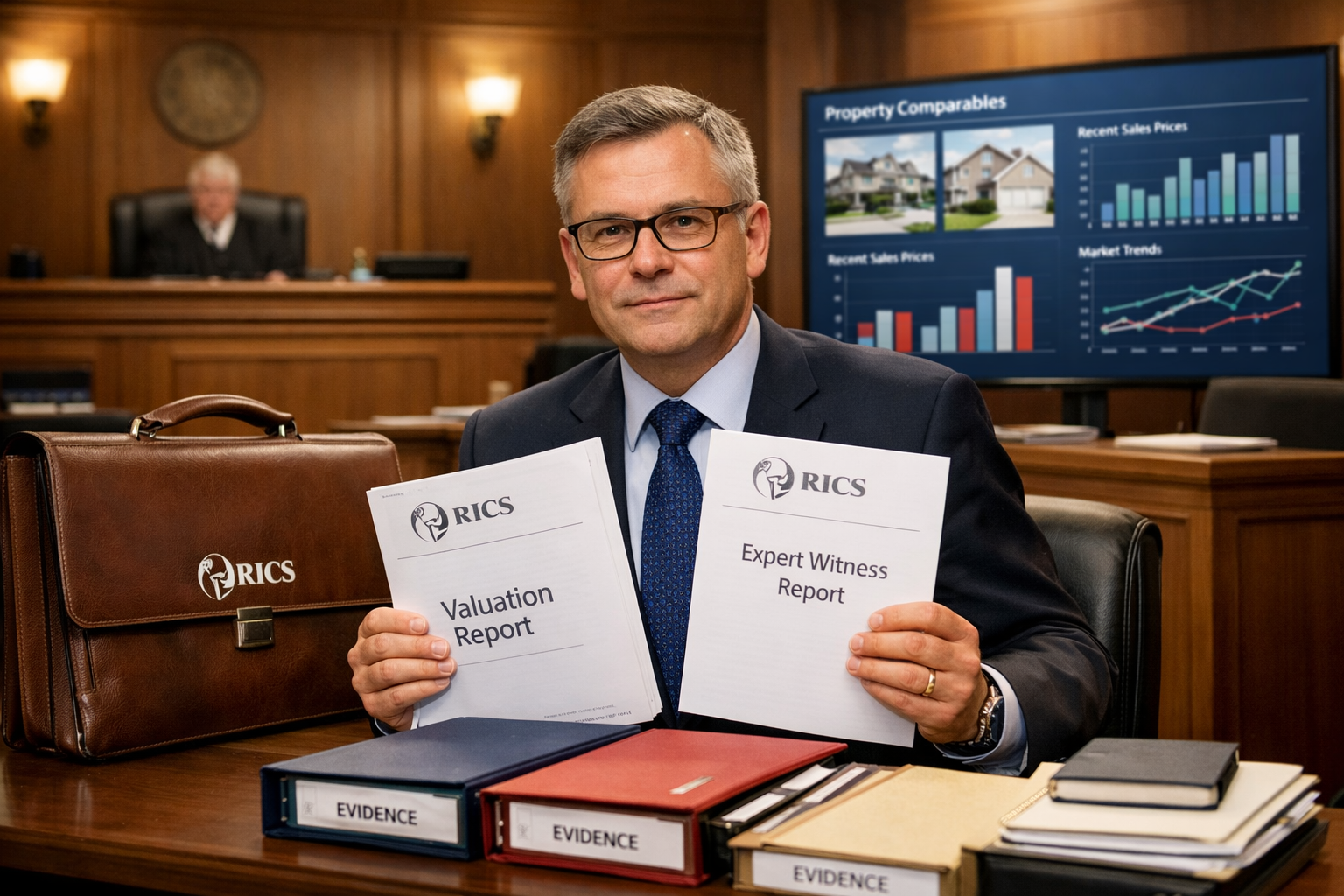
"Credible, independent valuations are critical to overall real estate industry health. They ensure properties adequately collateralize mortgages, protect mortgagors, and build public trust in the profession." [3]
The 2026 Market Context: Why Disputes Are Increasing
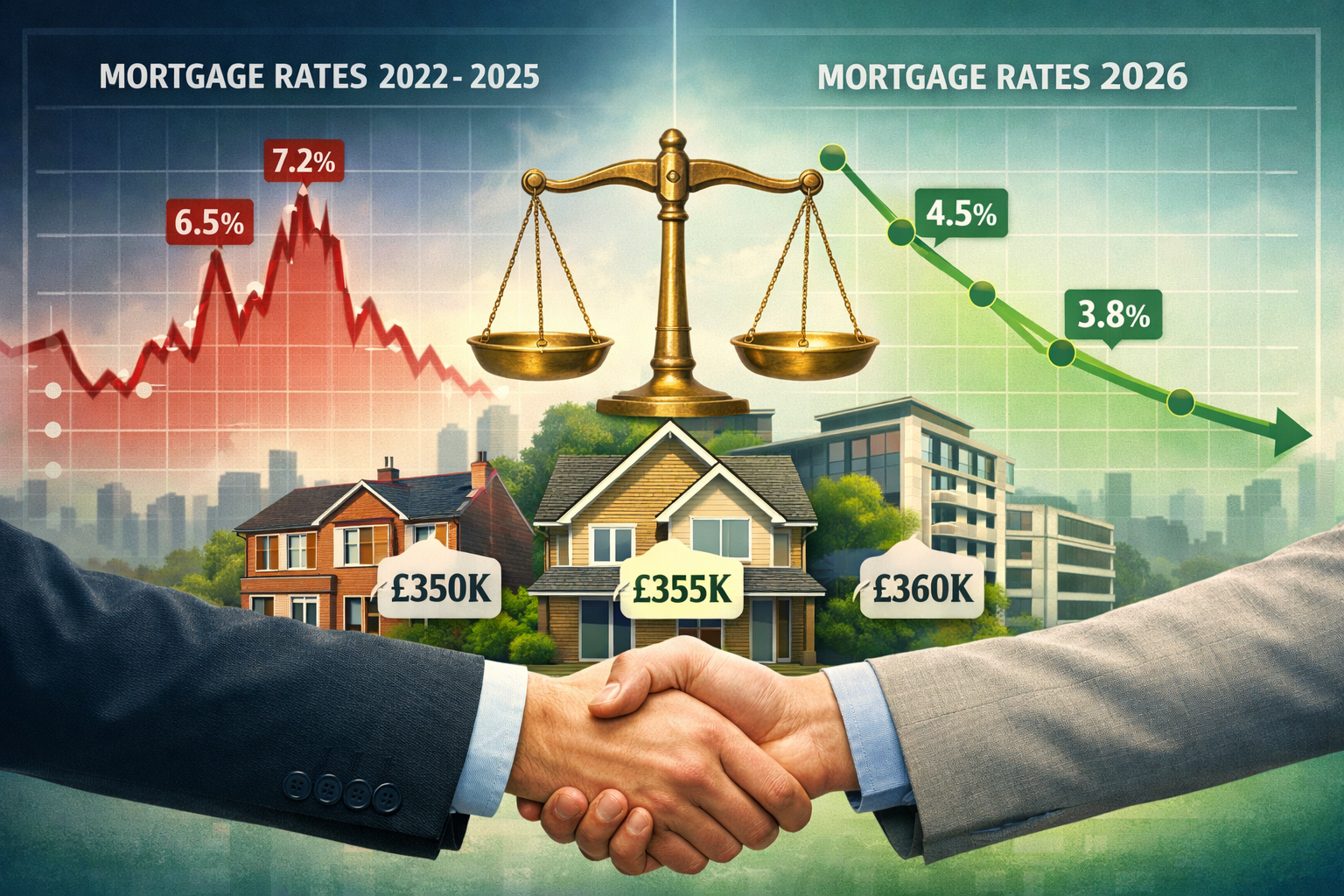
The current market environment has created perfect conditions for valuation disputes. Between 2022 and 2025, UK property prices experienced significant volatility driven by:
- Rapid interest rate increases from historic lows
- Economic uncertainty and inflation concerns
- Supply chain disruptions affecting construction costs
- Regional market variations creating pricing inconsistencies
Now, as rates begin to fall and prices stabilise in 2026, properties valued during peak volatility periods face reassessment. Buyers who secured mortgages at higher valuations may find their properties worth less, while lenders protected by conservative valuations face challenges from buyers seeking refinancing based on improved market conditions.
RICS Evidence Protocols and Professional Standards for Expert Witness Roles in Mortgage Valuation Disputes
The Royal Institution of Chartered Surveyors (RICS) has established comprehensive standards that govern how chartered surveyors conduct valuations and provide expert testimony. These protocols are particularly relevant when examining Expert Witness Roles in Mortgage Valuation Disputes: Standards Amid 2026's Stabilising Prices and Rate Cuts.
The RICS Red Book: Foundation of Valuation Standards
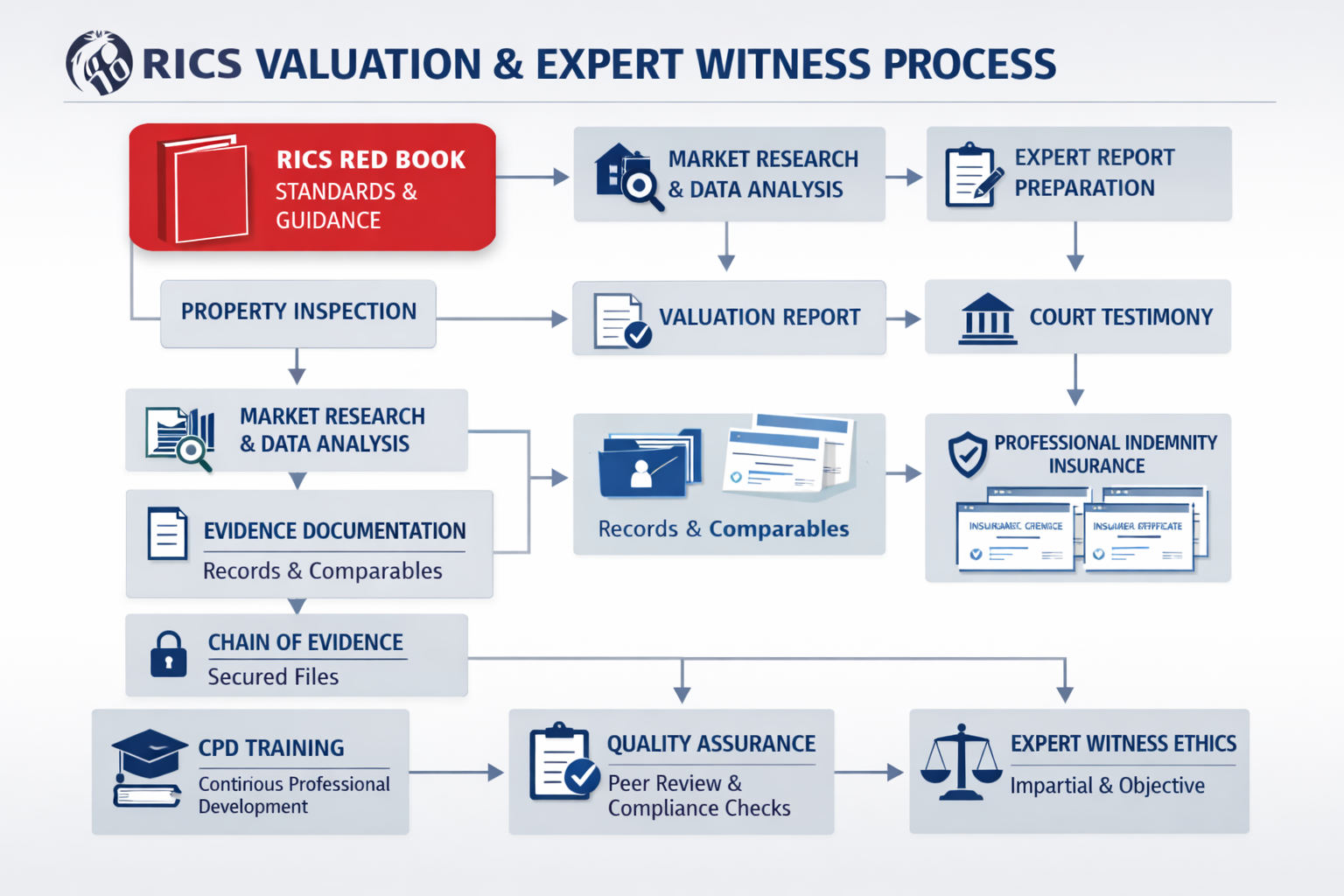
The RICS Valuation – Global Standards (commonly known as the Red Book) provides the mandatory framework for RICS members conducting valuations. In expert witness scenarios, adherence to Red Book standards establishes credibility and demonstrates professional competence. Key requirements include:
| Standard Component | Expert Witness Application |
|---|---|
| Terms of Engagement | Clear documentation of instruction scope and limitations |
| Basis of Value | Explicit statement of valuation basis (market value, investment value, etc.) |
| Valuation Approach | Transparent methodology selection and justification |
| Assumptions and Special Assumptions | Clear disclosure of all assumptions underlying the valuation |
| Reporting Requirements | Comprehensive documentation supporting conclusions |
Evidence-Based Methodology in 2026's Market
RICS valuation standards position themselves as the professional framework for credible expert testimony in 2026 valuation disputes, particularly relevant amid interest rate volatility challenges [4]. Expert witnesses must demonstrate their methodology through:
1. Comparable Evidence Analysis
The cornerstone of property valuation involves analysing recent sales of similar properties. In 2026's stabilising market, experts must carefully select comparables that reflect:
- Properties sold during similar market conditions
- Adjustments for time, location, and property characteristics
- Recognition of market transition from volatility to stability
- Documentation of why specific comparables were chosen or rejected
For those seeking detailed property valuations, understanding this comparable analysis process is essential.
2. Market Analysis and Context
Expert witnesses must demonstrate comprehensive understanding of:
- 📈 Local market trends specific to the property's location
- 💰 Mortgage availability and lending criteria changes
- 🏘️ Supply and demand dynamics in the relevant market sector
- 📊 Economic indicators affecting property values
3. Professional Judgment Documentation
Beyond data analysis, expert witnesses must articulate their professional judgment, including:
- How they weighted different valuation approaches
- Why certain factors were considered more or less significant
- How they addressed uncertainty or conflicting evidence
- What professional experience informed their conclusions
NAR Professional Standards Updates for 2026
While RICS standards govern UK chartered surveyors, international professional standards also influence best practices. The National Association of REALTORS® issued comprehensive updates to the Code of Ethics & Arbitration Manual for 2026, including modifications to compensation disclosure requirements and arbitration procedures [2]. These updates emphasise:
- Transparency in all valuation-related communications
- Disclosure obligations regarding potential conflicts of interest
- Professional cooperation standards between parties
- Dispute resolution procedures before litigation
Quality Assurance and Peer Review
To strengthen expert witness credibility, many chartered surveyors now undergo peer review of their valuation reports before court proceedings. This process involves:
- Independent review by another qualified surveyor
- Verification of methodology and calculations
- Assessment of conclusion reasonableness
- Documentation of review process for court disclosure
This additional layer of quality assurance demonstrates commitment to accuracy and can significantly enhance testimony credibility.
Case Studies: How Net Balance Shifts Influence Court Outcomes in 2026 Valuation Disputes
Real-world cases from 2026 illustrate how expert witness testimony and adherence to professional standards directly impact dispute resolution. These examples demonstrate the practical application of Expert Witness Roles in Mortgage Valuation Disputes: Standards Amid 2026's Stabilising Prices and Rate Cuts.
Case Study 1: The Refinancing Dispute – London Residential Property
Background: A homeowner sought to refinance a London property purchased in 2023 for £875,000. The original lender's valuation supported the purchase price. In early 2026, with interest rates falling, the homeowner requested refinancing but received a new valuation of £795,000—a £80,000 decrease.
The Dispute: The homeowner challenged the lower valuation, arguing that stabilising prices and improved market conditions should support at least the original value. The lender maintained that the 2023 valuation was inflated due to temporary market conditions.
Expert Witness Role: Both parties engaged chartered surveyors as expert witnesses. The key differentiator was the methodology for selecting comparable properties:
- Homeowner's Expert: Selected comparables from late 2025 and early 2026, showing price stabilisation
- Lender's Expert: Weighted comparables across a longer timeframe, including the 2023-2024 peak and subsequent correction
Outcome: The court favoured the lender's expert, whose methodology demonstrated:
✓ Comprehensive market analysis spanning multiple market phases
✓ Clear documentation of comparable selection criteria
✓ Acknowledgment of uncertainty and range of reasonable values
✓ Adherence to RICS Red Book standards throughout
The judge noted that the homeowner's expert had "cherry-picked" comparables from a narrow timeframe, undermining credibility. This case highlights how transparent methodology and comprehensive analysis trump selective evidence presentation.
Case Study 2: New Build Premium Dispute – Manchester Development
Background: A buyer contracted to purchase a new-build apartment in Manchester for £325,000 in 2024, with completion scheduled for 2026. Upon completion, the buyer's mortgage lender commissioned a valuation that came in at £295,000, creating a £30,000 shortfall.
The Dispute: The buyer argued that the developer's marketing materials and comparable new-build sales supported the contract price. The lender maintained that the valuation properly reflected market conditions at completion, not contract signing.
Expert Witness Role: The buyer's expert witness focused on:
- New-build premium typically commanded in the market
- Developer's sales data for similar units
- Marketing materials and price lists
The lender's expert emphasised:
- Secondary market comparables (resale properties)
- Adjustment for new-build premium decline in 2026
- Market evidence of reduced buyer willingness to pay premiums
- Analysis of actual transaction prices vs. asking prices
Outcome: The court found for the lender, but with important nuances. The judge accepted that new-build premiums had declined in 2026's stabilising market, but also noted that the buyer's expert failed to adequately address:
- How market conditions changed between contract and completion
- Why secondary market comparables weren't relevant
- Industry standards for valuing new-build properties
This case demonstrates the importance of addressing counterarguments and considering all relevant evidence, not just evidence supporting one's position.
Case Study 3: Commercial Property Valuation – Retail Unit Dispute
Background: A commercial lender sought to recover funds from a defaulted loan secured against a retail unit. The original 2023 valuation of £1.2 million supported the loan. By 2026, with the borrower in default, the lender obtained a new valuation of £850,000.
The Dispute: The borrower challenged the lower valuation in bankruptcy proceedings, arguing it undervalued the property and would force unnecessary liquidation.
Expert Witness Role: This case involved three expert witnesses:
- Lender's Expert: Emphasised declining retail property values and increased vacancy rates
- Borrower's Expert: Highlighted the property's specific advantages and potential for alternative uses
- Court-Appointed Expert: Provided independent assessment to assist the judge
Outcome: The court-appointed expert's valuation of £920,000 was adopted, splitting the difference but closer to the lender's position. Critical factors included:
- The court-appointed expert's demonstrable independence
- Comprehensive analysis of both retail and alternative use values
- Clear explanation of how 2026 market conditions affected valuation
- Professional acknowledgment of valuation uncertainty range
This case illustrates how independence and objectivity can be decisive, and why expert witnesses must maintain their duty to the court above all else.
Key Lessons from 2026 Case Studies
These cases reveal several patterns that influence outcomes in mortgage valuation disputes:
🎯 Comprehensive Methodology Wins: Experts who consider all relevant evidence and address counterarguments gain credibility
🎯 Transparency Matters: Clear documentation of assumptions, limitations, and methodology strengthens testimony
🎯 Independence Is Paramount: Courts quickly identify and discount testimony that appears partisan
🎯 Market Context Is Essential: Understanding 2026's unique market transition from volatility to stability is crucial
🎯 Professional Standards Compliance: Adherence to RICS and other professional standards establishes baseline credibility
Practical Considerations for Engaging Expert Witnesses in 2026
For parties involved in mortgage valuation disputes, understanding how to effectively engage and work with expert witnesses can significantly impact outcomes. Whether you're a lender, buyer, or legal representative, these practical considerations apply.
Selecting the Right Expert Witness
Not all qualified surveyors make effective expert witnesses. When selecting an expert for valuation disputes, consider:
Essential Qualifications:
- RICS membership (MRICS or FRICS designation)
- Specific experience in the relevant property sector
- Previous expert witness experience
- Professional indemnity insurance coverage
- No conflicts of interest with parties or properties involved
Desirable Attributes:
- Clear communication skills for court testimony
- Ability to explain complex concepts to non-specialists
- Track record of balanced, objective opinions
- Familiarity with local market conditions
- Understanding of current mortgage lending practices
For those seeking comprehensive valuation services for various purposes including matrimonial disputes or inheritance tax matters, selecting qualified professionals with expert witness experience provides added assurance.
The Instruction Process
Proper instruction of expert witnesses is crucial for obtaining useful testimony:
1. Clear Terms of Engagement
Written instructions should specify:
- Precise questions the expert should address
- Property details and relevant documentation
- Timeline for report delivery
- Budget and fee structure
- Disclosure requirements
2. Comprehensive Information Provision
Provide the expert with:
- Complete property documentation
- Previous valuation reports
- Transaction history
- Relevant correspondence
- Market data and comparables (if available)
3. Independence Preservation
Avoid actions that could compromise expert independence:
- ❌ Suggesting specific conclusions
- ❌ Withholding unfavourable information
- ❌ Pressuring for particular opinions
- ✅ Allowing full access to all relevant information
- ✅ Respecting professional judgment
Cost Considerations in 2026
Expert witness fees for mortgage valuation disputes typically include:
| Service Component | Typical Cost Range |
|---|---|
| Initial Consultation | £200 – £500 |
| Property Inspection | £500 – £1,500 |
| Valuation Report | £1,500 – £5,000 |
| Court Report Preparation | £2,000 – £7,500 |
| Court Attendance | £1,500 – £3,000 per day |
| Expert Meetings | £150 – £300 per hour |
Costs vary significantly based on property complexity, dispute value, and expert experience. While substantial, these costs must be weighed against potential losses from unfavourable dispute outcomes.
Preparing for Cross-Examination
Expert witnesses must prepare thoroughly for cross-examination, where opposing counsel will challenge their methodology, conclusions, and credibility. Effective preparation includes:
Documentation Review:
- Revisiting all source materials
- Verifying calculations and assumptions
- Identifying potential weaknesses in analysis
- Preparing explanations for professional judgments
Testimony Practice:
- Rehearsing clear, concise explanations
- Anticipating challenging questions
- Practicing remaining calm under pressure
- Developing strategies for handling hypothetical scenarios
Professional Presentation:
- Maintaining objectivity in language and demeanour
- Acknowledging limitations and uncertainties
- Avoiding defensive or argumentative responses
- Demonstrating respect for the court and process
The Impact of 2026 Market Conditions on Valuation Standards
Understanding how 2026's specific market characteristics affect valuation disputes provides essential context for expert witnesses and parties involved in litigation.
Interest Rate Trajectory and Valuation Implications
After peaking in 2023-2024, UK interest rates began declining in late 2025, with further cuts expected through 2026. This trajectory creates specific valuation challenges:
Discounted Cash Flow Adjustments: For investment properties, changing discount rates significantly affect present value calculations. Expert witnesses must justify their rate selections and demonstrate sensitivity analysis.
Affordability Improvements: Lower rates increase buyer purchasing power, potentially supporting higher valuations. However, experts must distinguish between anticipated future improvements and current market reality.
Refinancing Wave: As rates fall, refinancing activity increases, generating more valuation disputes as properties are reassessed under different market conditions.
Property Standards and Insurance Requirements
Fannie Mae's 2026 property standards updates [5] reflect broader industry trends affecting valuations:
- Enhanced property condition requirements
- Updated insurance coverage expectations
- Modified project standards for condominiums
- Revised documentation requirements
While these US-focused standards don't directly govern UK valuations, they reflect international trends toward more rigorous property assessment that UK lenders increasingly adopt.
Regional Market Variations
2026's market stabilisation hasn't occurred uniformly across the UK. Expert witnesses must demonstrate understanding of:
London and South East: Earlier stabilisation with modest growth resuming
Northern Cities: Continued affordability advantages driving demand
Rural Markets: Sustained premium from lifestyle migration trends
Coastal Areas: Mixed performance based on local employment and tourism factors
Effective expert testimony requires granular local market knowledge, not just national trend awareness. For those seeking regional expertise, working with surveyors who understand specific market dynamics is essential.
Technology and Valuation Methodology
2026 has seen increased adoption of technology-assisted valuation tools:
- Automated Valuation Models (AVMs): Algorithms providing instant valuations based on data analysis
- Geographic Information Systems (GIS): Spatial analysis tools for comparable selection
- Property Condition Assessment Technology: Drone surveys and thermal imaging
- Blockchain Property Records: Emerging transparent transaction history systems
Expert witnesses must understand these technologies' capabilities and limitations, particularly when opposing parties present AVM-generated valuations. Courts generally require expert explanation of why professional judgment differs from automated assessments.
Alternative Dispute Resolution and Expert Witness Roles
Not all valuation disputes proceed to full litigation. Alternative dispute resolution (ADR) methods offer faster, less expensive options where expert witnesses play modified roles.
Mediation in Valuation Disputes
Mediation involves a neutral third party facilitating negotiation between disputing parties. Expert witnesses in mediation:
- Provide technical explanations to help parties understand issues
- Offer range-of-value assessments rather than single-point valuations
- Participate in joint expert meetings to narrow disagreements
- Help identify compromise solutions
The informal nature of mediation allows experts to be more collaborative while maintaining objectivity.
Arbitration Procedures
Arbitration provides binding dispute resolution outside court systems. The National Association of REALTORS® 2026 updates include modifications to arbitration procedures for cooperating brokers [2], reflecting growing preference for this approach.
In arbitration, expert witnesses:
- Present evidence to arbitrators rather than judges
- Follow streamlined procedures with less formal rules
- Often participate in joint expert determinations
- May serve as arbitrators themselves if qualified
Expert Determination
Some contracts include expert determination clauses where a single expert's valuation binds both parties. This process:
- Eliminates adversarial expert witness roles
- Provides fastest dispute resolution
- Reduces costs significantly
- Requires careful expert selection to ensure fairness
Future Trends: Expert Witness Roles Beyond 2026
As the property market continues evolving, expert witness roles in mortgage valuation disputes will adapt to new challenges and opportunities.
Climate Risk and Property Valuation
Increasing awareness of climate change impacts will require expert witnesses to address:
- Flood risk assessments and insurance availability
- Energy efficiency requirements and retrofit costs
- Coastal erosion and sea level rise implications
- Extreme weather resilience considerations
These factors will become standard components of valuation analysis, requiring expanded expertise.
Regulatory Changes and Professional Standards
Ongoing regulatory evolution will shape expert witness requirements:
- Enhanced consumer protection measures
- Stricter lending standards
- Digital property transaction frameworks
- International standards harmonisation
Expert witnesses must commit to continuous professional development to maintain credibility.
Data Analytics and AI Integration
Advanced analytics will transform valuation methodology:
- Machine learning algorithms identifying pricing patterns
- Predictive models forecasting market movements
- Big data analysis of transaction histories
- Real-time market condition monitoring
Expert witnesses will need to demonstrate proficiency with these tools while explaining their limitations to courts.
Professional Liability Considerations
As expert witness roles become more complex, professional liability issues will intensify:
- Higher insurance requirements
- Stricter peer review standards
- Enhanced documentation expectations
- Greater scrutiny of methodology choices
Chartered surveyors serving as expert witnesses must ensure adequate professional indemnity coverage and robust quality assurance processes.
Conclusion
Expert Witness Roles in Mortgage Valuation Disputes: Standards Amid 2026's Stabilising Prices and Rate Cuts represent a critical intersection of professional expertise, legal requirements, and market dynamics. As the UK property market transitions from volatility to stability, valuation disputes have intensified, placing chartered surveyors in pivotal positions as arbiters of property worth.
The case studies and analysis presented demonstrate that successful expert witnesses share common characteristics:
✅ Rigorous adherence to RICS and professional standards
✅ Comprehensive, transparent methodology
✅ Unwavering independence and objectivity
✅ Deep understanding of current market conditions
✅ Clear communication of complex concepts
✅ Acknowledgment of uncertainty and limitations
For lenders, buyers, and legal professionals navigating valuation disputes in 2026, understanding these standards and selecting qualified expert witnesses can mean the difference between favourable and unfavourable outcomes. The stabilising market creates both opportunities and risks—properties may be undervalued or overvalued depending on methodology and comparable selection.
Actionable Next Steps
For Property Buyers and Owners:
- Commission independent valuations from RICS-qualified surveyors before disputes escalate
- Maintain comprehensive documentation of property improvements and market conditions
- Understand your lender's valuation methodology and assumptions
- Consider ADR options before pursuing costly litigation
For Lenders and Financial Institutions:
- Ensure internal valuation processes align with current RICS standards
- Maintain panels of qualified expert witnesses for dispute situations
- Document valuation methodology clearly to reduce dispute potential
- Stay informed about regional market variations affecting property values
For Chartered Surveyors:
- Pursue expert witness training and accreditation
- Maintain detailed records of methodology and professional judgments
- Commit to continuing professional development in valuation standards
- Build expertise in specific property sectors and regional markets
For Legal Professionals:
- Select expert witnesses based on qualifications, not just convenient opinions
- Provide comprehensive instructions and documentation to experts
- Understand valuation methodology sufficiently to effectively examine witnesses
- Consider ADR options that may resolve disputes more efficiently
The property market's evolution will continue creating valuation challenges. Those who understand professional standards, maintain objectivity, and communicate effectively will navigate these disputes successfully, contributing to market stability and public trust in the valuation profession.
For comprehensive valuation services across various contexts—from Right to Buy valuations to SIPP pension valuations—engaging qualified chartered surveyors with expert witness experience provides essential protection in today's complex property market.
References
[1] Pbr Data Valuation Manual Current Edition – https://content.naic.org/sites/default/files/pbr_data_valuation_manual_current_edition.pdf
[2] 2026 Summary Of Key Professional Standards Changes – https://www.nar.realtor/about-nar/policies/2026-summary-of-key-professional-standards-changes
[3] narfocus – https://www.narfocus.com/file/7638.pdf
[4] Expert Witness Challenges In 2026 Interest Rate Volatility Disputes Rics Data Driven Preparation – https://nottinghillsurveyors.com/blog/expert-witness-challenges-in-2026-interest-rate-volatility-disputes-rics-data-driven-preparation
[5] Lender Letter Ll 2026 03 Updates Project Standards Property Insurance Requirements – https://singlefamily.fanniemae.com/media/document/pdf/lender-letter-ll-2026-03-updates-project-standards-property-insurance-requirements