

With energy bills continuing to climb and stricter environmental regulations reshaping the property landscape, homeowners and landlords across the UK face a critical challenge in 2026. Energy Performance Certificates (EPCs) are no longer simple compliance documents—they've become essential roadmaps for property improvement and long-term value preservation. As building surveys increasingly integrate detailed retrofit recommendations, understanding how to navigate Energy Performance Certificates in 2026 Building Surveys: Retrofit Recommendations for Rising Costs and EPC Band Upgrades has never been more important for property stakeholders.
The UK government's announcement of the Warm Homes Plan on January 21, 2026, marks a turning point in residential energy efficiency standards.[6] Combined with the upcoming transition to a new assessment methodology and mandatory EPC C ratings for rental properties by 2030, property owners must now approach building surveys with a fresh perspective—one that prioritizes energy performance alongside structural integrity.[1]
Key Takeaways
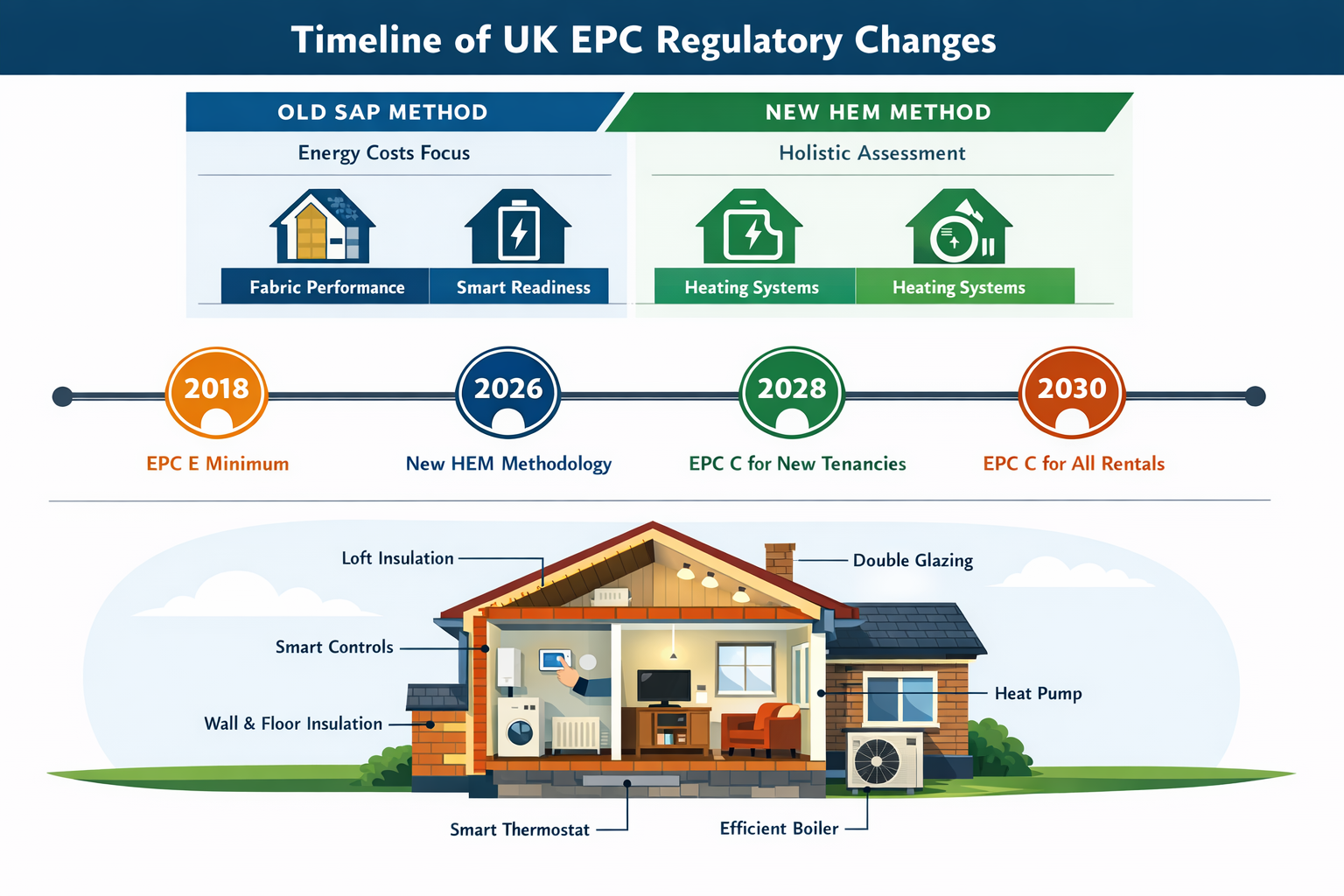
✅ New EPC C rating requirement: All rental properties must achieve minimum EPC C by October 1, 2030 (2028 for new tenancies), representing a significant upgrade from the current EPC E standard.[1][6]
✅ Revolutionary assessment methodology: The Home Energy Module (HEM) replaces the Standard Assessment Procedure (SAP) from October 2026, focusing on three core metrics—fabric performance, smart readiness, and heating systems—rather than overall energy consumption.[2][3]
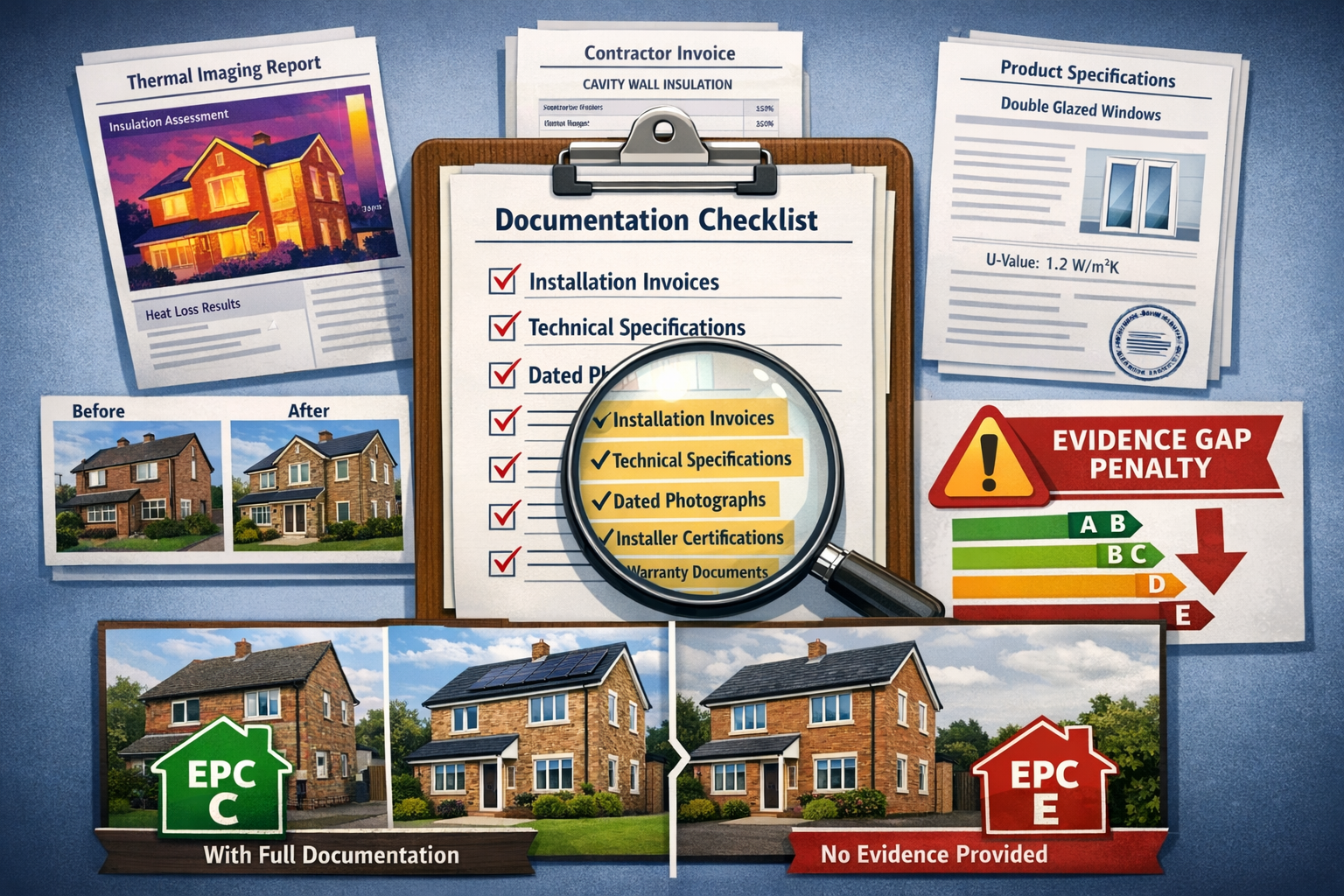
✅ Evidence documentation is critical: Without proper documentation (invoices, photos, specifications), property improvements may not be recognized in EPC assessments, potentially resulting in lower ratings despite actual upgrades.[4]
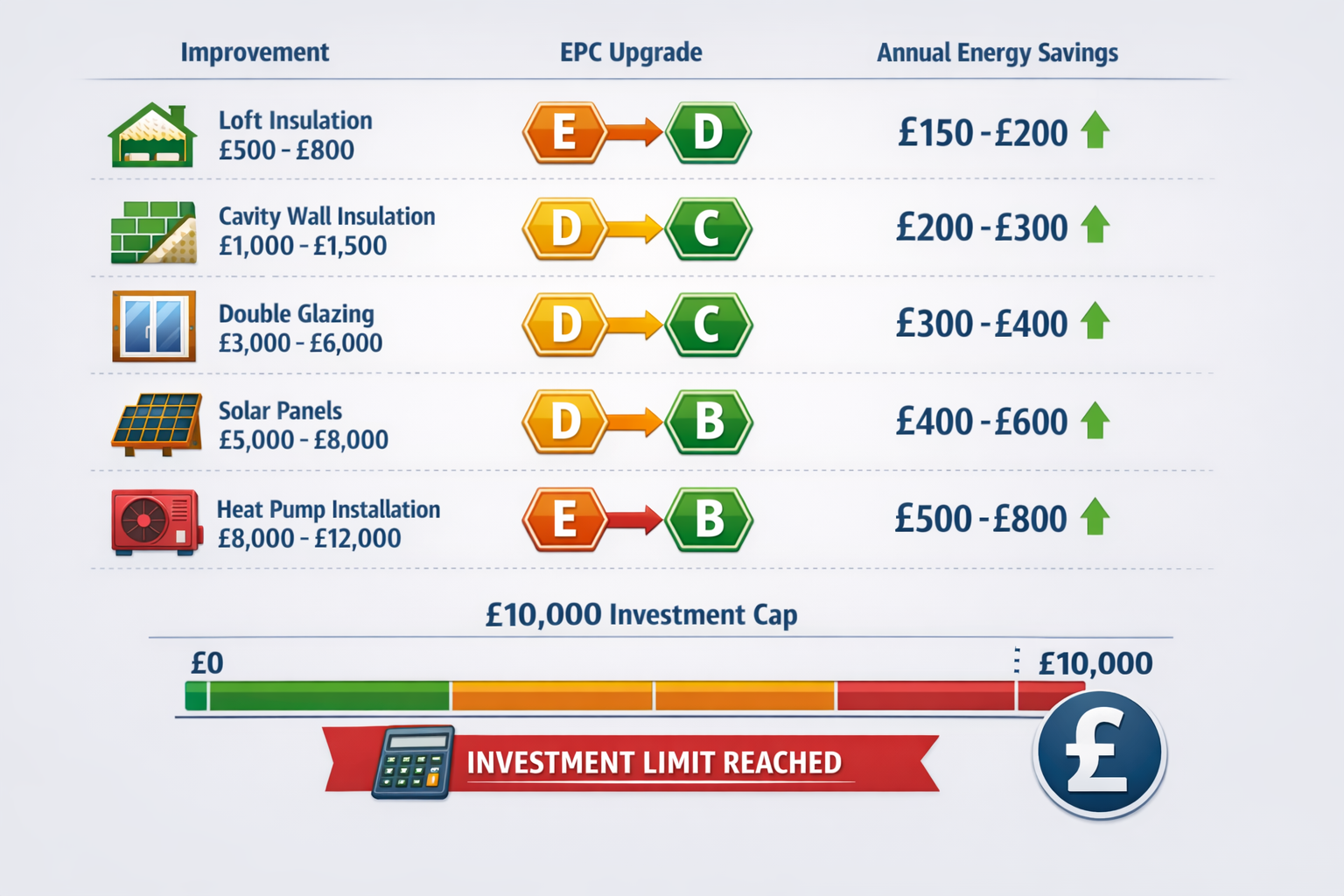
✅ £10,000 investment cap applies: Landlords must spend up to £10,000 (including eligible grants) on energy efficiency improvements to meet new standards, with a reduced cap of 10% property value for homes under £100,000.[1]
✅ Building surveys now include retrofit roadmaps: Modern Level 3 full building surveys incorporate comprehensive energy performance assessments and prioritized improvement recommendations to help buyers plan long-term upgrades.
Understanding the 2026 EPC Regulatory Landscape
The regulatory environment surrounding Energy Performance Certificates in 2026 Building Surveys: Retrofit Recommendations for Rising Costs and EPC Band Upgrades has undergone substantial transformation. Property professionals must grasp these changes to provide accurate guidance to clients navigating the market.
The Warm Homes Plan Framework
The Warm Homes Plan, officially announced on January 21, 2026, establishes a comprehensive framework for residential energy efficiency that affects both landlords and building survey practices.[6] This initiative represents the government's commitment to reducing carbon emissions while addressing fuel poverty across the UK housing stock.
The plan introduces stricter timelines for compliance:
- 2028: New tenancies must meet EPC C standard[3]
- October 1, 2030: All existing tenancies must achieve EPC C rating[1][6]
- October 2026: New-form domestic EPCs begin rollout[2]
- October 1, 2029: New HEM methodology becomes compulsory for all EPCs[7]
These deadlines create urgency for property owners to assess their current energy performance and plan necessary improvements. Building surveys conducted in 2026 must therefore address not just immediate defects but also the retrofit pathway to compliance.
From SAP to HEM: The Methodology Revolution
The transition from the Standard Assessment Procedure (SAP) to the Home Energy Module (HEM) represents the most significant change in EPC assessment methodology in decades.[2] This shift fundamentally alters how properties are evaluated and what improvements deliver the greatest rating benefits.
Three Core Performance Metrics
Unlike the previous single energy rating focused on consumption costs, the HEM methodology evaluates properties across three distinct dimensions:[3]
1. Fabric Performance 🏠
- Insulation quality in walls, roofs, and floors
- Double or triple glazing effectiveness
- Heat retention capabilities
- Thermal bridging and air tightness
2. Smart Readiness 💡
- Smart meter installation
- Energy storage batteries
- Solar panel systems
- Smart heating controls and automation
3. Heating Systems 🔥
- Heat pump installations (significantly higher scores)
- Gas boiler efficiency (lower scores under new system)
- Renewable heating technologies
- System controls and zoning
This three-pillar approach means properties can no longer achieve high ratings through efficient gas boilers alone. The methodology explicitly favors low-carbon heating solutions and renewable energy integration, fundamentally changing retrofit priorities.
The Evidence Gap Penalty: Documentation Requirements
Perhaps the most overlooked aspect of Energy Performance Certificates in 2026 Building Surveys: Retrofit Recommendations for Rising Costs and EPC Band Upgrades is the new evidence requirement introduced in 2026 regulations.[4]
Under previous rules, EPC assessors could make reasonable assumptions about property improvements based on visual inspection. The 2026 framework eliminates this flexibility, requiring documentary evidence for all upgrades:
| Required Documentation | Examples |
|---|---|
| Installation Invoices | Contractor bills showing work completed, materials used, and dates |
| Technical Specifications | Product datasheets with U-values, efficiency ratings, and performance metrics |
| Dated Photographs | Before-and-after images showing installation process and completion |
| Installer Certifications | FENSA certificates for windows, Gas Safe for boilers, MCS for renewables |
| Warranty Documents | Manufacturer guarantees and installer workmanship warranties |
Without this documentation, assessors must default to the worst possible rating assumption—meaning homeowners could invest thousands in high-specification insulation or double glazing but receive no credit in their EPC assessment.[4] This evidence gap penalty makes proper documentation as important as the physical improvements themselves.
When commissioning building surveys, buyers should specifically request that surveyors identify whether previous improvement works have adequate supporting documentation, as this directly impacts achievable EPC ratings.
Energy Performance Certificates in 2026 Building Surveys: Integration and Assessment
Modern building surveys have evolved beyond traditional structural assessments to incorporate comprehensive energy performance evaluations. This integration reflects the reality that Energy Performance Certificates in 2026 Building Surveys: Retrofit Recommendations for Rising Costs and EPC Band Upgrades are now central to property value and marketability.
How Building Surveyors Assess Energy Performance
When conducting Level 3 full building surveys, chartered surveyors now routinely evaluate energy-related building elements alongside structural components:
Thermal Envelope Assessment 🌡️
- Wall construction type and insulation presence
- Roof insulation depth and coverage
- Floor insulation in suspended timber or solid concrete floors
- Window glazing type and frame materials
- Door quality and draught-proofing
- Thermal bridging at junctions and penetrations
Heating and Hot Water Systems 🚿
- Boiler age, type, and efficiency rating
- Heating controls (thermostats, TRVs, programmers)
- Hot water cylinder insulation and controls
- Radiator sizing and distribution
- Potential for heat pump installation
Renewable Energy Potential ☀️
- Roof orientation and condition for solar panels
- Space availability for ground or air source heat pumps
- Loft space for solar thermal systems
- Garden area for ground source heat pump loops
Ventilation and Moisture Control 💨
- Natural ventilation adequacy
- Mechanical ventilation systems
- Condensation risk areas
- Potential for mechanical ventilation with heat recovery
Surveyors increasingly use thermal imaging cameras during inspections to identify heat loss areas invisible to the naked eye. These thermal surveys reveal insulation gaps, thermal bridging, and air leakage points that directly impact EPC ratings and energy costs.
Linking Survey Findings to EPC Bands
Understanding the relationship between physical building conditions and EPC ratings helps property stakeholders prioritize improvements. The current EPC banding system ranges from A (most efficient) to G (least efficient):
| EPC Band | SAP Score | Typical Annual Energy Cost | Common Property Characteristics |
|---|---|---|---|
| A | 92-100 | £200-£400 | New-build with heat pump, solar panels, excellent insulation |
| B | 81-91 | £400-£600 | Modern construction or extensively retrofitted with renewables |
| C | 69-80 | £600-£900 | Good insulation, efficient heating, double glazing throughout |
| D | 55-68 | £900-£1,200 | Moderate insulation, combination boiler, some double glazing |
| E | 39-54 | £1,200-£1,600 | Limited insulation, older heating system, single glazing present |
| F | 21-38 | £1,600-£2,200 | Poor insulation, inefficient heating, predominantly single glazed |
| G | 1-20 | £2,200+ | Very poor thermal performance, minimal improvements |
The mandatory minimum for rental properties is currently EPC E (implemented since 2018), but this rises to EPC C by October 1, 2030.[1][6] Building surveys must therefore assess not just current performance but the feasibility and cost of achieving C-rated status.
Questions to Ask During Energy-Focused Building Surveys
When commissioning a building survey with energy performance considerations, property buyers should ask specific questions to maximize the assessment's value. Our guide on questions to ask during a building survey covers structural aspects, but energy-specific inquiries include:
📋 Energy Performance Questions:
- What is the property's current EPC rating and when does it expire?
- Which improvements would have the greatest impact on achieving EPC C?
- Are there any barriers to installing renewable heating (listed building status, conservation area restrictions)?
- Is documentation available for previous energy improvements?
- What is the estimated cost to reach EPC C rating?
- Are there any structural issues that would complicate insulation installation?
- Is the electrical system adequate for heat pump or electric vehicle charging?
- What renewable energy potential does the property offer?
- Are there any moisture or ventilation concerns that could worsen with improved air tightness?
- Which improvements qualify for government grants or incentives?
These questions help buyers understand the total cost of ownership, including both purchase price and necessary energy upgrades to meet regulatory requirements or reduce running costs.
Retrofit Recommendations for Rising Costs and EPC Band Upgrades
The core value of integrating Energy Performance Certificates in 2026 Building Surveys: Retrofit Recommendations for Rising Costs and EPC Band Upgrades lies in developing practical, prioritized improvement strategies. With energy costs remaining elevated and regulatory deadlines approaching, property owners need clear roadmaps for cost-effective upgrades.
Cost-Effective Improvement Hierarchy
Not all energy improvements deliver equal value. Building surveyors typically recommend a prioritized approach based on cost-effectiveness, EPC impact, and practical feasibility:
Tier 1: High Impact, Lower Cost (£500-£2,000)
Loft Insulation 🏚️
- Cost: £500-£800 for typical semi-detached house
- EPC Impact: Can improve rating by 1-2 bands
- Payback Period: 2-3 years through reduced heating bills
- Considerations: Minimum 270mm depth recommended; check for adequate ventilation
Cavity Wall Insulation 🧱
- Cost: £1,000-£1,500 for typical property
- EPC Impact: Significant—often 1 band improvement
- Payback Period: 3-5 years
- Considerations: Not suitable for all wall types; requires professional assessment for exposure and cavity condition
Draught Proofing 🚪
- Cost: £200-£400 for comprehensive treatment
- EPC Impact: Modest but important for air tightness
- Payback Period: 1-2 years
- Considerations: Essential before improving heating efficiency; addresses windows, doors, letterboxes, and pipework penetrations
Hot Water Cylinder Insulation 💧
- Cost: £20-£100 for jacket and pipe lagging
- EPC Impact: Small but easy win
- Payback Period: Less than 1 year
- Considerations: Simple DIY option; essential for older cylinders
Tier 2: Medium Impact, Moderate Cost (£3,000-£8,000)
Double or Triple Glazing 🪟
- Cost: £3,000-£6,000 for full property replacement
- EPC Impact: 1 band improvement typically
- Payback Period: 10-15 years through energy savings alone
- Considerations: Also improves comfort, noise reduction, and property value; FENSA certification essential for EPC credit
Solar Photovoltaic Panels ☀️
- Cost: £5,000-£8,000 for 4kW system
- EPC Impact: Under HEM methodology, significant smart readiness score boost
- Payback Period: 8-12 years (improving with rising electricity costs)
- Considerations: Roof condition, orientation, and shading critical; MCS certification required; export tariff income available
Modern Condensing Boiler 🔧
- Cost: £2,500-£4,000 installed
- EPC Impact: Moderate under SAP; less beneficial under HEM
- Payback Period: 5-8 years
- Considerations: Interim solution if heat pump not yet feasible; ensure A-rated efficiency
Heating Controls Upgrade 🎛️
- Cost: £500-£1,500 for smart thermostats, TRVs, and zoning
- EPC Impact: Modest rating improvement but significant cost savings
- Payback Period: 3-5 years
- Considerations: Essential complement to any heating system; enables time and temperature zoning
Tier 3: Transformative Impact, Higher Investment (£8,000-£15,000+)
Air Source Heat Pump 🌬️
- Cost: £8,000-£12,000 installed (after £7,500 Boiler Upgrade Scheme grant)
- EPC Impact: Major—can achieve 2+ band improvement under HEM methodology
- Payback Period: 15-20 years through energy savings; improves with rising gas prices
- Considerations: Requires adequate insulation first; larger radiators may be needed; noise considerations for neighbors; MCS certification essential
Ground Source Heat Pump 🌍
- Cost: £15,000-£25,000 installed (after grant)
- EPC Impact: Excellent—highest heating system score under HEM
- Payback Period: 20-25 years through energy savings
- Considerations: Requires garden space for ground loops; most efficient system long-term; significant installation disruption
External Wall Insulation 🏗️
- Cost: £8,000-£15,000 for typical property
- EPC Impact: Substantial—often 2 band improvement for solid wall properties
- Payback Period: 15-25 years
- Considerations: Essential for solid wall properties; changes external appearance; may require planning permission
Solar Battery Storage 🔋
- Cost: £4,000-£8,000 for 10kWh system
- EPC Impact: Enhances smart readiness score under HEM
- Payback Period: 10-15 years (improving with electricity price volatility)
- Considerations: Maximizes solar panel investment; provides backup power; time-of-use tariff optimization
The £10,000 Investment Cap and Strategic Planning
The 2026 regulations introduce a £10,000 investment cap for landlords seeking to meet EPC C requirements.[1] This cap includes eligible government grants (such as the Warm Homes Local Grant) but excludes Boiler Upgrade Scheme vouchers.
For properties valued below £100,000, the cap reduces to 10% of property value rather than the full £10,000.[1]
Strategic Implications:
💷 Prioritize high-impact, lower-cost improvements first to maximize EPC band progression within budget constraints.
💷 Combine multiple smaller improvements rather than single expensive upgrades—loft insulation, cavity walls, and double glazing together often deliver better value than external wall insulation alone.
💷 Leverage available grants to extend improvement scope—the Boiler Upgrade Scheme's £7,500 heat pump grant doesn't count toward the £10,000 cap, making heat pumps more accessible.[1]
💷 Document everything meticulously to ensure improvements receive full EPC credit and avoid the evidence gap penalty.[4]
💷 Consider property value implications—improvements that enhance marketability and sale price may justify exceeding the minimum compliance investment.
Regional Considerations and Property-Specific Factors
Energy Performance Certificates in 2026 Building Surveys: Retrofit Recommendations for Rising Costs and EPC Band Upgrades must account for regional variations and property-specific constraints:
Geographic Factors 🗺️
- Climate zones: Properties in colder regions require more robust insulation strategies
- Exposure: Coastal and exposed rural properties face greater wind-driven heat loss
- Solar potential: Southern England receives 20-30% more solar radiation than northern Scotland
- Grid connection: Rural properties may face higher costs for electrical upgrades needed for heat pumps
Property-Specific Constraints 🏛️
- Listed buildings: Restrictions on external alterations limit insulation and window replacement options
- Conservation areas: Planning permission required for many external changes
- Flat ownership: Leasehold restrictions and shared building fabric complicate improvements
- Non-standard construction: Concrete, timber frame, or steel frame buildings require specialist approaches
- Structural condition: Properties requiring significant maintenance work should address structural issues before energy improvements
Chartered surveyors providing construction law advice can help navigate planning restrictions and building regulation requirements for complex retrofit projects.
Creating a Phased Improvement Plan
For properties requiring extensive work to reach EPC C, a phased approach spreads costs over time while delivering incremental benefits:
Phase 1 (Year 1): Foundation Improvements – £2,000-£4,000
- Loft insulation to 270mm
- Cavity wall insulation (if suitable)
- Comprehensive draught proofing
- Hot water cylinder and pipe insulation
- LED lighting throughout
Phase 2 (Year 2-3): Fabric Enhancement – £4,000-£8,000
- Double glazing replacement
- Heating controls upgrade (smart thermostats, TRVs)
- Solid wall insulation (if required)
- Ventilation improvements
Phase 3 (Year 3-5): Low-Carbon Systems – £8,000-£15,000
- Solar PV installation
- Heat pump replacement of gas boiler
- Battery storage (if solar installed)
- Electric vehicle charging point
This phased approach allows property owners to:
- Spread financial burden across multiple years
- Access different grant schemes as they become available
- Prioritize improvements based on changing energy prices
- Respond to regulatory updates and methodology changes
- Ensure each phase builds appropriately on previous work
Navigating the New HEM Methodology Impact
The transition from SAP to the Home Energy Module (HEM) methodology fundamentally changes how properties are assessed and which improvements deliver the greatest benefit. Understanding these changes is essential for Energy Performance Certificates in 2026 Building Surveys: Retrofit Recommendations for Rising Costs and EPC Band Upgrades.
How HEM Differs from SAP
The Standard Assessment Procedure (SAP) focused primarily on energy consumption costs—how much homeowners would spend on heating and hot water. This made gas boilers appear relatively favorable due to lower gas prices compared to electricity.
The HEM methodology shifts focus to carbon performance and fabric efficiency:[4]
Key HEM Priorities:
🔹 Carbon emissions weighted more heavily than running costs
🔹 Fabric performance (how well walls and roofs retain heat) becomes critical
🔹 Future-proofing for decarbonized electricity grid
🔹 Smart technology integration recognized and rewarded
🔹 Renewable energy generation significantly boosts ratings
This means properties with heat pumps, solar panels, and excellent insulation will achieve dramatically better ratings under HEM than under SAP, even if running costs are similar.
Conversely, properties with efficient gas boilers but poor insulation will see their ratings decline under the new methodology, as gas-fired heating receives lower scores regardless of efficiency.
Winners and Losers Under HEM
Properties That Benefit:
✅ Modern new-builds with heat pumps and high insulation standards
✅ Extensively retrofitted properties with renewable heating
✅ Properties with solar PV and battery storage
✅ Well-insulated homes with smart heating controls
✅ Properties in mild climates with lower heating demand
Properties That May Decline:
❌ Homes with efficient gas boilers but poor insulation
❌ Properties relying solely on fossil fuel heating
❌ Solid wall properties without external/internal insulation
❌ Properties lacking smart technology integration
❌ Homes with single glazing or poor thermal envelope
This shift creates urgency for property owners to prioritize fabric improvements and renewable heating rather than simply upgrading to a more efficient gas boiler.
Preparing for the October 2026 Transition
The new HEM methodology begins rolling out in October 2026 and becomes compulsory by October 1, 2029.[2][7] During the transition period, both methodologies will coexist, creating potential confusion.
Strategic Recommendations:
📅 For properties selling/renting before October 2029: Consider obtaining an EPC under the current SAP methodology if it produces a better rating, but recognize buyers may request a HEM assessment.
📅 For properties selling/renting after October 2029: Plan improvements based on HEM priorities—fabric first, then low-carbon heating, then renewables.
📅 For long-term property owners: Invest in improvements that score well under both methodologies (insulation, double glazing) before methodology-specific upgrades.
📅 For landlords approaching deadlines: Focus on achieving EPC C under whichever methodology is current, but verify compliance under HEM if approaching the 2030 deadline.
Building surveys conducted in 2026 should ideally assess properties under both methodologies where possible, providing clients with a complete picture of current performance and future compliance pathways.
Practical Implementation: From Survey to Retrofit
Translating building survey recommendations into actual improvements requires careful planning, contractor selection, and project management. This final implementation stage of Energy Performance Certificates in 2026 Building Surveys: Retrofit Recommendations for Rising Costs and EPC Band Upgrades determines whether theoretical improvements deliver real-world benefits.
Selecting Qualified Contractors
Energy efficiency improvements require specialist knowledge and certification. Poor installation can negate potential benefits and create new problems:
Essential Contractor Qualifications:
🔧 Insulation Installers
- CIGA (Cavity Insulation Guarantee Agency) registration for cavity walls
- NIA (National Insulation Association) membership
- TrustMark accreditation
- Appropriate insurance and guarantees (minimum 25 years for cavity walls)
🔧 Window and Door Installers
- FENSA, CERTASS, or equivalent competent person scheme registration
- Essential for Building Regulations compliance and EPC credit
- Minimum 10-year insurance-backed guarantee
🔧 Heating Engineers
- Gas Safe registration for gas boiler work
- MCS (Microgeneration Certification Scheme) for heat pumps
- OFTEC registration for oil systems
- Manufacturer-specific training for heat pump brands
🔧 Renewable Energy Installers
- MCS certification mandatory for solar PV, solar thermal, and heat pumps
- Required for Boiler Upgrade Scheme grants and Smart Export Guarantee payments
- Electrical qualifications (Part P) for solar installations
🔧 General Builders for Complex Retrofits
- Experience with retrofit projects specifically
- Understanding of building physics and moisture management
- References from similar energy improvement projects
- Willingness to work with building surveyors and energy assessors
When sourcing extra advice for complex projects, consider engaging specialist retrofit coordinators who can manage multi-trade projects and ensure improvements work together effectively.
Documentation and Evidence Collection
Given the evidence gap penalty introduced in 2026 regulations,[4] meticulous documentation is as important as the physical work itself.
Essential Documentation Checklist:
📄 Before Work Begins:
- Dated photographs of existing conditions (all elevations, internal spaces, specific areas being improved)
- Current EPC certificate
- Building survey report identifying required improvements
- Planning permissions or building regulation approvals (if required)
- Listed building consent (if applicable)
📄 During Installation:
- Progress photographs showing installation process
- Material delivery notes and packaging (proving specification)
- Installer certification and competency documents
- Any deviations from original specification (with explanations)
📄 After Completion:
- Final completion photographs
- Detailed invoices itemizing materials and labor
- Product specification sheets with technical performance data
- Installer certificates (FENSA, MCS, Gas Safe, etc.)
- Warranty and guarantee documents
- Building control completion certificates (if applicable)
- Updated EPC certificate showing improvements
Best Practice: Create a dedicated folder (physical and digital) for each improvement project, organizing documents chronologically. This documentation package becomes essential when:
- Requesting updated EPC assessment
- Selling the property (demonstrating improvements to buyers)
- Claiming tax relief or grants
- Resolving disputes with contractors
- Demonstrating compliance with rental regulations
Coordinating Improvements with Building Maintenance
Energy improvements should align with necessary maintenance work identified in building surveys. This coordination maximizes value and minimizes disruption:
Strategic Coordination Examples:
🔄 Roof Repairs + Loft Insulation: If roof covering requires replacement, combine with insulation upgrade to 270mm+ depth and ensure adequate ventilation.
🔄 Redecorating + Internal Wall Insulation: When internal redecoration is planned, consider adding internal wall insulation to solid wall properties before replastering.
🔄 Boiler Replacement + Heating System Upgrade: When an aging boiler fails, upgrade entire heating system including controls, pipework, and radiators to support future heat pump installation.
🔄 Window Replacement + Ventilation: When installing high-performance double glazing, add trickle vents and consider mechanical ventilation to prevent condensation in newly airtight property.
🔄 External Redecoration + External Wall Insulation: If external rendering or painting is needed, consider full external wall insulation system instead of simple redecoration.
This integrated approach, often recommended in comprehensive Level 3 building surveys, reduces total project costs by eliminating duplicate scaffolding, access, and preparation work.
Avoiding Common Retrofit Pitfalls
Energy improvements can create unintended consequences if not properly planned:
⚠️ Condensation and Moisture Problems
- Issue: Improved air tightness without adequate ventilation traps moisture, causing condensation, mold, and potential structural damage
- Solution: Always upgrade ventilation when improving insulation and air tightness; consider mechanical ventilation with heat recovery (MVHR)
⚠️ Thermal Bridging
- Issue: Insulation installed poorly or incompletely creates cold spots where heat escapes
- Solution: Ensure continuous insulation coverage; address junctions between walls, roofs, and floors; use thermal imaging to verify installation quality
⚠️ Oversized Heating Systems
- Issue: After insulation improvements, existing heating systems may be oversized, reducing efficiency
- Solution: Conduct heat loss calculations after insulation; resize heating systems appropriately; particularly important before heat pump installation
⚠️ Interstitial Condensation
- Issue: Moisture trapped within wall or roof structures causes hidden damage
- Solution: Use vapor control layers appropriately; ensure breathable materials in correct sequence; particularly critical in solid wall insulation
⚠️ Electrical System Inadequacy
- Issue: Heat pumps, solar batteries, and EV chargers require electrical capacity many older properties lack
- Solution: Assess electrical system capacity before planning electrification; budget for consumer unit upgrades and supply reinforcement if needed
⚠️ Planning and Building Regulation Violations
- Issue: Some improvements require permissions not obtained, creating legal and resale complications
- Solution: Verify requirements before work begins; particularly important for external wall insulation, listed buildings, and conservation areas
Building surveyors can identify these potential issues during initial assessments, allowing property owners to plan comprehensive solutions rather than addressing problems reactively.
Measuring Success: Post-Improvement Assessment
After completing retrofit works, verify that improvements deliver expected benefits:
Performance Verification Steps:
✅ Updated EPC Assessment: Obtain new EPC certificate from qualified assessor, providing all documentation to ensure full credit for improvements.
✅ Energy Consumption Monitoring: Track actual energy use before and after improvements (accounting for weather variations) to verify savings.
✅ Thermal Imaging Survey: Post-installation thermal imaging confirms insulation effectiveness and identifies any gaps or thermal bridging.
✅ Air Tightness Testing: For comprehensive retrofits, professional air tightness testing (blower door test) verifies improved building envelope performance.
✅ Heating System Performance: Monitor heat pump efficiency (COP – Coefficient of Performance) to ensure system operates as designed.
✅ Occupant Comfort: Assess thermal comfort improvements, draft elimination, and temperature consistency throughout property.
If improvements don't achieve expected EPC rating increases, investigate whether:
- Documentation was adequate for assessor to recognize improvements
- Installation quality met specifications
- Assessment methodology changed between original and updated certificates
- Additional hidden deficiencies exist that weren't addressed
Financial Support and Grant Opportunities in 2026
Understanding available financial support is crucial for Energy Performance Certificates in 2026 Building Surveys: Retrofit Recommendations for Rising Costs and EPC Band Upgrades, as grants can significantly reduce net investment costs.
Current Grant Schemes
Boiler Upgrade Scheme (BUS)
- Grant Amount: £7,500 for air source heat pumps; £7,500 for ground source heat pumps
- Eligibility: Homeowners and landlords in England and Wales replacing fossil fuel heating
- Key Point: BUS grants do not count toward the £10,000 landlord investment cap[1]
- Requirements: MCS-certified installer; property must meet minimum insulation standards
Warm Homes Local Grant
- Grant Amount: Varies by local authority; typically £5,000-£10,000
- Eligibility: Low-income households and fuel poverty areas
- Key Point: Does count toward the £10,000 landlord investment cap[1]
- Coverage: Insulation, heating upgrades, renewable energy
ECO4 (Energy Company Obligation)
- Grant Amount: Fully funded improvements for eligible households
- Eligibility: Means-tested benefits recipients or low EPC-rated properties
- Coverage: Insulation, heating, renewable energy
- Provider: Delivered through major energy suppliers
Home Upgrade Grant
- Grant Amount: Up to £10,000 (£15,000 for off-gas-grid properties)
- Eligibility: Low-income households in EPC D-G rated properties
- Coverage: Insulation and low-carbon heating
Local Authority Schemes
- Many councils offer additional support for energy improvements
- Eligibility and funding vary significantly by location
- Often targeted at conservation areas, listed buildings, or specific housing types
Tax Implications and Relief
VAT Reductions
- Energy-saving materials qualify for reduced 5% VAT rather than standard 20%
- Includes insulation, solar panels, heat pumps, and heating controls
- Installation labor also qualifies for reduced rate when part of energy-saving installation
Capital Gains Tax Considerations
- Energy improvements generally not deductible from CGT on residential property
- May be relevant for rental properties or commercial premises
Landlord Tax Deductions
- Energy efficiency improvements may qualify as allowable expenses against rental income
- Consult tax advisor for specific circumstances
Enhanced Capital Allowances (Commercial Properties)
- Businesses may claim accelerated tax relief on energy-efficient equipment
- Includes heating, lighting, and building envelope improvements
Return on Investment Analysis
When evaluating Energy Performance Certificates in 2026 Building Surveys: Retrofit Recommendations for Rising Costs and EPC Band Upgrades, consider multiple value dimensions:
Financial Returns:
💰 Energy bill savings: Reduced annual heating and electricity costs
💰 Grant funding: Direct reduction in net investment
💰 Property value increase: Energy-efficient properties command premium prices (estimated 5-10% for EPC C vs. E)
💰 Rental income protection: Maintaining ability to let property legally
💰 Reduced maintenance: Modern systems typically require less maintenance than aging equipment
Non-Financial Benefits:
🏡 Improved comfort: More consistent temperatures and elimination of drafts
🏡 Better health: Reduced condensation and mold; warmer living spaces
🏡 Environmental impact: Reduced carbon emissions and environmental footprint
🏡 Future-proofing: Compliance with increasingly stringent regulations
🏡 Market competitiveness: More attractive to environmentally conscious buyers and tenants
Example ROI Calculation:
Consider a property requiring £8,000 investment to move from EPC E to EPC C:
| Item | Amount |
|---|---|
| Total improvement cost | £8,000 |
| Less: Boiler Upgrade Scheme grant | -£7,500 |
| Net investment | £500 |
| Annual energy bill saving | £400 |
| Simple payback period | 1.25 years |
| Property value increase (5%) | £12,500 (on £250,000 property) |
| Total value created | £12,900 |
| Effective ROI | 2,480% |
This example demonstrates how strategic use of grants can transform retrofit economics from marginal investments into highly profitable improvements.
Future-Proofing Properties Beyond 2030
While 2030 represents the current regulatory deadline, property owners should consider longer-term trends when planning Energy Performance Certificates in 2026 Building Surveys: Retrofit Recommendations for Rising Costs and EPC Band Upgrades.
Anticipated Future Requirements
Potential Post-2030 Developments:
🔮 EPC B minimum for rentals: Following the pattern of progressive tightening, EPC B may become mandatory by 2035-2040
🔮 Owner-occupied standards: Currently exempt from minimum standards, owner-occupied properties may face requirements for sale or mortgage purposes
🔮 Embodied carbon considerations: Future EPC methodologies may account for materials' carbon footprint, not just operational energy
🔮 Whole-life carbon assessments: Integration of construction, operation, and demolition impacts into property ratings
🔮 Smart home integration requirements: Mandatory smart meters, demand response capabilities, and grid interaction
🔮 Retrofit passports: Personalized long-term improvement plans becoming standard for all properties
Building for Flexibility
When implementing improvements, consider future adaptability:
Design for Future Upgrades:
- Install oversized pipes and electrical conduits to accommodate future systems
- Ensure loft space remains accessible for future insulation upgrades
- Select heating systems compatible with future renewable electricity
- Install solar panel infrastructure even if panels aren't immediately fitted
- Choose modular systems that can be expanded or upgraded incrementally
Technology-Neutral Approaches:
- Focus on fabric improvements that remain valuable regardless of future heating technology
- Prioritize passive design principles over technology-dependent solutions
- Ensure electrical infrastructure can support future electrification
- Design systems for easy replacement without major building work
Climate Adaptation:
- Consider overheating risk as climate warms; include shading and ventilation
- Design for increased rainfall intensity and flood resilience
- Select materials and systems robust to changing climate conditions
- Balance heating and cooling needs in system selection
Conclusion: Taking Action on Energy Performance Certificates in 2026
The integration of Energy Performance Certificates in 2026 Building Surveys: Retrofit Recommendations for Rising Costs and EPC Band Upgrades represents a fundamental shift in how property professionals and owners approach building assessment and improvement. With the Warm Homes Plan framework now in place, the transition to HEM methodology underway, and mandatory EPC C ratings approaching for rental properties, the time for strategic action is now.
Key Action Steps for Property Stakeholders
For Homebuyers:
- Commission comprehensive building surveys that include detailed energy performance assessment
- Request documentation for all previous energy improvements to verify EPC credit
- Factor retrofit costs into purchase negotiations and budget planning
- Prioritize properties with good fabric performance or clear improvement pathways
- Investigate available grants before committing to improvement schedules
For Landlords:
- Obtain current EPC certificates for all rental properties to understand baseline performance
- Develop phased improvement plans to reach EPC C by required deadlines (2028 for new tenancies, 2030 for existing)
- Maximize the £10,000 investment cap through strategic improvement selection and grant leveraging
- Document all improvement works meticulously to avoid evidence gap penalties
- Consider selling properties that cannot economically achieve EPC C compliance
For Property Owners:
- Integrate energy improvements with planned maintenance work to maximize value
- Prioritize fabric improvements (insulation, glazing) before heating system changes
- Plan for long-term decarbonization rather than short-term compliance only
- Collect and organize documentation for all energy-related improvements
- Monitor energy consumption to verify improvement effectiveness
For Property Professionals:
- Develop expertise in HEM methodology and its implications for property assessment
- Establish relationships with qualified retrofit contractors and energy assessors
- Integrate energy performance considerations into all building survey reports
- Educate clients about the strategic importance of energy efficiency in property value
- Stay current with evolving regulations and grant opportunities
The Broader Context
Energy performance has transitioned from a niche concern to a central determinant of property value, marketability, and legal compliance. Properties that fail to meet evolving standards face:
- Rental prohibition after regulatory deadlines
- Reduced market value compared to energy-efficient alternatives
- Higher running costs as energy prices remain elevated
- Increased obsolescence risk as standards continue tightening
- Reduced buyer/tenant demand from environmentally conscious markets
Conversely, properties that embrace energy efficiency benefit from:
- Premium valuations in increasingly competitive markets
- Lower operating costs providing financial resilience
- Enhanced comfort and health for occupants
- Future-proofing against regulatory tightening
- Environmental contribution to carbon reduction goals
The integration of energy performance into building surveys provides property stakeholders with the information, prioritization, and strategic planning necessary to navigate this transformed landscape successfully.
Final Thoughts
Energy Performance Certificates in 2026 Building Surveys: Retrofit Recommendations for Rising Costs and EPC Band Upgrades represents more than regulatory compliance—it's an opportunity to create more comfortable, affordable, and sustainable homes while protecting and enhancing property values. By approaching energy improvements strategically, leveraging available financial support, and planning for long-term performance rather than minimum compliance, property owners can turn regulatory challenges into value-creating opportunities.
The building survey has evolved from a structural assessment tool into a comprehensive property improvement roadmap. Embracing this evolution and acting on professional recommendations positions property stakeholders for success in an increasingly energy-conscious property market.
For expert guidance on building surveys that integrate comprehensive energy performance assessment and retrofit recommendations, consult qualified chartered surveyors who understand both traditional building pathology and modern energy efficiency requirements. The investment in professional advice delivers returns through optimized improvement strategies, avoided pitfalls, and maximized property value.
References
[1] 2026 Changes Epc Rules Rental – https://anthonyjones.com/2026-changes-epc-rules-rental/
[2] Epc Reforms Mees Private Rented Property Confirmed – https://www.pinsentmasons.com/out-law/news/epc-reforms-mees-private-rented-property-confirmed
[3] Energy Performance Certificates Epc – https://www.nrla.org.uk/resources/energy-efficiency/energy-performance-certificates-epc
[4] Epc Requirements Uk Landlords Underinsurance – https://www.cardinus.com/epc-requirements-uk-landlords-underinsurance/
[5] Reforms To The Energy Performance Of Buildings Regime Partial Government Response – https://www.gov.uk/government/consultations/reforms-to-the-energy-performance-of-buildings-regime/outcome/reforms-to-the-energy-performance-of-buildings-regime-partial-government-response
[6] Watch – https://www.youtube.com/watch?v=S7J7gFY08bc
[7] New Energy Efficiency Rules For Rental Properties – https://www.simplybusiness.co.uk/knowledge/landlord-regulation/new-energy-efficiency-rules-for-rental-properties/