

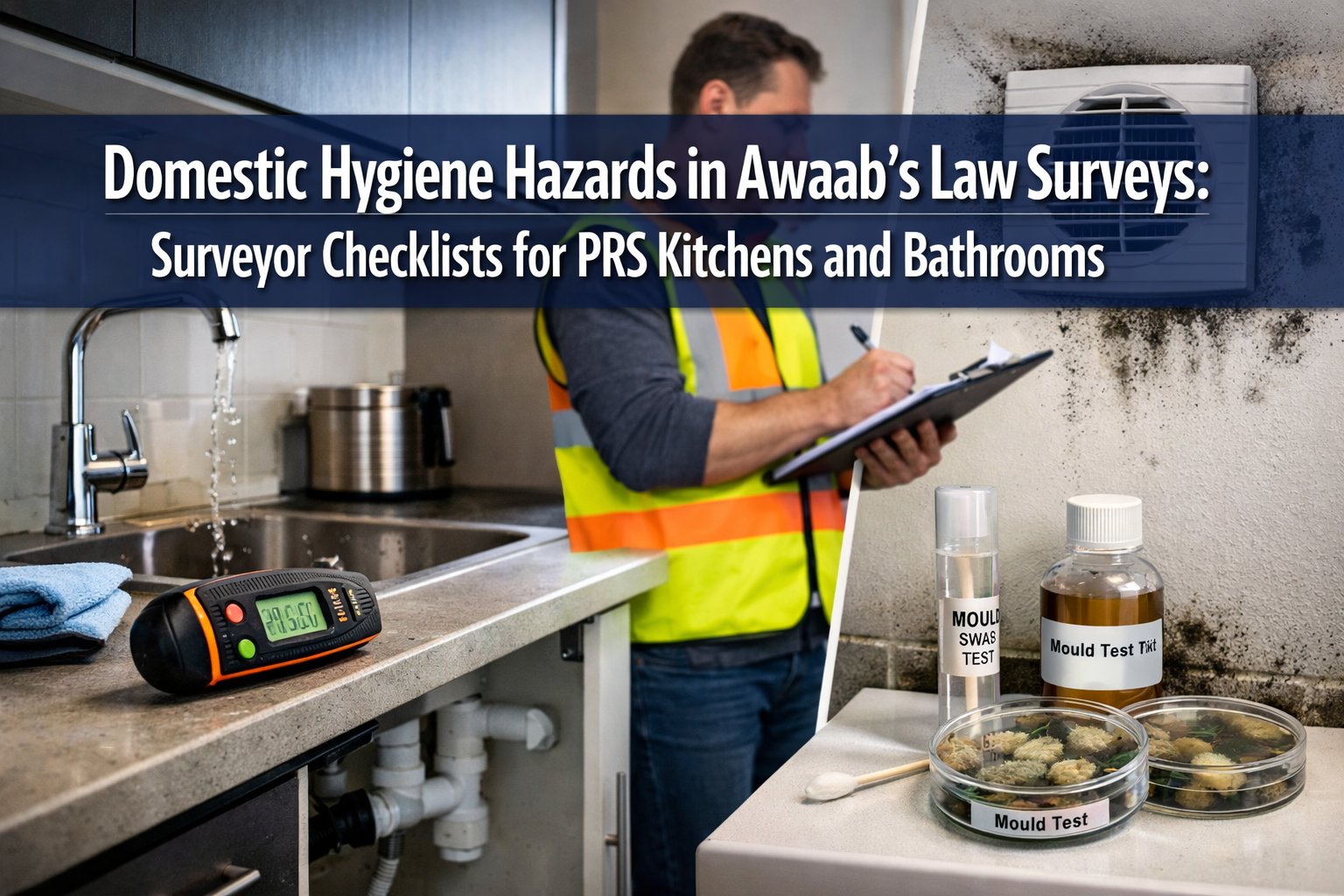
Social landlords face a watershed moment in 2026 as Awaab's Law extends beyond damp and mould to encompass domestic hygiene hazards—a category that includes pest infestations, sanitation failures, and waste accumulation[3][7]. This regulatory expansion demands that building surveyors develop robust inspection protocols specifically targeting kitchens and bathrooms, the primary zones where hygiene hazards manifest in rental properties.
Understanding Domestic Hygiene Hazards in Awaab's Law Surveys: Surveyor Checklists for PRS Kitchens and Bathrooms becomes critical for chartered surveyors conducting Level 3 inspections in 2026. The new requirements mandate strict investigation and remediation timelines, transforming how professionals assess plumbing integrity, ventilation adequacy, and pest vulnerability in private rented sector (PRS) properties[1][8].
Key Takeaways
- 🔍 Awaab's Law extends to domestic hygiene hazards from 2026, covering pest infestations, poor sanitation, and waste accumulation under the Housing Health and Safety Rating System (HHSRS)[3][7]
- 📋 Surveyors must implement specialized checklists for kitchens and bathrooms that assess plumbing leaks, ventilation failures, drainage issues, and pest entry points
- ⏱️ Strict investigation and remediation timelines apply, requiring landlords to address hygiene hazards within specified periods following the same protocols as damp and mould[8]
- 💷 Cost forecasting becomes essential for Level 3 surveys, with remediation expenses ranging from minor repairs to comprehensive system replacements
- 📸 Photographic evidence and documentation standards must meet regulatory requirements to support compliance reporting and potential enforcement actions
Understanding Domestic Hygiene Hazards Under Awaab's Law
What Qualifies as a Domestic Hygiene Hazard?
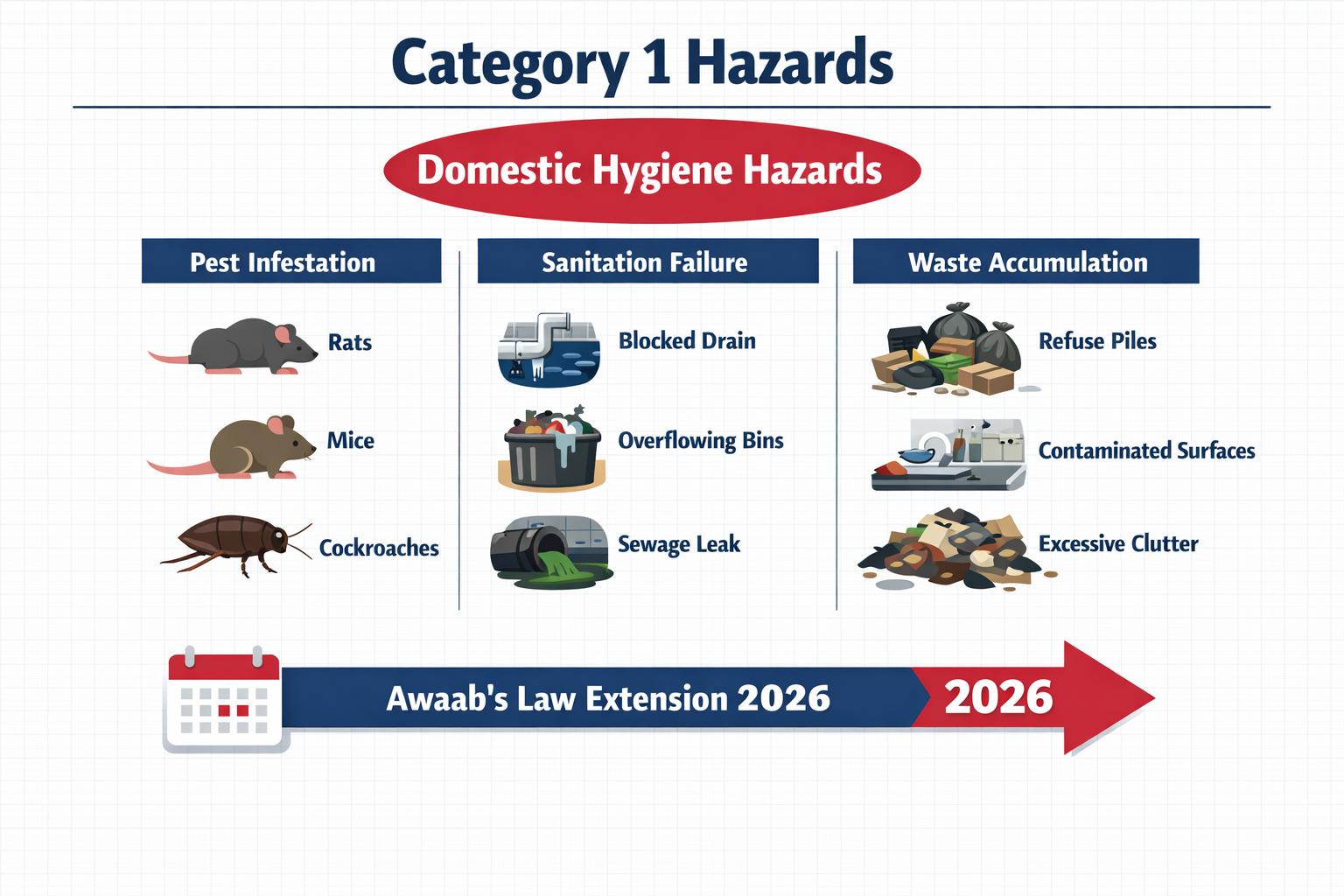
The Housing Health and Safety Rating System (HHSRS) explicitly defines domestic hygiene hazards as "risks arising from poor sanitation, waste accumulation and pests, such as rats, mice and insects"[3]. This classification extends Awaab's Law beyond its original focus on damp and mould to address a broader spectrum of health threats in rental properties.
Government consultations in 2025 highlighted real-world scenarios where tenants avoided using their kitchens due to rodent entry points, illustrating the severity of hygiene hazards[3]. These examples demonstrate why surveyors must adopt comprehensive assessment protocols that identify not just visible infestations but also the underlying structural and maintenance failures that enable them.
The three primary categories of domestic hygiene hazards include:
- Pest Infestations 🐀 – Rodents, cockroaches, bed bugs, and other vermin
- Sanitation Failures 🚽 – Blocked drains, sewage backups, inadequate waste disposal
- Waste Accumulation 🗑️ – Refuse buildup, contaminated surfaces, unhygienic conditions
Timeline for Implementation
The regulatory timeline for domestic hygiene hazards follows a phased approach:
| Date | Regulatory Milestone |
|---|---|
| 2026 | Awaab's Law extended to cover domestic hygiene hazards in social housing[3][7] |
| 2027 | Full extension to all HHSRS hazards except overcrowding[8] |
| Ongoing | Mandatory investigation and remediation within prescribed timelines[8] |
Social landlords must investigate hygiene hazards following the same strict protocols established for damp and mould cases[3]. This creates immediate pressure on surveyors to develop standardized assessment methodologies that satisfy regulatory requirements while providing actionable remediation guidance.
Surveyor Checklists for Kitchen Hygiene Hazards
Plumbing and Drainage Assessment
Kitchens represent the highest-risk zone for hygiene hazards due to constant water use, food preparation, and waste generation. A comprehensive Level 3 full building survey must include detailed plumbing assessments that identify current failures and predict future risks.
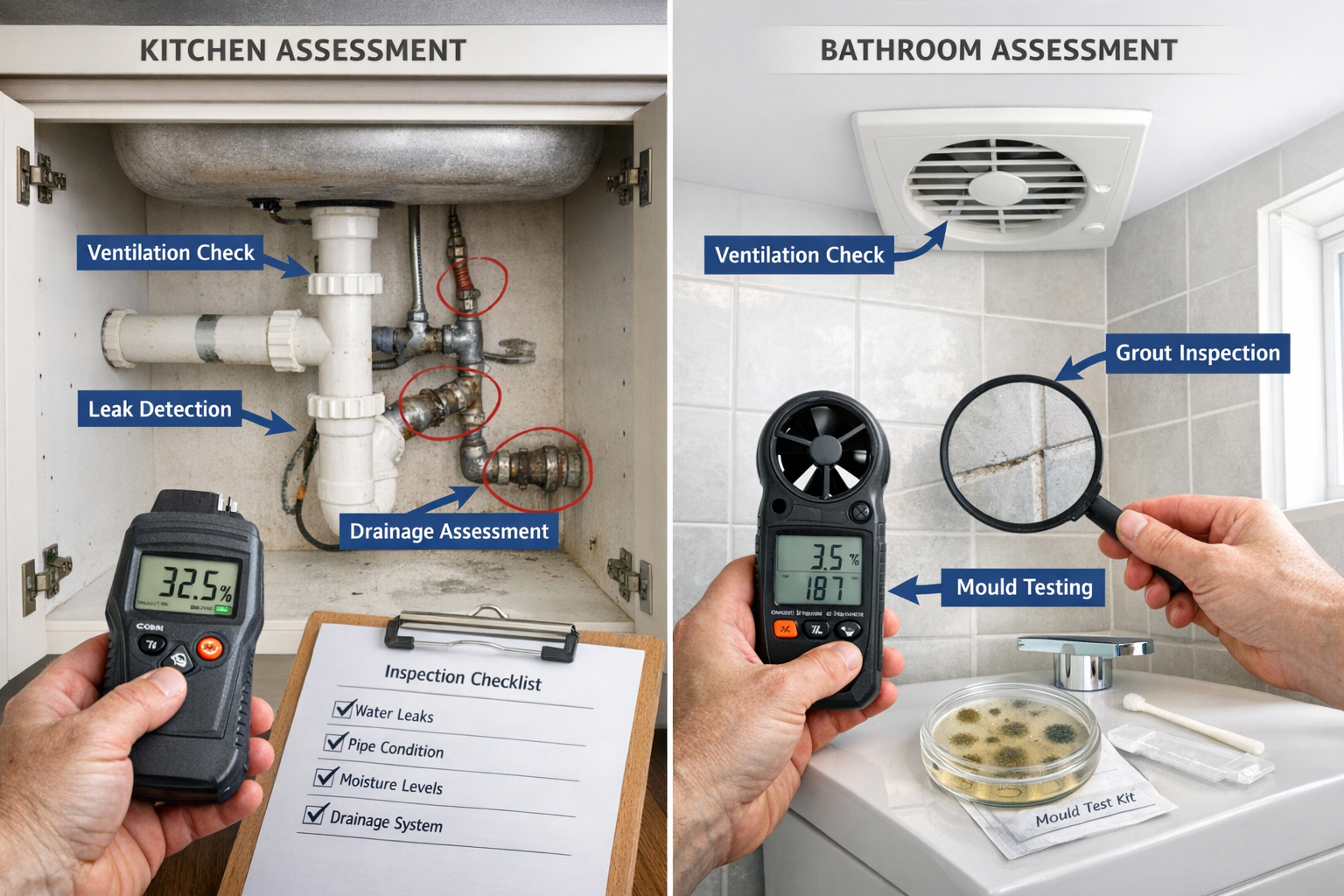
Essential Kitchen Plumbing Checklist:
✅ Under-Sink Inspection
- Check for active leaks at pipe connections
- Test moisture levels in cabinet base using calibrated meter
- Inspect waste pipe seals and trap integrity
- Document any signs of previous water damage
- Photograph corrosion or deterioration
✅ Water Supply Lines
- Examine supply valve condition and operation
- Test for slow leaks using pressure monitoring
- Check pipe material and age (copper, plastic, lead)
- Identify any non-compliant installations
- Assess accessibility for future maintenance
✅ Drainage System
- Run water to test drain flow rate
- Listen for gurgling indicating partial blockage
- Inspect visible waste pipes for cracks or separation
- Check external drainage points for standing water
- Document any foul odors suggesting sewer issues
The government's guidance emphasizes that landlords must address not just visible problems but also underlying conditions that could lead to hygiene hazards[8]. Surveyors conducting building pathology assessments should therefore evaluate plumbing system age, material condition, and maintenance history.
Ventilation and Moisture Control
Inadequate ventilation creates conditions for mould growth and pest attraction—two critical hygiene hazards. Kitchen ventilation assessment requires technical measurement rather than subjective observation.
Kitchen Ventilation Checklist:
🌬️ Mechanical Ventilation
- Test extractor fan operation and noise level
- Measure airflow rate (minimum 60 litres/second for cooker hoods)
- Check ducting route and termination point
- Inspect for grease buildup in filters and ducts
- Verify compliance with Building Regulations Part F
🌬️ Natural Ventilation
- Assess window opening area (minimum 1/20th of floor area)
- Check trickle vent functionality
- Test window operation and seal condition
- Document any blocked or painted-shut vents
- Evaluate cross-ventilation potential
🌬️ Moisture Generation Points
- Identify cooking appliances without adequate extraction
- Check for steam damage to walls and ceilings
- Test relative humidity levels using hygrometer
- Document condensation patterns on windows
- Assess drying facilities for washing
Recent industry guidance emphasizes that ventilation failures contribute directly to both damp-related and hygiene hazards[5]. When conducting urgent or dangerous building issues assessments, surveyors should prioritize non-functional ventilation systems as immediate risks.
Pest Entry Point Identification
The extension of Awaab's Law to pest hazards requires surveyors to adopt pest control surveyor methodologies[3]. This involves systematic identification of potential entry points and conducive conditions.
Kitchen Pest Vulnerability Checklist:
🔍 Structural Entry Points
- Gaps around service pipes entering walls
- Damaged door seals and threshold gaps
- Cracks in external walls near waste pipes
- Broken or missing airbricks
- Holes in suspended floor construction
🔍 Food and Water Sources
- Exposed food storage areas
- Unsealed refuse bins
- Water sources from leaking pipes
- Crumb accumulation in inaccessible areas
- Pet food storage conditions
🔍 Harbourage Opportunities
- Cluttered storage areas
- Gaps behind appliances
- Unsealed cable entry points
- Damaged skirting boards
- Void spaces under units
Photographic documentation of pest evidence—droppings, gnaw marks, nesting materials—provides crucial evidence for enforcement actions and cost forecasting. Surveyors should use consistent photography protocols with scale references and multiple angles.
Bathroom Hygiene Hazard Assessment Protocols
Sanitation System Evaluation
Bathrooms present unique hygiene risks due to sewage systems, constant moisture, and enclosed spaces. Domestic Hygiene Hazards in Awaab's Law Surveys: Surveyor Checklists for PRS Kitchens and Bathrooms must address both immediate failures and systemic vulnerabilities.
Bathroom Sanitation Checklist:
🚿 Toilet System Assessment
- Test flush mechanism operation and water flow
- Check for leaks at base seal and supply connection
- Inspect for cracks in pan or cistern
- Verify adequate water seal in trap
- Document any sewage odors or staining
🚿 Shower and Bath Drainage
- Test drainage speed and capacity
- Remove trap covers to inspect for blockages
- Check waste pipe falls and support
- Identify any signs of previous backups
- Test overflow functionality
🚿 Soil Stack and Vent Pipes
- Inspect visible sections for cracks or separation
- Check external stack condition and fixings
- Verify vent pipe termination height and location
- Listen for gurgling indicating ventilation issues
- Document any non-compliant installations
The maintenance requirements for sanitation systems become particularly important under Awaab's Law, as landlords face strict timelines for addressing reported issues[8].
Moisture and Mould Risk Assessment
Bathroom moisture control directly impacts both mould growth and pest attraction. Surveyors must evaluate multiple moisture sources and control mechanisms.
Bathroom Moisture Control Checklist:
💧 Surface Water Management
- Check shower screen seals and door operation
- Inspect grout condition and tile adhesion
- Test bath panel security and access
- Examine sealant condition around fixtures
- Document any standing water or pooling
💧 Extraction Systems
- Measure extractor fan airflow (minimum 15 litres/second)
- Test humidity-controlled operation if fitted
- Check ducting route avoids condensation traps
- Verify external termination prevents backdraft
- Inspect for mould growth in fan housing
💧 Hidden Moisture Sources
- Use thermal imaging to detect concealed leaks
- Test moisture levels in walls adjacent to shower
- Check for water damage in ceiling below
- Inspect boxing and ducting for condensation
- Document any musty odors indicating hidden damp
When moisture issues combine with poor ventilation, Category 1 hazards can develop rapidly[4]. Surveyors should reference building regulation compliance testing standards to determine whether existing systems meet current requirements.
Waste Disposal and Refuse Management
Inadequate waste management in bathrooms—particularly in houses of multiple occupation (HMOs)—creates hygiene hazards through bacterial growth and pest attraction.
Bathroom Waste Management Checklist:
🗑️ Refuse Storage
- Assess bin provision and capacity
- Check bin condition and cleanliness
- Verify adequate ventilation in bin storage areas
- Document any overflowing or accumulated waste
- Inspect for pest attraction evidence
🗑️ Sanitary Waste Disposal
- Check provision of sanitary bins where required
- Verify servicing arrangements for commercial bins
- Inspect disposal unit condition if fitted
- Document any improper waste disposal
- Assess tenant education and signage
🗑️ Cleaning Access and Standards
- Evaluate surface materials for cleanability
- Check for damaged or porous surfaces
- Assess accessibility for thorough cleaning
- Document any permanent staining or contamination
- Review landlord cleaning schedules for communal areas
Photography Templates and Documentation Standards
Regulatory-Compliant Evidence Capture
Awaab's Law enforcement relies heavily on photographic evidence to establish hazard severity and track remediation progress. Surveyors must adopt standardized photography protocols that satisfy legal requirements.
Essential Photography Standards:
📸 Technical Requirements
- Minimum 12-megapixel resolution
- Color-accurate white balance
- Consistent lighting (flash or natural light)
- Sharp focus on hazard details
- Metadata preservation (date, time, location)
📸 Composition Guidelines
- Wide shot showing room context
- Medium shot showing affected area
- Close-up detail of specific hazard
- Scale reference (ruler or coin) for defects
- Multiple angles for three-dimensional understanding
📸 Specific Hazard Documentation
- Pest Evidence: Droppings with scale, entry points, damage
- Moisture Issues: Meter readings visible, extent of staining
- Sanitation Failures: Blockages, leaks, sewage contamination
- Ventilation Problems: Non-operational fans, blocked vents
- Structural Defects: Cracks, gaps, deterioration
The government's guidance on Awaab's Law emphasizes that landlords must maintain records of investigations and remediation work[8]. Surveyor photographs therefore serve dual purposes: initial assessment documentation and baseline for measuring remediation effectiveness.
Report Templates for Hygiene Hazards
Standardized reporting ensures consistency across surveys and facilitates regulatory compliance. Reports should follow RICS guidance while incorporating Awaab's Law-specific requirements.
Report Structure for Hygiene Hazards:
1. Executive Summary
- Hazard identification and HHSRS category
- Severity rating (Category 1 or 2)
- Immediate risks requiring urgent action
- Estimated remediation costs
- Compliance timeline requirements
2. Detailed Findings by Room
- Kitchen hygiene hazards with photographic evidence
- Bathroom sanitation and moisture issues
- Pest vulnerability assessment
- Ventilation system performance
- Drainage and plumbing condition
3. Remediation Recommendations
- Priority ranking of repairs
- Specification of required works
- Compliance with Building Regulations
- Estimated costs by item
- Timeline for completion under Awaab's Law
4. Risk Assessment
- Health impact evaluation
- Likelihood of hazard worsening
- Tenant vulnerability factors
- Legal compliance status
- Enforcement risk assessment
When preparing reports for properties requiring condition survey assessments, surveyors should ensure hygiene hazard sections receive equivalent prominence to structural defects.
Cost Forecasting for Hygiene Hazard Remediation
Typical Repair Cost Ranges
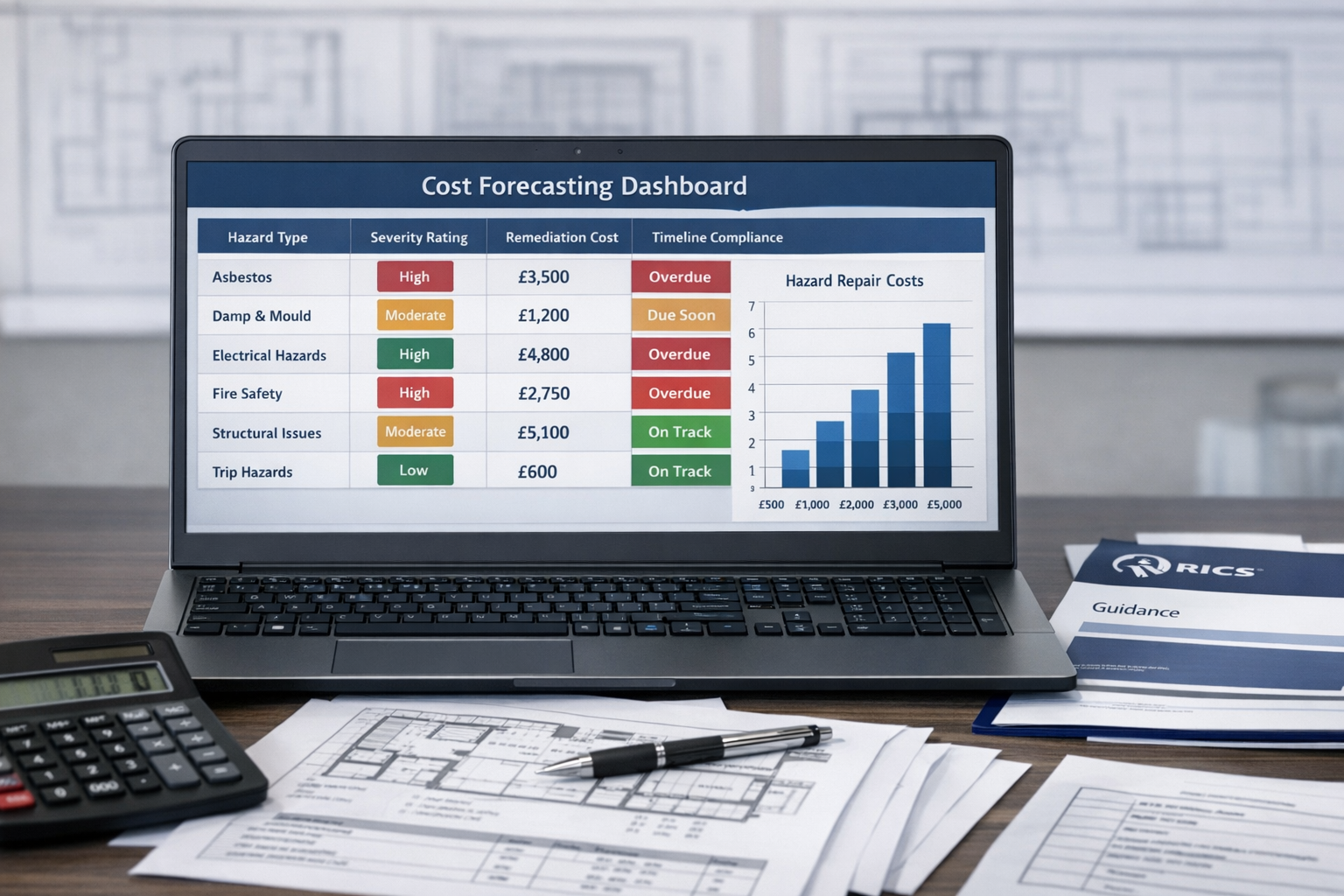
Accurate cost forecasting enables landlords to budget for compliance and helps surveyors provide realistic remediation advice. Costs vary significantly based on hazard severity and property configuration.
Kitchen Remediation Costs (2026 Estimates):
| Repair Type | Cost Range | Timeline |
|---|---|---|
| Replace leaking waste pipes | £150-£400 | 1-2 days |
| Install/upgrade extractor fan | £200-£800 | 1-2 days |
| Repair under-sink moisture damage | £300-£1,200 | 2-5 days |
| Pest-proof entry points | £250-£600 | 1-3 days |
| Replace non-compliant plumbing | £800-£3,000 | 3-7 days |
| Full kitchen ventilation system | £1,500-£4,000 | 5-10 days |
Bathroom Remediation Costs (2026 Estimates):
| Repair Type | Cost Range | Timeline |
|---|---|---|
| Replace toilet seal and fixings | £100-£250 | 1 day |
| Install compliant extractor fan | £250-£900 | 1-2 days |
| Re-seal shower enclosure | £150-£400 | 1 day |
| Clear blocked soil stack | £200-£600 | 1-2 days |
| Repair concealed leak | £400-£2,000 | 2-5 days |
| Replace bathroom ventilation system | £1,200-£3,500 | 4-8 days |
These estimates assume standard property configurations and accessible services. Complex cases involving structural alterations or asbestos removal significantly increase costs and timelines.
Compliance Timeline Considerations
Awaab's Law mandates specific investigation and remediation timelines that directly impact cost forecasting[8]. Surveyors must factor in:
⏱️ Investigation Period
- Initial response to tenant report
- Surveyor inspection scheduling
- Specialist testing if required
- Report preparation and delivery
⏱️ Remediation Period
- Contractor mobilization time
- Material procurement delays
- Access arrangements with tenants
- Follow-up inspection requirements
⏱️ Emergency Response
- Category 1 hazards requiring immediate action
- Temporary accommodation costs
- Out-of-hours contractor premiums
- Expedited material delivery charges
Understanding how to negotiate house price down after survey findings becomes particularly relevant when hygiene hazards affect property valuations and transaction timelines.
Budget Planning for Landlords
Forward-thinking landlords should incorporate hygiene hazard prevention into routine maintenance budgets rather than waiting for enforcement action.
Preventative Maintenance Budget Allocation:
💷 Annual Inspection Costs
- Professional survey: £300-£800 per property
- Specialist pest inspection: £150-£300
- Ventilation system testing: £100-£250
- Drainage CCTV survey: £200-£500
💷 Routine Maintenance
- Quarterly pest control: £40-£80 per visit
- Annual extractor fan servicing: £60-£120
- Biannual drainage maintenance: £100-£200
- Sealant replacement cycle: £150-£300 every 3-5 years
💷 Contingency Reserve
- Emergency repairs: 10-15% of annual rental income
- Compliance upgrades: £500-£2,000 per property annually
- Legal and enforcement costs: £1,000-£5,000 if required
Properties identified during Level 2 vs Level 3 survey assessments as having existing hygiene vulnerabilities require enhanced budget provisions.
Integration with Level 3 Survey Protocols
Incorporating Hygiene Hazards into Full Building Surveys
Domestic Hygiene Hazards in Awaab's Law Surveys: Surveyor Checklists for PRS Kitchens and Bathrooms must integrate seamlessly with existing Level 3 full building survey methodologies. This requires expanding traditional structural and services assessments to include health-focused evaluations.
Enhanced Survey Scope:
🔍 Pre-Survey Preparation
- Review tenant complaint history
- Obtain previous pest control records
- Check local authority enforcement notices
- Research property modification history
- Identify high-risk property characteristics (age, construction type, location)
🔍 On-Site Assessment Protocol
- Allocate 45-60 minutes for kitchen/bathroom hygiene assessment
- Use calibrated moisture meters and thermal imaging
- Document all potential pest entry points
- Test ventilation systems with airflow meters
- Photograph evidence using standardized templates
🔍 Post-Survey Analysis
- Compare findings against HHSRS guidance
- Calculate hazard scores and category ratings
- Develop prioritized remediation schedule
- Prepare cost estimates for all identified works
- Draft compliance timeline recommendations
Surveyors should reference what questions should you be asking during a building survey guidance to ensure tenant interviews capture relevant hygiene hazard information.
Training and Competency Requirements
The expansion of Awaab's Law creates new competency requirements for surveyors. Professional development should address:
Essential Training Areas:
📚 Regulatory Knowledge
- HHSRS assessment methodology
- Awaab's Law investigation timelines
- Category 1 and 2 hazard classification
- Enforcement procedures and penalties
- Social housing regulatory framework
📚 Technical Skills
- Pest identification and entry point analysis
- Ventilation system testing and specification
- Moisture investigation techniques
- Sanitation system assessment
- Photographic evidence standards
📚 Risk Assessment
- Health impact evaluation
- Vulnerable occupant considerations
- Hazard interaction effects
- Likelihood scoring methodologies
- Remediation priority ranking
Chartered surveyors should maintain continuing professional development (CPD) records demonstrating competency in hygiene hazard assessment. This protects both professional liability and ensures consistent service quality.
Conclusion
The extension of Awaab's Law to domestic hygiene hazards in 2026 represents a fundamental shift in rental property standards, demanding that surveyors adopt comprehensive assessment protocols for kitchens and bathrooms[3][7]. Building professionals must now evaluate not just structural integrity and building services, but also sanitation adequacy, pest vulnerability, and hygiene maintenance standards.
Domestic Hygiene Hazards in Awaab's Law Surveys: Surveyor Checklists for PRS Kitchens and Bathrooms provide the systematic framework necessary for regulatory compliance. These protocols enable surveyors to identify Category 1 and 2 hazards, document evidence to legal standards, forecast remediation costs accurately, and guide landlords through strict compliance timelines[8].
Actionable Next Steps
For surveyors preparing for 2026 implementation:
✅ Immediate Actions
- Review HHSRS guidance on domestic hygiene hazards
- Develop standardized checklists for kitchen and bathroom assessments
- Invest in calibrated testing equipment (moisture meters, airflow gauges)
- Create photography templates meeting regulatory evidence standards
- Establish cost databases for common hygiene hazard repairs
✅ Professional Development
- Complete CPD training on Awaab's Law requirements
- Attend pest control and sanitation system courses
- Practice hazard scoring and category classification
- Review case studies of enforcement actions
- Network with environmental health officers
✅ Practice Implementation
- Integrate hygiene hazard sections into standard survey reports
- Allocate additional time for kitchen/bathroom assessments
- Develop client guidance materials on compliance obligations
- Establish relationships with specialist contractors
- Monitor regulatory updates and guidance publications
The convergence of housing quality standards and health protection creates both challenges and opportunities for the surveying profession. Those who develop robust Domestic Hygiene Hazards in Awaab's Law Surveys: Surveyor Checklists for PRS Kitchens and Bathrooms will position themselves as essential advisors in an increasingly regulated rental sector.
For comprehensive property assessments that address all aspects of building condition and regulatory compliance, consider engaging qualified professionals who understand the full scope of Awaab's Law requirements. The health and safety of tenants—and the legal protection of landlords—depends on thorough, competent surveying that identifies and addresses hygiene hazards before they escalate into serious health threats.
References
[1] Awaabs Law A Letting Agents Guide – blog.goodlord.co
[2] Awaabs Law – rpclegal.com
[3] ppconline – ppconline.org
[4] Awaabs Law What Social Landlords Need To Know About Tackling Damp And Mould – rawlinspaints.com
[5] Awaabs Law Technical Compliance Hvac Ventilation – arm-environments.com
[6] Awaabs Law What It Means For Social Landlords And Tenants – harrisonclarke.co.uk
[7] Awaabs Law – envirovent.com
[8] Awaabs Law Guidance For Social Landlords Timeframes For Repairs In The Social Rented Sector – gov.uk
[9] Awaabs Law A Turning Point For Housing Safety And Indoor Air Quality – ecoair.org
[10] Awaab S Law What It Means For You – southernhousing.org.uk