

Do I Need a Survey on a New Build? The Essential 2026 Guide
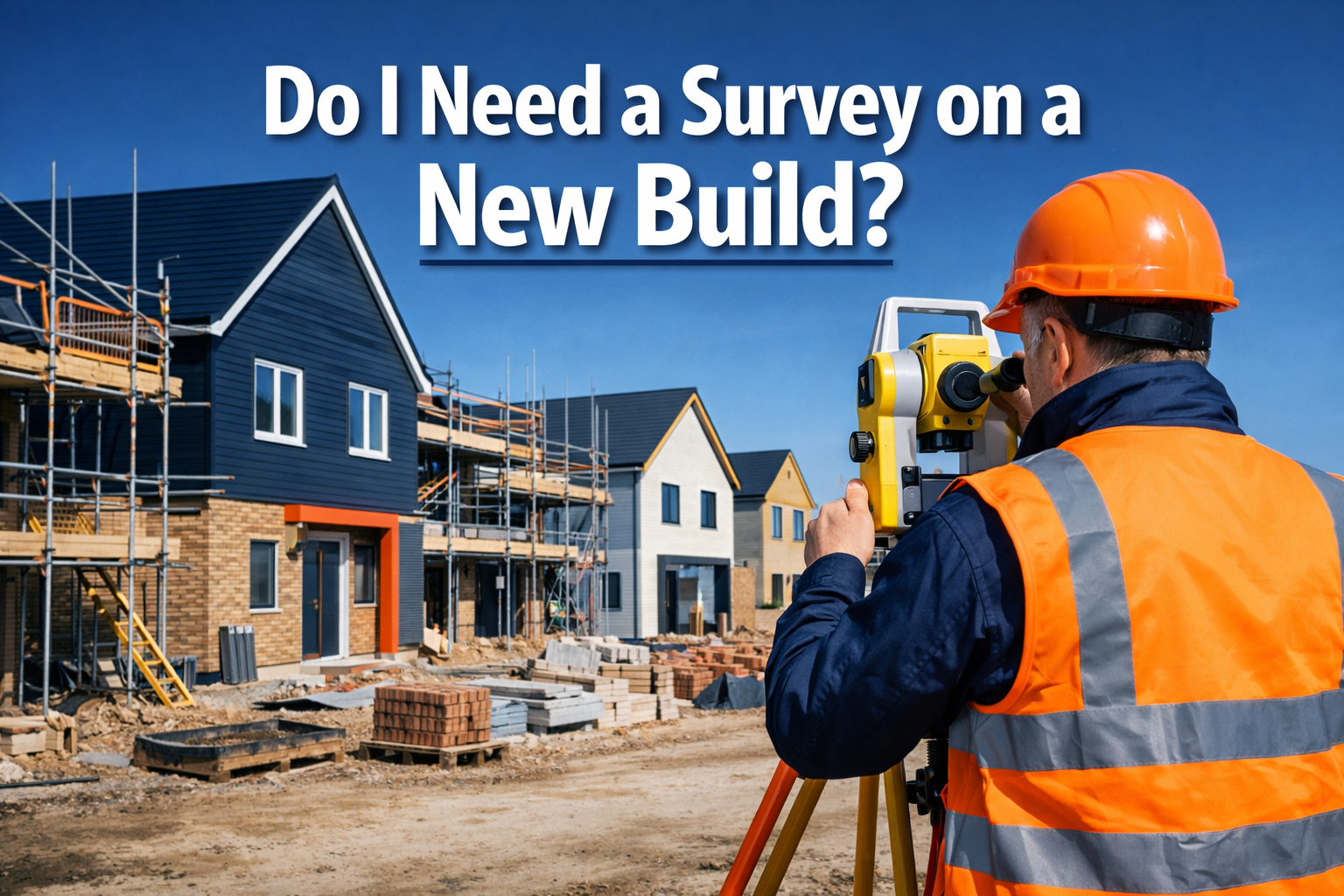
Buying a new build home feels like the safest property investment imaginable. Fresh construction, modern materials, building regulation compliance, and that coveted NHBC warranty—what could possibly go wrong? Yet thousands of homebuyers discover costly defects in their “brand new” properties every year, defects that could have been identified before completion. The question “do I need a survey on a new build?” deserves a more nuanced answer than the simple “no” many buyers receive from estate agents and developers.
The truth is that new build properties can harbour significant construction defects, regulatory non-compliance issues, and quality problems that won’t be covered by standard warranties. While developers promote their properties as move-in ready and defect-free, the reality of modern construction timelines, subcontractor quality variations, and cost-cutting measures tells a different story. Understanding whether you need a survey on your new build purchase could save you tens of thousands of pounds in remedial work.
Key Takeaways
- New build warranties don’t cover everything: NHBC and similar warranties have significant exclusions and won’t protect you from cosmetic defects, minor construction issues, or problems you should have spotted before completion
- Professional surveys identify hidden problems: Qualified surveyors regularly find defects in new builds including poor workmanship, building regulation non-compliance, and structural issues that aren’t visible to untrained eyes
- Snagging surveys differ from building surveys: While snagging lists focus on cosmetic finish issues, comprehensive building surveys examine structural integrity, materials quality, and regulatory compliance
- Timing matters critically: Arranging your survey before legal completion gives you negotiating power and the option to withdraw, while post-completion surveys limit your remedies
- Investment protection justifies the cost: Survey fees of £400-£800 are minimal compared to the average new build purchase price and potential repair costs that can exceed £20,000
Understanding New Build Warranties and Their Limitations
Most new build properties in the UK come with a 10-year structural warranty from providers like NHBC (National House Building Council), LABC Warranty, or Premier Guarantee. These warranties create a false sense of security that leads many buyers to skip independent surveys entirely. However, understanding what these warranties actually cover reveals significant gaps in protection.
What New Build Warranties Actually Cover
New build warranties typically operate on a tiered system:
| Time Period | Coverage | Limitations |
|---|---|---|
| First 2 years | Builder’s defects and workmanship issues | Excludes items you should have identified at completion; builder must still be trading |
| Years 3-10 | Major structural defects only | Very narrow definition of “structural”; excludes most building elements |
| Throughout | Deposit protection (if builder fails) | Only applies if purchased before completion |
The critical limitation is that warranties require you to identify and report obvious defects before or immediately after completion. If you accept the property without noting problems, you may forfeit coverage for those issues. Additionally, warranties don’t cover:
- Cosmetic finish defects after the initial period
- Poor workmanship that doesn’t constitute structural failure
- Building regulation non-compliance (unless it causes structural issues)
- Design flaws or inappropriate materials selection
- External works, landscaping, and boundary features
- Items damaged after completion
Why Warranties Aren’t Sufficient Protection
Warranty providers conduct their own inspections during construction, but these stage inspections focus on structural compliance rather than finish quality or comprehensive defect identification. Inspectors typically visit sites only 4-6 times during the entire build process, leaving substantial room for problems to develop between visits.
Furthermore, warranty claims processes can be lengthy and contentious. Providers often dispute whether identified defects constitute “structural” issues or fall under cosmetic categories. Even when claims succeed, warranty companies may specify their own contractors for remedial work, limiting your control over repair quality and timing.
For comprehensive guidance on different survey types and their applications, explore our detailed resource on which building survey you need.
Common Defects Found in New Build Properties
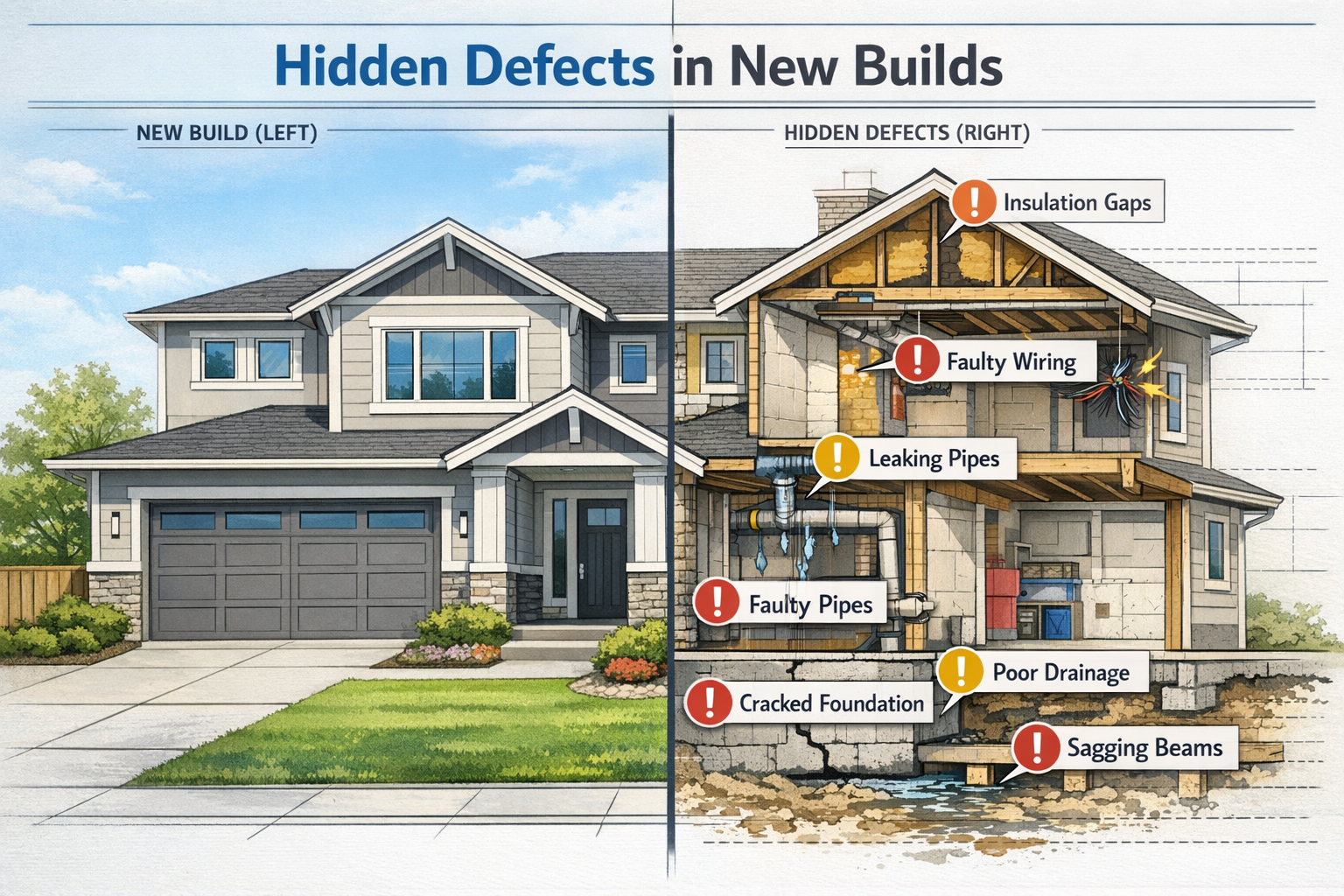
The assumption that new builds are defect-free contradicts the evidence from professional building surveys and homeowner experiences. Industry research suggests that over 90% of new build properties have at least some defects at completion, ranging from minor cosmetic issues to serious structural problems.
Structural and Building Regulation Issues
Qualified surveyors regularly identify serious problems in new construction:
Foundation and structural defects:
- Inadequate foundation depth or specification for soil conditions
- Poor concrete mixing ratios or curing procedures
- Insufficient structural support for load-bearing elements
- Incorrectly installed steel beams or lintels
- Wall tie installation problems in cavity walls
Building regulation non-compliance:
- Inadequate insulation failing to meet current thermal standards
- Ventilation systems that don’t meet Building Regulation requirements
- Fire safety measures incorrectly installed or missing entirely
- Drainage systems with incorrect falls or connections
- Electrical installations not complying with current wiring regulations
These issues aren’t always visible during casual viewing but can be identified through professional inspection. A comprehensive building defects survey can reveal problems before they become your financial responsibility.
Workmanship and Quality Control Problems
Modern construction timelines create pressure that often compromises quality:
- Plumbing issues: Poorly soldered joints, incorrect pipe sizing, inadequate water pressure
- Electrical problems: Insufficient socket provision, poorly terminated connections, missing earth bonding
- Roofing defects: Inadequate weatherproofing, poor tile alignment, insufficient ventilation
- Window and door installation: Gaps allowing water penetration, poor sealing, inadequate security
- Plastering and finishing: Uneven surfaces, visible joints, cracking from premature decoration
🏗️ Professional Insight: Surveyors frequently find that subcontractors working under tight deadlines cut corners on preparation work, proper material curing times, and quality checks that aren’t visible in final finishes.
Hidden Problems Not Covered by Warranties
Some of the most problematic defects fall outside warranty coverage:
- Thermal bridging and cold spots causing condensation and mould growth
- Acoustic insulation deficiencies between properties or floors
- Drainage and water management issues affecting gardens and boundaries
- Materials quality below specification or inappropriate for application
- Design flaws that create maintenance problems or limit future alterations
Understanding these common issues helps answer the question “do I need a survey on a new build?” with greater clarity. For properties with specific concerns about building materials assessments, specialist surveys can provide detailed analysis.
Types of Surveys Available for New Build Properties
When considering whether you need a survey on a new build, understanding the different survey types available helps you make an informed decision. Not all surveys are created equal, and new build properties require specific approaches.
Snagging Surveys vs. Building Surveys
Snagging surveys represent the most basic inspection level for new builds:
- Focus exclusively on cosmetic defects and finish quality
- Identify visible problems like paintwork issues, tile alignment, minor damage
- Typically cost £300-£500 for standard properties
- Usually conducted by non-chartered professionals or specialized snagging companies
- Provide detailed lists for developer rectification before completion
While snagging surveys help ensure acceptable finish standards, they don’t examine structural integrity, building regulation compliance, or hidden defects. For comprehensive information about snagging, review our guide on what is house snagging and when is a snagging survey necessary.
Building surveys (RICS Level 3 surveys) offer comprehensive assessment:
- Conducted by chartered surveyors with professional qualifications and insurance
- Examine structural elements, building regulation compliance, and construction quality
- Identify both visible and potential hidden defects
- Provide detailed analysis of materials, workmanship, and long-term durability
- Include recommendations for remedial work and cost implications
- Typically cost £600-£1,200 depending on property size and complexity
For new builds, a full Level 3 building survey provides the most comprehensive protection, examining aspects that warranties don’t cover and identifying problems before they become your responsibility.
RICS Level 2 vs. Level 3 Surveys for New Builds
The RICS Level 2 HomeBuyer Report represents a middle ground:
✅ Advantages:
- More affordable than Level 3 surveys (typically £400-£700)
- Covers major defects and urgent issues
- Suitable for relatively new, conventional construction
- Includes market valuation
❌ Limitations for new builds:
- Less detailed inspection of construction methods
- May miss subtle building regulation non-compliance
- Limited analysis of materials quality and long-term performance
- Standardized report format with less detailed commentary
For new build properties, particularly those with non-traditional construction methods, complex designs, or where you have specific concerns, a Level 3 survey provides better value despite higher initial costs. The detailed analysis can identify problems that would cost far more to remedy after completion.
Our comprehensive guide comparing Level 2 vs Level 3 surveys helps you determine which option suits your circumstances.
Specialist Surveys for Specific Concerns
Beyond general building surveys, specialist inspections address specific new build concerns:
- Thermal imaging surveys identify insulation defects and thermal bridging
- Air tightness testing verifies building regulation compliance for energy efficiency
- Acoustic testing confirms sound insulation meets required standards
- Drainage surveys examine underground drainage installation and function
- Electrical installation certificates verify compliance with current wiring regulations
For properties where building regulation compliance is questionable or where you want additional assurance, these specialist surveys complement comprehensive building surveys.
Do I Need a Survey on a New Build? Key Considerations
The decision whether to commission a survey on your new build purchase depends on several factors. While the property is new, “new” doesn’t automatically mean “perfect” or even “fit for purpose.”
Financial Investment and Risk Assessment
Consider the financial stakes involved:
Purchase price protection: With average new build prices exceeding £300,000 in many UK regions, a survey costing £600-£800 represents less than 0.3% of your investment. This minimal cost provides substantial protection against defects that could cost tens of thousands to remedy.
Repair cost potential: Common new build defects can be expensive to fix:
- Remedial foundation work: £10,000-£50,000+
- Roof repairs or replacement: £5,000-£15,000
- Building regulation compliance upgrades: £3,000-£20,000
- Drainage system repairs: £2,000-£8,000
- Replastering entire rooms: £1,500-£4,000 per room
Negotiating leverage: Survey findings provide concrete evidence for price negotiations or requiring developer remediation before completion. Many buyers successfully negotiate £5,000-£15,000 reductions based on survey findings, effectively making the survey pay for itself many times over.
Property Complexity and Construction Type
Certain new build characteristics increase the value of professional surveys:
🏘️ Higher risk factors:
- Non-traditional construction methods (timber frame, modular, innovative systems)
- Complex architectural designs with multiple roof levels or unusual features
- Challenging site conditions (sloping sites, poor ground conditions, flood risk areas)
- Smaller developers without established quality track records
- Properties built during adverse weather affecting construction quality
- Final units in developments where developers rush to complete
For properties with these characteristics, the question “do I need a survey on a new build?” has a clearer answer: yes, the risk justifies professional assessment.
Your Technical Knowledge and Confidence
Honestly assess your ability to identify construction defects:
Consider a survey if you:
- Lack construction industry experience or technical knowledge
- Feel uncertain about assessing building quality
- Want professional documentation of the property’s condition
- Need independent verification beyond developer assurances
- Plan to use the property as a long-term investment
- Have concerns about specific aspects of the construction
You might skip a survey if:
- You have professional construction or surveying qualifications yourself
- The property is from a major national developer with excellent reputation
- You’re prepared to accept the financial risk of undiscovered defects
- Budget constraints make survey costs genuinely prohibitive
However, even construction professionals often commission independent surveys for their own purchases, recognizing that objective third-party assessment provides value beyond personal inspection capabilities.
Timing and Purchase Process Considerations
When you arrange a survey significantly impacts its value:
Pre-completion surveys (recommended):
- Conducted before legal completion while you can still withdraw
- Provide maximum negotiating leverage with developers
- Allow time for remedial work before you take ownership
- Enable informed decisions about proceeding with purchase
Post-completion surveys:
- Useful for warranty claim documentation
- Help prioritize maintenance and repairs
- Provide baseline condition assessment
- Limited remedial options as you’ve already completed purchase
For maximum protection, arrange your survey before exchange of contracts or ensure your contract includes conditions allowing withdrawal based on survey findings. Understanding building survey timeframes helps you plan appropriately.
The Survey Process for New Build Properties
Understanding what happens during a new build survey helps you prepare effectively and maximize the value you receive from professional assessment.
What Surveyors Examine in New Builds
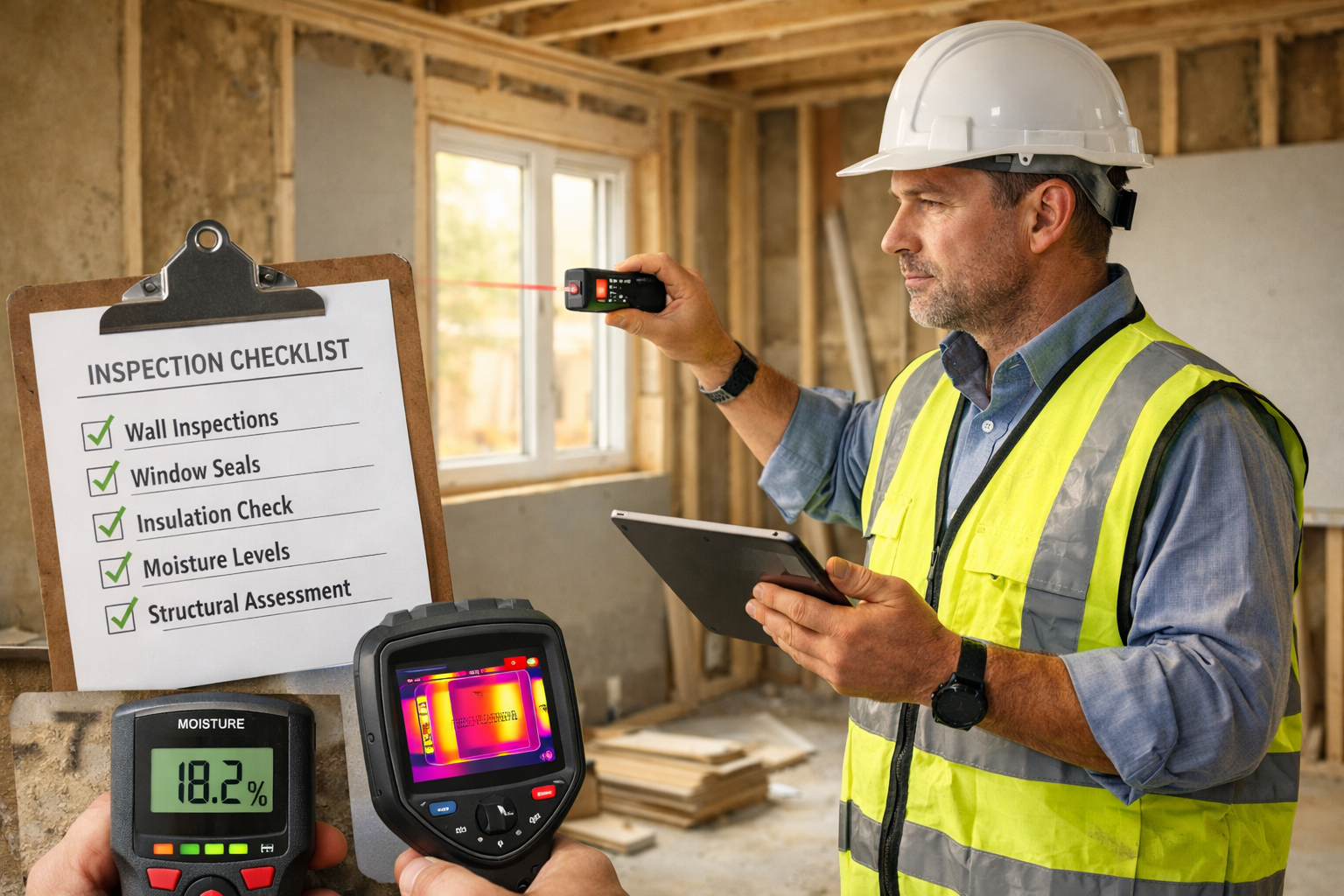
A comprehensive building survey of a new build property includes detailed examination of:
External elements:
- Foundation visibility and ground conditions
- External wall construction, materials, and finish quality
- Roof covering, structure, and weatherproofing
- Windows and doors installation, sealing, and operation
- Rainwater goods (gutters, downpipes) installation and function
- External drainage, surface water management, and gradients
- Boundary walls, fences, and external works
Internal elements:
- Wall construction, plasterwork, and finish quality
- Floor construction, levels, and finishes
- Ceiling construction and finish
- Internal joinery (doors, stairs, fitted units)
- Plumbing installations, water pressure, and drainage
- Electrical installations, socket provision, and consumer unit
- Heating system installation and controls
- Ventilation provision and function
- Insulation and thermal performance indicators
Building services:
- Boiler and heating system specification and installation
- Electrical system compliance with current regulations
- Plumbing system materials and installation quality
- Ventilation systems meeting building regulation requirements
- Smart home systems and integrated technology
Surveyors also review available documentation including planning permissions, building regulation approvals, warranty certificates, and energy performance certificates (EPCs). For more about what surveyors examine, see our article on what questions you should be asking during a building survey.
Accessing the Property for Survey
New build surveys present unique access considerations:
Pre-completion access: Developers typically allow survey access before completion, though you may need to:
- Coordinate timing with site managers and construction schedules
- Accept some areas may still be incomplete or inaccessible
- Understand that certain tests (like heating system operation) may not be possible
- Arrange access through your solicitor or estate agent
Access limitations: Surveyors will note areas they couldn’t access, such as:
- Roof spaces if hatches aren’t yet installed
- Underground drainage if not yet commissioned
- Areas behind fitted furniture or appliances
- External areas still under construction
Professional surveyors document these access limitations and explain how they affect the survey’s comprehensiveness.
Understanding Your Survey Report
New build survey reports typically include:
📋 Executive summary: Overview of key findings, urgent issues, and overall assessment
📋 Detailed room-by-room analysis: Specific defects, concerns, and observations for each area
📋 Photographic evidence: Images documenting identified defects and concerns
📋 Building regulation compliance assessment: Analysis of whether construction meets current standards
📋 Materials and workmanship evaluation: Professional opinion on quality and longevity
📋 Recommendations: Prioritized actions, further investigations needed, and estimated costs
📋 Technical appendices: Detailed technical information about construction methods and materials
Reports use standardized condition ratings:
- Condition 1: No repair currently needed
- Condition 2: Repairs or replacement requiring future attention
- Condition 3: Defects requiring urgent repair or replacement
For new builds, you should expect mostly Condition 1 ratings, with some Condition 2 items for minor issues. Multiple Condition 3 ratings indicate serious problems requiring immediate attention before completion.
Taking Action Based on Survey Findings
A survey report is only valuable if you act on its findings appropriately. Understanding your options helps you maximize the protection your survey provides.
Negotiating with Developers
Survey findings provide concrete evidence for negotiations:
Requesting remedial work: Present the survey report to the developer and request they:
- Rectify all identified defects before completion
- Provide written confirmation of completed remedial work
- Allow re-inspection by your surveyor to verify repairs
- Address building regulation compliance issues
Most reputable developers will address legitimate concerns, particularly Condition 3 defects and building regulation non-compliance, as these affect their warranty obligations and reputation.
Price reduction negotiations: For issues the developer won’t remedy, request price reductions reflecting:
- Estimated repair costs from the survey report
- Inconvenience and disruption of post-completion remediation
- Reduced property value due to identified defects
- Professional fees for overseeing remedial work
Withdrawal considerations: Serious structural defects, extensive building regulation non-compliance, or developer refusal to address significant issues may justify withdrawing from the purchase. Survey findings provide documented justification for this decision.
Prioritizing Remedial Work
If you proceed with purchase despite identified defects:
Immediate priorities (Condition 3 items):
- Structural safety issues
- Water penetration or weatherproofing failures
- Electrical safety hazards
- Building regulation compliance affecting safety or insurability
- Issues affecting warranty validity
Medium-term actions (Condition 2 items):
- Preventative maintenance to avoid deterioration
- Cosmetic defects affecting enjoyment or value
- Energy efficiency improvements
- Minor building regulation compliance issues
Long-term planning:
- Anticipated maintenance based on materials and construction quality
- Potential upgrades or improvements
- Monitoring of identified concerns
For guidance on planning remedial work, explore our resource on budgeting for repairs and restoration.
Documenting for Warranty Claims
Your survey report provides crucial documentation for future warranty claims:
- Baseline condition evidence: Proves defects existed at completion
- Professional assessment: Chartered surveyor opinions carry weight with warranty providers
- Photographic documentation: Visual evidence of defects at specific dates
- Technical analysis: Detailed descriptions of problems and their causes
Maintain your survey report with your property documents and reference it when making warranty claims. Understanding the consequences of failing to act on survey findings helps emphasize the importance of timely action.
Cost-Benefit Analysis: Is a New Build Survey Worth It?
The final consideration when asking “do I need a survey on a new build?” involves weighing costs against potential benefits.
Survey Costs in 2026
Typical survey costs for new build properties:
| Survey Type | Typical Cost Range | Best For |
|---|---|---|
| Snagging Survey | £300-£500 | Cosmetic defects only; minimal protection |
| RICS Level 2 HomeBuyer | £400-£700 | Standard new builds from major developers |
| RICS Level 3 Building Survey | £600-£1,200 | Comprehensive protection; complex properties |
| Specialist Surveys (additional) | £200-£500 each | Specific concerns (thermal, acoustic, drainage) |
Costs vary based on:
- Property size and complexity
- Location and surveyor availability
- Survey comprehensiveness and detail level
- Additional testing or specialist inspections
- Urgency and scheduling requirements
Potential Savings and Value
Survey benefits extend beyond identifying defects:
💰 Direct financial benefits:
- Price reductions averaging £5,000-£15,000 based on findings
- Avoided repair costs potentially exceeding £20,000
- Developer-funded remediation before completion
- Stronger warranty claim documentation
💰 Indirect value:
- Peace of mind knowing your investment is sound
- Informed decision-making about purchase completion
- Future planning for maintenance and improvements
- Insurance protection through professional indemnity coverage
- Resale value protection through early defect identification
Real-World Examples
Case Study 1 – Foundation Issues Identified:
Survey on £425,000 new build identified inadequate foundation depth for soil conditions. Developer initially disputed findings but independent structural engineer confirmed the problem. Developer undertook £35,000 remedial foundation work before completion. Survey cost: £750. Value provided: £35,000+ plus avoided future structural failure.
Case Study 2 – Building Regulation Non-Compliance:
Level 3 survey found inadequate fire protection between floors in new build townhouse, failing to meet current building regulations. Developer rectified issues and provided building control certification. Survey cost: £680. Value provided: Ensured regulatory compliance and future insurability.
Case Study 3 – Multiple Workmanship Defects:
Comprehensive survey identified 47 defects in £380,000 new build, including poor plumbing, inadequate ventilation, and substandard electrical work. Buyer negotiated £12,000 price reduction and developer remediated most serious issues. Survey cost: £820. Direct financial return: £12,000 (1,463% ROI).
These examples illustrate that the question “do I need a survey on a new build?” often has a clear financial answer: the potential savings and protection typically far exceed the survey cost.
For broader context on building surveys and their value, review our guide on why RICS building surveys are essential for home buyers.
Conclusion: Making an Informed Decision About New Build Surveys
The question “do I need a survey on a new build?” doesn’t have a universal answer, but the evidence strongly suggests that professional surveys provide valuable protection for most buyers. New build warranties, while useful, contain significant exclusions and don’t eliminate the risk of construction defects, poor workmanship, or building regulation non-compliance.
Key Decision Factors
You should strongly consider a survey if:
- Your new build purchase represents a significant financial investment
- The property features non-traditional construction or complex design
- You lack construction industry expertise to assess quality yourself
- The developer is smaller or less established
- You want maximum protection and peace of mind
- You’re purchasing for long-term investment rather than short-term occupation
A survey may be less critical if:
- You have professional construction or surveying qualifications
- The property is from a major national developer with excellent reputation
- You’re prepared to accept the financial risk of undiscovered defects
- Budget constraints genuinely make survey costs prohibitive
However, even in these circumstances, the minimal cost relative to purchase price and potential repair expenses makes surveys worthwhile for most buyers.
Recommended Next Steps
If you’re purchasing a new build property:
- Research survey options early: Don’t wait until exchange of contracts approaches
- Obtain quotes from chartered surveyors: Compare services, costs, and availability
- Review your purchase contract: Ensure you can commission surveys and act on findings
- Schedule surveys appropriately: Allow time for remediation negotiations before completion
- Prepare questions for surveyors: Maximize value by addressing specific concerns
- Plan for potential outcomes: Consider how you’ll respond to various survey findings
- Maintain documentation: Keep survey reports with property records for future reference
Final Thoughts
New build properties offer many advantages including modern design, energy efficiency, and warranty protection. However, “new” doesn’t guarantee “perfect,” and construction defects remain common across the industry. Professional surveys provide independent verification of quality, identify problems before they become your responsibility, and offer negotiating leverage that often recovers their cost many times over.
The small investment in a comprehensive building survey protects your much larger property investment and provides peace of mind that your new home meets the quality standards you expect and deserve. Rather than asking “do I need a survey on a new build?”, perhaps the better question is “can I afford not to have one?”
For personalized advice about surveying your specific new build property, consult with qualified chartered surveyors who can assess your circumstances and recommend appropriate survey options for your situation.
References
[1] Understanding The 2026 Alta Nsps Land Survey Standards Whats New And Why It Matters – https://millmanland.com/company-news/understanding-the-2026-alta-nsps-land-survey-standards-whats-new-and-why-it-matters/
[2] New 2026 Minimum Standard Detail 3684174 – https://www.jdsupra.com/legalnews/new-2026-minimum-standard-detail-3684174/
[3] 20251125 Key Updates To The 2026 Altansps Land Title Survey Standards – https://www.alta.org/news-and-publications/news/20251125-Key-Updates-to-the-2026-ALTANSPS-Land-Title-Survey-Standards
[4] Blog Land Survey Costs 2026 – https://www.thelandgeek.com/blog-land-survey-costs-2026/
[5] Siteselection – https://www.conscioushealthyhome.com/blog/siteselection
[6] 2026 Alta Nsps Land Title Survey Standards – https://www.partneresi.com/resources/references/standards-regulations/2026-alta-nsps-land-title-survey-standards/
[7] What The 2026 Altansps Updates Mean For Cre Professionals – https://www.globest.com/2025/12/22/what-the-2026-altansps-updates-mean-for-cre-professionals/
[8] Altanspsstandards – https://nsps.us.com/page/ALTANSPSStandards