

The Complete Guide to the Difference Between Level 2 and Level 3 Survey
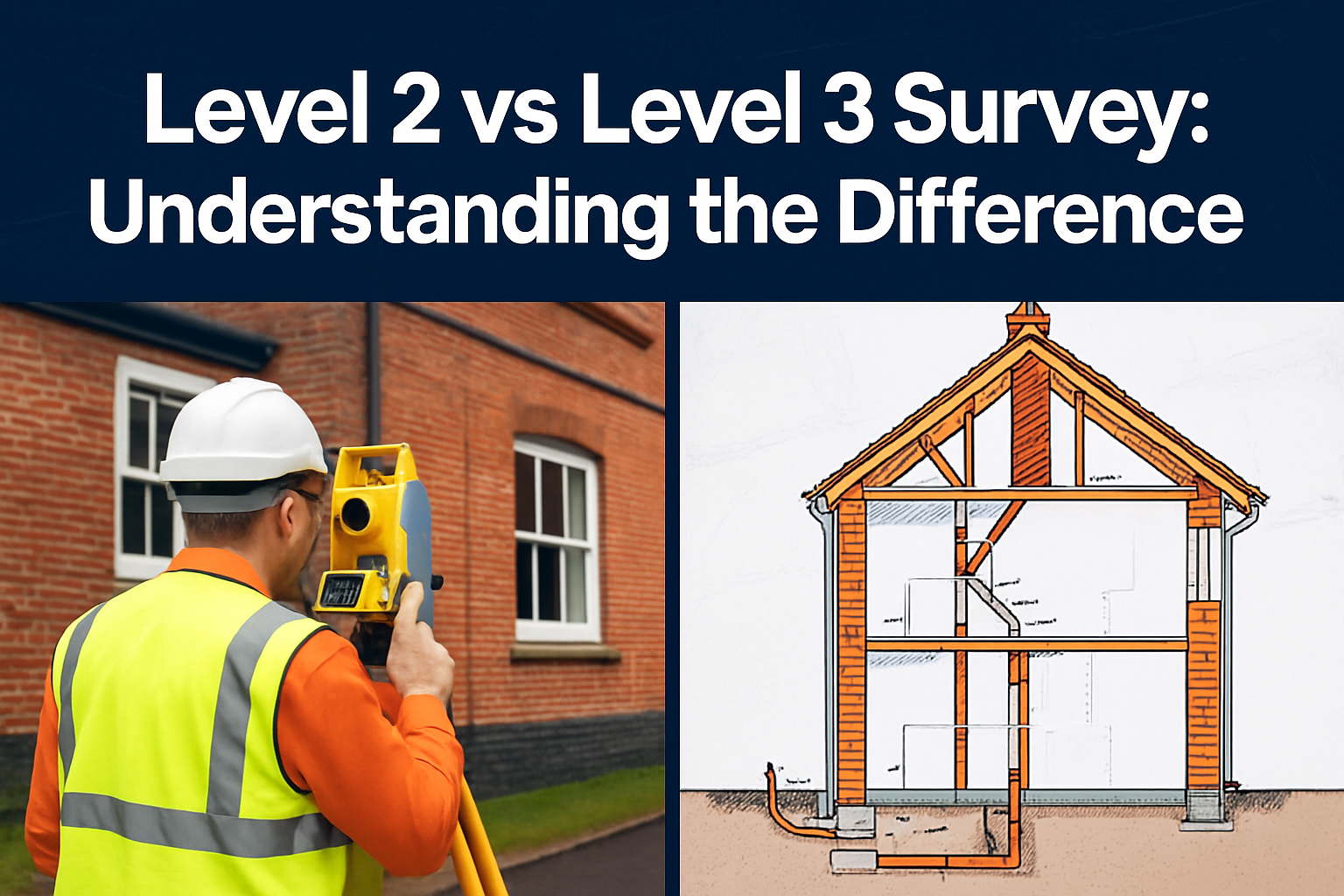
When purchasing a property, one of the most critical decisions homebuyers face is choosing the right type of building survey. The Difference Between Level 2 and Level 3 Survey can mean thousands of pounds in unexpected repairs—or the peace of mind that comes from truly understanding what lies beneath the surface of your potential new home. In 2025, with property prices remaining high and building defects becoming increasingly sophisticated to detect, selecting the appropriate survey level has never been more important for protecting your investment.
Key Takeaways
- Level 2 surveys (RICS Home Survey Level 2) provide a visual inspection of accessible areas without invasive investigation, suitable for conventional properties in reasonable condition
- Level 3 surveys (RICS Building Survey Level 3) offer comprehensive, detailed analysis including investigation of hidden areas, ideal for older, altered, or unusual properties
- Cost differences typically range from £400-£800 for Level 2 surveys versus £600-£1,500+ for Level 3 surveys, depending on property size and location
- The right choice depends on property age, condition, construction type, and your risk tolerance as a buyer
- Both surveys follow RICS (Royal Institution of Chartered Surveyors) standards but differ significantly in scope, depth, and reporting detail
Understanding RICS Survey Levels in 2025
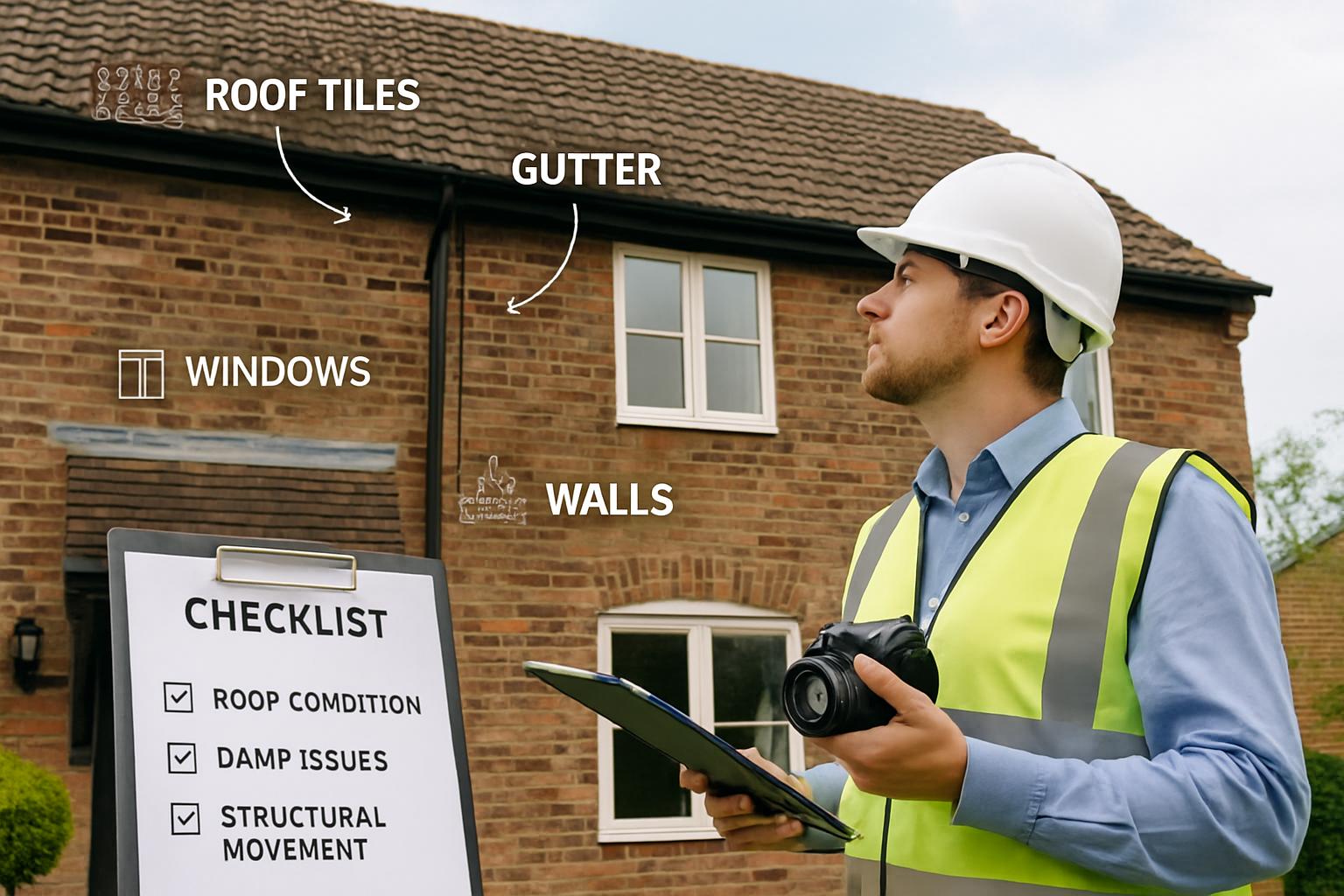
The Royal Institution of Chartered Surveyors (RICS) established standardized survey levels to help property buyers make informed decisions. These professional standards ensure consistency across the industry and provide clear expectations for what each survey type delivers [1].
What Are RICS Survey Standards?
RICS surveys follow a three-tier system designed to match different property types and buyer needs:
- Level 1 (RICS Home Survey Level 1/Condition Report): Basic assessment for newer properties
- Level 2 (RICS Home Survey Level 2): Mid-range survey for conventional properties
- Level 3 (RICS Building Survey): Comprehensive investigation for complex properties
The Difference Between Level 2 and Level 3 Survey represents a significant jump in thoroughness, time investment, and ultimately, the depth of information provided to prospective buyers.
What Is a Level 2 Survey? 📋
A Level 2 survey, formally known as the RICS Home Survey Level 2, represents the most popular choice among UK homebuyers. This intermediate survey option balances cost-effectiveness with meaningful property assessment.
Scope of Level 2 Survey Coverage
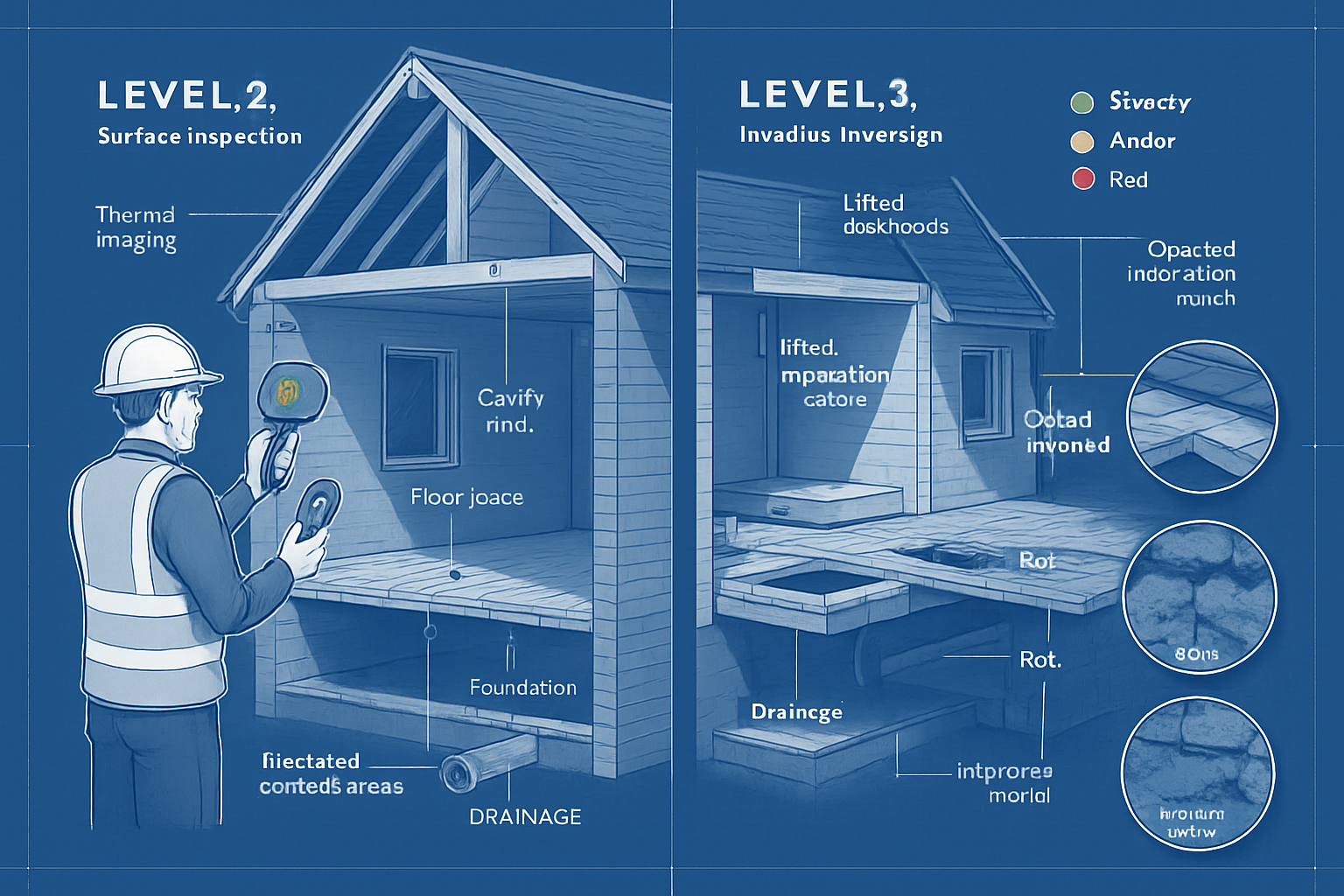
Level 2 surveys include:
- Visual inspection of accessible areas without moving furniture or lifting carpets
- Assessment of major elements: roof, walls, floors, windows, doors
- Identification of urgent defects requiring immediate attention
- Evaluation of damp and condensation issues
- Review of services (heating, plumbing, electrics) from a general perspective
- Traffic light rating system: color-coded conditions (green, amber, red)
What Level 2 Surveys Don’t Include
Understanding the limitations is crucial:
❌ No invasive investigation (no lifting floorboards or drilling)
❌ No detailed examination of concealed areas
❌ No testing of services or drainage systems
❌ No assessment of areas not readily accessible
❌ Limited structural analysis compared to Level 3
Ideal Candidates for Level 2 Surveys
A Level 2 survey works best for:
- Conventional properties built after 1900 using standard construction methods
- Properties in reasonable condition without obvious major defects
- Standard construction types (brick, block, timber frame)
- Properties that haven’t undergone significant alterations
- Buyers seeking value while still getting professional assessment
“A Level 2 survey provides sufficient detail for most modern properties in good condition, offering peace of mind without the expense of comprehensive investigation.” — RICS Guidance Note, 2025
What Is a Level 3 Survey? 🔍
The Level 3 survey, officially termed the RICS Building Survey (formerly called a Full Structural Survey), represents the most thorough and comprehensive property assessment available to buyers.
Comprehensive Scope of Level 3 Surveys
Level 3 surveys deliver:
- Detailed investigation of all accessible areas of the property
- Invasive inspection where necessary and agreed (lifting floorboards, accessing roof spaces)
- Structural analysis including foundations, load-bearing walls, and structural integrity
- Comprehensive defect identification with detailed explanations of causes and implications
- Extensive reporting often exceeding 50 pages with photographs and technical details
- Maintenance advice and repair cost guidance
- Future planning recommendations for property improvements
Advanced Investigation Techniques
Level 3 surveyors employ:
| Investigation Method | Purpose | Typical Use |
|---|---|---|
| Moisture meters | Detect hidden damp | Wall cavities, timber |
| Thermal imaging | Identify heat loss and moisture | Insulation assessment |
| Borescopes | Inspect concealed cavities | Wall voids, under floors |
| Structural calculations | Assess load-bearing capacity | Altered structures |
| Drainage inspection | Evaluate drainage systems | Older properties |
When Level 3 Surveys Are Essential
Consider a Level 3 survey for:
- Period properties built before 1900 or listed buildings
- Properties with visible defects or structural concerns
- Extensively altered buildings with additions or conversions
- Unusual construction types (timber frame, thatched, non-standard materials)
- Properties requiring renovation or significant work
- High-value investments where comprehensive knowledge is crucial
- Commercial properties or mixed-use buildings
Key Differences Between Level 2 and Level 3 Survey 🔑
Understanding the Difference Between Level 2 and Level 3 Survey requires examining multiple dimensions of comparison.
Depth of Inspection
Level 2:
- Surface-level visual examination
- Accessible areas only
- Non-invasive approach
- General assessment of condition
Level 3:
- In-depth investigation
- Includes concealed and hard-to-reach areas
- Invasive techniques where appropriate
- Detailed structural analysis
Report Detail and Length
| Aspect | Level 2 | Level 3 |
|---|---|---|
| Typical length | 15-30 pages | 50-100+ pages |
| Format | Standardized template | Bespoke detailed report |
| Photographs | Limited, key areas | Extensive documentation |
| Technical detail | Moderate | Comprehensive |
| Repair guidance | General recommendations | Detailed specifications |
| Cost estimates | Rarely included | Often provided |
Time Investment
⏱️ Level 2 Survey: Typically 2-4 hours on-site
⏱️ Level 3 Survey: Usually 4-8 hours or more, depending on property size
Professional Expertise Required
Both surveys must be conducted by qualified RICS surveyors, but Level 3 surveys often require:
- Greater experience with complex building pathology
- Specialized knowledge of period construction techniques
- Advanced diagnostic skills for structural assessment
- Broader technical expertise across multiple building disciplines
Cost Comparison
Level 2 Survey Costs (2025):
- Small property (1-2 bed): £400-£600
- Medium property (3-4 bed): £500-£700
- Large property (5+ bed): £600-£800
Level 3 Survey Costs (2025):
- Small property (1-2 bed): £600-£900
- Medium property (3-4 bed): £800-£1,200
- Large property (5+ bed): £1,000-£1,500+
- Period/complex properties: £1,500-£3,000+
The price difference reflects the additional time, expertise, and liability undertaken by the surveyor [2].
Understanding the Difference Between Level 2 and Level 3 Survey Reports
The reporting format represents one of the most tangible differences between these survey levels.
Level 2 Report Structure
A typical Level 2 report includes:
- Executive summary with traffic light ratings
- Section-by-section assessment (roof, walls, floors, etc.)
- Condition ratings:
- 🟢 Condition 1: No repair currently needed
- 🟡 Condition 2: Repairs or replacement requiring future attention
- 🔴 Condition 3: Urgent defects requiring immediate action
- Summary of risks and issues for legal advisors
- Valuation (if requested as additional service)
- General advice on maintenance and insurance
Level 3 Report Structure
Level 3 reports provide:
- Detailed executive summary with prioritized recommendations
- Comprehensive element-by-element analysis with technical explanations
- Photographic evidence extensively documenting conditions
- Structural assessment with engineering considerations
- Defect analysis including causes, implications, and remediation strategies
- Maintenance schedules for ongoing property care
- Repair cost guidance (approximate ranges)
- Technical appendices with specifications and references
- Future planning advice for improvements and alterations
“The Level 3 report doesn’t just identify problems—it explains why they exist, what they mean for the building’s long-term integrity, and how to address them properly.” — Chartered Building Surveyor, 2025
Making the Right Choice: Level 2 vs Level 3 Survey
Choosing between these survey levels requires careful consideration of multiple factors specific to your situation.
Property Age Considerations
Properties built after 1980:
- Generally suitable for Level 2
- Standard construction methods well-understood
- Fewer hidden defects typical
Properties built 1900-1980:
- Level 2 usually sufficient if unaltered
- Consider Level 3 if extensions or conversions present
- Evaluate visible condition carefully
Properties built before 1900:
- Level 3 strongly recommended
- Complex construction techniques require expertise
- Higher likelihood of hidden defects
Property Condition Assessment
Ask yourself:
- Are there visible cracks or structural movement?
- Has the property been significantly altered or extended?
- Are there signs of damp, subsidence, or settlement?
- Is the property well-maintained or showing neglect?
- Are there unusual features or construction methods?
Three or more “yes” answers strongly suggest a Level 3 survey is appropriate.
Your Risk Tolerance and Budget
Consider your personal situation:
Choose Level 2 if:
- Budget is constrained but professional advice still needed
- Property appears conventional and well-maintained
- You’re comfortable accepting some uncertainty
- Quick turnaround is important
Choose Level 3 if:
- You want maximum information before committing
- Property represents significant financial investment
- You plan extensive renovations or alterations
- Peace of mind is worth the additional cost
- You’re purchasing a unique or period property
Decision-Making Framework
| Factor | Level 2 | Level 3 |
|---|---|---|
| Property age | Post-1900 | Pre-1900 or any age with concerns |
| Construction | Standard | Non-standard or altered |
| Condition | Good-reasonable | Poor or uncertain |
| Your experience | Some property knowledge | First-time buyer or unfamiliar |
| Budget | Limited | Flexible |
| Risk appetite | Moderate | Low (want certainty) |
The Difference Between Level 2 and Level 3 Survey: Real-World Scenarios
Understanding how these surveys perform in actual situations helps clarify their practical differences.
Case Study 1: Victorian Terrace House
Property: 1880s three-bedroom terrace, visibly well-maintained
Level 2 Survey Findings:
- Identified minor roof tile slippage
- Noted some internal cracking (rated amber)
- Recommended monitoring and routine maintenance
- Outcome: Buyer proceeded with minor price negotiation
What Level 3 Would Have Revealed:
- Invasive investigation discovered concealed structural movement in rear extension
- Identified inadequate foundations under later addition
- Found extensive timber decay in hidden floor joists
- Estimated additional repairs: £25,000-£35,000
Lesson: Period properties benefit significantly from Level 3 scrutiny, even when appearing well-maintained externally.
Case Study 2: 1990s Detached House
Property: Modern four-bedroom detached, standard construction
Level 2 Survey Findings:
- Confirmed good overall condition
- Identified minor maintenance items
- Highlighted need for boiler service
- Outcome: Buyer proceeded confidently
Would Level 3 Have Added Value?
- Minimal additional findings expected
- Standard construction well-suited to Level 2 assessment
- Additional cost unlikely justified
- Conclusion: Level 2 appropriate and cost-effective
Lesson: Modern, conventional properties in good condition rarely require Level 3 investigation.
Additional Considerations Beyond the Survey Level
Several factors complement your survey choice in protecting your property investment.
Specialist Surveys and Add-Ons
Both Level 2 and Level 3 surveys can be supplemented with:
- Electrical inspection (EICR – Electrical Installation Condition Report)
- Drainage survey (CCTV drain inspection)
- Timber and damp survey (specialist invasive investigation)
- Asbestos survey (for pre-2000 properties)
- Environmental searches (contamination, flooding, radon)
These specialists provide deeper investigation in specific areas than general surveyors can offer [3].
The Role of Valuation
Both survey levels can include valuation services:
- Market valuation: Current market value assessment
- Reinstatement valuation: Rebuilding cost for insurance
- Investment valuation: Rental yield and ROI analysis
Understanding property value helps contextualize repair costs and negotiation strategies.
Survey Limitations and Exclusions
Even Level 3 surveys have boundaries:
- Cannot access genuinely inaccessible areas (sealed cavities, underground services)
- Do not include specialist testing beyond visual and basic diagnostic tools
- Cannot predict future defects that aren’t currently evident
- May be limited by weather conditions or occupied property constraints
Understanding these limitations prevents unrealistic expectations.
Maximizing Value from Your Survey Choice
Regardless of which level you choose, certain strategies maximize the return on your survey investment.
Preparing for the Survey
Before the surveyor visits:
✅ Ensure all areas are accessible (clear loft hatches, move furniture if possible)
✅ Provide property history and any known issues
✅ Share previous surveys or building work documentation
✅ Inform current owners to expect thorough inspection
✅ Request utilities are accessible (boiler, consumer unit, etc.)
Understanding Your Survey Report
When reviewing findings:
- Read the executive summary first for key issues
- Understand the rating system and what each level means
- Prioritize urgent items requiring immediate attention
- Distinguish between defects and maintenance items
- Note areas requiring specialist investigation
- Consider long-term implications, not just immediate costs
Acting on Survey Findings
Strategic responses include:
- Renegotiate purchase price based on identified defects
- Request seller remediation of urgent issues before completion
- Obtain specialist quotes for major repair work
- Adjust your renovation budget accordingly
- Reconsider the purchase if defects are too extensive
- Plan maintenance schedules for future property care
Questions to Ask Your Surveyor
Don’t hesitate to contact your surveyor for clarification:
- “Can you explain this defect in simpler terms?”
- “What’s the likely cost range for this repair?”
- “How urgent is this issue really?”
- “Should I commission specialist investigation?”
- “What happens if I don’t address this now?”
Professional surveyors expect and welcome these questions—their expertise extends beyond the written report.
Common Misconceptions About Survey Levels
Clearing up confusion helps buyers make better-informed decisions.
Myth 1: “Level 3 Surveys Are Only for Old Buildings”
Reality: While particularly valuable for period properties, Level 3 surveys benefit any complex, altered, or high-value property regardless of age.
Myth 2: “Level 2 Surveys Miss Everything Important”
Reality: Level 2 surveys identify significant defects effectively for appropriate properties. They’re not inferior—they’re fit for different purposes.
Myth 3: “The More Expensive Survey Is Always Better”
Reality: The “best” survey matches your property and circumstances. Overspending on unnecessary investigation provides no additional value.
Myth 4: “Surveys Guarantee the Property Is Fault-Free”
Reality: No survey can guarantee absence of defects. They provide professional assessment based on visible evidence at the time of inspection.
Myth 5: “I Can Skip the Survey If the Property Looks Good”
Reality: Many serious defects aren’t visible to untrained eyes. Professional assessment protects against expensive surprises [4].
The Future of Property Surveys in 2025 and Beyond
The surveying profession continues evolving with technological advancement and changing property markets.
Emerging Technologies
Current innovations include:
- Drone surveys for roof and chimney inspection without scaffolding
- Advanced thermal imaging detecting hidden moisture and insulation defects
- 3D scanning and modeling creating comprehensive property records
- AI-assisted defect recognition supporting surveyor analysis
- Digital reporting platforms with interactive elements and video
These technologies enhance both Level 2 and Level 3 surveys, though Level 3 investigations typically adopt advanced tools more extensively.
Regulatory Changes
The RICS continuously updates guidance to reflect:
- Building safety concerns following recent regulatory changes
- Energy efficiency requirements and EPC considerations
- Climate resilience assessment (flooding, overheating risks)
- Sustainability factors in property condition evaluation
Staying current with these developments ensures surveys remain relevant and valuable.
Conclusion: Making an Informed Decision
The Difference Between Level 2 and Level 3 Survey ultimately centers on depth, detail, and appropriateness to your specific property and circumstances. Neither option is universally “better”—each serves distinct purposes within the property purchasing process.
Level 2 surveys provide cost-effective, professional assessment perfectly suited to conventional properties in reasonable condition. They identify significant defects, offer maintenance guidance, and deliver peace of mind for the majority of modern homebuyers without unnecessary expense.
Level 3 surveys offer comprehensive investigation essential for complex, older, or altered properties where hidden defects could represent substantial financial risk. The detailed analysis, invasive investigation, and extensive reporting justify the additional cost when circumstances demand thorough understanding.
Your Action Plan
To make the right survey choice:
- Assess your property honestly against the criteria discussed
- Evaluate your risk tolerance and budget constraints
- Consult with your surveyor about their recommendation
- Consider specialist surveys for specific concerns
- Read your survey report thoroughly when received
- Act strategically on findings before completing purchase
- Maintain your property following survey recommendations
Final Thoughts
Property purchase represents one of life’s most significant financial commitments. Investing in appropriate professional survey—whether Level 2 or Level 3—protects that investment by ensuring you understand exactly what you’re buying. The relatively modest cost of a comprehensive survey pales compared to the potential expense of undiscovered defects.
In 2025’s competitive property market, knowledge truly is power. Understanding the Difference Between Level 2 and Level 3 Survey empowers you to make informed decisions, negotiate effectively, and proceed with confidence—or walk away when necessary. Choose wisely, act on professional advice, and your survey investment will pay dividends throughout your property ownership journey.
References
[1] Royal Institution of Chartered Surveyors (RICS). (2024). “RICS Home Survey Standard.” RICS Professional Guidance.
[2] HomeOwners Alliance. (2025). “House Survey Costs and Comparison Guide.” UK Property Research.
[3] The Property Care Association. (2024). “Specialist Property Surveys and Inspections.” Industry Standards Publication.
[4] Which? Consumer Rights. (2025). “Home Buyers Survey Guide: What You Need to Know.” Consumer Advice Publication.
SEO Meta Title and Description
Meta Title: Level 2 vs Level 3 Survey: Key Differences Explained 2025
Meta Description: Discover the difference between Level 2 and Level 3 survey options. Compare costs, coverage, and find the right property survey for your home purchase in 2025.