

{"cover":"Professional landscape format (1536×1024) hero image with bold text overlay 'Detecting Expanded Awaab's Law Hazards in Level 3 Surveys: 2026 Protocols for Fire, Electrical and Temperature Risks' in extra large 72pt white sans-serif font with dark shadow and semi-transparent navy overlay box, centered in upper third. Background shows split-screen composition: left side displays surveyor with thermal imaging camera inspecting electrical panel with visible heat signatures in orange and red, right side shows fire door with compliance certification label and smoke detector. Modern professional aesthetic with high contrast, deep blue and orange accent colors, editorial magazine quality, sharp focus on safety equipment and hazard detection tools, realistic lighting, architectural survey context","content":["Detailed landscape format (1536×1024) image showing comprehensive surveyor checklist being completed on digital tablet in foreground with split background: left third displays electrical hazards including exposed wiring with red warning indicators, faulty circuit breaker panel with voltage tester, non-compliant installations marked with yellow caution tape; right two-thirds shows fire safety elements including fire-rated door with EN standard certification label, smoke detection system with green operational lights, fire extinguisher mounted on wall. Professional surveyor in high-visibility vest pointing at hazards. Clean infographic-style overlays with icons for electrical risks, fire compliance, and detection protocols. Bright professional lighting, architectural survey aesthetic, sharp detail on compliance documentation","Detailed landscape format (1536×1024) thermal imaging visualization showing temperature risk assessment in residential property: central focus on thermal camera display screen showing heat map with color gradient from blue (cold zones) to red (hot zones), revealing inadequate insulation, overheating electrical components, and ventilation deficiencies. Background shows cross-section view of property wall with visible temperature variations, condensation patterns, and thermal bridging. Surveyor's gloved hand holding professional thermal imaging device in lower right. Technical overlay graphics displaying temperature readings in Celsius, compliance thresholds, and HHSRS hazard ratings. Modern technical aesthetic with purple, orange, and blue color scheme, professional documentation style, high-tech survey equipment focus","Detailed landscape format (1536×1024) professional liability and valuation documentation scene: foreground shows detailed property valuation report spread across modern desk with highlighted sections on hazard disclosure, risk assessment findings, and compliance status. Center displays laptop screen showing digital survey report with red flags for electrical hazards, fire safety deficiencies, and temperature control issues under Awaab's Law 2026 framework. Background features professional surveyor office setting with framed RICS certifications, building regulation reference books, and dual monitors displaying property floor plans with hazard location markers. Clean business aesthetic with navy blue, white, and gold accents, professional documentation photography style, sharp focus on legal compliance paperwork and digital reporting tools"]"}
Social landlords now face a 15-day deadline to fix fire doors, electrical hazards, and temperature control issues following the 2026 expansion of Awaab's Law into Phase 2. This regulatory shift transforms how chartered surveyors conduct property inspections, introducing stringent protocols for detecting and documenting hazards that previously fell outside emergency response requirements.
The expansion of Awaab's Law in 2026 marks a watershed moment for property professionals conducting Level 3 building surveys. Phase 2 requirements now mandate that social landlords address fire, electrical, excess cold, excess heat, and hygiene hazards within 15 days of reporting.[2] This article examines the specific protocols surveyors must implement when detecting expanded Awaab's Law hazards in Level 3 surveys: 2026 protocols for fire, electrical and temperature risks, with particular focus on liability mitigation in property valuations.
Key Takeaways
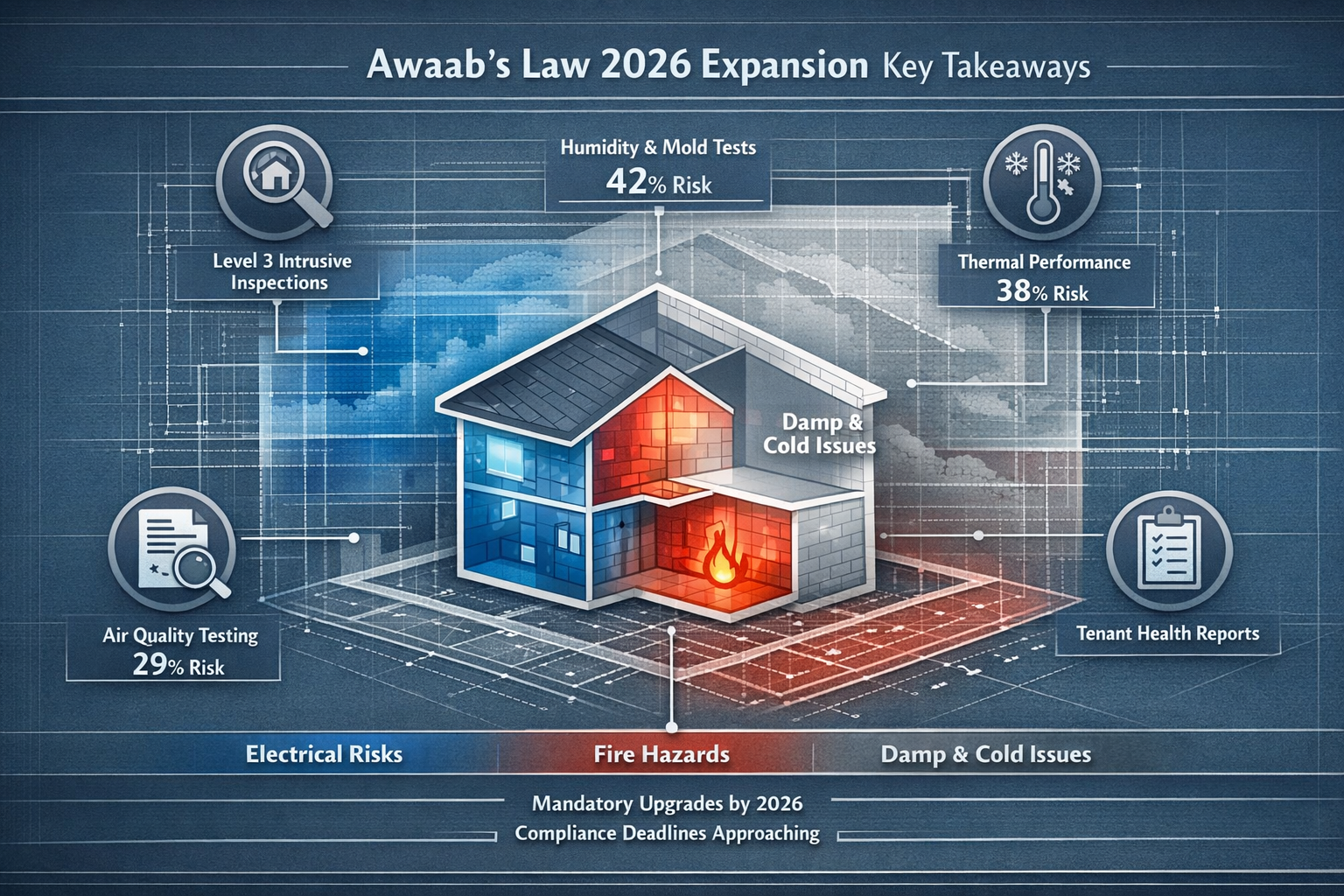
- Phase 2 Timeline: Awaab's Law Phase 2 came into force in 2026, requiring social landlords to fix fire, electrical, and temperature hazards within 15 days of reporting[2]
- Expanded Hazard Scope: Coverage now includes dangerous wiring, faulty circuits, non-compliant installations, fire door deficiencies, and inadequate ventilation systems[4][5]
- Standards Transition: All fire protection performance must comply with EN standards exclusively after September 2, 2029, with BS 476 standards no longer acceptable[2]
- Surveyor Liability: Level 3 surveys must document all Phase 2 hazards comprehensively to protect against professional negligence claims
- Phase 3 Preparation: By 2027, coverage extends to all 29 Housing Health and Safety Rating System (HHSRS) hazards[3]
Understanding Awaab's Law Phase 2: The 2026 Expansion
What Changed in Phase 2
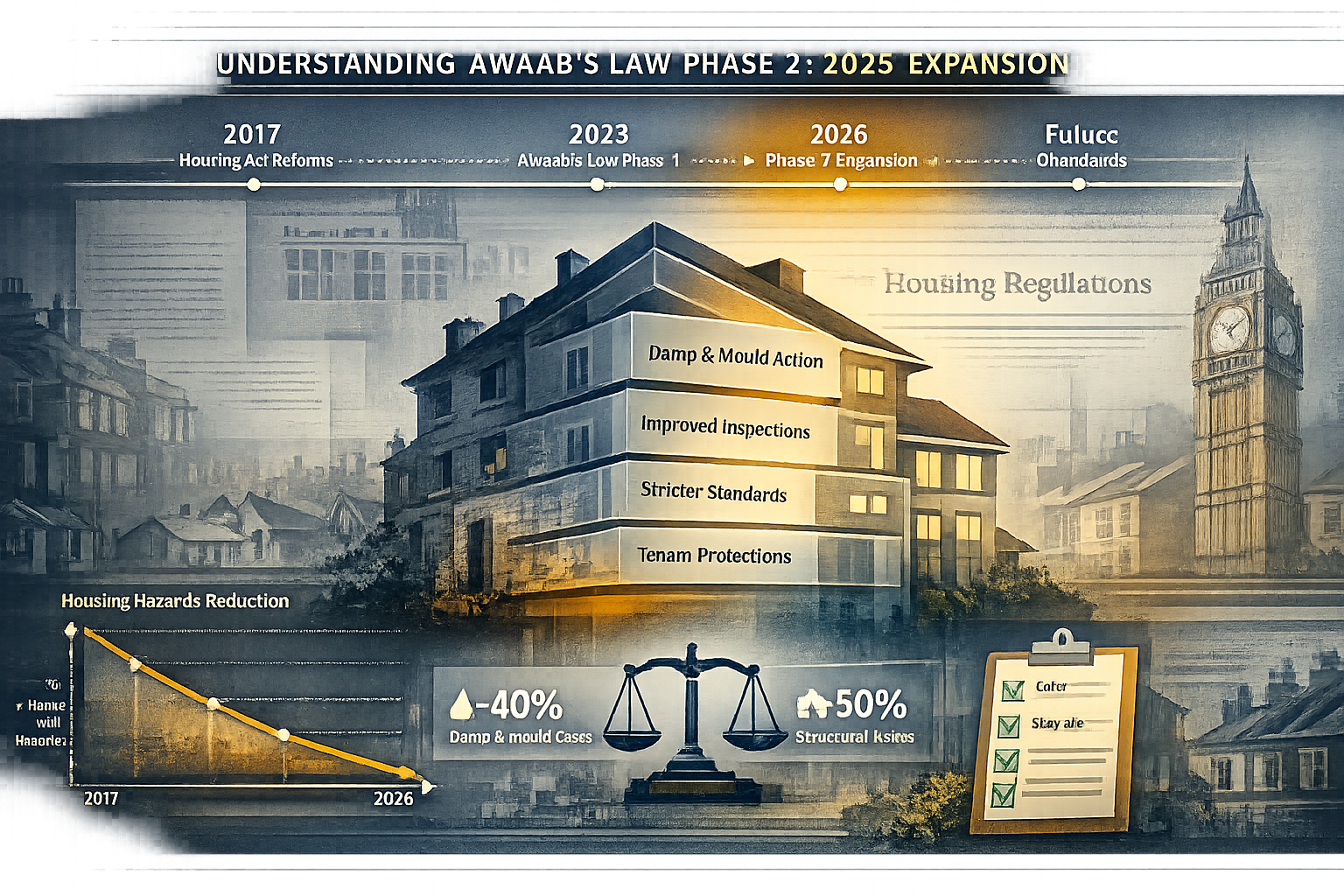
Phase 2 of Awaab's Law represents a significant expansion beyond the initial Phase 1 requirements that took effect on October 27, 2025. While Phase 1 focused on emergency health and safety hazards (requiring 24-hour response) and significant damp and mould issues (requiring 10-day investigation), Phase 2 broadens the scope considerably.[2][3]
The 2026 expansion specifically targets five critical hazard categories:
🔥 Fire hazards – Including fire door compliance and detection systems
⚡ Electrical risks – Covering dangerous wiring and faulty circuits
🥶 Excess cold – Addressing inadequate heating and insulation
🌡️ Excess heat – Tackling overheating and ventilation deficiencies
🧼 Hygiene issues – Encompassing domestic hygiene, food safety, and pest control[4][5]
The 15-Day Compliance Window
Social landlords must now fix all reported hazards within these categories within 15 working days of notification.[2] This compressed timeline creates significant pressure on property owners and management companies to maintain comprehensive hazard documentation and rapid response capabilities.
For surveyors conducting environmental assessments, this means inspection protocols must identify potential Phase 2 hazards with precision and clarity. Any ambiguity in survey reports could delay remediation and expose landlords to regulatory penalties.
Looking Ahead to Phase 3
The regulatory landscape continues to evolve. By 2027, Phase 3 will extend coverage to all 29 HHSRS hazards, creating a comprehensive health and safety framework that encompasses virtually every aspect of residential property condition.[3] Surveyors must prepare for this expansion by developing systematic approaches to hazard detection that can scale across the entire HHSRS spectrum.
Detecting Expanded Awaab's Law Hazards: Fire Safety Protocols in Level 3 Surveys
Fire Door Compliance Requirements
One of the most specific requirements under Phase 2 concerns fire doors. All fire doors reported as hazards must be replaced within 15 days to ensure fire compliance.[2] This creates a critical inspection checkpoint for surveyors conducting comprehensive property assessments.
When evaluating fire doors during a Level 3 survey, professionals must verify:
- Certification status – Confirm EN standard compliance (not BS 476)
- Intumescent strip condition – Check for damage or deterioration
- Self-closing mechanism functionality – Test operation under load
- Gap measurements – Verify smoke seal integrity around door perimeter
- Glazing specifications – Confirm fire-rated glass where applicable
- Signage presence – Ensure proper fire door identification labels
The BS 476 to EN Standards Transition
A critical regulatory change affects fire protection performance standards. All national standards (BS 476) for fire protection have been removed from building regulations. Only EN standards can be used to define fire protection performance after the 5-year coexistence period ending September 2, 2029.[2]
This creates a compliance cliff: After September 2, 2029, all doors must be tested to EN standards exclusively. BS 476 standards will no longer be acceptable for fire-rated doors.[2]
For surveyors, this means:
| Assessment Period | Standard Requirement | Survey Documentation |
|---|---|---|
| Before Sept 2, 2029 | BS 476 or EN standards acceptable | Note which standard applies |
| After Sept 2, 2029 | EN standards only | Flag BS 476 doors as non-compliant |
| Transition period | Recommend EN upgrades | Advise on replacement timeline |
Fire Detection and Alarm Systems
Beyond doors, surveyors must evaluate the adequacy of fire detection systems. Phase 2 specifically includes "inadequate detection systems" within its electrical hazards coverage.[4] This requires assessment of:
- Smoke detector placement and coverage
- Heat detector specifications in appropriate locations
- Carbon monoxide detector presence where required
- Alarm system functionality and battery backup
- Interconnection between detection devices
- Compliance with current building regulations
Fire risk assessments should be conducted alongside Level 3 surveys to provide comprehensive fire safety documentation that satisfies Awaab's Law requirements.
Electrical Hazard Detection Protocols Under 2026 Requirements
Defining Electrical Hazards in Phase 2
Phase 2 coverage includes a comprehensive range of electrical risks that surveyors must identify and document. The regulatory framework specifically addresses:[4][5]
- Dangerous wiring – Exposed conductors, damaged cables, or inappropriate installations
- Faulty circuits – Malfunctioning breakers, overloaded circuits, or improper earthing
- Non-compliant installations – Work not meeting current wiring regulations
- Electrical faults – Intermittent problems or recurring issues
- Fire spread risks – Electrical sources that could ignite combustible materials
- Inadequate detection systems – Missing or non-functional electrical safety devices
Level 3 Survey Electrical Inspection Checklist
When conducting detecting expanded Awaab's Law hazards in Level 3 surveys: 2026 protocols for fire, electrical and temperature risks, chartered surveyors should implement a systematic electrical assessment:
✅ Consumer Unit Inspection
- Check for modern RCD protection on all circuits
- Verify circuit labeling accuracy
- Assess for signs of overheating or damage
- Confirm adequate capacity for property load
✅ Visible Wiring Assessment
- Document exposed wiring or damaged cable sheathing
- Identify non-compliant surface-mounted installations
- Note junction boxes without proper enclosures
- Flag inappropriate cable routing near water sources
✅ Socket and Switch Evaluation
- Test socket polarity and earth continuity where possible
- Check for loose fittings or burn marks
- Verify bathroom zone compliance for electrical fittings
- Assess socket quantity adequacy for modern use
✅ Fixed Appliance Connections
- Review cooker, shower, and immersion heater installations
- Confirm appropriate cable sizing and protection
- Check isolation switch accessibility
- Verify earthing and bonding arrangements
Professional Electrical Testing Recommendations
While Level 3 surveys include visual inspection of electrical installations, surveyors should recommend comprehensive Electrical Installation Condition Reports (EICR) when concerns arise. The survey report should clearly state:
"This survey identifies potential electrical hazards through visual inspection only. A qualified electrician should conduct a full EICR to verify compliance with BS 7671 wiring regulations and Awaab's Law Phase 2 requirements."
This recommendation protects both the surveyor from liability and ensures landlords obtain the detailed electrical assessment necessary for Phase 2 compliance. Understanding building problems and solutions helps contextualize electrical hazards within broader property condition issues.
Temperature Risk Assessment: Excess Cold and Excess Heat Protocols
Excess Cold Standards and Detection
Excess cold hazards represent a significant health risk, particularly for vulnerable occupants. Phase 2 specifically addresses properties with inadequate heating or insulation systems.[4] Surveyors must evaluate multiple factors when assessing cold-related hazards:
Heating System Assessment:
- Primary heating source adequacy for property size
- Heating control functionality (thermostats, programmers, TRVs)
- System age and expected remaining service life
- Evidence of heating system failures or inadequacy
- Fuel type and accessibility considerations
Thermal Performance Indicators:
- Visible condensation patterns indicating cold surfaces
- Mould growth suggesting persistent cold and dampness
- Single-glazed windows in habitable rooms
- Uninsulated solid walls or inadequate cavity insulation
- Missing or inadequate loft insulation
- Draughts from doors, windows, or structural gaps
Surveyors should note that excess cold often correlates with damp and mould issues, creating compound hazards that require comprehensive remediation strategies.
Excess Heat Standards: A Growing Concern
Phase 2 specifically addresses overheating in properties without adequate ventilation or cooling systems.[4] This represents a relatively new regulatory focus, reflecting growing awareness of heat-related health risks in UK housing stock.
Overheating Risk Factors:
- South or west-facing glazing without shading or ventilation
- Inadequate ventilation in habitable rooms
- Roof spaces without insulation causing heat transfer
- Properties with poor cross-ventilation design
- Absence of openable windows in bedrooms
- Mechanical ventilation system failures
Survey Documentation Requirements:
- Room-by-room ventilation assessment
- Window opening functionality and safety
- Presence of mechanical ventilation systems
- Evidence of overheating (faded furnishings, occupant complaints)
- Thermal comfort considerations for vulnerable occupants
Thermal Imaging Technology in Level 3 Surveys
Advanced surveyors increasingly employ thermal imaging cameras to detect temperature-related hazards objectively. This technology reveals:
- Cold bridging through structural elements
- Insulation gaps or deficiencies
- Air leakage pathways
- Heating system distribution problems
- Overheating risk zones
Thermal imaging provides compelling visual evidence for survey reports, helping landlords understand the urgency of temperature-related hazards under Phase 2 requirements.
Liability Mitigation in Property Valuations Under Awaab's Law
The Valuation Impact of Phase 2 Hazards
The presence of Awaab's Law Phase 2 hazards significantly affects property valuations, particularly for social housing and private rental sector properties. Surveyors conducting valuations must consider:
Direct Cost Implications:
- Immediate remediation costs for identified hazards
- Compliance upgrade expenses (fire doors, electrical work, heating systems)
- Potential regulatory penalties for non-compliance
- Increased insurance premiums for non-compliant properties
Market Value Considerations:
- Reduced marketability of properties with outstanding hazards
- Buyer reluctance regarding properties with compliance issues
- Potential for retrospective claims from previous tenants
- Reputational risks for landlords with poor compliance records
Survey Report Disclosure Requirements
When conducting detecting expanded Awaab's Law hazards in Level 3 surveys: 2026 protocols for fire, electrical and temperature risks, comprehensive disclosure protects surveyors from professional negligence claims. Reports should include:
📋 Hazard Identification Section:
- Clear categorization of Phase 2 hazards
- Severity ratings aligned with HHSRS methodology
- Photographic evidence of identified issues
- Cross-references to relevant regulations
📋 Compliance Status Statement:
- Explicit statement on Awaab's Law applicability
- Timeline for required remediation (15-day requirement)
- Recommendations for specialist assessments
- Estimated costs for compliance works
📋 Liability Disclaimer:
- Scope limitations of visual inspection
- Recommendation for specialist testing (EICR, thermal surveys)
- Statement on concealed defects beyond survey scope
- Advice on statutory considerations
Professional Indemnity Considerations
Surveyors must ensure their professional indemnity insurance adequately covers Awaab's Law-related claims. The expanded hazard scope increases potential liability exposure, particularly for:
- Missed electrical hazards that subsequently cause fires
- Inadequate assessment of fire door compliance
- Failure to identify temperature-related health risks
- Insufficient recommendations for specialist assessments
Regular professional development on Awaab's Law requirements and updated survey protocols helps mitigate these risks. Understanding consequences of failing to act on identified hazards reinforces the importance of thorough documentation.
PAS 2000 and the Construction Products Code of Practice
Understanding PAS 2000 Requirements
PAS 2000, a construction products code of practice scheduled for publication in Q1 2026, introduces additional compliance layers for building materials and installations. The code covers:[2]
- Pre-market risk assessment procedures
- Factory production control standards
- Product information collection requirements
- Installation training and competency verification
- Testing protocols and documentation
- Product recall processes
For surveyors, PAS 2000 creates new verification requirements when assessing building components related to Phase 2 hazards. Fire doors, electrical installations, and heating systems must demonstrate compliance with PAS 2000 standards where applicable.
Integration with Level 3 Survey Protocols
When evaluating products and installations during detecting expanded Awaab's Law hazards in Level 3 surveys: 2026 protocols for fire, electrical and temperature risks, surveyors should:
- Verify product certification – Confirm PAS 2000 compliance documentation
- Check installation competency – Ensure installers meet training requirements
- Review maintenance records – Assess ongoing compliance with manufacturer specifications
- Flag non-compliant products – Identify items requiring replacement or upgrade
This additional layer of scrutiny helps protect landlords from using substandard products that could fail to meet Awaab's Law requirements, while also protecting surveyors from liability for recommending inadequate remediation solutions.
Practical Implementation: Survey Checklists for 2026 Compliance
Comprehensive Phase 2 Hazard Assessment Template
Surveyors should develop standardized checklists that ensure consistent evaluation of all Phase 2 hazards. A comprehensive template includes:
Fire Hazards Section:
- Fire door certification and condition
- Fire detection system adequacy
- Fire alarm functionality
- Emergency lighting presence
- Fire escape route clarity
- Combustible material storage risks
Electrical Hazards Section:
- Consumer unit age and RCD protection
- Visible wiring condition
- Socket and switch safety
- Fixed appliance installations
- Earthing and bonding arrangements
- EICR recommendation and age
Excess Cold Section:
- Primary heating system adequacy
- Heating controls functionality
- Insulation levels (walls, roof, floors)
- Window thermal performance
- Draught exclusion measures
- Condensation and mould evidence
Excess Heat Section:
- Ventilation adequacy in habitable rooms
- Window opening functionality
- Shading provisions for south/west glazing
- Mechanical ventilation systems
- Evidence of overheating problems
- Roof insulation and ventilation
Hygiene Section:
- Kitchen facilities adequacy
- Bathroom facilities condition
- Waste disposal arrangements
- Evidence of pest infestation
- Food storage facilities
- Personal hygiene facilities
Report Writing Best Practices
Effective communication of findings ensures landlords understand their compliance obligations. Survey reports should:
Use Clear Hazard Categorization:
- Emergency hazards (24-hour response required)
- Phase 2 hazards (15-day response required)
- Other HHSRS hazards (prepare for Phase 3)
- Maintenance issues (non-hazard recommendations)
Provide Actionable Recommendations:
- Specific remediation actions required
- Estimated costs for compliance works
- Recommended specialist consultants
- Timeline for addressing issues
- Consequences of non-compliance
Include Visual Documentation:
- Photographs of all identified hazards
- Annotated images highlighting specific concerns
- Thermal imaging where appropriate
- Comparison images showing good practice
Understanding budgeting for repairs and restoration helps surveyors provide realistic cost estimates for compliance works.
Preparing for Phase 3: All 29 HHSRS Hazards
The 2027 Expansion Timeline
Phase 3, scheduled for 2027, will extend Awaab's Law coverage to all 29 HHSRS hazards.[3] This comprehensive expansion requires surveyors to develop assessment capabilities across the full spectrum of housing health and safety concerns.
The complete HHSRS hazard list includes:
Physiological Requirements:
- Damp and mould growth
- Excess cold
- Excess heat
- Asbestos and manufactured mineral fibres
- Biocides
- Carbon monoxide and fuel combustion products
- Lead
- Radiation
- Uncombusted fuel gas
- Volatile organic compounds
Psychological Requirements:
- Crowding and space
- Entry by intruders
- Lighting
- Noise
Protection Against Infection:
- Domestic hygiene, pests and refuse
- Food safety
- Personal hygiene, sanitation and drainage
- Water supply
Protection Against Accidents:
- Falls associated with baths
- Falling on level surfaces
- Falling on stairs
- Falling between levels
- Electrical hazards
- Fire
- Hot surfaces and materials
- Collision and entrapment
- Explosions
- Position and operability of amenities
- Structural collapse and falling elements
Building Assessment Competency
Surveyors must develop or enhance competencies across all hazard categories to remain competitive in the post-Phase 3 environment. This may require:
- Additional professional training and certification
- Investment in specialized assessment equipment
- Collaboration with specialist consultants
- Updated professional indemnity insurance coverage
- Enhanced report templates and documentation systems
Conclusion
The 2026 expansion of Awaab's Law through Phase 2 implementation fundamentally transforms how chartered surveyors conduct property inspections and valuations. Detecting expanded Awaab's Law hazards in Level 3 surveys: 2026 protocols for fire, electrical and temperature risks requires systematic assessment methodologies, comprehensive documentation practices, and clear communication of compliance obligations to property owners.
The 15-day remediation requirement for fire, electrical, and temperature hazards creates significant urgency for landlords while increasing liability exposure for surveyors who fail to identify these issues adequately. The transition from BS 476 to EN standards for fire protection, combined with the introduction of PAS 2000 construction product requirements, adds additional complexity to compliance verification.
Actionable Next Steps for Surveyors
- Update survey protocols – Incorporate Phase 2 hazard checklists into standard inspection procedures
- Invest in technology – Consider thermal imaging and other diagnostic tools for objective hazard detection
- Enhance professional development – Attend training on Awaab's Law requirements and HHSRS assessment
- Review insurance coverage – Ensure professional indemnity policies adequately cover expanded liability exposure
- Standardize reporting – Develop clear templates that communicate hazards and compliance requirements effectively
- Prepare for Phase 3 – Begin developing assessment capabilities across all 29 HHSRS hazards ahead of 2027 implementation
For property owners and landlords, engaging qualified surveyors who understand these evolving requirements is essential for maintaining compliance, protecting tenant health, and mitigating legal and financial risks. The regulatory landscape will continue to evolve, making ongoing professional development and systematic hazard assessment protocols critical for all parties involved in property management and surveying.
References
[1] Awaabs Law 2026 Hazard Expansions Surveyor Protocols For Electrical Fire And Excess Heat Risks In Rentals – nottinghillsurveyors.com
[2] The Key Changes In 2026 That You Need To Be Aware Of – selo.global
[3] Awaabs Law Guide – wordnerds.ai
[4] Awaabs Law 2026 Social Landlords Housing Associations – villageheating.co.uk
[5] Awaabs Law Phase 2 What It Covers And What Housing Providers Should Be Doing Now – madetech.com