

Complete Guide to Damp Survey Cost: What UK Property Owners Need to Know in 2025
Discovering damp in your property can feel like finding a ticking time bomb in your walls. With repair costs potentially reaching thousands of pounds and property values at stake, understanding damp survey cost becomes crucial for making informed decisions about your most valuable asset.
Key Takeaways
• Damp survey costs typically range from £200-£1,500 depending on property size, survey type, and complexity of moisture issues
• Basic moisture assessments start around £200-£400, while comprehensive thermal imaging surveys can cost £800-£1,500+
• Property size and accessibility significantly impact pricing, with larger homes requiring more time and specialized equipment
• Early detection through professional surveys can save thousands in repair costs and prevent structural damage
• Different survey types serve specific purposes – from simple moisture readings to detailed structural assessments
Understanding Damp Survey Cost Fundamentals
What Influences Damp Survey Pricing?
The damp survey cost varies significantly based on several critical factors that property owners should understand before commissioning an assessment. Professional surveyors consider multiple elements when determining their fees, making it essential to understand these variables.
Property size represents the primary cost driver, as larger buildings require more time, equipment, and detailed analysis. A typical two-bedroom flat might cost £200-£400 to survey, while a four-bedroom house could range from £500-£800, and larger properties or commercial buildings may exceed £1,000.
Survey complexity also impacts pricing substantially. Simple moisture meter readings cost less than comprehensive thermal imaging assessments that reveal hidden moisture patterns within walls and structures. Advanced surveys using infrared technology and detailed reporting naturally command higher fees.
Location accessibility affects costs too. Properties in remote areas or those requiring specialist access equipment may incur additional charges. Similarly, urgent surveys requested outside normal business hours typically carry premium pricing.
Types of Damp Surveys Available
Understanding different survey types helps property owners select appropriate assessments for their specific needs and budget constraints.
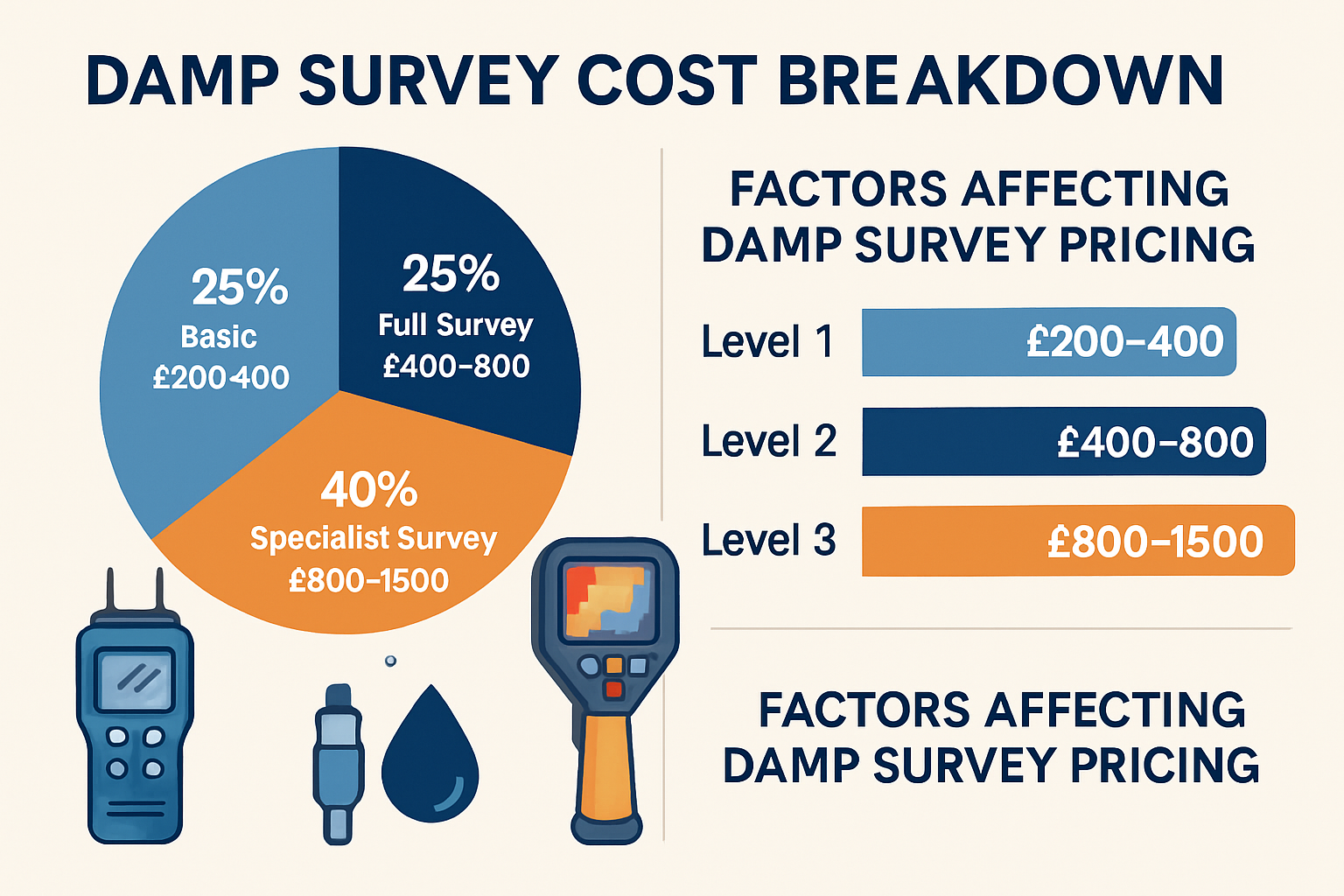
Level 1 Moisture Assessment (£200-£400) provides basic moisture readings using handheld meters. These surveys identify obvious damp areas but offer limited analysis of underlying causes or extent of moisture penetration.
Level 2 Comprehensive Survey (£400-£800) includes detailed moisture mapping, cause identification, and repair recommendations. Surveyors use multiple detection methods and provide written reports suitable for insurance claims or contractor briefings.
Level 3 Specialist Investigation (£800-£1,500+) incorporates advanced thermal imaging, salt analysis, and structural assessments. These comprehensive surveys suit complex cases, listed buildings, or situations requiring expert witness reports for legal proceedings.
Many property owners find professional building surveys essential for understanding the full scope of moisture-related issues affecting their properties.
Factors That Determine Your Damp Survey Cost
Property Characteristics and Survey Requirements
The physical characteristics of your property significantly influence the final damp survey cost. Understanding these factors helps property owners budget appropriately and select suitable survey options.
Building age and construction type affect survey complexity and pricing. Victorian terraced houses with solid walls require different assessment techniques compared to modern cavity wall constructions. Older properties often need more extensive investigation due to traditional building methods and materials that behave differently with moisture.
Number of affected areas directly impacts survey time and cost. A single damp patch in one room requires minimal investigation, while widespread moisture issues throughout multiple floors demand comprehensive assessment using various detection methods.
Access requirements can increase costs significantly. Properties with restricted access, high ceilings, or areas requiring scaffolding may incur additional charges for specialist equipment or safety measures.
Equipment and Technology Costs
Modern damp surveys rely on sophisticated equipment that influences overall pricing structures. Professional surveyors invest heavily in detection technology, and these costs factor into survey fees.
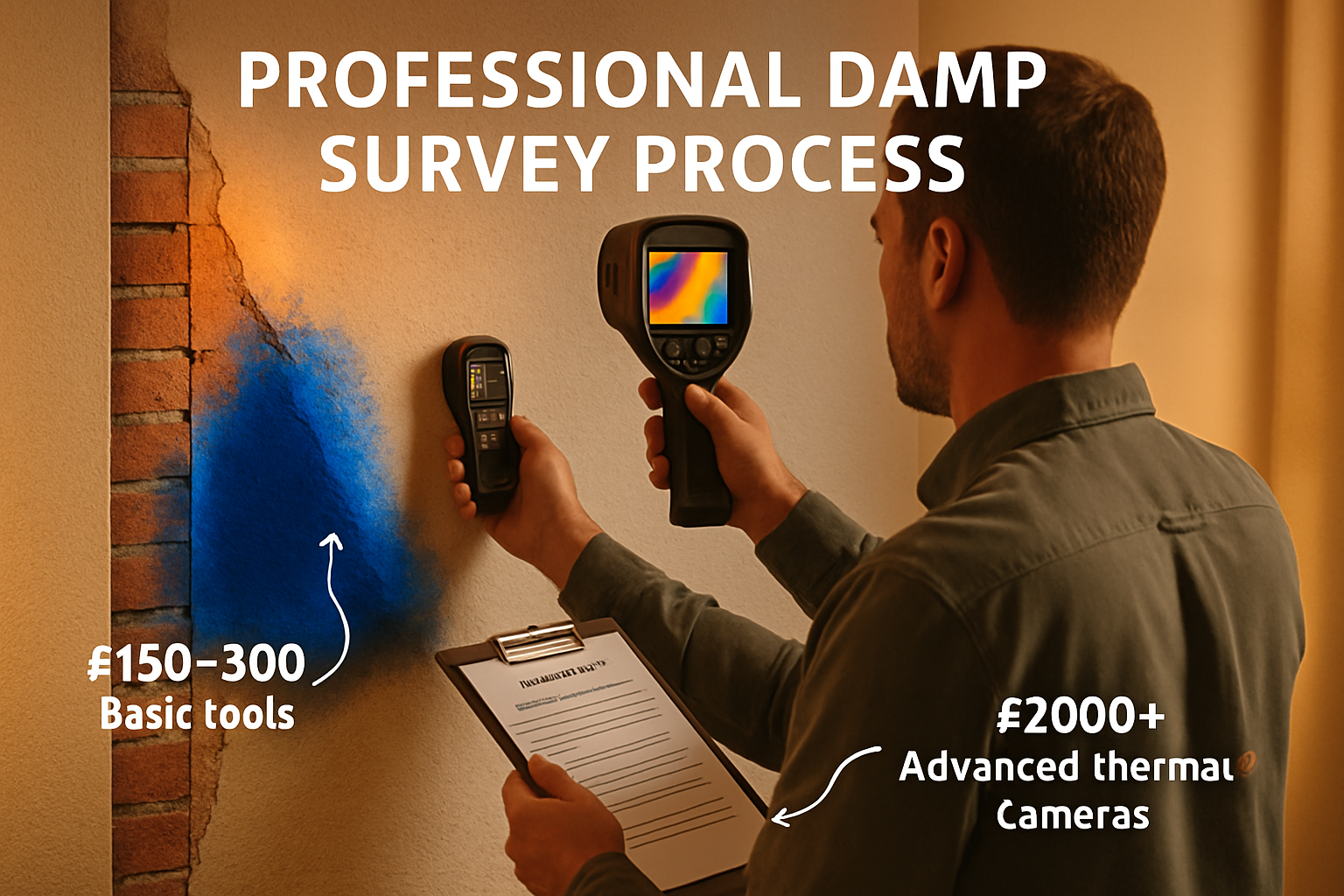
Thermal imaging cameras represent the most expensive survey equipment, costing £2,000-£15,000+ for professional-grade units. These devices reveal moisture patterns invisible to conventional methods, making them invaluable for comprehensive assessments but contributing to higher survey costs.
Moisture meters and hygrometers provide essential baseline measurements at lower equipment costs (£150-£500), making basic surveys more affordable while still delivering accurate moisture readings.
Specialist testing equipment for salt analysis, timber moisture content, and air quality measurements adds value to comprehensive surveys but increases overall costs due to equipment investment and expertise requirements.
Understanding common defects in older homes helps property owners appreciate why certain properties require more extensive and expensive survey approaches.
Geographic Location and Market Rates
Regional variations in damp survey cost reflect local market conditions, surveyor availability, and regional property characteristics that influence pricing structures.
London and Southeast England typically command premium rates (20-40% above national averages) due to higher operating costs, property values, and surveyor demand. Central London surveys may cost £300-£500 for basic assessments that would cost £200-£350 elsewhere.
Northern England and Scotland generally offer more competitive pricing, with comprehensive surveys often costing 15-25% less than southern equivalents while maintaining professional standards and expertise.
Rural vs Urban pricing varies based on surveyor availability and travel requirements. Rural properties may incur additional travel charges, while urban areas benefit from competitive pricing due to higher surveyor density.
Maximizing Value from Your Damp Survey Investment
Choosing the Right Survey Level
Selecting an appropriate survey level ensures optimal value for money while meeting specific property assessment needs. Property owners should match survey complexity to their situation rather than automatically choosing the cheapest or most expensive option.
Basic surveys suit properties with obvious moisture issues where cause identification seems straightforward. These assessments work well for rental property checks or simple purchase decisions where extensive analysis isn’t required.
Comprehensive surveys provide excellent value for complex moisture problems, insurance claims, or situations requiring detailed repair specifications. The additional cost often pays for itself through accurate problem identification and targeted repair recommendations.
Specialist investigations justify their higher costs when dealing with unusual moisture sources, listed buildings, or legal disputes requiring expert evidence. These surveys prevent costly misdiagnosis and ensure appropriate remedial strategies.
Property owners should also consider why professional surveyors are essential for accurate moisture assessment and reliable repair recommendations.
Preparing for Your Survey
Proper preparation maximizes survey effectiveness while potentially reducing costs through improved efficiency and access. Simple preparation steps can significantly enhance survey value and accuracy.
Clear access to all affected areas allows surveyors to work efficiently without delays that might increase costs. Remove furniture, stored items, and decorative coverings from areas requiring investigation.
Document moisture history by photographing affected areas over time and noting when problems first appeared. This information helps surveyors understand moisture patterns and focus their investigation effectively.
Compile relevant documentation including previous survey reports, building plans, and maintenance records. This background information enables more targeted assessment and better value from survey time.
Understanding Survey Reports and Next Steps
Professional damp survey reports provide valuable information that justifies the damp survey cost through actionable insights and clear repair guidance. Understanding report contents helps property owners maximize their investment value.
Moisture mapping shows exact locations and severity of damp problems, enabling targeted repairs rather than expensive whole-room treatments. This precision saves money on unnecessary work while ensuring effective remediation.
Cause identification prevents recurring problems by addressing root causes rather than symptoms. Understanding why moisture occurs enables permanent solutions that protect long-term property value.
Repair prioritization helps budget remedial work by identifying urgent issues requiring immediate attention versus minor problems that can wait. This guidance prevents over-spending while ensuring safety and structural integrity.
Many property owners find that structural engineering expertise becomes necessary when damp surveys reveal significant structural implications requiring specialist assessment.
Cost-Benefit Analysis and Long-Term Value
Preventing Expensive Repair Costs
The damp survey cost represents a small investment compared to potential repair expenses when moisture problems remain undetected or misdiagnosed. Understanding this cost-benefit relationship helps property owners make informed decisions about survey investments.
Early detection savings can reach thousands of pounds by identifying moisture sources before they cause structural damage, timber decay, or extensive mold growth. A £500 survey might prevent £5,000-£15,000 in major repair costs.
Accurate diagnosis prevents wasted money on inappropriate treatments. Many property owners spend thousands on ineffective damp-proofing when the real problem requires different solutions like improved ventilation or external repairs.
Insurance implications make professional surveys valuable for claims processing and coverage verification. Insurers often require professional moisture assessments before approving claims, making survey costs recoverable through successful claims.
Property Value Protection
Professional damp surveys protect property values by ensuring moisture problems receive appropriate treatment that maintains structural integrity and market appeal.
Market confidence increases when properties have documented moisture assessments and appropriate remedial work. Buyers and surveyors appreciate evidence of professional moisture management.
Mortgage approval often depends on satisfactory moisture assessments, particularly for older properties or those with visible damp signs. Survey costs become essential investments for successful property transactions.
Rental property compliance requires landlords to address moisture problems that affect tenant health and safety. Professional surveys provide necessary documentation for regulatory compliance and tenant protection.
Understanding essential homeowner knowledge helps property owners recognize when professional moisture assessments become necessary for property protection and value preservation.
Budgeting for Survey and Remedial Work
Effective budgeting combines damp survey cost with anticipated remedial work expenses to create realistic financial planning for moisture problem resolution.
Survey costs typically represent 5-15% of total moisture remediation expenses, making them worthwhile investments for accurate problem assessment and cost-effective repair planning.
Repair budgeting benefits from professional survey recommendations that provide realistic cost estimates for necessary work. This guidance prevents budget overruns and ensures adequate funding for effective solutions.
Maintenance planning uses survey insights to develop preventive strategies that minimize future moisture problems and associated costs. Regular monitoring and maintenance cost far less than major remedial work.
Conclusion
Understanding damp survey cost empowers property owners to make informed decisions about moisture assessment investments that protect their valuable assets. With costs ranging from £200 for basic assessments to £1,500+ for comprehensive investigations, the key lies in matching survey complexity to specific property needs and circumstances.
The value proposition becomes clear when considering that survey costs typically represent just 5-15% of total moisture remediation expenses while potentially preventing thousands in unnecessary or ineffective repairs. Professional surveys provide accurate diagnosis, targeted repair recommendations, and essential documentation for insurance claims or property transactions.
Take action today by researching qualified surveyors in your area and requesting detailed quotes that specify survey scope, equipment used, and reporting standards. Don’t let moisture problems escalate into expensive structural damage – invest in professional assessment that protects your property value and provides peace of mind.
For property owners ready to address moisture concerns professionally, Prince Surveyors offers comprehensive surveying services that deliver accurate assessments and valuable insights for informed property decisions.