

The property market stands at a pivotal crossroads in 2026. With sweeping homebuying reforms introducing mandatory upfront surveys and digital transformation reshaping every corner of the built environment sector, chartered surveyors face unprecedented demand—and an urgent need to evolve their skills. The question isn't whether the profession will adapt, but how quickly training pathways can scale to meet this moment.
Chartered Surveyor Training Pathways for 2026 Homebuying Reforms: RICS CPD and Talent Strategies represent the profession's comprehensive response to these challenges. Through enhanced digital tools, flexible continuing professional development (CPD) frameworks, and innovative qualification routes, the Royal Institution of Chartered Surveyors (RICS) is equipping its 130,000+ members to handle the sector-wide surge in demand while maintaining the gold standard of professional excellence.
Key Takeaways
✅ New CPD App Launch: RICS introduced a redesigned CPD application in February 2026 with improved tools for managing professional development and tracking competencies [1]
✅ Emerging Pathway Specialisms: Three new chartered surveyor pathways—Data Analytics & Intelligence, Residential Retrofit Surveying, and Sustainability Advisory—are launching in 2026 to address critical skills gaps [1][2]
✅ Flexible Outcomes-Based Framework: The modernized CPD structure enables members to upskill in artificial intelligence, environmental sustainability, and evolving client needs through personalized learning journeys [1]
✅ Home Survey Standard Revision: RICS is updating its Home Survey Standard to reflect consumer insights, technological advances, and 2026 homebuying reform requirements [1]
✅ Sector Capacity Building: Strategic talent initiatives focus on attracting young professionals, delivering world-class training for established practitioners, and closing critical skills gaps [1]
Understanding the 2026 Homebuying Reform Landscape
The homebuying process in 2026 looks dramatically different from previous years. Government reforms aimed at reducing transaction failures and improving consumer protection have introduced mandatory upfront property surveys for residential transactions. This fundamental shift places chartered surveyors at the center of every property purchase, creating both opportunity and pressure.
The Demand Surge Challenge
The introduction of mandatory surveys has created an immediate capacity challenge across the profession. Every residential property transaction now requires professional assessment before marketing, multiplying the volume of surveys needed. Firms like chartered surveyors in Barnes and chartered surveyors in Guildford are experiencing unprecedented appointment requests.
This surge arrives alongside broader market pressures:
- Increased regulatory scrutiny of survey quality and professional standards
- Consumer expectations for faster turnaround times despite thorough assessments
- Technology integration requirements for digital reporting and data management
- Sustainability assessment demands as environmental concerns influence property values
Government Policy Alignment
RICS has actively responded to government announcements on proposed reforms to the National Planning Policy Framework, the Single Construction Regulator, and the Warm Homes Plan [3]. These responses highlight both opportunities and risks for the surveying profession, ensuring member voices shape policy implementation.
In Scotland and Wales, RICS published region-specific priorities emphasizing the need to boost housing delivery, accelerate retrofit programmes, address skills challenges, and expand investment in built and natural environment education including apprenticeships [3].
Chartered Surveyor Training Pathways for 2026 Homebuying Reforms: Digital CPD Revolution

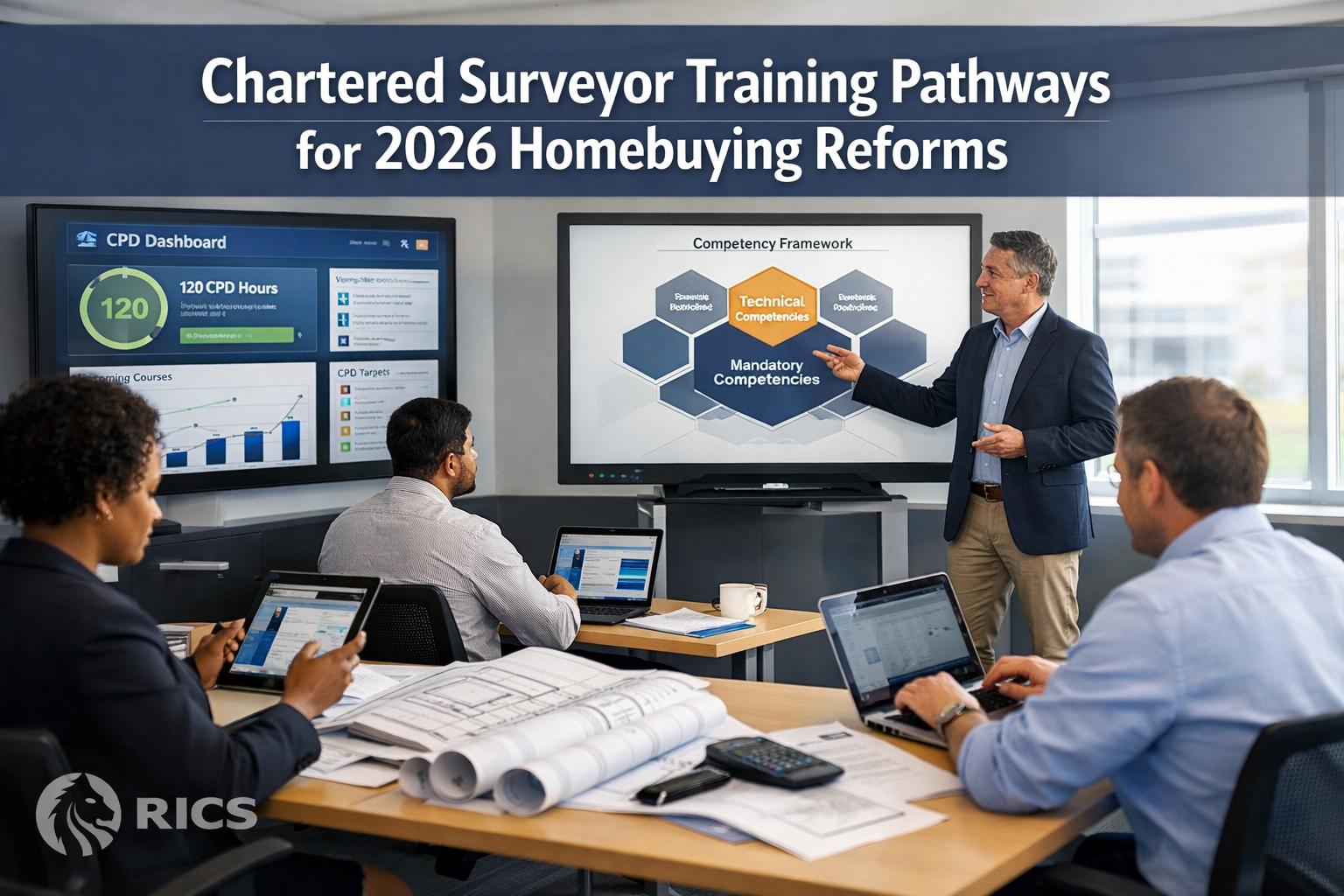
The foundation of professional adaptation lies in continuous learning. RICS launched a redesigned CPD app in February 2026 specifically designed to simplify how members manage professional development and create better experiences through improved tools [1]. This digital transformation represents more than a technical upgrade—it's a fundamental reimagining of how chartered surveyors maintain and enhance their expertise.
The New Outcomes-Based CPD Framework
The modernized CPD framework centers on a flexible, outcomes-based approach that enables members to upskill in essential areas including artificial intelligence, environmental sustainability, and evolving client needs [1]. Unlike traditional hour-counting systems, this model focuses on demonstrable competency improvements and real-world application.
Key features include:
| Feature | Benefit | Application |
|---|---|---|
| Personalized Learning Paths | Tailored to individual career goals and practice areas | Members focus on relevant competencies for their specialization |
| Digital Tracking & Badges | Visual progress indicators and achievement recognition | Motivates continuous improvement and showcases expertise |
| AI-Powered Recommendations | Suggests relevant courses based on practice gaps | Identifies emerging skill needs proactively |
| Mobile-First Design | Learn anywhere, anytime access | Fits professional development into busy schedules |
| Integration with Practice | Links CPD to actual survey work and client outcomes | Demonstrates tangible value of learning investments |
Technology Integration in Professional Development
The profession is experiencing rapid technological transformation with integration of artificial intelligence, machine learning, advanced data analytics, and digital modeling reshaping surveying practices through digital surveying techniques, automated valuation models, advanced BIM and GIS systems [2].
The new CPD framework specifically addresses these technological shifts by offering modules on:
- 🤖 AI-assisted property valuation and quality assurance systems
- 📊 Data analytics for market trend analysis and risk assessment
- 🏗️ Building Information Modeling (BIM) for comprehensive property assessment
- 🛰️ Drone technology and aerial survey techniques (relevant for premium drone surveys)
- 🔐 Cyber security and digital resilience in data management
Practical Implementation for Busy Professionals
For established chartered surveyors balancing client commitments with professional development, the new system offers practical advantages. Members can complete micro-learning modules during commutes, participate in virtual workshops without travel time, and apply new techniques immediately in their practice.
The app's integration with everyday survey work means that conducting a Level 3 full building survey or completing inheritance tax valuations can contribute to CPD records when paired with reflective practice documentation.
New RICS Pathways: Chartered Surveyor Training Pathways for 2026 Homebuying Reforms
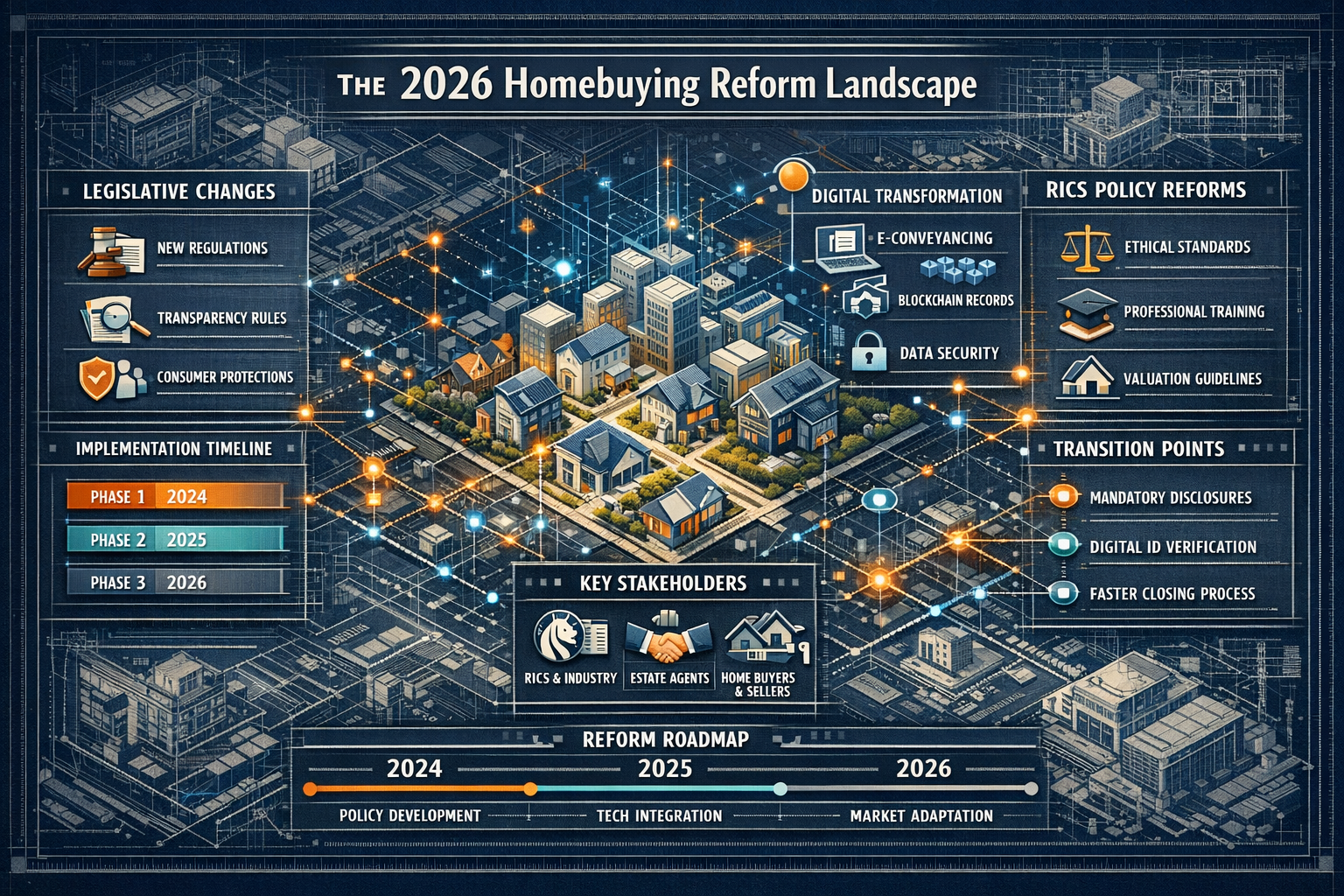
Perhaps the most significant development in chartered surveyor qualification routes is the introduction of three new specialized pathways designed to meet emerging market needs and align with 2026 reform requirements [1]. These pathways represent RICS's commitment to evolving the profession proactively rather than reactively.
Data, Analytics and Intelligence (MRICS) Pathway
RICS announced a pilot programme for a new Data, Analytics and Intelligence (MRICS) pathway to become a chartered surveyor, with an Expressions of Interest (EOI) process launched to assess demand and gather feedback from the sector [2]. Subject to validation at gateway stages, this pathway is expected to launch in phases beginning in 2026 [2].
Core competencies focus on five key areas:
- Core Understanding of Data Use across the built environment lifecycle
- Data Management, Valuation and Governance frameworks
- Cyber Security and Digital Resilience protocols
- Digital Best Practices, Ethics and Professional Responsibility
- Governance and Risk Management in digital environments [2]
This pathway addresses the reality that modern surveying increasingly depends on sophisticated data interpretation. Whether conducting matrimonial valuations or property development assessments, chartered surveyors must navigate complex datasets, ensure data integrity, and extract actionable insights.
Residential Retrofit Surveying Pathway
With the government's Warm Homes Plan and increasing focus on energy efficiency, the Residential Retrofit Surveying pathway addresses a critical skills shortage. This specialism, already in pilot assessment stage as of early 2026 [1], prepares surveyors to:
- Assess existing building performance and identify improvement opportunities
- Specify appropriate retrofit interventions balancing cost, effectiveness, and heritage considerations
- Navigate funding schemes and regulatory requirements for energy upgrades
- Conduct post-retrofit evaluations ensuring promised performance improvements materialize
The Quality in Retrofit Summit held at RICS headquarters in January 2026, in partnership with the Retrofit Academy, brought together members and stakeholders from industry, academia and government to address skills and capacity challenges [1]. This collaborative approach ensures the pathway reflects real-world practice requirements.
Sustainability Advisory Pathway
Environmental considerations now influence every property decision. The Sustainability Advisory pathway equips surveyors to provide expert guidance on:
- 🌱 Carbon footprint assessment and reduction strategies
- 🏅 Green building certifications (BREEAM, LEED, etc.)
- 💰 Environmental impact on property values and investment decisions
- 📋 Regulatory compliance with evolving environmental standards
- 🔄 Circular economy principles in construction and renovation
This pathway complements traditional surveying skills, enabling practitioners to address client questions about sustainability that increasingly arise during building surveys and property transactions.
Integration with Existing Qualifications
These new pathways don't replace traditional routes to chartered status—they expand options. Graduate surveyors can pursue these specialisms as primary qualifications, while established MRICS members can add these competencies through the enhanced CPD framework. This flexibility ensures the profession can rapidly scale capacity in critical areas without creating rigid career silos.
Talent Strategies: Building Capacity for Reform-Driven Demand
The most sophisticated training pathways mean little without sufficient professionals entering and remaining in the field. RICS committed to closing the skills gap in 2026 through a three-pronged talent strategy: encouraging young people to consider surveying careers, delivering world-class training for established professionals, and developing new pathways aligned with sustainability, retrofit, data and AI specialisms [1].
Attracting the Next Generation
The surveying profession faces demographic challenges common across professional services—an aging workforce and insufficient new entrants to replace retiring practitioners. To address this, RICS has implemented:
Youth Engagement Initiatives:
- 🎓 University partnerships showcasing surveying career diversity
- 💼 Apprenticeship programmes providing earn-while-you-learn routes
- 🌟 Mentorship schemes connecting students with practicing surveyors
- 📱 Social media campaigns highlighting technology and innovation in surveying
- 🏆 Scholarship opportunities reducing financial barriers to qualification
The profession's evolution toward technology integration and sustainability focus makes it increasingly attractive to digitally-native graduates seeking careers with environmental impact. The Data Analytics pathway, in particular, appeals to candidates with strong STEM backgrounds who might not have previously considered surveying.
Supporting Career Transitions
Not all future chartered surveyors will come directly from university programmes. The profession increasingly attracts mid-career professionals from adjacent fields—construction management, architecture, engineering, data science—who bring valuable complementary skills.
The flexible CPD framework and modular pathway structures accommodate these transitions by:
- Recognizing prior learning and experience through competency mapping
- Offering accelerated routes for candidates with relevant qualifications
- Providing flexible study options compatible with continued employment
- Creating bridge programmes addressing specific knowledge gaps
Retention and Professional Satisfaction
Training new surveyors solves only half the capacity equation—retaining experienced professionals is equally critical. RICS talent strategies address retention through:
✨ Career Development Support: Clear progression routes beyond initial chartered status
✨ Work-Life Balance Initiatives: Flexible working guidance and mental health resources
✨ Recognition Programmes: Celebrating excellence and innovation in practice
✨ Community Building: Regional networks and special interest groups fostering connection
✨ Value Propositions: Demonstrating how RICS membership supports business success
Firms offering blue light discounts and other community-focused services often find these values-aligned approaches improve both client satisfaction and staff retention.
Implementing Chartered Surveyor Training Pathways for 2026 Homebuying Reforms in Practice

Theory and strategy matter little without practical implementation. How do these training pathways and talent strategies translate into day-to-day surveying practice, particularly for firms navigating the 2026 reform landscape?
Home Survey Standard Revisions
RICS is revising its Home Survey Standard based on member consultations and feedback from RICS Regulation, addressing the need to strengthen survey standards and provide further clarification to reflect consumer insight and technological changes relevant to 2026 homebuying reforms [1].
These revisions will likely address:
- Digital reporting requirements and standardized data formats
- Mandatory elements for upfront surveys under new regulations
- Technology use guidance including drones, thermal imaging, and moisture meters
- Sustainability assessment integration into standard survey reports
- Consumer communication best practices ensuring accessibility and clarity
Surveyors conducting Level 2 or Level 3 surveys will need to familiarize themselves with these updated standards as they're implemented throughout 2026.
Technology Adoption in Survey Practice
The CPD framework's emphasis on technology isn't abstract—it reflects practical tools surveyors now employ daily:
Digital Survey Tools:
- 📱 Mobile survey apps replacing clipboards and enabling real-time data capture
- 📸 360-degree photography providing comprehensive property documentation
- 🌡️ Thermal imaging cameras identifying insulation deficiencies and moisture issues
- 📏 Laser measurement devices ensuring accuracy and efficiency
- ☁️ Cloud-based platforms facilitating collaboration and client access
These tools enhance both survey quality and efficiency—critical when demand surges. A surveyor equipped with modern technology can complete more thorough assessments in less time, helping address capacity constraints without compromising standards.
Collaborative Practice Models
The complexity of modern property assessment often exceeds any single surveyor's expertise. Successful firms increasingly adopt collaborative practice models where specialists contribute to comprehensive assessments:
"The days of the generalist surveyor working in isolation are ending. Today's property transactions benefit from teams bringing together building pathology expertise, energy assessment skills, data analytics capabilities, and local market knowledge."
This team approach aligns with the new pathway structure—a firm might include MRICS members specializing in traditional building surveying, residential retrofit, and data analytics, collectively providing comprehensive service.
Practices offering diverse services like structural engineering, party wall services, and dilapidations assessments exemplify this multidisciplinary approach.
Quality Assurance and Continuous Improvement
With mandatory upfront surveys placing surveyor assessments under greater scrutiny, quality assurance systems become essential. Leading practices implement:
- 🔍 Peer review processes for complex or high-value surveys
- 📊 Performance metrics tracking accuracy, completeness, and client satisfaction
- 🎯 Regular calibration exercises ensuring consistency across team members
- 📚 Case study reviews learning from challenging assessments
- 🔄 Feedback loops incorporating client and solicitor input
These systems align with CPD requirements—documenting quality assurance participation demonstrates continuous professional development and commitment to excellence.
Managing the Reform Transition
For surveyors navigating the 2026 reforms, practical implementation involves:
Client Education: Explaining how mandatory upfront surveys benefit buyers and sellers
Process Adaptation: Adjusting workflows to accommodate earlier survey timing
Report Evolution: Ensuring survey reports meet both regulatory and consumer needs
Fee Structures: Developing transparent pricing for mandatory survey services
Capacity Planning: Balancing demand surges with quality maintenance
Firms serving locations like Esher, Ealing, and Twickenham report that proactive communication about reform changes helps manage client expectations and streamline the transition.
Measuring Success: Outcomes and Impact
How will the profession know whether these training pathways and talent strategies succeed? RICS and the broader surveying community should monitor several key indicators:
Quantitative Metrics
📈 Pathway Enrollment: Number of candidates pursuing new specialisms
📈 CPD Engagement: App usage rates and module completion statistics
📈 Capacity Growth: Ratio of qualified surveyors to property transactions
📈 Diversity Improvements: Demographic representation across the profession
📈 Retention Rates: Percentage of qualified surveyors remaining active
Qualitative Outcomes
🎯 Consumer Satisfaction: Homebuyer confidence in survey quality and usefulness
🎯 Professional Confidence: Surveyor self-assessment of competency in emerging areas
🎯 Industry Recognition: Reputation of RICS qualifications among employers and clients
🎯 Innovation Adoption: Integration of new technologies and methodologies
🎯 Policy Influence: RICS input shaping effective property market regulation
Long-Term Impact
The ultimate measure of success lies in whether these initiatives enable the surveying profession to:
✅ Meet demand created by 2026 homebuying reforms without quality compromise
✅ Lead innovation in property assessment and valuation methodologies
✅ Attract talent ensuring the profession's sustainability and growth
✅ Serve consumers with accessible, reliable, technology-enhanced services
✅ Support sustainability goals through retrofit and environmental expertise
Early indicators suggest positive momentum—the EOI process for the Data Analytics pathway generated significant interest, the CPD app launch received strong member engagement, and the Quality in Retrofit Summit demonstrated cross-sector collaboration [1][2].
Challenges and Considerations
Despite promising developments, the profession faces ongoing challenges in implementing these training pathways and talent strategies:
Implementation Barriers
⚠️ Time Investment: CPD requirements compete with billable client work
⚠️ Cost Considerations: Training, technology, and qualification expenses
⚠️ Technology Access: Digital divide affecting smaller practices and rural areas
⚠️ Change Resistance: Established practitioners comfortable with traditional methods
⚠️ Pathway Validation: Ensuring new specialisms gain market recognition and value
Market Dynamics
The 2026 reforms create immediate demand that training pipelines cannot instantly satisfy. Even accelerated pathways require months or years to produce qualified practitioners. This timing gap may result in:
- Increased survey costs as demand outstrips supply
- Extended waiting times for property assessments
- Quality pressures as surveyors handle excessive workloads
- Market disruption if reform implementation outpaces capacity building
Balancing Specialization and Generalization
While new pathways address critical skills gaps, the profession must avoid over-specialization that fragments knowledge and reduces professional flexibility. The most effective surveyors combine deep expertise in specific areas with broad understanding across the built environment.
The CPD framework's flexibility helps address this balance—members can pursue specialized competencies while maintaining core surveying skills through diverse learning activities.
Future Outlook: Beyond 2026
The training pathways and talent strategies launched in 2026 represent not a destination but a continuous evolution. Looking ahead, several trends will likely shape the profession's development:
Emerging Technologies
🔮 Artificial Intelligence: Increasingly sophisticated AI tools assisting (not replacing) surveyor judgment
🔮 Virtual Reality: Immersive property tours and remote assessment capabilities
🔮 IoT Integration: Smart building data informing property assessments
🔮 Blockchain: Secure, transparent property transaction and survey record systems
🔮 Predictive Analytics: Machine learning models forecasting maintenance needs and value trends
Regulatory Evolution
As 2026 reforms embed and their impacts become clear, further policy adjustments seem inevitable. RICS's active engagement with government ensures surveyor perspectives inform these iterations [3]. Areas likely to see continued development include:
- Survey standardization balancing comprehensiveness with accessibility
- Professional liability frameworks addressing new technologies and methodologies
- Consumer protection mechanisms ensuring survey quality and recourse
- Environmental requirements as climate policy increasingly influences property markets
Professional Identity
The surveying profession's identity continues evolving from technical specialist to trusted advisor. Modern chartered surveyors increasingly serve as:
- 🏠 Property lifecycle consultants advising beyond single transactions
- 🌍 Sustainability experts guiding environmental improvements
- 📊 Data interpreters translating complex information into actionable insights
- 🤝 Client advocates navigating increasingly complex property markets
This expanded role requires the combination of technical excellence, communication skills, ethical judgment, and business acumen that comprehensive training pathways and ongoing CPD support.
Conclusion
The Chartered Surveyor Training Pathways for 2026 Homebuying Reforms: RICS CPD and Talent Strategies represent a comprehensive, forward-thinking response to unprecedented professional challenges and opportunities. Through the February 2026 launch of an enhanced CPD app, introduction of specialized pathways in Data Analytics, Residential Retrofit, and Sustainability Advisory, and strategic talent initiatives, RICS is equipping the profession to meet surging demand while maintaining gold-standard quality [1][2].
The mandatory upfront survey requirements introduced by 2026 homebuying reforms place chartered surveyors at the center of every residential property transaction. This elevated role brings both responsibility and opportunity—responsibility to deliver thorough, accessible, technology-enhanced assessments, and opportunity to demonstrate the profession's essential value in protecting consumers and supporting efficient property markets.
Success requires action at multiple levels:
For Individual Surveyors
✅ Engage with the new CPD framework: Download the app, explore learning pathways, and commit to continuous skill development
✅ Consider specialization: Evaluate whether emerging pathways align with career goals and market needs
✅ Embrace technology: Invest in digital tools and competencies that enhance survey quality and efficiency
✅ Participate in professional community: Attend events, join special interest groups, and contribute to knowledge sharing
For Surveying Firms
✅ Support professional development: Provide time, resources, and encouragement for staff CPD activities
✅ Invest in technology infrastructure: Equip teams with modern survey tools and data management systems
✅ Develop collaborative models: Build multidisciplinary teams bringing diverse expertise to complex assessments
✅ Communicate value: Help clients understand how professional surveys protect their interests and facilitate successful transactions
For the Profession Collectively
✅ Attract diverse talent: Showcase surveying careers to young people and career changers
✅ Maintain quality standards: Ensure capacity growth doesn't compromise assessment thoroughness
✅ Shape policy effectively: Continue RICS engagement with government on reform implementation
✅ Demonstrate impact: Measure and communicate how professional surveying serves consumers and markets
The 2026 homebuying reforms mark a watershed moment for chartered surveyors. The training pathways, CPD framework, and talent strategies now in place provide the foundation for professional success—but foundation alone isn't sufficient. Individual commitment, organizational investment, and collective action will determine whether the profession fully realizes this moment's potential.
For homebuyers navigating the reformed property market, these developments offer reassurance that the surveyors assessing their potential homes possess not only traditional expertise but also cutting-edge skills in technology, sustainability, and data analysis. Whether engaging chartered surveyors in Chiswick, Hounslow, or Sussex, consumers can expect professionals equipped to meet 2026's challenges.
The journey toward a transformed surveying profession has begun. The pathways are clear, the tools are available, and the need is urgent. Now comes the essential work of walking these pathways, applying these tools, and building the capacity that 2026's homebuying reforms demand.
References
[1] Update From Justin Young Rics Ceo January 2026 – https://www.rics.org/news-insights/update-from-justin-young-rics-ceo-january-2026
[2] Rics Calls For Expressions Of Interest In New Data Analytics And Intelligence Pathway – https://www.rics.org/news-insights/rics-calls-for-expressions-of-interest-in-new-data-analytics-and-intelligence-pathway
[3] Uk Influence And Advocacy Update January 2026 – https://www.rics.org/news-insights/uk-influence-and-advocacy-update-january-2026