

The UK property market is experiencing a significant recovery in 2026, with new build transactions surging as developers rush to meet housing targets. Yet behind the glossy marketing brochures and pristine show homes lies a sobering reality: 93.7% of new build buyers report problems to their builder after moving in, with over 25% discovering more than 15 defects.[2] As warranty activation periods become critical junctures for homeowners, chartered surveyors must master the evolving landscape of Chartered Surveyor Checklists for New Build Snagging in 2026: RICS Protocols Post-Warranty Activation to protect their clients' investments and navigate increasingly complex regulatory requirements.
The stakes have never been higher. With RICS implementing sweeping changes to professional standards—including mandatory AI disclosure requirements and expanded hazard assessments—surveyors need comprehensive, up-to-date protocols for identifying defects before warranty windows close. This guide explores the latest RICS frameworks, essential checklist components, and strategic approaches to post-warranty snagging inspections in 2026.
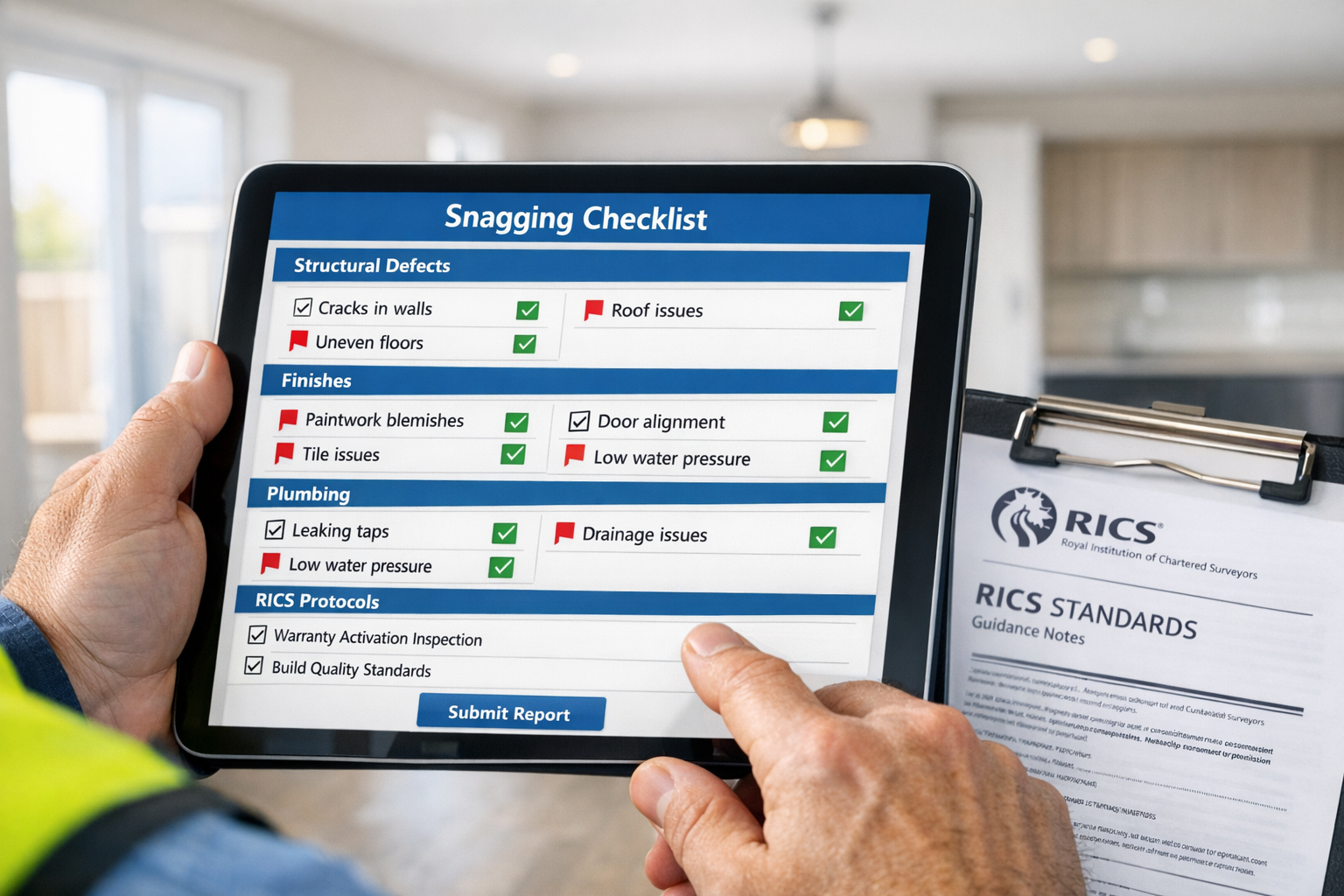
Key Takeaways
- ✅ RICS 2026 updates mandate AI disclosure in snagging reports, requiring surveyors to document AI system reliability and provide client opt-out mechanisms
- 📋 93.7% of new build buyers encounter defects, making professional snagging inspections essential within the critical two-year reporting window
- ⚖️ New Homes Quality Code grants pre-completion inspection rights, allowing chartered surveyors to identify issues before legal completion
- 🎓 Revised CPD framework requires ethics, sustainability, AI, and data training for all chartered surveyors effective January 2026
- 🏗️ Extended hazard regulations now cover excess temperatures and stair/bath falls, broadening the scope of mandatory snagging assessments
Understanding the 2026 RICS Framework for New Build Snagging Inspections
The regulatory landscape governing Chartered Surveyor Checklists for New Build Snagging in 2026: RICS Protocols Post-Warranty Activation has undergone substantial transformation. The Royal Institution of Chartered Surveyors (RICS) released its revised CPD framework in January 2026, fundamentally changing how professionals approach new build assessments.[1]
Mandatory CPD Requirements Impacting Snagging Protocols
Chartered surveyors must now complete training in four mandatory topics every three years:
- Ethics 🤝 – Professional conduct standards in client relationships
- Sustainability 🌱 – Environmental assessment criteria for new builds
- Artificial Intelligence 🤖 – AI tool integration and disclosure requirements
- Data and Technology 💻 – Digital inspection tools and data management
These requirements directly influence how surveyors conduct snagging inspections. The sustainability mandate, for instance, requires assessment of energy efficiency claims made by developers, while AI training ensures proper disclosure when automated defect detection tools are employed.
AI Integration and Disclosure Requirements
Perhaps the most significant change affecting Chartered Surveyor Checklists for New Build Snagging in 2026: RICS Protocols Post-Warranty Activation involves artificial intelligence. RICS-regulated firms must now:
- Record written decisions on AI system reliability – Document assumptions, limitations, and concerns about AI tools used in inspections
- Update engagement terms – Explicitly disclose when AI is used in surveying processes
- Specify Professional Indemnity Insurance coverage – Clarify extent of insurance protection for AI-generated findings
- Implement quality assurance processes – Establish human oversight protocols for AI-assisted assessments
- Provide client opt-out mechanisms – Allow clients to request human-only inspections[3]
These requirements ensure transparency while protecting both surveyors and clients as technology reshapes the profession. For those considering comprehensive building surveys, understanding how AI enhances rather than replaces professional judgment is crucial.
Updated Home Survey Standards
RICS released the 2nd Edition of its Home Survey Standard on February 16, 2026, providing updated guidance for property assessments.[4] While specific protocol changes remain under review, the update emphasizes standardization across the industry and enhanced consumer protection—particularly relevant for new build snagging where consistency in defect identification is paramount.
Essential Components of Chartered Surveyor Checklists for New Build Snagging in 2026
Professional snagging inspections require systematic approaches that balance thoroughness with efficiency. The following components form the foundation of effective Chartered Surveyor Checklists for New Build Snagging in 2026: RICS Protocols Post-Warranty Activation.
Structural and Exterior Elements
| Category | Key Inspection Points | Common Defects |
|---|---|---|
| Foundations & Substructure | Settlement indicators, drainage adequacy, damp-proof course integrity | Subsidence cracks, inadequate drainage, DPC bridging |
| External Walls | Brickwork quality, mortar joints, render finish, cavity wall ties | Poor pointing, render cracking, tie corrosion |
| Roof Structure | Tile/slate alignment, flashing installation, valley construction | Water ingress, inadequate ventilation, tile slippage |
| Windows & Doors | Operation, sealing, glazing quality, lock functionality | Poor fitting, condensation, hardware failure |
| Drainage Systems | Fall adequacy, connection integrity, access provision | Incorrect falls, blocked gullies, poor connections |
Understanding building pathology helps surveyors identify early warning signs of structural issues that may worsen after warranty periods expire.
Interior Finishes and Services
The interior inspection demands equal rigor, as cosmetic defects often mask more serious problems:
Plasterwork and Decorative Finishes:
- Wall and ceiling surface quality
- Joint cracking at wall/ceiling junctions
- Plaster adhesion and hollowness
- Paint coverage and finish quality
- Skirting board installation and gaps
Electrical Installations:
- Consumer unit compliance with current regulations
- Socket and switch operation
- Light fitting installation quality
- Earthing and bonding adequacy
- Smoke and CO detector functionality
Plumbing and Heating:
- Boiler installation and operation
- Radiator positioning and bleeding
- Pipework routing and insulation
- Sanitary ware installation quality
- Water pressure adequacy
Kitchen and Bathroom Installations:
- Unit alignment and door operation
- Worktop joints and sealing
- Appliance installation quality
- Tiling alignment and grouting
- Silicone sealing integrity
For detailed guidance on specific defects, the building inspections guide provides valuable context for homeowners and professionals alike.
Expanded Hazard Assessment Requirements
The 2026 RICS protocols extend hazard regulations to cover additional safety concerns:[3]
- Excess Temperatures ☀️ – Assessment of overheating risk in habitable rooms, particularly relevant given climate change and energy efficiency measures that may reduce natural ventilation
- Falls Associated with Baths 🛁 – Evaluation of bath installation height, surrounding surface slip resistance, and grab rail provision
- Falls Associated with Stairs 🪜 – Inspection of handrail security, balustrade spacing, tread consistency, and landing adequacy
These expanded requirements reflect evolving understanding of residential safety risks and must be incorporated into comprehensive snagging checklists.
Documentation and Evidence Standards
Professional snagging inspections require meticulous documentation:
✏️ Photographic Evidence – High-resolution images of each defect with scale references and location identifiers
📍 Location Mapping – Room-by-room defect schedules with precise location descriptions
📊 Severity Classification – Categorization of defects by urgency (immediate, urgent, non-urgent)
📝 Technical Descriptions – Detailed explanations of defects using industry-standard terminology
⚖️ Regulatory References – Citation of relevant building regulations, NHBC standards, or manufacturer specifications
This documentation becomes critical when pursuing defect rectification during the warranty period. Understanding what questions to ask during surveys helps clients maximize the value of professional inspections.
RICS Protocols for Post-Warranty Activation Snagging Inspections
The timing of snagging inspections relative to warranty activation creates unique challenges and opportunities. Understanding Chartered Surveyor Checklists for New Build Snagging in 2026: RICS Protocols Post-Warranty Activation requires knowledge of warranty structures and inspection windows.
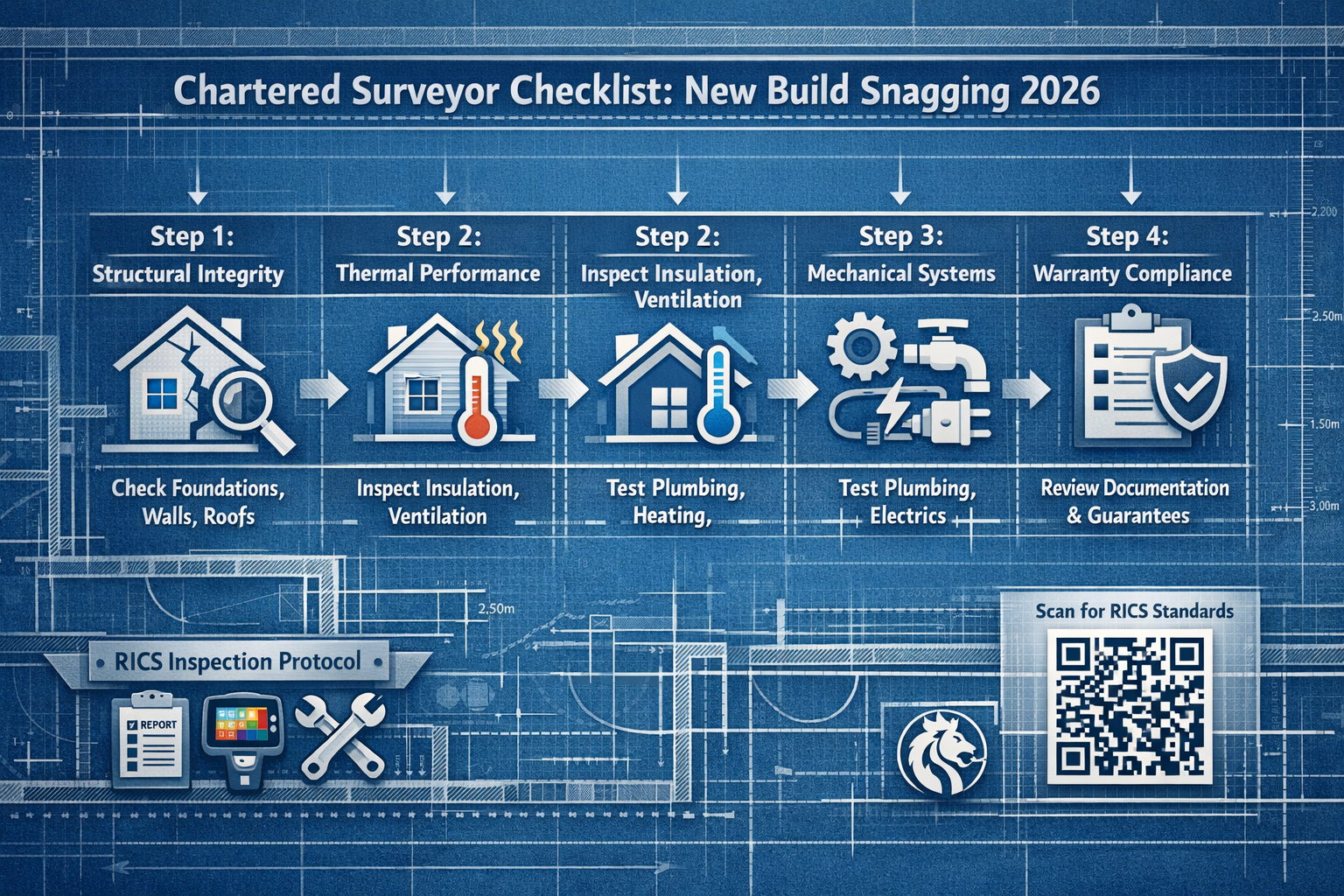
Understanding New Build Warranty Structures
Most new build properties in the UK come with two-tier warranty protection:
Initial Builder Warranty (Years 0-2):
- Covers all defects in materials, workmanship, and building regulation compliance
- Builder responsible for rectifying reported issues
- Homeowners typically have two years from completion to report snagging issues[2]
- Most cosmetic and minor defects must be reported within this window
Structural Warranty (Years 2-10):
- Covers major structural defects only
- Provided by organizations like NHBC, LABC Warranty, or Premier Guarantee
- Higher threshold for claims
- Limited to significant structural movement, subsidence, or major building element failure
This two-tier structure creates a critical deadline: defects must be identified and reported before the two-year builder warranty expires, or homeowners lose recourse for non-structural issues.
Pre-Completion Inspection Rights Under the New Homes Quality Code
Buyers purchasing from developers signed up to the New Homes Quality Code now have explicit rights to professional pre-completion snagging inspections.[2] This represents a significant shift in consumer protection:
Pre-Completion Inspection Benefits:
- Identifies defects before legal completion
- Provides leverage for rectification before money changes hands
- Creates comprehensive baseline documentation
- Establishes professional evidence for warranty claims
- Reduces post-move stress and disruption
Chartered surveyors conducting pre-completion inspections must provide:
- Comprehensive room-by-room assessments
- Written reports with photographic evidence
- Defect categorization by severity
- Recommendations for remediation
- Timeline guidance for rectification
This pre-completion window represents the optimal time for professional intervention, as developers have strong incentive to address issues before completion. For context on survey timeframes, see our guide on how long building surveys take.
Strategic Timing for Post-Completion Snagging
When pre-completion inspections aren't possible, strategic timing becomes essential:
Optimal Inspection Windows:
📅 Immediately Post-Completion (Weeks 1-4)
- Captures obvious defects before settlement
- Documents initial condition comprehensively
- Establishes baseline for future reference
- Allows early reporting to builder
📅 Six-Month Follow-Up
- Identifies settlement-related issues
- Assesses seasonal performance (heating, ventilation)
- Documents emerging defects
- Provides mid-warranty checkpoint
📅 18-22 Month Final Inspection
- Critical pre-warranty expiration assessment
- Captures all defects before two-year deadline
- Provides comprehensive final report for builder
- Protects against warranty expiration losses
This phased approach maximizes defect identification while respecting the two-year reporting window. Many surveyors recommend the 18-22 month inspection as the most critical, as it provides the final opportunity to identify issues before builder warranty expires.
Coordinating with Builder Rectification Processes
Professional snagging inspections must integrate with builder rectification workflows:
Best Practice Protocol:
- Initial Report Submission – Provide builder with comprehensive defect schedule within 14 days of inspection
- Rectification Agreement – Secure written commitment to address identified issues with timeline
- Access Coordination – Facilitate builder access while protecting client interests
- Remediation Verification – Conduct follow-up inspection to confirm proper rectification
- Outstanding Issues Documentation – Maintain records of unresolved defects for warranty escalation
Understanding construction law advice becomes valuable when builders dispute defect claims or refuse rectification.
Warranty Provider Escalation Procedures
When builders fail to address defects within the two-year window, escalation to warranty providers becomes necessary:
Escalation Process:
🔸 Documentation Compilation – Gather all inspection reports, correspondence with builder, and photographic evidence
🔸 Warranty Provider Notification – Submit formal complaint with comprehensive documentation
🔸 Independent Assessment – Warranty provider may commission independent surveyor inspection
🔸 Resolution Determination – Provider decides on coverage and rectification requirements
🔸 Alternative Dispute Resolution – Mediation or arbitration if initial resolution unsatisfactory
Professional snagging reports from chartered surveyors carry significantly more weight in these disputes than homeowner-compiled lists, often determining claim outcomes.
Leveraging Technology in 2026 Snagging Inspections
The integration of advanced technology distinguishes modern Chartered Surveyor Checklists for New Build Snagging in 2026: RICS Protocols Post-Warranty Activation from traditional approaches.
AI-Assisted Defect Detection
Artificial intelligence now supports various aspects of snagging inspections:
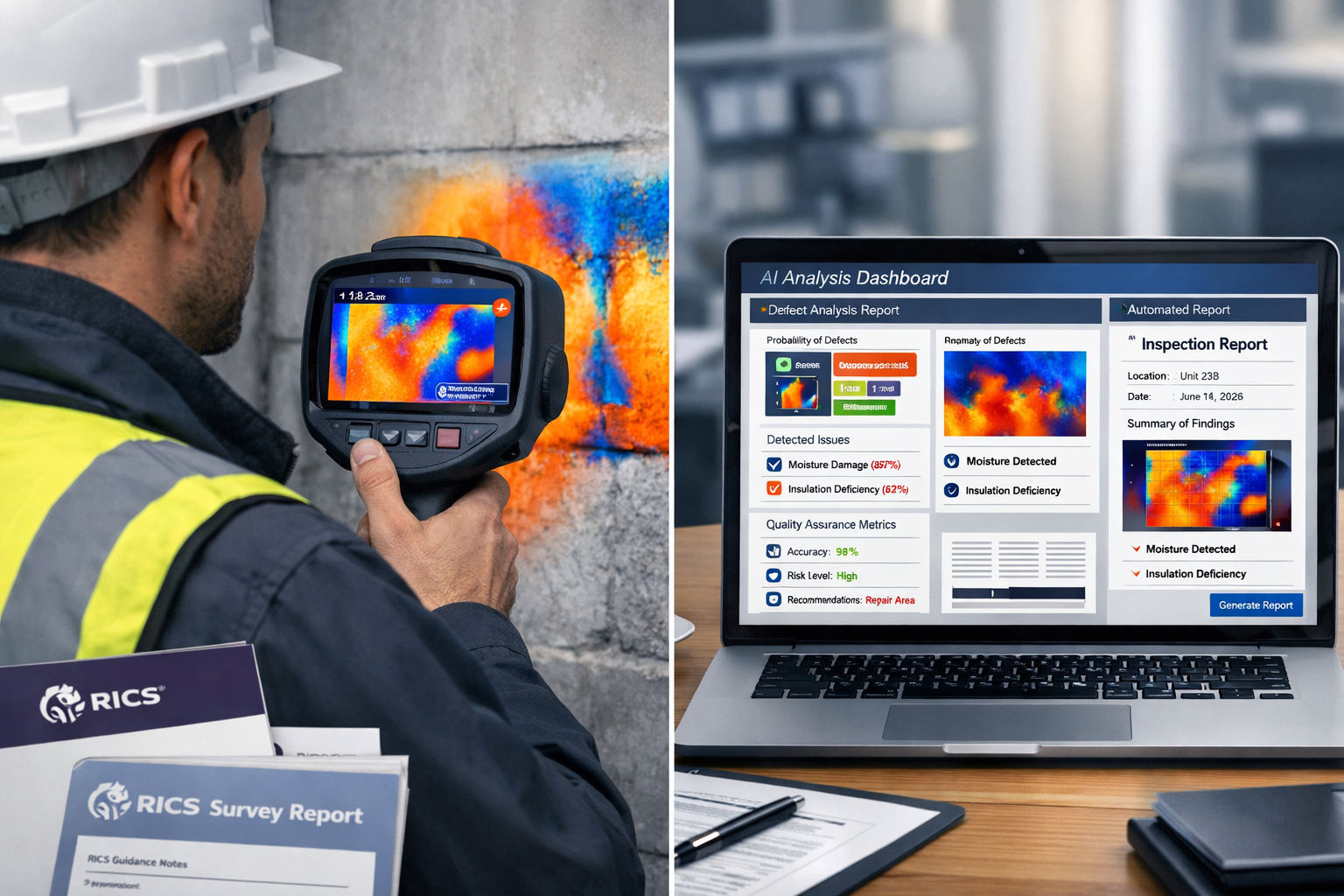
Thermal Imaging Analysis 🌡️
- AI-enhanced thermal cameras identify insulation gaps, moisture ingress, and thermal bridging
- Automated heat loss calculation and energy efficiency assessment
- Pattern recognition for hidden defects behind finished surfaces
Computer Vision for Surface Defects 👁️
- Automated detection of plaster cracks, paint defects, and finish inconsistencies
- Measurement tools for crack width and length assessment
- Comparison against manufacturer specifications and tolerances
Predictive Defect Modeling 📈
- Analysis of defect patterns across similar properties
- Risk assessment for future defect development
- Prioritization of inspection focus areas
However, RICS requirements mandate clear disclosure of AI use and human oversight of all AI-generated findings.[3] The RICS Member App launched in February 2026 helps surveyors track their AI-related CPD compliance.[1]
Digital Documentation Platforms
Modern snagging inspections leverage cloud-based platforms for:
- Real-time defect recording during site visits
- Automated report generation with template compliance
- Photographic evidence organization and annotation
- Client portal access for transparency
- Builder communication and tracking systems
These platforms improve efficiency while ensuring comprehensive documentation meets professional standards.
Moisture and Environmental Monitoring
Advanced sensors enable objective assessment of building performance:
Moisture Meters and Hygrometers
- Quantitative moisture content measurement
- Relative humidity monitoring
- Condensation risk assessment
Air Quality Monitors
- VOC (volatile organic compound) detection
- CO₂ level measurement
- Ventilation adequacy assessment
This data-driven approach strengthens defect claims by providing objective evidence beyond subjective observation. For those concerned about moisture issues, our guide on what causes moisture in buildings offers detailed insights.
Common New Build Defects and Warranty Coverage Implications
Understanding typical defects and their warranty implications helps chartered surveyors prioritize inspection focus and advise clients effectively.
High-Frequency Cosmetic Defects
Paint and Decoration Issues:
- Coverage inconsistencies
- Overspray on fixtures and fittings
- Poor cutting-in at edges
- Missed areas behind radiators
Coverage: Typically covered under builder warranty if reported within two years, but rarely covered under structural warranty.
Plasterwork Defects:
- Surface irregularities and hollowness
- Cracking at wall/ceiling junctions
- Poor finishing around openings
- Damage during construction
Coverage: Builder warranty within two years; structural warranty only if cracking indicates structural movement.
Medium-Severity Installation Defects
Kitchen and Bathroom Issues:
- Cabinet door misalignment
- Worktop joint gaps
- Silicone seal failures
- Tile lippage and grout issues
- Appliance installation problems
Coverage: Builder warranty within two years; no structural warranty coverage.
Heating and Plumbing:
- Radiator air locks
- Boiler programming errors
- Inadequate water pressure
- Pipe noise and vibration
- Thermostat calibration issues
Coverage: Builder warranty for installation defects; manufacturer warranty for equipment faults; structural warranty typically excludes.
Critical Structural and Building Envelope Defects
Foundation and Structural Movement:
- Settlement cracks exceeding acceptable tolerances
- Lintel deflection
- Wall tie failure indicators
- Floor level variations
Coverage: May qualify for structural warranty if exceeding specified thresholds; builder warranty for all levels.
Water Ingress and Damp:
- Roof leaks
- Window and door penetration
- Rising damp from DPC failure
- Cavity wall insulation settlement
Coverage: Builder warranty within two years; structural warranty if causing significant damage to structural elements.
Building Regulation Non-Compliance:
- Inadequate fire protection
- Ventilation deficiencies
- Electrical installation non-compliance
- Structural calculation errors
Coverage: Both builder and structural warranties typically cover regulation non-compliance; potential for additional legal remedies.
For comprehensive understanding of older property defects that may inform new build assessment, see our guide on common defects in older homes.
Cost-Benefit Analysis of Professional Snagging Inspections
The investment in professional Chartered Surveyor Checklists for New Build Snagging in 2026: RICS Protocols Post-Warranty Activation delivers substantial returns:
Typical Inspection Costs
Pre-Completion Snagging Inspection:
- One-bedroom apartment: £300-£450
- Three-bedroom house: £450-£650
- Four+ bedroom house: £650-£900
Post-Completion Follow-Up:
- Verification inspection: £200-£350
- 18-month comprehensive re-inspection: £350-£550
Value Delivered
Defect Rectification Savings:
Given that 93.7% of buyers report problems and 25% find more than 15 defects,[2] professional identification typically saves:
- Average rectification value: £3,000-£8,000
- Major defect prevention: £10,000-£50,000+
- Warranty claim success rate increase: 40-60%
Stress and Disruption Reduction:
- Structured defect identification and reporting
- Professional advocacy with builders
- Reduced homeowner time investment
- Clear documentation for disputes
Long-Term Property Value Protection:
- Proper rectification maintains property value
- Documentation aids future sales
- Prevention of defect escalation
- Enhanced buyer confidence
For those considering whether to invest in surveys, our article on which building survey you need provides valuable decision-making guidance.
Navigating Builder Disputes and Warranty Claims
Even with professional snagging reports, disputes can arise. Understanding resolution pathways is essential.
Common Builder Objections
"That's Within Acceptable Tolerances"
- Requires reference to specific NHBC or warranty provider standards
- Professional surveyor reports citing technical standards carry weight
- Independent measurement and documentation crucial
"That's Cosmetic, Not a Defect"
- Distinction between preference and defect requires professional judgment
- Reference to manufacturer specifications and industry standards
- Photographic evidence of deviation from standard practice
"That's Wear and Tear, Not a Defect"
- Timeline documentation proves defect existed from completion
- Pre-completion or early post-completion inspection evidence critical
- Professional assessment of defect causation
Escalation Strategies
Internal Builder Complaints Process:
- Submit formal written complaint with surveyor report
- Request written response within 14 days
- Escalate to senior management if unsatisfactory
- Document all communications meticulously
Warranty Provider Intervention:
- Notify warranty provider of unresolved disputes
- Provide comprehensive documentation
- Cooperate with independent assessment
- Follow provider's resolution process
Alternative Dispute Resolution:
- Consider mediation for faster resolution
- Arbitration as binding alternative to litigation
- Legal action as last resort for significant defects
Regulatory Complaints:
- New Homes Quality Board for code members
- Trading Standards for consumer protection issues
- Professional body complaints for surveyor disputes
Understanding dilapidation protocols provides additional context for property condition disputes.
Future Developments in Snagging Inspection Standards
The evolution of Chartered Surveyor Checklists for New Build Snagging in 2026: RICS Protocols Post-Warranty Activation continues as the profession adapts to technological advancement and regulatory change.
Anticipated RICS Updates
Enhanced Digital Standards:
- Standardized digital report formats
- Mandatory photographic evidence requirements
- Cloud-based documentation protocols
- Client portal accessibility standards
Expanded Environmental Assessment:
- Carbon performance verification
- Energy efficiency claim validation
- Indoor air quality standards
- Sustainable material verification
Improved Consumer Protection:
- Clearer warranty coverage explanations
- Standardized defect severity classifications
- Enhanced builder communication protocols
- Dispute resolution pathway guidance
Technology Integration Trends
Drone and Aerial Inspection:
- Roof and chimney assessment without access equipment
- Thermal imaging from exterior
- Photographic documentation of inaccessible areas
- Regulatory approval and insurance considerations
3D Scanning and Digital Twins:
- Comprehensive property condition modeling
- Precise measurement and documentation
- Comparison against approved plans
- Future reference for alterations and extensions
Blockchain Documentation:
- Immutable inspection records
- Transparent warranty claim histories
- Secure multi-party access
- Enhanced property transaction efficiency
Regulatory Horizon
Building Safety Act Implications:
- Enhanced inspection requirements for certain property types
- Extended liability periods for some defects
- Digital record-keeping mandates
- Professional competence requirements
Consumer Protection Enhancements:
- Potential extension of builder warranty periods
- Stricter enforcement of quality standards
- Enhanced buyer rights and remedies
- Improved warranty provider oversight
Staying current with these developments requires ongoing professional development, which the revised CPD framework supports through mandatory technology and AI training.[1]
Conclusion
The landscape of Chartered Surveyor Checklists for New Build Snagging in 2026: RICS Protocols Post-Warranty Activation reflects a profession in transformation. With 93.7% of new build buyers encountering defects, professional snagging inspections have evolved from optional extras to essential consumer protections. The 2026 RICS updates—particularly AI disclosure requirements, expanded hazard assessments, and enhanced CPD mandates—ensure chartered surveyors maintain the highest professional standards while leveraging technological advancement.
For homeowners, the message is clear: professional snagging inspections deliver substantial value, particularly when timed strategically within the critical two-year builder warranty window. The pre-completion inspection rights now available under the New Homes Quality Code provide unprecedented opportunity for defect identification before legal commitment.
For chartered surveyors, mastering the updated protocols, integrating AI tools transparently, and maintaining meticulous documentation standards positions professionals to deliver exceptional client value while navigating increasingly complex regulatory requirements.
Actionable Next Steps
For Homeowners:
✅ Commission pre-completion snagging inspection where possible
✅ Schedule 18-22 month follow-up before warranty expiration
✅ Engage RICS-qualified chartered surveyors with new build experience
✅ Maintain comprehensive records of all defect reports and correspondence
✅ Understand your warranty structure and reporting requirements
For Chartered Surveyors:
✅ Complete mandatory CPD in AI, technology, sustainability, and ethics
✅ Update engagement terms to include AI disclosure requirements
✅ Implement comprehensive digital documentation systems
✅ Develop expertise in expanded hazard assessment protocols
✅ Establish clear quality assurance processes for AI-assisted inspections
For Developers and Builders:
✅ Embrace pre-completion inspection rights as quality assurance opportunities
✅ Establish responsive defect rectification processes
✅ Maintain transparent communication with warranty providers
✅ Invest in quality control to reduce snagging issues
✅ Recognize professional snagging reports as valuable feedback
The evolution of new build snagging protocols in 2026 represents progress toward higher construction standards, enhanced consumer protection, and professional excellence. By understanding and implementing these updated frameworks, all stakeholders contribute to improved housing quality and homeowner satisfaction across the UK property market.
For professional guidance on building surveys and snagging inspections, explore our comprehensive building survey services and discover how chartered surveyors protect your property investment.
References
[1] Revised Cpd Framework Effective 2026 New App – https://www.rics.org/news-insights/revised-cpd-framework-effective-2026-new-app
[2] Need Snagging List New Build Home – https://hoa.org.uk/advice/guides-for-homeowners/i-am-buying/need-snagging-list-new-build-home/
[3] pbctoday.co.uk – https://www.pbctoday.co.uk/news/planning-construction-news/five-hot-topics-for-surveyors-spring-2026/158511/
[4] Home Survey Standard 2nd Edition A Progress Update – https://www.rics.org/news-insights/home-survey-standard-2nd-edition-a-progress-update