

The UK property market stands at a crossroads. With transaction volumes fluctuating and buyer confidence wavering, property transactions require more than traditional assessment methods. Today's clients demand transparency, accuracy, and certainty before committing to what may be their largest financial decision. The question facing surveyors in 2026 is clear: how can professionals transform uncertainty into confidence through data-driven solutions?
The answer lies in embracing technological innovation. Certainty in Property Transactions: How Surveyors Can Leverage Data-Driven Solutions to Build Client Confidence in 2026 represents a fundamental shift in how surveying professionals deliver value. By integrating advanced technologies—from AI-powered data processing to real-time 3D digital twins—surveyors can position themselves as essential confidence-builders rather than mere service providers.
This transformation isn't optional. Clients now expect instant access to comprehensive property intelligence, predictive maintenance insights, and transparent risk assessments. Surveyors who master data-driven methodologies will dominate the market, while those clinging to outdated practices risk obsolescence.

Key Takeaways
✅ AI-driven data processing now enables instant terrain classification, anomaly detection, and preliminary modeling, reducing manual sorting time and accelerating transaction timelines by up to 75%[4]
✅ Real-time 3D digital twins provide interactive decision-making tools that allow clients to visualize property behavior under various conditions, building confidence through transparency[1]
✅ Cloud-based platforms have replaced static document delivery, ensuring all stakeholders access the latest survey versions instantly without outdated information compromising decisions[1]
✅ Predictive maintenance data can reduce long-term asset costs by as much as 40%, positioning surveyors as lifecycle partners rather than one-time service vendors[3]
✅ Building Information Modeling (BIM) integration is becoming standard practice, enabling seamless collaboration across construction and operations phases while delivering sustained client value[1]
Understanding the Certainty Crisis in Modern Property Transactions
The UK property market faces unprecedented challenges in 2026. Transaction certainty has become the industry's top priority, yet traditional surveying methods often fail to deliver the transparency modern clients demand. Buyers want comprehensive risk assessments. Sellers need accurate valuations. Investors require predictive insights. All stakeholders seek confidence that their decisions rest on reliable data.
Why Traditional Methods Fall Short
Conventional surveying approaches typically deliver static documents—PDF reports that capture a property's condition at a single moment. These reports, while professionally prepared, present several limitations:
- 📄 Limited interactivity: Clients cannot explore different scenarios or visualize potential issues
- ⏰ Time delays: Manual data processing creates bottlenecks that slow transaction timelines
- 🔍 Surface-level insights: Traditional methods may miss hidden defects or future maintenance needs
- 📊 Disconnected data: Information exists in silos rather than integrated decision-making platforms
These shortcomings create uncertainty. When clients cannot fully understand a property's condition, risks, or long-term costs, they hesitate. Transactions stall. Negotiations become contentious. Confidence erodes.
The Data-Driven Difference
Data-driven surveying solutions fundamentally transform this dynamic. Rather than delivering static snapshots, modern surveyors provide dynamic, interactive property intelligence that builds genuine confidence. This approach leverages multiple technological innovations working in concert to deliver unprecedented certainty.
Consider how comprehensive building surveys now incorporate real-time data streams, predictive analytics, and collaborative platforms. These enhanced methodologies address the certainty crisis by providing:
| Traditional Approach | Data-Driven Solution |
|---|---|
| Single-point assessment | Continuous monitoring capability |
| Manual data interpretation | AI-powered anomaly detection |
| Paper-based deliverables | Cloud-based interactive platforms |
| Limited stakeholder access | Real-time collaboration tools |
| Historical condition only | Predictive maintenance insights |
The difference is transformative. Clients gain confidence because they understand not just what a property is today, but what it will require tomorrow.
How Surveyors Can Leverage Data-Driven Solutions to Build Client Confidence
AI-Powered Data Processing and Analysis
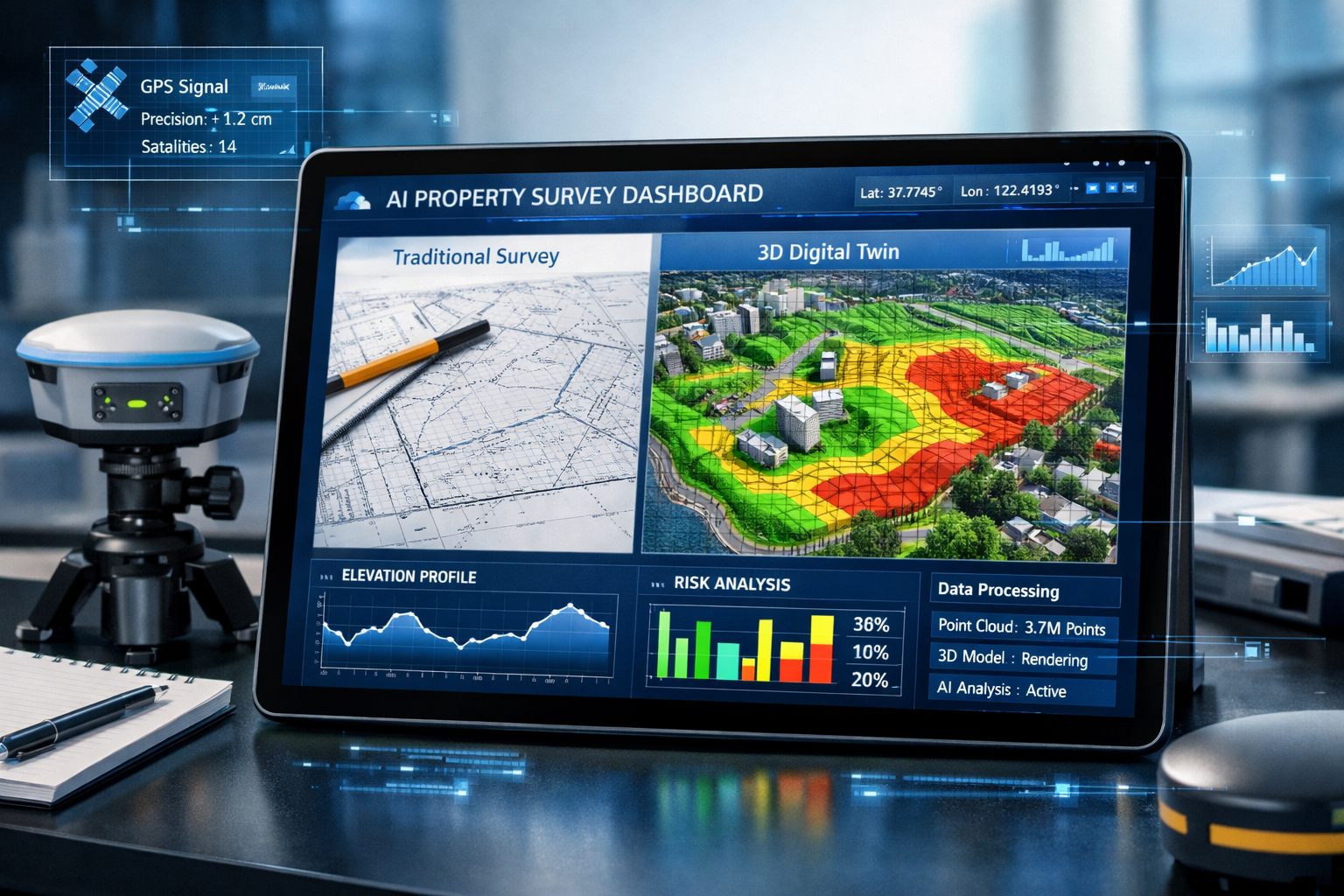
Artificial intelligence has fundamentally changed surveying workflows in 2026. AI-driven data processing is now embedded in core surveying workflows, with AI systems instantly classifying terrain, identifying markers, flagging anomalies, and generating preliminary surface models rather than requiring manual sorting of field data[1].
This transformation delivers multiple client benefits:
Speed and Efficiency: Mobile 3D mapping and GNSS RTK systems are delivering 75% faster surveys with 40-60% cost improvements, significantly accelerating transaction timelines and reducing client expenses[4]. What once required weeks of manual processing now happens in hours.
Enhanced Accuracy: GPS enhancements, including Global Navigation Satellite System (GNSS) implementation, now provide centimeter-level accuracy with real-time data, enabling surveyors to deliver substantially more reliable results to clients than previously possible[1].
Proactive Risk Identification: AI algorithms analyze survey data to flag potential issues before they become problems. This proactive approach helps clients understand risks upfront, eliminating surprises that could derail transactions.
For example, when conducting a Level 3 full building survey, AI systems can instantly compare structural measurements against historical data, identify deviation patterns, and predict potential failure points—all before the surveyor completes the final report.
Real-Time 3D Digital Twins and Visualization
Perhaps no technology builds client confidence more effectively than real-time 3D digital twins. These interactive models provide decision-making tools that allow developers, engineers, planners, and property buyers to visualize property behavior under various conditions[1].
Digital twins enable clients to:
- 🏗️ Explore renovation scenarios: See how proposed changes affect structural integrity
- 💧 Simulate water flow: Understand drainage patterns and flood risks
- 🌱 Project vegetation changes: Visualize landscape evolution over time
- 🏢 Test infrastructure stress: Assess how buildings respond to environmental factors
This visualization capability transforms abstract survey data into tangible understanding. When clients can "walk through" a property digitally, examining every detail from multiple angles, their confidence soars.
Premium drone surveys now integrate seamlessly with digital twin platforms, capturing aerial perspectives that reveal roof conditions, drainage patterns, and site boundaries with unprecedented clarity. This comprehensive view eliminates blind spots that traditionally created uncertainty.
Cloud-Based Collaboration Platforms
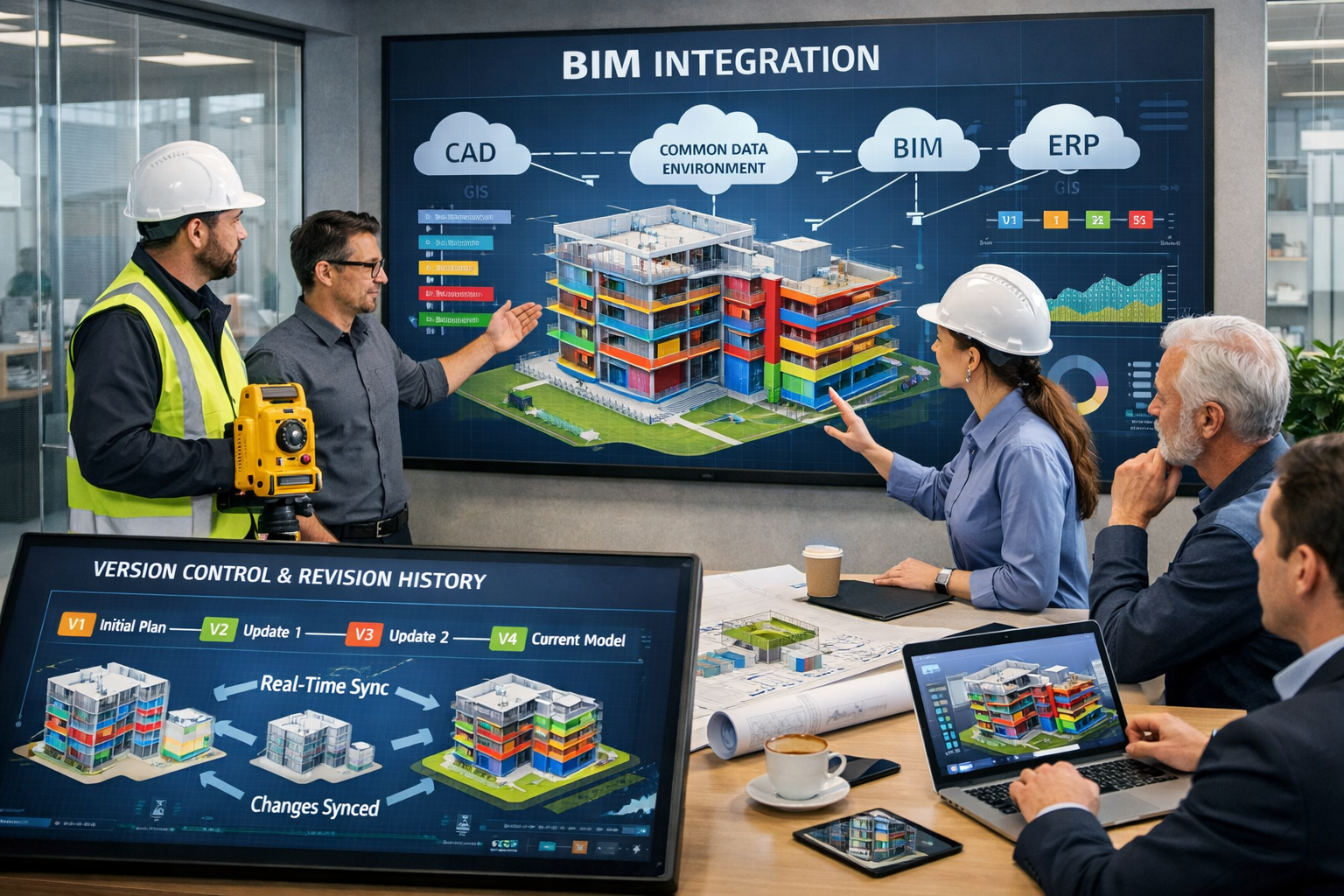
Cloud-based platforms have replaced static document delivery, enabling instant file sharing, 3D visualization in browsers, real-time revision syncing, and integrated communication with engineers and architects—ensuring all stakeholders have the latest survey versions without outdated PDFs[1].
This shift toward Common Data Environments (CDEs) fundamentally changes survey deliverables from static plans into dynamic, shared environments where survey data informs real-time decision-making across construction and operations phases[3].
The benefits for client confidence include:
✔️ Transparency: All parties access identical information simultaneously
✔️ Version control: No confusion about which report is current
✔️ Collaborative decision-making: Stakeholders can comment, question, and clarify in real-time
✔️ Audit trails: Complete documentation of all decisions and data sources
When clients know that everyone involved in their transaction—from surveyors to solicitors to mortgage lenders—works from the same accurate, current data, their confidence in the process increases dramatically.
Building Information Modeling (BIM) Integration
Building Information Modeling (BIM) integration is becoming standard practice, with surveyors increasingly collaborating with architects, engineers, and construction professionals to integrate geospatial data into BIM models, enhancing project planning and reducing conflicts[1].
This integration creates a seamless digital thread from initial survey through design, construction, and operations. For clients, this means:
- 📐 Coordinated planning: Survey data automatically informs design decisions
- 🔧 Clash detection: Potential conflicts identified before construction begins
- 💰 Cost certainty: Accurate measurements reduce budget surprises
- 🏗️ Lifecycle management: Survey data supports ongoing maintenance planning
Understanding the difference between Level 2 and Level 3 surveys becomes crucial when considering BIM integration, as Level 3 surveys provide the detailed data necessary for comprehensive BIM models.
Delivering Long-Term Value Through Predictive Analytics and Lifecycle Support
Predictive Maintenance and Asset Management
The most forward-thinking surveyors in 2026 recognize that certainty in property transactions extends far beyond the initial purchase. Clients need confidence not just in today's condition, but in tomorrow's costs and requirements.
Predictive maintenance data is unlocking long-term asset value, with as much as 75% of an asset's total cost of ownership accruing during operations and maintenance phases—spatial data from initial surveys enables predictive maintenance that can reduce costs by as much as 40%[3].
This represents a fundamental shift in surveyor value proposition. Rather than providing a one-time assessment, data-driven surveyors deliver:
Lifecycle Cost Projections: Using historical data and AI analysis, surveyors can project when major building systems will require replacement, what repairs will likely be needed, and how maintenance costs will evolve over time.
Condition Monitoring: Initial survey data establishes a baseline for ongoing monitoring. Clients can track how their property's condition changes over time, identifying issues early when they're less expensive to address.
Investment Planning: Property investors gain confidence in acquisition decisions when they understand not just purchase price, but total lifecycle costs. This transparency enables more accurate ROI calculations and better investment decisions.
Services like budgeting repairs and restoration become exponentially more valuable when informed by predictive analytics rather than reactive assessments.
Expanding Into Lifecycle Asset Management Services
Surveyors are expanding into lifecycle asset management services, positioning themselves as essential long-term partners rather than vendors of measurement services by delivering survey data optimized for 3D visualization and BIM integration[3].
This evolution creates multiple advantages:
🤝 Ongoing client relationships: Rather than one-time transactions, surveyors become trusted advisors
📈 Recurring revenue streams: Subscription-based monitoring and reporting services
💡 Deeper client understanding: Continuous engagement builds expertise in specific properties
🎯 Competitive differentiation: Lifecycle services separate forward-thinking firms from traditional competitors
For property owners managing portfolios, data-driven property management platforms now provide real-time portfolio visibility through integrated technology systems including property management software with analytics dashboards, predictive maintenance tools, market intelligence platforms, and tenant engagement tools—supporting cost-effective decision-making across multiple properties[2].
Sustainability and Environmental Considerations
Sustainability-driven survey practices are becoming core to client decision-making, with surveyors playing vital roles in guiding environmentally conscious development decisions and helping clients understand environmental impact implications of property transactions[1].
In 2026, environmental certainty matters as much as structural certainty. Clients want to know:
- 🌍 Carbon footprint: What are the property's current and projected emissions?
- ♻️ Energy efficiency: How do heating, cooling, and power systems perform?
- 💚 Retrofit potential: What improvements would deliver the best environmental ROI?
- 🌡️ Climate resilience: How will the property perform as climate patterns change?
Data-driven surveyors integrate environmental sensors, energy modeling, and climate projection data into their assessments. This comprehensive approach helps clients make sustainable choices while understanding long-term operational costs.
Understanding why property owners hire surveyors increasingly includes environmental assessment and sustainability planning alongside traditional structural evaluation.
Building Client Confidence Through Transparent Communication and Reporting

Interactive Reporting Formats
The format of survey deliverables matters as much as the data itself. Traditional PDF reports, while comprehensive, often overwhelm clients with technical jargon and static images. Data-driven reporting transforms this experience through:
Interactive dashboards that allow clients to:
- Filter information by priority level (critical, moderate, minor)
- Click on specific areas for detailed explanations
- View before-and-after scenarios for potential repairs
- Access cost estimates linked to specific findings
Video walkthroughs where surveyors guide clients through digital property models, explaining findings in plain language while highlighting specific areas of concern or interest.
Layered information architecture that presents high-level summaries for quick decision-making while providing detailed technical data for those who want deeper understanding.
This approach recognizes that different stakeholders need different information levels. Buyers want clear risk assessments. Mortgage lenders need compliance verification. Contractors require technical specifications. Data-driven platforms deliver customized views for each audience.
Data Transparency and Source Documentation
Building confidence requires transparency about data sources and methodology. Modern clients—especially those making significant property investments—want to understand:
- 📡 Where did the data come from?
- 🔬 What technologies were used?
- 📊 How accurate are the measurements?
- ✅ What standards were followed?
Leading surveyors in 2026 provide comprehensive documentation that answers these questions. Every finding links back to its source data. Measurement accuracy specifications appear alongside results. Technology descriptions explain capabilities and limitations.
This transparency builds trust. When clients understand the rigor behind survey findings, they gain confidence in recommendations. When they can trace every conclusion back to verifiable data, uncertainty diminishes.
Real-Time Communication and Stakeholder Coordination
Cloud-based collaboration platforms enable real-time communication that keeps all transaction stakeholders aligned. Rather than waiting days for email responses, clients can:
- 💬 Ask questions directly within the survey platform
- 📞 Schedule video consultations with surveyors
- 🔔 Receive instant notifications when reports update
- 👥 Share specific findings with other professionals
This immediate access eliminates the information gaps that traditionally created transaction delays and uncertainty. When solicitors, mortgage brokers, and contractors all work from the same current data, transactions proceed smoothly.
For complex properties requiring additional specialist advice, cloud platforms facilitate seamless coordination between primary surveyors and specialists in areas like building pathology or structural engineering.
Implementing Data-Driven Solutions: Practical Steps for Surveyors
Technology Investment and Training
Transitioning to data-driven methodologies requires strategic investment in both technology and skills development. Surveyors should prioritize:
Core technology platforms:
- GNSS RTK systems for centimeter-level positioning accuracy
- Mobile 3D mapping equipment for rapid site capture
- Drone systems for aerial surveys and roof inspections
- Cloud-based collaboration and reporting platforms
- AI-powered data processing software
Professional development:
- Training in digital twin creation and management
- BIM integration certification
- Data analytics and visualization skills
- Client communication in digital environments
The investment pays dividends through faster surveys, reduced costs, and enhanced client satisfaction. Firms that master these technologies gain competitive advantages that traditional competitors cannot match.
Building Strategic Partnerships
No single surveying firm can master every aspect of data-driven property assessment. Strategic partnerships extend capabilities and enhance client value:
- 🤝 Technology vendors: Collaborate with software developers to customize platforms
- 🏗️ Construction professionals: Integrate survey data into project workflows
- 🔬 Specialist consultants: Partner with environmental, structural, and energy experts
- 💼 Property management firms: Provide ongoing monitoring and maintenance services
These partnerships enable surveyors to deliver comprehensive solutions that address every aspect of property certainty, from initial assessment through long-term management.
Marketing the Data-Driven Difference
Clients won't value data-driven approaches unless they understand the benefits. Effective marketing emphasizes:
Tangible outcomes:
- "75% faster survey completion"
- "40% reduction in long-term maintenance costs"
- "Centimeter-level accuracy guaranteed"
Visual demonstrations:
- Before-and-after comparisons of traditional versus data-driven reports
- Interactive platform demonstrations
- Case studies showing how data prevented costly mistakes
Client testimonials highlighting confidence, transparency, and value.
Understanding what homeowners should know about their property helps surveyors position data-driven services as essential rather than optional upgrades.
Regional Considerations and Market Adaptation
While data-driven methodologies deliver value across all property markets, regional characteristics influence implementation approaches. Surveyors operating in areas like Surrey, Berkshire, and Essex must adapt their approaches to local property characteristics, client expectations, and market conditions.
Urban markets (such as Fulham, Hampstead, or Islington) often feature:
- Higher property values demanding premium services
- Complex structural issues in period properties
- Greater client sophistication and technology adoption
- Faster transaction timelines requiring rapid turnaround
Suburban and rural markets (including St Albans, Godalming, or Buckinghamshire) present different considerations:
- Larger properties requiring extensive site surveys
- Environmental and land use concerns
- Agricultural or development potential assessments
- Different client priorities and communication preferences
Successful data-driven surveyors adapt their technology deployment and communication approaches to match regional market characteristics while maintaining consistent quality and accuracy standards.
Conclusion: Building the Future of Property Transaction Certainty
The UK property market in 2026 demands more than traditional surveying methods can deliver. Clients require comprehensive transparency, predictive insights, and collaborative platforms that build genuine confidence in their property decisions. Certainty in Property Transactions: How Surveyors Can Leverage Data-Driven Solutions to Build Client Confidence in 2026 represents not just a technological evolution, but a fundamental reimagining of the surveyor's role.
Data-driven surveyors position themselves as essential confidence-builders by:
✅ Deploying AI-powered processing that delivers 75% faster surveys with unprecedented accuracy
✅ Creating real-time 3D digital twins that enable interactive decision-making
✅ Implementing cloud-based collaboration platforms that keep all stakeholders aligned
✅ Integrating BIM to support seamless project coordination
✅ Providing predictive maintenance insights that reduce lifecycle costs by 40%
✅ Delivering transparent, interactive reporting that eliminates uncertainty
The firms that master these methodologies will dominate the market. Those that cling to outdated practices will struggle to compete as clients increasingly demand the certainty that only data-driven approaches can provide.
Next Steps for Surveying Professionals
Immediate actions:
- Assess current technology capabilities and identify gaps
- Invest in GNSS RTK and mobile 3D mapping systems
- Implement cloud-based collaboration platforms
- Train staff in digital twin creation and BIM integration
- Develop interactive reporting formats that showcase data-driven advantages
Strategic initiatives:
- Build partnerships with technology vendors and specialist consultants
- Develop lifecycle asset management service offerings
- Create marketing materials that demonstrate data-driven value
- Establish predictive maintenance and monitoring programs
- Position your firm as a confidence-builder rather than a measurement service
The future of property transactions belongs to surveyors who embrace data-driven solutions. By leveraging AI, digital twins, cloud collaboration, and predictive analytics, forward-thinking professionals will build the client confidence that drives successful transactions in 2026 and beyond.
Whether you're conducting a comprehensive building survey or providing specialized assessments, data-driven methodologies transform your value proposition from necessary compliance to strategic advantage. The question isn't whether to adopt these approaches—it's how quickly you can implement them to serve clients who increasingly demand certainty in every property transaction.
References
[1] Future Land Surveying 2026 – https://haller-blanchard.com/future-land-surveying-2026/
[2] Data Driven Decision Making Property Managers – https://bfpminc.com/data-driven-decision-making-property-managers/
[3] Doubling Down On Digital – https://amerisurv.com/2026/02/01/doubling-down-on-digital/
[4] The Future Of Land Surveying Technology 2026 Trends In Mobile 3d Mapping And Gnss Rtk Systems – https://nottinghillsurveyors.com/blog/the-future-of-land-surveying-technology-2026-trends-in-mobile-3d-mapping-and-gnss-rtk-systems