

The property market in 2026 faces a paradox: mortgage rates have fallen to three-year lows, yet buyer confidence remains stubbornly weak. Building surveys under buyer sentiment pressure now require fundamental adaptation as surveyors navigate a landscape where affordability concerns overshadow rate improvements. When 40% of homebuilders resort to price cuts and buyer hesitation becomes the norm[7], inspection professionals must evolve their protocols to maintain trust and deliver value during these uncertain times.
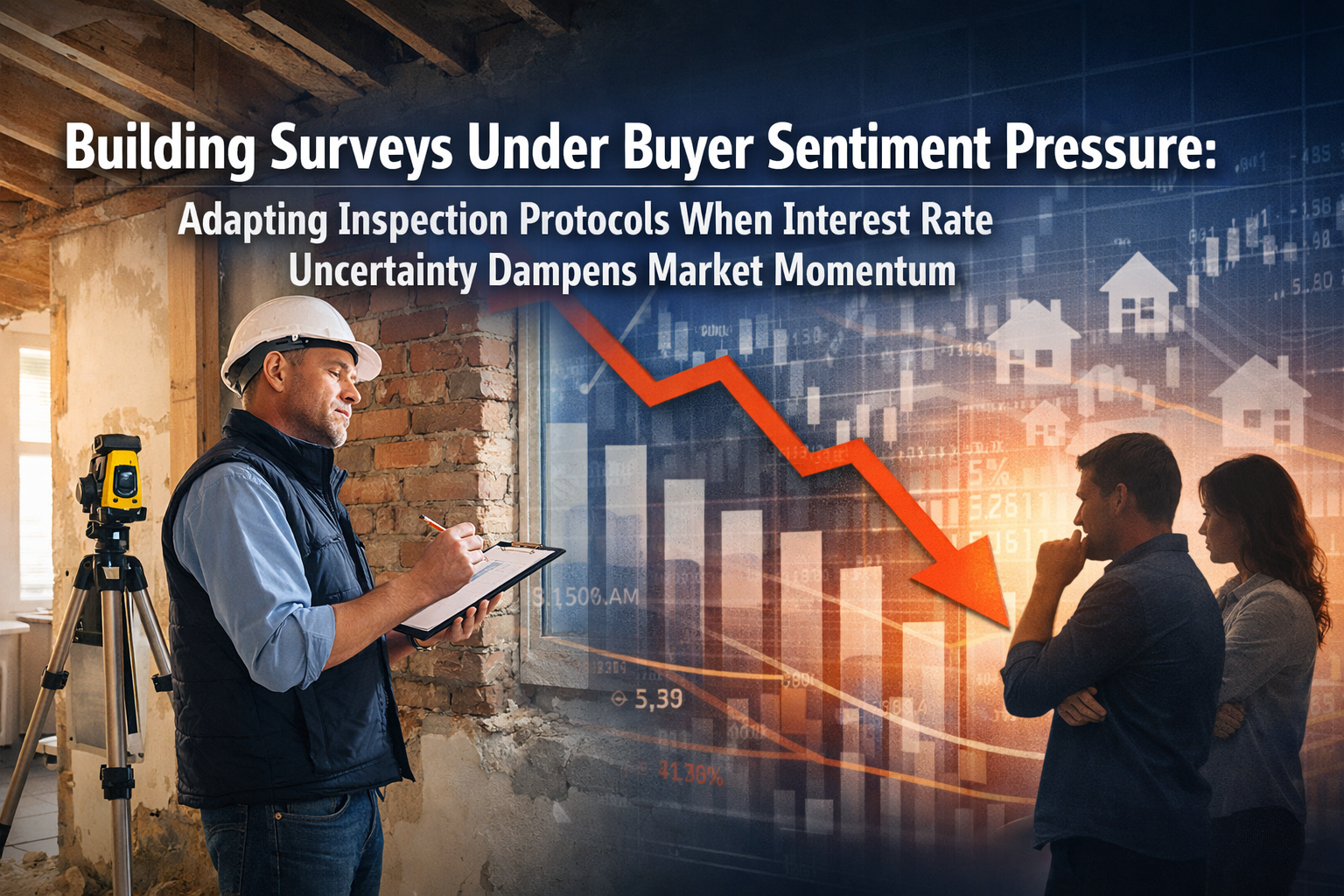
The challenge extends beyond simple market fluctuations. Interest rate uncertainty has created a cautious purchasing environment where buyers scrutinize every detail before committing. This shift demands that building surveys under buyer sentiment pressure incorporate enhanced communication strategies, deeper inspection methodologies, and reporting frameworks that address the specific anxieties of today's hesitant purchasers.
Key Takeaways
- 📉 Buyer confidence remains weak despite mortgage rates falling to 6.06%—a three-year low—indicating that rate reductions alone cannot restore market momentum[7]
- 🔍 Enhanced inspection depth is essential as cautious buyers demand more comprehensive surveys that justify their investment decisions during uncertain times
- 💬 Communication protocols must evolve to address buyer anxiety through transparent reporting, clear risk assessments, and accessible explanations of findings
- 📋 Documentation standards are tightening with lenders requiring synchronized packages including third-party inspection reports and dated progress photos[1]
- ⚖️ Compliance pressures are escalating as the market transitions from price competition to strict adherence and high-efficiency mandates with zero tolerance for error[2]
Understanding the Current Market Climate and Its Impact on Building Surveys
The Interest Rate Paradox of 2026
The residential property market presents an unusual contradiction in early 2026. While the average 30-year mortgage rate dropped to 6.06%—nearly a full percentage point below the previous year—homebuilder confidence actually declined in January[7]. This disconnect reveals a fundamental truth: building surveys under buyer sentiment pressure must address concerns that extend far beyond financing costs.
Builder confidence fell even as rates improved, with 40% of homebuilders cutting prices in January 2026, matching December levels and marking the third consecutive month since May 2020 with reductions at or above this threshold[7]. Average price cuts increased from 5% to 6%, signaling persistent pressure on the market despite more favorable lending conditions.
Key market indicators affecting surveys:
| Metric | Current Status (2026) | Impact on Surveys |
|---|---|---|
| 30-Year Mortgage Rate | 6.06% (3-year low)[7] | Lower but insufficient to restore confidence |
| Builder Price Cuts | 40% of builders, 6% average reduction[7] | Buyers expect negotiation leverage |
| Builder Confidence Index | Declined in January 2026[7] | Reduced construction quality concerns |
| Six-Month Sales Expectations | Rose to 52 in December 2025[3] | Cautious optimism for spring market |
Why Buyer Sentiment Remains Fragile
Several interconnected factors contribute to the persistent buyer hesitation that shapes modern inspection protocols:
Affordability constraints continue to dominate despite rate improvements. Many potential buyers remain priced out of markets where property values haven't adjusted proportionally to income growth. This creates a pool of cautious purchasers who view building inspections and surveys as critical protection mechanisms rather than routine formalities.
Economic uncertainty extends beyond interest rates. Inflation concerns, employment stability questions, and broader economic volatility make buyers extremely risk-averse. They approach property purchases with heightened scrutiny, demanding comprehensive documentation of every potential issue.
Memory of recent volatility affects decision-making. Buyers who witnessed rapid rate increases in 2022-2023 remain skeptical that current conditions will persist. This creates demand for surveys that identify not just current defects but potential future liabilities that could compound if market conditions deteriorate further.
"The 2026 construction landscape is transitioning from price competition toward strict compliance and high-efficiency mandates with zero tolerance for error." [2]
Adapting Inspection Protocols for Hesitant Buyers
Enhanced Communication Strategies
Building surveys under buyer sentiment pressure require surveyors to fundamentally reimagine how they communicate findings. Traditional technical reports no longer suffice when buyers approach purchases with heightened anxiety and skepticism.
Pre-inspection consultations have become essential rather than optional. Before conducting the survey, surveyors should engage buyers in detailed discussions about their specific concerns, budget constraints, and risk tolerance. Understanding whether a buyer is stretching financially or has renovation capacity dramatically influences how findings should be presented and prioritized.
Layered reporting structures address different audience needs within a single document. A well-adapted 2026 survey report includes:
- Executive summary with clear risk ratings (high/medium/low) and estimated cost ranges
- Visual documentation with annotated photographs showing issues from multiple angles
- Technical detail sections for specialists and contractors
- Plain-language explanations that avoid jargon while maintaining accuracy
- Prioritized action items distinguishing urgent repairs from long-term maintenance
When determining which building survey buyers need, surveyors must now factor in the psychological state of the market, not just the property characteristics. A Level 2 survey might have sufficed in a confident market, but cautious 2026 buyers increasingly opt for comprehensive Level 3 full building surveys even for relatively modern properties.
Deepening Inspection Methodologies
The current market demands more thorough investigation than standard protocols previously required. Buyers justify the additional expense of comprehensive surveys by viewing them as insurance against post-purchase surprises that could prove financially devastating in an uncertain economy.
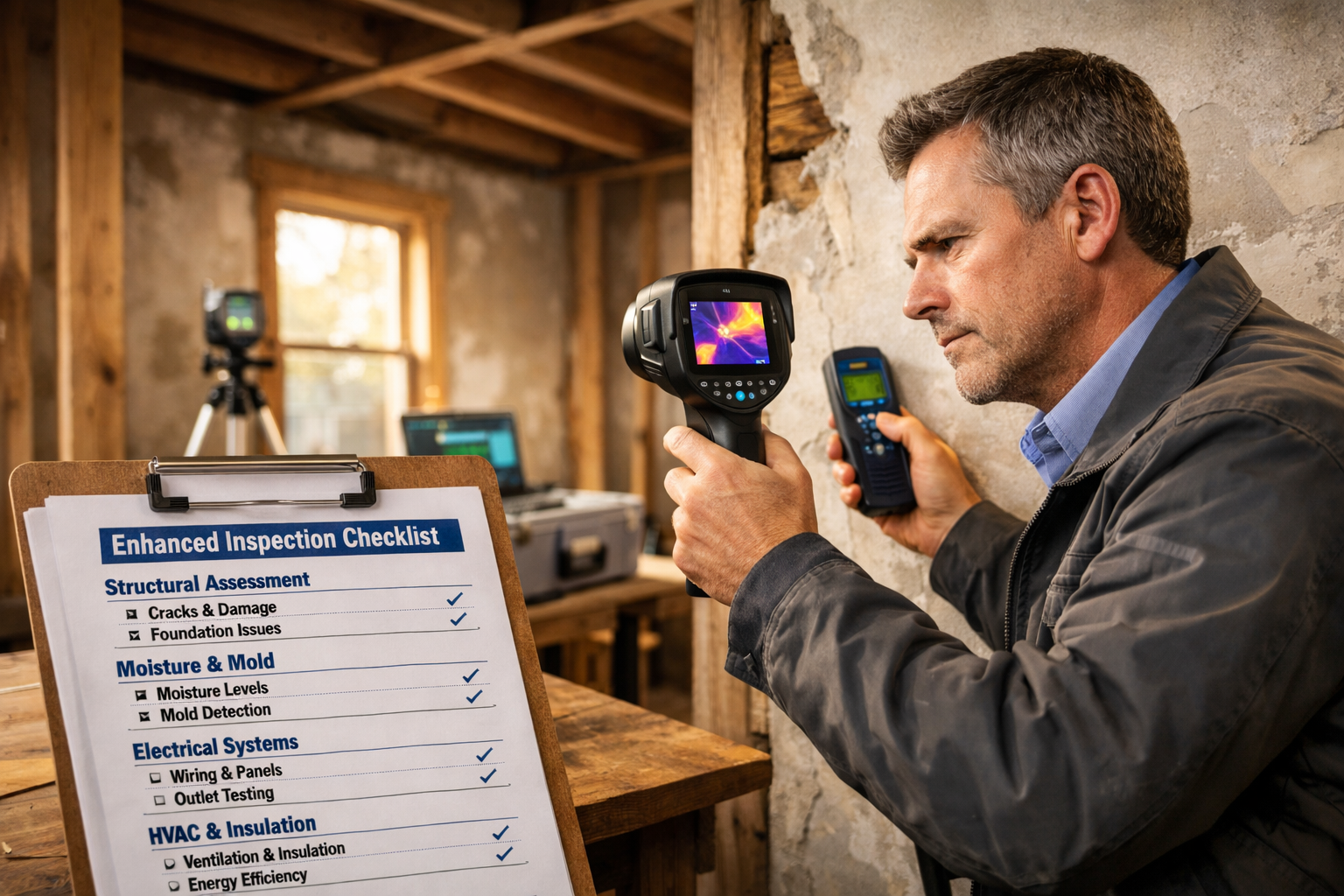
Technology integration has accelerated in response to buyer demands for evidence-based findings:
- 🔬 Thermal imaging to identify hidden moisture, insulation deficiencies, and heating system inefficiencies
- 📡 Moisture meters for precise readings rather than visual assessment alone
- 🚁 Drone surveys for roof and chimney inspection without access limitations
- 📱 Digital documentation with time-stamped photographs and GPS coordinates
- 💻 3D scanning for accurate measurements and spatial documentation
These technologies address buyer skepticism by providing objective, verifiable data rather than subjective assessments. When a surveyor can show thermal imagery revealing heat loss patterns, buyers gain confidence that issues are being thoroughly investigated rather than casually observed.
Extended inspection timeframes reflect the need for thoroughness. Where a standard survey might have taken 3-4 hours, comprehensive 2026 protocols often require 5-7 hours for similar properties. This additional time allows for:
- Multiple visits at different times of day or weather conditions
- Consultation with specialists for complex issues
- Detailed documentation of every accessible area
- Follow-up investigation of initial concerns
Understanding what questions buyers should ask during a building survey helps surveyors anticipate concerns and address them proactively within their inspection protocols.
Addressing Code Compliance and Future-Proofing
The shift toward "zero tolerance for error" in 2026 construction standards[2] extends to existing properties as well. Buyers increasingly demand assurance that properties meet current building codes and can adapt to emerging efficiency requirements.
Compliance verification now forms a standard component of adapted surveys:
- ✅ Electrical system compliance with current wiring regulations
- ✅ Structural modifications documented with appropriate building control approvals
- ✅ Energy efficiency ratings and potential improvement pathways
- ✅ Asbestos presence in pre-2000 properties requiring specialized asbestos building surveys
- ✅ Fire safety compliance, particularly in converted properties
Future regulatory risk assessment addresses buyer concerns about upcoming requirements that could impose unexpected costs. Surveyors should identify areas where properties may face compliance pressure in coming years, such as:
- Heating system replacements as fossil fuel bans approach
- Insulation upgrades to meet evolving energy performance standards
- Window and door replacements for thermal efficiency
- Drainage and water management improvements
This forward-looking approach helps buyers make informed decisions about whether a property represents a sound long-term investment or a potential compliance liability.
Building Surveys Under Buyer Sentiment Pressure: Adapting Inspection Protocols When Interest Rate Uncertainty Dampens Market Momentum Through Documentation and Reporting

Synchronized Documentation Packages
Lender requirements have evolved alongside buyer expectations, creating new standards for survey documentation. The 2026 construction playbook emphasizes synchronized documentation packages that include dated progress photos, third-party inspection reports, and signed lien waivers to expedite approvals and reduce financing costs[1].
For property surveys, this translates to comprehensive documentation packages that serve multiple stakeholders:
For buyers, documentation must provide:
- Clear photographic evidence of all significant defects
- Comparative examples showing similar issues and their implications
- Cost estimates from reputable contractors for identified repairs
- Timeline projections for addressing urgent versus deferred maintenance
For lenders and solicitors, documentation should include:
- Formal risk assessments categorizing issues by severity
- Structural integrity confirmations or concerns requiring specialist review
- Identification of issues affecting property value or mortgageability
- Clear statements about urgent or dangerous building issues requiring immediate attention
For insurance providers, surveys increasingly need to document:
- Flood risk factors and drainage adequacy
- Fire safety provisions and escape routes
- Security features and vulnerability assessments
- Maintenance history and deferred work implications
This multi-audience approach ensures that surveys serve as comprehensive property intelligence documents rather than simple defect lists.
Risk Stratification and Cost Projection
Building surveys under buyer sentiment pressure must clearly distinguish between different categories of issues to help anxious buyers make rational decisions rather than emotional ones.
Effective risk stratification frameworks include:
🔴 Critical/Urgent (Address within 1-3 months)
- Structural instability requiring immediate shoring or repair
- Active water ingress causing ongoing damage
- Electrical hazards presenting fire or shock risks
- Failed drainage systems creating health hazards
- Dangerous materials requiring immediate remediation
Understanding the consequences of failing to act on urgent issues helps buyers prioritize their response.
🟡 Significant (Address within 6-12 months)
- Deteriorating roofing requiring replacement before failure
- Heating system inefficiency or approaching end-of-life
- Damp issues requiring investigation and treatment
- Window and door replacements for security and efficiency
- Drainage improvements to prevent future problems
🟢 Moderate (Address within 1-3 years)
- Decorative repairs and cosmetic improvements
- Minor pointing and masonry repairs
- Gutter and downpipe replacements
- Garden boundary repairs
- Non-urgent efficiency upgrades
⚪ Maintenance (Ongoing attention)
- Regular servicing of mechanical systems
- Periodic repainting and weatherproofing
- Gutter cleaning and minor repairs
- Garden and landscape maintenance
- Routine inspections and adjustments
Cost projection methodologies have become more sophisticated to address buyer demands for financial clarity. Rather than vague ranges, adapted 2026 surveys provide:
- Low-medium-high cost scenarios for each significant issue
- Phasing strategies that spread costs over manageable timeframes
- DIY versus professional cost comparisons where appropriate
- Bulk repair efficiencies when multiple issues can be addressed simultaneously
- Contingency recommendations (typically 15-20% above estimates)
Comprehensive building problems and solutions documentation helps buyers understand not just what's wrong but realistic pathways to resolution.
Transparency in Limitations and Uncertainties
Ethical survey practice in 2026 requires explicit acknowledgment of inspection limitations and areas of uncertainty. Buyers appreciate honesty about what cannot be determined without invasive investigation, as it demonstrates professional integrity and helps them make informed decisions about additional specialist surveys.
Standard limitation disclosures should clearly state:
- Inaccessible areas such as concealed spaces, areas blocked by furniture, or locked rooms
- Non-invasive methodology explaining that surveys do not involve lifting floorboards, moving furniture, or destructive investigation
- Weather-dependent observations noting that some issues only manifest in specific conditions
- Specialist expertise boundaries recommending additional surveys for electrical, structural, or environmental concerns beyond general surveying scope
Uncertainty communication requires careful calibration. Rather than avoiding issues that cannot be definitively assessed, effective 2026 surveys acknowledge uncertainty while providing risk-based guidance:
"The rear extension shows minor cracking that may indicate settlement or may be superficial shrinkage. Without opening up the structure, definitive diagnosis is not possible. Given the property's age and construction type, structural investigation by a specialist engineer is recommended before exchange to eliminate significant risk. Estimated cost: £500-£800 for investigation; potential repair costs if structural issue confirmed: £3,000-£8,000."
This approach provides actionable guidance while maintaining professional honesty about diagnostic limitations.
Integration with Broader Property Intelligence
Modern surveys increasingly integrate with broader property intelligence to provide comprehensive due diligence. Buyers in uncertain markets want complete pictures rather than isolated technical assessments.
Contextual information that enhances survey value includes:
- Local market conditions and comparable property values
- Transport links and accessibility factors affecting property utility
- Planning history and potential development impacts
- Environmental factors including flood risk, contamination, and subsidence zones
- Neighborhood trends affecting long-term investment value
Cross-referencing with specialist surveys creates comprehensive property profiles:
- Coordinating with building pathology specialists for complex defect diagnosis
- Integrating building defects survey findings with structural engineering assessments
- Combining general surveys with environmental and contamination studies
- Linking survey findings to energy performance certificates and upgrade recommendations
This holistic approach addresses the comprehensive risk assessment that cautious 2026 buyers demand before committing to purchases in uncertain markets.
Practical Implementation: Adapting Your Survey Practice for 2026 Market Conditions
Updating Standard Operating Procedures
Survey firms must formalize protocol adaptations through updated standard operating procedures that reflect current market realities. Ad hoc adjustments create inconsistency; systematic updates ensure all surveyors deliver the enhanced service that building surveys under buyer sentiment pressure require.
Recommended SOP updates include:
📋 Pre-inspection protocols
- Mandatory buyer consultation calls to understand specific concerns
- Review of property listing information and available documentation
- Identification of known issues requiring specialist attention
- Equipment checklist verification including advanced diagnostic tools
📋 On-site inspection protocols
- Extended minimum timeframes based on property size and complexity
- Mandatory photographic documentation standards (minimum images per room)
- Checklist expansion to include compliance and efficiency factors
- Weather and access limitation documentation procedures
📋 Reporting protocols
- Standardized risk stratification categories and definitions
- Cost estimation methodologies with defined sources and ranges
- Limitation and uncertainty disclosure templates
- Multi-audience formatting with executive summaries and technical sections
📋 Quality assurance protocols
- Peer review requirements for complex or high-value properties
- Client feedback collection and response procedures
- Continuing professional development focused on emerging issues
- Technology proficiency maintenance and updates
Understanding how long building surveys take helps firms schedule appropriately for enhanced protocols without creating bottlenecks.
Technology Investment Priorities
Firms adapting to 2026 market conditions should prioritize technology investments that demonstrably enhance buyer confidence and inspection thoroughness. Not all technology delivers proportional value; strategic selection matters.
High-value technology investments:
-
Thermal imaging cameras (£2,000-£8,000) – Provides objective evidence of insulation deficiencies, moisture issues, and heating system problems that buyers particularly value in an energy-conscious market
-
Professional moisture meters (£200-£600) – Enables precise moisture content measurement rather than subjective assessment, critical for damp-related concerns
-
Drone equipment and licensing (£1,500-£5,000 plus training) – Allows comprehensive roof and chimney inspection without access limitations, addressing a common survey weakness
-
Digital reporting platforms (£50-£200/month) – Streamlines report production with standardized templates, photo integration, and client portal access for transparent communication
-
3D scanning equipment (£3,000-£15,000) – Creates detailed spatial records useful for renovation planning and dispute resolution, though cost-benefit depends on market segment
Technology implementation considerations:
- ⚡ Training requirements and proficiency development timelines
- ⚡ Client communication about enhanced capabilities and value
- ⚡ Integration with existing workflows and reporting systems
- ⚡ Maintenance, calibration, and upgrade costs
- ⚡ Insurance and liability implications of advanced diagnostics
Pricing Strategy in a Cautious Market
Adapting survey protocols inevitably affects pricing structures. Enhanced inspections require more time and equipment, yet buyers in uncertain markets resist price increases. Strategic pricing approaches balance these competing pressures.
Value-based pricing models that resonate with cautious buyers:
💰 Tiered service offerings allow buyers to select inspection depth based on property characteristics and risk tolerance:
- Essential survey: Standard protocol for low-risk modern properties
- Comprehensive survey: Enhanced protocol with extended inspection time and technology
- Premium survey: Full protocol including specialist consultations and follow-up investigations
💰 Bundled services create perceived value while encouraging comprehensive due diligence:
- Survey + energy assessment + cost projection package
- Survey + specialist referral coordination + post-survey consultation
- Survey + drone inspection + thermal imaging upgrade
💰 Transparent cost breakdowns help buyers understand value delivery:
- Base inspection fee covering standard protocol
- Technology supplements itemized separately (thermal imaging, drone survey)
- Specialist consultation fees clearly distinguished
- Report enhancement options (expedited delivery, additional copies)
Comparing Level 2 versus Level 3 surveys helps buyers understand value differences and make appropriate selections.
Building Client Confidence Through Communication
In markets characterized by buyer hesitation, survey firms must actively build confidence through proactive, transparent communication that extends beyond the formal report.
Pre-survey confidence building:
- Detailed explanations of inspection methodology and scope
- Surveyor credentials and experience sharing
- Sample report sections demonstrating thoroughness
- Client testimonials from similar property types
- Clear timelines and process explanations
During-survey engagement:
- On-site preliminary discussions of significant findings (where appropriate)
- Photographic updates shared in real-time (for premium services)
- Accessibility and responsiveness to urgent client questions
- Transparent communication about limitations encountered
Post-survey support:
- Follow-up consultation calls to discuss findings and implications
- Assistance interpreting technical aspects for non-specialist buyers
- Contractor referrals for identified repairs
- Availability for solicitor or lender queries
- Post-purchase support for emerging questions
This comprehensive communication approach transforms surveys from transactional services into consultative relationships that address the anxiety underlying building surveys under buyer sentiment pressure in 2026.
Conclusion
The property market of 2026 presents unique challenges that demand fundamental adaptation in how building surveys are conducted and communicated. Despite mortgage rates falling to three-year lows, buyer confidence remains fragile, creating an environment where building surveys under buyer sentiment pressure must evolve beyond traditional protocols to maintain their value and relevance.
The key adaptations—enhanced communication strategies, deepened inspection methodologies, sophisticated documentation packages, and transparent risk assessment—reflect a market where buyers approach purchases with heightened scrutiny and anxiety. Surveyors who recognize this shift and systematically adapt their practices will not only maintain client confidence but position themselves as essential advisors during uncertain times.
The transition from price competition to compliance rigor, the integration of advanced diagnostic technologies, and the demand for comprehensive property intelligence all point toward a more professional, thorough, and client-focused survey industry. These changes, while requiring investment in time, technology, and training, ultimately strengthen the profession's value proposition and protect buyers from the costly mistakes that uncertain markets make particularly devastating.
Actionable Next Steps
For survey professionals adapting to 2026 market conditions:
✅ Review and update standard operating procedures to formalize enhanced protocols rather than relying on ad hoc adjustments
✅ Invest strategically in technology that demonstrably enhances inspection thoroughness and buyer confidence, prioritizing thermal imaging and moisture detection equipment
✅ Develop tiered service offerings that allow buyers to select appropriate inspection depth while maintaining profitability for comprehensive surveys
✅ Enhance communication protocols throughout the survey process, from pre-inspection consultations through post-survey support
✅ Create comprehensive documentation packages that serve multiple stakeholders and provide clear risk stratification with realistic cost projections
✅ Build specialist networks for coordinated property intelligence that addresses the comprehensive due diligence cautious buyers demand
✅ Maintain professional development focused on emerging compliance requirements, diagnostic techniques, and client communication skills
For property buyers navigating uncertain markets, understanding what types of building surveys are available and selecting surveyors who have adapted their protocols to current market conditions provides essential protection against the risks that make hesitation rational in 2026.
The fundamental principle remains unchanged: thorough, honest, professionally communicated building surveys protect buyers from costly mistakes while enabling confident decision-making. In markets dampened by interest rate uncertainty and fragile sentiment, this protection becomes more valuable than ever—and survey professionals who deliver it through adapted protocols will thrive despite challenging conditions.
References
[1] 2026 Construction Interest Rates – ls-usa.com
[2] Watch – youtube.com
[3] Homebuilder Sentiment Nahb December 2025 – realtor.com
[7] Builder Confidence Interest Rates – chicagoagentmagazine.com