

Scotland's property market is experiencing a remarkable resurgence in 2026, with prices climbing steadily across major cities and rural areas alike. Yet beneath this optimistic surface lies a critical challenge: as buyers rush to secure properties in an increasingly competitive market, the temptation to skip thorough due diligence grows stronger. Building Surveys for Scotland's 2026 Housing Recovery: Prioritising Structural Risks in Upward Price Trends has never been more important, as rising prices can mask underlying structural defects that could cost buyers tens of thousands in unexpected repairs.
The current housing recovery presents a unique paradox. While upward price trends signal market confidence and economic stability, they also create urgency that can lead to hasty purchasing decisions. Comprehensive building surveys serve as essential safeguards, protecting buyers from inheriting costly structural problems hidden behind fresh paint and cosmetic improvements. In a market where properties receive multiple offers within days, understanding what lies beneath the surface becomes not just advisable—it's financially critical.
Key Takeaways
- 🏴 Scotland's 2026 housing recovery shows strong price momentum across Edinburgh, Glasgow, and Aberdeen, creating urgency that can compromise due diligence
- 🔍 Comprehensive building surveys are essential for detecting hidden structural defects that rising prices may obscure, particularly in older Scottish properties
- 📊 Structural risk assessment protects buyers from unexpected repair costs averaging £15,000-£45,000 for major defects in traditional Scottish buildings
- 🏗️ Retrofit and energy compliance requirements under Scottish building standards make thorough surveys critical for future-proofing property investments
- ✅ Professional survey reports provide negotiating power and informed decision-making in competitive markets where multiple offers are common
Understanding Scotland's 2026 Housing Market Recovery
Scotland's property market has entered a robust recovery phase in 2026, characterized by sustained price growth, increased transaction volumes, and renewed buyer confidence. This resurgence follows several years of market uncertainty and represents a significant shift in the Scottish housing landscape.
Current Market Dynamics
The Scottish housing market in 2026 demonstrates several key characteristics:
Regional Price Growth Patterns:
- Edinburgh and surrounding Lothians: 6-8% annual growth
- Glasgow and West Central Scotland: 5-7% annual growth
- Aberdeen and Northeast: 4-6% recovery from previous downturn
- Rural and Highland regions: 7-9% growth driven by remote work trends
Supply and Demand Imbalances:
The fundamental driver of Scotland's price recovery remains a persistent shortage of available properties. Housing stock levels sit approximately 25% below pre-pandemic levels, while buyer demand has increased substantially. This imbalance creates competitive bidding situations where properties regularly achieve prices 5-10% above Home Report valuations.
| Market Indicator | 2024 | 2025 | 2026 |
|---|---|---|---|
| Average Sale Price | £195,000 | £205,000 | £218,000 |
| Time on Market | 42 days | 35 days | 28 days |
| Sales Over Valuation | 15% | 22% | 31% |
| Multiple Offers | 48% | 61% | 73% |
Factors Driving Price Momentum
Several interconnected factors fuel Scotland's housing recovery:
Mortgage Accessibility: Interest rates have stabilized at more manageable levels compared to 2023-2024 peaks, with fixed-rate products becoming increasingly competitive. First-time buyer schemes and government support programs have expanded access to mortgage finance.
Economic Confidence: Scotland's economic indicators show steady improvement, with employment rates strengthening and wage growth outpacing inflation in key sectors. This economic stability translates directly into housing market confidence.
Demographic Shifts: Population movements continue favoring Scottish cities and rural areas, particularly among remote workers seeking quality of life improvements and more affordable housing compared to Southeast England.
Investment Activity: Buy-to-let investors and portfolio developers have returned to the market, recognizing Scotland's rental yield potential and long-term capital appreciation prospects.
Risks Hidden by Rising Prices
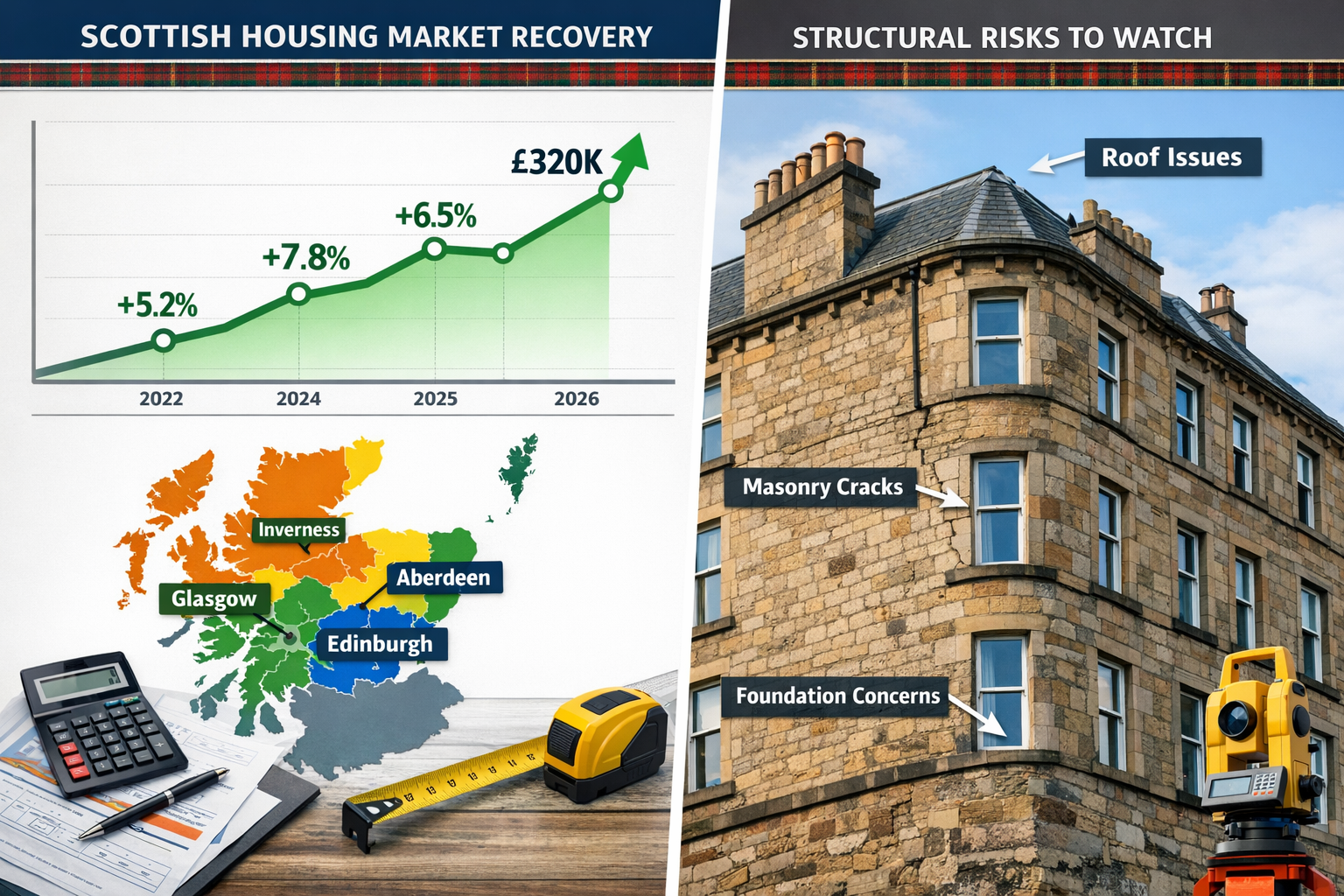
While upward price trends signal market health, they simultaneously create conditions where structural problems become easier to overlook or downplay. Building Surveys for Scotland's 2026 Housing Recovery: Prioritising Structural Risks in Upward Price Trends addresses this critical concern directly.
The Cosmetic Improvement Trap: Sellers increasingly invest in superficial improvements—fresh paint, new flooring, updated kitchens—that enhance visual appeal while potentially concealing underlying structural issues. A property that looks move-in ready may harbor serious defects behind those attractive surfaces.
Bidding War Pressure: When multiple buyers compete for the same property, the psychological pressure to secure the purchase can override rational risk assessment. Buyers may waive survey conditions or ignore warning signs to avoid losing their desired home.
Valuation Inflation: As comparable sales prices rise, property valuations increase accordingly. However, these valuations reflect market sentiment rather than structural condition, meaning buyers may pay premium prices for properties requiring substantial remedial work.
Why Building Surveys Are Critical During Housing Recovery
The intersection of rising prices and competitive markets makes comprehensive building surveys more valuable than ever. Understanding what types of building surveys are there helps buyers select appropriate inspection levels for their circumstances.
Structural Defects Common in Scottish Properties
Scotland's housing stock includes significant proportions of older buildings constructed with traditional methods and materials. These properties, while characterful and desirable, present specific structural vulnerabilities:
Traditional Tenement Buildings:
- Sandstone deterioration and spalling
- Shared structural elements requiring coordinated maintenance
- Historic alterations that may compromise structural integrity
- Dampness from solid wall construction
- Roof and chimney stack degradation
Victorian and Edwardian Properties:
- Settlement cracks from inadequate foundations
- Timber decay in suspended floors and roof structures
- Lead plumbing and outdated electrical systems
- Single-glazed sash windows with extensive repairs needed
- Subsidence risks in certain geological areas
Post-War Construction:
- Concrete carbonation in 1950s-1970s builds
- Cavity wall tie corrosion
- Flat roof deterioration
- Asbestos-containing materials
- Inadequate insulation requiring retrofit
A Level 3 full building survey provides the comprehensive assessment necessary to identify these issues before purchase completion.
Financial Protection Through Thorough Assessment
The financial implications of undiscovered structural defects can be substantial:
Typical Repair Costs for Major Defects:
- Subsidence underpinning: £10,000-£50,000
- Complete roof replacement: £8,000-£25,000
- Rising damp treatment and replastering: £5,000-£15,000
- Structural timber repairs: £3,000-£12,000
- Chimney stack rebuilding: £2,500-£8,000
- Foundation repairs: £15,000-£40,000
When purchasing a property for £250,000, discovering £30,000 in hidden structural repairs transforms the actual cost to £280,000—potentially exceeding budget and mortgage capacity. A building survey costing £800-£1,500 provides exceptional value by revealing these issues beforehand.
Negotiating Power in Competitive Markets
Even in fast-moving markets with multiple offers, professional survey findings provide legitimate grounds for renegotiation. Sellers recognize that structural defects will emerge during any buyer's due diligence, making them more willing to adjust prices when presented with documented evidence.
Strategic Advantages:
- ✅ Documented evidence supports price reduction requests
- ✅ Identifies deal-breakers before significant legal costs accrue
- ✅ Establishes realistic renovation budgets
- ✅ Provides leverage for seller-funded repairs
- ✅ Protects against post-purchase disputes
Understanding urgent or dangerous building issues identified during surveys can be particularly powerful in negotiations, as these require immediate attention regardless of market conditions.
Prioritising Structural Risks in Building Surveys for Scotland's 2026 Housing Recovery
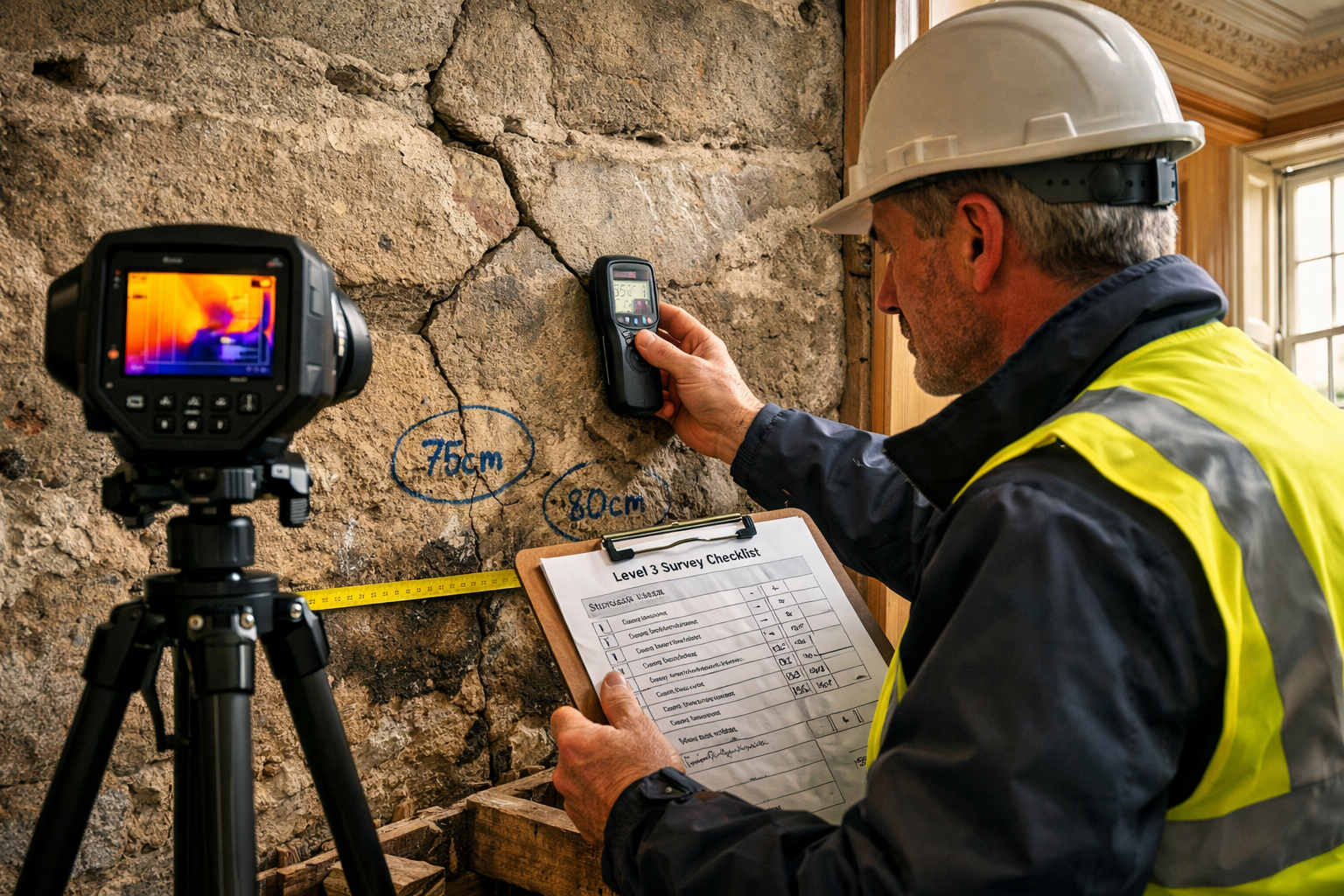
Building Surveys for Scotland's 2026 Housing Recovery: Prioritising Structural Risks in Upward Price Trends requires a systematic approach to risk assessment that balances thoroughness with practical decision-making timelines.
The Risk-Based Survey Approach
Professional surveyors employ a hierarchical risk assessment methodology that categorizes findings by severity and urgency:
Category 1 – Critical Structural Risks:
- Active structural movement or subsidence
- Unsafe structural elements requiring immediate attention
- Dangerous electrical or gas installations
- Severe water ingress causing ongoing damage
- Compromised load-bearing elements
Category 2 – Significant Defects:
- Progressive deterioration requiring intervention within 1-2 years
- Building regulation non-compliance
- Defective drainage systems
- Roof covering approaching end of serviceable life
- Dampness affecting habitable spaces
Category 3 – Maintenance Items:
- Routine repairs and decorative work
- Minor weatherproofing improvements
- Cosmetic upgrades
- Preventive maintenance recommendations
This classification system helps buyers understand which issues demand immediate attention versus those that can be addressed over time. When asking questions during a building survey, focus on understanding the surveyor's risk categorization rationale.
Scottish Building Standards and Compliance
Scotland operates under distinct building regulations that differ from England and Wales. Survey reports must assess compliance with current Scottish Building Standards, particularly regarding:
Energy Performance Requirements:
- EPC ratings and improvement potential
- Insulation standards for walls, roofs, and floors
- Heating system efficiency
- Glazing performance
- Renewable energy integration opportunities
Safety Compliance:
- Fire safety provisions, especially in flats and HMOs
- Electrical installation certification
- Gas safety compliance
- Structural stability certification
- Asbestos management
Planning and Building Warrant History:
- Verification that previous alterations obtained proper consents
- Identification of unauthorized works
- Assessment of non-compliant conversions
- Listed building considerations
Understanding building pathology specific to Scottish construction types ensures surveys address region-specific concerns effectively.
Technology-Enhanced Survey Capabilities
Modern surveying technology provides unprecedented insight into structural conditions:
Thermal Imaging: Identifies heat loss, moisture ingress, and insulation deficiencies invisible to visual inspection. Particularly valuable for assessing solid wall properties common in Scotland.
Moisture Meters: Quantifies dampness levels in walls, floors, and timbers, distinguishing between surface condensation and penetrating damp requiring remedial action.
Drone Surveys: Premium drone surveys enable detailed roof and chimney inspection without scaffolding, providing high-resolution imagery of otherwise inaccessible areas.
Structural Monitoring: For properties showing signs of movement, electronic crack monitoring establishes whether defects are historic and stable or actively progressing.
Endoscopic Inspection: Allows examination of concealed spaces including wall cavities, under floors, and within roof voids without destructive investigation.
These technologies complement traditional survey methods, providing comprehensive assessment that identifies issues early when remediation costs remain manageable.
Retrofit Assessment for Future-Proofing
Scotland's ambitious climate targets and evolving energy efficiency requirements make retrofit potential a critical survey consideration. Properties that meet current standards may require substantial upgrades to comply with future regulations.
Key Retrofit Considerations:
- Solid wall insulation feasibility and costs
- Roof insulation upgrade potential
- Heating system replacement requirements
- Renewable energy installation suitability
- Ventilation improvements for airtight upgrades
- Listed building constraints on energy improvements
A forward-looking survey assesses not only current condition but also the property's capacity for cost-effective energy performance improvements. This perspective proves especially valuable given Scotland's trajectory toward net-zero housing targets.
Specialist Structural Engineering Input
Complex structural concerns identified during building surveys often warrant specialist structural engineering assessment. Understanding when to hire a structural engineer prevents costly misdiagnosis and ensures appropriate remediation strategies.
Situations Requiring Structural Engineering Expertise:
- Significant cracking patterns suggesting movement
- Alterations to load-bearing walls
- Roof structure modifications
- Foundation concerns
- Retaining wall failures
- Loft conversion structural adequacy
Structural engineering services provide detailed calculations, remediation specifications, and Building Warrant application support when surveys reveal significant structural concerns.
Selecting the Right Building Survey for Scottish Property Purchases
Choosing an appropriate survey level balances thoroughness with cost-effectiveness. Which building survey do I need depends on property type, age, condition, and purchase price.
Survey Level Comparison
RICS Home Survey Level 1 (Condition Report):
- Best for: New-build or recently constructed properties in excellent condition
- Scope: Basic condition assessment with traffic light rating system
- Limitations: No advice on repairs or ongoing maintenance
- Cost: £300-£500
- Recommendation for 2026 recovery: Rarely sufficient given competitive market risks
RICS Home Survey Level 2 (HomeBuyer Report):
- Best for: Conventional properties in reasonable condition built post-1900
- Scope: Inspection of accessible areas with condition ratings and repair advice
- Limitations: No detailed investigation of concealed areas
- Cost: £500-£900
- Recommendation for 2026 recovery: Adequate for standard properties without obvious defects
RICS Home Survey Level 3 (Building Survey):
- Best for: Older properties, unusual construction, properties requiring renovation, or high-value purchases
- Scope: Comprehensive inspection with detailed analysis of construction, condition, and defects
- Limitations: More expensive and time-consuming
- Cost: £800-£1,500+
- Recommendation for 2026 recovery: Strongly recommended for most Scottish property purchases given market conditions
When Level 3 Surveys Are Essential
Given the risks inherent in Scotland's 2026 housing recovery, Level 3 building surveys provide optimal protection for:
- Pre-1919 properties: Traditional construction methods require specialist assessment
- Properties showing visible defects: Cracks, dampness, or structural alterations
- Listed buildings: Historic fabric and conservation constraints
- Properties for renovation: Comprehensive understanding of existing condition
- High-value purchases: Greater financial exposure justifies thorough investigation
- Competitive bidding situations: Detailed knowledge supports confident decision-making
- Properties with complex histories: Multiple extensions, conversions, or alterations
Survey Timing in Fast-Moving Markets
Scotland's competitive market creates timing challenges for comprehensive surveys. Strategic planning ensures thorough assessment without losing purchase opportunities:
Pre-Offer Survey Strategy:
- Arrange preliminary viewing with surveyor before making offer
- Obtain indicative assessment of major concerns
- Factor survey findings into offer price
- Include survey contingency in offer conditions
Post-Offer Survey Approach:
- Commission survey immediately upon offer acceptance
- Request expedited report delivery (typically 5-7 working days)
- Maintain communication with seller's agent during survey period
- Prepare renegotiation strategy based on findings
Survey Contingency Clauses:
- Include condition allowing withdrawal based on survey findings
- Specify timeframe for survey completion and review
- Establish thresholds for price renegotiation
- Protect deposit pending satisfactory survey outcome
Environmental and Planning Considerations in Building Surveys
Comprehensive building surveys extend beyond structural assessment to encompass environmental issues and planning compliance that affect property value and usability.
Environmental Risk Assessment
Flood Risk: Scotland's changing climate patterns increase flood vulnerability in previously unaffected areas. Surveys should assess:
- Property elevation relative to watercourses
- Historical flooding evidence
- Drainage adequacy
- Flood defense infrastructure
- Insurance implications
Contaminated Land: Former industrial sites, fuel storage areas, or landfill proximity may indicate contamination risks requiring investigation and potential remediation.
Japanese Knotweed and Invasive Species: Presence of invasive plants affects mortgage availability and requires professional eradication programs costing £2,000-£10,000.
Radon Gas: Certain Scottish regions show elevated radon levels requiring measurement and potential mitigation through improved ventilation or radon sumps.
Planning Compliance Verification
Unauthorized alterations represent significant legal and financial risks. Building surveys should verify:
- Building Warrant History: Confirmation that extensions, loft conversions, and structural alterations obtained proper consent
- Planning Permission: Verification of consent for changes of use, new structures, or material external alterations
- Listed Building Consent: For properties with heritage designation, confirmation of proper consent for all alterations
- Conservation Area Compliance: Verification that external changes comply with conservation area restrictions
Discovering unauthorized works post-purchase can result in enforcement action requiring expensive remediation or retrospective consent applications with uncertain outcomes.
Making Informed Decisions: From Survey to Purchase
The ultimate value of Building Surveys for Scotland's 2026 Housing Recovery: Prioritising Structural Risks in Upward Price Trends lies in translating technical findings into informed purchasing decisions.
Interpreting Survey Reports Effectively
Professional survey reports contain substantial technical information. Focus on:
Executive Summary: Prioritized list of significant concerns requiring immediate attention or affecting purchase decision
Cost Implications: Estimated repair costs for identified defects, enabling realistic budget planning
Urgency Assessment: Timeline for addressing defects—immediate, short-term (1-2 years), or long-term maintenance
Risk Evaluation: Surveyor's professional opinion on severity and potential progression of defects
Recommendations: Suggested further investigations, specialist consultations, or monitoring requirements
Negotiation Strategies Based on Survey Findings
Survey reports provide legitimate grounds for price renegotiation even in competitive markets:
Minor Defects (Under £5,000 total):
- Accept as part of property purchase
- Factor into renovation planning
- Request seller address specific safety concerns
Moderate Defects (£5,000-£15,000):
- Request price reduction equivalent to 50-75% of repair costs
- Negotiate seller-funded repairs before completion
- Obtain multiple contractor quotes to support negotiations
Major Defects (Over £15,000):
- Request substantial price reduction
- Consider withdrawing if defects exceed acceptable risk
- Obtain specialist reports to quantify exact remediation costs
- Renegotiate mortgage terms based on revised property value
When to Walk Away
Despite emotional investment and competitive pressure, some survey findings warrant purchase withdrawal:
- Progressive structural movement requiring extensive underpinning
- Widespread timber decay affecting structural integrity
- Major building regulation non-compliance requiring expensive remediation
- Contamination issues with uncertain remediation costs
- Repair costs exceeding 15-20% of purchase price
- Defects making property unmortgageable until rectified
Walking away from a problematic property, though disappointing, prevents potentially catastrophic financial consequences. Scotland's recovering market will present alternative opportunities.
Conclusion
Building Surveys for Scotland's 2026 Housing Recovery: Prioritising Structural Risks in Upward Price Trends represents essential due diligence in today's competitive property market. While rising prices and buyer enthusiasm signal market confidence, they simultaneously create conditions where costly structural defects can be overlooked in the rush to secure properties.
Comprehensive building surveys provide critical protection by:
✅ Identifying hidden structural defects before financial and legal commitment
✅ Quantifying repair costs for realistic budget planning
✅ Providing negotiating leverage even in competitive markets
✅ Assessing retrofit requirements for future regulatory compliance
✅ Verifying planning and building warrant compliance to avoid legal complications
Scotland's housing recovery presents genuine opportunities for buyers, but success requires balancing enthusiasm with rigorous assessment. The relatively modest cost of professional building surveys—typically 0.3-0.6% of purchase price—provides exceptional value compared to the tens of thousands in unexpected repairs that undiscovered defects can generate.
Actionable Next Steps
For buyers navigating Scotland's 2026 housing market:
- Commission appropriate survey levels based on property age, type, and condition—favor Level 3 surveys for pre-1950 properties
- Select RICS-qualified surveyors with specific experience in Scottish construction types and building standards
- Include survey contingencies in purchase offers to protect against undisclosed defects
- Request detailed cost estimates for identified defects to support negotiation and budget planning
- Obtain specialist input when surveys identify complex structural or environmental concerns
- Review survey reports thoroughly before proceeding to ensure full understanding of property condition
- Factor long-term maintenance and retrofit costs into affordability calculations
The intersection of rising prices and structural risk assessment defines Scotland's 2026 housing landscape. Buyers who prioritize comprehensive building surveys position themselves to make confident, informed decisions that protect both immediate financial interests and long-term property value. In a recovering market, thorough due diligence isn't pessimism—it's prudent investment strategy that distinguishes successful property purchases from costly mistakes.