

{"cover":"Professional landscape format (1536×1024) hero image featuring bold text overlay 'Building Surveys for New Build Snags in 2026: Checklists for 2-5% Price Growth Buyer Protections' in extra large 72pt white sans-serif font with dark shadow and semi-transparent navy overlay box, positioned in upper third center. Background shows modern new build housing development with brick facades, pristine construction, professional surveyor in high-visibility vest holding clipboard and tablet inspecting exterior wall details. Foreground includes architectural blueprints, inspection checklist, and measuring tools. Color scheme: navy blue, white, construction orange accents. Magazine cover quality, editorial style, high contrast, professional real estate aesthetic with subtle UK housing market growth chart overlay in corner showing 2-5% upward trend line.","content":["Detailed landscape format (1536×1024) image showing comprehensive new build defect inspection scene with professional surveyor examining multiple snagging issues simultaneously. Split-screen composition: left side displays close-up photographs of common defects including scratched window glass with visible marks, uneven plastering with measuring level showing angle, poorly fitted door frame with visible gaps, paint splatter on carpet fibers. Right side shows surveyor's digital tablet screen displaying detailed snagging checklist with red priority markers, photographic evidence thumbnails, and categorized defect list. Include magnifying glass highlighting EPC rating certificate, fire safety documentation, and structural warranty papers. Professional lighting, construction site aesthetic, inspection tools scattered including moisture meter, spirit level, and thermal imaging camera. Color palette: professional blues, warning oranges, documentation whites.","Detailed landscape format (1536×1024) technical infographic illustration showing room-by-room new build inspection protocol with cutaway architectural cross-section view of modern two-story house. Each room labeled with numbered priority markers (1-3 stars) indicating defect severity levels. Kitchen area highlights plumbing connections, appliance installations, and tiling work with red warning icons. Bathroom shows moisture testing points, ventilation checks, and waterproofing inspection zones in yellow. Living areas display electrical outlet testing, flooring levelness checks, and window seal inspections in green. Loft space shows insulation depth measurement (270mm standard marked), ventilation pathways, and structural timber inspection points. Include sidebar checklist with tick boxes for EPC compliance, fire safety systems, and Building Regulation standards. Clean architectural drawing style with color-coded priority system, measurement annotations, and professional surveying symbols.","Detailed landscape format (1536×1024) professional scene showing buyer protection documentation and warranty timeline visualization. Central focus on organized desk with spread documents including NHBC warranty certificate with prominent 2-year defect correction period highlighted in yellow, New Homes Quality Code documentation, professional snagging survey report bound with photographic evidence tabs, and builder correspondence folder. Background shows timeline infographic on wall displaying key protection milestones: pre-completion inspection window, completion date, 2-year warranty period for defects, 10-year structural warranty coverage. Include calculator displaying cost-benefit analysis (£320 survey cost versus £15,000 average defect correction value), property price growth chart showing 2-5% appreciation curve for 2026 UK market, and tablet showing digital defect tracking app interface. Professional office lighting, real estate transaction aesthetic, organized documentation style with sticky note reminders and priority flags."]

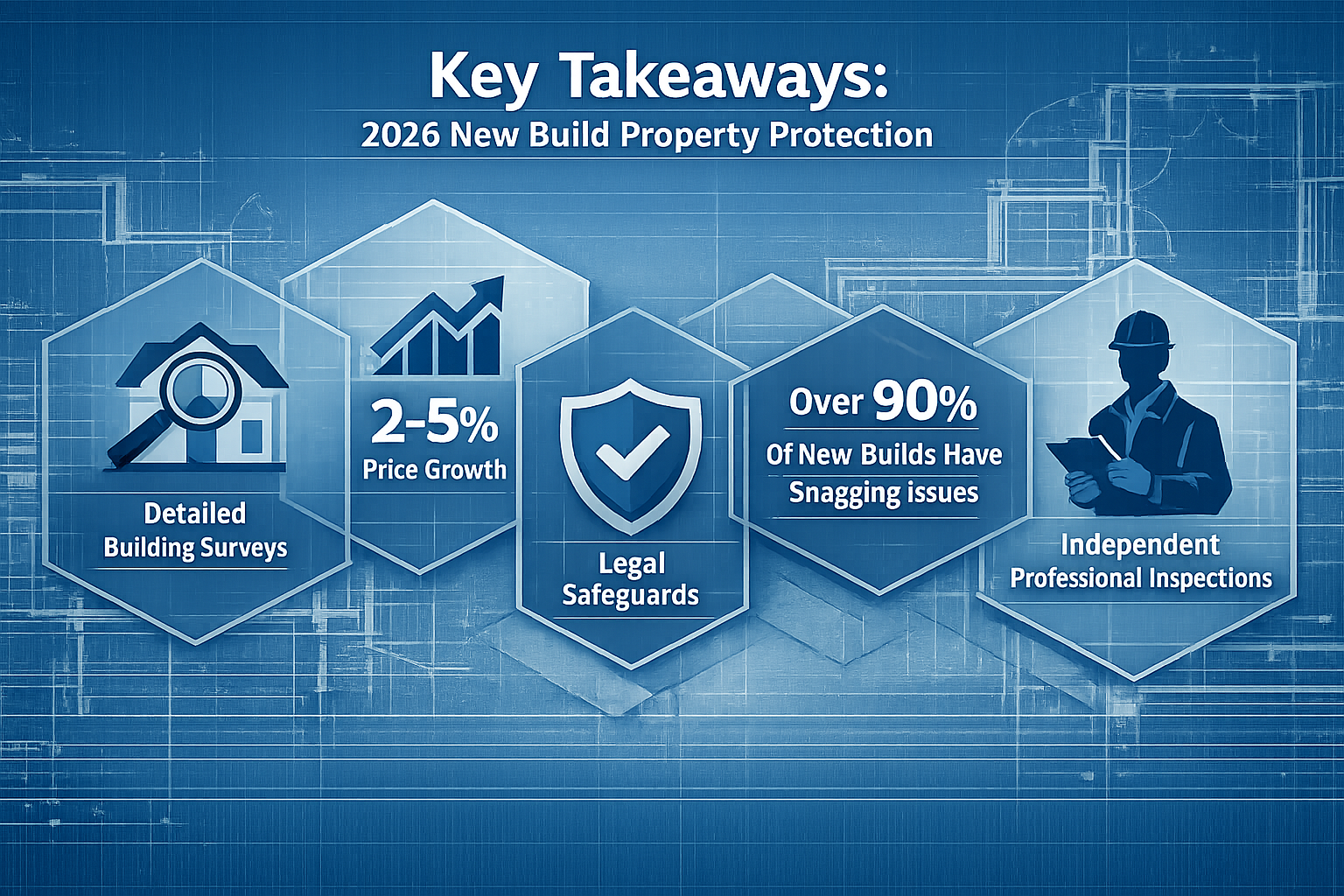
The UK housing market in 2026 presents a unique opportunity for buyers, with property prices experiencing modest growth of 2-5% nationally. Yet beneath the gleaming facades of new build homes lies a sobering reality: 93.7% of new build buyers report problems to their builder after moving in, with over a quarter discovering more than 15 separate defects [1]. As buyers invest substantial sums into properties appreciating at steady rates, Building Surveys for New Build Snags in 2026: Checklists for 2-5% Price Growth Buyer Protections have become essential tools for safeguarding investments and ensuring quality standards are met before completion.
Unlike older properties where structural concerns dominate, new builds present a different challenge. The defects are often cosmetic or compliance-related, yet they can significantly impact property value, energy efficiency, and long-term maintenance costs. With enhanced focus on EPC ratings, fire safety regulations, and structural warranties not covered in previous retrofit mandates, today's buyers need comprehensive protection strategies that go beyond traditional surveys.
Key Takeaways
- 93.7% of new build buyers encounter defects after moving in, making professional snagging surveys essential for protecting investments in the 2-5% growth market [1]
- Professional snagging surveys start at £320 and typically identify defects worth thousands in correction costs, with NHBC warranties allowing two years for builder-funded repairs [1][4]
- Priority defect protocols focus on EPC compliance, fire safety systems, and structural issues that directly impact property value and resale potential in 2026's regulated market
- Pre-completion inspection rights under the New Homes Quality Code allow buyers to identify and address issues before legal completion [1]
- Comprehensive checklists covering 10+ categories ensure nothing is overlooked, from insulation depth standards (270mm) to electrical safety certifications [6]
Understanding New Build Snags and Their Impact on 2026 Property Values
What Constitutes a Snagging Defect?
A snagging survey represents a detailed inspection of newly constructed properties designed to identify defects, imperfections, and non-compliance issues before or shortly after completion. While the term "snag" might sound minor, these defects range from purely cosmetic problems to serious compliance failures that affect property value, safety, and energy performance.
Common categories of new build snags include:
- 🎨 Cosmetic defects: Scratched windows, paint splatters, damaged carpets, poorly finished joinery
- 🔧 Functional issues: Doors or windows that don't close properly, loose tiles, uneven flooring
- 💧 Plumbing problems: Leaking pipework, poorly sealed joints, inadequate water pressure
- ⚡ Electrical concerns: Incorrectly wired fittings, missing safety certificates, non-compliant installations
- 🏠 Structural matters: Poor plastering, cracked walls, inadequate insulation causing draughts [4]
The financial implications extend beyond immediate repair costs. In 2026's market, where properties appreciate at 2-5% annually, unaddressed snags can:
- Reduce resale value by 3-7% according to buyer perception studies
- Increase energy bills by up to £400 annually through poor insulation or draughts
- Create legal complications if discovered after the two-year NHBC warranty period expires [4]
The 2026 Market Context: Why Buyer Protections Matter More
The modest 2-5% price growth characterizing 2026's property market creates a specific investment environment where buyer protections become critical leverage points. Unlike boom periods where rapid appreciation masks underlying defects, steady growth markets demand quality assurance.
"With over a quarter of new build buyers reporting more than 15 snags, professional inspection isn't optional—it's essential risk management in a measured growth market." [1]
This market dynamic means:
For buyers: Every pound spent on property represents a significant investment requiring protection. A £350,000 new build appreciating at 3% annually gains £10,500 in value, but unaddressed defects costing £5,000-£15,000 to repair effectively halve that gain.
For developers: Reputation matters more in steady markets. Builders face increased scrutiny, and snagging surveys create accountability that protects both parties through documented evidence.
For lenders: Mortgage providers increasingly require evidence of quality assurance on new builds, with some offering preferential rates for properties with clean snagging reports.
Understanding why a building survey is essential for home buyers provides broader context for these specialized new build inspections.
Building Surveys for New Build Snags in 2026: Comprehensive Inspection Checklists
Priority One: EPC Compliance and Energy Efficiency Standards
Energy Performance Certificate (EPC) compliance has become non-negotiable in 2026's regulatory environment. New builds must achieve minimum ratings, but the difference between a C-rated and A-rated property significantly impacts both running costs and resale value.
Critical EPC-related inspection points:
| Component | Standard Requirement | Common Defects | Impact |
|---|---|---|---|
| Loft Insulation | 270mm mineral wool depth | Insufficient coverage, compressed areas, gaps around joists | 15-20% heat loss |
| Wall Insulation | Cavity wall or solid wall to current Building Regs | Poor installation, thermal bridges, missing sections | 30-35% heat loss |
| Window Glazing | Double or triple glazing with low-E coating | Incorrectly fitted, poor seals, missing trickle vents | 10-15% heat loss |
| Heating Systems | High-efficiency boiler (92%+ efficiency) or heat pump | Incorrect sizing, poor commissioning, missing controls | 25-30% excess costs |
| Ventilation | Mechanical ventilation with heat recovery (MVHR) in many new builds | Incorrect ducting, inadequate airflow, noisy operation | Condensation, mold risk |
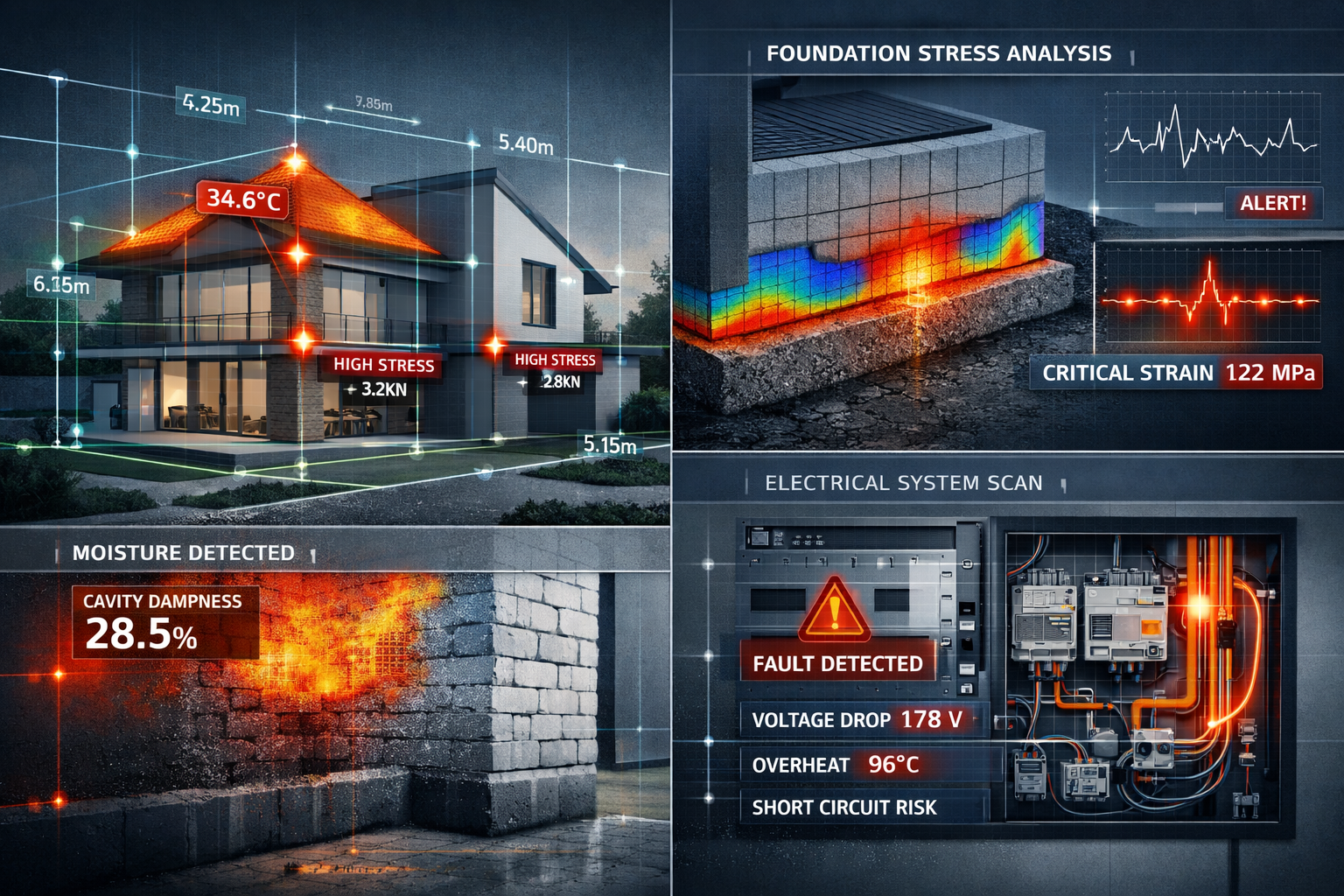
Professional surveyors use thermal imaging cameras to identify cold spots, air leakage points, and insulation deficiencies invisible to visual inspection alone. In 2026, these tools have become standard equipment for comprehensive snagging surveys [6].
Action checklist for EPC compliance:
✅ Request EPC certificate before completion and verify rating matches specifications
✅ Measure loft insulation depth in multiple locations (should be consistent 270mm)
✅ Check all external doors and windows for proper sealing and weather stripping
✅ Verify heating system commissioning certificates and control programming
✅ Test ventilation systems for adequate airflow in all rooms
✅ Inspect for visible thermal bridges at junctions and penetrations
For properties requiring deeper investigation into building performance issues, areas requiring further investigation may include specialized thermal performance testing.
Priority Two: Fire Safety Systems and Compliance
Post-Grenfell regulations have transformed fire safety requirements for new builds, particularly in multi-occupancy developments. The 2026 Building Safety Act amendments place additional responsibilities on developers and create specific inspection requirements.
Essential fire safety inspection points:
🔥 Smoke and Heat Detectors
- Mains-powered with battery backup in every room except bathrooms and toilets
- Interlinked system that triggers all alarms simultaneously
- Tested and certified to BS EN 14604 standard
- Proper positioning (ceiling-mounted, away from corners and air vents)
🔥 Fire Doors and Escape Routes
- Fire doors properly hung with correct gaps (3-4mm maximum)
- Intumescent strips and smoke seals correctly fitted
- Self-closing mechanisms functioning smoothly
- Clear escape routes without obstructions
- Emergency lighting in communal areas (apartments/flats)
🔥 Compartmentation and Fire Stopping
- Cavity barriers installed at correct intervals
- Service penetrations properly fire-stopped
- Party walls adequately fire-rated
- Loft spaces compartmentalized in terraced properties
🔥 External Wall Systems
- Cladding materials compliant with current regulations
- Adequate fire breaks between floors
- Balconies with proper fire resistance ratings
- Documentation of materials used and compliance certificates
Common defects found in 2026 inspections include smoke detectors not properly interlinked, fire doors with excessive gaps or missing intumescent strips, and inadequate fire-stopping around service penetrations [8].
Professional tip: Request copies of all fire safety certificates, including smoke detector installation certificates, fire door compliance documentation, and compartmentation test results. These documents become crucial if issues arise during the warranty period.
Priority Three: Structural Integrity and Building Regulation Compliance
While new builds benefit from current Building Regulations, construction defects still occur. Structural issues represent the highest-risk category because they're often hidden and expensive to remedy.
Key structural inspection areas:
Foundation and Substructure
- No visible cracking in external walls (hairline cracks under 0.5mm may be acceptable settlement)
- Level floors throughout (maximum deviation 3mm per meter)
- No signs of subsidence or heave
- Proper drainage around foundations
- Damp-proof course correctly installed and undamaged
Walls and Load-Bearing Elements
- Plumb walls (vertical alignment within tolerance)
- Properly bonded brickwork with consistent mortar joints
- Lintels correctly sized and positioned above openings
- No bulging, bowing, or leaning walls
- Cavity trays installed at correct positions
Roof Structure
- Trusses or rafters properly secured and aligned
- No sagging or deflection in roof planes
- Ridge and hip tiles securely fixed
- Adequate ventilation to roof space
- Sarking felt or breathable membrane correctly installed
Floors and Ceilings
- Solid floors level and free from cracking
- Suspended floors without excessive bounce or creaking
- Ceiling joists adequately sized and spaced
- No visible deflection in ceiling planes
- Proper sound insulation between floors (particularly flats)
Understanding building pathology helps identify early warning signs of structural issues that may develop over time.
Room-by-Room Snagging Checklist for 2026
Kitchen Inspection Points 🍳
- All appliances installed, level, and functioning
- Worktops securely fixed with no gaps or damage
- Tiling properly aligned with consistent grouting
- Plumbing connections leak-free under pressure testing
- Electrical outlets positioned per specifications
- Adequate ventilation (extractor fan to external wall)
- Flooring level and properly finished
Bathroom Inspection Points 🚿
- Waterproofing (tanking) correctly installed in wet areas
- Tiles properly fixed with no hollow sounds when tapped
- Silicone seals complete and professionally finished
- Plumbing fixtures securely mounted and leak-free
- Adequate ventilation (extractor fan with correct extraction rate)
- Shower screens properly sealed and functioning
- Hot water temperature regulated (maximum 48°C at outlets)
Bedroom Inspection Points 🛏️
- Windows open, close, and lock smoothly
- Adequate power outlets per Building Regulations
- Heating radiators functioning and balanced
- Flooring level and damage-free
- Doors hung correctly with proper clearances
- Plastering smooth and paint finish consistent
- Built-in wardrobes (if included) properly fitted
Living Areas Inspection Points 🛋️
- Flooring transitions smooth and level
- Skirting boards and architraves properly fitted
- Windows and doors draught-free
- Electrical outlets and switches functioning correctly
- Heating system providing adequate warmth
- No signs of dampness or condensation
- Decoration to specified standard
External Areas Inspection Points 🏡
- Boundaries clearly defined and secure
- Drainage systems functioning (gullies, downpipes, manholes)
- External walls free from cracking or damage
- Paths and driveways properly constructed and level
- Garden areas to specified finish
- External lighting functioning
- Bin storage and external tap installed
For comprehensive property assessment, consider how a Level 3 full building survey approaches systematic inspection methodologies.
Professional vs. DIY Snagging: Making the Right Choice for Your Investment
When to Hire a Professional Surveyor
While some buyers attempt DIY snagging lists, professional surveys offer significant advantages that justify the investment, particularly in 2026's regulated environment.
Professional snagging surveys typically cost £320-£600 depending on property size and location [1][2]. This investment provides:
✅ Technical expertise: Professional surveyors identify issues invisible to untrained eyes, including thermal performance defects, structural concerns, and compliance failures
✅ Photographic evidence: Comprehensive documentation with high-quality images creates indisputable records for developer negotiations
✅ Prioritized reporting: Defects categorized by urgency and cost impact, helping focus developer attention on critical issues
✅ Industry credibility: Builders take professional reports more seriously than homeowner lists, accelerating resolution
✅ Legal protection: Professional reports provide evidence if disputes escalate or warranty claims become necessary
✅ Specialized equipment: Thermal cameras, moisture meters, and spirit levels identify hidden defects
When professional surveys are essential:
- Properties over £300,000 where defect costs could significantly impact investment returns
- Multi-story homes or flats where fire safety and structural issues carry higher risk
- Properties with complex systems (heat pumps, MVHR, solar panels)
- Situations where buyers lack construction industry experience
- When builders resist addressing reported issues (professional reports carry weight)
DIY Snagging: Tools and Techniques
For buyers with construction knowledge or very limited budgets, DIY snagging remains possible with proper preparation and tools.
Essential DIY snagging toolkit:
| Tool | Purpose | Approximate Cost |
|---|---|---|
| Spirit level | Check floors, walls, and surfaces for level/plumb | £15-30 |
| Torch (bright LED) | Illuminate dark areas and highlight surface imperfections | £10-25 |
| Moisture meter | Detect dampness in walls and floors | £20-50 |
| Electrical socket tester | Verify correct wiring and earthing | £10-15 |
| Tape measure | Verify dimensions match specifications | £5-15 |
| Camera/smartphone | Document all defects with clear photographs | Existing device |
| Notepad/tablet | Record detailed notes and locations | £5-20 |
| Printed checklist | Ensure systematic coverage of all areas | Free download |
DIY inspection methodology:
- Systematic approach: Work room by room, top to bottom, following a consistent pattern
- Adequate time: Allow 3-4 hours for thorough inspection of average three-bedroom house
- Good lighting: Inspect during daylight hours with additional artificial lighting
- Document everything: Photograph every defect from multiple angles with measurements
- Be specific: Record exact locations (e.g., "bedroom 2, north wall, 1.2m from door")
- Prioritize issues: Mark urgent, important, and minor defects separately
Comprehensive checklists are available from various sources, including detailed room-by-room templates [5][7][8].
Understanding Survey Timelines and Scheduling
Timing plays a crucial role in effective snagging survey deployment. Understanding how long a building survey takes helps plan the inspection schedule appropriately.
Optimal inspection timeline:
📅 Pre-completion inspection (2-4 weeks before completion)
- Ideal timing for identifying issues while builder has easy site access
- Allows maximum time for remediation before moving in
- Buyers under New Homes Quality Code have the right to this inspection [1]
- Some finishes may not be complete, requiring follow-up inspection
📅 Completion day inspection (day of legal completion)
- Verifies pre-completion issues have been addressed
- Documents property condition at handover
- Creates baseline for any post-completion issues
- Limited time available (typically 1-2 hours)
📅 Post-completion inspection (within 2 weeks of moving in)
- Identifies issues not visible during earlier inspections
- Tests all systems under actual use conditions
- Must be completed within NHBC warranty notification periods
- Most comprehensive assessment possible
Professional recommendation: Conduct pre-completion and post-completion inspections for maximum protection. The two-stage approach costs more but provides comprehensive coverage across different property states.
Negotiating Repairs and Protecting Your Investment
Understanding Warranty Coverage and Developer Obligations
New build properties in 2026 typically come with NHBC (National House Building Council) warranties or equivalent coverage providing structured protection periods:
Two-year builder warranty period:
- Builder responsible for fixing defects at their own expense
- Covers workmanship and materials issues
- Excludes fair wear and tear
- Builder must respond within reasonable timeframe (typically 28 days)
- Early identification through snagging surveys maximizes this protection [4]
Ten-year structural warranty:
- Covers major structural defects affecting property stability
- Higher excess payments (typically £1,000+)
- Requires evidence that issues are structural rather than cosmetic
- Administered by warranty provider, not builder directly
Building Regulation compliance:
- Developers must provide Building Control completion certificates
- Certifies property meets minimum legal standards
- Absence of certificates can affect mortgage and resale
- Buyers entitled to copies of all compliance documentation
Effective Negotiation Strategies
Armed with a comprehensive snagging report, buyers gain significant negotiating leverage before completion.
Pre-completion negotiation tactics:
💷 Retention of funds: Request solicitor holds back portion of purchase price (typically £5,000-£15,000) until defects are remedied
💷 Delayed completion: Refuse to complete until critical defects are addressed (requires strong legal position)
💷 Price reduction: Negotiate reduction equivalent to estimated repair costs plus inconvenience compensation
💷 Professional remediation: Require developer to use qualified contractors for specific repairs (electrical, plumbing, structural)
💷 Extended warranties: Request extended warranty coverage or additional guarantees for problematic areas
Post-completion defect reporting:
- Document thoroughly: Photograph and describe every defect with precise location details
- Report promptly: Notify builder in writing within 2 weeks of discovery
- Use formal channels: Submit through official warranty provider portals when possible
- Set reasonable deadlines: Request response within 14 days, repairs within 28 days
- Escalate systematically: Progress from site manager to regional director to warranty provider
- Maintain records: Keep copies of all correspondence, photographs, and repair schedules
For properties with serious issues, understanding urgent or dangerous building issues helps prioritize safety-critical repairs.
Protecting Value in a 2-5% Growth Market
In 2026's steady appreciation environment, protecting property value requires proactive defect management that goes beyond immediate repairs.
Value protection strategies:
📈 Complete all repairs within warranty period: Unaddressed defects become buyer's financial responsibility after two years, potentially costing thousands
📈 Obtain written confirmation: Request formal sign-off letters confirming all repairs completed to satisfactory standard
📈 Document everything for resale: Maintain comprehensive file of snagging reports, repair records, and warranty correspondence
📈 Address EPC-affecting issues first: Energy efficiency directly impacts resale value and buyer mortgage options
📈 Consider independent verification: For major repairs, hire independent surveyor to verify work quality (typical cost £150-£300)
Market impact analysis:
A £350,000 new build with unaddressed snags worth £10,000 in repairs faces:
- 2-3% reduction in buyer offers (£7,000-£10,500)
- Extended marketing time (average 6-8 weeks additional)
- Potential mortgage valuation issues affecting buyer financing
- Total impact: £17,000-£20,500 in lost value and carrying costs
Conversely, properties with clean snagging records and comprehensive repair documentation command premium prices in competitive markets.
Advanced Protection Strategies for 2026 New Build Buyers
Leveraging Technology in Snagging Surveys
Modern technology has revolutionized new build inspections, providing capabilities impossible even five years ago.
Thermal imaging cameras detect:
- Insulation gaps and thermal bridges
- Air leakage around windows and doors
- Hidden moisture ingress
- Underfloor heating defects
- Inadequate cavity wall insulation
Moisture meters identify:
- Rising dampness in walls
- Penetrating dampness from roof or wall defects
- Plumbing leaks behind finished surfaces
- Condensation-prone areas
- Inadequate waterproofing in wet rooms
Drone surveys provide:
- Comprehensive roof inspection without scaffolding
- Chimney and flashing examination
- Gutter and downpipe assessment
- Overall property elevation documentation
Learn more about premium drone survey capabilities for comprehensive property assessment.
Digital documentation platforms enable:
- Cloud-based defect tracking with photographic evidence
- Real-time sharing with developers and solicitors
- Automated reminder systems for repair deadlines
- Historical records for warranty claims
- Integration with property management systems
Understanding Which Survey Type You Need
New build buyers often ask about survey types and their applicability to recently constructed properties.
Survey type comparison for new builds:
| Survey Type | Applicability | Cost Range | Best For |
|---|---|---|---|
| Snagging survey | Highly relevant | £320-£600 | All new builds |
| Level 2 (HomeBuyer) | Limited value | £400-£800 | Not recommended for new builds |
| Level 3 (Building survey) | Valuable for complex properties | £600-£1,200 | Large new builds, unusual construction |
| Specific defect survey | As needed | £200-£500 | Follow-up to identified issues |
For detailed guidance, review which building survey you need for your specific circumstances.
Professional recommendation: For standard new builds under £500,000, a comprehensive snagging survey provides optimal value. For properties over £500,000 or those with complex systems, consider combining snagging with a Level 3 building survey for maximum protection.
Regional Considerations and Local Expertise
Property standards and common defects vary by region, making local surveyor expertise valuable.
Regional factors affecting new builds:
🏴 London and Southeast: Higher property values justify more comprehensive surveys; focus on space standards and specification compliance
🏴 Northern regions: Greater emphasis on insulation and heating system efficiency; damp-related issues more common
🏴 Coastal areas: Additional focus on salt-resistant materials, wind-driven rain protection, and corrosion resistance
🏴 Rural locations: Drainage systems, septic tanks, and off-grid services require specialized inspection
Finding chartered surveyors with local expertise ensures familiarity with regional building practices, common developer issues, and local authority requirements.
Conclusion: Securing Your Investment in 2026's New Build Market
The 2026 property market presents unique opportunities for new build buyers, with steady 2-5% growth providing solid investment potential without excessive speculation. However, with 93.7% of new build buyers encountering defects [1], comprehensive protection strategies are essential for safeguarding these substantial investments.
Building Surveys for New Build Snags in 2026: Checklists for 2-5% Price Growth Buyer Protections represent more than simple inspection protocols—they provide structured approaches to identifying, documenting, and resolving defects that could significantly impact property value, energy efficiency, and long-term satisfaction.
Key Action Steps for New Build Buyers
✅ Schedule professional snagging survey 2-4 weeks before completion (investment: £320-£600)
✅ Focus inspection priorities on EPC compliance, fire safety systems, and structural integrity
✅ Document everything thoroughly with photographs, measurements, and detailed descriptions
✅ Report defects promptly within NHBC warranty notification periods (typically 2 weeks of discovery)
✅ Negotiate effectively using retention funds, delayed completion, or price reductions as leverage
✅ Maintain comprehensive records for warranty claims and future resale documentation
✅ Address critical issues first prioritizing safety, structural, and value-affecting defects
✅ Verify all repairs before accepting developer sign-off and releasing retention funds
The Investment Case for Professional Surveys
A £320 professional snagging survey that identifies £10,000 in defects provides a 3,000% return on investment. In a market appreciating at 2-5% annually, protecting that appreciation through defect-free property condition becomes essential financial planning.
Moreover, properties with clean snagging records and comprehensive repair documentation command premium prices, reduce time on market, and attract better-quality buyers when resale time arrives.
Moving Forward with Confidence
The new build market in 2026 offers excellent opportunities for buyers willing to invest in proper due diligence. By following comprehensive checklists, leveraging professional expertise where appropriate, and maintaining systematic documentation, buyers can confidently navigate new build purchases while protecting their investments against the defects that affect the vast majority of newly constructed properties.
Whether you choose professional surveys or carefully executed DIY inspections, the critical factor is systematic, thorough assessment before completion, combined with prompt defect reporting and persistent follow-through during warranty periods.
For personalized advice on your specific new build purchase, contact qualified chartered surveyors who can provide tailored guidance based on your property, location, and circumstances.
The difference between a protected investment and a problematic property often comes down to a few hours of professional inspection and systematic defect documentation. In 2026's measured growth market, that protection has never been more valuable.
References
[1] Need Snagging List New Build Home – https://hoa.org.uk/advice/guides-for-homeowners/i-am-buying/need-snagging-list-new-build-home/
[2] New Build Snagging Survey – https://chekes.co.uk/residential/surveys/new-build-snagging-survey/
[4] New Build Snagging Survey – https://surveymatch.co.uk/new-build-snagging-survey/
[5] Snagging Checklist – https://www.comparemymove.com/guides/surveying/snagging-checklist
[6] 10 Things Your New Build Snagging Survey Should Include In 2026 – https://www.snagitltd.com/content-types/blog/10-things-your-new-build-snagging-survey-should-include-in-2026/
[7] New Build Snagging List – https://www.moveiq.co.uk/advice/buying-exchange-and-completion/new-build-snagging-list/
[8] 743 Snagging List Checklist New Build Homes – https://www.pettyson.co.uk/about-us/our-blog/743-snagging-list-checklist-new-build-homes