

{"cover":"Professional landscape format (1536×1024) editorial hero image featuring bold text overlay 'Building Surveys for EPC Upgrades in 2026: Surveyor Strategies for Mandatory Retrofit Compliance and Buyer Incentives' in extra large 72pt white sans-serif font with dark gradient shadow, positioned in upper third with perfect alignment. Background shows modern UK residential property with thermal imaging overlay displaying heat loss patterns in vibrant red, orange, and blue gradient, professional chartered surveyor in foreground holding digital tablet displaying EPC certificate with rating scale from A to G, clipboard with building survey checklist visible. Architectural details of brick facade with visible insulation improvements, energy-efficient windows. Color palette: deep navy blue, white, green accents representing energy efficiency. High contrast, magazine cover quality, RICS professional standard aesthetic, rule of thirds composition, crystal clear readability","content":["Detailed landscape format (1536×1024) image showing professional building surveyor conducting comprehensive energy performance assessment inside UK residential property. Scene includes surveyor using thermal imaging camera pointed at external wall revealing cold spots and insulation deficiencies shown in blue thermal gradient, clipboard with detailed EPC upgrade checklist visible in foreground, cross-section diagram overlay showing wall cavity insulation layers, moisture meter testing window frames, loft hatch open revealing inadequate insulation depth measurement with ruler showing current versus required levels. Background shows period property features including sash windows, radiators, boiler cupboard. Professional lighting, technical documentation visible, RICS standards compliance materials, measuring tools, digital tablet displaying building survey report template with energy efficiency section highlighted, color-coded defect severity ratings from minor to urgent","Detailed landscape format (1536×1024) infographic-style image displaying mandatory EPC retrofit compliance timeline for 2026 with visual calendar showing key regulatory deadlines, property transaction flowchart illustrating buyer incentive schemes including government grants, green mortgage products, stamp duty relief opportunities. Central focus on EPC certificate comparison showing before and after ratings (F to C upgrade example) with cost breakdown table listing typical retrofit measures: loft insulation £800-1200, cavity wall insulation £1500-2500, boiler replacement £2500-4000, double glazing £5000-8000. Visual elements include UK currency symbols, percentage savings calculations, energy bill reduction projections over 5-10 years, professional surveyor annotations highlighting valuation adjustments for energy-efficient properties, property value increase percentages, market competitiveness indicators, clean modern financial aesthetic with green sustainability theme, bar charts showing ROI timelines, professional typography","Detailed landscape format (1536×1024) image showing comprehensive building survey documentation process for EPC upgrade recommendations. Scene displays professional surveyor's desk workspace with multiple documents spread out including detailed building survey report with dedicated energy performance section, annotated floor plans marking areas requiring retrofit attention with color-coded priority levels, thermal imaging printouts showing heat loss patterns, material specification sheets for insulation products, contractor quotation comparisons, compliance certification templates. Digital elements include laptop screen showing RICS building survey software interface with EPC integration module, smartphone displaying building regulations Part L compliance checker app. Background shows property photographs documenting existing conditions: uninsulated loft space, single-glazed windows, old boiler system, solid wall construction. Professional measuring tools, moisture meters, reference books on energy efficiency standards, calculator showing budget projections, sticky notes with surveyor recommendations, clean organized professional workspace aesthetic"]
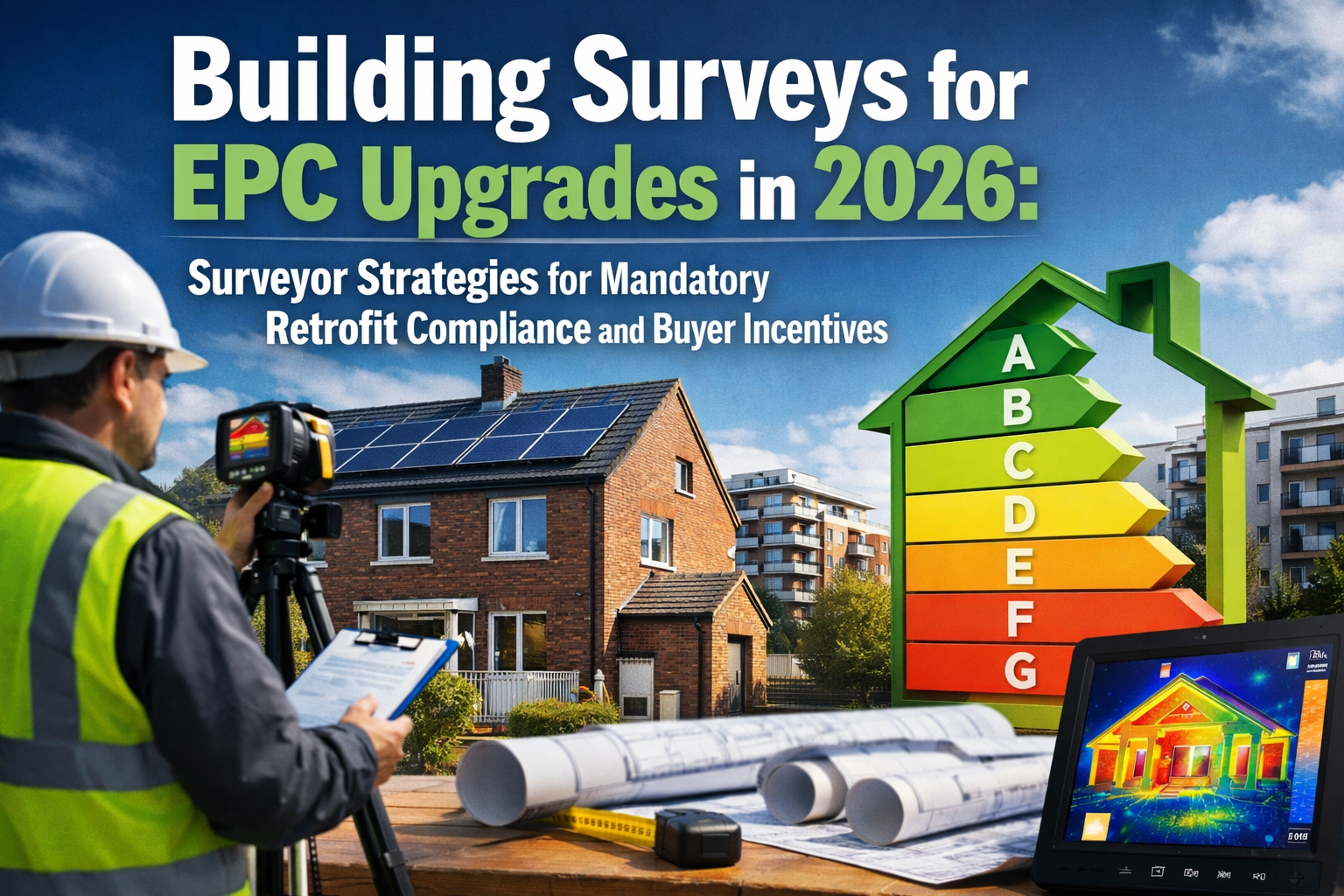
As energy costs continue to climb and the Royal Institution of Chartered Surveyors (RICS) strengthens home survey standards, Building Surveys for EPC Upgrades in 2026: Surveyor Strategies for Mandatory Retrofit Compliance and Buyer Incentives has become a critical focus for property professionals and homebuyers alike. The residential property market is recovering, but energy performance certificates (EPCs) now carry unprecedented weight in property valuations, transaction decisions, and regulatory compliance.
In 2026, building surveyors face a transformed landscape where energy efficiency is no longer an afterthought but a central component of property assessment. With mandatory minimum EPC ratings looming for rental properties and increasing buyer demand for energy-efficient homes, surveyors must develop sophisticated strategies for identifying defects, recommending upgrades, and calculating accurate valuation adjustments. This comprehensive guide explores how chartered surveyors can navigate these challenges while helping clients maximize both compliance and financial incentives.
Key Takeaways
✅ EPC ratings directly impact property valuations in 2026, with energy-efficient homes commanding premium prices while poor-performing properties face significant devaluation and reduced marketability.
✅ Building surveyors must integrate detailed energy performance assessments into standard survey reports, identifying specific retrofit opportunities and providing cost-benefit analyses for upgrade pathways.
✅ Multiple financial incentives exist for EPC improvements, including government grants, green mortgages with preferential rates, stamp duty relief schemes, and enhanced property values that can offset retrofit costs.
✅ Mandatory compliance deadlines are approaching for rental properties, making proactive surveyor recommendations essential for landlords and investors to avoid penalties and maintain rental income streams.
✅ Precise defect identification and prioritization allows property buyers to negotiate purchase prices effectively while planning strategic, phased retrofit programs that maximize return on investment.
The Evolving Role of Building Surveys in Energy Performance Assessment
Understanding EPC Requirements in 2026
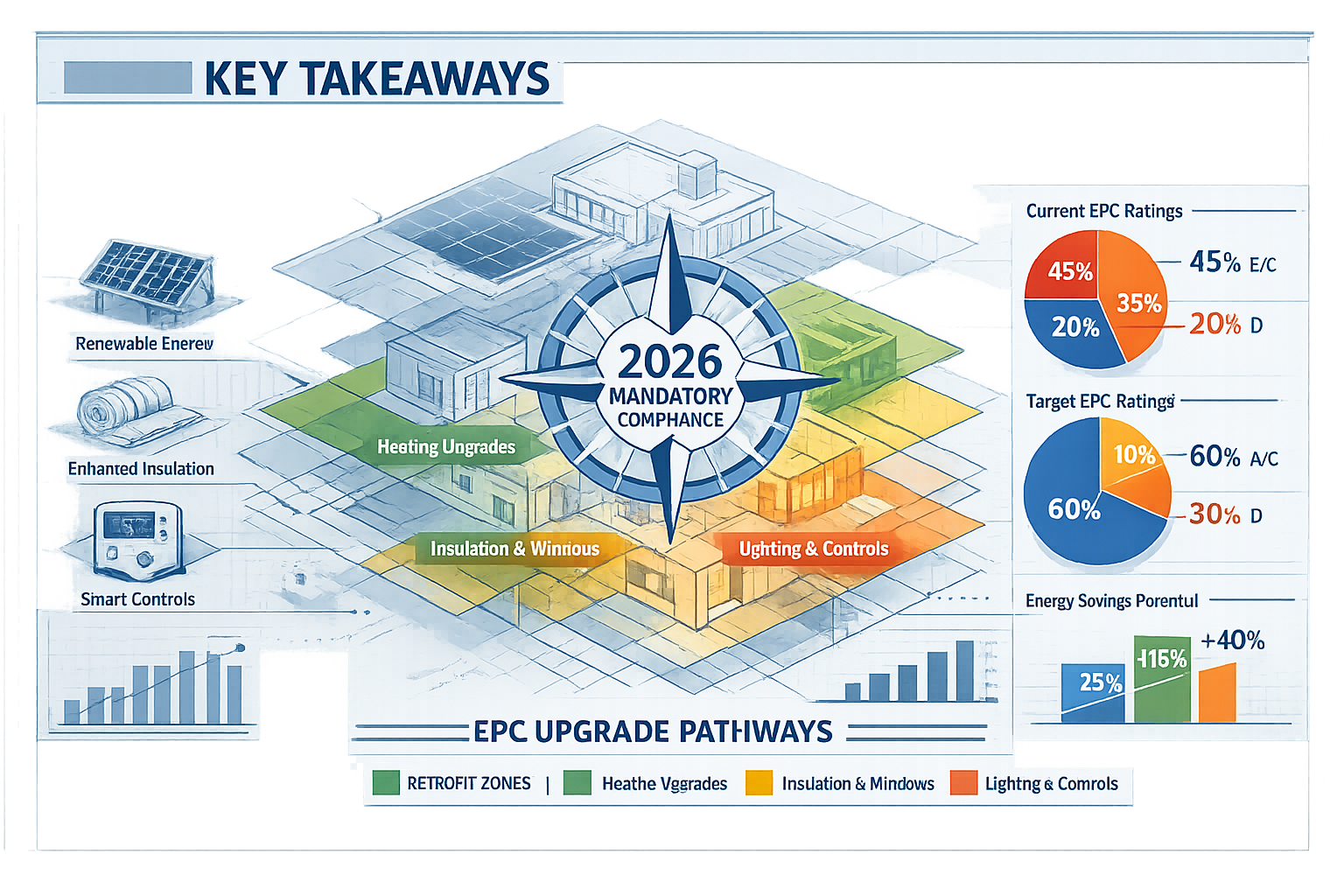
Energy Performance Certificates have transformed from simple regulatory documents into powerful tools that influence property transactions, rental compliance, and market competitiveness. In 2026, the minimum EPC rating requirements for rental properties continue to tighten, with many landlords facing mandatory upgrades to achieve at least an EPC rating of C by upcoming deadlines.
Building surveyors conducting RICS building surveys must now incorporate comprehensive energy performance evaluations as standard practice. This integration requires surveyors to:
- Assess current energy efficiency across all building elements including insulation, glazing, heating systems, and renewable energy installations
- Identify specific deficiencies that contribute to poor EPC ratings and increased energy consumption
- Recommend targeted retrofit measures with realistic cost estimates and projected rating improvements
- Evaluate compliance risks for properties subject to Minimum Energy Efficiency Standards (MEES) regulations
- Calculate valuation adjustments based on energy performance and required upgrade costs
The shift represents a fundamental change in surveying practice. Where traditional building surveys focused primarily on structural integrity and maintenance issues, modern surveys must balance these concerns with detailed energy performance analysis.
Why Energy Efficiency Matters for Property Valuations
Market data from 2026 demonstrates that EPC ratings significantly influence property values. Homes with A or B ratings command premiums of 5-15% compared to equivalent properties with D or E ratings. Conversely, properties with F or G ratings face substantial devaluation, often 10-20% below market average, due to:
- Higher running costs deterring potential buyers
- Mandatory upgrade requirements before rental or sale
- Limited mortgage availability as lenders increasingly favor energy-efficient properties
- Reduced buyer pool as environmentally conscious purchasers prioritize sustainability
- Future-proofing concerns regarding upcoming regulatory changes
For surveyors, this creates both challenges and opportunities. Accurate assessment of energy performance defects enables precise valuation adjustments, helping buyers negotiate fair purchase prices while identifying value-adding improvement opportunities.
Integration with Traditional Building Survey Methodology
Successful Building Surveys for EPC Upgrades in 2026: Surveyor Strategies for Mandatory Retrofit Compliance and Buyer Incentives requires seamless integration of energy assessment into established survey protocols. When conducting a Level 3 full building survey, surveyors should:
Expand inspection scope to include:
- Loft spaces for insulation depth and coverage assessment
- Wall construction types and cavity insulation status
- Window and door seals, glazing specifications, and thermal bridging
- Heating system age, efficiency ratings, and control mechanisms
- Ventilation systems and air tightness indicators
- Renewable energy installations and upgrade potential
Document findings systematically using:
- Thermal imaging to identify heat loss patterns and insulation gaps
- Moisture meters to detect condensation issues related to poor ventilation
- Detailed photography of energy-relevant building elements
- Measurements of insulation depths, boiler specifications, and glazing types
- Notes on building orientation, shading, and solar gain opportunities
Provide actionable recommendations including:
- Prioritized retrofit measures ranked by cost-effectiveness
- Estimated costs for each improvement using current market rates
- Projected EPC rating improvements for individual and combined measures
- Payback periods through reduced energy bills
- Available grant funding and incentive schemes
This comprehensive approach ensures clients receive complete information for informed decision-making about property purchases and improvement investments.
Surveyor Strategies for Identifying EPC Upgrade Opportunities
Systematic Defect Identification for Energy Performance
Professional building surveyors must develop systematic methodologies for identifying energy efficiency defects that impact EPC ratings. The most common issues affecting residential properties in 2026 include:
Insulation Deficiencies 🏠
- Loft insulation: Many older properties have inadequate depth (less than 270mm current standard)
- Cavity wall insulation: Uninsulated cavities in properties built between 1920-1990
- Solid wall insulation: Absence of internal or external insulation on pre-1920 properties
- Floor insulation: Missing or deteriorated underfloor insulation, particularly in suspended timber floors
Glazing and Window Issues 🪟
- Single-glazed windows in period properties
- Failed double-glazing units with condensation between panes
- Poor window seals allowing air infiltration
- Inadequate secondary glazing in conservation areas with restrictions
Heating System Inefficiencies 🔥
- Boilers older than 15 years with efficiency ratings below 85%
- Lack of heating controls (thermostatic radiator valves, programmable thermostats, zone controls)
- Oversized or undersized heating systems for property requirements
- Absence of renewable heating technologies (heat pumps, solar thermal)
Ventilation and Air Tightness Problems 💨
- Excessive air leakage through gaps, cracks, and unsealed penetrations
- Inadequate controlled ventilation leading to condensation and mold
- Missing or ineffective extract ventilation in wet rooms
- Absence of mechanical ventilation with heat recovery (MVHR) systems
When conducting building surveys, surveyors should document these defects with photographic evidence, precise locations, and severity assessments. Understanding what questions should be asked during a building survey helps ensure comprehensive coverage of energy-related concerns.
Cost-Benefit Analysis for Retrofit Measures
A critical component of Building Surveys for EPC Upgrades in 2026: Surveyor Strategies for Mandatory Retrofit Compliance and Buyer Incentives involves providing clients with realistic cost-benefit analyses for potential improvements. Surveyors should present information in accessible formats:
| Retrofit Measure | Typical Cost (£) | Annual Savings (£) | Payback Period | EPC Rating Improvement |
|---|---|---|---|---|
| Loft insulation (270mm) | 800-1,200 | 200-300 | 3-5 years | +1 to +2 bands |
| Cavity wall insulation | 1,500-2,500 | 250-350 | 5-7 years | +1 to +2 bands |
| Solid wall insulation (external) | 8,000-15,000 | 400-600 | 15-25 years | +2 to +3 bands |
| Double glazing replacement | 5,000-8,000 | 150-250 | 20-30 years | +1 band |
| Condensing boiler upgrade | 2,500-4,000 | 300-450 | 6-9 years | +1 to +2 bands |
| Air source heat pump | 10,000-14,000 | 500-800 | 12-18 years | +2 to +3 bands |
| Solar PV panels (4kW) | 5,000-7,000 | 400-600 | 8-12 years | +1 to +2 bands |
These figures should be adjusted for property-specific factors including size, current condition, regional price variations, and available grant funding. Surveyors must also consider non-financial benefits such as improved comfort, reduced condensation and mold risk, and enhanced property marketability.
Prioritization Frameworks for Phased Upgrades
Most property buyers cannot afford to implement all recommended improvements simultaneously. Effective surveyor strategies include developing prioritized retrofit roadmaps that balance:
Quick wins (low cost, high impact):
- Loft insulation topping up
- Draught-proofing doors and windows
- Thermostatic radiator valve installation
- Hot water cylinder insulation
- LED lighting upgrades
Medium-term investments (moderate cost, significant impact):
- Cavity wall insulation
- Boiler replacement with high-efficiency condensing model
- Heating controls upgrade (smart thermostats, zone controls)
- Secondary glazing in conservation areas
Long-term strategic upgrades (high cost, transformational impact):
- Solid wall insulation (external or internal)
- Complete window replacement with triple glazing
- Heat pump installation
- Solar PV and battery storage systems
This phased approach allows buyers to plan improvements over 3-5 years, spreading costs while progressively improving energy performance and property value. Surveyors should highlight which measures qualify for government grants or green financing schemes to maximize affordability.
Mandatory Retrofit Compliance and Regulatory Landscape
Current EPC Regulations for Rental Properties
The regulatory framework governing energy performance in rental properties has strengthened significantly. In 2026, landlords must navigate complex Minimum Energy Efficiency Standards (MEES) requirements that prohibit letting properties below specified EPC ratings.
Current regulations mandate:
- Minimum EPC rating of E for all new tenancies and lease renewals (enforced since 2020)
- Planned progression to EPC rating C for all rental properties by 2028 (subject to parliamentary approval)
- Maximum cost cap of £3,500 per property for required improvements (though this may increase)
- Exemption registration requirements for properties where improvements are not cost-effective
- Penalties up to £5,000 per property for non-compliance
Building surveyors assessing EPC and MEES compliance must clearly identify whether rental properties meet current standards and what upgrades are necessary to achieve future requirements. This information is critical for:
- Landlord clients planning compliance strategies and budgeting for improvements
- Property investors evaluating acquisition opportunities and calculating total ownership costs
- Buyer clients purchasing properties with sitting tenants or rental investment potential
- Estate agents marketing rental properties and managing landlord expectations
Timeline Planning for Compliance Deadlines
Effective Building Surveys for EPC Upgrades in 2026: Surveyor Strategies for Mandatory Retrofit Compliance and Buyer Incentives requires surveyors to help clients understand and plan for upcoming deadlines. A clear timeline framework includes:
Immediate priorities (2026):
- All existing rental properties must meet minimum EPC rating E
- Properties with F or G ratings face rental prohibition unless exemption registered
- Landlords should begin planning for anticipated 2028 rating C requirement
Medium-term planning (2027-2028):
- Expected implementation of EPC rating C minimum for all rental properties
- Increased enforcement activity and penalty assessments
- Potential changes to cost caps and exemption criteria
Long-term considerations (2029-2030):
- Possible further tightening to EPC rating B for rental properties
- Extended requirements to owner-occupied properties at point of sale
- Integration with broader net-zero carbon targets for housing stock
Surveyors should provide clients with customized compliance roadmaps showing:
- Current EPC rating and regulatory status
- Required improvements to achieve rating C
- Estimated costs and implementation timelines
- Available funding sources and incentive schemes
- Recommended phasing to minimize rental income disruption
- Contingency planning for regulatory changes
Understanding how long a building survey takes helps clients plan inspection schedules around property transaction timelines and compliance deadlines.
Exemption Criteria and Registration Processes
Not all properties can achieve required EPC ratings within cost cap limits. Surveyors must understand exemption criteria to advise clients appropriately:
Valid exemptions include:
- Cost cap exemption: Required improvements exceed £3,500 and landlord has installed all measures within cap
- Seven-year payback exemption: Improvements would take longer than seven years to recover costs through energy savings
- Consent exemption: Required improvements need third-party consent (planning, listed building, tenant) that has been refused
- Devaluation exemption: Improvements would reduce property value by more than 5%
- New landlord exemption: Six-month grace period after property acquisition
Exemptions must be registered on the national PRS Exemptions Register and typically last five years before reassessment. Surveyors should:
- Document evidence supporting exemption claims
- Calculate total improvement costs with supporting quotations
- Demonstrate that all cost-effective measures within cap have been identified
- Advise on exemption registration procedures and renewal requirements
- Monitor regulatory changes that may affect exemption validity
This guidance protects landlord clients from penalties while ensuring compliance with legal obligations.
Buyer Incentives and Financial Opportunities for EPC Improvements
Government Grant Schemes and Funding Programs
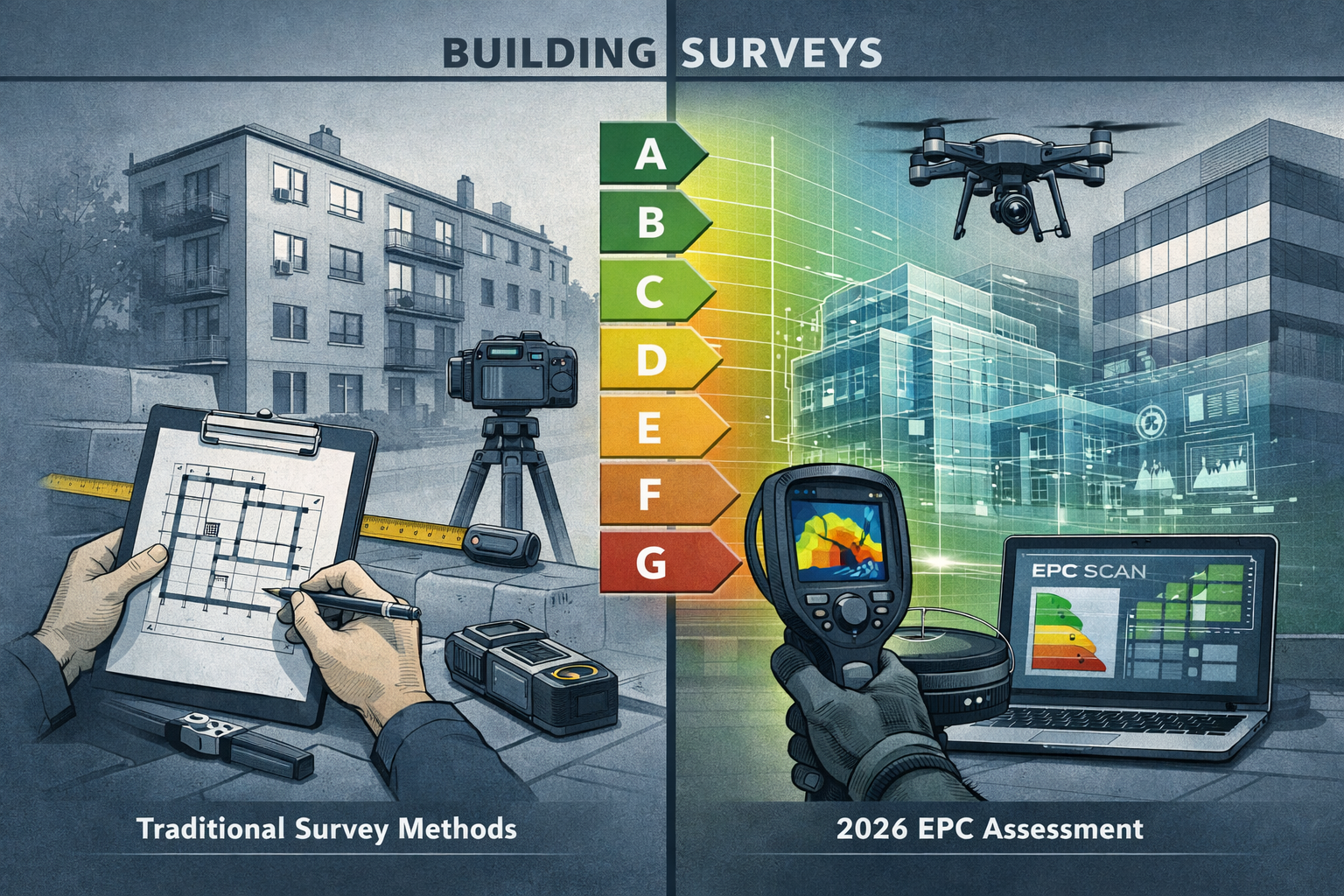
One of the most valuable aspects of Building Surveys for EPC Upgrades in 2026: Surveyor Strategies for Mandatory Retrofit Compliance and Buyer Incentives involves identifying available financial support for energy improvements. Surveyors should familiarize themselves with current funding schemes:
Energy Company Obligation (ECO) Scheme 💷
- Funding for low-income households and vulnerable groups
- Covers insulation, heating upgrades, and renewable technologies
- Eligibility based on benefits receipt or property characteristics
- Can cover 100% of improvement costs for qualifying households
Boiler Upgrade Scheme (BUS)
- Grants of £5,000-£6,000 for heat pump installations
- Replaces older fossil fuel heating systems
- Available to homeowners and landlords
- Reduces upfront costs of low-carbon heating transitions
Local Authority Grants
- Variable schemes operated by individual councils
- Often targeted at specific property types or areas
- May include additional support for listed buildings or conservation areas
- Frequently combined with national schemes for maximum support
Green Homes Grant (if reinstated)
- Previous scheme provided vouchers covering up to two-thirds of improvement costs
- Maximum grants of £5,000 (or £10,000 for low-income households)
- Future iterations may offer similar support structures
Surveyors should include grant eligibility assessments in survey reports, noting which recommended improvements qualify for funding and directing clients to application resources. This information significantly improves the financial viability of retrofit projects and demonstrates surveyor value beyond basic property inspection.
Green Mortgages and Preferential Financing
The mortgage market in 2026 increasingly rewards energy-efficient properties through green mortgage products offering:
Interest rate discounts:
- Typically 0.10-0.25% reduction for properties with EPC rating A or B
- Savings of £500-£1,500 annually on average mortgage
- Cumulative savings of £12,500-£37,500 over 25-year mortgage term
Higher loan-to-value ratios:
- Additional 5-10% borrowing capacity for energy-efficient properties
- Enables buyers to afford more expensive eco-homes
- Reduces deposit requirements for first-time buyers
Cashback incentives:
- Lump sum payments (£250-£1,000) for purchasing high-EPC properties
- Can be used for further improvements or moving costs
- Demonstrates lender commitment to sustainability goals
Retrofit financing:
- Additional borrowing for energy improvements at preferential rates
- Integrated into main mortgage or separate green loan products
- Repayment structured to align with energy bill savings
Building surveyors should highlight these opportunities when assessing properties, particularly when comparing similar properties with different EPC ratings. The financial advantages of green mortgages can justify higher purchase prices for energy-efficient homes or fund improvement programs for lower-rated properties.
Property Value Enhancement Through Energy Upgrades
Perhaps the most compelling incentive for EPC improvements is direct property value enhancement. Market analysis from 2026 demonstrates clear correlations between energy performance and sale prices:
Value premium for high EPC ratings:
- Properties with EPC rating A or B sell for 5-15% above comparable D or E rated properties
- Average UK house price of £300,000 translates to £15,000-£45,000 premium
- Premium percentages increase in areas with environmentally conscious buyer demographics
Reduced time on market:
- High-EPC properties sell 20-30% faster than low-rated equivalents
- Reduced carrying costs for sellers (mortgage, utilities, council tax)
- Less price negotiation and fewer failed transactions
Improved rental yields:
- Energy-efficient rental properties command 5-10% higher rents
- Lower void periods due to increased tenant demand
- Reduced maintenance costs and tenant complaints about heating bills
Future-proofing against regulation:
- Compliance with anticipated tightening of sale requirements
- Avoidance of forced pre-sale improvements at inopportune times
- Protection against property value decline as standards increase
Surveyors conducting budgeting for repairs and restoration should present EPC improvements as value-adding investments rather than mere compliance costs. Detailed calculations showing:
- Total improvement costs
- Annual energy bill savings
- Property value increase
- Combined financial benefit over 5, 10, and 20 years
- Return on investment percentages
This analysis helps buyers make informed decisions about which properties to purchase and how to prioritize improvements post-purchase.
Stamp Duty Relief and Tax Incentives
Additional financial incentives for energy-efficient property transactions include:
Potential stamp duty relief schemes:
- Periodic government initiatives offering reduced stamp duty for high-EPC properties
- Typical reductions of 1-2% on purchase price
- Savings of £3,000-£6,000 on average property transactions
Capital gains tax considerations:
- Energy improvements may qualify as enhancement expenditure
- Reduces taxable gain when selling investment properties
- Particularly relevant for landlords upgrading rental portfolios
Income tax deductions for landlords:
- Energy efficiency improvements may qualify as allowable expenses
- Reduces taxable rental income in improvement year
- Particularly valuable for higher-rate taxpayers
Inheritance tax planning:
- Energy improvements maintain property value
- May qualify for business property relief in certain circumstances
- Relevant for landlords with significant property portfolios
Surveyors should note these opportunities in reports while recommending clients consult tax advisors for specific advice based on individual circumstances.
Advanced Surveyor Techniques for EPC Assessment
Thermal Imaging and Diagnostic Technologies
Modern building surveyors employ advanced diagnostic technologies to accurately assess energy performance and identify improvement opportunities. Thermal imaging cameras have become essential tools for:
Heat loss visualization 🌡️
- Identifying missing or inadequate insulation in walls, roofs, and floors
- Detecting thermal bridging at junctions and structural elements
- Locating air leakage paths around windows, doors, and service penetrations
- Revealing hidden defects like cavity wall tie failure or damp insulation
Moisture and condensation analysis
- Distinguishing between penetrating damp and condensation issues
- Identifying cold surfaces prone to mold growth
- Assessing ventilation adequacy and air circulation patterns
- Evaluating effectiveness of existing damp-proofing measures
System performance verification
- Checking radiator and underfloor heating distribution
- Identifying blocked or inefficient heating circuits
- Assessing boiler and heat pump operation
- Detecting hot water cylinder heat loss
Thermal imaging should be conducted during appropriate conditions (minimum 10°C temperature difference between inside and outside) and results clearly documented in survey reports with annotated images showing problem areas and recommended solutions.
Building Physics and Retrofit Risk Assessment
Competent surveyors understand building physics principles essential for safe retrofit design. Poorly planned energy improvements can create serious problems:
Interstitial condensation risks:
- Adding insulation without proper vapor control
- Creating cold surfaces within wall constructions
- Moisture accumulation leading to timber decay and structural damage
- Mold growth within building fabric
Ventilation and indoor air quality:
- Excessive air-tightening without adequate controlled ventilation
- Increased humidity levels and condensation
- Poor indoor air quality affecting occupant health
- Requirement for mechanical ventilation systems
Thermal bridging and cold spots:
- Uninsulated structural elements creating heat loss paths
- Localized cold surfaces causing condensation and mold
- Reduced overall thermal performance despite insulation improvements
- Need for continuous insulation layers
Moisture management:
- Breathability requirements for solid wall properties
- Compatibility of insulation materials with existing construction
- Drainage and water management around external insulation
- Risk of trapped moisture in retrofit scenarios
Surveyors must assess these risks when recommending improvements and advise clients to engage qualified retrofit designers or architects for complex projects. Understanding the difference between full building survey vs homebuyer survey helps clients select appropriate survey levels for comprehensive energy assessment.
Documentation and Reporting Best Practices
Effective Building Surveys for EPC Upgrades in 2026: Surveyor Strategies for Mandatory Retrofit Compliance and Buyer Incentives requires clear, comprehensive documentation:
Dedicated energy performance sections should include:
- Current EPC rating and certificate details
- Detailed assessment of all energy-relevant building elements
- Photographic and thermal imaging evidence
- Specific deficiencies affecting energy performance
- Regulatory compliance status (MEES, Building Regulations)
Improvement recommendations should specify:
- Prioritized list of retrofit measures
- Detailed descriptions of required works
- Estimated costs with basis of calculation
- Projected EPC rating improvements
- Payback periods and return on investment
- Available grant funding and incentive schemes
- Specialist consultants required for complex improvements
Risk warnings should address:
- Building physics risks of inappropriate retrofits
- Requirement for specialist design in certain scenarios
- Planning and listed building consent requirements
- Party wall considerations for external insulation
- Asbestos risks in older properties requiring investigation
Valuation adjustments should reflect:
- Reduction for required compliance improvements
- Deduction for deferred maintenance affecting energy performance
- Potential value enhancement from recommended upgrades
- Comparative market analysis of similar properties with different EPC ratings
This comprehensive approach ensures clients receive actionable intelligence for decision-making while protecting surveyors from liability for incomplete advice.
Special Considerations for Different Property Types
Period Properties and Conservation Constraints
Historic and period properties present unique challenges for EPC upgrades and retrofit compliance. Surveyors must balance energy improvement objectives with:
Listed building restrictions 🏛️
- Requirement for listed building consent for most alterations
- Prohibition on external insulation affecting character
- Restrictions on window replacement and double glazing
- Need for specialist heritage consultants and conservation officers
Conservation area limitations
- Planning consent required for external alterations
- Restrictions on solar panels and external insulation
- Requirements for traditional materials and appearance
- Variable policies between different local authorities
Building physics compatibility
- Solid wall construction requiring breathable materials
- Lime mortar and traditional plasters needing vapor permeability
- Risks of trapping moisture with impermeable insulation
- Importance of maintaining traditional ventilation patterns
Practical improvement strategies for period properties include:
- Internal wall insulation with breathable materials (wood fiber, cork)
- Secondary glazing instead of replacement windows
- Draught-proofing with reversible methods
- High-efficiency heating systems and controls
- Loft insulation (often unrestricted)
- Floor insulation from below where accessible
Surveyors should clearly document constraints and recommend appropriate specialists for period property retrofits, ensuring improvements preserve character while enhancing performance.
New Build Properties and Developer Compliance
Conversely, new build properties should meet high energy standards, but surveyors conducting snagging surveys must verify:
Design specification compliance:
- Actual EPC rating matches developer claims
- Building Regulations Part L compliance
- Insulation installation quality and continuity
- Air tightness test results and ventilation provision
Common defects affecting energy performance:
- Missing or inadequate insulation in difficult areas
- Thermal bridging at junctions and penetrations
- Air leakage around windows, doors, and service entries
- Incorrectly installed or commissioned heating systems
- Mechanical ventilation systems not functioning properly
Warranty and remediation:
- NHBC or similar warranty coverage for energy defects
- Developer obligations to remedy non-compliance
- Documentation required for warranty claims
- Timeframes for reporting defects
Early identification of energy performance defects in new builds protects buyers from future compliance issues and ensures properties deliver promised running costs.
Multi-Unit Buildings and Shared Ownership
Flats and apartments present unique challenges for EPC improvements due to:
Shared building elements:
- External walls, roofs, and windows owned collectively
- Requirement for freeholder and leaseholder agreement
- Section 20 consultation for major works
- Apportionment of costs between leaseholders
Individual unit limitations:
- Restricted ability to improve building fabric
- Focus on heating, lighting, and appliance efficiency
- Potential for individual heat pump installations where permitted
- Importance of lease terms and building regulations
Collective improvement opportunities:
- Whole-building external insulation programs
- Communal heating system upgrades
- Roof insulation and solar panel installations
- Window replacement programs
Surveyors assessing flats should clearly distinguish between individual unit improvements and collective building works, advising on lease requirements, service charge implications, and the need for freeholder cooperation.
Negotiation Strategies and Transaction Implications

Using Survey Findings to Negotiate Purchase Price
One of the most valuable applications of Building Surveys for EPC Upgrades in 2026: Surveyor Strategies for Mandatory Retrofit Compliance and Buyer Incentives involves supporting purchase price negotiations. Surveyors should provide clients with:
Quantified cost deductions based on:
- Required improvements to achieve target EPC rating
- Urgent energy-related repairs (failed boiler, damaged insulation)
- Compliance costs for rental properties below MEES standards
- Professional fees for retrofit design and project management
Market-based valuation adjustments considering:
- Comparable sales of properties with different EPC ratings
- Typical price premiums for energy-efficient homes in the area
- Buyer resistance to properties with poor energy performance
- Lender concerns about mortgage availability for low-EPC properties
Negotiation positioning including:
- Total cost of required improvements with supporting quotations
- Suggested purchase price reduction (typically 50-100% of improvement costs)
- Alternative arrangements (seller completes improvements before completion)
- Retention of funds in escrow pending improvement completion
Understanding how to negotiate house price down after survey helps buyers leverage energy performance findings effectively.
Transaction Timing and Completion Conditions
Energy performance considerations can affect transaction timelines and completion terms:
Pre-completion improvement agreements:
- Seller undertakes specified EPC improvements before completion
- Retention clauses holding funds pending satisfactory completion
- Re-inspection requirements to verify work quality
- Adjustment of completion date to allow improvement time
Post-completion arrangements:
- Purchase price reduction reflecting improvement costs
- Buyer assumes responsibility for all improvements
- Immediate access to property for contractor quotes and planning
- Consideration of grant application timelines
Rental property transactions:
- Verification of current EPC certificate validity (10-year lifespan)
- Confirmation of MEES compliance or exemption registration
- Tenant notification requirements for improvement works
- Coordination with tenancy agreements and void periods
Surveyors should advise clients on optimal transaction structures based on property condition, improvement urgency, and client circumstances.
Long-Term Investment Planning
For buy-to-let investors and portfolio landlords, strategic EPC improvement planning is essential:
Portfolio assessment strategies:
- Prioritizing properties furthest from compliance
- Identifying properties with most cost-effective improvement potential
- Planning phased programs to spread costs over multiple years
- Coordinating improvements with void periods and tenancy renewals
Financial modeling should include:
- Total improvement costs across portfolio
- Rental income implications during improvement works
- Potential rent increases for improved properties
- Property value enhancement and portfolio valuation
- Tax implications of improvement expenditure
Risk management considerations:
- Regulatory change monitoring and adaptation
- Diversification across different property types and EPC ratings
- Exit strategies for properties with poor improvement economics
- Insurance implications of energy performance
Surveyors providing investment advice should present comprehensive financial analyses showing total cost of ownership including energy compliance requirements.
Future Trends and Emerging Considerations
Anticipated Regulatory Changes Beyond 2026
The regulatory landscape for energy performance continues to evolve. Surveyors must monitor anticipated changes including:
Tightening rental standards:
- Progression to minimum EPC rating B by 2030-2035
- Potential removal or reduction of cost cap exemptions
- Increased penalties for non-compliance
- Extension to holiday lets and short-term rentals
Owner-occupier requirements:
- Possible minimum EPC standards at point of sale
- Mandatory improvement disclosure in property marketing
- Green mortgage requirements from major lenders
- Integration with broader net-zero housing targets
New assessment methodologies:
- Updated EPC calculation methods reflecting real-world performance
- Integration of smart meter data into energy assessments
- Whole-life carbon assessments alongside operational energy
- Recognition of embodied carbon in retrofit materials
Surveyors should future-proof advice by recommending improvements that exceed current minimum standards, protecting clients from imminent regulatory changes.
Technology Integration and Smart Home Systems
Modern energy-efficient homes increasingly incorporate smart technologies that surveyors must understand:
Smart heating controls:
- Learning thermostats optimizing heating patterns
- Zone controls and individual room temperature management
- Remote access and monitoring via smartphone apps
- Integration with weather forecasts and occupancy patterns
Energy monitoring systems:
- Real-time consumption tracking and analysis
- Identification of inefficient appliances and behaviors
- Solar generation and battery storage optimization
- Integration with time-of-use tariffs for cost minimization
Home automation:
- Automated lighting, heating, and ventilation control
- Occupancy sensing and adaptive systems
- Integration with renewable energy generation
- Contribution to EPC ratings and energy performance
Surveyors should assess existing smart systems during inspections, noting functionality, integration quality, and potential for enhancement.
Embodied Carbon and Whole-Life Assessment
Beyond operational energy, embodied carbon in building materials and retrofit measures is gaining attention:
Material selection considerations:
- Carbon footprint of insulation materials (mineral wool vs. foam vs. natural fibers)
- Whole-life carbon assessment of heating systems
- Recycled and low-carbon building products
- Local sourcing and transportation impacts
Retrofit vs. demolition analysis:
- Carbon cost of demolition and new construction
- Benefits of retaining and improving existing buildings
- Optimal balance between performance and embodied carbon
- Long-term sustainability of different improvement approaches
Circular economy principles:
- Reuse and recycling of existing materials
- Design for future disassembly and material recovery
- Durability and longevity of retrofit measures
- Minimizing waste in improvement projects
While not yet reflected in EPC assessments, forward-thinking surveyors should consider whole-life carbon in advice to environmentally conscious clients.
Conclusion: Integrating EPC Excellence into Professional Practice
Building Surveys for EPC Upgrades in 2026: Surveyor Strategies for Mandatory Retrofit Compliance and Buyer Incentives represents a fundamental evolution in surveying practice. As energy performance becomes central to property valuation, transaction decisions, and regulatory compliance, chartered surveyors must develop sophisticated capabilities in energy assessment, retrofit planning, and financial analysis.
The most successful surveyors in 2026 integrate energy performance evaluation seamlessly into traditional building survey methodologies, providing clients with comprehensive intelligence covering structural integrity, maintenance requirements, and energy efficiency opportunities. This holistic approach delivers maximum value while positioning surveyors as essential advisors in an increasingly complex property market.
Key Success Factors for Surveyors
Technical competence 🔧
- Mastery of building physics and retrofit principles
- Proficiency with thermal imaging and diagnostic technologies
- Understanding of current and anticipated regulations
- Knowledge of available funding and incentive schemes
Clear communication
- Accessible reporting for non-technical clients
- Quantified cost-benefit analyses for improvement options
- Prioritized recommendations supporting decision-making
- Visual documentation of energy-related defects
Market awareness
- Understanding of EPC impact on property values
- Knowledge of green mortgage and financing products
- Awareness of buyer preferences and market trends
- Ability to support negotiation strategies
Professional development
- Continuous learning about regulatory changes
- Engagement with retrofit industry developments
- Networking with energy assessors, retrofit coordinators, and specialists
- Contribution to industry standards and best practice
Actionable Next Steps for Property Professionals
For building surveyors looking to enhance EPC assessment capabilities:
- Invest in thermal imaging equipment and training to provide advanced diagnostic services
- Develop relationships with retrofit specialists for complex project referrals
- Create standardized energy assessment templates ensuring comprehensive coverage
- Monitor regulatory developments and update client advice accordingly
- Market EPC expertise as a differentiator in competitive surveying markets
For property buyers seeking to maximize value:
- Commission comprehensive building surveys including detailed energy performance assessment
- Request specific EPC improvement recommendations with cost-benefit analyses
- Investigate available grant funding before finalizing improvement budgets
- Consider green mortgage products offering preferential rates for energy-efficient properties
- Use survey findings strategically in purchase price negotiations
For landlords and investors managing compliance requirements:
- Conduct portfolio-wide EPC audits identifying compliance risks and opportunities
- Develop phased improvement programs spreading costs over multiple years
- Prioritize properties furthest from compliance or with most cost-effective improvement potential
- Coordinate improvements with void periods minimizing rental income disruption
- Maintain detailed records of improvements and exemption registrations
The Broader Context: Property Markets and Sustainability
The integration of energy performance into building surveys reflects broader societal shifts toward sustainability and climate action. As the UK pursues net-zero carbon targets, the residential property sector must undergo substantial transformation. Building surveyors occupy a crucial position in this transition, identifying improvement opportunities, supporting informed decision-making, and ensuring regulatory compliance.
Properties with poor energy performance face increasing financial and regulatory pressures, while energy-efficient homes command premiums and preferential financing. This divergence will likely accelerate, making early action on EPC improvements increasingly valuable. Surveyors who develop expertise in this area position themselves as essential advisors guiding clients through complex decisions with significant financial implications.
The residential property market recovery in 2026 provides opportunities for buyers to acquire properties requiring improvement at favorable prices, implement strategic retrofits using available incentives, and realize enhanced values as energy performance becomes ever more critical to market competitiveness. Professional building surveyors who master Building Surveys for EPC Upgrades in 2026: Surveyor Strategies for Mandatory Retrofit Compliance and Buyer Incentives will thrive in this evolving landscape, delivering exceptional value to clients while contributing to broader sustainability objectives.
By embracing energy performance as a core component of professional practice, surveyors ensure relevance, competitiveness, and positive impact in a property market increasingly defined by environmental performance and regulatory compliance. The future of building surveying is inextricably linked to energy efficiency, and those who lead in this area will shape the profession for decades to come.
References
[1] Hundreds Of Buildings Behind On Quake Retrofits Though Few Show Gas Leak Risk – https://www.sfpublicpress.org/hundreds-of-buildings-behind-on-quake-retrofits-though-few-show-gas-leak-risk/
[2] Understanding The Mandatory Seismic Retrofit Ordinance For San Jose Property Owners – https://rzadvisors.com/blog/understanding-the-mandatory-seismic-retrofit-ordinance-for-san-jose-property-owners
[3] Californias 2026 Foundation Code Updates What Contractors Need To Know – https://sumerinnovations.com/californias-2026-foundation-code-updates-what-contractors-need-to-know/
[4] Seismic Retrofitting – https://rimkus.com/article/seismic-retrofitting/
[5] Soft Story Retrofit Program – http://dbs.lacity.gov/services/specialized-services/mandatory-retrofit-programs/soft-story-retrofit-program
[6] California Seismic Retrofit Guide 2022 – https://www.imegcorp.com/wp-content/uploads/2022/11/California-seismic-retrofit-guide-2022.pdf
[7] Seismic Safety Hospitals California – https://calmatters.org/health/2023/01/seismic-safety-hospitals-california/
[8] Spc 4d Regulations – https://hcai.ca.gov/facilities/building-safety/seismic-compliance-and-safety/spc-4d-regulations/