

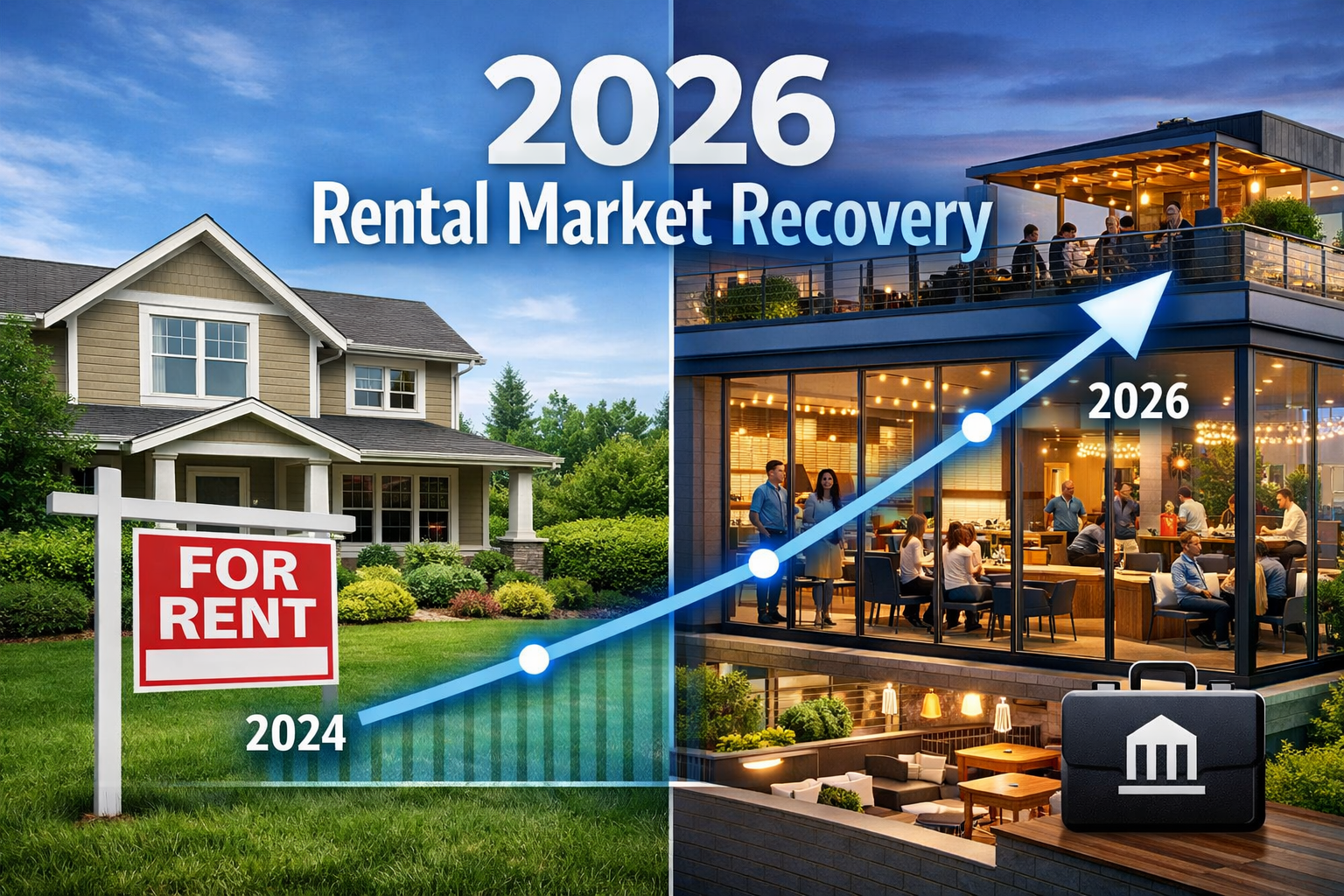
The institutional buy-to-let sector is experiencing a remarkable transformation in 2026. As rental markets recover from recent economic pressures, professional landlords and property investment firms are increasingly turning to co-living developments as a strategic response to changing tenant demographics and housing affordability challenges. This shift demands a fundamental rethinking of how building surveys are conducted, particularly when assessing Building Surveys for Co-Living Developments in Recovering Rental Markets: RICS Standards for Multi-Tenancy Compliance 2026 requirements.
Co-living properties present unique surveying challenges that traditional residential assessments simply weren't designed to address. With multiple tenants sharing communal facilities, enhanced fire safety requirements, and complex regulatory frameworks, surveyors must adapt their methodologies to ensure comprehensive compliance evaluations.
Key Takeaways
- 🏢 Institutional investors are driving co-living demand as rental markets recover, requiring specialized Level 3 building survey protocols for multi-tenancy properties
- 🔥 Enhanced fire safety assessments are critical for co-living developments, with compartmentation, escape routes, and detection systems requiring detailed evaluation beyond standard residential surveys
- 📋 RICS standards are evolving in 2026 to address "additional risk" dwellings, with new guidance expected by Q1 2026 following public consultation [3]
- ⚖️ Multi-tenancy compliance encompasses HMO licensing, building regulations, accessibility standards, and shared amenity specifications that demand tailored survey approaches
- 💼 Professional landlords benefit from comprehensive building surveys that identify compliance gaps before acquisition, reducing regulatory risk and protecting investment value
The Rise of Co-Living in Recovering Rental Markets
Market Dynamics Driving Co-Living Growth
The rental market landscape has shifted dramatically since 2024. Institutional investors, including real estate investment trusts (REITs) and private equity firms, have identified co-living as a resilient asset class that addresses multiple market pressures simultaneously. Rising property prices, stagnant wage growth, and changing lifestyle preferences among millennials and Generation Z have created strong demand for affordable, community-oriented housing solutions.
Professional landlords are responding by converting traditional properties or developing purpose-built co-living schemes that maximize rental yields while meeting tenant expectations for quality shared spaces. This trend has accelerated throughout 2025 and into 2026 as rental markets stabilize and investor confidence returns.
Why Traditional Building Surveys Fall Short
Standard residential building surveys—even comprehensive Level 3 full building surveys—were designed primarily for single-family occupancy. They typically assess:
- Structural integrity
- Damp and moisture issues
- Roof condition
- Services (electrical, plumbing, heating)
- General maintenance requirements
However, co-living developments introduce additional complexity:
✅ Multiple cooking facilities in shared kitchens requiring enhanced gas safety and ventilation
✅ Increased occupancy loads affecting structural, electrical, and plumbing capacity
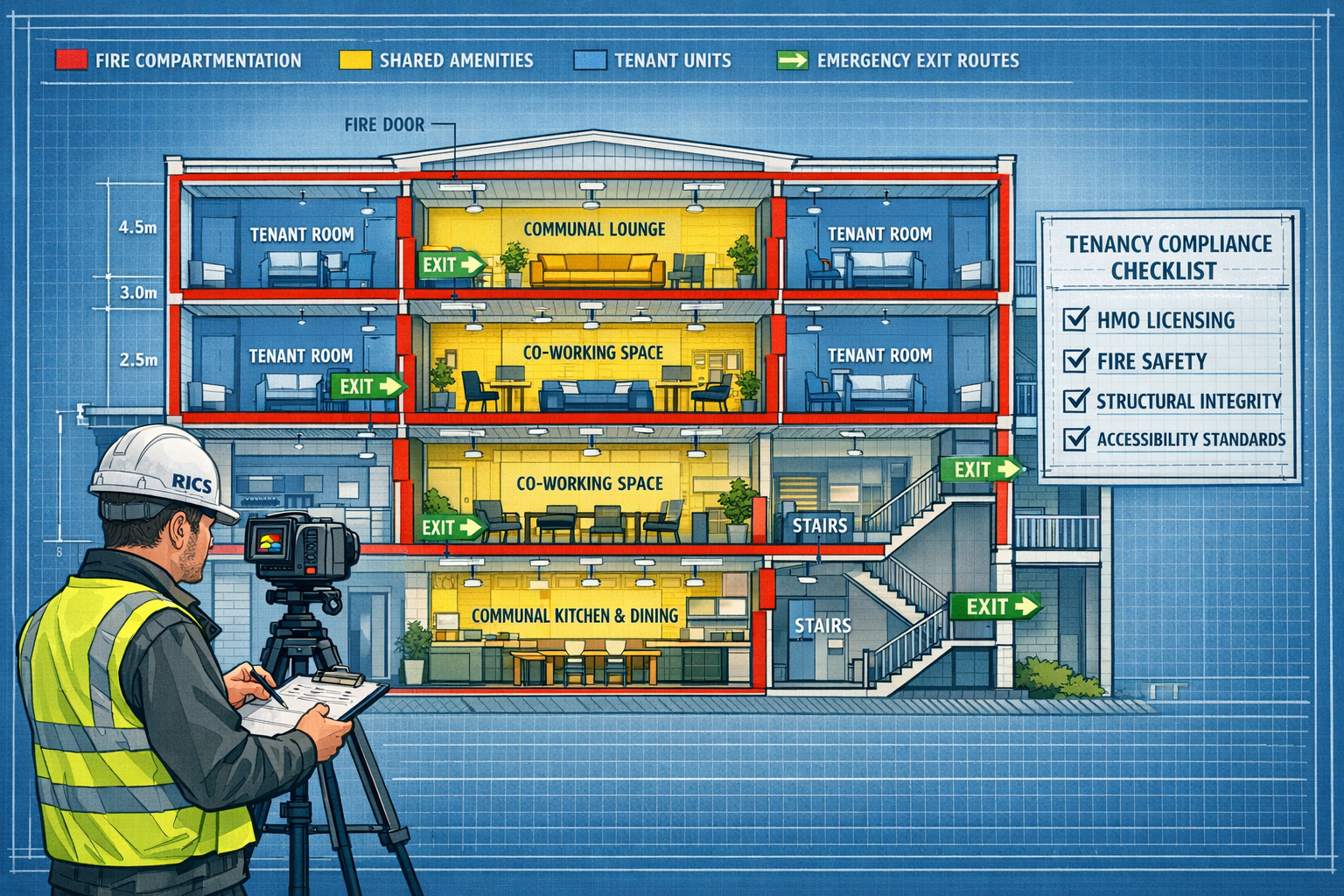
✅ Fire safety compartmentation between private and communal areas
✅ Accessibility requirements for common spaces
✅ HMO licensing thresholds and local authority regulations
Understanding what types of building surveys are there becomes crucial when determining the appropriate assessment level for multi-tenancy properties.
RICS Standards for Multi-Tenancy Compliance in 2026
Current RICS Guidance and Upcoming Updates
The Royal Institution of Chartered Surveyors (RICS) has recognized the need for updated standards to address evolving property types. Following a public consultation that ran from August to October 2025, RICS issued a progress update in February 2026 indicating that the Home Survey Standard 2nd edition will include specific guidance for "additional risk" dwellings [3].
"We are committed to transparency around the process and will share an update on our progress and next steps by the end of March." — RICS Home Survey Standard Update [3]
This commitment signals that surveyors can expect clearer protocols for assessing co-living and multi-tenancy properties by Q1 2026. The updated standards are expected to address:
- Enhanced risk assessment methodologies for properties with multiple occupants
- Specific guidance on shared amenity evaluation
- Fire safety assessment protocols aligned with current building regulations
- Compliance verification procedures for HMO and multi-tenancy licensing
Residential Stock Condition Survey Standards
Parallel to the Home Survey Standard updates, RICS has been developing a Code of Practice for Residential Stock Condition Surveys, with consultation concluding in February 2026 [2]. While primarily aimed at housing associations and local authorities managing large residential portfolios, this standard provides valuable frameworks for assessing multi-occupancy properties systematically.
The stock condition survey approach emphasizes:
- Standardized assessment criteria across multiple properties
- Lifecycle costing for building components
- Regulatory compliance verification
- Risk-based prioritization of maintenance and repair works
Professional landlords operating co-living portfolios can benefit from adopting these systematic approaches, even when commissioning surveys for individual acquisitions.
Building Surveys for Co-Living Developments: Essential Assessment Areas
Fire Safety and Compartmentation
Fire safety represents the most critical aspect of Building Surveys for Co-Living Developments in Recovering Rental Markets: RICS Standards for Multi-Tenancy Compliance 2026. Co-living properties typically require:
Compartmentation Assessment
- Evaluation of fire-resistant walls and floors between units
- Inspection of fire door specifications and self-closing mechanisms
- Assessment of service penetrations (pipes, cables) through fire barriers
- Verification of cavity barriers in roof spaces and wall cavities
Means of Escape
- Analysis of escape route widths and travel distances
- Emergency lighting provision and functionality
- Signage clarity and compliance with current standards
- Secondary escape route availability from upper floors
Detection and Alarm Systems
- Appropriate fire detection system type (L1, L2, or L3 category)
- Interconnection between units and common areas
- Regular testing and maintenance records
- Heat and smoke detector placement in accordance with BS 5839-6
Surveyors conducting assessments should reference environmental issues that may impact fire safety, including ventilation adequacy and combustible material presence.
Structural Capacity for Increased Occupancy
Co-living developments often house significantly more occupants than properties were originally designed for. Structural assessments must consider:
| Structural Element | Standard Residential | Co-Living Considerations |
|---|---|---|
| Floor Loading | 1.5 kN/m² (domestic) | 2.0-3.0 kN/m² (communal areas) |
| Staircase Width | 800mm minimum | 1000mm+ for escape routes |
| Foundation Load | Single-family design | Multiple occupants + amenities |
| Roof Structure | Standard domestic loads | Potential rooftop terrace use |
Surveyors should identify any areas of further investigation where structural capacity may be insufficient for proposed occupancy levels.
Services Infrastructure and Capacity
Electrical Systems
- Consumer unit capacity: Adequate for multiple high-demand appliances
- Circuit protection: RCD protection throughout
- Communal area lighting: Emergency lighting and adequate illumination
- EV charging infrastructure: Growing tenant expectation in 2026
Properties should meet current EPC and MEES requirements, with co-living developments typically needing EPC ratings of C or above to attract institutional investment.
Plumbing and Drainage
- Hot water capacity: Sufficient for peak demand periods
- Water pressure: Adequate supply to all floors during simultaneous use
- Drainage capacity: Sized for increased occupancy
- Legionella risk: Assessment of water systems and temperature control
Heating and Ventilation
- Individual heating controls in private rooms
- Mechanical ventilation in windowless bathrooms and internal kitchens
- Communal area heating with appropriate zoning
- Extract ventilation for cooking facilities meeting Building Regulations Part F
HMO Licensing and Multi-Tenancy Regulations
Houses in Multiple Occupation (HMO) licensing requirements vary by local authority but typically apply when:
- Three or more tenants form more than one household
- Shared facilities such as kitchens or bathrooms exist
- Rent is paid (or other consideration provided)
Building surveys for potential co-living conversions must assess compliance with HMO standards:
✅ Minimum room sizes: Typically 6.51m² for single occupancy, 10.22m² for double
✅ Kitchen facilities: Adequate cooking and food preparation space per occupant
✅ Bathroom provision: Minimum ratios (often 1:5 occupants)
✅ Fire safety measures: As detailed above
✅ Waste storage: Adequate provision for increased occupancy
Understanding how often rental units should be inspected helps landlords maintain ongoing compliance after initial surveys.
Shared Amenity Specifications
Purpose-built co-living developments typically include amenities that require specialized assessment:
Communal Kitchens
- Commercial-grade equipment suitability and safety
- Gas safety certification for multiple cooking appliances
- Ventilation adequacy for simultaneous cooking
- Food hygiene compliance for shared food preparation areas
Common Lounges and Workspaces
- Acoustic insulation between communal and private areas
- Furniture fire safety ratings (BS 7176 or equivalent)
- Accessibility compliance (Part M Building Regulations)
- Natural lighting and ventilation adequacy
Laundry Facilities
- Electrical capacity for multiple high-load appliances
- Drainage and water supply adequacy
- Ventilation to prevent moisture accumulation
- Safety interlocks on commercial washing equipment
Tailored Level 3 Survey Protocols for Co-Living Properties
Pre-Survey Planning and Scope Definition
Before commencing Building Surveys for Co-Living Developments in Recovering Rental Markets: RICS Standards for Multi-Tenancy Compliance 2026, surveyors should:
- Clarify the intended use: Confirm the number of proposed occupants and tenancy structure
- Identify applicable regulations: Determine local HMO licensing requirements and planning use class
- Review existing documentation: Examine planning permissions, building control approvals, and EPC certificates
- Define reporting requirements: Establish whether compliance certification or advisory reporting is needed
- Coordinate specialist input: Arrange fire safety engineers, structural engineers, or M&E consultants as required
Clients should understand which building survey they need based on property type and intended use.
Inspection Methodology
A comprehensive co-living building survey should follow a systematic approach:
Phase 1: External Inspection
- Structural envelope assessment
- Drainage and external services
- Fire escape routes and accessibility
- External amenity spaces (gardens, terraces)
Phase 2: Common Areas
- Entrance halls and circulation spaces
- Communal kitchens and lounges
- Shared bathrooms and laundry facilities
- Plant rooms and service cupboards
Phase 3: Individual Units
- Representative sample of private rooms
- Ensuite facilities where provided
- Fire safety features in each unit
- Services provision and condition
Phase 4: Services and Compliance
- Electrical installation condition and certification
- Gas safety and ventilation systems
- Water services and legionella risk
- Fire alarm and detection systems
Surveyors should be prepared to address questions during the building survey from both landlords and tenants regarding compliance matters.
Reporting Standards for Multi-Tenancy Properties
Survey reports for co-living developments should include:
Executive Summary
- Overall suitability for intended use
- Critical compliance issues requiring immediate attention
- Estimated costs for compliance works
- Regulatory approval requirements
Detailed Findings
- Structured by building element and compliance area
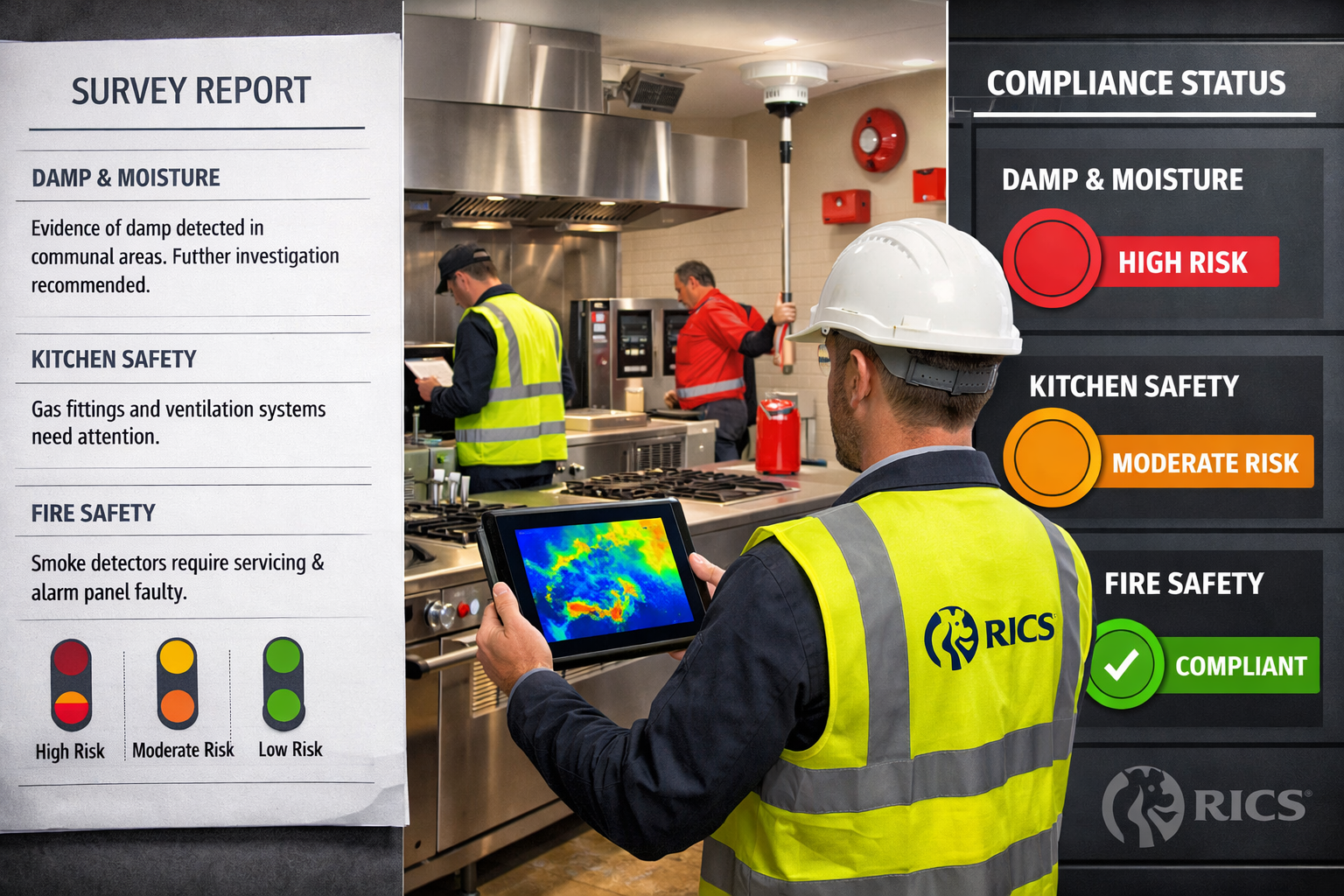
- Traffic light rating system (Red/Amber/Green) for urgency
- Photographic evidence of defects and non-compliance
- Cross-references to relevant regulations and standards
Compliance Matrix
A tabulated summary showing compliance status across:
- Building Regulations (Parts A-P as applicable)
- HMO licensing standards
- Fire safety regulations
- Accessibility requirements
- Energy performance standards
Recommendations and Costings
- Prioritized action plan for compliance works
- Budget estimates for remedial works
- Timescales for implementation
- Ongoing maintenance requirements
Appendices
- Regulatory reference documents
- Specialist reports (fire risk assessment, structural calculations)
- Test certificates (electrical, gas, fire alarm)
- Planning and building control correspondence
Understanding the consequences of failing to act on survey recommendations is crucial for landlords considering co-living investments.
Investment Due Diligence for Institutional Landlords
Risk Assessment for Co-Living Portfolios
Institutional investors acquiring co-living properties or portfolios should commission building surveys that specifically address:
Regulatory Risk
- Current compliance status with all applicable regulations
- Likelihood of regulatory changes affecting the property
- Historical enforcement action by local authorities
- Adequacy of existing licenses and certifications
Financial Risk
- Capital expenditure required for compliance
- Ongoing maintenance costs for shared facilities
- Potential rental voids during remedial works
- Insurance implications of multi-tenancy use
Operational Risk
- Tenant turnover impact on wear and tear
- Management intensity for shared amenities
- Dispute resolution mechanisms for communal areas
- Staff accommodation requirements (if applicable)
Exit Strategy Risk
- Reversibility of co-living adaptations
- Alternative use potential
- Planning considerations for change of use
- Market demand sustainability
Benchmarking Against Portfolio Standards
Professional landlords operating multiple co-living properties benefit from establishing portfolio-wide standards that exceed minimum regulatory requirements. Building surveys should assess properties against these enhanced benchmarks:
- Energy efficiency targets (e.g., EPC B rating minimum)
- Amenity quality standards (specification levels for furnishings and equipment)
- Technology infrastructure (broadband speeds, smart home integration)
- Accessibility provisions (exceeding Part M minimum requirements)
- Sustainability credentials (water efficiency, waste management, green spaces)
This approach not only reduces regulatory risk but also enhances tenant satisfaction and rental premiums in competitive markets.
Case Study: Converting Traditional Properties to Co-Living
Typical Conversion Challenges
Many co-living opportunities in 2026 involve converting existing residential or commercial properties rather than purpose-built developments. Common challenges identified through building surveys include:
Victorian and Edwardian Terraces
- Inadequate fire compartmentation between floors
- Insufficient bathroom provision for increased occupancy
- Electrical systems requiring complete rewiring
- Structural alterations needed for ensuite bathrooms
- Planning permission requirements for change of use
Former Office Buildings
- Residential amenity standards (natural light, ceiling heights)
- Sound insulation between units
- Kitchen and bathroom installation in previously commercial spaces
- Building Regulations approval for change of use
- Parking and outdoor amenity provision
Purpose-Built Flats
- Lease restrictions on sub-letting or multi-occupancy
- Freeholder consent requirements
- Service charge implications of increased occupancy
- Communal area suitability for co-living use
- Fire safety upgrades to meet current standards
Survey-Informed Feasibility Assessment
A comprehensive building survey enables investors to make informed decisions by:
- Quantifying conversion costs with reasonable accuracy
- Identifying deal-breakers such as structural limitations or planning constraints
- Negotiating purchase prices based on remedial work requirements
- Planning project timelines from acquisition through to occupancy
- Securing appropriate financing with lender-approved survey reports
Investors can learn how to negotiate house prices down based on survey findings, applying similar principles to co-living acquisitions.
Future Trends: Building Surveys for Co-Living in 2026 and Beyond
Technology Integration in Survey Practice
The surveying profession is embracing technological innovations that enhance assessment accuracy and reporting efficiency:
Digital Survey Tools
- Thermal imaging cameras for moisture and insulation defects
- Laser measuring devices for precise dimensional surveys
- Drone photography for roof and high-level inspections
- 3D scanning for detailed spatial analysis
Data Analytics
- Predictive maintenance modeling based on component condition
- Portfolio-level trend analysis for institutional landlords
- Benchmarking against comparable properties
- Lifecycle costing for capital planning
Client Communication
- Interactive digital reports with embedded multimedia
- Cloud-based document sharing for stakeholder access
- Real-time survey updates during inspection
- Video conferencing for remote client participation
Sustainability and ESG Considerations
Environmental, Social, and Governance (ESG) factors are increasingly influencing institutional investment decisions. Building surveys for co-living developments now commonly assess:
Environmental Performance
- Carbon footprint and pathway to net-zero
- Renewable energy potential (solar PV, heat pumps)
- Water efficiency measures
- Sustainable material use in construction and fit-out
Social Impact
- Affordability relative to local market
- Community space provision and quality
- Accessibility for diverse tenant populations
- Health and wellbeing features (air quality, natural light, green space)
Governance Standards
- Transparent management structures
- Tenant engagement mechanisms
- Compliance monitoring and reporting
- Ethical supply chain considerations
These factors align with the growing emphasis on property renovations that add value for tenants, particularly in the co-living sector where tenant experience drives occupancy rates.
Regulatory Evolution
The regulatory landscape for co-living continues to develop in 2026. Surveyors should monitor:
- Building Safety Act implementation: Ongoing requirements for higher-risk residential buildings
- Local authority licensing schemes: Expanding HMO and selective licensing areas
- Energy efficiency mandates: Future MEES threshold increases beyond current EPC C requirement
- Fire safety guidance: Updates to Approved Document B and fire risk assessment methodologies
- Accessibility standards: Potential strengthening of Part M requirements for new developments
Staying informed about regulatory changes ensures that building surveys remain relevant and provide clients with forward-looking compliance advice.
Selecting the Right Surveyor for Co-Living Assessments
Essential Qualifications and Experience
When commissioning Building Surveys for Co-Living Developments in Recovering Rental Markets: RICS Standards for Multi-Tenancy Compliance 2026, clients should seek surveyors with:
✅ RICS Chartered status (MRICS or FRICS)
✅ Building surveying specialism with multi-occupancy experience
✅ HMO and licensing knowledge relevant to the local authority
✅ Fire safety competence or access to specialist fire engineers
✅ Professional indemnity insurance adequate for property value and risk
Questions to Ask Prospective Surveyors
Before appointing a surveyor, consider asking:
- How many co-living or HMO properties have you surveyed in the past 12 months?
- Are you familiar with the specific licensing requirements in [local area]?
- Do you work with specialist consultants for fire safety and structural assessments?
- What format will the survey report take, and what turnaround time do you offer?
- Can you provide references from institutional landlord clients?
- How do you stay current with evolving RICS standards and building regulations?
Understanding building surveyor access requirements helps clients prepare for the inspection process.
Cost Considerations
Building survey fees for co-living properties typically exceed standard residential surveys due to:
- Increased property size and complexity
- Additional compliance assessments required
- Specialist consultant involvement
- Enhanced reporting requirements
- Higher professional indemnity insurance costs
However, comprehensive surveys represent a small percentage of acquisition costs and provide invaluable risk mitigation for institutional investments. Survey fees typically range from £1,500 to £5,000+ depending on property size, complexity, and location.
Conclusion
Building Surveys for Co-Living Developments in Recovering Rental Markets: RICS Standards for Multi-Tenancy Compliance 2026 represent a specialized discipline that demands expertise beyond traditional residential surveying. As institutional investors increasingly recognize co-living as a resilient asset class in recovering rental markets, the need for comprehensive, compliance-focused building assessments has never been greater.
The evolving RICS standards, with updates expected throughout 2026, will provide clearer frameworks for assessing "additional risk" dwellings and multi-tenancy properties [3]. However, surveyors and their clients cannot afford to wait for finalized guidance—the market is moving now, and investment decisions require robust due diligence today.
Key Success Factors
For Institutional Landlords:
- Commission comprehensive Level 3 building surveys before acquiring co-living properties
- Establish portfolio-wide standards that exceed minimum regulatory requirements
- Budget adequately for compliance works identified through surveys
- Maintain ongoing inspection and maintenance programs to preserve compliance
For Surveyors:
- Develop specialized expertise in multi-tenancy regulations and fire safety
- Adopt systematic assessment protocols tailored to co-living properties
- Invest in technology that enhances inspection accuracy and reporting quality
- Stay current with evolving RICS standards and regulatory changes
For the Industry:
- Advocate for clear, practical guidance on co-living assessment standards
- Share best practices and case studies to elevate professional competence
- Engage with regulators to ensure standards balance safety with housing supply
- Recognize co-living as a legitimate, valuable housing solution requiring professional expertise
Next Steps
If you're considering investing in co-living developments or need to assess existing multi-tenancy properties:
- Engage a qualified chartered surveyor with demonstrable co-living experience
- Define your compliance requirements clearly, including any portfolio standards
- Allow adequate time for comprehensive inspections and specialist input
- Budget for remedial works identified through the survey process
- Establish ongoing compliance monitoring to maintain standards post-acquisition
The intersection of institutional investment, recovering rental markets, and evolving tenant preferences creates significant opportunities in the co-living sector. However, success depends on rigorous due diligence that identifies and addresses compliance risks before they become costly problems. Comprehensive building surveys, conducted to emerging RICS standards for multi-tenancy properties, provide the foundation for confident investment decisions and sustainable portfolio growth.
As we progress through 2026, the professionalization of co-living assessments will separate successful institutional landlords from those who underestimate the complexity of multi-tenancy compliance. The surveyors who develop specialized expertise in this area will find themselves increasingly valuable to clients navigating this dynamic market segment.
References
[1] Building Surveys For Co Living And Multi Generational Homes Assessing Compliance In 2026 Tenant Demand Surge – https://nottinghillsurveyors.com/blog/building-surveys-for-co-living-and-multi-generational-homes-assessing-compliance-in-2026-tenant-demand-surge
[2] Residential Stock Condition Surveys – https://www.rics.org/profession-standards/rics-standards-and-guidance/sector-standards/real-estate-standards/residential-stock-condition-surveys
[3] Home Survey Standards – https://www.rics.org/profession-standards/rics-standards-and-guidance/sector-standards/building-surveying-standards/home-surveys/home-survey-standards
[4] Understanding The Rics Home Survey Standard Proposal – https://www.rics.org/news-insights/understanding-the-rics-home-survey-standard-proposal