

.

The property market is showing clear signs of recovery as 2026 unfolds, with buyer enquiries improving and sales expectations surging to +35% for the year ahead. For building surveyors and property professionals, this upswing presents both tremendous opportunity and significant operational challenges. Building Surveys and Market Recovery: Preparing for Increased Buyer Activity in 2026 requires strategic planning, operational scaling, and quality management systems that can handle increased demand without compromising service standards.
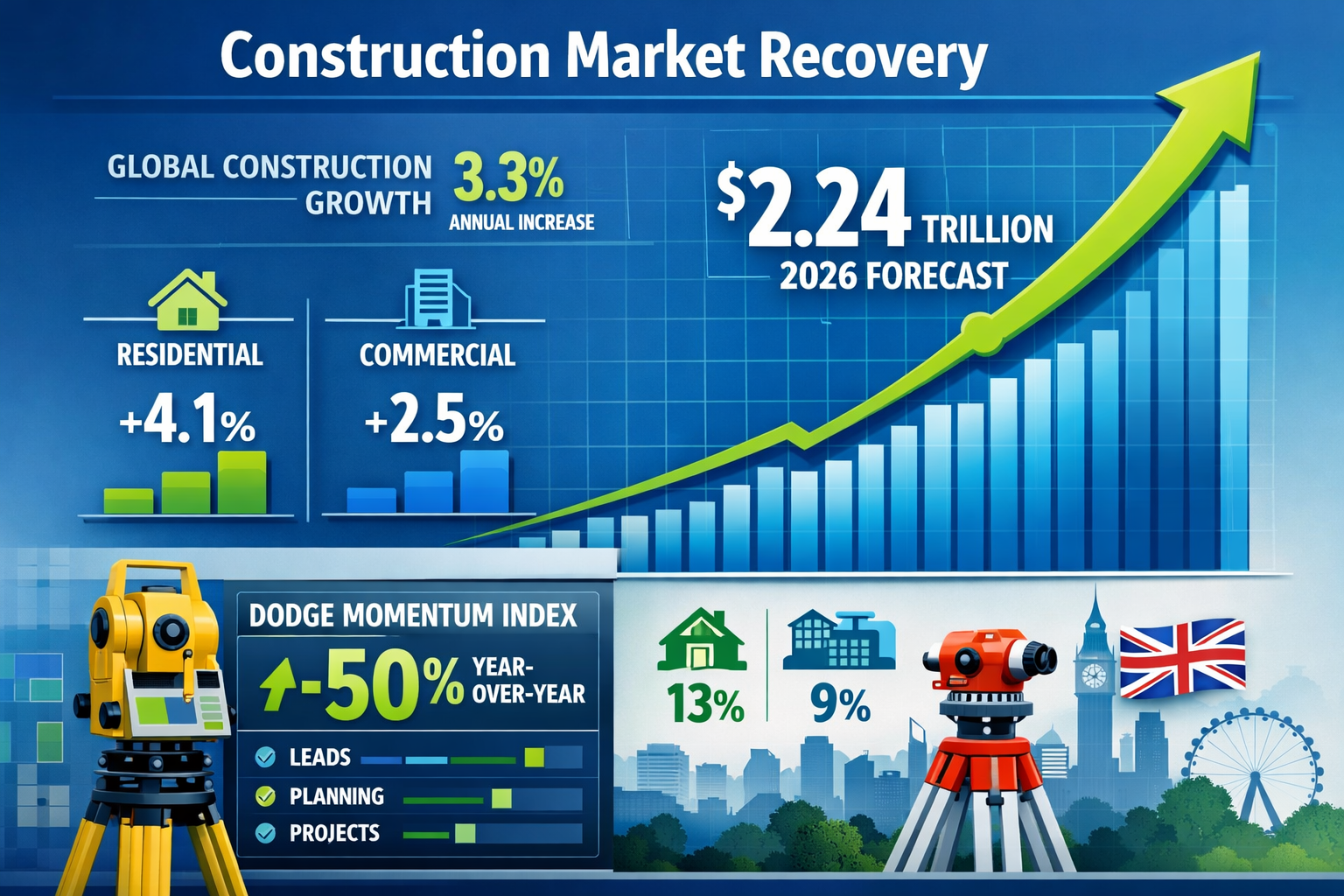
With construction spending projected to surpass $2.24 trillion in the United States alone and global construction output forecast to grow approximately 3.3% in 2026[1], the property sector is experiencing renewed momentum after years of economic volatility. This recovery is creating unprecedented demand for professional building surveys as buyers return to the market with confidence and lenders tighten due diligence requirements.
Key Takeaways
- 📈 Market recovery is accelerating: Construction spending is projected to grow 2.0% in 2026, with the Dodge Momentum Index showing 50% year-over-year growth, indicating robust planning activity[1][5]
- 🏗️ Survey demand will surge: With buyer enquiries improving and sales expectations at +35%, surveyors must prepare for significantly higher survey volumes throughout 2026
- 🔧 Operational scaling is critical: Successful firms will implement technology solutions, streamline workflows, and expand capacity while maintaining quality standards
- 💼 Quality cannot be compromised: Despite increased volumes, maintaining thorough inspection standards and comprehensive reporting remains essential for professional reputation and client protection
- 🎯 Strategic preparation wins: Surveyors who invest now in training, technology, and process optimization will capture market share during the recovery phase
Understanding the 2026 Market Recovery Landscape
Construction Market Fundamentals Driving Recovery
The construction and property markets are experiencing a fundamental shift as 2026 progresses. After navigating supply chain disruptions, labor shortages, and economic uncertainty throughout 2024 and 2025, the sector is now positioned for sustained growth. Non-residential construction spending is projected to grow 2.0% in 2026, representing a return to expansion after periods of contraction[1].
This recovery is not uniform across all sectors. Commercial construction is expected to rebound 3.9% in 2026, though office construction continues to face headwinds with projected declines of 2.0% due to persistent hybrid work models and high vacancy rates[1]. Meanwhile, hotel construction is showing revival with 6.0% growth expected, reflecting renewed confidence in travel and hospitality sectors[1].
The residential market presents particularly strong opportunities for building surveyors. The National Association of Home Builders (NAHB) forecasts steady recovery in single-family housing as mortgage rates ease, particularly in markets experiencing chronic housing shortages[2]. This residential focus aligns perfectly with the core services provided by most building survey professionals.
Planning Activity Signals Future Survey Demand
One of the most compelling indicators for building surveyors is the Dodge Momentum Index, which grew 7.0% from November to December 2025, with year-over-year growth of 50% and institutional planning up 60%[5]. This planning activity represents future construction projects that will eventually require comprehensive surveying services.
The momentum index tracks non-residential building projects in planning stages, serving as a leading indicator of construction spending trends. When planning activity surges by 50% year-over-year, it signals that survey demand will follow within 6-12 months as projects move from planning to execution phases.
For residential surveyors, the picture is equally promising. Despite builder confidence declining to 37 in January 2026 (down 2 points from December)[4], the underlying fundamentals remain strong. Forty percent of builders reported price cuts in January 2026, with average reductions of 6%[4], making properties more accessible to buyers who will require Level 3 full building surveys before completing purchases.
Regional Variations and Market Segmentation
The recovery is not evenly distributed geographically or by property type. Markets with chronic housing shortages are experiencing the most robust activity, while areas with oversupply continue to struggle. Understanding these regional variations helps surveyors allocate resources effectively and target marketing efforts where demand will be strongest.
Data center construction continues to outperform all commercial subcategories, driven by major investments from technology giants including Amazon, Meta, and OpenAI across multiple states[1]. While these projects may require specialized surveying expertise, they represent significant opportunities for firms with the technical capabilities to serve this growing sector.
The retail construction forecast shows modest 2.0% recovery in 2026 after subdued activity in 2025[1], suggesting that commercial property surveys for retail spaces will gradually increase but remain below pre-pandemic levels. Surveyors should adjust their service mix accordingly, focusing resources on residential and high-growth commercial sectors.
Building Surveys and Market Recovery: Strategic Operational Scaling
Assessing Current Capacity and Identifying Bottlenecks
Before scaling operations to meet increased demand, surveying firms must conduct honest assessments of current capacity. This involves analyzing survey completion times, report turnaround periods, quality control processes, and client satisfaction metrics to identify where bottlenecks currently exist or are likely to emerge under increased volume.
Most surveying bottlenecks occur in three areas:
- Field inspection scheduling – Limited surveyor availability during peak demand periods
- Report writing and quality review – Time-intensive processes that cannot be rushed without compromising quality
- Client communication and follow-up – Essential touchpoints that suffer when teams are overextended
Understanding why RICS building surveys are essential for home buyers helps firms prioritize quality over speed, even during market surges. A rushed survey that misses critical defects damages professional reputation far more than declining work when capacity is reached.
Technology Integration for Efficiency Gains
Technology represents the most significant opportunity for scaling survey operations without proportionally increasing headcount. Modern surveying technology includes:
Digital inspection tools enable faster, more accurate data collection in the field. Tablets and specialized surveying software allow surveyors to input observations, capture photos, and generate preliminary reports on-site, reducing office time and accelerating turnaround.
Drone technology has revolutionized roof and elevation inspections, particularly for large or complex properties. Premium drone surveys provide detailed imagery of areas that would otherwise require expensive scaffolding or access equipment, reducing inspection time while improving safety and thoroughness.
Thermal imaging cameras identify moisture ingress, insulation defects, and heating system issues that might be missed during visual inspection alone. These tools enhance survey quality while actually reducing the time required for certain diagnostic procedures.
Report automation software streamlines the report writing process without sacrificing customization or quality. Template systems with clause libraries allow surveyors to efficiently compile comprehensive reports while maintaining the detailed, property-specific analysis that clients expect.
Workforce Planning and Training Strategies
Scaling survey capacity ultimately requires appropriate staffing levels. However, recruiting qualified chartered surveyors takes time, making advance planning essential for firms anticipating market recovery.
Graduate recruitment programs provide a pipeline of talent that can be developed over 2-3 years. While graduates require supervision and cannot immediately handle complex surveys independently, they can assist senior surveyors, conduct preliminary research, and handle administrative tasks that free up experienced professionals for fieldwork.
Continuing professional development (CPD) ensures existing team members maintain current knowledge of building regulations, construction techniques, and emerging defects. As the market recovers, clients will increasingly seek surveyors who understand modern construction methods, new build considerations, and energy efficiency requirements.
Specialist training in areas like thermal imaging, drone operation, and historic building analysis allows firms to differentiate their services and command premium fees. These specializations become particularly valuable during market recoveries when buyers are willing to invest in comprehensive due diligence.
Strategic Partnerships and Referral Networks
No surveying firm can handle unlimited volume alone. Strategic partnerships with complementary professionals create capacity overflow options while providing clients with comprehensive service.
Structural engineer partnerships enable seamless referrals when surveys identify issues requiring specialist assessment. Understanding when to hire a structural engineer and maintaining relationships with trusted engineers enhances client service during high-volume periods.
Estate agent relationships provide consistent referral sources during market upswings. Agents value surveyors who deliver timely, professional reports that facilitate transactions rather than creating unnecessary delays or complications.
Solicitor networks appreciate surveyors who understand the legal implications of survey findings and can communicate effectively about defects, liabilities, and recommended actions. These relationships often generate repeat business and referrals.
Building Surveys and Market Recovery: Maintaining Quality During Volume Increases
Quality Control Systems That Scale
The greatest risk during market recoveries is quality degradation as firms rush to capture increased business. Implementing robust quality control systems before volume increases ensures standards remain consistent regardless of workload.
Peer review processes require all reports to undergo secondary review by another qualified surveyor before client delivery. While this adds time to the process, it catches errors, ensures consistency, and provides valuable learning opportunities for junior team members.
Standardized checklists ensure no critical inspection areas are overlooked during busy periods. What is covered in a Level 3 building survey should be clearly documented and verified for every inspection, regardless of property type or surveyor experience level.
Client feedback systems provide early warning when quality issues emerge. Regular satisfaction surveys and follow-up calls identify problems before they escalate to complaints or professional liability claims.
Photographic documentation standards require comprehensive visual evidence supporting all significant findings. This protects both clients and surveyors by providing clear records of property conditions at inspection time.
Time Management and Realistic Scheduling
Maintaining quality requires realistic scheduling that accounts for property complexity, travel time, report writing, and quality review. During market recoveries, the temptation to overbook can be strong, but it inevitably leads to rushed inspections and compromised reports.
Property-specific time allocation recognizes that a small modern apartment requires significantly less inspection time than a large Victorian house with multiple extensions. Scheduling systems should account for property age, size, complexity, and access considerations.
Buffer time between inspections prevents cascading delays when unexpected issues arise. Finding serious defects like common defects in older homes may require additional investigation time that shouldn't compromise subsequent appointments.
Report writing capacity often becomes the bottleneck during high-volume periods. Firms should calculate realistic report completion rates and schedule inspections accordingly, ensuring surveyors aren't conducting fieldwork when they should be writing reports.
Client Communication Excellence
Clear, proactive communication becomes even more critical during busy periods when clients may feel neglected or anxious about their property purchases.
Expectation setting begins at initial contact, with clear timelines for inspection scheduling, report delivery, and follow-up consultation. Under-promising and over-delivering builds trust and reduces client anxiety.
Progress updates keep clients informed throughout the survey process, particularly if unexpected delays occur. A brief email confirming inspection completion and estimated report delivery demonstrates professionalism and reduces follow-up inquiries.
Accessible explanations ensure clients understand survey findings and their implications. Technical jargon should be minimized, and surveyors should be available for follow-up discussions to clarify recommendations and answer questions.
Post-survey support includes being available to discuss findings with clients' solicitors, contractors, or other professionals involved in the transaction. This support adds value and often generates referrals and repeat business.
Leveraging Market Recovery for Business Growth

Service Diversification Opportunities
Market recoveries create opportunities to expand service offerings beyond traditional building surveys. Clients experiencing property transactions often need complementary services that surveying firms are well-positioned to provide.
Snagging surveys for new builds represent growing demand as buyers increasingly recognize that new construction isn't defect-free. Understanding what house snagging involves and when it's necessary allows firms to serve buyers purchasing from developers.
Energy performance considerations are increasingly important to buyers concerned about running costs and environmental impact. Surveyors who understand EPC ratings and MEES regulations provide valuable guidance that influences purchasing decisions.
Pre-purchase consultations allow buyers to discuss property concerns before committing to full surveys. These consultations generate goodwill, demonstrate expertise, and often convert to full survey instructions.
Post-purchase project management helps clients coordinate recommended repairs and improvements identified during surveys. This ongoing relationship generates additional revenue while ensuring survey recommendations are properly implemented.
Pricing Strategies for Growth Markets
Market recoveries allow firms to review pricing structures and ensure fees reflect the value provided and market conditions.
Value-based pricing focuses on the protection and peace of mind surveys provide rather than simply charging by property size or type. Clients purchasing £500,000+ properties understand that a comprehensive survey costing £800-1,200 represents excellent value compared to the financial risks of undiscovered defects.
Tiered service offerings allow clients to choose survey levels appropriate to their needs and budgets, from basic condition reports to comprehensive Level 3 surveys with specialist testing. This approach captures clients at different price points while encouraging upgrades to more thorough services.
Package pricing bundles surveys with complementary services like snagging inspections, energy assessments, or property valuations at attractive rates that increase average transaction values.
Marketing and Positioning During Recovery
As buyer activity increases, effective marketing ensures surveying firms capture their share of growing demand.
Educational content marketing positions firms as trusted experts by providing valuable information to property buyers. Blog posts, videos, and guides addressing common concerns demonstrate expertise and build trust before potential clients make contact.
Estate agent partnerships should be actively cultivated during recovery periods when agents are busier and more receptive to relationships that help their clients. Providing agents with survey information they can share with buyers creates goodwill and generates referrals.
Online presence optimization ensures potential clients find the firm when searching for surveying services. Local search optimization, Google Business Profile management, and positive review generation drive consistent inquiry flow.
Client testimonials and case studies provide social proof that influences buyer decisions. Highlighting how surveys identified significant defects that saved clients money demonstrates tangible value and justifies professional fees.
Preparing for Sector-Specific Recovery Trends
Residential Property Survey Demand
The residential sector typically leads property market recoveries, with buyer confidence returning before commercial investment activity. Residential construction is likely to respond first to improving economic conditions[3], creating immediate opportunities for building surveyors.
First-time buyers represent significant survey demand as they enter the market, often purchasing older properties that require comprehensive inspection. These buyers typically lack property experience and value detailed guidance about condition issues and maintenance requirements.
Downsizers moving from large family homes to smaller properties often have high expectations for property condition and appreciate thorough surveys that identify all defects, even minor ones that experienced buyers might overlook.
Buy-to-let investors require surveys that assess not just current condition but also future maintenance costs and rental appeal. Understanding how property renovations add value for tenants helps surveyors provide investment-focused advice.
Commercial Property Considerations
While commercial construction recovery may lag residential markets[3], certain commercial sectors show strong growth potential that will generate survey demand.
Data center development continues to outperform all commercial subcategories[1], requiring specialized surveying expertise for these technically complex facilities. Surveyors with electrical, mechanical, and structural knowledge can command premium fees in this growing sector.
Hotel and hospitality properties are experiencing revival with 6.0% growth expected in 2026[1]. These properties require specialized survey knowledge regarding commercial building regulations, accessibility requirements, and operational systems.
Retail property recovery at 2.0% growth[1] suggests modest opportunities for commercial surveyors, particularly for retail-to-residential conversions that are increasingly common in changing high streets.
New Build and Development Projects
As construction activity increases, demand for new build inspections and development-related surveying services will grow correspondingly.
New build snagging becomes increasingly important as construction volumes rise and quality control may suffer under pressure to complete projects quickly. Buyers of new properties increasingly recognize the value of independent inspection before accepting handover.
Development site assessments help investors and developers understand existing conditions, constraints, and opportunities before purchasing land or buildings for redevelopment. These assessments require different skills than traditional building surveys but leverage similar expertise.
Progress inspections during construction provide buyers purchasing off-plan with confidence that their properties are being built to specification. These ongoing inspections generate recurring revenue and build long-term client relationships.
Technology and Innovation in Survey Delivery
Digital Transformation of Survey Processes
The surveying profession has traditionally been paper-based and labor-intensive, but digital transformation is accelerating as firms seek efficiency gains to handle increased volumes.
Cloud-based practice management systems enable seamless coordination between field surveyors, office staff, and clients. These systems track appointments, manage workflows, store documents, and facilitate communication from any location.
Mobile inspection applications allow surveyors to complete reports in the field using tablets or smartphones, dramatically reducing office time and improving turnaround speeds. Photos, measurements, and observations are captured digitally and automatically integrated into report templates.
Client portals provide secure access to reports, invoices, and supporting documents, reducing administrative burden while improving client experience. Clients appreciate 24/7 access to their survey information and supporting materials.
Electronic signature systems streamline contract execution and report acknowledgment, eliminating postal delays and simplifying document management.
Advanced Inspection Technologies
Beyond basic digitization, advanced technologies are transforming what surveyors can detect and how efficiently they work.
Thermal imaging identifies moisture problems, insulation defects, and heating system issues invisible to the naked eye. This technology is becoming standard equipment for comprehensive surveys rather than a specialist add-on.
Moisture meters provide objective measurements of dampness levels, supporting visual observations with quantifiable data that helps clients understand the severity of moisture-related defects.
Drone surveys enable detailed roof and elevation inspections without expensive access equipment. Understanding how drone surveys work and their benefits helps firms market this technology effectively to clients.
Laser measuring devices improve accuracy while reducing measurement time, particularly for large or complex properties where traditional tape measures are cumbersome.
Artificial Intelligence and Data Analytics
Emerging technologies are beginning to influence surveying practices, though human expertise remains essential for property assessment.
AI-assisted defect identification uses machine learning to analyze photographs and identify potential issues like cracking patterns, moisture staining, or structural movement. While not replacing surveyor judgment, these tools can flag areas requiring closer inspection.
Predictive maintenance modeling analyzes building age, materials, and condition to forecast future maintenance requirements and costs, providing clients with valuable long-term planning information.
Comparative market analysis uses data analytics to benchmark property condition against similar properties, helping clients understand whether identified defects are typical for the property type or represent unusual concerns.
Risk Management During Market Upswings
Professional Indemnity Considerations
Increased survey volumes create increased professional liability exposure. Firms must ensure insurance coverage and risk management practices scale appropriately with business growth.
Adequate coverage limits should reflect both individual survey values and aggregate annual exposure. As property values and survey volumes increase, insurance coverage should be reviewed and adjusted accordingly.
Claims history review helps identify patterns in complaints or claims that might indicate systemic quality issues requiring attention. Even minor complaints should be analyzed for improvement opportunities.
Policy exclusions should be thoroughly understood, particularly regarding specialist services like drone surveys, thermal imaging, or new build inspections that may require specific coverage endorsements.
Quality Assurance Documentation
Comprehensive documentation protects surveyors from liability claims while demonstrating professional standards.
Inspection photographs should comprehensively document property conditions, particularly all defects mentioned in reports. Time-stamped, geotagged images provide irrefutable evidence of conditions at inspection time.
Scope of service documentation clearly defines what was and wasn't included in each survey, protecting against claims that issues were "missed" when they were actually outside the agreed scope.
Limitation clauses in terms of engagement and reports should be clear, reasonable, and properly explained to clients, ensuring they understand any constraints on the inspection or reporting.
Client Selection and Instruction Clarity
Not all potential clients represent good business during market recoveries. Firms should maintain standards for client acceptance and instruction clarity.
Red flag clients who pressure for unrealistic turnaround times, question professional fees excessively, or demonstrate unrealistic expectations about survey scope should be politely declined. These clients create disproportionate risk and administrative burden.
Clear instruction terms should be confirmed in writing before inspections proceed, covering scope, fees, timing, access arrangements, and report delivery. Verbal agreements create misunderstanding risks that increase during busy periods.
Deposit requirements for new clients reduce no-show risks and demonstrate client commitment. Requiring payment before inspection scheduling is standard practice that protects firm resources.
Building Surveys and Market Recovery: Implementation Timeline
Immediate Actions (Next 30 Days)
Firms should take immediate steps to prepare for increased demand:
✅ Assess current capacity – Calculate realistic survey volumes based on existing resources
✅ Review technology stack – Identify gaps in digital tools and inspection equipment
✅ Update pricing – Ensure fee structures reflect current market conditions and value provided
✅ Refresh marketing materials – Update website, brochures, and online profiles with current information
✅ Contact referral sources – Reconnect with estate agents, solicitors, and past clients to signal availability
Short-Term Priorities (Next 90 Days)
Building on immediate actions, firms should implement:
📋 Technology implementation – Deploy new software, equipment, or systems identified as priorities
📋 Training programs – Ensure all team members are proficient with new tools and processes
📋 Quality control systems – Formalize review processes and documentation standards
📋 Recruitment planning – Identify staffing needs and begin recruitment or training programs
📋 Partnership development – Establish formal relationships with complementary professionals
Medium-Term Strategy (6-12 Months)
Sustained growth requires ongoing development:
🎯 Service expansion – Introduce new offerings based on market demand and firm capabilities
🎯 Team development – Invest in continuing professional development and specialist training
🎯 Process optimization – Continuously refine workflows based on experience and feedback
🎯 Market positioning – Build reputation through thought leadership, case studies, and testimonials
🎯 Performance monitoring – Track key metrics and adjust strategies based on results
Conclusion: Positioning for Success in the 2026 Recovery
Building Surveys and Market Recovery: Preparing for Increased Buyer Activity in 2026 represents both significant opportunity and substantial challenge for surveying professionals. With construction spending projected to surpass $2.24 trillion[1], global construction output forecast to grow 3.3%[1], and buyer enquiries improving with sales expectations at +35%, the market conditions for sustained recovery are firmly established.
Success during this recovery period requires more than simply working harder or longer hours. Firms that thrive will be those that strategically scale operations, embrace technology, maintain uncompromising quality standards, and position themselves as trusted advisors rather than transactional service providers.
The surveying profession plays a critical role in property markets by protecting buyers, supporting informed decision-making, and identifying issues before they become expensive problems. As market activity increases, this role becomes even more important, with buyers relying on professional expertise to navigate competitive markets where purchase decisions must be made quickly but carefully.
Actionable Next Steps
Property professionals preparing for increased buyer activity in 2026 should:
- Conduct honest capacity assessments to understand current limitations and growth potential
- Invest in technology that improves efficiency without compromising quality
- Develop quality control systems that scale with increased volumes
- Build strategic partnerships that provide capacity overflow and complementary services
- Enhance client communication to differentiate through service excellence
- Monitor market indicators to adjust strategies as conditions evolve
- Prioritize professional development to maintain expertise and service standards
The firms that begin preparing now will be best positioned to capture market share, build lasting client relationships, and establish reputations that sustain success beyond the immediate recovery period. Those that wait until demand overwhelms capacity will struggle with quality issues, client dissatisfaction, and missed opportunities.
The 2026 market recovery is not just a temporary uptick—it represents a fundamental shift as the property sector emerges from years of uncertainty into a period of sustained growth. Building surveyors who recognize this opportunity and prepare accordingly will find 2026 to be a transformative year for their practices and their professional success.
For comprehensive building survey services delivered by experienced chartered surveyors, explore our full range of surveying solutions designed to protect buyers and support informed property decisions in all market conditions.
References
[1] Construction Market Outlook 2026 – https://www.gallagherbassett.com/-/media/files/gallagher-bassett/us/news-and-insights/construction-market-outlook-2026.pdf
[2] 2026 Construction Outlook – https://sips.premierbuildingsystems.com/blog/2026-construction-outlook
[3] constructiondive – https://www.constructiondive.com/news/5-construction-trends-2026/808904/
[4] Builder Sentiment Loses Ground At Start Of 2026 – https://www.nahb.org/news-and-economics/press-releases/2026/01/builder-sentiment-loses-ground-at-start-of-2026
[5] 2026 Winter Construction Market Trends – https://interactive.usa.skanska.com/2026-winter-construction-market-trends
[6] 2026 Construction Industry Outlook – https://news.agc.org/economics/2026-construction-industry-outlook/