

Fewer than one in five private rental listings in England currently advertise as "pets considered" — and that number has been falling since the Renters' Rights Act 2026 came into force, with one market analysis recording a c.13% drop in pet-friendly listings as some landlords pre-emptively tighten their policies [3]. The paradox is striking: legislation designed to open doors for pet-owning tenants appears, at least in the short term, to be closing them. For building surveyors and valuers working across the Private Rented Sector (PRS), this tension sits at the heart of a rapidly evolving risk landscape.
Building Surveyors and the Renters' Rights Act 2026: Pets, Repairs and Habitability Risks That Should Be Flagged in Reports is no longer a niche compliance topic — it is a mainstream professional duty. Reports that fail to address pet-related wear, habitability obligations and the structural implications of the new legislative framework leave clients exposed and surveyors professionally vulnerable.
Key Takeaways 📋
- The Renters' Rights Act 2026 gives tenants a statutory right to request a pet; landlords cannot issue blanket refusals, and surveyors must treat pet permissions as a material risk factor.
- Surveyors should flag specific building elements — flooring, acoustic insulation, ventilation, common areas — that are vulnerable to accelerated wear from pet occupancy.
- Habitability risks must be explicitly rated in reports, covering damp, mould, unsafe electrics and structural defects that could be compounded by pet use.
- Head-lease and title constraints on pets are a critical due-diligence item; where a superior lease prohibits animals, a landlord's consent may still breach those covenants.
- Pet-damage insurance, deposit rules and double-recovery fraud risks mean surveyors must record existing pet-related damage separately and comment on insurability.
What the Renters' Rights Act 2026 Means for Surveyors
The Shift from Discretion to Statutory Right
Before 2026, a landlord's decision on pets was largely discretionary. The Renters' Rights Act 2026 fundamentally changes that position. Tenants in England now hold a statutory right to request a pet, and landlords "must not unreasonably withhold or delay" consent [5]. Crucially, each request must be considered on its individual merits — property suitability, the tenant's ability to care for the animal responsibly, and the physical characteristics of the building all come into play [7].
For surveyors, this is not merely a legal background note. It directly shapes what a competent report must address. Where a property is being purchased for PRS investment or is already let, the surveyor's commentary on condition, yield risk and future repair liabilities must now account for the realistic probability that pets will be present.
"Blanket 'no pets' policies are no longer acceptable under the Act. Each request must be considered on individual merits — and surveyors are on the front line of assessing whether a building can actually support that." [7]
Pet Damage Insurance: A New Variable in Risk Assessment
The Act expressly permits landlords to require tenants to hold pet damage insurance as a condition of granting consent [5]. This creates a new layer of due diligence for surveyors:
- Is evidence of pet damage insurance noted in the tenancy documentation?
- Does the building's condition suggest that insurance cover would be adequate, or are there systemic vulnerabilities?
- Has any prior pet-related damage been recorded separately from general wear and tear?
Surveyors are advised to record existing pet-related damage as a distinct line item. Landlords can claim for pet damage through insurance and, subject to deposit rules, from tenancy deposits — but they must not recover the same loss twice, which constitutes fraud [2]. A clear, itemised survey record protects all parties.
Pet-Related Building Risks That Should Be Flagged in Reports
Flooring, Finishes and Acoustic Insulation
Industry guidance published in early 2026 identifies a specific set of building elements that surveyors should treat as high-risk under pet occupancy [7]. These are not hypothetical concerns — they translate directly into condition ratings, maintenance allowances and valuation adjustments.
| Building Element | Pet-Related Risk | Recommended Action in Report |
|---|---|---|
| Original parquet / hardwood floors | Scratching, moisture ingress from spills | Flag as vulnerable; recommend protective specification |
| Soft timber balustrades and staircases | Claw damage, accelerated wear | Note condition; advise more robust finish |
| Carpeted basements / lower ground floors | Odour retention, moisture and mould risk | Assess ventilation; flag habitability concern |
| Acoustic insulation between units | Barking and pet noise complaints | Rate adequacy; note risk of nuisance claims |
| Exposed cabling in common areas | Chewing hazard, fire risk | Record as safety defect; recommend remediation |
| Communal doors and skirting boards | Scratching, persistent odour | Note systemic pet-management issues |
For period properties, the risks are often more acute. Older buildings with original timber floors, minimal acoustic separation and limited ventilation are particularly susceptible. Surveyors working on Edwardian or Victorian stock should cross-reference these risks with a building pathology assessment to ensure that pre-existing defects are not compounded by pet-related wear.
Ventilation, Waste Management and Common Areas
For PRS blocks — particularly those converting fixed-term ASTs to periodic tenancies under the wider reform package — the cumulative impact of multiple pet-owning tenants on shared infrastructure is a material concern [9]. Reports should explicitly comment on:
- Adequacy of common-area ventilation to manage odours and maintain air quality
- Waste management systems and whether refuse areas can accommodate pet-related waste
- External amenity space: is there sufficient exercise space, or will pets be confined to units in ways that increase interior wear?
- Health and safety hazards introduced by increased pet occupancy — trip hazards from leads, slippery floors from intensive cleaning regimes, and pet-related contamination of shared surfaces [9]
A full Level 3 building survey is the appropriate tool for capturing these risks comprehensively, particularly for older or larger PRS properties where pet-related deterioration may interact with existing structural or services defects.
Habitability Risks, Repairs and the Surveyor's Duty to Flag
Fitness for Human Habitation: The Core Obligation
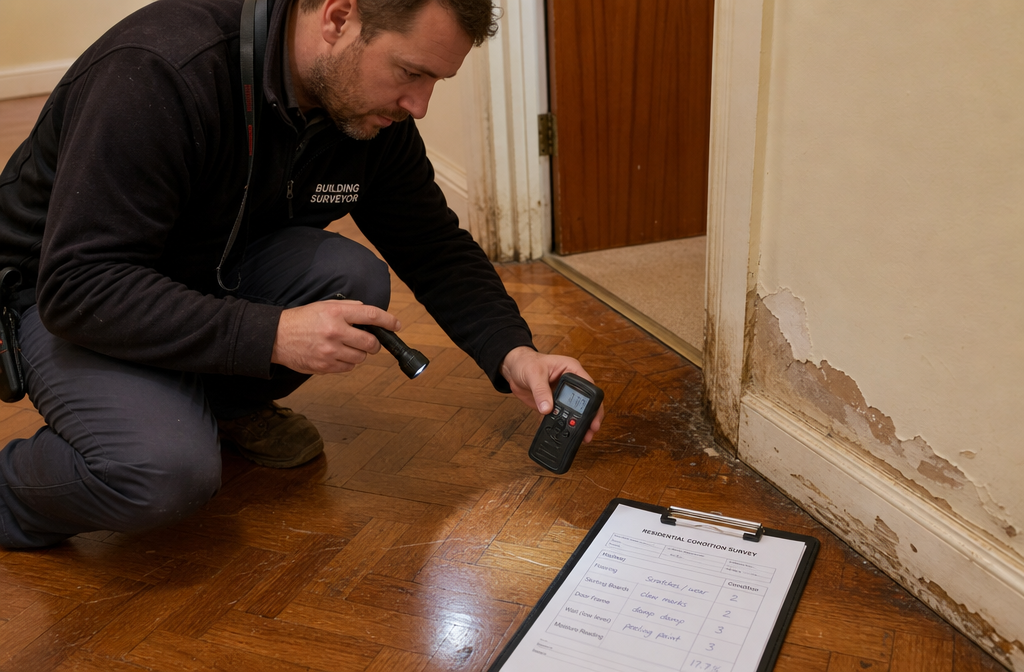
Separate from the pet provisions, the Renters' Rights Act 2026 reinforces and extends the landlord's long-standing duty to maintain habitable conditions. Surveyors are being urged to treat habitability risks as a cross-cutting theme in every PRS report [9]. This means going beyond a simple condition rating and providing explicit commentary where defects could compromise legal fitness for human habitation.
Conditions that must be clearly flagged include:
- 🟥 Damp and mould — particularly in poorly ventilated spaces where pet occupancy could accelerate moisture retention
- 🟥 Unsafe electrical installations — especially where exposed cabling in common areas presents both a pet-chewing hazard and a fire risk
- 🟥 Structural instability — any movement, settlement or defect that affects the safety of the building fabric
- 🟥 Inadequate heating — a property that cannot be maintained at a habitable temperature fails the fitness standard regardless of tenancy type
- 🟠 Poor drainage and sanitation — defects that become more acute with higher occupancy or pet use
International experience reinforces the importance of this documentation. In jurisdictions such as California, it is illegal to collect full rent for units with serious habitability problems, and documented inspection reports become core evidence in habitability disputes and constructive eviction claims [4] [6]. UK surveyors should understand that their condition reports carry equivalent evidentiary weight in disputes under the Homes (Fitness for Human Habitation) Act and related legislation.
For a detailed understanding of how repairs and maintenance obligations interact with survey findings, the guide to how often rental units should be inspected provides useful context for landlords and their advisers.
How Pet Occupancy Can Exacerbate Existing Defects
One of the most important contributions a surveyor can make is connecting pre-existing defects with the amplifying effect of pet occupancy. This is not about penalising pet owners — it is about giving clients an accurate picture of likely future repair liabilities.
Consider these interactions:
- Damp in a carpeted basement + dog occupancy = accelerated mould growth, persistent odour, potential respiratory health risk for occupants
- Poorly sealed ground-floor doors + cat flap installation = cold bridging, draught penetration, increased heating demand
- Inadequate acoustic insulation + dog barking = nuisance complaints, potential enforcement action under tenancy terms
- Original parquet flooring + large dog = surface scratching within months, requiring costly restoration
Surveyors should include a specific section in reports that addresses pet-exacerbated risk, particularly where the property is being acquired for PRS investment and the buyer needs to budget for realistic maintenance scenarios. The guide to budgeting for repairs and restoration is a valuable resource for quantifying these costs.
Lease Constraints, Title Issues and the Compliance Gap
When the Head-Lease Says No
One of the most practically significant issues for surveyors working on leasehold PRS properties is the conflict between the Act's pro-pet presumption and superior lease covenants. If a landlord is a leaseholder and the head-lease or building management rules prohibit pets, any consent the landlord grants to a tenant may still breach those superior covenants [5].
"Freeholder does not allow pets" is recognised as a reasonable ground for refusal under the Act — but only if the surveyor (and the landlord) actually knows about it. This makes head-lease review a mandatory due-diligence step for any PRS survey or valuation [7].
Surveyors should:
- Check the head-lease for any prohibition on animals, whether absolute or qualified
- Review management company rules and building handbooks for pet-related restrictions
- Note in the report where lease terms override the Act's general pro-pet presumption
- Flag the compliance risk for institutional landlords managing multiple units within a block
Where asbestos-containing materials are present in older blocks — a common finding in pre-2000 properties — surveyors should also consider whether pet-related disturbance of building fabric (e.g., scratching at walls or floors containing ACMs) creates an additional safety dimension. An asbestos building survey may be warranted in such cases.
Market Practice vs. Legal Rights: A Valuation Consideration
The c.13% drop in "pets considered" listings since the Act came into force [3] creates a valuation nuance that surveyors must address. There is now a meaningful gap between:
- Legal rights — tenants can request a pet and challenge unreasonable refusals
- Market practice — a significant proportion of landlords are restricting pet-friendly offers
For valuation purposes, this divergence affects letting risk, void periods and achievable rent. A property with restrictive covenants that prevent pet occupation may command a smaller tenant pool than comparable unrestricted stock. Conversely, a property that is genuinely well-suited to pets — robust finishes, good ventilation, external space — may attract premium demand from the growing cohort of pet-owning tenants [1].
Surveyors and valuers should comment on this dynamic explicitly, particularly in reports for institutional PRS investors and lenders assessing rental yield sustainability. For context on how legislative changes are reshaping property market conditions more broadly, the overview of property market legislation changes provides useful background.
Practical Checklist: What Surveyors Should Include in PRS Reports in 2026
The following checklist consolidates guidance from professional commentary and industry sources [7] [9] into actionable report content:
🐾 Pet-Related Physical Risks
- Condition and vulnerability of floor finishes (parquet, carpet, softwood)
- Acoustic insulation adequacy between units (noise transmission risk)
- Ventilation provision in all habitable rooms and common areas
- External amenity/exercise space availability
- Condition of communal doors, skirting boards and shared surfaces
- Exposed or accessible cabling in common areas
- Evidence of existing pet-related damage (record separately)
🏠 Habitability and Repair Obligations
- Damp, mould and condensation — location, severity, cause
- Electrical installation condition and safety
- Structural integrity — movement, settlement, cracking
- Heating system adequacy and efficiency
- Drainage and sanitation condition
- EPC rating and compliance with MEES — see EPC and MEES guidance for building surveys
📋 Legal and Title Due Diligence
- Head-lease review for pet restrictions
- Management company rules and building handbook
- Evidence of pet damage insurance in tenancy documentation
- Existing claims history (where accessible)
- Fire risk assessment status for blocks — see fire risk assessments
💷 Valuation and Risk Commentary
- Maintenance allowance adjusted for pet-occupancy risk
- Comment on letting risk and tenant pool implications
- Note where landlord policies diverge from local market norms
- Flag systemic pet-management issues affecting insurability
Conclusion: Actionable Next Steps for Surveyors
The Renters' Rights Act 2026 has permanently altered the risk profile of PRS properties. Building Surveyors and the Renters' Rights Act 2026: Pets, Repairs and Habitability Risks That Should Be Flagged in Reports is not a passing compliance concern — it is a structural shift in what competent survey practice requires.
What to do now:
- Update report templates to include dedicated sections on pet-related physical risks, habitability ratings and lease-constraint due diligence.
- Treat pet damage insurance as a material fact — note its presence or absence and comment on adequacy relative to building condition.
- Always check the head-lease before commenting on a landlord's ability to grant or refuse pet consent; superior covenants can override the Act.
- Quantify pet-exacerbated repair costs in maintenance budgets, particularly for period properties with original finishes.
- Comment explicitly on the market practice gap — where landlord policies diverge from the Act's pro-pet presumption, flag the letting risk and void-period implications for investor clients.
- Use condition ratings purposefully — C3 ratings for damp, unsafe electrics or structural defects must be accompanied by clear habitability commentary, not just technical description.
The surveyor who understands this landscape does not just protect their professional indemnity — they deliver genuinely superior advice to clients navigating one of the most significant shifts in English tenancy law in a generation.
References
[1] Riverlpm Rentersrightsact Ukproperty Lettingagents Activity – linkedin.com
[2] Renting To Tenants With Pets – totallandlordinsurance.co.uk
[3] Watch (YouTube analysis of pet-friendly listing trends) – youtube.com
[4] Repairs – sftu.org
[5] Valuation Impacts Of Pet Permissions Under Renters Rights Act 2026 Surveyor Assessments For PRS Properties – wimbledonsurveyors.com
[6] Major Repairs And Maintenance – justia.com
[7] Renters Rights Act 2026 Pet Damage Risks Building Survey Checklists For Valuation Adjustments In PRS – canterburysurveyors.com
[8] Facebook community discussion on Renters' Rights Act – facebook.com
[9] Renters Rights Act 2026 Building Survey Checklists For Pet Friendly And Periodic Tenancy Conversions – kingstonsurveyors.com