

The UK property market stands on the brink of its most significant transformation in decades. Government consultations on mandatory upfront property condition assessments are reshaping the entire landscape of building surveys in 2026. For chartered surveyors, these proposals represent far more than regulatory adjustments—they signal a fundamental shift in when, how, and to what extent properties must be assessed before transactions complete. Understanding Building Survey Scope Expansion Under Mandatory Upfront Assessment Proposals: What Surveyors Must Know for 2026 Consultations is no longer optional; it's essential for professional survival and client service excellence.
Key Takeaways
- Mandatory upfront assessments will require property condition reports before properties are marketed, fundamentally changing survey timing and scope [1]
- RICS quality standards have been updated for 2026 with enhanced inspection requirements that surveyors must implement immediately [4]
- Survey costs are rising with professional assessments starting at £320, reflecting expanded scope and regulatory compliance demands [2]
- Surveyors must prepare now by updating protocols, investing in training, and revising client communication strategies to meet new consultation requirements
- Hidden defects detection becomes more critical as expanded assessments uncover building fabric issues and structural concerns earlier in the transaction process [3]
Understanding the 2026 Mandatory Assessment Proposals
The proposed mandatory upfront condition assessments mark what industry experts describe as "a watershed moment" in how building surveys are conducted across the UK [1]. These reforms aim to transform the homebuying process by requiring comprehensive property assessments before properties enter the market, rather than after offers are accepted.
What Makes These Proposals Different?
Traditional building surveys have operated on a buyer-initiated model. Purchasers commission Level 3 full building surveys after identifying a property of interest, often discovering significant defects late in the transaction process. The 2026 proposals flip this model entirely.
Key changes include:
- 📋 Seller responsibility: Property owners must commission assessments before marketing
- ⏰ Timing shift: Surveys occur at listing stage, not after offer acceptance
- 📊 Standardized reporting: Uniform assessment criteria across all property types
- 🔍 Enhanced disclosure: More comprehensive defect identification and reporting requirements
- ⚖️ Legal implications: Potential liability changes for both sellers and surveyors
The Regulatory Framework Taking Shape
The consultation process involves multiple stakeholders including the Royal Institution of Chartered Surveyors (RICS), the Department for Levelling Up, Housing and Communities, and consumer protection organizations. The framework being developed addresses several critical areas:
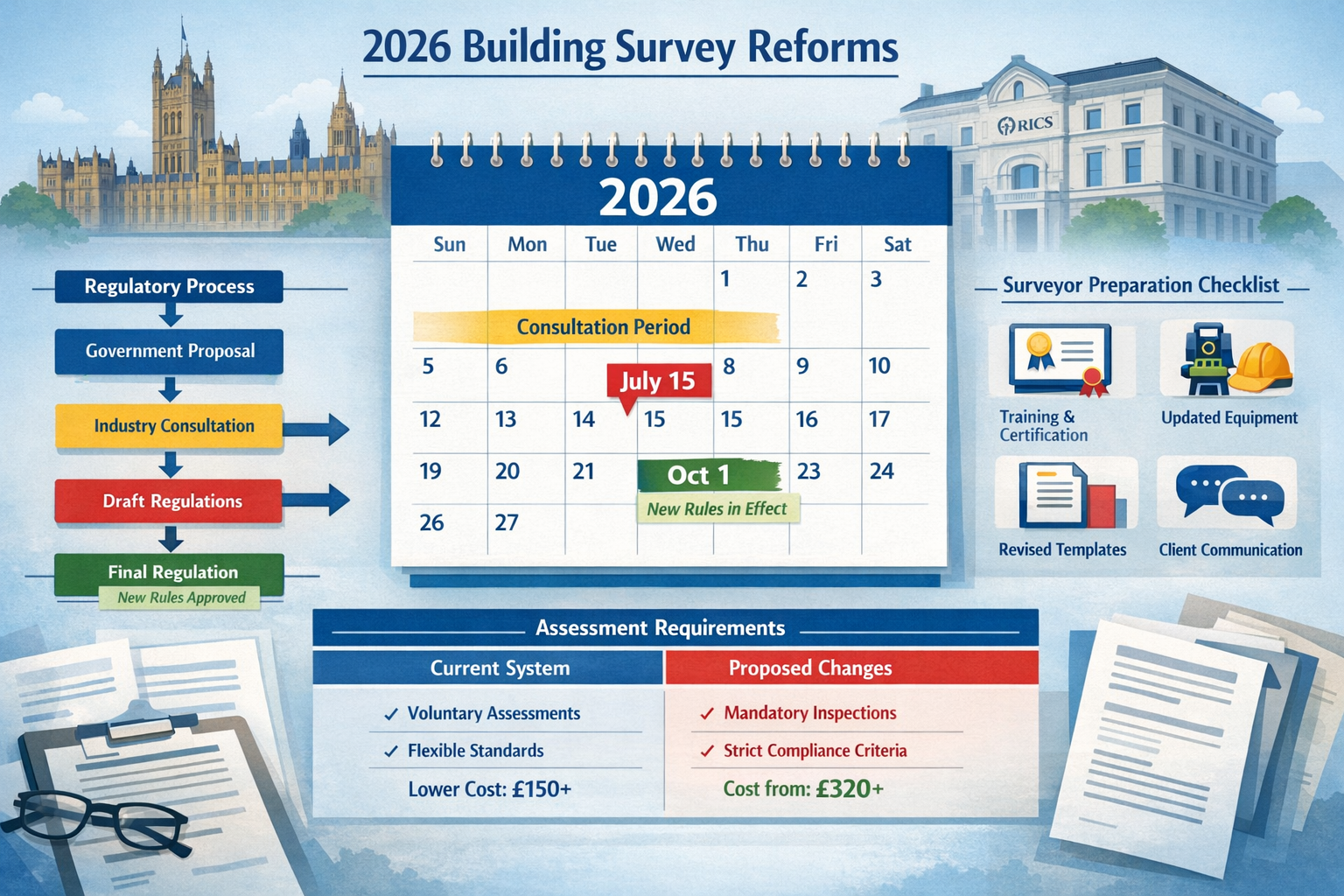
| Framework Component | Current Status | 2026 Proposal |
|---|---|---|
| Survey Timing | Post-offer, buyer-initiated | Pre-marketing, seller-initiated |
| Minimum Standards | Voluntary guidelines | Mandatory compliance requirements |
| Scope Definition | Variable by surveyor | Standardized assessment criteria |
| Report Format | Flexible presentation | Uniform template requirements |
| Quality Assurance | Self-regulated | Enhanced oversight mechanisms |
The proposals specifically target transaction fall-through rates, which currently exceed 30% in some regions, often due to unexpected survey findings. By moving assessments earlier, policymakers hope to create more transparent, efficient property transactions.
Building Survey Scope Expansion Under Mandatory Upfront Assessment Proposals: Practical Implications for Surveyors
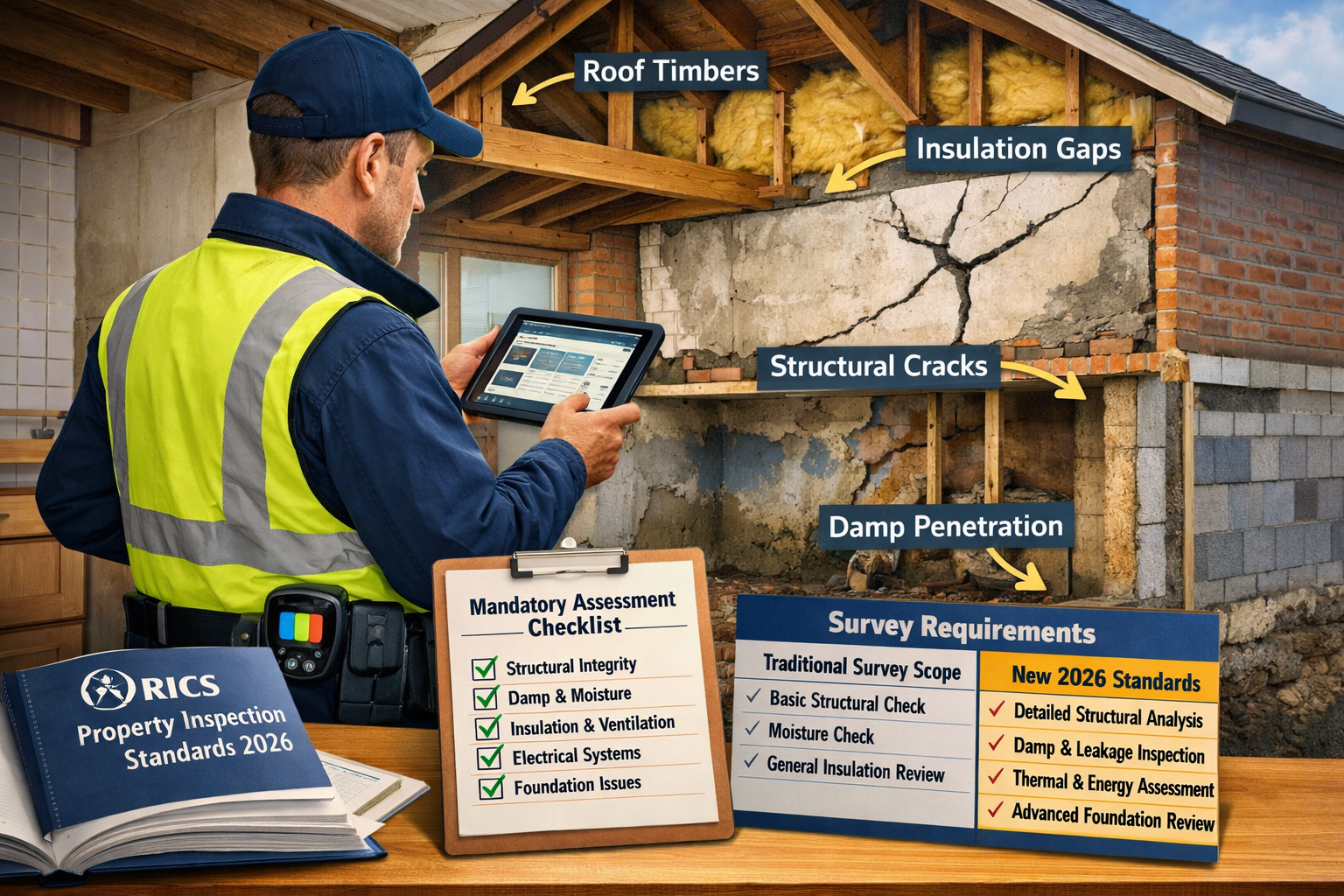
The expansion of survey scope under these proposals extends far beyond simply conducting assessments earlier in the transaction timeline. Surveyors face substantial changes to their operational practices, professional responsibilities, and service delivery models.
Expanded Assessment Requirements
The 2026 proposals significantly broaden what must be examined during property assessments. Enhanced home inspection requirements now mandate comprehensive evaluation of areas previously considered optional or subject to surveyor discretion [4].
Expanded scope areas include:
-
Building materials assessments: Detailed identification and condition evaluation of all construction materials, with particular attention to potentially hazardous substances. Surveyors should reference comprehensive building materials assessment protocols when preparing for these expanded requirements.
-
Energy performance integration: Mandatory assessment of thermal efficiency, insulation adequacy, and heating system condition beyond basic EPC requirements
-
Accessibility compliance: Evaluation of building code compliance for current accessibility standards, particularly relevant for properties built before modern regulations
-
Environmental risk factors: Assessment of flood risk, ground stability, and environmental contamination potential
-
Future maintenance forecasting: Projected maintenance requirements and cost implications over 5-10 year horizons
Access and Investigation Challenges
One significant practical concern involves building surveyor access to properties during pre-marketing assessments. When sellers still occupy properties, coordinating comprehensive inspections becomes more complex than traditional vacant property surveys.
"The shift to mandatory upfront assessments requires surveyors to develop new protocols for occupied property inspection while maintaining the thoroughness that comprehensive condition assessments demand."
Surveyors must now consider:
- Occupied property protocols: Developing respectful yet thorough inspection procedures when homeowners remain in residence
- Limited access documentation: Clear reporting on areas that couldn't be fully assessed and potential implications
- Follow-up inspection provisions: Mechanisms for additional assessment if initial access was restricted
- Technology utilization: Deploying thermal imaging, moisture meters, and other diagnostic tools that minimize invasive investigation
Cost Implications and Pricing Structures
Professional building surveys are starting at £320 for independent assessments in 2026, reflecting the expanded scope and enhanced requirements [2]. However, this baseline figure represents only standard residential properties. Complex buildings, period properties, or those requiring specialist investigation command significantly higher fees.
Pricing considerations for surveyors:
- Scope-based fee structures: Developing transparent pricing that reflects assessment complexity
- Seller vs. buyer commissioning: Adjusting fee structures for different client types and motivations
- Liability insurance costs: Increased premiums reflecting expanded professional responsibilities
- Technology investment recovery: Incorporating equipment upgrade costs into fee structures
Understanding which building survey clients need becomes more complex when sellers, rather than buyers, commission assessments. Surveyors must clearly communicate scope options while ensuring compliance with minimum mandatory requirements.
Navigating RICS Quality Standards Updates for 2026 Consultations
The Royal Institution of Chartered Surveyors has substantially revised quality standards to align with mandatory assessment proposals. These updates create both challenges and opportunities for surveying professionals who must demonstrate compliance while maintaining competitive service delivery [4].
Enhanced Inspection Requirements
RICS has introduced more prescriptive inspection protocols that define minimum investigation standards across property types. These requirements address longstanding concerns about survey quality variability and consumer protection.
Key enhanced requirements include:
- Minimum inspection time allocations: Specified duration requirements based on property size and complexity
- Mandatory investigation areas: Non-negotiable assessment components regardless of property condition
- Documentation standards: Photographic evidence requirements and detailed condition recording
- Reporting timelines: Maximum turnaround times from inspection to report delivery
- Quality assurance checks: Internal review processes before report release
Compliance and Professional Development
Surveyors must invest in continuing professional development (CPD) to meet updated standards. The 2026 requirements emphasize both technical competency and regulatory knowledge.
Essential CPD areas:
✅ Regulatory framework training: Understanding legal obligations under mandatory assessment requirements
✅ Technical skills enhancement: Advanced diagnostic techniques for comprehensive condition assessment
✅ Report writing standards: Meeting new template and disclosure requirements
✅ Risk management: Navigating liability implications of expanded scope assessments
✅ Client communication: Explaining complex findings to diverse client types
The enhanced standards particularly impact how surveyors identify and report urgent or dangerous building issues. Clear categorization of defect severity becomes critical when assessments occur before buyer involvement.
Technology Integration Requirements
RICS quality standards increasingly expect surveyors to leverage technology for more accurate, comprehensive assessments. Digital tools enhance both inspection capabilities and reporting quality.
Technology expectations include:
- Digital inspection platforms: Mobile applications for systematic data collection and photographic documentation
- Diagnostic equipment: Thermal imaging cameras, moisture meters, and structural analysis tools
- Drone surveys: Aerial inspection capabilities for roofs and elevated building elements
- 3D modeling: Spatial documentation for complex structural configurations
- Cloud-based reporting: Secure, accessible report delivery systems
Investment in these technologies represents significant capital expenditure but positions surveyors competitively as mandatory assessments become standard practice.
Preparing Your Surveying Practice for Scope Expansion
Forward-thinking surveyors are already adapting their practices to align with anticipated regulatory changes. Preparation now minimizes disruption when mandatory requirements take effect and positions practices as industry leaders during the transition period.
Operational Protocol Updates
Reviewing and revising standard operating procedures ensures compliance readiness while maintaining service quality. This involves systematic evaluation of current practices against anticipated requirements.
Protocol revision priorities:
- Inspection checklists: Expanding assessment criteria to cover all mandatory elements
- Time allocation: Adjusting scheduling to accommodate more comprehensive investigations
- Equipment inventory: Ensuring diagnostic tools meet enhanced assessment requirements
- Report templates: Developing formats that satisfy standardized reporting expectations
- Quality control: Implementing internal review processes before report release
Many surveyors find value in understanding areas requiring further investigation and how to communicate these effectively under the new framework where sellers, not buyers, commission initial assessments.
Client Communication Strategies
The shift from buyer-commissioned to seller-commissioned surveys requires fundamentally different communication approaches. Surveyors must explain findings to clients with different motivations and concerns.
Communication adaptations needed:
- Seller-focused reporting: Framing findings in terms of disclosure obligations and transaction implications
- Buyer accessibility: Ensuring reports commissioned by sellers remain comprehensible to eventual purchasers
- Defect severity explanation: Clear categorization helping all parties understand urgency and cost implications
- Remediation guidance: Practical advice on addressing identified issues before or during transactions
- Limitation disclosure: Transparent communication about assessment boundaries and areas requiring specialist investigation
Understanding the consequences of failing to act on survey findings becomes particularly important when advising sellers about disclosure obligations and potential liability.
Business Model Adjustments
Mandatory upfront assessments create new market dynamics that may require business model evolution. Surveyors should consider how these changes affect revenue streams, client relationships, and competitive positioning.
Strategic considerations:
📈 Volume vs. value: Increased survey volume from mandatory requirements versus potentially lower fees per assessment
🤝 Client relationship shifts: Developing seller relationships alongside traditional buyer focus
⚖️ Liability management: Adjusting professional indemnity insurance and risk management practices
🔄 Repeat business opportunities: Creating value-added services for clients navigating assessment requirements
💼 Market positioning: Differentiating through quality, turnaround time, or specialized expertise
Some practices are exploring partnerships with estate agents, conveyancers, and construction law advisors to create comprehensive service packages addressing all aspects of mandatory assessment compliance.
Training and Development Investment
Preparing staff for expanded scope requirements demands significant training investment. Practices with multiple surveyors must ensure consistent quality across all team members.
Training priorities:
- Regulatory compliance: Ensuring all surveyors understand mandatory requirements and legal implications
- Technical competency: Enhancing skills in expanded assessment areas like energy performance and accessibility
- Technology proficiency: Training on new diagnostic equipment and digital reporting platforms
- Report quality: Standardizing documentation and communication approaches across the team
- Client service: Developing consultation skills for diverse client types and situations
Practices might benefit from understanding how specialists approach specific property types, such as the detailed assessment approach used when surveying Edwardian cottages, which require particular attention to period construction methods and common defect patterns.
Industry Response and Consultation Participation
The surveying profession's collective response to these proposals will significantly influence final regulatory requirements. Active participation in consultation processes allows practitioners to shape practical, workable standards that serve both consumer protection and professional practice interests.
Current Industry Perspectives
Professional bodies and individual surveyors have expressed mixed reactions to mandatory assessment proposals. While supporting transparency and consumer protection objectives, many raise practical implementation concerns.
Common industry positions:
✅ Support for: Reduced transaction fall-through rates, improved market transparency, enhanced professional standards
⚠️ Concerns about: Implementation timelines, cost implications for sellers, liability framework clarity, enforcement mechanisms
❓ Questions regarding: Scope definition boundaries, quality assurance oversight, technology requirements, training adequacy
Understanding the difference between Level 2 and Level 3 surveys becomes relevant as consultations determine which assessment level becomes mandatory for different property types.
Engaging with Consultation Processes
Surveyors have multiple channels for contributing to policy development. Active engagement ensures practitioner perspectives inform final requirements.
Participation opportunities:
- RICS consultation responses: Formal submissions through professional body channels
- Government consultation portals: Direct responses to Department proposals
- Industry working groups: Collaborative policy development with regulators and stakeholders
- Professional forums: Sharing experiences and perspectives with surveying colleagues
- Client feedback: Gathering and communicating consumer perspectives on proposed changes
Preparing for Implementation
Regardless of final consultation outcomes, some form of enhanced assessment requirements appears inevitable. Prudent surveyors are preparing for multiple scenarios while monitoring policy development.
Preparation strategies:
- Scenario planning: Developing response strategies for different possible regulatory outcomes
- Phased implementation: Gradually adopting enhanced practices before mandatory requirements take effect
- Competitive positioning: Marketing enhanced assessment capabilities to forward-thinking clients
- Partnership development: Building relationships with stakeholders in the expanded assessment ecosystem
- Continuous monitoring: Tracking consultation outcomes and regulatory announcements
Conclusion
Building Survey Scope Expansion Under Mandatory Upfront Assessment Proposals: What Surveyors Must Know for 2026 Consultations represents the most significant regulatory shift in property assessment practices in recent memory. The transition from voluntary, buyer-initiated surveys to mandatory, seller-commissioned assessments fundamentally alters surveying practice operations, professional responsibilities, and market dynamics.
Surveyors who proactively prepare for these changes will position themselves as industry leaders during the transition period and beyond. This preparation encompasses operational protocol updates, technology investment, enhanced training, and strategic business model adjustments. The expanded scope requirements, while demanding, create opportunities for surveyors to demonstrate value through comprehensive, high-quality assessments that serve all transaction parties.
The consultation process remains active throughout 2026, offering surveyors opportunities to shape final regulatory requirements. Engaging with these consultations ensures practitioner perspectives inform workable, practical standards that balance consumer protection with professional practice realities.
Actionable Next Steps for Surveyors
Immediate actions (next 30 days):
- Review current inspection protocols against anticipated mandatory requirements
- Assess technology and equipment needs for enhanced assessment capabilities
- Register for RICS updates and government consultation notifications
- Calculate financial implications of scope expansion for your practice
Short-term priorities (next 3-6 months):
- Invest in necessary diagnostic equipment and digital reporting platforms
- Develop or update report templates meeting standardized format expectations
- Complete relevant CPD training on regulatory requirements and technical competencies
- Engage with consultation processes through formal submissions or industry forums
Long-term strategic planning (6-12 months):
- Revise business model to accommodate mandatory assessment market dynamics
- Build relationships with estate agents, conveyancers, and other transaction stakeholders
- Develop marketing materials positioning your practice for the new regulatory environment
- Implement quality assurance processes ensuring consistent compliance across all assessments
The mandatory assessment proposals represent both challenge and opportunity for the surveying profession. By understanding the implications, preparing systematically, and engaging constructively with policy development, surveyors can navigate this transformation successfully while enhancing their professional contribution to transparent, efficient property transactions.
References
[1] Homebuying Reform Impacts On Building Surveys Preparing For Mandatory Upfront Condition Assessments In 2026 – https://nottinghillsurveyors.com/blog/homebuying-reform-impacts-on-building-surveys-preparing-for-mandatory-upfront-condition-assessments-in-2026
[2] Building Survey Protocols For New Build Properties In 2026 Spotting Defects Amid 2 5 Price Growth Forecasts – https://nottinghillsurveyors.com/blog/building-survey-protocols-for-new-build-properties-in-2026-spotting-defects-amid-2-5-price-growth-forecasts
[3] Things About Building Surveying You Need To Know In 2026 – https://mcessex.co.uk/2026/01/23/things-about-building-surveying-you-need-to-know-in-2026/
[4] Building Survey Quality Standards 2026 Navigating Rics Updates And Enhanced Home Inspection Requirements – https://nottinghillsurveyors.com/blog/building-survey-quality-standards-2026-navigating-rics-updates-and-enhanced-home-inspection-requirements