

The landscape of building surveying is undergoing its most significant transformation in decades. As 2026 unfolds, Building Survey Scope Expansion: Preparing for Upfront Condition Assessments and Evolving RICS Consultation Requirements represents a fundamental shift in how property professionals approach their work. RICS consultations are exploring mandatory property condition assessments as upfront requirements, potentially transforming surveyor workflows across the UK. For chartered surveyors, understanding what's coming and adapting practice methodologies isn't just advisable—it's essential for professional survival and excellence.
The Royal Institution of Chartered Surveyors (RICS) has initiated comprehensive reviews of building survey standards, responding to government policy changes, consumer expectations, and the urgent push toward net zero carbon emissions. These evolving requirements demand that surveyors expand their expertise beyond traditional structural assessments to encompass energy performance, sustainability metrics, and building physics—areas that were once considered supplementary but are now becoming core competencies.
Key Takeaways
- 🔍 Mandatory upfront condition assessments are being explored by RICS, requiring surveyors to provide comprehensive property evaluations earlier in transaction processes
- 📊 Expanded scope requirements now include energy systems, building physics, and sustainability assessments alongside traditional structural surveys
- 🏗️ Future Homes and Buildings Standards endorsed by RICS signal regulatory shifts affecting survey methodologies and reporting requirements
- 📚 Enhanced professional development in retrofit and sustainability is becoming essential for surveyors to meet evolving client and regulatory expectations
- ⚡ Quality strengthening initiatives are actively transforming building survey standards throughout 2026, requiring practice adaptation
Understanding the Drivers Behind Building Survey Scope Expansion
Government Policy and Net Zero Commitments
The UK Government's publication of the Future Homes and Buildings Standards has fundamentally altered the regulatory environment for property assessment. RICS CEO Justin Young endorsed these standards as "a positive step toward net zero," confirming they strengthen building regulations to deliver low-carbon, energy-efficient homes.[2] This governmental direction creates a ripple effect throughout the surveying profession.
The standards require new buildings to produce 75-80% less carbon emissions compared to current requirements, with a complete ban on fossil fuel heating systems in new homes. For surveyors, this means understanding:
- Heat pump technology and installation requirements
- Advanced insulation systems and thermal performance
- Renewable energy integration and grid connectivity
- Ventilation strategies for airtight construction
- Building fabric performance standards
Consumer Expectations and Market Demands
Property buyers in 2026 are increasingly sophisticated and environmentally conscious. They expect comprehensive information about:
- Long-term running costs and energy efficiency
- Retrofit potential and improvement pathways
- Environmental impact and carbon footprint
- Future-proofing against regulatory changes
- Climate resilience and adaptation measures
This shift in buyer priorities means that traditional building surveys must evolve to address these concerns comprehensively. Surveyors who fail to provide this expanded scope risk becoming irrelevant in an increasingly competitive marketplace.
RICS Quality Strengthening Initiatives
RICS quality strengthening initiatives are actively transforming building survey standards and surveyor practice in 2026.[1] These initiatives represent a comprehensive evolution in professional standards, driven by:
- Member feedback highlighting gaps in current survey approaches
- Regulatory guidance requiring enhanced assessment depth
- Consumer insights demanding greater transparency
- Technological advances enabling more detailed analysis
The Home Survey Standard is undergoing its second edition update, with focus on strengthening survey areas and providing clarification to reflect these multiple pressures.[2]
The Scope of Building Survey Expansion: What's Changing
From Structural Focus to Holistic Assessment
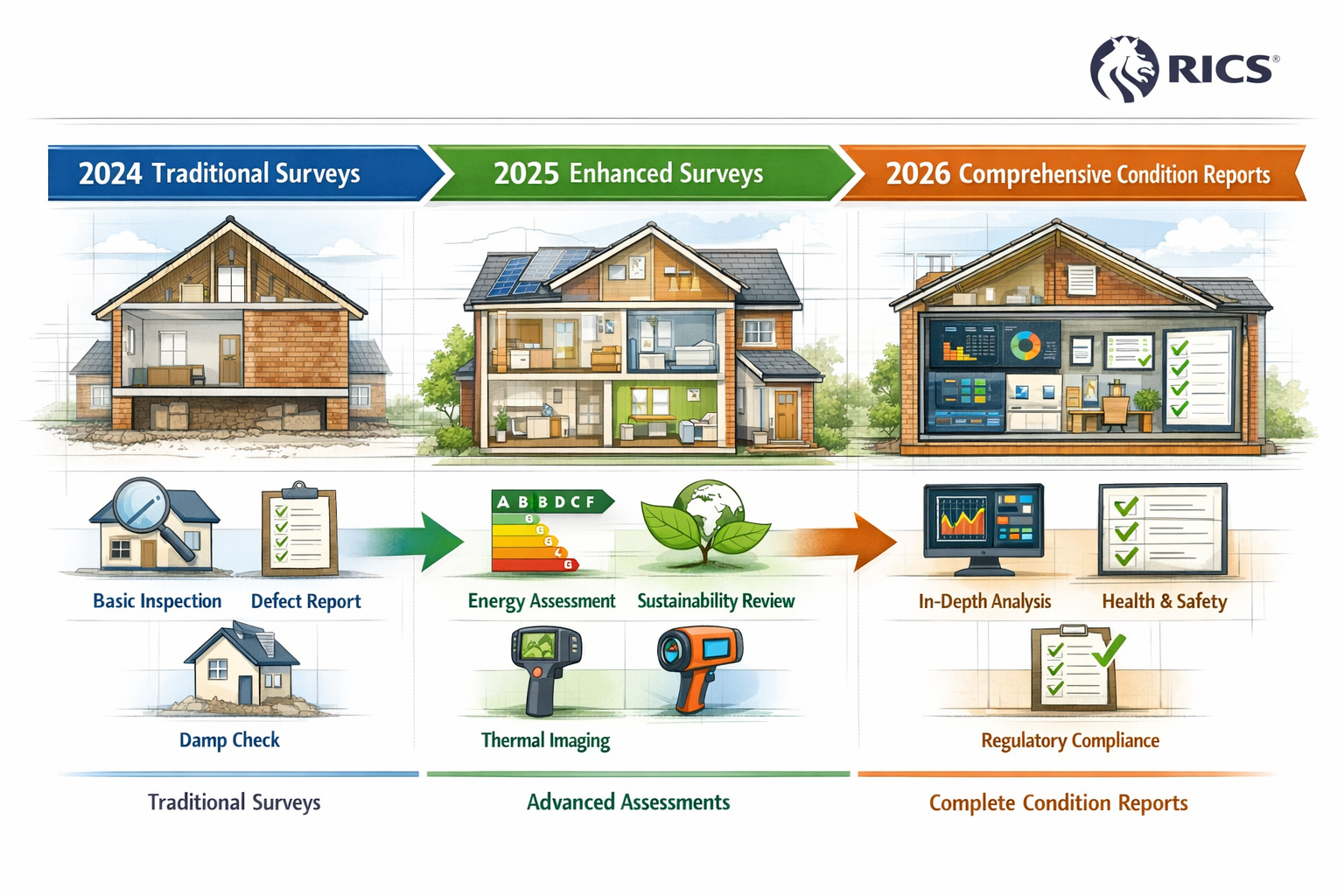
Traditional building surveys concentrated primarily on structural integrity, visible defects, and maintenance issues. The expanded scope requires a holistic property assessment that encompasses:
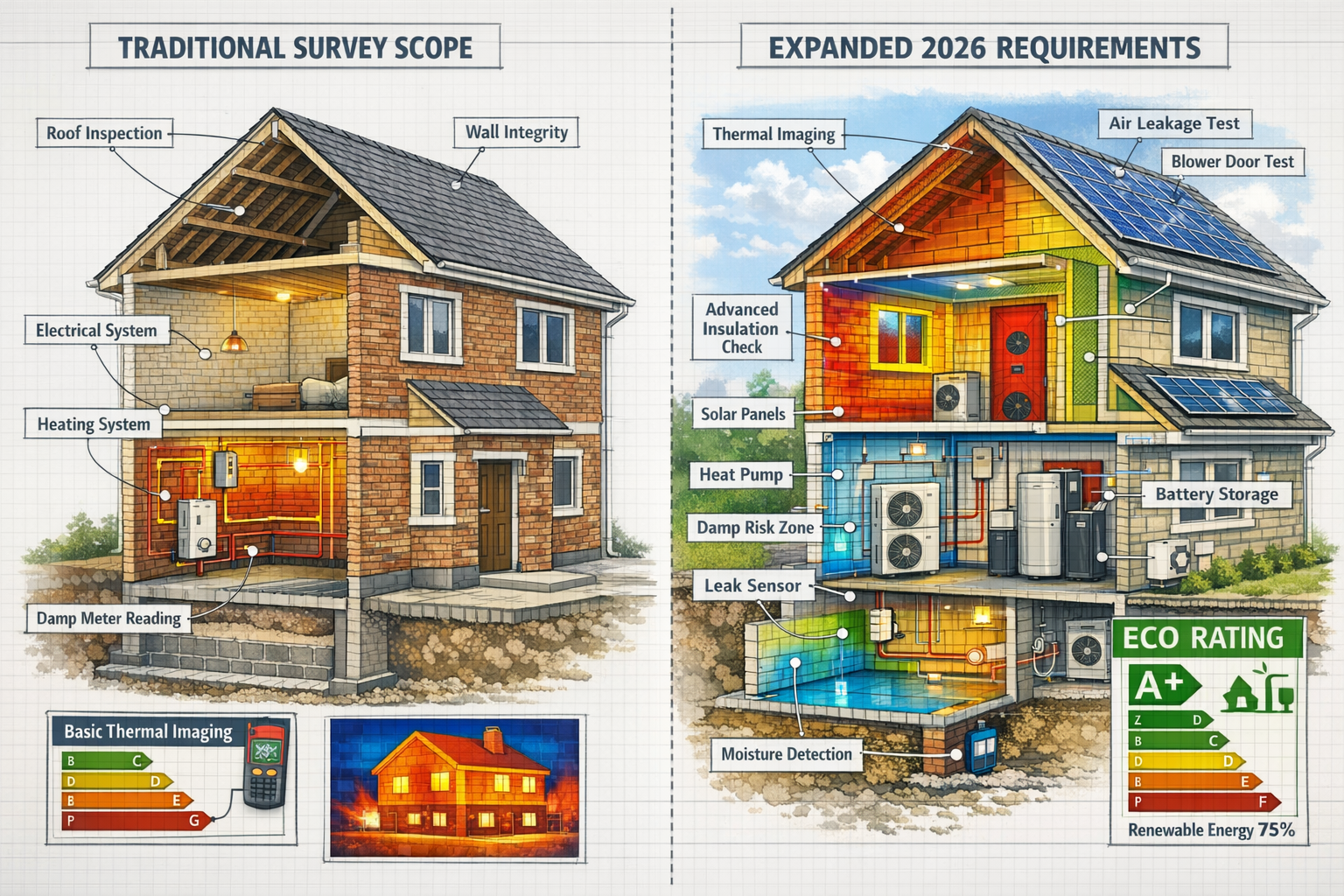
| Traditional Survey Elements | Expanded 2026 Requirements |
|---|---|
| Structural condition | Structural condition + building physics |
| Visible defects | Visible defects + hidden performance issues |
| Maintenance recommendations | Maintenance + energy improvement pathways |
| Material condition | Material condition + sustainability assessment |
| Basic services inspection | Comprehensive systems evaluation |
Mandatory Upfront Property Condition Assessments
RICS consultation requirements are expanding surveyor scope to include mandatory upfront property condition assessments.[3] This represents a fundamental shift in when and how surveys are conducted:
Current Practice (Pre-2026):
- Surveys typically commissioned after offer acceptance
- Limited time for detailed assessment
- Reactive approach to discovered issues
- Negotiations based on post-survey findings
Emerging Requirements (2026 and Beyond):
- Upfront assessments before marketing or early in process
- Comprehensive evaluation including energy performance
- Proactive disclosure of property condition
- Informed decision-making from transaction outset
This shift aims to reduce transaction fall-through rates, improve transparency, and ensure buyers have complete information before committing to purchases. For surveyors, it means developing workflows that can deliver comprehensive assessments within tighter timeframes while maintaining quality standards.
Enhanced Sustainability and Energy Expertise
The expanded assessment scope requires surveyors to develop specialized knowledge beyond traditional building defects, with emphasis on energy systems evaluation and sustainable construction methods to support the UK's net zero transition.[3]
Key competency areas now include:
Building Physics Understanding:
- Thermal bridging and heat loss calculations
- Moisture dynamics and condensation risk
- Airtightness and ventilation balance
- Solar gain and overheating assessment
Energy Systems Evaluation:
- Heating system efficiency and suitability
- Renewable energy potential (solar, heat pumps)
- Hot water system performance
- Smart controls and automation
Retrofit Assessment:
- Insulation upgrade opportunities
- Window and door replacement priorities
- Heating system conversion pathways
- Whole-house retrofit planning
Understanding EPC ratings and MEES requirements has become essential baseline knowledge, but the expanded scope goes significantly further.
Preparing Your Practice for Building Survey Scope Expansion
Professional Development and Training Priorities
RICS is supporting government and industry through new membership pathways that specifically build expertise in retrofit and sustainability services.[2] Surveyors must prioritize continuous professional development in:
✅ Energy Assessment Methodologies
- SAP and RdSAP calculation principles
- Thermal imaging interpretation
- Blower door testing and airtightness measurement
- Energy modeling software proficiency
✅ Sustainable Construction Practices
- Modern Methods of Construction (MMC)
- Natural and sustainable materials
- Circular economy principles in building
- Embodied carbon assessment
✅ Building Services Knowledge
- HVAC systems and controls
- Renewable energy technologies
- Water efficiency and rainwater harvesting
- Smart home technology integration
✅ Regulatory Framework Mastery
- Building Regulations Part L (Conservation of fuel and power)
- Future Homes Standard requirements
- Planning policy and sustainability requirements
- Grant and funding scheme knowledge
Technology Integration and Digital Tools
Expanding survey scope necessitates adopting advanced technology to maintain efficiency while increasing assessment depth:
Essential Technology Investments:
🔧 Thermal Imaging Equipment – High-resolution cameras for identifying heat loss, moisture ingress, and insulation defects
🔧 Moisture Detection Systems – Advanced meters capable of non-invasive deep-wall measurement
🔧 Digital Survey Platforms – Software that integrates traditional survey data with energy performance metrics
🔧 3D Scanning and Modeling – Tools for creating accurate as-built models supporting retrofit planning
🔧 Drone Technology – For safe, comprehensive roof and elevation inspection
The time required for building surveys will inevitably increase with expanded scope, but technology can help manage this through more efficient data capture and analysis.
Workflow Restructuring for Upfront Assessments
Adapting to mandatory upfront property condition assessments requires fundamental workflow changes:
Pre-Survey Phase:
- Enhanced client consultation to explain expanded scope
- Comprehensive desk study including energy certificate history
- Coordination with estate agents for early access
- Technology preparation and equipment calibration
Survey Execution:
- Systematic structural assessment (traditional elements)
- Comprehensive energy performance evaluation
- Sustainability and retrofit potential assessment
- Photographic and thermal imaging documentation
- Building services detailed inspection
Post-Survey Deliverables:
- Integrated condition and energy performance report
- Prioritized improvement recommendations with cost estimates
- Energy upgrade pathway options
- Long-term maintenance and improvement planning
- Supporting data (thermal images, measurements, calculations)
Understanding what questions should be asked during a building survey becomes even more critical as scope expands to encompass these additional elements.
Implementing Expanded Assessments: Practical Considerations
Client Communication and Expectation Management
The expanded scope creates both opportunities and challenges in client relationships. Clear communication is essential:
Setting Appropriate Expectations:
- Explain the additional value provided by comprehensive assessments
- Clarify the increased time and cost associated with expanded surveys
- Demonstrate how upfront information prevents costly surprises
- Highlight long-term savings from energy efficiency insights
Transparent Pricing Structures:
- Develop tiered service offerings (basic, standard, comprehensive)
- Clearly itemize additional assessment components
- Offer modular add-ons for specific client needs
- Justify pricing through demonstrated value
Access and Logistics Challenges
Expanded assessments create additional building surveyor access requirements:
Extended Access Needs:
- Longer on-site time for comprehensive evaluation
- Access to all areas including lofts, basements, and service areas
- Electrical panel and heating system access for detailed inspection
- Potential need for multiple visits for specialized testing
Coordination Requirements:
- Working with occupied properties and tenant schedules
- Coordinating with estate agents for vacant property access
- Scheduling specialized testing (blower door, thermography)
- Managing weather-dependent assessments (thermal imaging)
Quality Assurance and Professional Standards
Maintaining quality while expanding scope requires robust systems:
Documentation Standards:
- Comprehensive photographic records with thermal imaging
- Detailed measurement and calculation records
- Clear differentiation between observation and recommendation
- Evidence-based conclusions supported by data
Peer Review Processes:
- Internal quality checks for complex assessments
- Specialist consultation for unfamiliar systems
- Regular calibration of equipment and methodologies
- Continuous improvement based on feedback
Professional Indemnity Considerations:
- Ensuring insurance coverage extends to expanded scope
- Clear limitation statements for areas outside expertise
- Appropriate disclaimers for predictive assessments
- Documentation of specialist referrals when necessary
Regional Considerations and Market Variations
The implementation of expanded survey requirements may vary by region and property type. Chartered surveyors operating in different areas must adapt their approaches:
- Surveyors in Berkshire may encounter different retrofit challenges than those in urban areas
- Oxfordshire chartered surveyors working with historic properties face unique assessment considerations
- London-based practices in areas like Chelsea or Hampstead must balance heritage constraints with modern performance standards
Understanding local building stock characteristics, common construction types, and regional climate considerations becomes increasingly important as assessments become more technically sophisticated.
The Business Case for Embracing Expanded Scope
Competitive Differentiation
Early adopters of comprehensive assessment methodologies gain significant competitive advantages:
Market Positioning Benefits:
- Differentiation from competitors offering traditional-only surveys
- Attraction of environmentally conscious clients
- Higher-value service offerings with improved margins
- Enhanced professional reputation and thought leadership
Client Retention and Referrals:
- Comprehensive service reduces need for multiple specialists
- Higher client satisfaction from complete information
- Increased referral rates from impressed clients
- Repeat business for retrofit project support
New Revenue Streams
Expanded expertise opens additional service opportunities:
💰 Retrofit Planning and Project Management – Guiding clients through improvement implementations
💰 Energy Performance Optimization – Ongoing advisory services for property optimization
💰 Pre-Marketing Assessments – Services for sellers preparing properties for sale
💰 Portfolio Assessments – Comprehensive evaluations for landlords and investors
💰 Compliance Advisory – Helping clients navigate evolving regulatory requirements
These services complement traditional Level 3 building surveys while providing ongoing client relationships beyond single transactions.
Risk Mitigation
Embracing expanded scope actually reduces professional risk:
Reduced Liability Exposure:
- Comprehensive assessments identify issues traditional surveys might miss
- Energy performance insights prevent future client dissatisfaction
- Documentation of building physics issues protects against claims
- Proactive identification of hidden defects reduces negligence risk
Professional Standards Compliance:
- Alignment with evolving RICS requirements
- Demonstration of current competency and knowledge
- Protection against professional conduct complaints
- Future-proofing against regulatory changes
Challenges and Concerns: Addressing the Skeptics
Cost and Time Implications
The most common concern about expanded survey scope relates to increased costs and time requirements:
Addressing Cost Concerns:
- Demonstrate value through comprehensive risk identification
- Show long-term savings from energy efficiency insights
- Compare costs to multiple separate assessments
- Highlight transaction security benefits
Managing Time Pressures:
- Invest in technology for efficient data capture
- Develop standardized workflows and checklists
- Build experienced teams with specialized expertise
- Use preliminary desktop assessments to streamline site work
Competency Gaps and Training Requirements
Not all surveyors feel prepared for expanded technical requirements:
Bridging Knowledge Gaps:
- Pursue structured CPD in building physics and energy assessment
- Collaborate with specialists during transition period
- Join professional networks and knowledge-sharing groups
- Consider formal qualifications in energy assessment
Building Confidence:
- Start with pilot projects incorporating expanded elements
- Seek mentorship from early adopters
- Attend RICS training and guidance sessions
- Gradually expand scope as competency develops
Market Readiness and Client Acceptance
Some surveyors question whether the market is ready for expanded assessments:
Building Market Demand:
- Educate clients about benefits through marketing and consultation
- Demonstrate value through case studies and examples
- Align messaging with broader sustainability trends
- Highlight regulatory trajectory and future requirements
The reality is that mandatory requirements will drive market acceptance regardless of current readiness. Proactive surveyors who lead rather than follow will capture market share.
Future Trajectory: What's Next for Building Survey Standards
Anticipated RICS Guidance Updates
The second edition of the Home Survey Standard is expected to formalize many emerging requirements:
Likely Inclusions:
- Mandatory energy performance assessment elements
- Standardized sustainability reporting frameworks
- Enhanced building physics evaluation requirements
- Technology integration guidance and standards
- Retrofit potential assessment protocols
Integration with Broader Property Transaction Reform
Building survey expansion is part of wider property transaction modernization:
Connected Initiatives:
- Material information requirements for sellers
- Upfront information packs reducing transaction times
- Digital property passports tracking building information
- Integrated transaction platforms connecting all parties
Surveyors who understand these broader reforms can position themselves as essential advisors throughout the transaction process, not just report providers.
Technology Evolution and Automation
Emerging technologies will continue reshaping survey practice:
On the Horizon:
- AI-assisted defect identification and analysis
- Automated energy modeling from survey data
- Blockchain-based property information systems
- Virtual reality property inspections and assessments
- Internet of Things (IoT) building monitoring integration
Staying current with technological developments ensures surveyors can deliver expanded scope efficiently while maintaining competitive pricing.
Conclusion: Embracing the Evolution of Building Survey Practice
Building Survey Scope Expansion: Preparing for Upfront Condition Assessments and Evolving RICS Consultation Requirements represents more than regulatory compliance—it's an opportunity to elevate the surveying profession and deliver genuinely comprehensive value to clients. The transformation underway in 2026 reflects the urgent need for built environment professionals to support the UK's net zero transition while meeting increasingly sophisticated consumer expectations.
The surveyors who will thrive in this evolving landscape are those who:
✅ Invest in continuous professional development across building physics, energy systems, and sustainable construction
✅ Embrace technology that enables efficient, comprehensive assessments without compromising quality
✅ Restructure workflows to accommodate upfront assessment requirements and expanded scope
✅ Communicate value effectively to clients, demonstrating how comprehensive assessments protect investments and enable informed decisions
✅ Collaborate with specialists to fill knowledge gaps while building internal expertise
✅ Stay engaged with RICS consultations and contribute to the development of emerging standards
The transition won't happen overnight, and challenges remain in balancing expanded requirements with practical delivery constraints. However, the trajectory is clear: building surveys are evolving from primarily structural assessments to holistic property evaluations that encompass performance, sustainability, and future potential.
Actionable Next Steps
For surveyors preparing for this evolution:
- Audit current capabilities against expanded scope requirements to identify priority development areas
- Develop a technology roadmap for acquiring necessary equipment and software
- Create a CPD plan focused on building physics, energy assessment, and retrofit knowledge
- Review and update service offerings to reflect expanded scope and value
- Engage with RICS consultations to stay informed about emerging requirements
- Network with early adopters to learn from their experiences and challenges
- Start small with pilot projects incorporating expanded elements before full implementation
The future of building surveying is comprehensive, technology-enabled, and sustainability-focused. By preparing now for mandatory upfront condition assessments and evolving RICS requirements, surveyors can position themselves not just to survive regulatory changes, but to lead the profession into its next era of enhanced professionalism and client value.
For more information about comprehensive building assessments and how expanding survey standards might affect your property transaction, explore our resources on Level 3 building surveys and choosing the right property survey.
References
[1] Building Survey Standards Evolution How Rics Quality Strengthening Initiatives Impact Surveyor Practice In 2026 – nottinghillsurveyors.com
[2] Rics Ceo Comments On The Publication Of The Future Homes And Building Standards – rics.org
[3] Mandatory Upfront Property Condition Assessments How Rics Consultation Changes Will Transform Surveyor Workflows In 2026 – nottinghillsurveyors.com