

Fewer than one in three private rental kitchens in England currently meet the hygiene standards that Awaab's Law Phase 2 now demands — a sobering statistic that places thousands of landlords at immediate legal risk as of October 2026. The expansion of Awaab's Law beyond damp and mould means that building survey protocols for food safety hazards under Awaab's Law 2026, including PRS kitchen assessments and remediation costs, have become a central compliance obligation for every landlord operating in the private rented sector. Understanding exactly what surveyors must inspect, how hazards are scored, and what remediation work costs is no longer optional — it is a legal necessity [1][6].
Key Takeaways
- Awaab's Law Phase 2, effective October 2026, now covers hygiene and food safety hazards in private rental kitchens, not just damp and mould.
- Landlords must commission Level 3 building surveys that assess food preparation surfaces, ventilation, drainage, and pest control.
- Category 1 hazards trigger mandatory repair timelines: 24 hours for emergencies, 48 hours for urgent issues.
- Remediation costs range from minor repairs at £200-£1,000 to full system replacements exceeding £20,000.
- Non-compliance risks enforcement orders, compensation claims, and loss of rental income.
What Awaab's Law Phase 2 Means for PRS Kitchens in 2026
Awaab's Law was originally introduced following the tragic death of Awaab Ishak, a two-year-old child who died as a result of prolonged exposure to mould in a social housing property. Phase 1 of the legislation focused on damp and mould remediation timelines for social landlords. Phase 2, which takes effect in October 2026, dramatically widens the scope [1].
The expanded law now covers a broad range of HHSRS (Housing Health and Safety Rating System) hazards, including:
- Excess cold and excess heat
- Structural collapse risks
- Electrical hazards
- Falls on stairs and in bathrooms
- Hygiene hazards, including food safety defects in kitchens
For private rented sector (PRS) landlords, this marks a fundamental shift. Kitchens — previously assessed informally or as part of general property checks — must now be subject to structured, documented building survey protocols that meet the legal threshold set by the expanded legislation [6].
The Renters' Rights Act 2026 reinforces these obligations by strengthening tenants' ability to report hazards and seek redress without fear of retaliatory eviction. Together, these two pieces of legislation create a compliance environment in which proactive kitchen assessments are not just good practice — they are legally mandated.
"The expansion of Awaab's Law into food safety and hygiene hazards means that a poorly maintained kitchen is no longer just a tenant complaint — it is a potential Category 1 HHSRS hazard with enforceable legal consequences."
Level 3 Building Survey Checklists for Kitchen Hygiene Hazards
The most rigorous and appropriate survey type for identifying food safety hazards in rental properties is the Level 3 building survey. This is the most comprehensive residential survey available, and it is specifically designed to investigate defects in depth, provide repair cost estimates, and flag areas requiring specialist investigation. For a full overview of what this survey covers, see what is a Level 3 building survey.
Building survey protocols for food safety hazards under Awaab's Law 2026 require Level 3 assessments to cover the following kitchen-specific elements systematically [2]:
Food Preparation Surfaces
- Condition of worktops: cracks, delamination, exposed chipboard substrate
- Integrity of tile grout and silicone seals around sinks and splashbacks
- Evidence of bacterial harborage points (gaps between units and walls)
- Condition of sink and drainer: corrosion, blockages, slow drainage
Ventilation and Air Quality
- Functionality of mechanical extraction (cooker hoods, extractor fans)
- Adequacy of natural ventilation: window openings, trickle vents
- Evidence of condensation or grease accumulation on surfaces
- Ductwork condition and termination point (internal vs. external)
Drainage and Waste Management
- Condition of waste pipes: blockages, leaks, odors
- Trap integrity under sinks (U-bends and P-traps)
- Evidence of rodent or pest ingress via drainage routes
- Drainage falls and gradient adequacy
Pest Control Indicators
- Evidence of rodent activity: droppings, gnaw marks, entry points
- Insect infestation signs: cockroach frass, fly breeding sites
- Gaps in skirting, pipework penetrations, and service entries
- Condition of door and window seals
Appliance Safety and Services
- Gas appliance condition and certification status
- Electrical socket proximity to water sources (compliance with Part P)
- Condition of refrigeration units (where landlord-supplied)
- Evidence of carbon monoxide risk from cooking appliances
Each of these elements must be scored using the HHSRS methodology, which calculates a hazard score based on the probability of harm and the likely severity of that harm. A score above a defined threshold triggers a Category 1 designation, which carries mandatory remediation timelines [6].
For landlords managing multiple properties, a condition survey report can provide a structured baseline for each unit, making it easier to track changes over time and demonstrate ongoing compliance.
Remediation Timelines, Costs, and Compliance Under Awaab's Law 2026
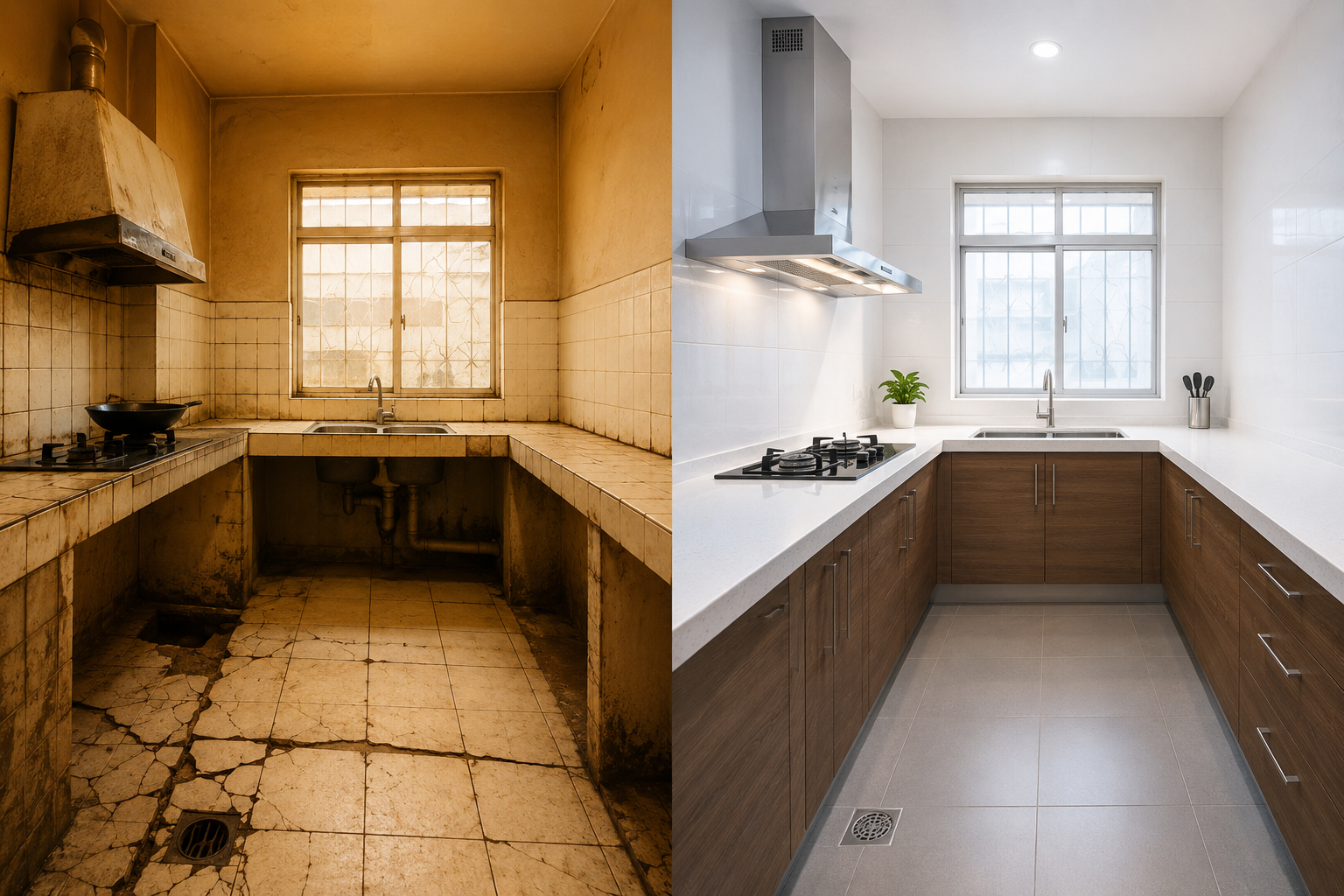
Understanding the financial and procedural obligations attached to building survey protocols for food safety hazards under Awaab's Law 2026 is critical for landlords planning their compliance strategies and budgets.
Mandatory Remediation Timelines
Once a surveyor identifies a hazard during a PRS kitchen assessment, the following timelines apply [3][4]:
| Hazard Category | Action Required | Timeline |
|---|---|---|
| Emergency (Category 1, immediate risk) | Begin repair works | Within 24 hours |
| Urgent (Category 1, serious risk) | Initiate investigation and repair | Within 48 hours |
| Category 2 (non-urgent) | Schedule remediation | Within a reasonable period |
These timelines are not aspirational — they are legally enforceable. A landlord who fails to act within the prescribed window faces enforcement action from the local housing authority, including improvement notices and prohibition orders.
Remediation Cost Breakdown
The costs associated with kitchen hygiene remediation vary significantly depending on the nature and severity of the defect. Based on current market data for PRS kitchen assessments and remediation costs, landlords should expect the following approximate expenditure ranges [2]:
Survey and Investigation Costs
- Level 3 building survey fee: £800-£1,500
- Specialist drainage CCTV survey: £200-£400
- Pest control inspection and report: £150-£300
- Air quality or ventilation assessment: £200-£500
Minor Remediation Works (£200-£1,000)
- Resealing worktops and splashbacks
- Replacing extractor fan units
- Rodent proofing (gap filling, mesh installation)
- Drain unblocking and trap replacement
Moderate Remediation Works (£1,000-£5,000)
- Full kitchen worktop replacement
- Mechanical ventilation system upgrade
- Drainage relining or partial replacement
- Electrical socket repositioning for water zone compliance
Major System Replacements (£5,000-£20,000+)
- Complete kitchen refurbishment
- Full drainage system replacement
- Structural repairs to kitchen floor or walls
- Rewiring of kitchen circuits
Landlords are advised to budget between 1% and 2% of the property's value annually to cover routine maintenance, inspections, and reactive repairs [2]. For a property valued at £300,000, this equates to £3,000-£6,000 per year — a figure that underscores the importance of proactive survey commissioning rather than reactive crisis management.
For properties where remediation costs are substantial, an insurance reinstatement cost valuation can help ensure that the building is adequately insured to cover the full cost of works, particularly where structural or services-related defects are involved.
Valuation Impacts of Kitchen Hygiene Defects
Food safety hazards identified during a survey do not only carry remediation costs — they can directly affect the market and rental value of a property. A kitchen with Category 1 hygiene hazards may be classified as uninhabitable until remediated, resulting in:
- Loss of rental income during remediation works
- Reduced market value if the property is listed for sale
- Potential compensation claims from tenants for harm suffered
- Increased insurance premiums following enforcement action
For landlords considering the financial implications of non-compliance, it is worth noting that enforcement orders can also result in civil penalties of up to £30,000 under the Housing Act 2004 framework, which underpins the HHSRS scoring system [5][6].
Documentation Standards, Surveyor Roles, and Tenant Communication
A building survey that identifies hazards but fails to document them adequately is legally insufficient. The documentation standards required under Awaab's Law 2026 are specific and demanding [4].
What Survey Reports Must Include
Survey reports produced as part of PRS kitchen assessments must contain:
- Photographic evidence of each identified defect, with timestamps and location references
- Precise measurements where relevant (e.g., ventilation extraction rates, drainage gradients)
- HHSRS hazard scores for each identified risk, with clear Category 1 or Category 2 designations
- Detailed narratives explaining the nature of the hazard, its likely cause, and its potential harm
- Recommended remedial actions with prioritization and estimated costs
- Areas of further investigation flagged for specialist follow-up
For properties where defects require deeper investigation before a full scope of works can be determined, a structured approach to areas of further investigation ensures that no hazard is left unquantified.
The Surveyor's Role in HHSRS Compliance
Surveyors operating under Awaab's Law 2026 are not simply inspectors — they are compliance partners. Their responsibilities include [6]:
- Conducting HHSRS-style assessments with formal hazard scoring
- Recommending remedial actions in order of priority
- Providing cost estimates to support landlord budgeting (see budgeting repairs and restoration)
- Acting as expert witnesses in disputes between landlords and tenants or local authorities
- Advising on compliance with the Renters' Rights Act 2026 alongside Awaab's Law obligations
Chartered surveyors with RICS accreditation are best placed to deliver this level of service, as their professional indemnity insurance and regulatory oversight provide landlords with an additional layer of protection.
Tenant Communication and Complaint Logging
Awaab's Law 2026 places specific obligations on landlords regarding how they receive and respond to tenant reports of hazards. Landlords must [2]:
- Establish a formal written channel for tenants to report food safety and hygiene concerns
- Maintain a dated log of all complaints received, including the nature of the hazard reported
- Acknowledge complaints within a defined period and initiate investigation promptly
- Provide tenants with regular written updates on the progress of investigations and remediation works
- Retain all records for a minimum period in case of enforcement action or litigation
Failure to maintain adequate complaint logs is itself a compliance failure, even if the underlying hazard is eventually remediated. Landlords managing blocks of flats or HMOs should ensure that their health and safety inspection processes are updated to incorporate the expanded Awaab's Law requirements.
Proactive Steps Landlords Should Take in 2026
Given the October 2026 implementation date for Phase 2, landlords who have not yet acted should prioritize the following steps:
- Commission a Level 3 building survey for each rental property, with specific focus on kitchen hygiene hazards
- Review existing tenancy agreements and complaint procedures for compliance with the Renters' Rights Act 2026
- Establish a formal repair log and tenant communication protocol
- Obtain cost estimates for any identified remediation works and budget accordingly
- Ensure all gas and electrical safety certificates are current
- Engage a chartered surveyor familiar with HHSRS scoring to advise on borderline Category 1 hazards
- Review property market legislation changes to stay current with evolving compliance requirements
For landlords unsure which survey type is most appropriate for their property, a clear guide on which building survey is needed can help match the assessment level to the property's age, condition, and risk profile.
Conclusion
The introduction of Awaab's Law Phase 2 in October 2026 has fundamentally changed what is expected of private landlords when it comes to kitchen hygiene and food safety. Building survey protocols for food safety hazards under Awaab's Law 2026, covering PRS kitchen assessments and remediation costs, are no longer a matter of best practice — they are a legal obligation with enforceable timelines and significant financial consequences for non-compliance.
Actionable next steps for landlords:
- Book a Level 3 building survey immediately if one has not been completed in the past 12 months
- Use the kitchen hygiene checklist in this article as a pre-inspection self-assessment tool
- Engage a RICS-accredited chartered surveyor to conduct formal HHSRS scoring
- Set aside 1-2% of property value annually for maintenance and compliance costs
- Update tenant communication protocols to meet the formal complaint-logging requirements of Awaab's Law 2026
Proactive compliance is always less costly than reactive enforcement. Landlords who invest in thorough PRS kitchen assessments now will be far better positioned to avoid the financial and reputational damage that comes with enforcement action, compensation claims, and property prohibition orders.
References
[1] What Is Awaabs Law – awaabslawguide.co.uk
[2] Building Survey Checklists For Domestic Hygiene Hazards Under Awaabs Law 2026 Level 3 Protocols For Rentals – wimbledonsurveyors.com
[3] Building Survey Protocols For Structural Collapse Risks Awaabs Law 2026 Extensions And High Risk Property Assessments – nottinghillsurveyors.com
[4] Building Survey Protocols For Excess Temperature And Falls Hazards Awaabs Law 2026 Expansion Beyond Damp And Mould – wimbledonsurveyors.com
[5] Building Surveys For Bath Stair And Fall Hazards Under Awaabs Law 2026 Level 3 Protocols For Rental Property Compliance – wimbledonsurveyors.com
[6] Awaabs Law Phase 2 October 2026 Hhsrs Hazards What Private Landlords And Surveyors Must Do Now – canterburysurveyors.com