

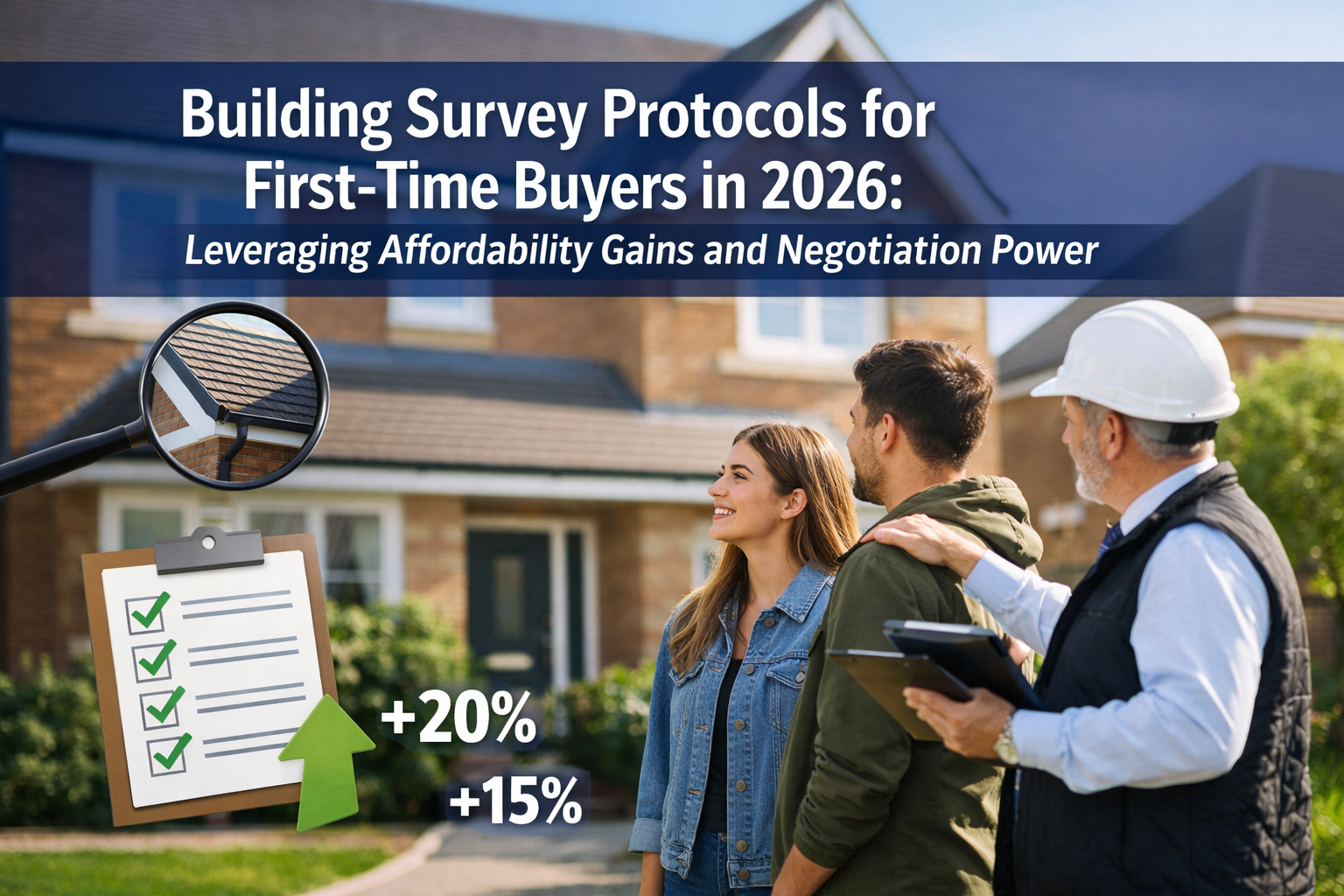
Stepping onto the property ladder has never required more strategic planning than it does today. As first-time buyers navigate the 2026 housing market, one critical tool stands between a dream home and a costly nightmare: a comprehensive building survey protocol. With mortgage rates stabilizing, wage growth outpacing inflation, and property listings increasing across the UK, Building Survey Protocols for First-Time Buyers in 2026: Leveraging Affordability Gains and Negotiation Power has become the essential roadmap for securing not just any property, but the right property at the right price.
The landscape has shifted dramatically. More buyers are ready to enter the market in 2026, with improved affordability creating fresh opportunities for those who have been waiting on the sidelines.[7] Yet this recovering market brings its own challenges: properties that have weathered economic uncertainty may harbor hidden defects, and increased competition means buyers must move quickly—but smartly. A structured survey protocol transforms what could be an overwhelming process into a systematic advantage.
Key Takeaways
- Level 3 building surveys provide comprehensive defect identification essential for first-time buyers in recovering markets where properties may have deferred maintenance issues
- 2026 affordability improvements from wage growth and stabilizing rates create stronger negotiation positions when survey findings reveal repair needs
- Systematic survey protocols help first-time buyers prioritize critical defects, estimate repair costs, and confidently renegotiate purchase prices
- Professional chartered surveyors equipped with modern technology like thermal imaging and drone inspections uncover issues invisible during standard viewings
- Strategic timing and preparation maximize the value of survey investments, turning findings into tangible savings averaging thousands of pounds
Understanding Building Survey Protocols for First-Time Buyers in 2026
What Makes 2026 Different for First-Time Buyers
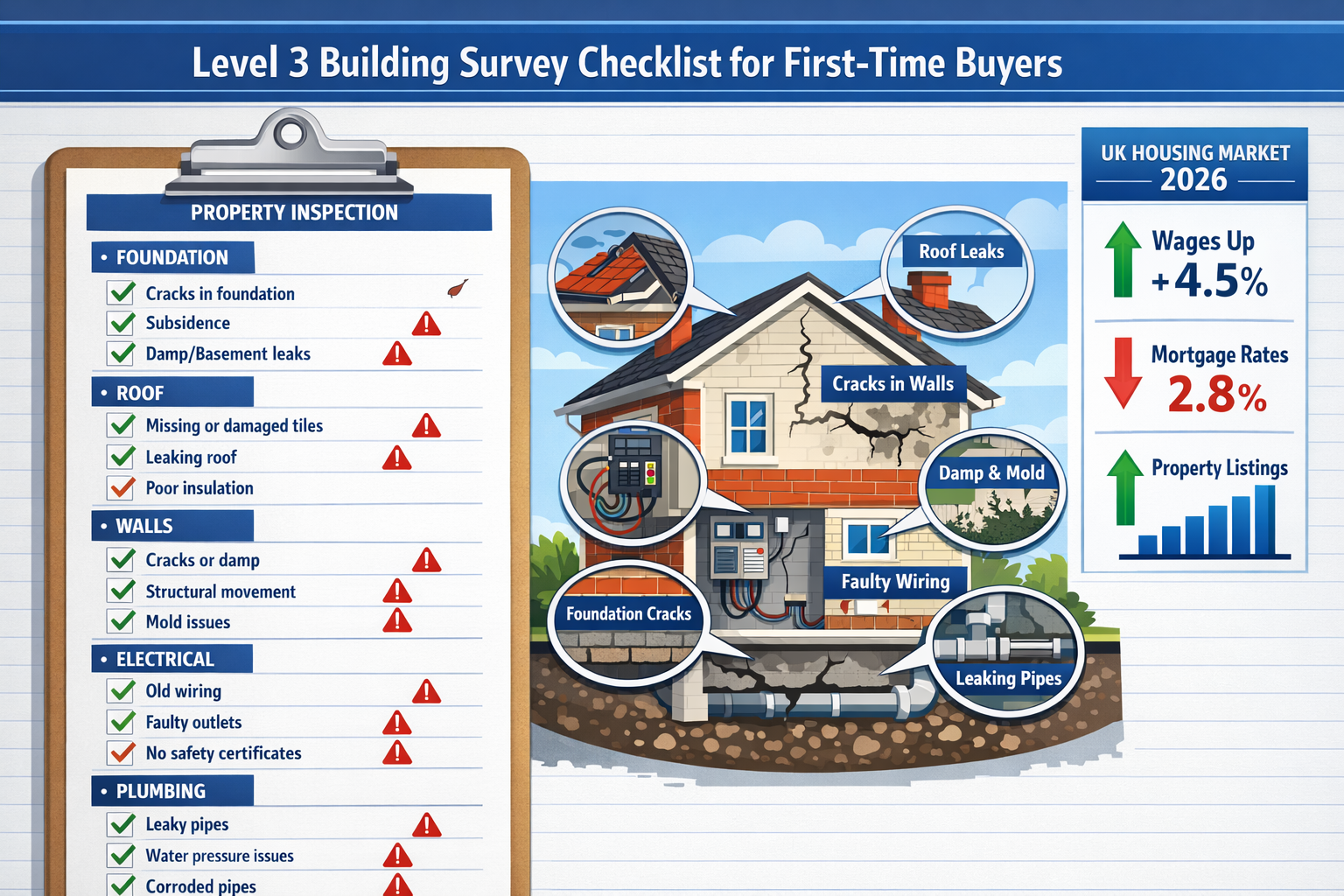
The housing market in 2026 presents a unique convergence of favorable conditions for first-time buyers. Unlike the uncertainty that characterized previous years, current market dynamics offer genuine advantages for those entering homeownership.[3] Wage growth has created improved purchasing power, while mortgage rates have moved away from their peaks, making monthly payments more manageable for households with steady income.
Property listings have increased, giving buyers more options and reducing the pressure to make hasty decisions without proper due diligence. This expanded inventory means buyers can afford to be selective—but only if they know what to look for. The recovering market also means some properties have experienced periods of reduced maintenance or delayed repairs, making thorough inspections more critical than ever.
Understanding these market conditions is the first step in Building Survey Protocols for First-Time Buyers in 2026: Leveraging Affordability Gains and Negotiation Power. The improved affordability doesn't just mean qualifying for a mortgage; it means having the financial breathing room to invest in comprehensive surveys and the negotiating power to address findings without losing the property to competing offers.
The Three Levels of Building Surveys Explained
UK property surveys come in three distinct levels, each serving different needs and property types. For first-time buyers, understanding these options is fundamental to building an effective survey protocol.
Level 1 (Condition Report) provides a basic overview of the property's condition using a simple traffic-light system. While the most affordable option, it offers limited detail and is typically only suitable for new-build properties or modern homes in excellent condition.
Level 2 (HomeBuyer Report) offers more detail about the property's condition and highlights urgent defects requiring immediate attention. This mid-tier option suits relatively modern properties (post-1960s) in reasonable condition. However, it doesn't include detailed structural assessments or advice on repairs.
Level 3 (Full Building Survey) represents the most comprehensive inspection available. This detailed examination covers all accessible areas of the property, providing in-depth analysis of construction, condition, and defects. For first-time buyers in 2026, this level offers the greatest protection and negotiation leverage, particularly for:
- Properties built before 1960
- Homes requiring renovation or with visible defects
- Unusual construction types or materials
- Properties that have been empty or poorly maintained
- Any home where you need detailed repair cost estimates
The RICS building survey provides essential protection for home buyers by uncovering issues that could cost thousands to remedy. For first-time buyers working with limited budgets, this upfront investment typically saves far more than it costs.
Key Components of an Effective Survey Protocol
A robust survey protocol goes beyond simply commissioning a report. It involves strategic planning, clear objectives, and systematic follow-through. Building Survey Protocols for First-Time Buyers in 2026 should include these essential components:
Pre-Survey Preparation 📋
- Research the property's history, previous sales, and any planning applications
- Document visible concerns during viewings to share with the surveyor
- Prepare specific questions about areas of concern
- Understand what questions should be asked during a building survey
Survey Specification
- Select the appropriate survey level (typically Level 3 for first-time buyers)
- Request additional investigations for specific concerns (damp testing, electrical checks)
- Consider premium drone surveys for comprehensive roof inspection
- Ensure surveyor access to all areas, including lofts, cellars, and outbuildings
Timeline Management
Understanding building survey timeframes helps coordinate the purchase process. Typically, surveys take 3-5 working days from instruction to report delivery, though complex properties may require longer.
Report Analysis Framework
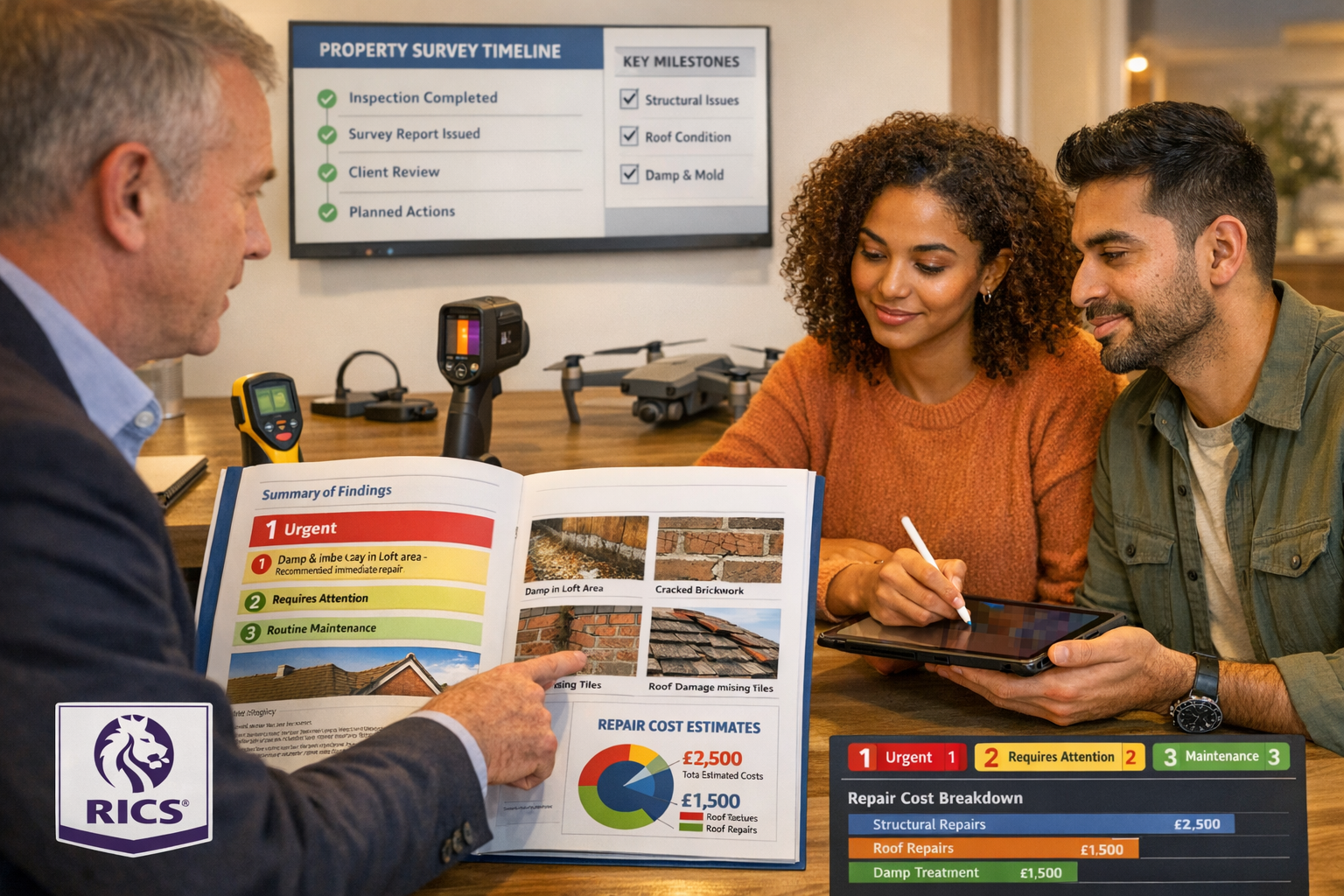
- Categorize findings by urgency (immediate, short-term, long-term)
- Obtain repair cost estimates for identified defects
- Identify urgent or dangerous building issues requiring immediate attention
- Assess which issues are deal-breakers versus negotiation points
This systematic approach transforms the survey from a checkbox exercise into a powerful tool for informed decision-making and price negotiation.
Leveraging Affordability Gains and Negotiation Power Through Strategic Surveys
How 2026 Market Conditions Strengthen Your Position
The improved affordability landscape in 2026 fundamentally changes the negotiation dynamic for first-time buyers. When buyers have more financial flexibility, they gain strategic advantages that previous generations lacked during tighter market conditions.
Financial Breathing Room 💰
With wage growth outpacing housing cost increases in many areas, first-time buyers in 2026 often have modest reserves beyond their deposit and purchase costs. This financial cushion serves multiple purposes:
- Funding comprehensive Level 3 surveys without financial strain
- Maintaining negotiating position even when repairs are needed
- Demonstrating to sellers that you're a serious, qualified buyer
- Providing options to proceed with purchases contingent on price adjustments
Increased Inventory Leverage
More properties on the market means buyers aren't forced into bidding wars that eliminate negotiation opportunities.[7] When survey findings reveal defects, buyers can credibly consider alternative properties rather than accepting unfavorable terms. This "walk-away power" is perhaps the strongest negotiating position available.
Seller Motivation in Recovering Markets
Sellers in 2026 often face their own pressures: properties that have been on the market through uncertain times, deferred maintenance costs, or the need to complete sales to pursue their own purchases. Survey findings that might have been dismissed in a seller's market now become legitimate negotiation points that motivated sellers must address.
Translating Survey Findings Into Price Reductions
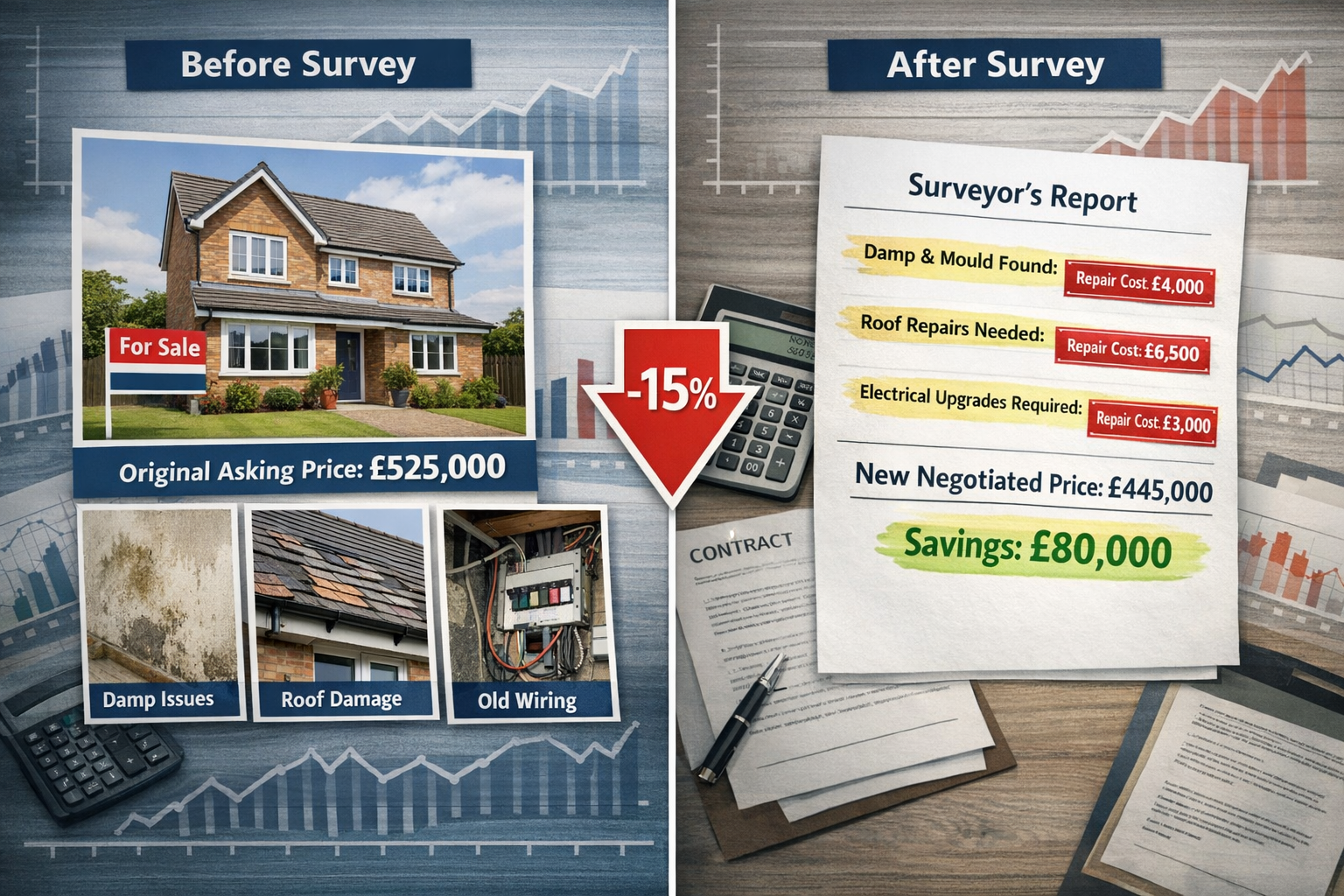
The true power of Building Survey Protocols for First-Time Buyers in 2026: Leveraging Affordability Gains and Negotiation Power lies in converting technical findings into financial adjustments. Understanding average price reductions after surveys provides context for realistic negotiations.
Categorizing Defects for Negotiation
Not all survey findings carry equal weight in negotiations. Strategic buyers prioritize issues based on:
| Defect Category | Negotiation Impact | Typical Cost Range | Priority Level |
|---|---|---|---|
| Structural issues (subsidence, foundation problems) | Very High | £10,000-£50,000+ | 🔴 Critical |
| Roof defects (leaks, structural damage) | High | £5,000-£20,000 | 🔴 Critical |
| Damp and water penetration | High | £2,000-£15,000 | 🟠 High |
| Electrical system failures | Medium-High | £3,000-£8,000 | 🟠 High |
| Heating system issues | Medium | £2,000-£6,000 | 🟡 Medium |
| Cosmetic defects | Low | £500-£3,000 | 🟢 Low |
Developing Your Negotiation Strategy
Armed with a detailed building defects survey, first-time buyers should:
- Obtain multiple repair quotes from qualified contractors for major issues
- Separate deal-breakers from negotiable items – structural issues may warrant withdrawal, while heating system repairs justify price reduction
- Calculate total remediation costs and determine your target reduction (typically 100% of critical repairs, 50-75% of medium-priority issues)
- Present findings professionally with supporting documentation and quotes
- Propose specific solutions: price reduction, seller-funded repairs, or retention from purchase price
Real-World Application Example
Consider a first-time buyer purchasing a £300,000 property. The Level 3 survey reveals:
- Roof repairs needed: £6,000
- Damp treatment required: £4,000
- Electrical rewiring: £5,000
- Cosmetic issues: £2,000
Total identified issues: £17,000
A strategic negotiation might request:
- Full price reduction for roof and damp (safety/structural): £10,000
- 50% reduction for electrical: £2,500
- Accept cosmetic issues as buyer responsibility
Target negotiated reduction: £12,500 (4.2% of purchase price)
This approach demonstrates reasonableness while securing substantial savings that improve affordability and reduce immediate post-purchase financial pressure.
Advanced Survey Technologies Enhancing Buyer Power
Modern survey technology has revolutionized defect detection, giving first-time buyers access to information that was previously difficult or impossible to obtain. These innovations strengthen negotiation positions by providing irrefutable evidence of property conditions.
Thermal Imaging Surveys 🌡️
Thermal cameras detect temperature variations that indicate hidden problems:
- Water leaks behind walls or under floors
- Missing or inadequate insulation
- Air leakage points affecting energy efficiency
- Electrical hotspots indicating potential fire hazards
These findings are particularly valuable because they reveal issues invisible during traditional inspections, making them difficult for sellers to dispute.
Drone Roof Inspections
Premium drone surveys provide detailed roof examination without the limitations of ladder access:
- Complete photographic documentation of roof condition
- Identification of loose or missing tiles
- Chimney stack assessment
- Gutter and valley condition analysis
For first-time buyers, drone surveys eliminate the "out of sight, out of mind" risk that often leads to expensive surprises after purchase.
Moisture Meters and Damp Detection
Sophisticated moisture detection equipment identifies:
- Rising damp from failed damp-proof courses
- Penetrating damp from external defects
- Condensation issues from poor ventilation
- Hidden water damage from historic leaks
Damp issues are among the most common and costly defects in UK properties, making accurate detection essential for informed negotiations.
Building Survey Protocols for First-Time Buyers in 2026: Your Complete Action Plan
Pre-Purchase Survey Checklist for First-Time Buyers
Implementing effective Building Survey Protocols for First-Time Buyers in 2026: Leveraging Affordability Gains and Negotiation Power requires systematic preparation. This comprehensive checklist ensures nothing is overlooked:
Phase 1: Property Selection & Initial Assessment ✅
Before making an offer:
- Conduct thorough viewings in different weather conditions and times of day
- Photograph any visible concerns (cracks, staining, deterioration)
- Research the property's age, construction type, and any extensions
- Check local authority planning history and building control records
- Review Energy Performance Certificate (EPC) ratings and understand EPC implications for building surveys
- Speak with neighbors about property history if possible
Phase 2: Survey Commissioning 📞
Once your offer is accepted:
- Engage a RICS-qualified chartered surveyor within 48 hours
- Clearly communicate your concerns and priorities
- Decide between full building survey vs homebuyer survey based on property characteristics
- Request additional specialist investigations if needed (drainage, electrical, structural engineering)
- Ensure surveyor access to all areas is arranged with the seller
- Confirm turnaround time fits your purchase timeline
Phase 3: During the Survey 🔍
Maximize survey value by:
- Attending the survey if the surveyor permits (many welcome buyer presence)
- Asking questions about findings in real-time
- Understanding the difference between defects and normal wear
- Requesting clarification on technical terminology
- Taking notes on priority concerns raised by the surveyor
Phase 4: Report Analysis 📊
When you receive the survey report:
- Read the entire document carefully, not just the summary
- Create a prioritized list of defects by urgency and cost
- Obtain contractor quotes for major repairs (minimum two quotes per item)
- Calculate total remediation costs
- Identify any urgent or dangerous issues that might affect your decision to proceed
- Consult with your solicitor about legal implications of findings
Phase 5: Negotiation Strategy 💼
Develop your approach:
- Determine your "walk-away" threshold for serious defects
- Calculate fair price reduction requests based on actual repair costs
- Prepare professional documentation package for seller (survey extracts, quotes, photographs)
- Consider alternative solutions (seller completes repairs, retention from purchase price, reduced price)
- Establish your negotiation timeline and decision deadlines
Common Defects First-Time Buyers Should Prioritize
Not all survey findings require equal attention. First-time buyers should focus on defects that impact safety, structural integrity, and long-term costs. Here are the critical areas that warrant immediate attention:
Structural Concerns 🏗️
These represent the highest priority and often justify price renegotiation or purchase withdrawal:
- Subsidence or settlement: Cracking patterns indicating foundation movement
- Structural wall cracks: Significant cracking requiring monitoring or repair
- Roof structure defects: Sagging, timber decay, or inadequate support
- Floor structural issues: Bouncing floors, rot in joists, inadequate support
Water Ingress and Damp 💧
Among the most common and potentially costly issues:
- Rising damp from failed damp-proof courses
- Penetrating damp through walls, windows, or roofs
- Condensation and mold growth
- Defective rainwater goods (gutters, downpipes)
- Poor drainage around the property
Building Services ⚡
Essential systems that affect daily living and safety:
- Electrical systems: Outdated wiring, inadequate earthing, consumer unit issues
- Heating systems: Boiler age and condition, radiator functionality, efficiency ratings
- Plumbing: Lead pipes, water pressure issues, visible leaks
- Drainage: Blocked or damaged drains, inadequate surface water disposal
External Elements 🏠
Defects that, if ignored, lead to more serious internal problems:
- Roof covering condition (tiles, slates, flat roof membranes)
- Chimney stack stability and condition
- External wall render or brickwork defects
- Window and door condition, especially in older properties
- Boundary walls and outbuilding stability
Hidden Defects Requiring Specialist Investigation
Some issues require additional specialist surveys beyond the standard building survey:
- Asbestos presence in pre-2000 properties
- Japanese knotweed or other invasive plants
- Contaminated land (former industrial sites)
- Structural movement requiring monitoring
- Complex drainage systems
For these situations, your surveyor will recommend additional investigations. While this adds cost, the information gained is invaluable for informed decision-making and powerful negotiation.
Working With Chartered Surveyors: Maximizing Your Investment
The relationship between first-time buyers and their surveyor is crucial to successful Building Survey Protocols for First-Time Buyers in 2026. Understanding how to work effectively with professionals maximizes the value of your investment.
Selecting the Right Surveyor 🎯
Not all surveyors are created equal. Look for:
- RICS qualification (Member or Fellow of the Royal Institution of Chartered Surveyors)
- Local market knowledge of construction types and common issues in your area
- Relevant experience with properties similar to your target purchase
- Clear communication style that explains technical matters in accessible language
- Professional indemnity insurance protecting you if issues are missed
- Positive reviews from previous first-time buyer clients
Communicating Your Priorities
Make your surveyor's job easier and more targeted by:
- Sharing photographs of concerns from your viewings
- Explaining your renovation plans or budget constraints
- Highlighting specific areas you want extra attention paid to
- Being honest about your property experience level
- Asking for explanations of technical terms you don't understand
Understanding Survey Limitations ⚠️
Even comprehensive Level 3 surveys have boundaries:
- Surveyors cannot see through walls, floors, or ceilings
- Areas that are inaccessible, covered, or locked cannot be inspected
- Non-invasive inspections won't reveal all hidden defects
- Surveyors provide professional opinions, not guarantees
- Some issues require specialist investigations beyond the surveyor's scope
Understanding these limitations helps set realistic expectations and prevents disappointment when surveys don't uncover every potential issue.
Post-Survey Consultation
Many surveyors offer follow-up discussions—take advantage:
- Schedule a phone or video call to discuss findings
- Ask for clarification on priority items
- Request recommendations for specialist contractors
- Discuss whether additional investigations are warranted
- Get advice on realistic repair cost expectations
This consultation often provides the practical insights needed to develop your negotiation strategy and make confident decisions about proceeding with the purchase.
Timing Your Survey Within the Purchase Process
Strategic timing maximizes the value of your survey while minimizing risks and costs. The optimal survey protocol for first-time buyers in 2026 includes these timing considerations:
Ideal Survey Timeline ⏰
- Offer Accepted: Instruct surveyor within 24-48 hours
- Survey Conducted: Typically 3-7 days after instruction
- Report Received: 3-5 working days after survey
- Analysis & Quotes: 5-7 days to obtain contractor estimates
- Renegotiation: 2-3 days for discussions with seller
- Decision Point: 14-21 days after offer acceptance
This timeline allows thorough investigation while maintaining purchase momentum. Delays can cause sellers to lose confidence or consider backup offers.
Survey Before or After Mortgage Valuation?
Most mortgage lenders require a basic valuation before approving your loan. Strategic buyers should:
- Commission their building survey simultaneously with the mortgage valuation
- Understand that mortgage valuations are not surveys and provide minimal defect information
- Use building survey findings to inform whether to proceed with mortgage application
- Recognize that survey findings might affect the lender's valuation
Managing Survey Costs Within Your Budget
Building surveys represent a significant expense for first-time buyers (typically £500-£1,500 depending on property size and complexity). Budget for:
- The survey fee itself
- Potential specialist investigations (£200-£500 each)
- Contractor quotes for repair estimates (often free or nominal charges)
- Possible additional surveys if serious issues are found
Remember: the average price reduction after survey typically far exceeds the survey cost, making this one of the highest-return investments in the purchase process.
Energy Efficiency and Future-Proofing Considerations
First-time buyers in 2026 must think beyond immediate defects to long-term property performance and costs. Energy efficiency increasingly affects property values, running costs, and future saleability.
EPC Ratings and Building Surveys 🌱
Energy Performance Certificates provide baseline efficiency information, but building surveys reveal the underlying causes of poor performance:
- Inadequate or missing insulation in walls, roofs, and floors
- Single-glazed windows or failed double-glazing units
- Inefficient heating systems
- Air leakage through gaps and poor sealing
- Thermal bridging in construction
Understanding EPC and MEES implications helps first-time buyers anticipate future improvement costs and potential rental restrictions if circumstances change.
Climate Resilience Factors
2026 buyers should also consider climate-related risks revealed through surveys:
- Flood risk and drainage adequacy
- Overheating potential in summer months
- Ventilation adequacy to prevent condensation
- Roof and external fabric resilience to extreme weather
- Sustainable materials and construction methods
Properties requiring significant energy efficiency improvements present both challenges and opportunities—negotiate price reductions to fund upgrades that will reduce long-term running costs and increase property value.
Conclusion: Empowering Your Property Purchase Journey
Building Survey Protocols for First-Time Buyers in 2026: Leveraging Affordability Gains and Negotiation Power represents more than a checklist—it's a comprehensive strategy for transforming the complex property purchase process into a structured, manageable journey toward successful homeownership. The favorable market conditions of 2026, characterized by improved affordability through wage growth and stabilizing mortgage rates, create unprecedented opportunities for first-time buyers who approach their purchase with diligence and strategic planning.
The comprehensive building survey stands as your most powerful tool in this journey. Far from being a mere formality, a properly executed Level 3 survey provides the detailed intelligence needed to make informed decisions, avoid costly mistakes, and negotiate from a position of strength. The investment in professional surveying expertise typically returns many times its cost through price reductions, avoided disasters, and informed prioritization of necessary repairs.
Your Next Steps 🚀
To implement effective survey protocols and maximize your position as a first-time buyer:
- Educate yourself thoroughly about property types, common defects, and survey processes before beginning your property search
- Budget appropriately for comprehensive Level 3 surveys as a non-negotiable element of your purchase costs
- Engage RICS-qualified chartered surveyors immediately upon offer acceptance to maintain purchase momentum
- Analyze survey findings systematically, obtaining contractor quotes for major defects to support negotiations
- Negotiate confidently using documented evidence and realistic repair cost estimates
- Make informed decisions about whether to proceed, renegotiate, or walk away based on comprehensive information
The 2026 property market rewards prepared, informed buyers who combine improved affordability with strategic due diligence. By implementing robust survey protocols, first-time buyers transform what could be an overwhelming experience into a systematic process that protects their interests, secures fair value, and establishes a solid foundation for successful homeownership.
Your dream home awaits—approach it with the professional protocols, expert guidance, and strategic thinking that turn first-time buyers into confident homeowners. The investment in comprehensive surveys today prevents the expensive surprises that undermine homeownership joy tomorrow. With the right protocols in place, you're not just buying a property—you're securing your future with eyes wide open and negotiations firmly in your favor.
References
[3] Home Buyer Preparation 2026 – https://themortgagereports.com/125202/home-buyer-preparation-2026
[7] More Buyers Ready Jump 2026 – https://nationalmortgageprofessional.com/news/more-buyers-ready-jump-2026