

{"cover":"Professional landscape format (1536×1024) hero image featuring bold text overlay 'Awaab's Law Electrical and Fire Hazard Surveys: Level 3 Protocols for Private Rental Compliance in 2026' in extra large 72pt white sans-serif font with dark shadow and semi-transparent navy overlay box, positioned in upper third center. Background shows split composition: left side displays detailed electrical panel with circuit breakers and wiring inspection, right side shows fire safety equipment including smoke detector and emergency exit signage in modern rental property. Color scheme: deep navy blue, safety orange, white accents. High contrast, editorial magazine cover quality, professional surveying aesthetic with subtle grid overlay suggesting inspection checklist","content":["Landscape format (1536×1024) detailed infographic showing Awaab's Law hazard categories with emphasis on electrical and fire risks. Central flowchart displays emergency response timeline: 24-hour emergency hazards in red boxes (dangerous wiring, fire door failures) connected to 10-working-day standard hazards in amber boxes (faulty circuits, inadequate fire detection). Left side shows electrical hazard icons: exposed wiring, overloaded sockets, non-compliant fuse boxes. Right side displays fire hazard icons: blocked escape routes, missing fire extinguishers, faulty alarms. Bottom section features color-coded severity scale from Category 1 (immediate danger) to Category 2 (significant hazard). Professional surveying aesthetic with clipboard and measurement tools in corners, clean white background with safety yellow accents","Landscape format (1536×1024) comprehensive visual showing Level 3 building survey inspection process in private rental property. Wide-angle view of surveyor conducting electrical and fire safety assessment: foreground shows professional with thermal imaging camera scanning electrical panel, middle ground displays detailed inspection checklist on tablet showing compliance criteria, background reveals rental property interior with visible fire safety equipment. Left margin features vertical checklist overlay with tick boxes: wiring compliance, RCD protection, fire door integrity, smoke detector functionality, emergency lighting. Right side shows magnified detail callouts of specific hazard points: corroded electrical connections, damaged fire door seals, expired extinguishers. Color palette: professional greys, inspection red highlights, compliance green checkmarks, warning amber zones","Landscape format (1536×1024) financial impact visualization showing property valuation consequences of Awaab's Law non-compliance. Split-screen comparison: left half displays property with compliance certificate showing maintained market value with upward trending graph line in green, property condition rating A-grade badge, tenant satisfaction score 95%. Right half shows non-compliant property with penalty notices, declining valuation graph in red showing 15-20% value reduction, enforcement action warnings, empty rental units. Center dividing line features balance scale tipping toward compliant side. Bottom section shows cost breakdown table: inspection fees, remediation costs, penalty fines, lost rental income, legal expenses. Top banner displays 2026 enforcement timeline with key milestone dates. Professional financial aesthetic with calculator, British pound symbols, official documentation imagery, serious business tone with navy and burgundy color scheme"]"}
The death of two-year-old Awaab Ishak from prolonged exposure to mould in 2020 triggered one of the most significant legislative shifts in UK rental housing safety. By 2026, Awaab's Law has expanded beyond its original focus on damp and mould to encompass critical electrical and fire hazards—creating unprecedented compliance obligations for private rental sector (PRS) landlords. With enforcement penalties now including property devaluation of 15-20% and potential prosecution, understanding Awaab's Law Electrical and Fire Hazard Surveys: Level 3 Protocols for Private Rental Compliance in 2026 has become essential for property owners, surveyors, and letting agents.
The 2026 extensions mandate comprehensive hazard assessments with strict investigation and remediation timeframes. Emergency electrical and fire hazards now require response within 24 hours, while significant hazards must be investigated within 10 working days[1][2]. This article examines the detailed protocols, surveyor checklists, and valuation impacts landlords must navigate to maintain compliance and protect their investment portfolios.
Key Takeaways
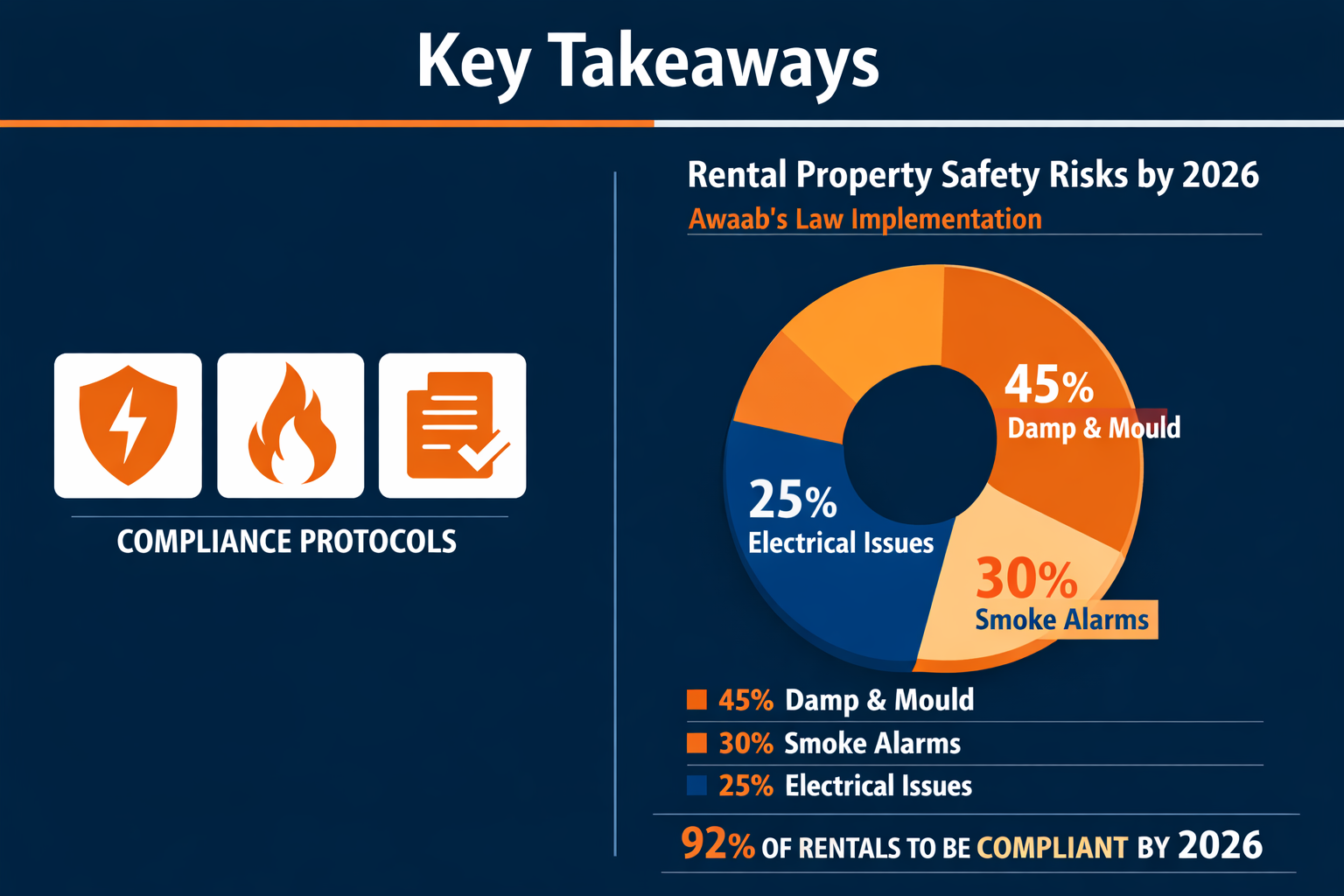
- ⚡ Emergency electrical and fire hazards under Awaab's Law 2026 require landlord response within 24 hours, with significant hazards investigated within 10 working days
- 🔍 Level 3 building surveys provide the most comprehensive assessment protocol for identifying electrical faults, fire safety failures, and structural hazards in rental properties
- 💷 Non-compliance penalties can reduce property valuations by 15-20% while triggering enforcement action, prosecution, and rental income loss
- 📋 Expanded hazard categories now include dangerous wiring, faulty circuits, fire door failures, inadequate detection systems, and blocked escape routes
- 🏠 Private rental sector landlords must implement systematic inspection protocols to meet 2026 compliance standards and protect tenant safety
Understanding Awaab's Law 2026: Expanded Hazard Categories for Electrical and Fire Safety
Awaab's Law originally focused on damp and mould conditions in social housing, but the 2026 amendments have significantly broadened its scope to address a wider range of health and safety hazards across both social and private rental sectors. The legislation now explicitly includes electrical hazards and fire hazards as priority categories requiring immediate attention[5].
Core Hazard Categories Under 2026 Regulations
The expanded framework identifies multiple hazard categories that landlords must monitor and address:
Electrical Hazards:
- Dangerous or exposed wiring systems
- Faulty electrical circuits and overloaded sockets
- Non-compliant electrical installations failing current regulations
- Inadequate earthing and RCD (Residual Current Device) protection
- Deteriorated consumer units and distribution boards
Fire Safety Hazards:
- Fire door failures including damaged seals, incorrect gaps, and faulty closers
- Inadequate or non-functional fire detection and alarm systems
- Blocked or obstructed emergency escape routes
- Missing or expired fire extinguishing equipment
- Combustible materials in common areas
Additional Priority Hazards:
- Excess cold and excess heat conditions
- Structural collapse risks and explosion potential
- Falls associated with baths, stairs, and level surfaces
- Domestic hygiene, pests, and food safety issues[3]
Response Timeframes: Emergency vs. Standard Hazards
The legislation establishes clear timelines that differentiate between emergency situations and standard hazards[1][2]:
| Hazard Severity | Investigation Timeline | Example Scenarios |
|---|---|---|
| Emergency Hazards | Within 24 hours | Exposed live wiring, gas leaks, complete fire alarm failure, structural collapse risk |
| Significant Hazards | Within 10 working days | Faulty circuits, damaged fire doors, inadequate fire detection, mould growth |
| Standard Hazards | Within 14-28 days | Minor electrical repairs, routine maintenance, cosmetic issues |
This tiered approach ensures that life-threatening conditions receive immediate attention while maintaining systematic oversight of less critical issues. For landlords managing multiple properties, implementing a robust inspection and response system is no longer optional—it's a legal requirement with serious financial consequences for non-compliance.
The shift toward proactive hazard identification has made Level 3 full building surveys increasingly valuable for private rental compliance. These comprehensive assessments provide the detailed analysis necessary to identify potential hazards before they escalate into emergency situations or trigger enforcement action.
Level 3 Survey Protocols: Comprehensive Electrical and Fire Hazard Assessment Methods
Level 3 building surveys represent the most thorough inspection methodology available for rental property compliance. Unlike basic condition reports or Level 2 HomeBuyer surveys, Level 3 surveys provide exhaustive analysis of property condition, structural integrity, and safety hazards—making them ideal for Awaab's Law Electrical and Fire Hazard Surveys: Level 3 Protocols for Private Rental Compliance in 2026.
What Makes Level 3 Surveys Essential for Awaab's Law Compliance?
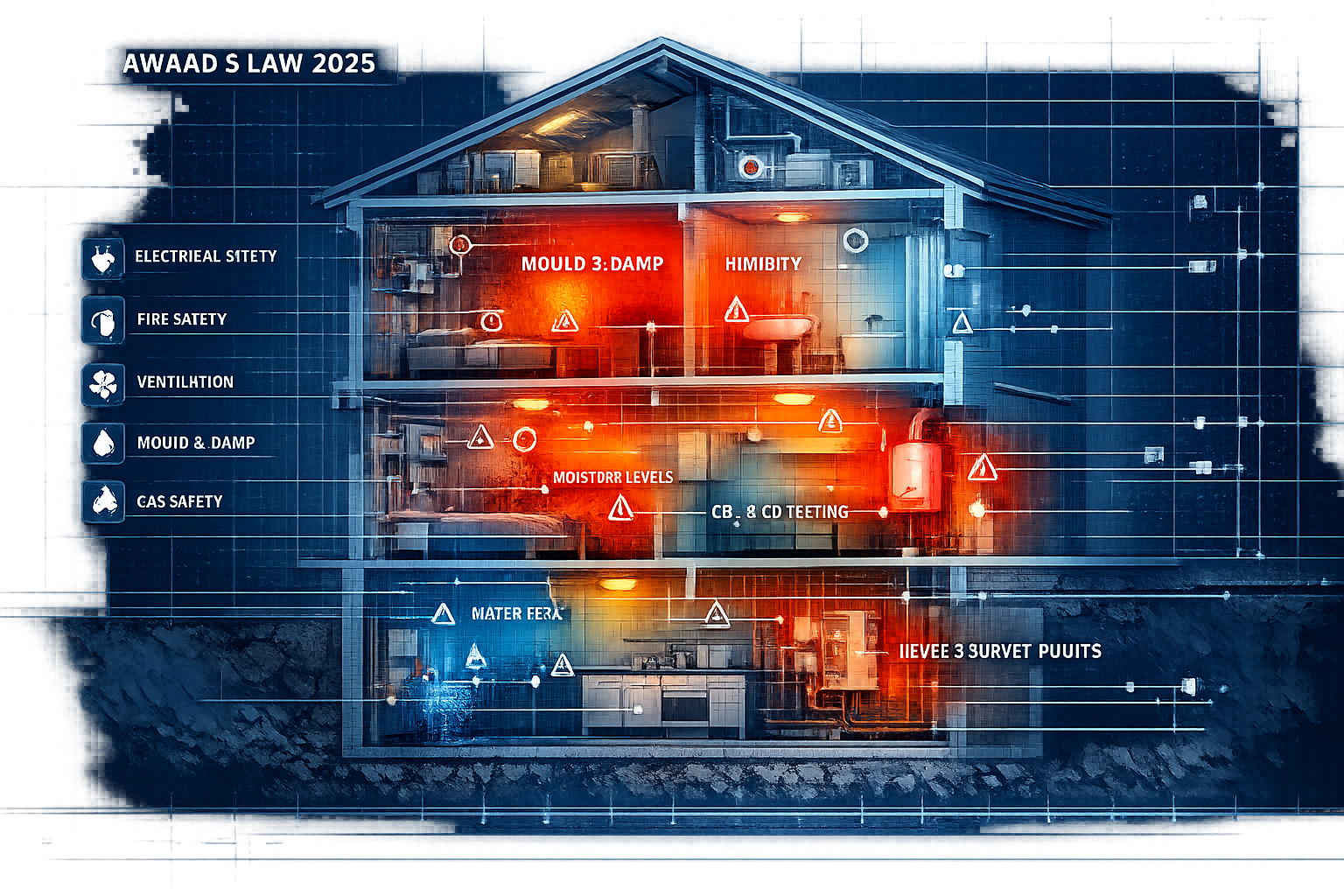
A comprehensive Level 3 survey includes detailed examination of:
Electrical System Assessment:
- Complete visual inspection of consumer units and distribution boards
- Assessment of wiring condition, age, and compliance with BS 7671 regulations
- Identification of overloaded circuits and inadequate earthing
- Evaluation of socket outlet condition and quantity
- Review of electrical installation certificates and testing records
- Thermal imaging to detect hidden electrical faults and overheating
Fire Safety Evaluation:
- Fire door integrity testing (gaps, seals, closers, intumescent strips)
- Smoke detector and fire alarm system functionality assessment
- Emergency lighting provision and operation
- Fire escape route identification and obstruction analysis
- Fire extinguisher location, type, and maintenance status
- Compartmentation and fire stopping effectiveness
Structural and Environmental Hazards:
- Structural stability assessment for collapse risk
- Damp, mould, and condensation analysis
- Ventilation adequacy evaluation
- Heating system performance and excess cold risk
- Fall hazards on stairs, bathrooms, and uneven surfaces
The Level 3 Inspection Process: Step-by-Step Protocol
Chartered surveyors conducting Level 3 assessments for Awaab's Law compliance follow a systematic protocol:
1. Pre-Inspection Documentation Review 📋
- Electrical Installation Condition Reports (EICR)
- Fire Risk Assessments
- Previous survey reports and maintenance records
- Building control certificates and planning permissions
2. Comprehensive Site Inspection 🔍
- Accessible areas: all rooms, loft spaces, basement areas
- External envelope: roof, walls, foundations, drainage
- Services: electrical, heating, plumbing, ventilation
- Safety equipment: detectors, extinguishers, emergency lighting
3. Specialist Testing and Analysis ⚡
- Thermal imaging for electrical hotspots
- Moisture meter readings for damp assessment
- Smoke detector functionality testing
- Fire door gap measurements and operation checks
4. Hazard Categorization and Prioritization ⚠️
- Category 1 hazards: immediate serious threat requiring 24-hour response
- Category 2 hazards: significant risk requiring 10-day investigation
- Category 3 hazards: moderate concerns for routine maintenance planning
5. Detailed Reporting and Recommendations 📊
- Comprehensive written report with photographic evidence
- Prioritized remediation schedule with cost estimates
- Compliance certification or deficiency notices
- Recommendations for sourcing specialist advice when required
Surveyor Checklists: Electrical and Fire Hazard Identification
Professional surveyors use detailed checklists to ensure consistent hazard identification:
Electrical Hazard Checklist:
- ✅ Consumer unit age and condition (modern RCD protection required)
- ✅ Visible wiring condition (no exposed conductors or damaged insulation)
- ✅ Socket outlet quantity and condition (no overloading or damage)
- ✅ Light fitting safety and appropriate IP ratings for wet areas
- ✅ Earthing and bonding adequacy
- ✅ EICR currency (required every 5 years for rental properties)
- ✅ Electrical installation compliance with current regulations
Fire Safety Hazard Checklist:
- ✅ Smoke detector presence in every circulation space and habitable room
- ✅ Fire alarm system functionality and regular testing evidence
- ✅ Fire door condition (30-minute or 60-minute rated as required)
- ✅ Intumescent strips and smoke seals intact
- ✅ Self-closing mechanisms operational
- ✅ Emergency escape routes clear and unobstructed
- ✅ Fire extinguisher provision, type, and inspection dates
- ✅ Emergency lighting in common areas and escape routes
For properties with urgent or dangerous building issues identified during inspection, surveyors must immediately notify landlords and recommend emergency remediation measures. This proactive approach helps landlords avoid the severe penalties associated with non-compliance while protecting tenant safety.
Understanding what types of building surveys are available helps landlords select the appropriate inspection level for their compliance needs. While Level 2 surveys may suffice for newer properties in good condition, Level 3 assessments provide the comprehensive analysis required for older rental stock or properties with known issues.
Valuation Impacts and Financial Consequences of Non-Compliance in 2026
The financial implications of failing to meet Awaab's Law Electrical and Fire Hazard Surveys: Level 3 Protocols for Private Rental Compliance in 2026 extend far beyond immediate remediation costs. Property valuations, rental income, insurance coverage, and legal liability all face significant impact when landlords fail to maintain compliant properties.
Property Valuation Reduction: The 15-20% Penalty
Non-compliant properties face substantial devaluation in the current market. Surveyors and valuers now routinely apply discounts of 15-20% to properties with identified Awaab's Law hazards, particularly when:
- Emergency hazards remain unaddressed beyond 24-hour timeframes
- Significant hazards persist beyond 10-day investigation requirements
- Multiple Category 1 or Category 2 hazards exist simultaneously
- Enforcement notices have been issued by local authorities
- Properties lack current electrical or fire safety certification
Example Valuation Impact:
| Property Scenario | Market Value (Compliant) | Market Value (Non-Compliant) | Valuation Loss |
|---|---|---|---|
| 2-bed flat, London | £450,000 | £360,000 – £382,500 | £67,500 – £90,000 |
| 3-bed house, Manchester | £275,000 | £220,000 – £233,750 | £41,250 – £55,000 |
| 4-bed house, Birmingham | £320,000 | £256,000 – £272,000 | £48,000 – £64,000 |
These valuation reductions reflect genuine market sentiment. Buyers and investors increasingly demand evidence of full Awaab's Law compliance before proceeding with purchases, and mortgage lenders may refuse financing for properties with outstanding hazard notices.
Direct Financial Penalties and Enforcement Action
Local authorities possess extensive enforcement powers under 2026 regulations:
Civil Penalties:
- Up to £30,000 per breach for failure to address emergency hazards
- £5,000 – £15,000 for missed investigation timeframes
- Cumulative penalties for multiple properties or repeated violations
Criminal Prosecution:
- Unlimited fines for serious breaches causing tenant harm
- Potential imprisonment for gross negligence
- Criminal records affecting future property investment opportunities
Rent Repayment Orders:
- Tenants can reclaim up to 12 months' rent for non-compliant properties
- Automatic entitlement when landlords fail to meet statutory obligations
- Additional compensation for health impacts or emotional distress
Rental Income Loss and Void Periods
Non-compliance creates multiple revenue disruption scenarios:
Immediate Void Periods:
When emergency hazards require tenant evacuation, landlords face complete income loss during remediation. Properties requiring extensive electrical rewiring or fire safety upgrades may remain vacant for 4-12 weeks, costing thousands in lost rent.
Rental Licence Suspension:
Many local authorities now tie selective licensing to Awaab's Law compliance. Licence suspension or revocation prohibits legal letting, creating extended void periods until full compliance is restored.
Tenant Retention Challenges:
Properties with recurring hazard issues experience higher tenant turnover. Replacement costs (marketing, referencing, void periods) typically equal 6-8 weeks of rental income per tenancy change.
Insurance Implications and Coverage Gaps
Landlord insurance policies increasingly exclude claims related to non-compliant properties:
- Public liability coverage may be void if injuries result from known, unaddressed hazards
- Buildings insurance can refuse claims for damage caused by electrical faults identified but not remediated
- Rent guarantee insurance typically excludes coverage when properties lack current safety certificates
- Premium increases of 25-40% for properties with enforcement history
The Consequences of Failing to Act
Beyond immediate financial penalties, non-compliance creates cascading consequences:
Reputational Damage:
- Enforcement notices become public record
- Online tenant review platforms highlight safety failures
- Professional letting agents may refuse to manage non-compliant properties
- Future tenants conduct due diligence before signing agreements
Portfolio-Wide Impact:
- Lenders may review entire property portfolios when one property faces enforcement
- Refinancing becomes difficult or impossible with compliance issues
- Portfolio expansion plans stall due to damaged landlord reputation
- Exit strategies become limited as buyers demand significant discounts
Legal Liability:
- Personal injury claims from tenants harmed by hazards
- Negligence lawsuits with unlimited compensation potential
- Director liability for limited company landlords
- Professional indemnity claims against property managers
Proactive Compliance: The Cost-Benefit Analysis
While comprehensive Level 3 surveys and remediation work require upfront investment, the cost-benefit ratio strongly favours proactive compliance:
Typical Investment:
- Level 3 survey: £800 – £1,500 per property
- Electrical remediation: £2,000 – £8,000 (depending on scope)
- Fire safety upgrades: £1,500 – £5,000 (doors, detectors, extinguishers)
- Total compliance investment: £4,300 – £14,500
Potential Loss from Non-Compliance:
- Property devaluation: £40,000 – £90,000
- Civil penalties: £5,000 – £30,000
- Rent repayment orders: £12,000 – £24,000 (12 months rent)
- Lost rental income: £6,000 – £18,000 (void periods)
- Legal costs: £5,000 – £20,000
- Total potential loss: £68,000 – £182,000
The mathematics are compelling: proactive compliance costs represent just 6-8% of potential non-compliance losses. For landlords managing multiple properties, implementing systematic inspection protocols through regular rental unit inspections provides the most cost-effective risk management strategy.
Understanding property market legislation changes helps landlords anticipate future regulatory developments and maintain ahead-of-compliance positioning. As enforcement intensifies throughout 2026, early adopters of comprehensive inspection protocols will maintain competitive advantages in tenant attraction and property valuations.
Implementing Systematic Compliance: Best Practices for Private Landlords in 2026
Successfully navigating Awaab's Law Electrical and Fire Hazard Surveys: Level 3 Protocols for Private Rental Compliance in 2026 requires systematic implementation of inspection, documentation, and remediation processes. Forward-thinking landlords are adopting comprehensive compliance frameworks that protect both tenant welfare and investment value.
Establishing Annual Inspection Cycles
Rather than reactive responses to tenant complaints or enforcement notices, best-practice landlords implement proactive inspection schedules:
Annual Level 3 Survey Protocol:
- Commission comprehensive Level 3 surveys every 12-18 months
- Schedule inspections during tenancy renewals or void periods
- Engage RICS-qualified chartered surveyors with Awaab's Law expertise
- Request specific focus on electrical and fire safety hazards
- Obtain detailed photographic evidence and written reports
Quarterly Safety Checks:
- Visual inspection of smoke detectors and fire alarm functionality
- Fire door operation and seal condition assessment
- Emergency lighting testing
- Electrical socket and visible wiring condition review
- Escape route obstruction checks
Monthly Tenant Communication:
- Formal request for hazard reporting
- Reminder of tenant responsibilities for detector testing
- Documentation of tenant-reported issues and response actions
- Building positive landlord-tenant relationships around safety
Documentation and Record-Keeping Systems
Comprehensive documentation provides essential protection against enforcement action and legal claims:
Essential Compliance Records:
- 📄 Current EICR (Electrical Installation Condition Report) – renewed every 5 years
- 📄 Fire Risk Assessment – updated annually or after significant changes
- 📄 Level 3 survey reports with hazard identification and remediation tracking
- 📄 Gas Safety Certificates – renewed annually
- 📄 Energy Performance Certificates – valid for 10 years
- 📄 Smoke and carbon monoxide detector installation certificates
- 📄 Fire door installation and maintenance records
- 📄 Remediation work completion certificates and invoices
- 📄 Tenant communication logs regarding safety issues
- 📄 Contractor qualifications and insurance documentation
Digital Management Systems:
Modern property management software enables:
- Centralized document storage with automatic expiry alerts
- Scheduled inspection reminders and compliance deadline tracking
- Contractor management and certification verification
- Tenant portal access for safety documentation
- Automated compliance reporting for portfolio landlords
Building a Trusted Professional Network
Compliance requires collaboration with qualified specialists:
Essential Professional Relationships:
- Chartered Surveyors: RICS-qualified professionals for Level 3 surveys and ongoing compliance advice
- Qualified Electricians: NICEIC or NAPIT registered electricians for EICR and remediation work
- Fire Safety Consultants: Specialists for fire risk assessments and complex fire safety upgrades
- Property Solicitors: Legal expertise for construction law advice and enforcement defence
- Insurance Brokers: Specialists in landlord insurance with compliance expertise
Budgeting for Compliance: Financial Planning Strategies
Smart landlords incorporate compliance costs into their investment models:
Annual Compliance Budget (per property):
- Routine inspections and surveys: £500 – £1,000
- Electrical and fire safety testing: £300 – £600
- Routine maintenance and minor remediation: £800 – £1,500
- Contingency for major remediation: £2,000 – £5,000
- Total annual provision: £3,600 – £8,100
Capital Improvement Planning:
For older properties requiring significant upgrades:
- Phased electrical system modernization (3-5 year plan)
- Systematic fire door replacement program
- Ventilation and heating system improvements
- Property renovations that add value for tenants while ensuring compliance
Tenant Education and Engagement
Successful compliance requires tenant cooperation:
Tenant Onboarding Process:
- Comprehensive safety briefing during move-in
- Written guidance on detector testing and emergency procedures
- Clear reporting procedures for safety concerns
- Explanation of landlord response timeframes under Awaab's Law
- Documentation of tenant acknowledgment and understanding
Ongoing Tenant Communication:
- Monthly safety reminders via email or tenant portal
- Prompt response to reported issues with clear timelines
- Transparent communication about inspection schedules
- Recognition of tenant cooperation in maintaining safe properties
Portfolio Management Strategies
For landlords managing multiple properties, systematic approaches become essential:
Risk-Based Prioritization:
- Categorize properties by age, condition, and hazard risk
- Prioritize older properties or those with known issues
- Implement staggered inspection schedules across portfolio
- Allocate remediation budgets based on risk assessment
Economies of Scale:
- Negotiate annual contracts with surveyors and contractors
- Bulk purchasing of safety equipment (detectors, extinguishers)
- Standardized specification for fire doors and electrical installations
- Shared professional services across property portfolio
Technology Integration:
- Smart smoke detectors with remote monitoring
- Digital inspection apps for quarterly checks
- Automated compliance tracking and reporting
- Predictive maintenance scheduling based on property age and condition
Conclusion: Protecting Investments Through Proactive Compliance
The expansion of Awaab's Law in 2026 to encompass electrical and fire hazards represents a fundamental shift in private rental sector obligations. Landlords can no longer afford reactive approaches to property safety—the financial, legal, and reputational consequences of non-compliance are simply too severe. With property devaluations of 15-20%, civil penalties reaching £30,000, and potential criminal prosecution, the cost of inaction far exceeds the investment required for comprehensive compliance.
Awaab's Law Electrical and Fire Hazard Surveys: Level 3 Protocols for Private Rental Compliance in 2026 provide the robust framework necessary to identify, prioritize, and remediate hazards before they escalate into emergencies or trigger enforcement action. By commissioning regular Level 3 surveys from qualified chartered surveyors, maintaining meticulous documentation, and implementing systematic inspection protocols, landlords protect both their tenants and their investment portfolios.
Actionable Next Steps for Landlords
Immediate Actions (Within 30 Days):
- ✅ Commission Level 3 surveys for all rental properties lacking current comprehensive assessments
- ✅ Review and update all electrical and fire safety certification
- ✅ Conduct emergency hazard reviews focusing on wiring, fire doors, and detection systems
- ✅ Establish formal tenant communication channels for hazard reporting
- ✅ Compile comprehensive compliance documentation for each property
Short-Term Implementation (Within 90 Days):
- 📋 Develop systematic inspection schedules for entire property portfolio
- 📋 Build professional network of qualified surveyors, electricians, and fire safety consultants
- 📋 Implement digital compliance management systems
- 📋 Create detailed remediation plans with prioritized timelines and budgets
- 📋 Review insurance coverage and ensure policies reflect compliance status
Long-Term Strategy (Ongoing):
- 🎯 Maintain annual Level 3 survey cycles with comprehensive hazard assessments
- 🎯 Budget appropriately for compliance costs and capital improvements
- 🎯 Stay informed about regulatory developments and enforcement trends
- 🎯 Foster positive tenant relationships centered on safety and transparency
- 🎯 Position properties as premium, compliant options in competitive rental markets
The landlords who thrive in 2026 and beyond will be those who embrace compliance as a competitive advantage rather than viewing it as a regulatory burden. Properties with documented safety records, current certifications, and proactive hazard management command premium rents, attract quality tenants, and maintain strong valuations in an increasingly regulated market.
Don't wait for enforcement action or tenant complaints to drive your compliance strategy. Commission your Level 3 survey today and take control of your property's safety, value, and future in the evolving regulatory landscape.
References
[1] Awaabs Law – procurementhub.co.uk
[2] Awaabs Law Guide – wordnerds.ai
[3] Awaabs Law Guidance For Social Landlords Timeframes For Repairs In The Social Rented Sector – gov.uk
[4] Building Surveys For Retrofit Compliance Navigating Rics Standards And Consumer Insights In 2026 – nottinghillsurveyors.com
[5] Awaabs Law 2026 Social Landlords Housing Associations – villageheating.co.uk