

By 2026, buildings account for nearly 40% of global energy consumption — and the UK's tightening Minimum Energy Efficiency Standards (MEES) mean that ignoring environmental performance during a property survey is no longer just poor practice. It is a financial liability. Sustainability in Property Surveying: Assessing Environmental Impacts for Eco-Conscious Development has shifted from a niche specialism into a core professional discipline, driven by stricter land-use regulations, growing investor demand for ESG-aligned assets, and new ecological data tools that give surveyors unprecedented forecasting power.
Whether assessing a brownfield site for redevelopment or auditing an existing residential block, today's chartered surveyors must weave environmental thinking into every stage of their work. This guide explains how, and why it matters more than ever in 2026.
Key Takeaways 📋
- Stricter 2026 regulations around MEES, biodiversity net gain, and land-use planning make environmental assessment a legal and commercial necessity.
- Ecological data tools — from GIS mapping to drone surveys — allow surveyors to capture and forecast environmental risks with far greater accuracy.
- ESG integration in property surveying directly enhances long-term asset value and investor confidence.
- Phase I Environmental Site Assessments (ESA) and ecological risk assessments are foundational steps in responsible eco-conscious development.
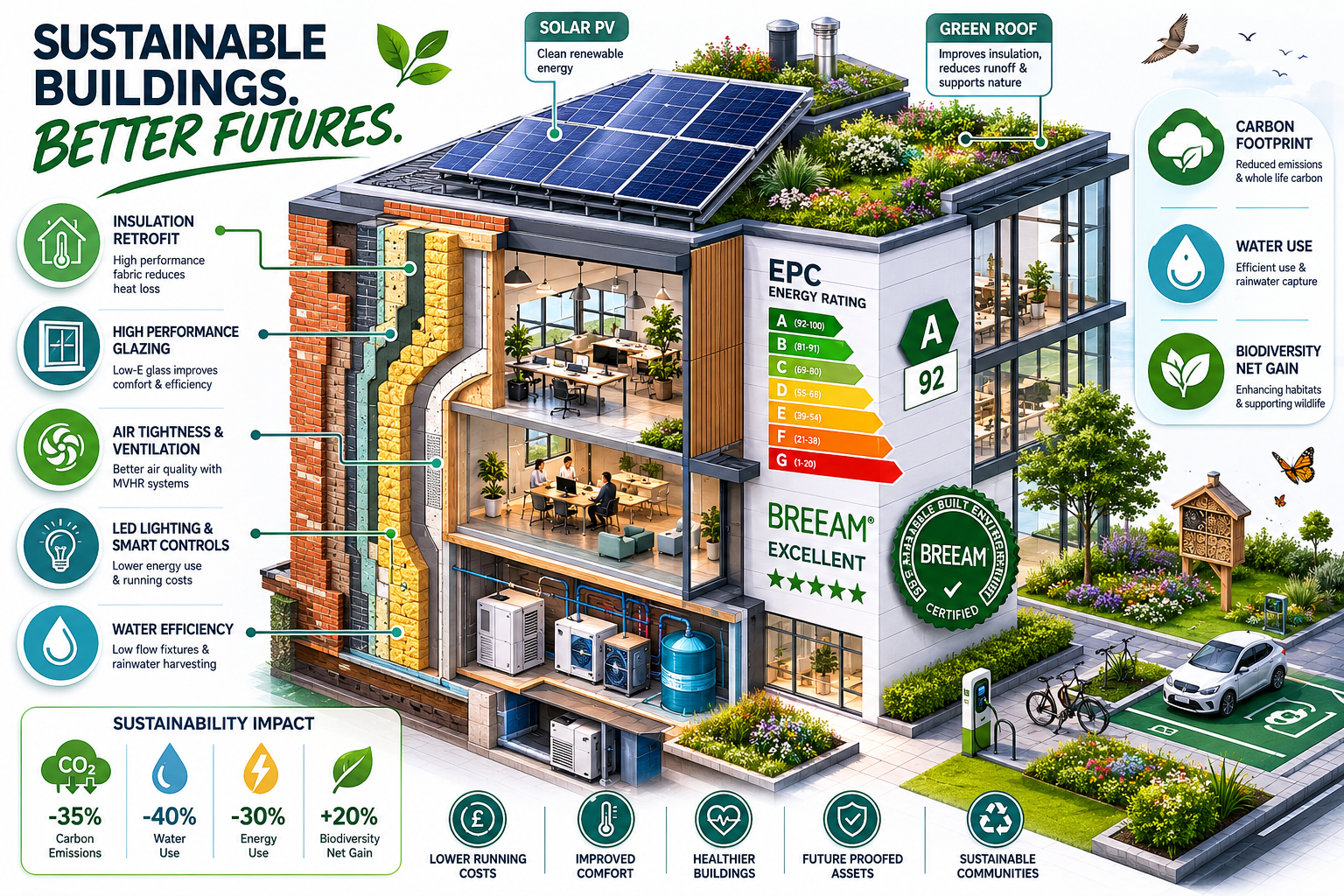
- Sustainable retrofits identified during surveys can significantly improve EPC ratings, reducing regulatory risk and boosting resale value.
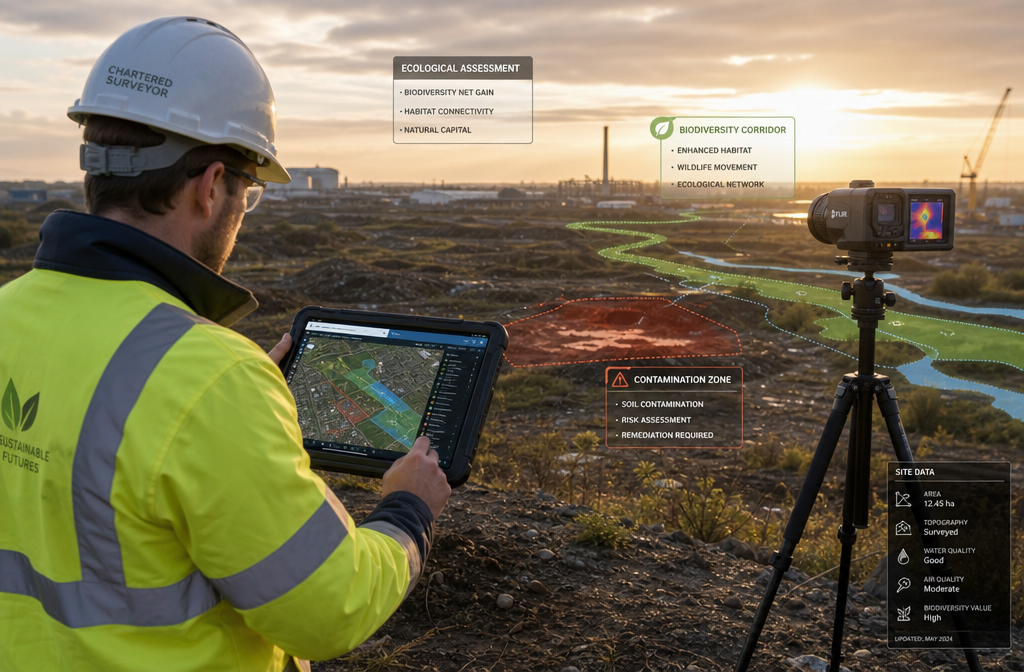
Why Environmental Assessment Is Now Central to Property Surveying
The relationship between property surveying and environmental responsibility has evolved dramatically. A decade ago, an energy performance check was a box-ticking exercise. In 2026, it is a gateway to financing, planning permission, and long-term asset viability.
The Regulatory Landscape in 2026
The UK government has progressively tightened its environmental requirements for buildings. MEES now demand higher EPC ratings for both residential lettings and commercial properties, with non-compliant landlords facing significant penalties. Understanding how EPC ratings and MEES interact with a building survey is now a fundamental part of any pre-purchase or pre-let assessment.
The Environment Act's Biodiversity Net Gain (BNG) requirement — now mandatory for most developments — means surveyors must assess ecological baselines before any ground is broken. Developers who skip this step risk planning refusals and costly retrospective mitigation [6].
Alongside MEES, the rise of Environmental, Social, and Governance (ESG) criteria has reshaped how institutional investors evaluate property portfolios. Certifications such as BREEAM, LEED, and the WELL Building Standard are increasingly demanded by lenders and occupiers alike [10]. Surveyors who can assess a property against these frameworks add measurable value to their clients.
💬 "Sustainability is no longer a premium add-on in property surveying — it is the baseline expectation for any professionally conducted assessment."
What Environmental Surveyors Actually Do
According to RICS, environmental surveyors investigate and identify the potential impact of environmental factors on construction projects, and the reverse — how development affects the surrounding environment [7]. Their work spans:
- Contaminated land assessments (Phase I and Phase II ESAs)
- Flood risk and drainage evaluations
- Air quality and noise impact reporting
- Ecological surveys covering protected species and habitats
- Carbon and energy performance auditing
This breadth means that Sustainability in Property Surveying: Assessing Environmental Impacts for Eco-Conscious Development is not a single task but an integrated framework that runs through every stage of a project's lifecycle [4].
Tools for Ecological Data Capture and Forecasting 🛰️
Modern surveyors have access to a powerful toolkit that was simply unavailable five years ago. These tools do not just capture current conditions — they enable predictive modelling that helps clients understand long-term environmental risk.
GIS Mapping and Remote Sensing
Geographic Information System (GIS) platforms allow surveyors to overlay multiple environmental datasets — flood zones, contamination records, ecological designations, soil types — onto a single interactive map. This dramatically speeds up the due diligence process and reduces the chance of missing a critical constraint.
Remote sensing via satellite imagery can track vegetation change, surface water movement, and land-use shifts over time. For brownfield assessments, this historical data is invaluable in identifying legacy contamination risks [9].
Drone Surveys for Environmental Assessment
Premium drone surveys have become a game-changer for ecological and structural assessment. A drone can:
- 📍 Map large sites quickly and safely
- 🌿 Identify vegetation types and protected habitat boundaries
- 🏚️ Assess roof condition and thermal performance without scaffolding
- 💧 Detect drainage issues and water ingress patterns
Thermal drone imaging, in particular, is increasingly used to identify heat loss in existing buildings — directly informing retrofit recommendations that improve EPC ratings.
Phase I Environmental Site Assessments (ESA)
A Phase I ESA is the starting point for environmental due diligence on any development site. It involves a desktop review of historical records, regulatory databases, and site visits to identify Recognised Environmental Conditions (RECs) — areas where contamination or ecological risk may be present [9].
If a Phase I ESA flags concerns, a Phase II ESA follows, involving physical sampling of soil and groundwater. This two-stage process is now standard practice for responsible developers and is increasingly required by lenders as a condition of finance.
Ecological Risk Assessment Tools
Ecological risk assessments go beyond contamination to evaluate how a proposed development might affect local biodiversity. Tools used include:
| Tool | Purpose |
|---|---|
| Habitat Condition Assessment | Baseline biodiversity mapping |
| Biodiversity Metric 4.0 | Calculating biodiversity net gain |
| Bat and Bird Surveys | Protected species compliance |
| Phase 1 Habitat Survey | Rapid ecological triage |
| Hydrological Modelling | Flood and drainage forecasting |
Ecological risk assessments identify potential environmental risks associated with property development and maintenance, enabling the design of effective mitigation strategies before construction begins [5].
Building Performance Simulation Software
Energy modelling tools such as IES VE and DesignBuilder allow surveyors and engineers to simulate a building's thermal performance under different retrofit scenarios. This means clients can see — before spending a penny — which interventions will deliver the greatest improvement in EPC rating and carbon reduction.
For those planning renovations, understanding the right order to renovate a property can make the difference between an efficient retrofit and costly rework.
Integrating Sustainability in Property Surveying: Assessing Environmental Impacts for Eco-Conscious Development Across the Property Lifecycle
Environmental assessment is not a one-off event. It must be embedded across every phase of a property's life — from acquisition and development through to management and disposal.
Pre-Acquisition Due Diligence
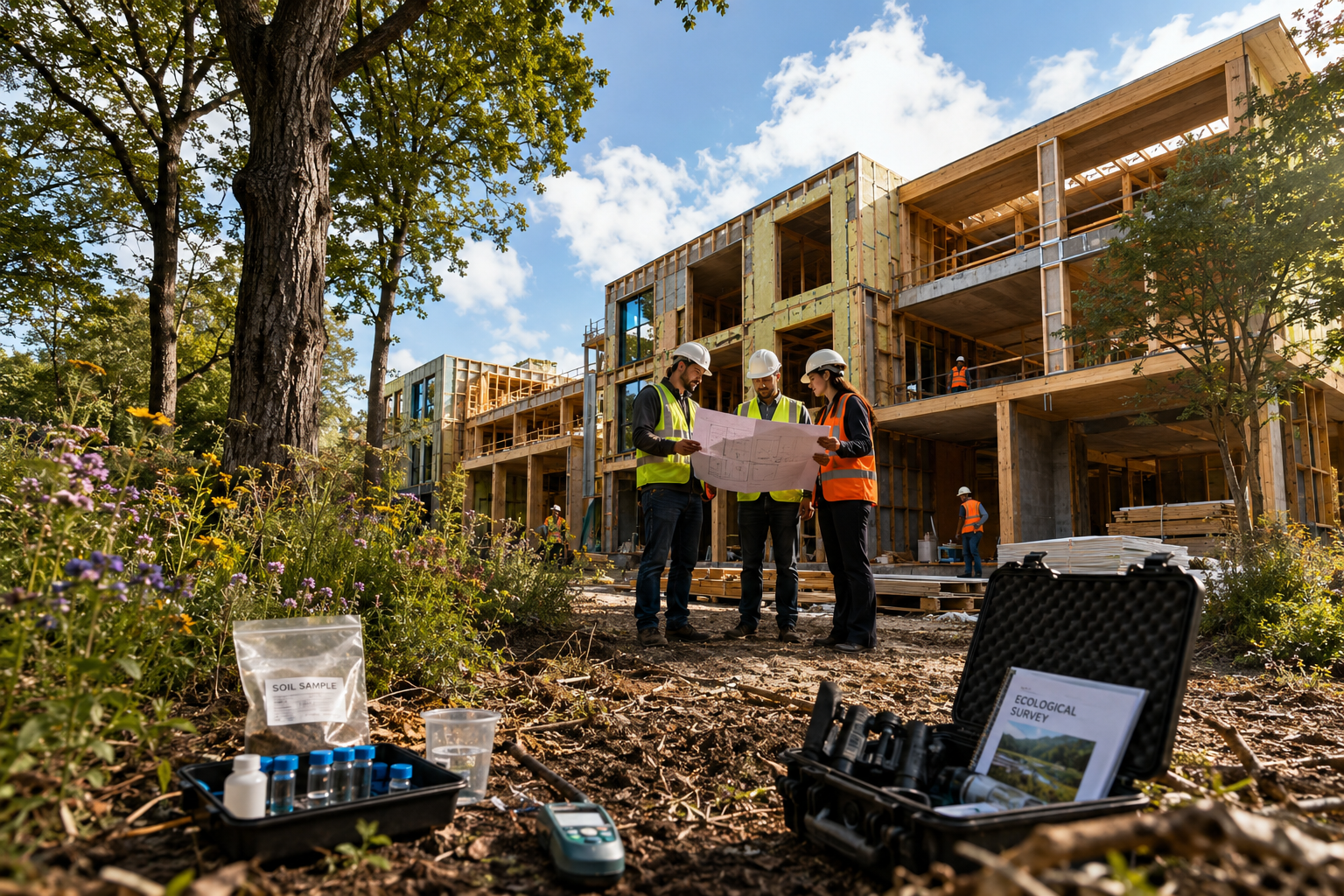
Before purchasing land or property, buyers and developers need a clear picture of environmental liabilities. A comprehensive building survey at this stage should include:
- EPC rating and MEES compliance status
- Flood risk zone classification
- Contamination history
- Proximity to ecological designations (SSSIs, Ancient Woodland)
- Planning constraints related to environmental policy
Environmental due diligence at acquisition protects buyers from inheriting costly liabilities — contaminated land remediation, for example, can run into hundreds of thousands of pounds [9].
Development and Planning Stage
During the planning stage, Environmental Impact Assessments (EIAs) are required for many major development projects. EIAs help identify, assess, and mitigate adverse environmental impacts before planning consent is granted, ensuring compliance with regulations and promoting sustainable development [2].
Key components of a development-stage environmental assessment include:
- Transport and air quality modelling
- Noise and vibration impact studies
- Landscape and visual impact assessment
- Water resource and drainage strategy
- Biodiversity Net Gain calculation and habitat management plan
Developers working on community housing projects should explore how community housing and sustainability services can integrate these requirements from the outset, reducing delays and cost overruns.
Retrofit and Refurbishment
For existing buildings, Sustainability in Property Surveying: Assessing Environmental Impacts for Eco-Conscious Development means identifying retrofit opportunities that reduce carbon emissions and improve energy performance [3]. Common survey findings that trigger retrofit recommendations include:
- ❄️ Poor wall and roof insulation (U-values above current standards)
- 🔥 Inefficient heating systems (gas boilers facing phase-out)
- 💡 Outdated lighting and electrical systems
- 🌧️ Inadequate drainage and waterproofing
- 🪟 Single or poor-quality double glazing
Surveyors integrating ESG principles advocate for low-carbon retrofitting as a means of enhancing property value and ensuring compliance with evolving environmental regulations [1]. A well-executed retrofit programme can lift a property from EPC band E to band C — a critical threshold under current MEES rules.
For older properties, a Level 3 Full Building Survey is particularly valuable, as it provides the depth of structural and material analysis needed to plan effective environmental upgrades.
Ongoing Property Management
Environmental responsibility does not end at completion. Effective property management in 2026 includes:
- Regular EPC reviews and energy audits
- Monitoring of drainage and flood resilience measures
- Maintenance of green roofs, SuDS features, and biodiversity enhancements
- Tracking of carbon and energy consumption data against ESG targets
Block managers, in particular, have a growing responsibility to ensure that communal areas and building fabric meet environmental standards, especially as service charge regulations evolve.
Challenges and How to Overcome Them ⚠️
Despite the clear benefits, integrating environmental assessment into property surveying is not without obstacles.
Key Challenges
The Local Government Association has identified several barriers to effective environmental assessment practice [8]:
- Accessibility of data — Environmental databases are not always consistent or up to date.
- Resource constraints — Smaller practices may lack specialist environmental expertise.
- Consistency of approach — Without standardised methodologies, assessment quality varies widely.
- Monitoring gaps — Post-development environmental monitoring is often inadequate.
Practical Solutions
| Challenge | Solution |
|---|---|
| Data gaps | Use multiple GIS sources; commission Phase I ESA early |
| Lack of expertise | Partner with specialist environmental consultants |
| Inconsistent standards | Follow RICS guidance and BRE/BREEAM frameworks |
| Monitoring failures | Build monitoring obligations into development agreements |
Staying current with property market legislation changes is essential for surveyors navigating the rapidly shifting regulatory environment.
The Business Case: How Eco-Conscious Surveying Adds Long-Term Property Value 💷
Beyond compliance, there is a compelling financial argument for integrating sustainability into property surveying.
Higher Asset Values
Properties with strong EPC ratings, BREEAM certifications, or demonstrable ESG credentials consistently achieve higher sale prices and rental premiums. Research consistently shows that green-certified buildings outperform non-certified equivalents in both occupancy rates and capital values [10].
Reduced Regulatory Risk
Properties that fail MEES requirements cannot be legally let in many categories. Identifying and addressing these issues at survey stage — rather than after purchase — can save buyers from significant financial exposure.
Investor and Lender Confidence
ESG-aligned assets are increasingly preferred by institutional investors and are attracting more favourable financing terms from lenders who have made sustainability commitments. A survey that clearly documents environmental performance gives clients a competitive edge in the market [1].
Future-Proofing Against Regulation
With further tightening of energy efficiency standards expected beyond 2026, properties assessed and improved today will be better positioned to meet tomorrow's requirements without costly emergency retrofits.
Conclusion: Taking Action on Sustainable Property Surveying
Sustainability in Property Surveying: Assessing Environmental Impacts for Eco-Conscious Development is no longer optional — it is the professional standard that the market, regulators, and responsible clients now demand. The tools are available, the regulatory framework is clear, and the financial case is compelling.
Actionable Next Steps ✅
- Commission a full building survey that explicitly includes EPC assessment, flood risk review, and contamination screening before any acquisition.
- Request ecological risk assessments for any development or significant refurbishment project, particularly where BNG obligations apply.
- Engage a chartered surveyor experienced in ESG and environmental assessment to ensure compliance with 2026 MEES standards.
- Use drone and GIS tools to capture accurate ecological baselines and identify structural issues that affect energy performance.
- Plan retrofits strategically — prioritise interventions that deliver the greatest EPC improvement and carbon reduction per pound spent.
- Monitor and report — build environmental performance tracking into ongoing property management from day one.
The properties that will hold and grow their value over the next decade are those where environmental performance has been rigorously assessed, honestly reported, and proactively improved. That process starts with the survey.
References
[1] Environmental Social And Governance – terracottaproperty.com
[2] Environmental Impact Assessment – socotec.co.uk
[3] Modern Approach To Sustainability In Building Surveying – fitzgeraldsurveying.co.uk
[4] Environmental Surveying – hensonarchitect.com
[5] Ecological Assessment – vaia.com
[6] Navigating The Landscape Of Evolving Building Standards While Excelling In Sustainability – rics.org
[7] Guide To A Career In The Land And Resources Sector – rics.org
[8] Barriers And Challenges Environmental – www2.local.gov.uk
[9] Environmental Due Diligence – transect.com
[10] Realestatesustainabilitybasics – majorsustainability.smeal.psu.edu