

{"cover":"Professional landscape format (1536×1024) hero image featuring bold text overlay 'Expert Witness Preparation for 2026 Rent Dispute Escalation' in extra large 72pt white sans-serif font with dark shadow and semi-transparent navy overlay box, positioned in upper third. Background shows modern courtroom setting with wooden witness stand, legal documents, property valuation reports spread on table, and blurred figure of professional surveyor in business attire. Foreground includes gavel, rental contract, and comparative market analysis charts. Color scheme: deep navy blue, gold accents, white text, professional lighting. High contrast, editorial magazine cover quality, authoritative legal aesthetic with property valuation focus. Composition follows rule of thirds with text perfectly centered and balanced visual hierarchy.","content":["Landscape format (1536×1024) detailed illustration showing expert witness vetting process with split-screen composition: left side displays professional surveyor reviewing credentials documents, RICS certification, license verification checklist on tablet screen; right side shows courtroom cross-examination scene with barrister questioning witness. Center overlay features transparent checklist graphic with checkmarks for qualifications, experience, testimony history, bias assessment. Color palette: professional grey, blue, white with gold accent highlights. Include visual elements: magnifying glass over credentials, scales of justice symbol, property valuation report, credential badges. Clean, informative, business editorial style with documentary photography aesthetic.","Landscape format (1536×1024) comprehensive infographic showing rental valuation methodology with three-column layout: left column displays comparable property analysis with mini property photos, price points, location pins on map; center column shows detailed valuation calculation breakdown with mathematical formulas, adjustment factors, market data charts with upward/downward trend arrows; right column presents final valuation report format with professional document layout, signature line, RICS logo. Include visual elements: calculator, spreadsheet data, property images, market trend graphs, adjustment percentage indicators. Color scheme: corporate blue, white, grey with green/red indicators for value adjustments. Professional financial document aesthetic with clear data visualization.","Landscape format (1536×1024) dynamic courtroom preparation scene showing expert witness and legal team in conference room strategy session: foreground displays large table covered with evidence materials including rental comparables, valuation reports, regulatory framework documents, ombudsman guidelines, highlighted legal texts; mid-ground shows professional surveyor presenting findings on large wall-mounted screen displaying property data, market analysis charts, regulatory compliance checklist; background features whiteboard with case strategy notes, timeline, key arguments mapped out. Include visual elements: open laptop, bound expert report, sticky notes, coffee cups, professional briefcases. Warm professional lighting, collaborative atmosphere, high-stakes preparation aesthetic. Color palette: warm wood tones, navy, burgundy, cream with pops of yellow highlighter."]"}
Rental valuation disputes are projected to surge by 340% in 2026 as the new Private Rented Sector Landlord Ombudsman framework takes effect across England. This regulatory shift, combined with stricter rent review processes and emerging legal strategies that frame excessive rent increases as criminal violations, creates an unprecedented demand for expert witnesses who can defend rental valuations under intense scrutiny. The stakes have never been higher for property professionals preparing to testify in ombudsman proceedings and potential litigation.
Expert Witness Preparation for 2026 Rent Dispute Escalation: Defending Rental Valuations Under New Ombudsman Framework requires a fundamental understanding of both the evolving regulatory landscape and the rigorous vetting standards that determine witness credibility. As demonstrated in landmark cases like Emmons v. Jesso (2025), where expert testimony on lease interpretation and industry standards proved decisive in securing a $14,700 judgment, the quality of expert preparation directly influences case outcomes[1].
This comprehensive guide equips chartered surveyors, property valuers, and real estate professionals with the evidence frameworks, credibility safeguards, and defence strategies essential for navigating the 2026 ombudsman environment and defending rental valuations against escalating tenant challenges.
Key Takeaways
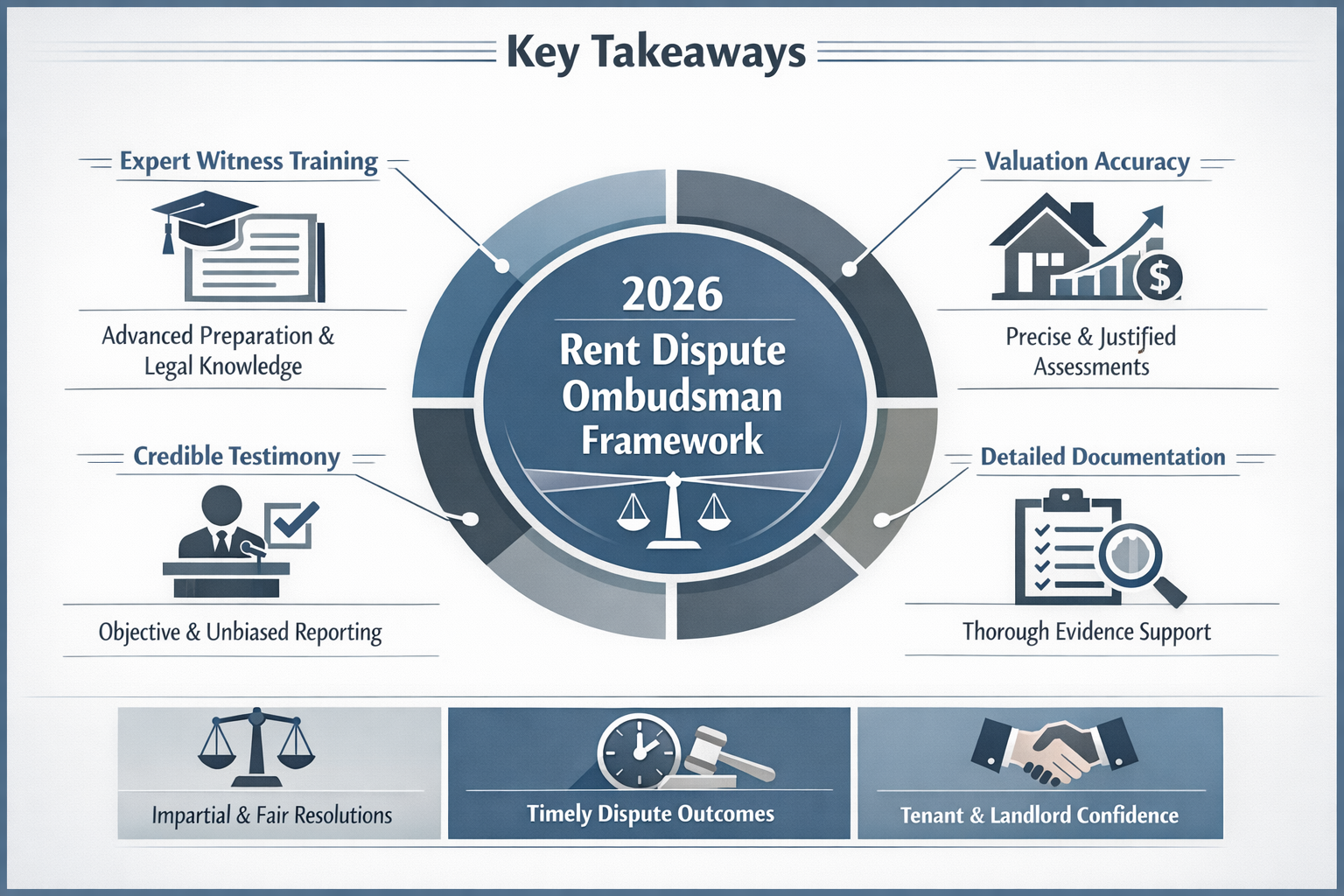
✅ Case-fit verification is critical: Experts must match the exact dispute issue with documented specialty relevance, current practice credentials, and jurisdiction-specific qualifications to withstand ombudsman scrutiny[3].
✅ Prior testimony consistency matters more than volume: Contradictions across previous depositions, reports, and publications create greater cross-examination vulnerabilities than high testifying frequency[3].
✅ Valuation methodology transparency is essential: Comprehensive comparable analysis, documented adjustment rationale, and regulatory compliance evidence form the foundation of defensible rental valuations under the new framework.
✅ Emerging legal strategies demand updated expertise: California precedents show tenant attorneys framing illegal rent increases as "stolen property" claims under Penal Code Section 496, enabling treble damages—a strategy likely to influence UK dispute approaches[5].
✅ Ombudsman proceedings require different preparation: Unlike traditional litigation, the 2026 framework emphasizes accessible evidence presentation, regulatory compliance documentation, and consumer protection alignment.
Understanding the 2026 Ombudsman Framework and Rent Dispute Landscape
The introduction of the Private Rented Sector Landlord Ombudsman represents the most significant regulatory change to rental dispute resolution in England since the Housing Act 1988. This mandatory framework compels all private landlords to join an approved ombudsman scheme, creating a structured pathway for tenants to challenge rent increases, service quality, and property conditions without immediately resorting to tribunal proceedings.
Key Regulatory Changes Driving Dispute Escalation
The 2026 framework introduces several mechanisms that directly impact rental valuation disputes:
Mandatory Ombudsman Membership: All private landlords must register with an approved scheme by Q2 2026, creating a formal dispute resolution channel that tenants can access without legal representation or filing fees.
Enhanced Tenant Protections: The framework strengthens tenant rights to challenge rent increases, particularly where valuations appear disconnected from market conditions or property improvements.
Regulatory Alignment with Awaab's Law: New standards for property conditions, particularly regarding damp and mould, create additional grounds for rent reduction claims when properties fail to meet habitability standards[4].
Increased Scrutiny of Valuation Methodology: Ombudsman proceedings demand transparent, evidence-based justification for rental valuations, with particular focus on comparable property analysis and adjustment rationale.
Emerging Legal Strategies That Threaten Rental Valuations
Beyond the ombudsman framework, expert witnesses must prepare for increasingly sophisticated legal challenges to rental valuations. California precedents provide insight into strategies likely to influence UK disputes:
"Stolen Property" Claims: Tenant attorneys are framing improper rent increases as violations equivalent to theft, seeking treble damages under criminal statutes—a strategy that transforms civil rent disputes into quasi-criminal proceedings[5].
Price Gouging Protections: LA County's February 2026 regulations prohibit evicting tenants to re-rent at higher rates, establishing clear barriers to rent escalation via tenant displacement[7]. Similar protections are anticipated in UK jurisdictions.
Regulatory Violation Compounding: Disputes increasingly combine multiple claims—excessive rent, property condition failures, harassment allegations—requiring expert witnesses to address interconnected valuation and compliance issues.
For expert witnesses providing expert witness reports, understanding these regulatory dynamics is essential for credible testimony preparation.
Expert Witness Vetting and Credibility: The Foundation of Defensible Testimony
The credibility of expert testimony in Expert Witness Preparation for 2026 Rent Dispute Escalation: Defending Rental Valuations Under New Ombudsman Framework hinges on rigorous vetting processes that examine qualifications, experience, and potential bias indicators. Recent research identifies five critical vetting dimensions that determine witness credibility[3].
Case-Fit Confirmation: Matching Expertise to Dispute Specifics
The most common expert witness failure occurs when credentials don't precisely align with the dispute issue. For rental valuation disputes, this means:
Specialty Relevance Verification 🎯
- Current practice in residential lettings valuation (not just general property valuation)
- Geographic market knowledge specific to the dispute location
- Experience with comparable property analysis in the relevant property type
- Understanding of local rental market dynamics and seasonal variations
Current vs. Historical Practice Assessment
Expert witnesses must demonstrate active, current practice in rental valuations, not outdated experience from previous decades. Ombudsman panels and opposing counsel scrutinize:
- Recent valuation assignments (within 12-24 months)
- Continuing professional development in rental regulations
- Familiarity with current market data sources and analysis tools
- Updated knowledge of 2026 regulatory framework changes
Jurisdiction-Specific Qualifications
UK rental disputes require experts with:
- RICS (Royal Institution of Chartered Surveyors) membership and current practicing certificates
- Knowledge of English housing law and tenancy regulations
- Experience with tribunal procedures and ombudsman frameworks
- Understanding of local authority licensing schemes and compliance requirements
License and Disciplinary History Verification
Comprehensive vetting must examine professional standing through multiple channels[3]:
| Verification Element | Why It Matters | Red Flags |
|---|---|---|
| Professional License Status | Confirms current authority to practice | Expired, suspended, or restricted licenses |
| RICS Membership Standing | Validates professional standards adherence | Disciplinary proceedings, membership lapses |
| Public Disciplinary Records | Reveals ethics violations or competence issues | Complaints upheld, sanctions imposed |
| Practice Privilege Restrictions | Identifies scope limitations | Conditional practice permissions |
| Employment Change Timing | Correlates disciplinary issues with career moves | Departures coinciding with investigations |
For chartered surveyors offering commercial valuations or leasehold extension valuations, maintaining impeccable professional standing is essential for expert witness credibility.
Prior Testimony Consistency Analysis
Consistency matters more than volume in expert witness credibility assessment[3]. Opposing counsel systematically review:
Deposition and Trial Transcripts: Searching for contradictions in methodology, opinions, or factual assertions across different cases.
Published Expert Reports: Comparing current valuation approaches with previously documented methodologies to identify inconsistencies.
Academic and Professional Publications: Cross-referencing testimony with published articles, research, or industry guidance to detect conflicts.
Effective Preparation Strategy:
- Maintain comprehensive records of all previous testimony and reports
- Develop consistent, defensible valuation methodologies applied uniformly
- Document any methodology evolution with clear rationale
- Prepare explanations for apparent contradictions before cross-examination
- Review own prior testimony before each new engagement
Litigation Footprint and Bias Signal Assessment
Ombudsman panels and tribunals assess potential expert bias through litigation pattern analysis[3]:
Retention Pattern Examination ⚖️
- Plaintiff vs. defense representation ratio (significant imbalance suggests bias)
- Repeat engagements by same law firms or insurance carriers
- Concentration of work from landlord associations or tenant advocacy groups
Financial Conflict Identification
- Expert witness fees as percentage of total professional income
- Financial relationships with parties or their representatives
- Investment interests in rental property or related industries
Public Advocacy Assessment
- Published opinions on rental regulation or tenant rights
- Membership in partisan industry organizations
- Social media statements revealing predisposition
Personal Litigation History
- Own landlord-tenant disputes as party
- Professional negligence claims related to valuations
- Regulatory proceedings affecting credibility
Expert witnesses must proactively address potential bias perceptions by maintaining balanced case portfolios, transparent fee structures, and professional neutrality in public statements.
Defending Rental Valuations: Evidence Frameworks and Methodology Standards
Expert Witness Preparation for 2026 Rent Dispute Escalation: Defending Rental Valuations Under New Ombudsman Framework requires mastery of evidence-based valuation methodologies that withstand ombudsman scrutiny and cross-examination. The following frameworks provide defensible structures for rental valuation testimony.
Comprehensive Comparable Property Analysis
The foundation of any defensible rental valuation is rigorous comparable analysis that demonstrates market-based reasoning:
Selection Criteria Documentation 📊
- Geographic Proximity: Comparables within 0.5-1 mile radius (urban) or 2-3 mile radius (suburban/rural)
- Property Type Matching: Identical or highly similar property classifications (terraced, semi-detached, flat type, etc.)
- Size Parameters: Comparable floor area (±15% variance), bedroom/bathroom count
- Condition Alignment: Similar property condition, age, and modernization level
- Amenity Equivalence: Parking, outdoor space, storage, communal facilities
- Temporal Relevance: Rental evidence within 3-6 months of valuation date
Adjustment Methodology Transparency
Every adjustment to comparable rents must be documented with clear rationale:
- Location Adjustments: Quantified differences in desirability, transport links, local amenities (typically ±5-10%)
- Size Adjustments: Per-square-foot or per-bedroom differential calculations
- Condition Adjustments: Quantified impact of superior/inferior decoration, fixtures, systems (typically ±5-15%)
- Amenity Adjustments: Specific value attributions for parking (£50-150/month), gardens, balconies
- Market Timing Adjustments: Documented rental growth rates applied to older comparables
Data Source Verification
Ombudsman proceedings demand transparent data sourcing:
- Multiple listing platforms (Rightmove, Zoopla, OnTheMarket) for market evidence
- Letting agent confirmation of achieved rents (not just asking prices)
- Land Registry data for ownership verification
- Local authority licensing records for compliance verification
Regulatory Compliance Integration
Rental valuations in 2026 cannot be defended without demonstrating regulatory compliance alignment:
Property Condition Standards 🏠
- Energy Performance Certificate (EPC) rating impact on rental value (minimum E rating requirement)
- Awaab's Law compliance regarding damp, mould, and hazard responsiveness[4]
- Housing Health and Safety Rating System (HHSRS) Category 1 hazard absence
- Electrical safety certification and gas safety compliance
Licensing and Compliance Status
- Selective licensing scheme compliance (where applicable)
- HMO licensing for multi-occupancy properties
- Planning permission for residential use verification
- Building regulation compliance for alterations
Rent Control and Limitation Compliance
- Local authority rent pressure zone restrictions (where applicable)
- Tenancy type-specific limitations (assured, assured shorthold, regulated)
- Rent increase procedure compliance (notice periods, frequency limits)
For properties requiring property development assessments or Right to Buy valuations, regulatory compliance verification follows similar rigorous standards.
Market Context and Trend Analysis
Defensible rental valuations require broader market context beyond individual comparables:
Supply and Demand Dynamics
- Local vacancy rates and time-to-let statistics
- New rental supply pipeline (development completions)
- Demographic trends affecting rental demand
- Employment and economic indicators for the local area
Rental Growth Trajectory
- Historical rental growth rates (3-5 year trends)
- Seasonal variation patterns in the local market
- Comparative growth rates vs. regional and national averages
- Forward-looking market indicators and forecasts
Competitive Positioning
- Subject property's position within local rental hierarchy
- Unique selling points or competitive disadvantages
- Target tenant demographic alignment
- Marketing time and tenant demand evidence
Documentation and Report Standards
Expert witness reports for ombudsman proceedings must meet elevated standards:
Essential Report Components 📋
- Executive Summary: Clear valuation conclusion with supporting rationale (1-2 pages)
- Property Description: Comprehensive physical description, location analysis, condition assessment
- Comparable Analysis: Detailed table with adjustments, supporting evidence, and photographs
- Methodology Explanation: Transparent description of valuation approach and reasoning
- Regulatory Compliance Review: Documentation of compliance verification
- Market Context: Supply/demand analysis, trend assessment, positioning evaluation
- Assumptions and Limitations: Clear statement of valuation basis and scope restrictions
- Professional Credentials: CV, qualifications, experience summary, declaration of independence
Visual Evidence Integration
- Property photographs (exterior, interior, condition issues)
- Comparable property photographs for visual comparison
- Location maps showing comparable property positions
- Charts illustrating rental trends and market data
- Adjustment calculation tables with clear methodology
Cross-Examination Preparation and Testimony Delivery
The most thoroughly prepared valuation evidence can fail under ineffective testimony delivery. Expert Witness Preparation for 2026 Rent Dispute Escalation: Defending Rental Valuations Under New Ombudsman Framework demands specific cross-examination preparation strategies.
Anticipating Challenge Vectors
Opposing counsel and ombudsman panels typically challenge rental valuations through predictable vectors:
Comparable Selection Attacks 🎯
- "Cherry-picking" allegations (selecting only favorable comparables)
- Geographic stretch criticisms (comparables too distant)
- Temporal relevance challenges (outdated rental evidence)
- Property type mismatch assertions (inadequate similarity)
Defense Strategy: Demonstrate systematic comparable search process, document rejected comparables with reasons, explain selection criteria transparently.
Adjustment Methodology Challenges
- Excessive or insufficient adjustment percentages
- Inconsistent adjustment application across comparables
- Lack of market evidence supporting adjustment quantum
- Subjective rather than objective adjustment basis
Defense Strategy: Provide market evidence for adjustment rates, apply consistent methodology, reference industry guidance, acknowledge adjustment uncertainties.
Bias and Independence Attacks
- Financial interest in outcome allegations
- Repeat engagement by landlord clients
- Professional relationship with instructing party
- Advocacy rather than objective analysis
Defense Strategy: Maintain detailed engagement records, demonstrate balanced case portfolio, emphasize professional duty to tribunal/ombudsman, provide independent opinion regardless of client preference.
Effective Testimony Techniques
Clarity and Accessibility 💬
Ombudsman proceedings emphasize accessibility for self-represented tenants:
- Avoid technical jargon or explain terms clearly
- Use visual aids to illustrate complex concepts
- Speak directly to panel members, not just legal representatives
- Acknowledge uncertainties and limitations honestly
Confidence Without Arrogance
- Express opinions with appropriate certainty levels
- Acknowledge alternative interpretations where legitimate
- Avoid dismissive responses to opposing arguments
- Maintain professional demeanor under pressure
Responsive Listening
- Answer the specific question asked (not the question preferred)
- Request clarification when questions are ambiguous
- Pause before responding to consider answer fully
- Admit when information is outside expertise scope
Post-Testimony Follow-Up
Effective expert witness practice extends beyond testimony delivery:
Supplementary Evidence Provision
- Respond promptly to panel information requests
- Provide additional documentation when requested
- Clarify testimony points requiring elaboration
- Update evidence if market conditions change materially
Professional Reflection
- Review testimony transcripts for improvement opportunities
- Analyze opposing expert critiques for methodology enhancement
- Update valuation approaches based on panel feedback
- Maintain continuing professional development in dispute resolution
Professionals offering service charge management or property inspection services can apply similar testimony preparation standards across dispute contexts.
Building an Expert Witness Practice in Rental Dispute Resolution
For chartered surveyors and property professionals seeking to develop or expand expert witness capabilities in the 2026 rental dispute environment, strategic practice development is essential.
Technical Knowledge Gap Assessment
Honest self-assessment of technical competencies identifies development priorities[4]:
Core Competency Requirements ✅
- Residential rental valuation methodology
- Comparable analysis and adjustment techniques
- Market research and data analysis
- Regulatory compliance frameworks (EPC, HHSRS, licensing)
- Damp, mould, and property condition assessment
- Tenancy law and rent review procedures
Emerging Expertise Areas
- Ombudsman procedure and evidence requirements
- Awaab's Law compliance and habitability standards
- Energy efficiency impact on rental values
- Selective licensing and HMO regulations
- Rent pressure zone restrictions
- Alternative dispute resolution techniques
Professional Development Pathways
- RICS Expert Witness training and certification
- Specialist rental valuation courses and qualifications
- Property condition assessment training (damp, mould, hazards)
- Regulatory compliance workshops (Awaab's Law, licensing)
- Mock tribunal and cross-examination practice
- Mentorship with experienced expert witnesses
Practice Infrastructure Development
Successful expert witness practice requires supporting infrastructure:
Case Management Systems 💼
- Engagement tracking and conflict checking
- Document management and version control
- Deadline monitoring and reminder systems
- Time recording and fee management
- Comparable property database maintenance
Quality Assurance Protocols
- Peer review processes for reports and valuations
- Methodology consistency checks
- Citation and reference verification
- Professional indemnity insurance adequacy
- Continuing competence documentation
Marketing and Positioning
- Professional website with expert witness credentials
- Published articles demonstrating expertise
- Speaking engagements at industry conferences
- Networking with solicitors and barristers
- Membership in expert witness directories
Fee Structures and Engagement Terms
Transparent fee arrangements protect both expert and instructing party:
Typical Fee Models
- Hourly rates for research, analysis, and report preparation (£150-300/hour depending on experience)
- Fixed fees for standard report types
- Daily rates for tribunal attendance and testimony (£1,500-3,000/day)
- Separate charges for travel, disbursements, and expert conferences
Essential Engagement Terms
- Clear scope of work definition
- Payment terms and advance fee requirements
- Independence and impartiality confirmation
- Limitation of liability provisions
- Intellectual property and report ownership
- Termination conditions and outstanding fee treatment
Professionals providing services across West London, North London, East London, and surrounding areas including Surrey, Guildford, and Hampshire can develop regional expertise valuable for expert witness credibility.
Conclusion
Expert Witness Preparation for 2026 Rent Dispute Escalation: Defending Rental Valuations Under New Ombudsman Framework represents both a significant professional challenge and an opportunity for chartered surveyors and property professionals. The introduction of mandatory ombudsman schemes, combined with stricter regulatory standards and increasingly sophisticated tenant legal strategies, creates unprecedented demand for expert witnesses who can defend rental valuations with credible, evidence-based testimony.
Success in this evolving landscape requires three foundational elements:
1. Impeccable Professional Credentials: Rigorous vetting of qualifications, license status, disciplinary history, and prior testimony consistency forms the bedrock of expert witness credibility. Professionals must proactively maintain professional standing, document expertise, and address potential bias perceptions before engagement.
2. Defensible Valuation Methodologies: Comprehensive comparable analysis, transparent adjustment rationale, regulatory compliance integration, and market context documentation create valuation opinions that withstand ombudsman scrutiny and cross-examination. Evidence-based approaches grounded in market data and industry standards prove far more resilient than subjective assertions.
3. Effective Testimony Delivery: Even the most robust valuation evidence requires clear, confident, and accessible presentation. Anticipating challenge vectors, preparing responsive answers, maintaining professional demeanor under pressure, and acknowledging limitations honestly distinguish effective expert witnesses from ineffective ones.
Actionable Next Steps
For property professionals preparing to enter or expand expert witness practice in rental dispute resolution:
Immediate Actions 🚀
- Complete RICS Expert Witness training and certification
- Conduct honest technical knowledge gap assessment
- Develop comprehensive comparable property database for your region
- Review and update professional indemnity insurance coverage
- Create standardized report templates meeting ombudsman evidence requirements
Medium-Term Development
- Pursue specialist training in damp, mould, and property condition assessment
- Build relationships with solicitors and barristers practicing housing law
- Publish articles demonstrating rental valuation expertise
- Attend ombudsman proceedings as observers to understand process
- Develop case management infrastructure and quality assurance protocols
Long-Term Practice Building
- Establish reputation through consistent, high-quality expert witness work
- Maintain continuing professional development in evolving regulations
- Contribute to industry guidance on rental valuation standards
- Mentor emerging expert witnesses
- Expand expertise into related dispute areas (service charges, dilapidations, lease renewals)
The 2026 ombudsman framework transforms rental dispute resolution, elevating the importance of expert witness testimony in defending rental valuations. Property professionals who invest in rigorous preparation, defensible methodologies, and effective testimony skills will find themselves in high demand as disputes escalate throughout 2026 and beyond.
References
[1] Leasing Expert Witness Testimony Shapes Outcome In Emmons V Jesso A Landmark Expert Witness Case – expertwitnessblog.com
[2] Marketersmedia 2026 4 16 Real Estate Expert Witness For Legal Disputes Testimony Services Announced – financialcontent.com
[3] Expert Witness Vetting Checklist – expertinstitute.com
[4] Expert Witness Testimonies In 2026 Rental Regulation Disputes Preparing For Awaabs Law And Tenant Demand Surges – nottinghillsurveyors.com
[5] 2026 Rent Strategy For California Housing Providers – bornstein.law
[6] Expert Witness Essentials For Buy To Let Valuation Disputes Navigating 2026 Rental Regulation Shifts – nottinghillsurveyors.com
[7] 1201642 2026 02 06reportonextendingpricegougingprotections Rc – file.lacounty.gov