

The UK property market stands at a crossroads in spring 2026, with government consultations proposing mandatory upfront property condition assessments that could fundamentally reshape how residential transactions unfold.[1][2] This shift represents the most significant transformation in homebuying processes in decades, moving comprehensive building surveys from their traditional post-offer position to the critical early stages of property marketing. For buyers navigating uncertain economic conditions and surveyors preparing for increased workloads, understanding these Upfront Property Condition Surveys for Greater Certainty: RICS Strategies in Spring 2026 Transactions has become essential for successful property dealings.
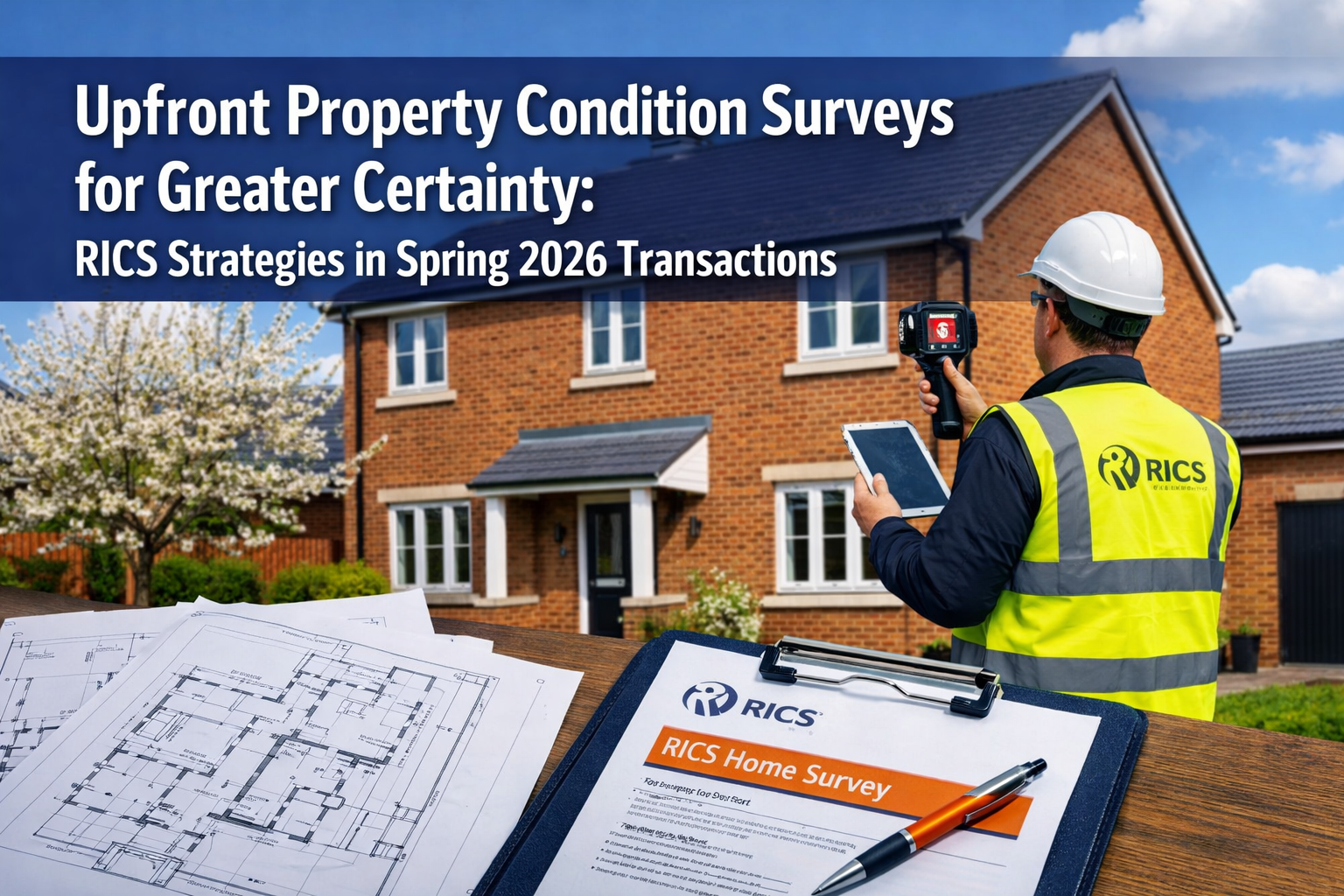
The surveying sector anticipates a substantial uplift in volumes across both lending and surveys in 2026, with lenders forecasting increased activity and a strong start to the year.[1] However, this optimism exists alongside broader market challenges, including falling buyer enquiries and rising borrowing costs that have dampened confidence.[4] Within this complex landscape, the proposed reforms offer a pathway to greater transaction certainty through early identification of property defects and realistic pricing expectations.
Key Takeaways
- 🏠 Government reforms propose mandatory upfront property condition assessments that would shift comprehensive building surveys to before offers are made, transforming transaction timelines
- 📊 RICS standards for spring 2026 include new AI guidelines, whole life carbon assessments, and enhanced CPD platforms to support surveyors adapting to increased early-stage workloads
- ⚡ Level 3 surveys conducted upfront reduce transaction risks by identifying urgent or dangerous building issues before buyers commit financially
- 💼 Professional capacity concerns require RICS talent pipeline initiatives and surveyor retraining to meet anticipated demand increases
- ✅ Market certainty improves when buyers receive detailed condition information early, reducing fall-throughs and renegotiations that plague traditional processes
Understanding the Proposed Upfront Survey Reforms
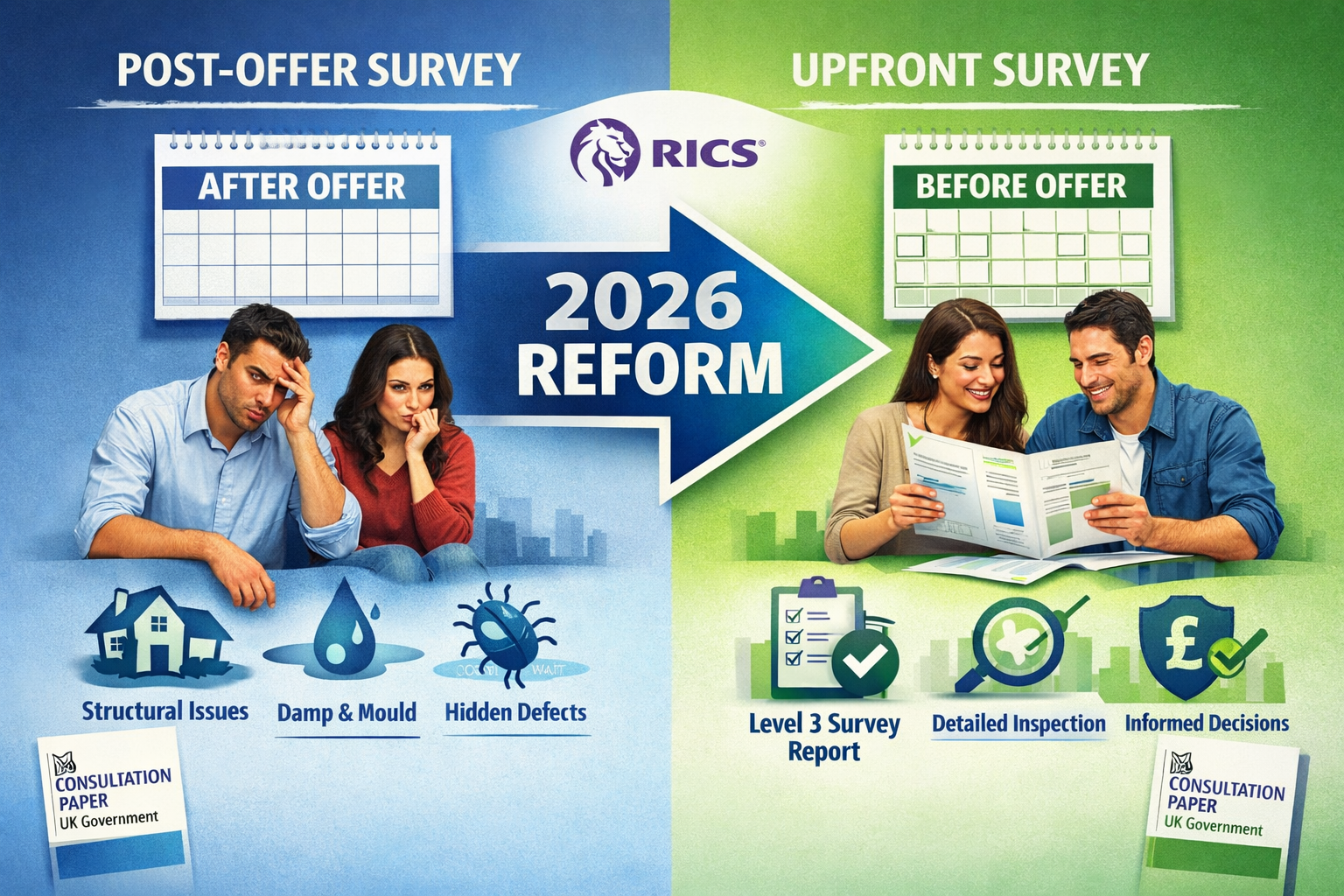
The UK government's consultation on upfront property assessments represents what industry experts describe as "transformative" changes for the surveying profession.[1] Unlike the current system where buyers typically commission surveys after making offers—often discovering significant defects that lead to renegotiations or collapsed sales—the proposed model requires sellers to provide comprehensive property condition information before marketing begins.
The Current System's Limitations
Traditional homebuying processes place surveys late in the transaction timeline, creating several problems:
- Financial commitment before information: Buyers make offers without full knowledge of property condition
- High fall-through rates: Surveys revealing unexpected defects cause renegotiations or abandoned purchases
- Wasted costs: Buyers lose survey fees, legal costs, and mortgage arrangement fees when transactions collapse
- Extended timelines: The discovery-renegotiation cycle adds weeks or months to completions
- Market inefficiency: Properties may be marketed at unrealistic prices that don't reflect true condition
How Upfront Surveys Change the Process
The proposed reforms would fundamentally alter this sequence by requiring property condition assessments before properties reach the market.[2] This shift means:
For Sellers:
- Commission comprehensive surveys before listing properties
- Provide detailed condition reports to all prospective buyers
- Price properties realistically based on actual condition
- Reduce renegotiation risks after offers are accepted
For Buyers:
- Access detailed property information before viewing or offering
- Make informed decisions based on comprehensive condition data
- Reduce risk of unexpected repair costs post-purchase
- Streamline transaction timelines with fewer surprises
For Surveyors:
- Significantly increased demand for surveys earlier in the process
- Need for faster building survey timeframes to accommodate marketing schedules
- Enhanced professional standards and quality assurance requirements
- Potential liability considerations when multiple parties rely on single reports
RICS Position on Reform Implementation
RICS has responded to the government consultation by emphasizing several key principles for successful implementation.[4] The organization supports improving upfront information availability but warns against piecemeal changes that could add cost or complexity without delivering genuine consumer benefits.
RICS recommendations include:
| Principle | Implementation Approach |
|---|---|
| Qualified Professionals | Ensure only appropriately qualified surveyors conduct upfront assessments |
| Proportionate Standards | Match survey depth to property type and transaction value |
| Consumer Protection | Maintain clear professional indemnity and quality assurance frameworks |
| Market Readiness | Phase implementation to allow sector capacity building |
| Cost Transparency | Provide clear guidance on who pays for upfront surveys |
The organization stresses that reforms must enhance rather than complicate the homebuying process, with particular attention to ensuring the surveying profession has sufficient capacity to meet increased demand.[1]
RICS Strategies and Standards for Spring 2026 Transactions
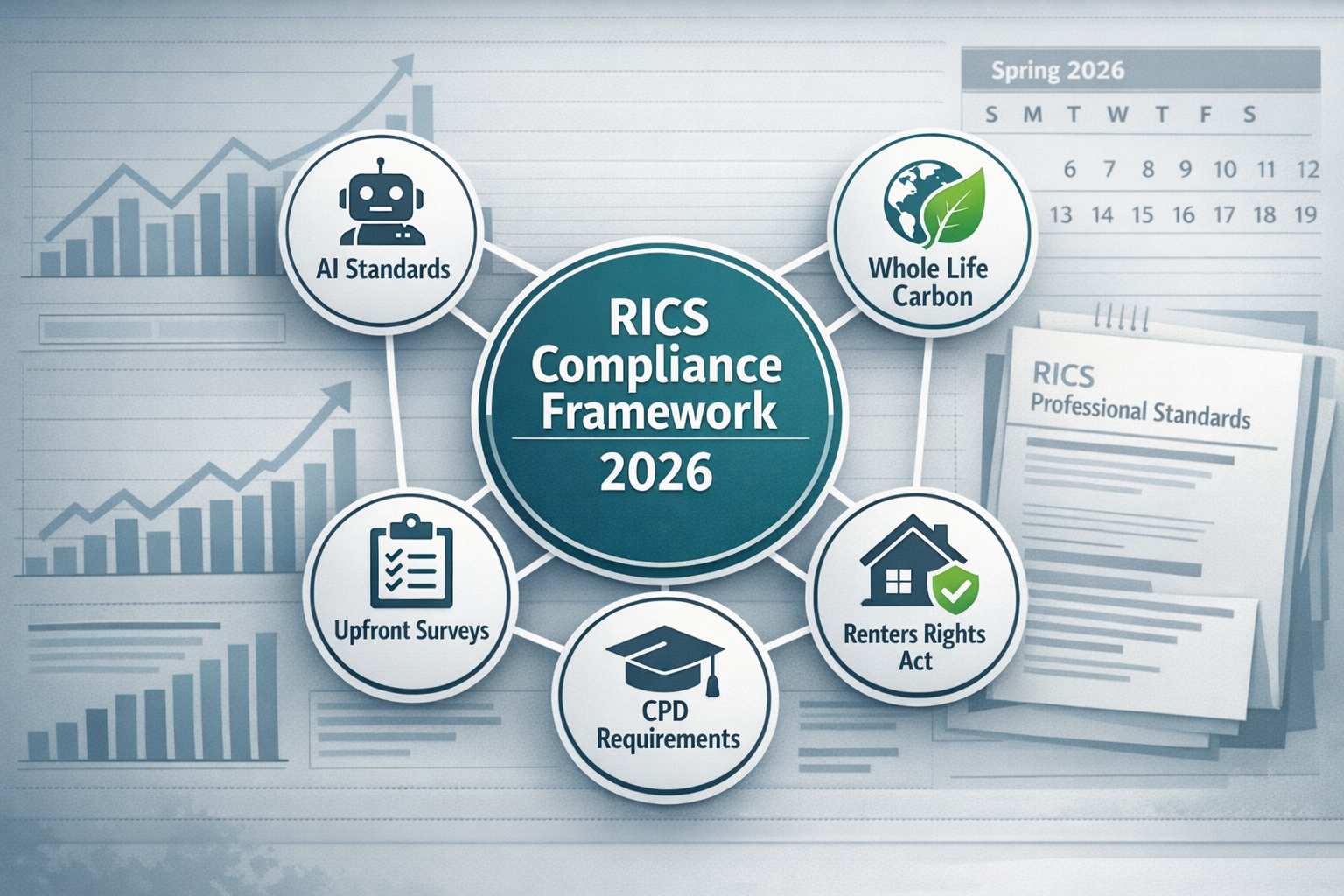
As the surveying sector prepares for potential upfront survey mandates, RICS has implemented several strategic initiatives and updated professional standards to support members through this transition period. These Upfront Property Condition Surveys for Greater Certainty: RICS Strategies in Spring 2026 Transactions frameworks provide essential guidance for practitioners adapting to evolving market demands.
New AI Standards in Surveying Practice
In March 2026, RICS introduced a new Professional Standard on the Responsible Use of AI in Surveying Practice, establishing guidelines for how artificial intelligence can be ethically and effectively integrated into survey work.[3] This standard addresses:
- Data quality requirements for AI-assisted property assessments
- Professional judgment preservation ensuring AI supports rather than replaces surveyor expertise
- Transparency obligations requiring disclosure when AI tools contribute to survey conclusions
- Liability frameworks clarifying responsibility when AI-generated insights inform recommendations
For upfront surveys, AI tools can potentially accelerate initial data gathering and analysis, helping surveyors manage increased workloads. However, the standard emphasizes that final professional judgments must remain with qualified chartered surveyors who understand building pathology and construction principles.
Whole Life Carbon Assessment Integration
RICS published its Professional Standard on Whole Life Carbon Assessment for the Built Environment (2nd Edition) and adopted PAS 2080:2023, establishing frameworks for measuring lifecycle carbon emissions.[3] While primarily focused on new construction and major refurbishments, these standards increasingly influence property condition surveys by:
- Assessing existing building fabric performance and retrofit potential
- Evaluating environmental issues affecting long-term sustainability
- Identifying energy efficiency improvements for budgeting repairs and restoration
- Supporting buyers' understanding of future regulatory compliance costs
For upfront surveys in spring 2026, incorporating basic whole life carbon considerations helps buyers understand not just immediate condition issues but also longer-term sustainability and compliance trajectories.
Enhanced CPD and Talent Pipeline Initiatives
Recognizing that upfront survey mandates would significantly increase demand for qualified surveyors, RICS has invested in capacity-building initiatives:[1]
🎓 Clearer Qualification Pathways
- Streamlined routes for graduates to achieve chartered status
- Enhanced mentorship programs connecting experienced and developing surveyors
- Accelerated assessment processes for qualified professionals
📱 Digital CPD Enhancement
- New RICS member app providing mobile access to learning resources
- Improved CPD tracking and compliance monitoring
- Specialized modules on upfront survey best practices and emerging standards
🔄 Retraining Programs
- Focused training for surveyors transitioning to higher-volume upfront work
- Quality assurance frameworks ensuring consistent standards across increased workloads
- Peer review mechanisms supporting professional development
These initiatives aim to ensure the profession can meet anticipated demand increases without compromising the quality standards essential for reliable property condition assessments.
Renters' Rights Act Implications
From May 1, 2026, the Renters' Rights Act introduced significant changes affecting surveyors' landlord clients:[3]
- Abolition of Section 21 evictions (no-fault evictions)
- Mandatory periodic tenancies replacing fixed-term agreements
- Advance rent deposit restrictions limited to one month's rent
- Awaab's Law expansion to private rented sector improving living condition standards
For surveyors conducting upfront property condition assessments on rental investments, these regulatory changes create additional considerations. Landlords purchasing properties need comprehensive information about potential compliance costs, necessary improvements to meet enhanced living standards, and realistic maintenance budgets under the new regulatory framework.
Implementing Level 3 Surveys for Maximum Transaction Certainty
While the government consultation considers various assessment levels, Level 3 full building surveys offer the most comprehensive approach to upfront property condition assessment. Understanding how to effectively implement these detailed surveys early in the transaction process provides maximum certainty for all parties in spring 2026 transactions.
What Level 3 Surveys Provide
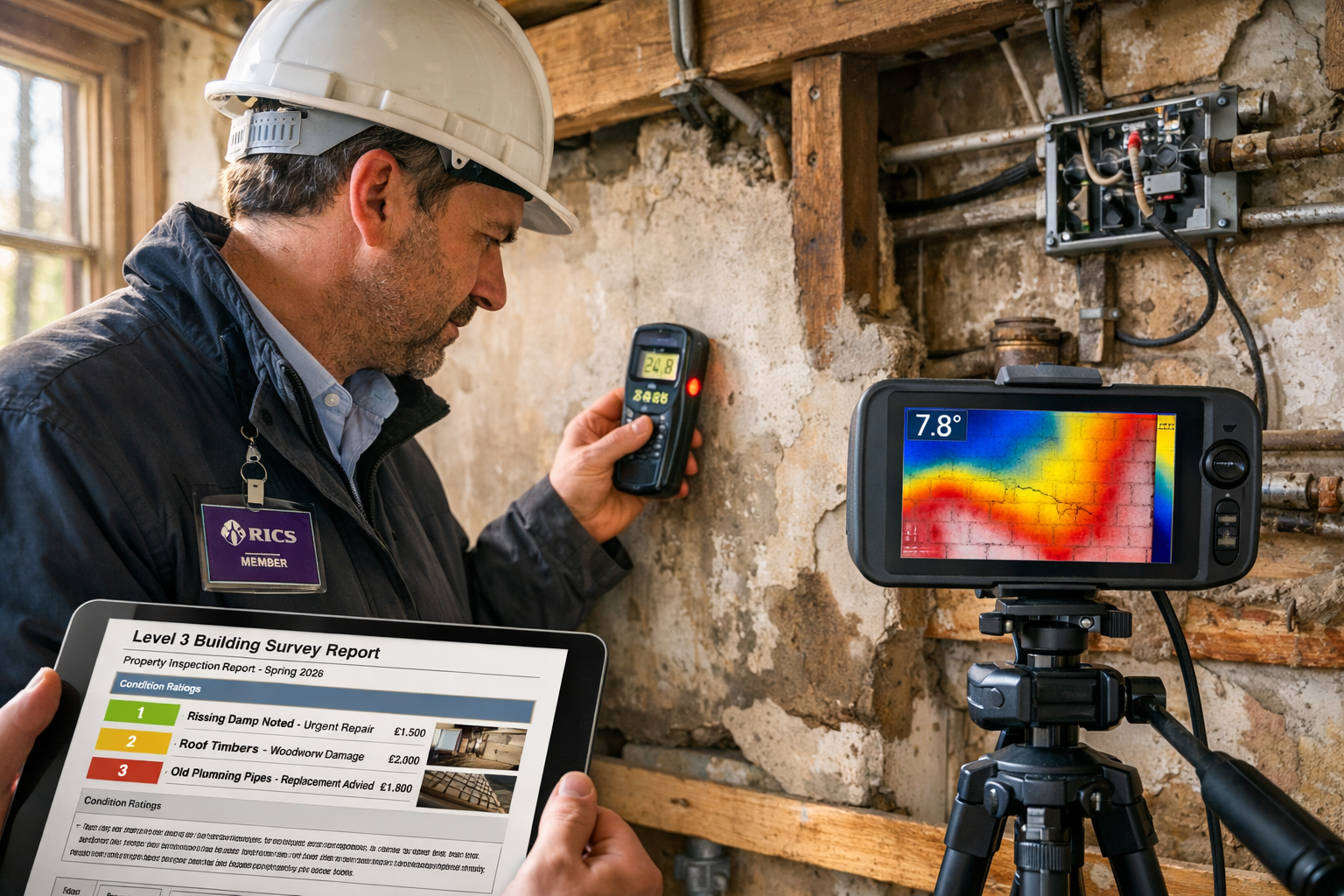
Level 3 building surveys represent the most thorough property condition assessment available, particularly suited for older properties, unusual constructions, or buildings requiring renovation. When conducted upfront, these surveys deliver:
Comprehensive Condition Analysis
- Detailed examination of all accessible areas including roof spaces, floor voids, and service installations
- Assessment of building materials and construction methods
- Identification of defects ranging from minor maintenance items to serious structural concerns
- Evaluation of previous alterations and their compliance with building regulations
Risk Identification and Prioritization
- Clear categorization of defects by urgency and severity
- Highlighting of urgent or dangerous building issues requiring immediate attention
- Identification of areas requiring further investigation by specialists
- Assessment of consequences of failing to act on identified issues
Financial Planning Support
- Detailed cost estimates for necessary repairs and improvements
- Guidance on budgeting repairs and restoration work
- Recommendations for sourcing extra advice from specialists
- Long-term maintenance planning information
Level 3 vs. Level 2: Choosing the Right Survey
Understanding the difference between Level 2 and Level 3 surveys helps determine the appropriate assessment depth for upfront property condition reporting:
Level 2 (HomeBuyer Report) 📋
- Suitable for conventional properties in reasonable condition
- Traffic light condition rating system
- Limited inspection of concealed areas
- More affordable option for straightforward properties
- What's included in a Level 2 survey covers standard condition elements
Level 3 (Full Building Survey) 🔍
- Recommended for older properties (typically pre-1900)
- Essential for properties requiring renovation or with known defects
- Detailed descriptive reporting of all elements
- Comprehensive assessment of concealed and accessible areas
- Necessary for unusual construction methods or materials
For upfront survey purposes in spring 2026, Level 3 surveys provide the comprehensive information needed to support confident purchasing decisions and realistic property pricing, particularly in uncertain market conditions where buyers seek maximum assurance.
Practical Implementation for Sellers
Sellers commissioning upfront surveys should consider:
Timing Considerations ⏰
- Commission surveys 2-4 weeks before intended marketing date
- Allow time for addressing critical issues before listing
- Consider building survey timeframes when planning marketing schedules
Strategic Approach 🎯
- Address urgent safety issues before marketing
- Obtain quotes for significant repair work to inform pricing
- Consider completing minor repairs to improve survey findings
- Prepare documentation for any recent improvement works
Disclosure Management 📄
- Provide complete survey reports to all prospective buyers
- Maintain transparency about known issues
- Update reports if circumstances change during marketing period
- Consider obtaining specialist reports for flagged investigation areas
Practical Implementation for Buyers
Even when sellers provide upfront surveys, buyers should:
Verify Survey Quality ✅
- Confirm surveyor holds appropriate RICS qualifications
- Check survey date and ensure findings remain current
- Verify survey scope matches property characteristics
- Review surveyor's professional indemnity insurance coverage
Conduct Additional Due Diligence 🔎
- Commission independent surveys for high-value or complex properties
- Obtain specialist assessments for flagged investigation areas
- Review EPC and MEES implications for energy efficiency
- Consider future planning potential and restrictions
Negotiate Informed Offers 💰
- Use detailed condition information to support offer pricing
- Request repair cost deductions based on survey findings
- Consider retention arrangements for unresolved investigation areas
- Evaluate long-term ownership costs revealed by survey
Managing Uncertain Market Conditions
Spring 2026's market uncertainty—with buyer enquiries falling to -39% and rising borrowing costs—makes comprehensive upfront surveys particularly valuable.[4] In volatile conditions:
For Buyers:
- Detailed condition information reduces risk in uncertain markets
- Comprehensive surveys support confident decision-making despite economic headwinds
- Early defect identification prevents costly surprises when finances are already stretched
For Sellers:
- Upfront surveys demonstrate transparency and build buyer confidence
- Realistic pricing based on actual condition attracts serious buyers
- Reduced renegotiation risk protects against extended marketing periods
For Surveyors:
- Enhanced quality standards maintain professional credibility
- Thorough documentation protects against liability in uncertain conditions
- Clear communication helps clients navigate complex decisions
Spring 2026 Market Context and Strategic Considerations
The implementation of Upfront Property Condition Surveys for Greater Certainty: RICS Strategies in Spring 2026 Transactions occurs within a specific market context that shapes their practical application and strategic value.
Current Market Dynamics
The residential property market in early 2026 presents mixed signals:[1][4]
Positive Indicators 📈
- Surveying sector expects volume uplift across lending and surveys
- Lenders forecast increased activity supporting strong year start
- Buy-to-let investment continues, particularly from institutional landlords
- Professional landlords understand survey value, supporting demand
Challenging Factors 📉
- New buyer enquiries fell to net balance of -39%
- Rising borrowing costs dampen buyer confidence
- Geopolitical uncertainty weighs on market sentiment
- Momentum loss in early 2026 compared to previous period
Within this environment, upfront property condition surveys serve as risk mitigation tools, providing the certainty buyers need to proceed confidently despite broader economic uncertainty.
Institutional and Professional Landlord Activity
Buy-to-let investment remains active in spring 2026, with professional and institutional landlords continuing acquisitions.[1] These sophisticated investors typically:
- Commission comprehensive surveys regardless of regulatory requirements
- Understand the value of detailed condition information for investment decisions
- Consider long-term maintenance costs and compliance requirements
- Evaluate properties against portfolio performance standards
For surveyors, this segment provides stable demand for high-quality upfront assessments, with clients who appreciate thorough professional work and understand its value in supporting sound investment decisions.
Preparing for Regulatory Implementation
While the government consultation continues, prudent market participants are preparing for potential mandatory upfront survey requirements:
Surveyors Should:
- Enhance capacity to handle increased early-stage survey volumes
- Develop standardized upfront survey report formats
- Establish quality assurance processes for higher-volume work
- Build specialist networks for sourcing extra advice on flagged issues
Estate Agents Should:
- Educate sellers about upfront survey benefits and processes
- Adjust marketing timelines to accommodate pre-listing surveys
- Develop systems for distributing survey reports to prospective buyers
- Train staff on interpreting survey findings for client discussions
Solicitors Should:
- Update transaction processes to incorporate upfront survey information
- Revise standard contracts to address upfront survey disclosure requirements
- Advise clients on liability and warranty considerations
- Prepare for accelerated transaction timelines when surveys are pre-completed
Strategic Advantages in Competitive Markets
Even before mandatory implementation, sellers who voluntarily commission upfront surveys gain competitive advantages:
Market Differentiation 🏆
- Properties with comprehensive condition reports stand out in listings
- Transparency builds buyer confidence and trust
- Professional presentation signals serious, motivated sellers
Transaction Efficiency ⚡
- Reduced time from offer to exchange when surveys are pre-completed
- Fewer renegotiations based on unexpected survey findings
- Lower fall-through rates protecting against extended marketing periods
Pricing Confidence 💷
- Realistic pricing based on actual condition attracts qualified buyers
- Justification for asking prices when condition is documented
- Reduced price reduction pressure when condition is transparent from outset
Integration with Broader Property Strategies
Upfront property condition surveys integrate with several related property management and investment strategies:
- Property development: Comprehensive condition assessments inform development feasibility
- Valuations: Detailed condition information supports accurate property valuation
- Investment analysis: Survey findings inform investment return calculations
- Maintenance planning: Condition assessments guide long-term property maintenance strategies
Understanding these connections helps property professionals leverage upfront surveys as strategic tools rather than mere compliance requirements.
Conclusion
The proposed reforms around Upfront Property Condition Surveys for Greater Certainty: RICS Strategies in Spring 2026 Transactions represent a fundamental shift in how UK property transactions unfold. By moving comprehensive building assessments from their traditional post-offer position to the early stages of property marketing, these changes promise greater transaction certainty, reduced fall-through rates, and more informed decision-making for all parties.
RICS has responded to this transformative moment with updated professional standards covering AI use, whole life carbon assessment, and enhanced CPD platforms, while advocating for proportionate implementation that delivers genuine consumer benefits without adding unnecessary complexity.[1][3][4] The organization's talent pipeline initiatives aim to ensure the profession has sufficient capacity to meet anticipated demand increases as reforms take effect.
For market participants navigating spring 2026's uncertain conditions—with falling buyer enquiries but positive surveying sector expectations—comprehensive Level 3 building surveys conducted upfront provide the detailed property condition information needed to proceed confidently despite economic headwinds.[1][4] These assessments identify defects early, support realistic pricing, and reduce the renegotiation risks that plague traditional transaction processes.
Actionable Next Steps
For Property Sellers:
- Commission a comprehensive Level 3 building survey before marketing your property
- Address urgent safety issues identified in the survey before listing
- Use survey findings to price your property realistically based on actual condition
- Provide complete survey reports to all prospective buyers to build confidence
For Property Buyers:
5. Request upfront survey reports from sellers and verify surveyor qualifications
6. Commission independent assessments for high-value or complex properties
7. Use detailed condition information to negotiate informed offers
8. Budget appropriately for repairs and maintenance identified in surveys
For Surveyors:
9. Enhance your capacity to handle increased early-stage survey demand
10. Complete RICS CPD modules on upfront survey best practices and new standards
11. Develop quality assurance processes for higher-volume work
12. Build specialist networks for comprehensive areas requiring further investigation
The shift toward upfront property condition surveys represents more than regulatory change—it's an opportunity to fundamentally improve transaction certainty, reduce market inefficiencies, and support better-informed property decisions in an increasingly complex market environment. By embracing these strategies in spring 2026, property professionals position themselves at the forefront of a transforming sector.
References
[1] Surveying In 2026 Reform Recovery And Renewed Demand – lrg.co.uk
[2] Homebuying Process Reforms 2026 Impact On Early Building Surveys And Valuation Timing – nottinghillsurveyors.com
[3] pbctoday.co.uk – pbctoday.co.uk
[4] Uk Influence And Advocacy Update January 2026 – rics.org