

Building surveyors face unprecedented pressure in Spring 2026: property enquiries have fallen 15% year-on-year, geopolitical uncertainty continues to dampen buyer confidence, and price expectations are softening across key UK markets. Yet amid this volatility, a new generation of Transaction Certainty Tools for Building Surveyors: Risk Mitigation Strategies in Volatile Spring 2026 Markets is emerging—standardized protocols, enhanced documentation requirements, and transparent reporting frameworks that can transform uncertainty into competitive advantage.
The introduction of the 2026 ALTA/NSPS Minimum Standard Detail Requirements on February 23, 2026, represents more than a technical update.[1] It signals a fundamental shift toward data-driven risk mitigation that building surveyors can leverage to protect clients, reduce transaction failures, and maintain deal momentum when market conditions turn challenging.

Key Takeaways
- ✅ Enhanced documentation standards effective February 23, 2026, require surveyors to obtain adjoining property deeds and provide clearer encumbrance disclosures[6]
- 📊 Transparency protocols now mandate explicit statements about easements, encroachments, and relative positional precision to reduce underwriting surprises[4]
- 🔄 Coordination requirements between surveyors and title insurers have strengthened, enabling faster resolution of title issues[4]
- 🛡️ Certification flexibility allows surveyors to certify directly to lenders' successors and assigns, supporting complex financing structures[3]
- 💼 Strategic implementation of these tools helps building surveyors differentiate their services and maintain transaction velocity during market downturns
Understanding the 2026 Market Volatility Context
Spring 2026 presents a challenging environment for property transactions across the UK. Weak buyer enquiries, combined with continued geopolitical tensions and inflation concerns, have created hesitancy among purchasers and lenders alike. In this climate, transaction certainty becomes the critical differentiator between deals that complete and those that collapse.
Building surveyors who understand and implement the latest risk mitigation strategies can offer clients something invaluable: confidence. When buyers and lenders trust the accuracy, completeness, and transparency of survey documentation, they move forward with greater speed and conviction.
The timing of the 2026 ALTA/NSPS standards update—though primarily focused on US land title surveys—provides valuable insights for UK building surveyors seeking to enhance their own practices. The principles underlying these changes—documentation rigor, transparency, and coordination—are universally applicable to professional surveying practice.
The Cost of Transaction Failure
When property transactions fail, the financial and emotional costs are substantial. Buyers lose survey fees, legal costs, and mortgage arrangement fees. Sellers face extended marketing periods and potential price reductions. Building surveyors risk reputational damage and potential professional liability claims.
According to industry estimates, transaction failures cost the UK property market hundreds of millions annually. Many of these failures stem from preventable issues: undisclosed encumbrances, boundary disputes, unclear easements, or inadequate documentation of property conditions.
By implementing robust Transaction Certainty Tools for Building Surveyors: Risk Mitigation Strategies in Volatile Spring 2026 Markets, professionals can significantly reduce these failure rates—even when broader market conditions remain challenging.
Enhanced Documentation Standards: The Foundation of Risk Mitigation
The 2026 ALTA/NSPS standards introduce several documentation requirements that building surveyors can adapt to strengthen their own practice protocols.[1][2]
Adjoining Property Research
One significant change requires surveyors to obtain copies of deeds for adjoining properties themselves—a responsibility that previously fell to title insurers.[6] This shift places greater burden on surveyors but also provides greater control over the quality and completeness of boundary analysis.
UK building surveyors can implement similar protocols by:
- Requesting Land Registry title documents for adjoining properties as standard practice
- Identifying potential boundary discrepancies early in the survey process
- Documenting gaps or overlaps between surveyed property and adjacent parcels
- Providing clients with comprehensive boundary risk assessments
This proactive approach helps identify issues before they derail transactions. When conducting a Level 3 Full Building Survey, incorporating adjoining property research adds minimal time but substantial value.
Title Evidence Requirements
The updated standards require surveyors to receive a copy of the most recent title commitment or other title evidence satisfactory to the insurer.[6] This clarifies the foundational purpose of comprehensive surveys: to verify that physical property conditions align with legal title documentation.
Building surveyors should establish clear protocols for:
- Requesting title documents at the outset of every survey engagement
- Cross-referencing physical observations against recorded easements, covenants, and restrictions
- Flagging discrepancies immediately to clients and their legal representatives
- Documenting the source and date of all title evidence reviewed
These practices ensure surveys provide genuine transaction certainty rather than merely describing physical conditions in isolation from legal context.
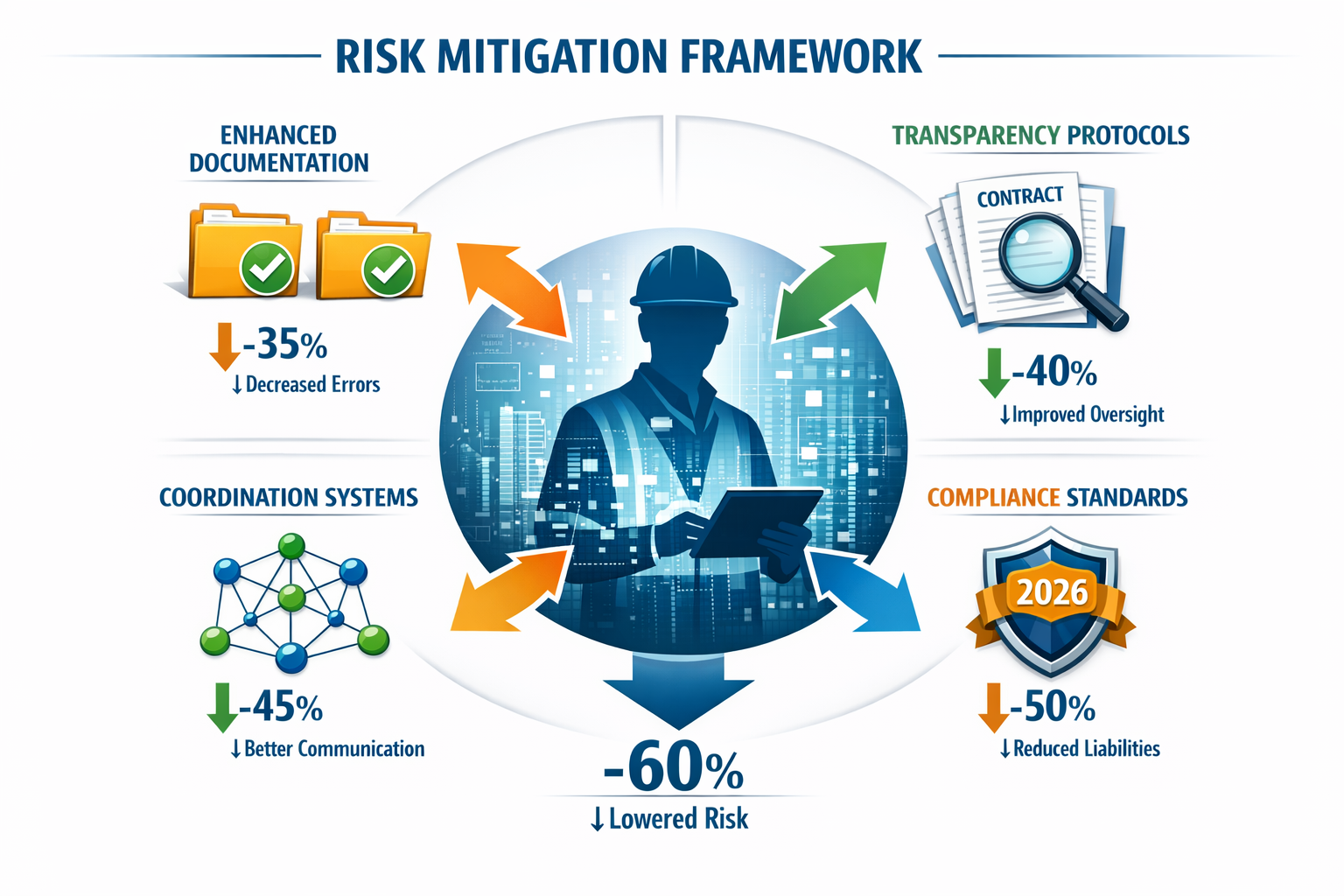
Transparency Protocols: Clear Communication Reduces Risk
Perhaps the most significant advancement in Transaction Certainty Tools for Building Surveyors: Risk Mitigation Strategies in Volatile Spring 2026 Markets involves enhanced transparency requirements around encumbrances, easements, and accuracy expectations.
Easement Disclosure Standards
The 2026 standards mandate that surveys explicitly state whether easements are:
- ✔️ Shown on the survey
- ❌ Cannot be located physically
- 📋 Blanket easements (affecting multiple properties)
- 📄 Illegible in recorded documents
- ⭕ Do not affect the surveyed property[4]
This five-category framework eliminates ambiguity and prevents costly misunderstandings. UK building surveyors can adopt similar disclosure protocols, ensuring clients understand exactly what easement risks exist and which require further investigation.
When surveyors discover recorded easements not listed in title materials, they must now notify title insurers, allowing determination of whether such easements should be plotted.[4] This coordination prevents surprises during the underwriting process that might otherwise delay or derail financing.
Relative Positional Precision
The updated standards require enhanced transparency regarding Relative Positional Precision (RPP)—a measure of expected accuracy of boundary locations.[5] Surveyors must clearly disclose:
- The accuracy standard used for the survey
- How the surveyed property relates to adjoining parcels
- Identifiable gaps or overlaps between properties
- Limitations of the survey methodology
For UK building surveyors, implementing similar transparency around measurement accuracy and boundary confidence helps manage client expectations and reduces liability exposure. When clients understand the inherent limitations of survey techniques, they make better-informed decisions about accepting risk or pursuing additional investigation.
Understanding which building survey you need becomes clearer when surveyors explain accuracy expectations upfront.
Encroachment and Property-Use Disclosures
The 2026 standards introduce more standardized encroachment and property-use disclosures that materially affect underwriting and transactional risk allocation.[3] Building surveyors should document:
- Physical encroachments (structures, fences, driveways crossing boundaries)
- Encroachments onto the surveyed property from adjacent parcels
- Current property use and any deviations from permitted use
- Access arrangements and potential right-of-way issues
Clear, standardized reporting of these issues enables faster resolution. When buyers, sellers, and lenders receive consistent, comprehensive information, they can assess risk accurately and negotiate appropriate contractual protections.
Coordination Systems: Strengthening Professional Collaboration
Effective Transaction Certainty Tools for Building Surveyors: Risk Mitigation Strategies in Volatile Spring 2026 Markets require seamless coordination between surveyors, legal professionals, title insurers, and lenders.
Surveyor-Title Insurer Coordination
The 2026 standards place stronger emphasis on coordination between surveyors and title insurers.[4] This collaboration ensures:
- Alignment between physical survey findings and title commitments
- Early identification of title defects that require curative action
- Efficient resolution of encumbrance questions
- Reduced transaction delays from miscommunication
UK building surveyors can implement similar coordination protocols by:
- Establishing direct communication channels with clients' solicitors
- Providing preliminary findings before final report issuance
- Participating in pre-completion meetings to address survey concerns
- Offering post-survey consultation to resolve emerging issues
This collaborative approach transforms surveyors from report providers into transaction facilitators—a valuable differentiation in competitive markets.
Lender Certification Flexibility
The updated standards allow surveyors to expressly certify surveys to lenders' successors and assigns, including syndicated loan and secondary market structures.[3] This addresses common commercial financing practices where loans are sold or transferred after origination.
For building surveyors working with commercial or high-value residential properties, offering flexible certification provides lenders greater confidence and may facilitate more favorable financing terms for clients.
When conducting surveys for properties requiring budgeting for repairs and restoration, clear certification to current and future lenders ensures the survey retains value throughout the ownership period.
Table A Revisions: Negotiated Items
The 2026 standards include significant Table A revisions that clarify technology, accuracy communication (Item 15), relate survey observations specifically (Item 20), and establish newly defined negotiated items (Item 21).[2]
Table A in ALTA/NSPS surveys lists optional items that clients may request beyond minimum standards. UK building surveyors can develop similar à la carte service menus that allow clients to customize survey scope based on their specific risk tolerance and transaction complexity.
| Standard Survey Elements | Optional Add-Ons | Premium Services |
|---|---|---|
| Boundary verification | Adjoining property research | Comprehensive title analysis |
| Structural condition assessment | Utilities mapping | Environmental risk screening |
| Basic encumbrance review | Easement location verification | Legal covenant interpretation |
| Standard accuracy reporting | Enhanced precision measurements | 3D digital modeling |
This tiered approach enables clients to balance cost against risk mitigation needs—particularly valuable in volatile markets where buyers seek maximum protection without unnecessary expense.
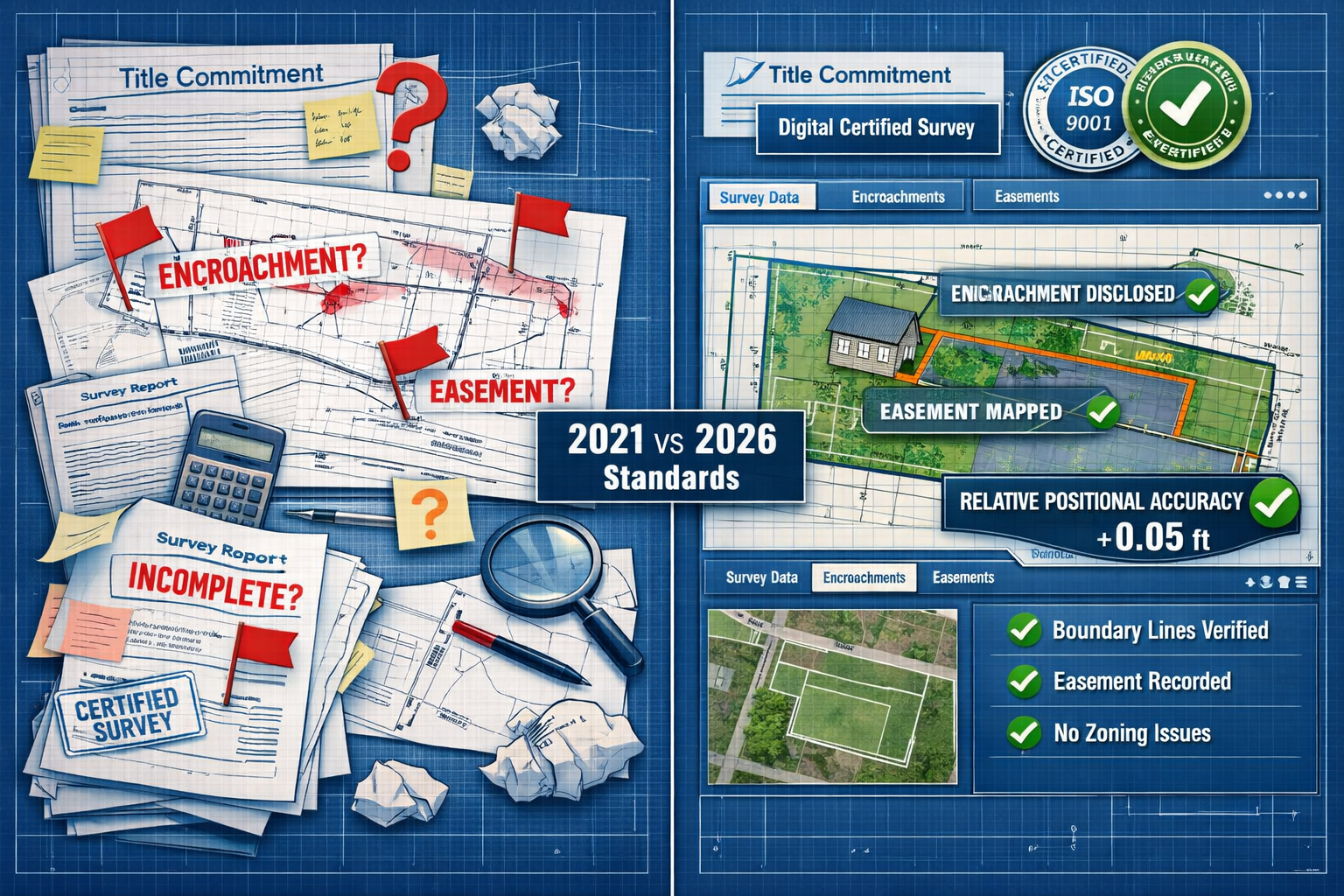
Implementing Transaction Certainty Tools in Your Practice
Building surveyors ready to implement Transaction Certainty Tools for Building Surveyors: Risk Mitigation Strategies in Volatile Spring 2026 Markets should follow a structured approach:
Step 1: Update Standard Operating Procedures
Review and revise internal procedures to incorporate:
- 📋 Enhanced documentation checklists covering title evidence, adjoining properties, and encumbrance verification
- 🔍 Quality control protocols ensuring consistent application of transparency standards
- 📞 Coordination workflows defining communication touchpoints with solicitors, lenders, and title professionals
- 📊 Reporting templates that standardize disclosure of easements, encroachments, and accuracy limitations
Step 2: Invest in Technology and Training
Modern surveying technology supports enhanced documentation and transparency:
- Digital measurement tools with documented accuracy specifications
- Geographic Information Systems (GIS) for boundary analysis and easement mapping
- Document management platforms ensuring secure storage and retrieval of title evidence
- Collaborative software enabling real-time communication with transaction stakeholders
Equally important is staff training on new protocols. All team members should understand the rationale behind enhanced documentation requirements and their role in transaction risk mitigation.
Step 3: Communicate Value to Clients
Many clients—particularly in volatile markets—will readily pay for enhanced certainty. Building surveyors should clearly articulate how upgraded protocols:
- ⚡ Reduce transaction failure risk through comprehensive documentation
- 💰 Prevent costly surprises by identifying issues early
- ⏱️ Accelerate completion through proactive coordination
- 🛡️ Provide legal protection via transparent disclosure of limitations
When discussing how long a building survey takes, explain that enhanced protocols may add modest time but deliver substantial risk reduction.
Step 4: Monitor and Refine
Track key performance indicators to assess the effectiveness of new protocols:
- Transaction completion rates for surveyed properties
- Client satisfaction scores related to survey comprehensiveness
- Post-survey inquiry volume (lower volume suggests clearer initial reporting)
- Professional liability claims (should decrease with enhanced documentation)
Use this data to continuously refine procedures and demonstrate value to clients and referral partners.
Sector-Specific Applications
Different property types and transaction contexts require tailored application of Transaction Certainty Tools for Building Surveyors: Risk Mitigation Strategies in Volatile Spring 2026 Markets.
Residential Transactions
For standard residential purchases, focus on:
- Clear boundary verification and encroachment disclosure
- Easement identification affecting property use and value
- Coordination with solicitors on title questions
- Transparent reporting of survey accuracy and limitations
Buyers considering whether they need a survey on a new build benefit from understanding that even new properties require verification of boundaries, easements, and compliance with planning permissions.
Commercial Properties
Commercial transactions demand more extensive protocols:
- Comprehensive adjoining property research
- Detailed utilities and infrastructure mapping
- Zoning and permitted use verification
- Enhanced coordination with commercial lenders and title insurers
The certification flexibility introduced in 2026 standards particularly benefits commercial transactions where loan syndication or sale is common.[3]
Development Sites
Property development projects require maximum transaction certainty:
- Detailed topographic and boundary surveys
- Comprehensive easement and covenant analysis
- Access rights verification
- Environmental constraint identification
Developers working with chartered surveyors in London or other major markets expect sophisticated risk mitigation protocols that prevent costly delays once construction begins.
Heritage and Listed Buildings
Properties with heritage designations require specialized attention:
- Conservation area restrictions
- Listed building consent requirements
- Historical easements and rights of way
- Structural condition assessment considering preservation obligations
When conducting surveys on heritage properties, building pathology expertise combined with enhanced documentation protocols provides comprehensive risk assessment.
Regulatory Compliance and Professional Standards
While the 2026 ALTA/NSPS standards apply specifically to US land title surveys, UK building surveyors operate under their own regulatory framework:
RICS Standards
The Royal Institution of Chartered Surveyors (RICS) sets professional standards for UK surveyors. The principles underlying Transaction Certainty Tools for Building Surveyors: Risk Mitigation Strategies in Volatile Spring 2026 Markets align closely with RICS requirements for:
- Competence in survey methodology and property assessment
- Transparency in reporting limitations and uncertainties
- Integrity in professional relationships and coordination
- Service quality meeting client needs and expectations
EPC and MEES Compliance
Enhanced documentation protocols should include verification of EPC ratings and MEES compliance, particularly for rental properties where minimum energy efficiency standards apply.
Building Safety Act
Following the Building Safety Act implementation, surveyors must pay particular attention to:
- Fire safety provisions in multi-occupancy buildings
- Building control compliance documentation
- Structural warranty information
- Cladding and external wall system verification
Enhanced documentation protocols naturally incorporate these regulatory requirements, providing clients comprehensive risk assessment.
Navigating the Transition Period
The 2026 ALTA/NSPS standards include specific transition provisions: surveys on contracts signed before February 23, 2026, may use 2021 Standards if clearly documented with the client, title company, and noted in the contract.[2] However, projects undertaken long after that date do not qualify for this exception.[2]
UK building surveyors implementing enhanced protocols should similarly consider transition management:
Grandfather Existing Engagements
For survey engagements contracted before implementing new protocols, clearly document which standards apply. Avoid mid-engagement scope changes that could create confusion or liability exposure.
Communicate Changes to Referral Partners
Solicitors, estate agents, and lenders who regularly refer survey work need advance notice of enhanced protocols. Explain:
- What's changing and why
- Timeline for implementation
- Impact on cost and turnaround time (if any)
- Benefits for their clients and transaction success rates
Phase Implementation
Rather than implementing all enhancements simultaneously, consider phased rollout:
- Phase 1: Enhanced documentation (title evidence, adjoining property research)
- Phase 2: Transparency protocols (standardized easement and encroachment disclosure)
- Phase 3: Coordination systems (formal communication protocols with transaction stakeholders)
This approach allows staff to adapt gradually and systems to be refined based on early experience.
Cost-Benefit Analysis
Implementing Transaction Certainty Tools for Building Surveyors: Risk Mitigation Strategies in Volatile Spring 2026 Markets involves investment in training, technology, and potentially extended survey time. However, the benefits typically far exceed costs:
Direct Financial Benefits
- 💷 Premium pricing for enhanced service quality
- 📈 Increased referrals from satisfied clients and transaction partners
- 🎯 Reduced liability claims through comprehensive documentation
- ⚡ Higher completion rates generating repeat business
Competitive Advantages
- 🏆 Market differentiation in crowded surveying markets
- 🤝 Stronger professional relationships with solicitors and lenders
- 📊 Data-driven reputation for accuracy and reliability
- 🔄 Resilience during market downturns when transaction certainty becomes paramount
Risk Mitigation Value
The true value of enhanced protocols becomes apparent when they prevent transaction failures. A single prevented failure—avoiding lost fees, reputational damage, and potential litigation—can justify years of protocol investment.
Future Trends in Transaction Certainty
Looking beyond Spring 2026, several trends will likely shape the evolution of Transaction Certainty Tools for Building Surveyors:
Digital Integration
Expect continued integration of surveying with digital property platforms, enabling:
- Real-time survey data sharing with transaction stakeholders
- Automated cross-referencing of survey findings with title databases
- Digital certification and verification systems
- Blockchain-based survey records ensuring authenticity and permanence
Predictive Risk Analytics
Advanced data analytics will enable surveyors to provide predictive risk assessments based on historical patterns:
- Likelihood of boundary disputes in specific areas
- Common easement complications by property type
- Typical cost ranges for identified defects
- Transaction failure probability based on survey findings
Enhanced Client Portals
Client-facing technology will improve transparency and engagement:
- Interactive survey reports with clickable elements
- Video walkthroughs highlighting key findings
- Real-time Q&A during survey process
- Post-survey monitoring and updates
Sustainability Integration
As environmental concerns intensify, transaction certainty tools will increasingly incorporate:
- Climate risk assessments (flood, subsidence, extreme weather)
- Energy efficiency verification and improvement recommendations
- Sustainable materials identification
- Carbon footprint calculations
Building surveyors who stay ahead of these trends will maintain competitive advantage as market conditions evolve.
Conclusion
Transaction Certainty Tools for Building Surveyors: Risk Mitigation Strategies in Volatile Spring 2026 Markets represent more than technical compliance updates—they embody a fundamental shift toward transparency, coordination, and comprehensive risk assessment that serves clients, protects professionals, and strengthens the entire property transaction ecosystem.
The 2026 ALTA/NSPS standards, while specific to US practice, offer valuable lessons for UK building surveyors: enhanced documentation prevents surprises, transparent disclosure manages expectations, and proactive coordination accelerates transactions. In volatile markets characterized by weak enquiries and softening prices, these capabilities become essential differentiators.
Building surveyors who implement robust transaction certainty protocols position themselves as indispensable transaction partners rather than mere report providers. They reduce failure rates, command premium fees, and build lasting relationships with clients and referral sources.
Next Steps
To begin implementing Transaction Certainty Tools for Building Surveyors: Risk Mitigation Strategies in Volatile Spring 2026 Markets in your practice:
- Audit current procedures against the enhanced standards discussed in this article
- Identify gaps in documentation, transparency, or coordination protocols
- Develop implementation plan with clear timelines and responsibilities
- Invest in necessary technology and staff training
- Communicate changes to clients and referral partners
- Monitor results and refine protocols based on experience
The volatile Spring 2026 market presents challenges, but also opportunities for building surveyors who embrace enhanced standards and deliver genuine transaction certainty. Those who act decisively will thrive regardless of broader market conditions.
For expert guidance on implementing these strategies, consider consulting with chartered surveyors who specialize in comprehensive risk assessment and transaction support.
References
[1] Alta Surveys Revised 2026 – bvna.com
[2] 2026 Alta Nsps Standards Now In Effect – bealsandthomas.com
[3] 2026 Alta Nsps Survey Standards Update Key Takeaways For Commercial Real Estate – taftlaw.com
[4] 2026 Alta Survey Standards Updates – hklaw.com
[5] New 2026 Alta Nsps Survey Standards What Developers And Counsel Should Know – hallrender.com
[6] Five Key Updates 2026 Altansps Land Title Survey Standards – westwoodps.com