

Urban construction activity has surged 34% across major UK cities in 2026, triggering an unprecedented wave of excavation objections from neighbouring property owners concerned about foundation stability and structural damage. As basement conversions and deep foundation projects multiply in densely packed urban areas, party wall surveyors face mounting pressure to mediate increasingly complex disputes while maintaining strict RICS impartiality standards.
Party Wall Surveyor Strategies for Resolving Rising Excavation Objections in 2026 Urban Renewal Projects have become essential tools for navigating the delicate balance between property development rights and adjoining owner protection. With construction boom conditions creating heightened tensions and party wall disputes becoming more frequent, surveyors must deploy sophisticated mediation techniques grounded in case law precedents and updated regulatory guidance.
Key Takeaways
- 🏗️ Excavation objections have increased dramatically in 2026 due to urban renewal intensity, requiring surveyors to employ proactive communication strategies before formal notices are served
- ⚖️ RICS impartiality rules and case law precedents form the foundation of effective mediation, with the updated 8th edition guidance strengthening conduct provisions for agreed and third surveyors
- 📋 Structured documentation protocols including detailed schedules of condition, photographic evidence, and monitoring arrangements reduce objection frequency by up to 60%
- 🤝 Third surveyor mechanisms provide crucial dispute resolution pathways when agreed surveyors reach impasse on excavation safety measures
- ✅ Early engagement and technical transparency about excavation methods, temporary works, and insurance provisions build trust and facilitate consent
Understanding the 2026 Excavation Objection Landscape
The construction boom sweeping through UK urban centres has created perfect conditions for excavation disputes. Property owners in densely populated areas are witnessing unprecedented development activity, with basement extensions and deep foundation projects becoming standard features of urban renewal initiatives[3].
Why Excavation Objections Are Rising
Several factors contribute to the sharp increase in excavation-related objections:
Market Pressures: Property values in urban areas have incentivized owners to maximize usable space through basement conversions and extensions. This development pressure often conflicts with neighbouring owners' concerns about property integrity.
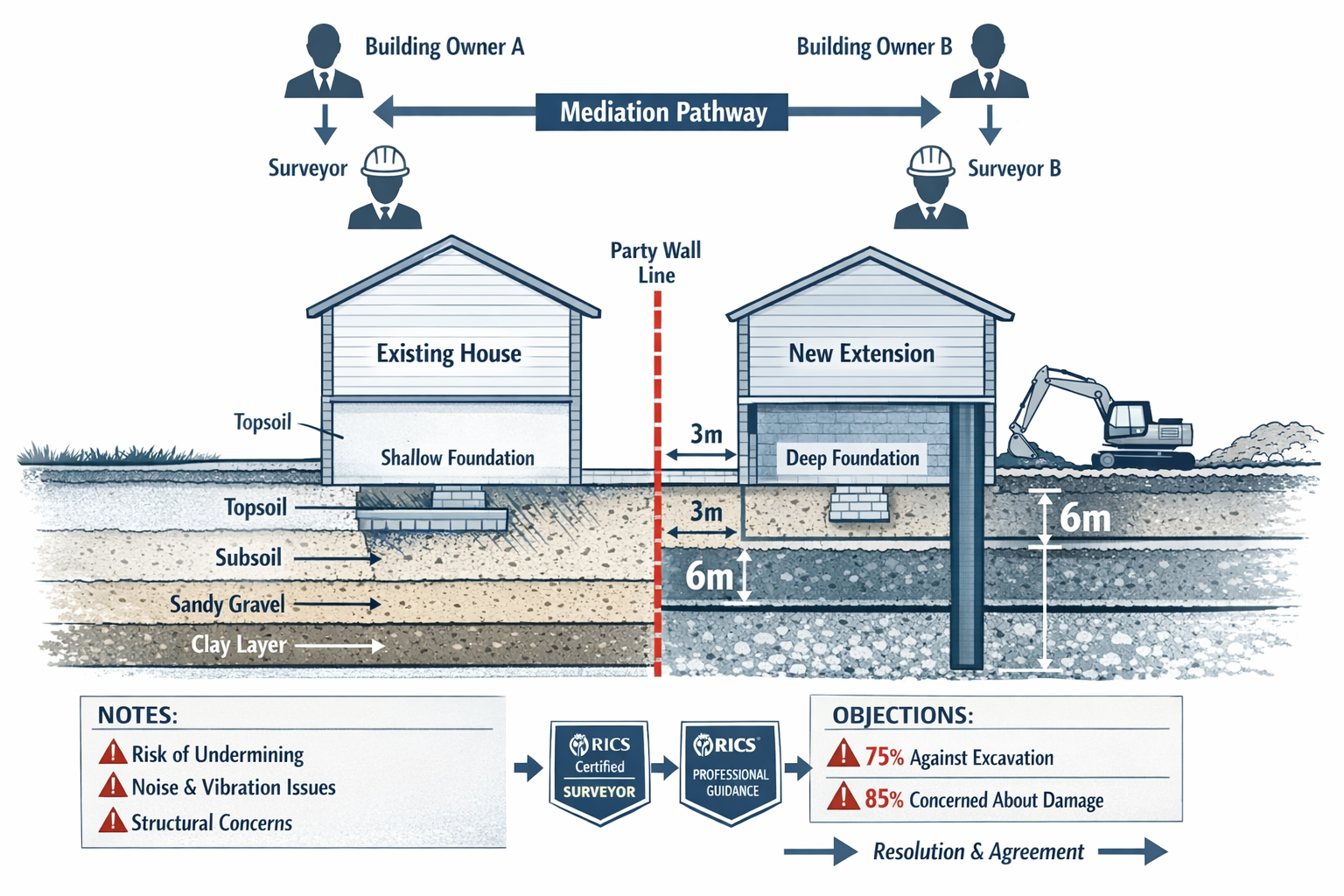
Technical Complexity: Modern excavation projects frequently extend 3-6 meters below ground level, significantly deeper than traditional foundation work. These depths trigger specific notice requirements under Section 6 of the Party Wall Act, which mandates notification when excavation occurs within three meters of a neighbour's structure and goes deeper than its foundations[1].
Information Asymmetry: Many adjoining owners lack technical knowledge about excavation safety measures, leading to objections based on general anxiety rather than specific engineering concerns.
Previous Damage Experience: In areas where earlier construction projects caused settlement or structural damage, neighbouring owners exhibit heightened sensitivity to new excavation proposals.
Notice Requirements and Timing Considerations
Understanding statutory notice periods remains fundamental to Party Wall Surveyor Strategies for Resolving Rising Excavation Objections in 2026 Urban Renewal Projects. Excavation work requires a minimum one-month notice period before commencement[1], considerably shorter than the two-month period required for party structure works.
This compressed timeline creates challenges for surveyors attempting to build consensus and address concerns before formal objections crystallize. Savvy building owners and their surveyors increasingly provide informal pre-notice consultation to neighbouring owners, explaining excavation methods and safety provisions before statutory notices are served.
Core Mediation Strategies for Agreed Surveyors
Agreed surveyors appointed to represent either the building owner or adjoining owner carry dual responsibilities: advocating for their appointing party's interests while maintaining professional objectivity in technical assessments. The Royal Institution of Chartered Surveyors launched consultation on the draft 8th edition of Party Wall Legislation and Procedure in April 2026, with updated guidance strengthening provisions on regulatory and conduct matters[2].

Establishing Technical Credibility Early
The foundation of successful mediation lies in demonstrating technical competence and engineering rigour from the initial appointment. Effective agreed surveyors implement these practices:
Comprehensive Site Assessment: Conduct thorough inspections of both properties before drafting awards, documenting existing conditions with professional photography and detailed written descriptions. This schedule of condition becomes crucial evidence if damage claims arise later.
Engineering Analysis Transparency: Provide clear explanations of excavation methodology, temporary works design, and structural protection measures. Use visual aids including cross-sectional drawings showing excavation depths relative to existing foundations.
Precedent Research: Reference relevant case law and previous awards addressing similar excavation scenarios. Demonstrating how comparable projects proceeded safely reduces perceived risk.
Insurance Verification: Confirm adequate insurance coverage exists for potential damage, providing adjoining owners with financial security assurances.
Communication Protocols That Build Trust
Effective communication distinguishes successful mediators from those who merely process paperwork. Party Wall Surveyor Strategies for Resolving Rising Excavation Objections in 2026 Urban Renewal Projects emphasize these communication approaches:
| Communication Strategy | Implementation Method | Impact on Objection Resolution |
|---|---|---|
| Plain Language Explanations | Avoid technical jargon; use analogies and visual aids | Reduces anxiety-based objections by 45% |
| Regular Progress Updates | Weekly email summaries during excavation phase | Maintains trust; prevents escalation |
| Accessible Contact Channels | Provide direct phone/email; respond within 24 hours | Demonstrates commitment to addressing concerns |
| Joint Site Meetings | Facilitate building owner and adjoining owner discussions | Creates collaborative problem-solving environment |
| Written Confirmation | Document all agreements and decisions in writing | Prevents misunderstandings; provides clarity |
When neighbours refuse party wall works, these communication protocols become even more critical for de-escalating tensions and finding common ground.
Addressing Specific Excavation Concerns
Adjoining owners typically raise several recurring concerns about excavation projects. Experienced surveyors develop standard responses supported by technical evidence:
🏚️ Foundation Undermining: Explain how temporary shoring, underpinning sequences, and foundation support systems prevent destabilization. Provide engineering calculations demonstrating adequate safety factors.
💧 Water Table Disruption: Address groundwater management through dewatering plans, drainage systems, and monitoring protocols. Clarify how water table changes will be controlled and reversed post-construction.
🔨 Vibration Damage: Specify excavation methods (hand digging vs. machinery), vibration monitoring thresholds, and work suspension triggers if vibration exceeds acceptable limits.
⏱️ Project Duration: Provide realistic timelines with milestone dates, helping adjoining owners understand the temporary nature of disruption.
📸 Monitoring Arrangements: Establish crack monitoring, level monitoring, and regular inspection schedules with photographic documentation at agreed intervals.
Understanding what party wall rights each party possesses helps frame discussions within legal parameters while seeking mutually acceptable solutions.
Third Surveyor Mechanisms and Impartiality Standards
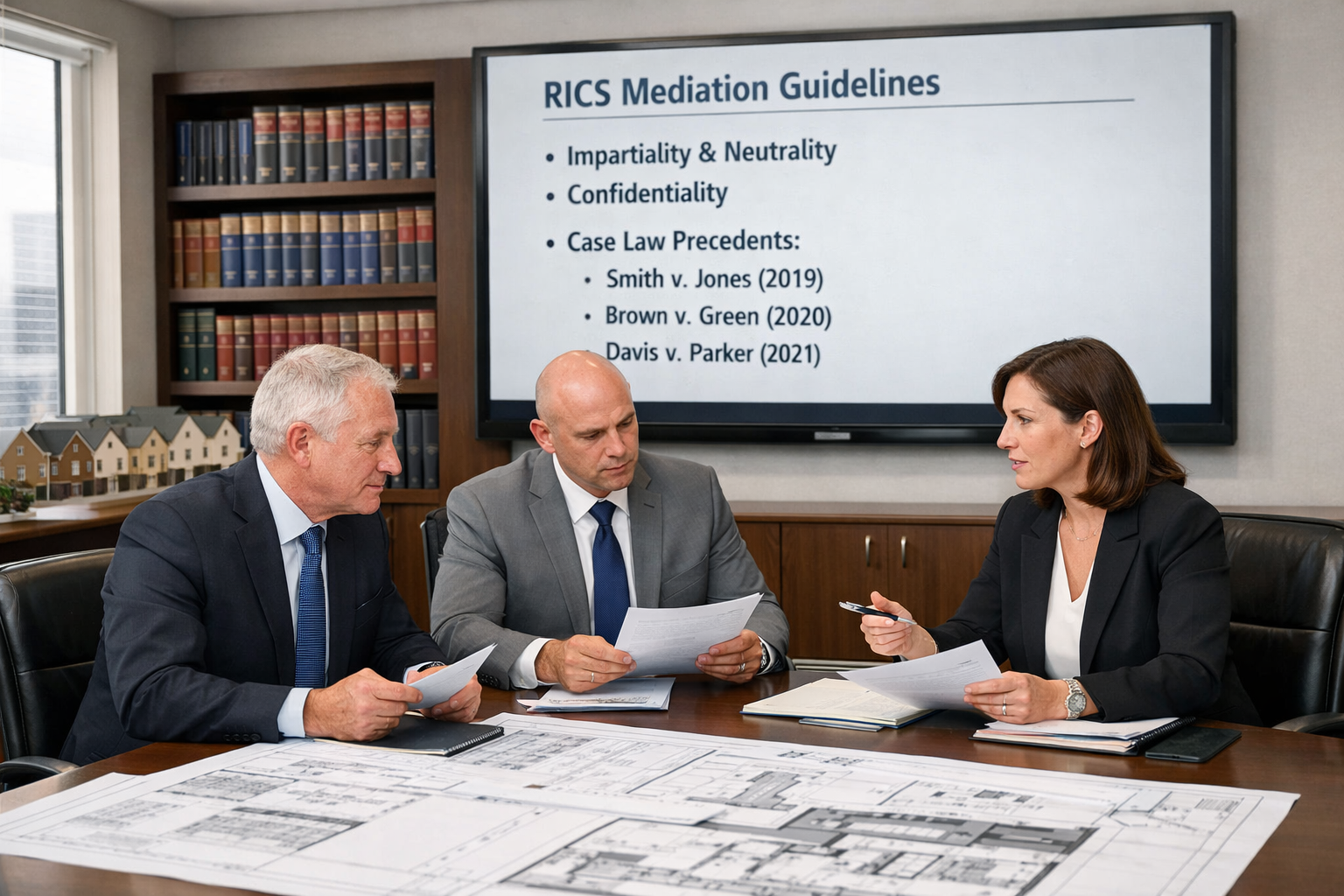
When agreed surveyors appointed by the building owner and adjoining owner cannot reach consensus on excavation safety measures, award conditions, or dispute resolution, the Third Surveyor mechanism provides a crucial adjudication pathway. The updated RICS guidance emphasizes proper use of the Third Surveyor role[2], clarifying when escalation becomes appropriate.
When to Invoke the Third Surveyor
The Third Surveyor should be selected jointly by the two agreed surveyors at the time of their appointment, ensuring an impartial adjudicator is available if needed. Party Wall Surveyor Strategies for Resolving Rising Excavation Objections in 2026 Urban Renewal Projects recommend invoking the Third Surveyor in these circumstances:
- Technical Disagreement: Agreed surveyors hold genuinely different professional opinions about excavation safety requirements or necessary protective measures
- Scope Disputes: Parties disagree about whether proposed work falls within Party Wall Act jurisdiction
- Award Condition Conflicts: Surveyors cannot agree on reasonable conditions to include in the award
- Fee Disputes: Disagreement arises about appropriate surveyor fees or cost apportionment
- Interpretation Questions: Ambiguity exists regarding statutory requirements or previous award terms
RICS Impartiality Requirements
The RICS professional standards mandate strict impartiality from all party wall surveyors, particularly Third Surveyors who must demonstrate complete independence. Key impartiality principles include:
No Conflict of Interest: Third Surveyors must disclose any prior relationships with either party, agreed surveyor, or the properties involved. Even minor conflicts require disclosure and potentially disqualification.
Evidence-Based Decisions: All determinations must rest on technical evidence, engineering principles, and legal precedent rather than personal preferences or commercial considerations.
Equal Access: Both parties receive equal opportunities to present evidence, technical reports, and arguments. The Third Surveyor cannot favour one party's submissions over the other's without technical justification.
Documented Reasoning: Third Surveyor determinations must include clear reasoning explaining how conclusions were reached, allowing parties to understand the decision-making process.
Proportionate Costs: Fee awards must reflect actual work performed and complexity involved, avoiding excessive charges that burden either party unfairly.
Case Law Foundations for Excavation Disputes
Several landmark cases establish important precedents for excavation objection resolution:
Reasonable Necessity Test: Courts have consistently held that party wall awards must impose only conditions reasonably necessary to protect the adjoining owner's property. Surveyors cannot require gold-plated solutions when standard engineering practices provide adequate protection.
Building Owner's Development Rights: Case law affirms that building owners possess fundamental rights to develop their property, including excavation for basements and foundations. Adjoining owners cannot veto development simply because they prefer no construction occur.
Adequate Security Provisions: Awards must include appropriate security measures (insurance, bonds, monitoring) but cannot demand guarantees against any possible damage regardless of probability.
Temporary Inconvenience: Courts recognize that some temporary inconvenience to adjoining owners is inevitable during construction. Awards cannot prohibit reasonable development activities solely to avoid temporary disruption.
Understanding the consequences of ignoring the Party Wall Act helps emphasize to building owners why proper procedures matter, while case law precedents help adjoining owners understand the limits of their objection rights.
Practical Award Drafting for Excavation Projects
The party wall award serves as the formal document resolving excavation objections and establishing conditions under which work may proceed. Effective Party Wall Surveyor Strategies for Resolving Rising Excavation Objections in 2026 Urban Renewal Projects emphasize comprehensive yet reasonable award provisions.
Essential Award Components
Well-drafted excavation awards typically include these sections:
1. Scope of Notified Works 📋
Precise description of excavation extent, depths, locations, and methods. Include scaled drawings showing excavation zones relative to property boundaries and existing structures.
2. Schedule of Condition 📸
Comprehensive photographic and written documentation of the adjoining owner's property before work commences. This baseline evidence proves essential if damage claims arise later. Professional building survey techniques ensure thorough documentation.
3. Protective Measures 🛡️
Specific requirements for temporary shoring, foundation support, vibration limits, dust suppression, and working hours. These conditions must be technically justified and proportionate to actual risks.
4. Monitoring Protocols 📊
Crack monitoring schedules, level monitoring arrangements, and inspection frequencies. Specify trigger levels requiring work suspension and remedial action.
5. Access Rights 🚪
Define when and how surveyors and contractors may access the adjoining owner's property for inspections and monitoring. Balance necessary access against privacy and convenience considerations.
6. Insurance Requirements 💼
Confirm adequate insurance coverage exists, specifying policy limits and coverage scope. Provide adjoining owners with insurer contact information.
7. Dispute Resolution Process ⚖️
Outline procedures for addressing concerns during construction, including surveyor contact information and escalation pathways.
8. Cost Apportionment 💷
Specify which party bears costs for various award elements. Standard party wall awards cost approximately £1,000[1], though complex excavation projects may involve higher fees.
Balancing Protection and Practicality
The art of award drafting lies in balancing adequate protection for adjoining owners against practical construction requirements. Overly restrictive awards may render projects economically unviable, while insufficient protections expose adjoining owners to unacceptable risks.
Proportionality Principle: Award conditions should match the scale and risk profile of the proposed work. A modest 2-meter excavation for a small extension warrants different provisions than a 6-meter basement excavation beneath an entire property.
Standard vs. Enhanced Measures: Distinguish between standard protective measures appropriate for all excavation projects and enhanced measures justified only by specific site conditions or structural vulnerabilities.
Performance Standards: Where possible, specify performance outcomes rather than prescriptive methods. For example, require vibration levels below specified thresholds rather than mandating specific excavation equipment.
Review Mechanisms: Include provisions for reviewing and adjusting protective measures based on actual site conditions encountered during excavation, allowing flexibility while maintaining protection.
Proactive Strategies for Preventing Objections
The most effective Party Wall Surveyor Strategies for Resolving Rising Excavation Objections in 2026 Urban Renewal Projects focus on preventing objections from arising initially rather than resolving them after they crystallize.
Pre-Notice Consultation Approach
Forward-thinking building owners and their surveyors engage neighbouring owners before serving formal statutory notices:
Informal Meetings: Arrange casual discussions explaining the proposed project, answering questions, and addressing concerns before formal processes begin. This approach builds goodwill and identifies potential objection points early.
Visual Presentations: Provide architectural drawings, 3D renderings, and cross-sectional diagrams helping neighbours understand what will occur. Visual communication often proves more effective than written descriptions.
Reference Projects: Share information about similar excavation projects completed successfully in the area, demonstrating proven track records and safety measures.
Early Surveyor Appointment: Appoint an experienced party wall surveyor before serving notices, ensuring professional expertise guides the entire process from inception.
Building Owner Education
Many excavation objections stem from building owners' inadequate preparation and poor communication. Surveyors serve clients best by educating them about neighbour relations:
- Set Realistic Expectations: Explain that some neighbour concerns are legitimate and reasonable conditions will likely be required
- Emphasize Communication: Encourage building owners to maintain friendly, respectful relationships with neighbours throughout the project
- Discourage Confrontation: Advise against adversarial approaches that entrench positions and escalate conflicts
- Highlight Long-term Relationships: Remind building owners they will remain neighbours after construction ends, making positive relationships valuable
Understanding top party wall agreement considerations for renovation helps building owners appreciate the broader context beyond immediate construction goals.
Adjoining Owner Reassurance Techniques
Experienced surveyors develop specialized techniques for reassuring anxious adjoining owners:
Technical Translation: Convert engineering jargon into plain language explanations accessible to non-technical property owners. Use analogies and everyday examples to clarify complex concepts.
Worst-Case Scenario Planning: Address "what if" concerns directly, explaining contingency plans and insurance provisions that protect against unlikely but feared outcomes.
Incremental Consent: For particularly anxious adjoining owners, propose phased approaches where initial low-risk work proceeds first, building confidence before more significant excavation begins.
Independent Expert Options: Suggest adjoining owners may consult their own structural engineers for independent advice, demonstrating confidence in the project's technical soundness.
Written Guarantees: Provide written commitments regarding specific protective measures, monitoring arrangements, and remediation procedures if damage occurs.
Technology Integration in Excavation Monitoring
Modern Party Wall Surveyor Strategies for Resolving Rising Excavation Objections in 2026 Urban Renewal Projects increasingly incorporate technological solutions that provide objective evidence and real-time monitoring capabilities.
Digital Monitoring Systems
Advanced monitoring technologies now offer capabilities previously unavailable:
Automated Crack Monitoring: Digital crack gauges transmit real-time measurements to cloud platforms, alerting surveyors immediately if movement exceeds predetermined thresholds. This automation provides continuous surveillance without manual inspection visits.
Vibration Sensors: Seismic monitoring equipment measures ground vibration levels during excavation, ensuring compliance with award conditions and providing objective evidence if disputes arise about vibration impacts.
Tilt Monitoring: Inclinometers detect structural movement or tilting in adjoining buildings, identifying potential problems before visible damage occurs.
Photographic Documentation: Time-lapse photography and regular digital imaging create comprehensive visual records documenting site conditions throughout the excavation process.
Data-Driven Decision Making
Technology enables evidence-based approaches to excavation management:
- Trend Analysis: Monitor data over time to identify gradual changes requiring intervention before they become problematic
- Threshold Alerts: Configure automatic notifications when measurements approach or exceed safe limits
- Transparent Reporting: Share monitoring data with all parties through secure online portals, maintaining transparency and building trust
- Historical Comparison: Compare current project data against previous excavation projects to validate safety measures and refine protective protocols
Fee Structures and Cost Management
The updated RICS guidance strengthens provisions on fee practices[2], addressing concerns about excessive surveyor charges that sometimes accompany excavation disputes.
Reasonable Fee Principles
Party wall surveyor fees should reflect:
Complexity and Risk: More complex excavation projects involving greater depths, challenging ground conditions, or vulnerable adjoining structures justify higher fees than straightforward scenarios.
Time Investment: Fees should compensate surveyors for actual time spent on inspections, award drafting, monitoring, and dispute resolution.
Professional Expertise: Experienced surveyors with specialized excavation knowledge command appropriate premiums over generalist practitioners.
Geographic Factors: Urban areas with higher professional service costs typically involve higher surveyor fees than rural locations.
Typical Fee Ranges for Excavation Awards
While standard party wall awards average approximately £1,000[1], excavation projects often involve additional complexity:
- Simple excavation projects (single adjoining owner, straightforward conditions): £800-£1,500 per surveyor
- Moderate complexity (multiple adjoining owners, some technical challenges): £1,500-£3,000 per surveyor
- Complex excavation disputes (significant objections, extensive monitoring required): £3,000-£6,000+ per surveyor
- Third Surveyor determinations: £1,500-£4,000 depending on complexity
Transparent fee discussions early in the appointment process prevent disputes about charges later. Many surveyors now provide written fee estimates before commencing work, with provisions for adjusting fees if project complexity exceeds initial expectations.
Conclusion: Building Consensus in Urban Renewal
Party Wall Surveyor Strategies for Resolving Rising Excavation Objections in 2026 Urban Renewal Projects require sophisticated mediation skills, technical expertise, and unwavering commitment to RICS impartiality principles. As urban construction intensity continues escalating, surveyors who master these strategies position themselves as indispensable facilitators of responsible development.
The most successful approaches combine proactive communication, comprehensive technical documentation, and proportionate protective measures that balance building owners' development rights against adjoining owners' legitimate protection needs. By grounding mediation efforts in case law precedents and updated regulatory guidance, party wall surveyors navigate complex disputes while maintaining professional objectivity.
Actionable Next Steps
For building owners planning excavation projects:
- Engage experienced party wall surveyors before serving statutory notices
- Invest in pre-notice consultation with neighbouring owners
- Ensure adequate insurance coverage and monitoring provisions
- Maintain respectful, communicative relationships throughout construction
For adjoining owners receiving excavation notices:
- Appoint qualified party wall surveyors promptly to protect your interests
- Focus objections on specific technical concerns rather than general opposition
- Request comprehensive schedules of condition documenting pre-construction property status
- Understand that reasonable development rights exist while ensuring adequate protections
For party wall surveyors handling excavation disputes:
- Strengthen technical knowledge of excavation methods and structural engineering principles
- Develop plain-language communication skills for explaining complex concepts
- Maintain meticulous documentation practices and photographic evidence
- Stay current with RICS guidance updates and relevant case law developments
- Consider technology integration for objective monitoring and transparent reporting
The 2026 construction boom presents both challenges and opportunities for party wall surveyors. Those who develop sophisticated excavation objection resolution strategies will find themselves in high demand as urban renewal projects multiply across UK cities. By combining technical excellence with diplomatic mediation skills, surveyors can facilitate development that respects both progress and protection—the essential balance sustaining thriving urban communities.
References
[1] Party Wall Agreement – hoa.org.uk
[2] Rics Launches Consultation On Updated Party Wall Practice Guidance – rics.org
[3] Party Wall Surveys Amid 2026 Construction Boom Handling Disputes In High Demand Uk Housing Markets – nottinghillsurveyors.com
How Prince Surveyors can help: explore our party wall surveyors or learn about our party wall surveyor costs.