

More than 22% of private rented homes currently fail to meet the Decent Homes Standard—that's one in five properties requiring immediate improvement works.[2] With the Renters' Rights Act now in force as of May 1, 2026, landlords face unprecedented compliance obligations that fundamentally reshape property investment strategies, valuation methodologies, and building survey protocols across the UK's Private Rented Sector (PRS).
The Building Survey Checklists for Decent Homes Standards in PRS: 2026 Compliance Under Renters' Rights Act represent a critical shift from age-based assessments to condition-focused evaluations. Landlords must now demonstrate measurable outcomes across multiple habitability criteria, with Category 1 hazards triggering automatic failure and potential enforcement action. This comprehensive guide outlines the mandatory upgrade requirements, professional survey protocols, and valuation implications that define the new regulatory landscape.
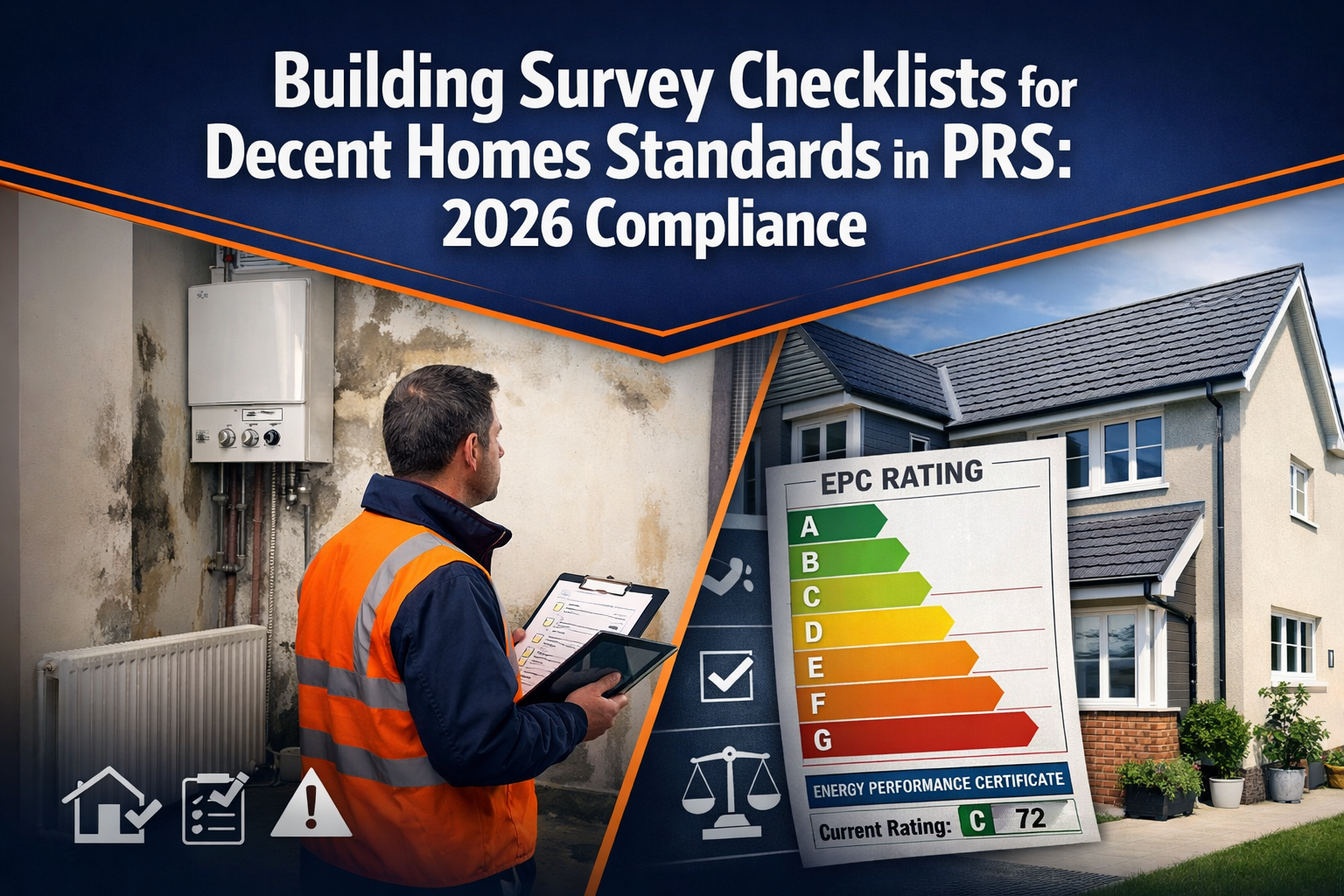
Key Takeaways
- Immediate registration required: All landlords must register with the Private Rented Sector Database and PRS Landlord Ombudsman by May 1, 2026, with full property compliance deadline extended to 2035[1][2]
- Zero tolerance for Category 1 hazards: Properties must be completely free from serious hazards—no balancing exercise or grace threshold applies under the new gateway requirement[2]
- Condition-based assessments replace age benchmarks: Eight key building components (roof, walls, windows, doors, kitchen, bathroom, heating, electrics) must meet reasonable repair standards regardless of installation date[2]
- Mandatory Level 2 or Level 3 building surveys: Professional building surveys are required to document compliance across all Decent Homes Standard criteria before the 2035 deadline[5]
- Valuation impact: Non-compliant properties face significant market value reductions, while compliant homes command premium rents and improved investment returns
Understanding the Decent Homes Standard Framework for Building Survey Checklists in 2026 PRS Compliance
The Decent Homes Standard establishes four to five outcome-focused criteria that require clear, measurable results rather than subjective professional judgment.[6] This fundamental shift demands structured building survey checklists that systematically evaluate each compliance dimension.
The Four Core Compliance Pillars
1. Category 1 Hazard Elimination (Gateway Requirement) 🚨
Properties must be completely free from Category 1 hazards as defined under the Housing Health and Safety Rating System (HHSRS). This represents the most stringent requirement—a single serious hazard causes automatic failure with no opportunity for offsetting positive features.[2]
Common Category 1 hazards requiring immediate remediation include:
- Excess cold due to inadequate heating or insulation
- Damp and mould growth from condensation or water ingress
- Falls on stairs or level surfaces
- Electrical hazards from outdated or dangerous wiring
- Fire safety deficiencies
- Entry by intruders through insecure doors or windows
Professional surveyors conducting Level 3 full building surveys must identify and document all potential hazards with photographic evidence and risk assessments.
2. Reasonable State of Repair 🔧
Eight key building components must be assessed for actual condition and performance:
| Component | Assessment Criteria | Common Failure Points |
|---|---|---|
| Roof structure | Weather-tight, structurally sound, adequate insulation | Missing tiles, felt deterioration, inadequate ventilation |
| External walls | Damp-proof, thermally efficient, structurally stable | Cavity wall tie failure, render cracks, missing pointing |
| Windows | Secure, draught-proof, adequate ventilation | Single glazing, failed seals, rotten frames |
| External doors | Secure, weather-tight, thermally efficient | Inadequate locks, poor seals, damaged frames |
| Kitchen facilities | Functional, hygienic, adequate space | Outdated units, insufficient worktop, poor ventilation |
| Bathroom | Functional, hygienic, adequate facilities | Damaged sanitary ware, inadequate ventilation, mould growth |
| Heating system | Adequate warmth, efficient operation, safe | Boiler age >15 years, inadequate radiators, no thermostatic control |
| Electrical installation | Safe, adequate sockets, compliant | No RCD protection, insufficient circuits, outdated consumer unit |
The condition-based approach means a 30-year-old boiler in excellent working order may pass, while a 10-year-old system with safety concerns fails.[2] Surveyors must evaluate actual performance rather than relying on installation dates.
3. Modern Facilities and Services 💡
Properties must provide reasonably modern facilities including:
- Kitchen with adequate space for food preparation and storage
- Bathroom with bath or shower, wash basin, and WC
- Adequate natural and artificial lighting
- Effective ventilation in kitchens and bathrooms
- Sufficient electrical sockets for modern living
4. Thermal Comfort and Energy Efficiency ⚡
A valid Energy Performance Certificate (EPC) with at least an E rating is legally required unless exempt.[4] Many landlords are proactively upgrading to C ratings through:
- Loft and cavity wall insulation improvements
- Energy-efficient condensing boilers
- Double or triple glazing installations
- LED lighting upgrades
- Smart heating controls with programmable thermostats
Understanding why building surveys are essential helps landlords appreciate the comprehensive nature of compliance assessments required under the new framework.
Building Survey Checklists for Decent Homes Standards in PRS: Mandatory Assessment Protocols
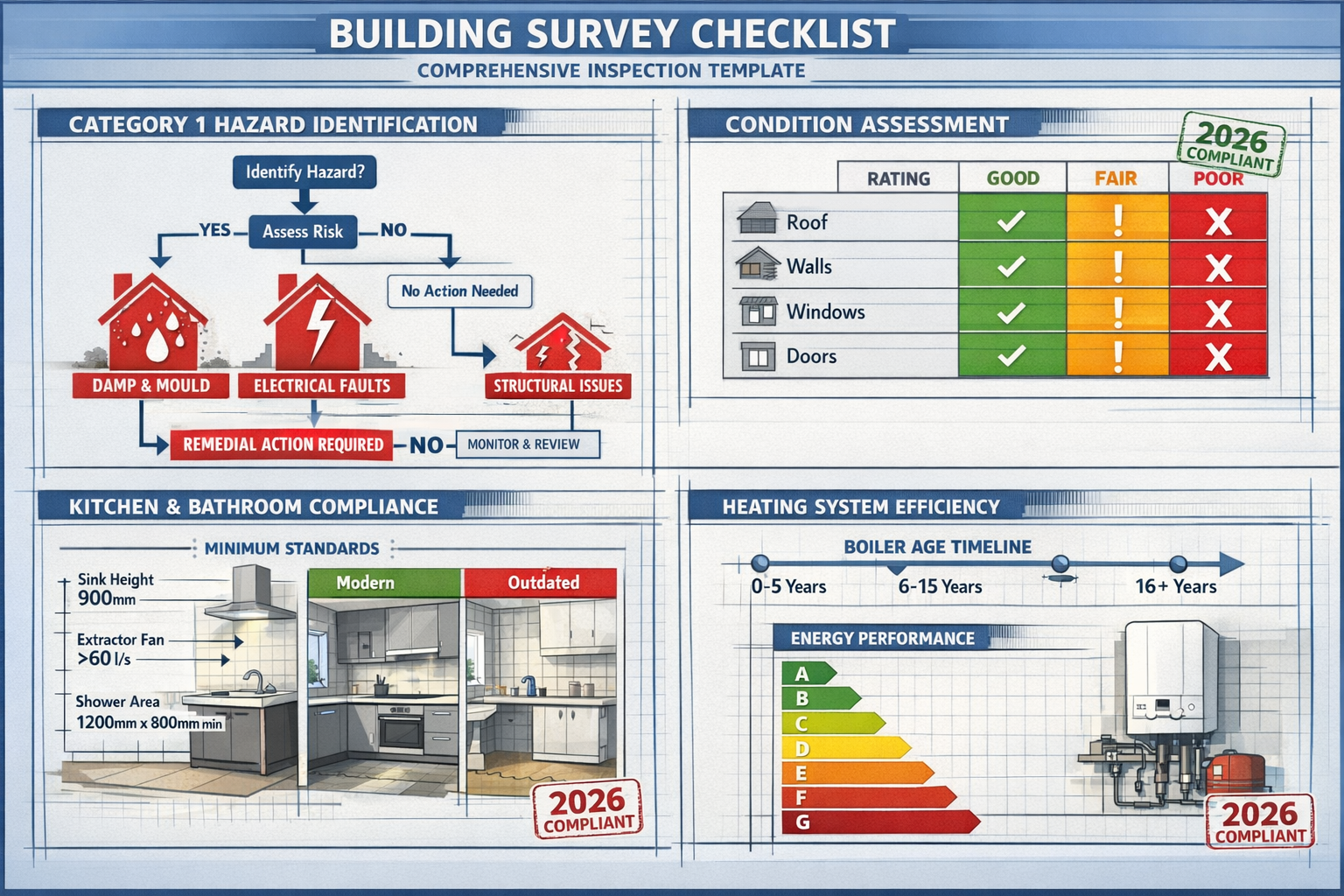
Professional building surveys form the foundation of Decent Homes Standard compliance verification. Landlords must commission Level 2 or Level 3 surveys depending on property age, condition, and complexity to systematically assess all regulatory criteria.[5]
Level 2 vs Level 3 Survey Selection for PRS Compliance
Level 2 HomeBuyer Reports suit:
- Properties built post-1980 in reasonable condition
- Standard construction with no significant alterations
- Properties with no visible signs of major defects
Level 3 Full Building Surveys are mandatory for:
- Pre-1900 properties or unusual construction types
- Properties with visible defects or previous alterations
- Listed buildings or conservation area properties
- Properties requiring detailed defect analysis for compliance planning
The complete guide to choosing between Level 2 or Level 3 surveys provides detailed selection criteria. For most PRS properties requiring Decent Homes Standard assessment, Level 3 surveys offer the comprehensive analysis necessary for regulatory compliance.
Comprehensive Building Survey Checklist Template
Section A: Category 1 Hazard Assessment 🔍
Systematic evaluation of 29 potential hazards across four categories:
✅ Physiological Requirements
- Damp and mould growth (moisture meters, thermal imaging)
- Excess cold (heating capacity calculations, insulation surveys)
- Excess heat (ventilation adequacy, solar gain assessment)
- Asbestos exposure (visual inspection, asbestos building surveys where indicated)
- Biocides and chemical contamination
- Carbon monoxide and fuel combustion products
- Lead contamination
- Radiation exposure
- Uncombusted fuel gas
- Volatile organic compounds
✅ Psychological Requirements
- Crowding and space adequacy
- Entry by intruders (lock quality, window security)
- Lighting deficiencies
- Noise pollution
✅ Protection Against Infection
- Domestic hygiene, pests, and refuse
- Food safety in kitchen facilities
- Personal hygiene and sanitation
- Water supply contamination
✅ Protection Against Accidents
- Falls on level surfaces and stairs
- Falls between levels (balconies, windows)
- Electrical hazards
- Fire safety (detection, escape routes, fire doors)
- Hot surfaces and materials
- Collision and entrapment hazards
- Explosions
- Structural collapse and falling elements
Each hazard receives a risk rating based on likelihood and potential harm severity. Category 1 hazards (high risk) trigger mandatory remediation requirements.
Section B: Building Component Condition Assessment 🏗️
Detailed evaluation of eight key components using standardized condition ratings:
Rating Scale:
- Excellent – Recently installed, no defects, full remaining service life
- Good – Minor wear only, no immediate repairs required
- Fair – Moderate wear, routine maintenance needed within 12 months
- Poor – Significant deterioration, repairs required within 6 months
- Very Poor – Critical condition, immediate remediation necessary
For each component, surveyors document:
- Current condition rating with photographic evidence
- Specific defects identified with locations
- Estimated remaining service life
- Repair or replacement recommendations
- Cost estimates for compliance works
- Priority ranking (immediate, short-term, medium-term)
Section C: Modern Facilities Assessment 🚿
Checklist verification of minimum facility standards:
Kitchen Facilities:
- Adequate worktop space (minimum 1.5m continuous run)
- Sink with hot and cold water supply
- Space for cooker with appropriate ventilation
- Space for refrigerator and food storage
- Adequate natural or artificial lighting
- Effective mechanical ventilation or openable window
- Hygienic wall and floor surfaces
Bathroom Facilities:
- Bath or shower with hot and cold water
- Wash basin with hot and cold water
- WC (may be separate room)
- Adequate natural or artificial lighting
- Effective mechanical ventilation or openable window
- Hygienic wall and floor surfaces
- Adequate space for safe use
Section D: Thermal Comfort and Energy Efficiency 🌡️
Comprehensive heating and insulation assessment:
- Current EPC rating and validity date
- Heating system type, age, and capacity
- Radiator distribution and sizing adequacy
- Thermostatic controls and programming capability
- Loft insulation depth and condition
- Cavity wall insulation presence
- Window glazing type and condition
- Draught-proofing effectiveness
- Upgrade recommendations to achieve target EPC rating
Section E: Statutory Compliance Documentation 📋
Verification of mandatory certificates and records:
- Valid EPC (minimum E rating) issued within last 10 years
- Gas Safety Certificate (annual, issued within last 12 months)
- Electrical Installation Condition Report (maximum 5 years old)
- Smoke alarm installation (every floor) with test records
- Carbon monoxide alarm installation (rooms with fuel-burning appliances)
- Legionella risk assessment for water systems
- Fire safety risk assessment (HMOs and buildings with common areas)
- Planning permission and Building Regulations approval for alterations
Understanding statutory considerations ensures comprehensive compliance verification beyond physical condition assessment.
Professional Survey Standards and Accreditation
All building surveys for Decent Homes Standard compliance should be conducted by:
- RICS Chartered Surveyors with residential property expertise
- Qualified professionals with HHSRS assessment training
- Experienced practitioners familiar with PRS regulatory requirements
- Insured surveyors providing professional indemnity coverage
The survey report must provide clear, actionable recommendations with cost estimates and priority rankings to support compliance planning and budget allocation.
Implementing Building Survey Findings: Compliance Roadmap and Upgrade Priorities
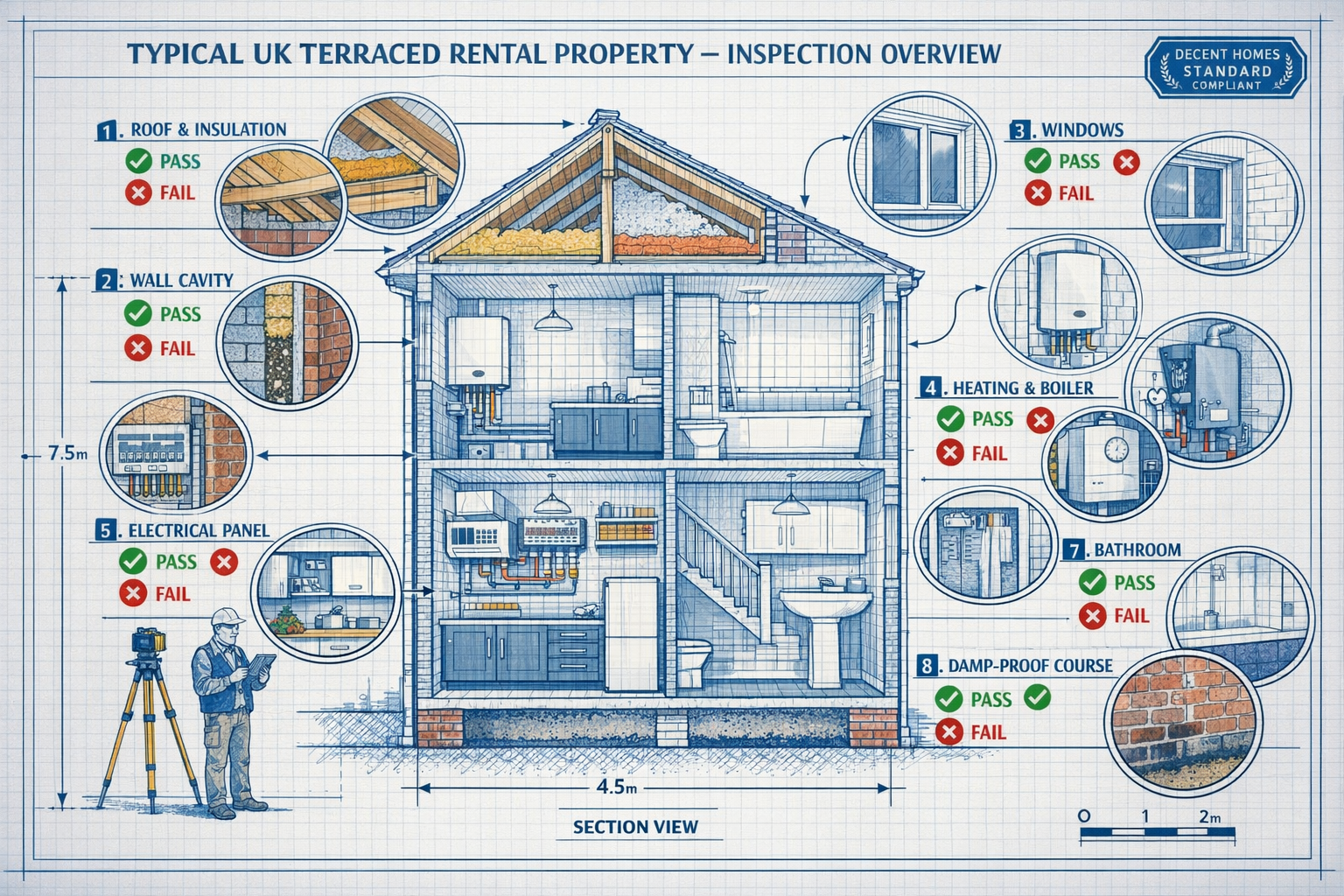
Once the building survey identifies deficiencies, landlords must develop a structured compliance roadmap prioritizing urgent or dangerous building issues before addressing longer-term improvements.
Priority 1: Immediate Safety Hazards (0-30 Days) ⚠️
Category 1 hazards require immediate remediation with no grace period. Common urgent works include:
Electrical Safety:
- Replace outdated fuse boxes with modern consumer units featuring RCD protection
- Rewire properties with dangerous wiring (cloth-insulated cables, inadequate earthing)
- Install additional sockets to eliminate overloading and extension lead dependence
- Repair or replace damaged switches, sockets, and light fittings
Heating System Failures:
- Replace non-functional boilers immediately (especially during winter months)
- Repair radiator leaks and distribution issues
- Install thermostatic radiator valves for temperature control
- Ensure adequate heating capacity for property size
Structural Safety:
- Shore up dangerous structural elements showing signs of collapse
- Repair unsafe stairs, balustrades, and floor structures
- Secure loose roof coverings posing fall hazards
- Address immediate fire safety deficiencies (blocked escape routes, missing fire doors)
Understanding the consequences of failing to act on urgent defects helps landlords appreciate the legal and financial risks of delayed remediation.
Priority 2: Short-Term Compliance Works (1-6 Months) 🔨
Essential repairs to meet Decent Homes Standard criteria:
Damp and Mould Remediation:
- Install or repair damp-proof courses
- Improve ventilation in kitchens and bathrooms (mechanical extract fans)
- Address condensation issues through insulation improvements
- Repair roof leaks and external wall penetrations
- Treat existing mould growth and redecorate affected areas
Window and Door Upgrades:
- Replace single-glazed windows with double glazing (or secondary glazing in conservation areas)
- Install secure locks meeting insurance standards
- Repair or replace damaged frames and seals
- Improve draught-proofing around openings
Kitchen and Bathroom Modernization:
- Replace non-functional or unhygienic sanitaryware
- Install adequate worktop space and storage
- Upgrade ventilation systems
- Replace damaged or inappropriate floor and wall surfaces
- Ensure adequate lighting and electrical sockets
Priority 3: Medium-Term Improvements (6-24 Months) 📈
Planned upgrades to achieve full compliance and optimize performance:
Energy Efficiency Enhancements:
- Loft insulation to minimum 270mm depth
- Cavity wall insulation installation
- Boiler replacement with modern condensing models
- Smart heating controls and zoning systems
- LED lighting throughout property
Preventative Maintenance:
- External redecoration and weatherproofing
- Roof covering replacement (if nearing end of service life)
- Gutter and downpipe replacement
- External wall repairs and repointing
- Garden boundary maintenance
Compliance Documentation:
- Commission updated EPC following improvement works
- Obtain Electrical Installation Condition Reports
- Complete annual Gas Safety Certificates
- Document all upgrade works with invoices and certificates
Budget Planning and Cost Management 💰
Typical compliance upgrade costs vary significantly based on property condition:
Minor Compliance Works (£3,000-£8,000):
- Properties in generally good condition requiring targeted improvements
- EPC rating upgrades from E to D
- Kitchen or bathroom refresh
- Heating system repairs and controls
Moderate Compliance Works (£8,000-£20,000):
- Properties with multiple component failures
- Complete heating system replacement
- Window replacement throughout
- Significant damp remediation
- Electrical rewiring
Major Compliance Works (£20,000-£50,000+):
- Properties with fundamental structural issues
- Complete kitchen and bathroom replacement
- Comprehensive insulation upgrades
- Roof replacement
- Multiple Category 1 hazard remediation
Landlords should obtain multiple quotes from qualified contractors and consider:
- Phased implementation to spread costs across multiple tax years
- Grant funding opportunities for energy efficiency improvements
- Tax relief for qualifying repairs and maintenance expenditure
- Rental income protection during improvement works
- Long-term value enhancement from compliance investments
Effective planning ensures compliance works proceed efficiently while minimizing tenant disruption and void periods.
Valuation Implications and Investment Analysis for Building Survey Checklists Under 2026 PRS Compliance
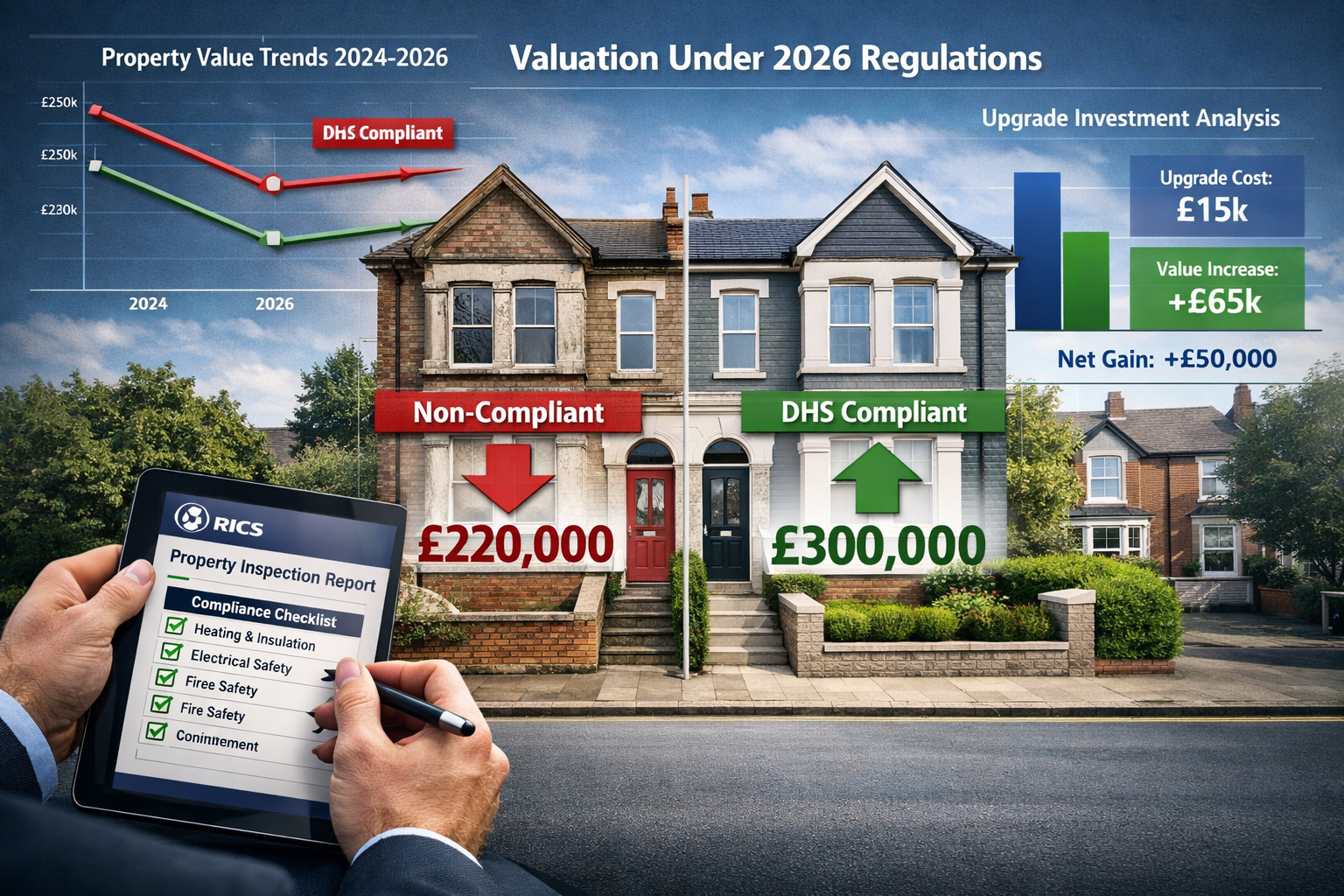
The Renters' Rights Act fundamentally alters rental property valuation methodologies, with building survey findings directly impacting market values, rental yields, and investment returns.[5]
Market Value Adjustments for Non-Compliance
Valuation Penalties for Decent Homes Standard Failures:
Properties failing to meet the Decent Homes Standard face significant market value reductions reflecting:
- Immediate compliance costs deducted from market value
- Regulatory risk premiums applied by cautious buyers
- Reduced rental income potential from limited tenant demand
- Increased void periods as tenants prioritize compliant properties
- Enforcement action risks including fines and prohibition orders
Typical valuation adjustments range from 5-20% below comparable compliant properties depending on deficiency severity and remediation costs.[5]
Example Valuation Scenario:
Three-bedroom Victorian terrace, market value £350,000 if fully compliant
Scenario A: Minor Non-Compliance
- EPC rating F (requires insulation upgrades)
- Outdated kitchen and bathroom
- Estimated compliance costs: £12,000
- Adjusted valuation: £330,000 (5.7% reduction)
Scenario B: Moderate Non-Compliance
- Category 1 hazards (damp, inadequate heating)
- Single glazing throughout
- Electrical rewiring required
- Estimated compliance costs: £28,000
- Adjusted valuation: £305,000 (12.9% reduction)
Scenario C: Severe Non-Compliance
- Multiple Category 1 hazards
- Structural issues requiring significant repairs
- Complete systems replacement needed
- Estimated compliance costs: £55,000
- Adjusted valuation: £280,000 (20% reduction)
Premium Values for Compliant Properties
Conversely, properties demonstrably meeting or exceeding Decent Homes Standard requirements command premium valuations reflecting:
✅ Reduced buyer risk with comprehensive compliance documentation
✅ Immediate rental readiness with no remediation delays
✅ Enhanced tenant demand and reduced void periods
✅ Higher sustainable rents from quality-conscious tenants
✅ Lower maintenance costs from modern, efficient systems
✅ Future-proofed investment against regulatory tightening
Premium valuations typically range from 3-8% above standard market values for properties with:
- Recent building survey confirming full compliance
- EPC rating C or above
- Modern kitchen and bathroom (installed within 10 years)
- New or recently serviced heating system
- Complete electrical and gas safety certification
- Comprehensive maintenance records
Investment Return Analysis
Landlords must evaluate compliance investments through comprehensive return analysis:
Return on Investment (ROI) Calculation:
ROI = (Annual Rental Income Increase + Property Value Increase - Compliance Costs) / Compliance Costs × 100
Example Investment Analysis:
Property: Two-bedroom flat requiring £15,000 compliance works
Pre-Compliance Position:
- Monthly rent: £1,000
- Annual rental income: £12,000
- Property value: £240,000
- Rental yield: 5.0%
Post-Compliance Position:
- Monthly rent: £1,150 (15% increase from improved condition)
- Annual rental income: £13,800
- Property value: £260,000 (compliance premium)
- Rental yield: 5.3%
Investment Return:
- Annual income increase: £1,800
- Property value increase: £20,000
- Total benefit: £21,800
- Compliance investment: £15,000
- Net ROI: 45.3% (first year)
- Payback period: 8.3 years from rental income alone
Tax Implications and Relief Opportunities
Qualifying Repairs and Maintenance:
- Revenue expenditure fully deductible against rental income
- Includes repairs maintaining existing condition
- Replacement of worn components with modern equivalents
Capital Improvements:
- Enhancements beyond original specification
- Added to property cost basis for capital gains calculation
- Not immediately deductible against rental income
Replacement of Domestic Items Relief:
- Furniture, appliances, and furnishings
- Full cost deductible in year of purchase
- Applies to like-for-like or improved replacements
Landlords should maintain comprehensive records of all compliance expenditure with professional advice on optimal tax treatment.
Portfolio Strategy Considerations
Professional investors must evaluate individual property compliance costs against portfolio-wide strategy:
Retain and Upgrade Decision Factors:
- Total compliance costs vs property value
- Expected rental income post-compliance
- Local market demand and competition
- Long-term capital appreciation potential
- Personal capacity for managing improvement works
Disposal Decision Factors:
- Compliance costs exceeding 15-20% of property value
- Properties in declining rental markets
- High-maintenance older properties requiring ongoing investment
- Portfolio rebalancing toward compliant, lower-maintenance assets
Acquisition Opportunity Identification:
- Non-compliant properties at discounted values
- Properties with straightforward, cost-effective compliance pathways
- Strong rental demand areas with supply constraints
- Properties where compliance works add significant value
Chartered surveyors providing professional valuations incorporate comprehensive compliance assessments into investment recommendations.
Ongoing Compliance Management: Annual Certification and Inspection Protocols
Meeting initial Decent Homes Standard requirements represents just the starting point—landlords must maintain ongoing compliance through systematic inspection and certification protocols.
Mandatory Annual Certifications 📜
Gas Safety Certification:
- Gas Safe registered engineer inspection required annually
- Certificate must be provided to tenants within 28 days
- Landlords must retain copies for enforcement verification
- Covers all gas appliances, pipework, and ventilation
- Non-compliance penalties: unlimited fines and up to six months imprisonment[4]
Electrical Installation Condition Reports:
- Required every five years (or at tenancy change if longer)
- Must be conducted by qualified electrician
- Identifies dangerous conditions and required remedial works
- Certificate provided to tenants within 28 days
- Non-compliance penalties: up to £30,000 fines
Energy Performance Certificates:
- Valid for 10 years from issue date
- Minimum E rating required (with limited exemptions)
- Must be displayed in property and provided to prospective tenants
- Updated certificate required following significant energy efficiency improvements
- Non-compliance penalties: up to £5,000 fines
Periodic Building Condition Inspections 🔍
Beyond mandatory certifications, prudent landlords commission regular building condition surveys:
Annual Visual Inspections:
- Tenant-occupied properties inspected annually
- Focus on maintenance issues and emerging defects
- Photographic documentation of property condition
- Early identification of damp, heating, or structural concerns
Five-Year Comprehensive Surveys:
- Detailed building survey similar to acquisition assessment
- Systematic evaluation of all building components
- Updated compliance verification against current standards
- Planned maintenance programming and budget forecasting
Post-Tenancy Condition Surveys:
- Comprehensive inspection following tenant departure
- Dilapidations assessment and deposit negotiations
- Compliance verification before re-letting
- Opportunity for planned upgrade works during void period
Tenant Reporting and Response Protocols
Effective compliance management requires structured systems for tenant maintenance reporting:
Reporting Mechanisms:
- Multiple contact channels (phone, email, online portal)
- 24/7 emergency contact for urgent issues
- Clear definitions of emergency vs routine repairs
- Documented acknowledgment of all reports
Response Timeframes:
- Emergency repairs (loss of heating, water supply, security): 24 hours
- Urgent repairs (partial heating loss, minor leaks): 3-5 working days
- Routine repairs (cosmetic issues, non-essential items): 20-30 working days
- Planned maintenance (cyclical decorations, system replacements): scheduled annually
Documentation Requirements:
- Written records of all maintenance requests
- Contractor invoices and completion certificates
- Photographic evidence of works completed
- Tenant confirmation of satisfactory resolution
Systematic maintenance management demonstrates regulatory compliance and supports defense against tenant complaints or enforcement action.
Private Rented Sector Database Registration
As of May 1, 2026, all landlords must register with the Private Rented Sector Database providing:[1]
- Landlord contact details and verification
- Property addresses and tenure information
- Current EPC ratings and compliance status
- Gas and electrical safety certificate details
- Tenant deposit protection information
- Rent payment records and tenancy terms
PRS Landlord Ombudsman Registration:
Concurrent registration with the PRS Landlord Ombudsman provides:
- Independent dispute resolution service
- Tenant complaint handling procedures
- Regulatory compliance oversight
- Professional standards enforcement
Registration fees and renewal requirements vary by property portfolio size and local authority area. Non-registration prevents serving valid eviction notices and may result in financial penalties.
Professional Support and Expert Resources for Building Survey Compliance
Successfully navigating Decent Homes Standard compliance requires coordinated professional support across multiple disciplines.
Building Surveyor Selection Criteria
Choose RICS Chartered Surveyors with:
✅ Residential property specialization and PRS experience
✅ HHSRS assessment qualifications and training
✅ Local market knowledge of typical property types and defects
✅ Professional indemnity insurance providing adequate coverage
✅ Clear reporting standards with actionable recommendations
✅ Reasonable fee structures reflecting survey scope and complexity
Understanding why property owners hire surveyors helps landlords appreciate the value of professional expertise in compliance planning.
Contractor and Specialist Engagement
Compliance works require qualified, competent contractors:
Gas Safe Registered Engineers:
- Boiler installation and servicing
- Gas appliance safety checks
- Heating system design and commissioning
NICEIC or NAPIT Registered Electricians:
- Electrical installation and testing
- Consumer unit upgrades
- Periodic inspection and certification
Competent Person Scheme Members:
- Building Regulations self-certification
- Quality assurance for installation works
- Warranty-backed workmanship guarantees
Specialist Contractors:
- Damp-proofing and timber treatment specialists
- Insulation installation companies
- Window and door replacement specialists
- Kitchen and bathroom fitters
Legal and Regulatory Advice
Complex compliance scenarios may require specialist legal advice:
- Property solicitors for enforcement action defense
- Tax advisors for optimal expenditure treatment
- Letting agents with regulatory compliance expertise
- Landlord associations providing member support and guidance
Technology and Compliance Management Tools
Digital platforms streamline compliance management:
Property Management Software:
- Centralized document storage for certificates
- Automated renewal reminders for certifications
- Maintenance request tracking and contractor management
- Tenant communication and record-keeping
Compliance Tracking Systems:
- Portfolio-wide compliance status dashboards
- Regulatory deadline monitoring and alerts
- Budget forecasting for planned works
- Audit trails for enforcement defense
Energy Efficiency Calculators:
- EPC rating prediction tools
- Improvement measure cost-benefit analysis
- Grant funding eligibility checkers
- Carbon footprint tracking
Conclusion
The Building Survey Checklists for Decent Homes Standards in PRS: 2026 Compliance Under Renters' Rights Act represent a fundamental transformation of private rental sector regulation. With 22% of properties currently failing to meet minimum standards[2], landlords face an unprecedented compliance challenge requiring systematic assessment, strategic investment, and ongoing management commitment.
Professional building surveys conducted by qualified chartered surveyors provide the essential foundation for compliance planning, identifying Category 1 hazards requiring immediate remediation and prioritizing longer-term improvement works. The shift from age-based to condition-based assessments demands detailed evaluation of actual component performance across eight key building elements, supported by comprehensive documentation and certification.
Landlords who proactively address compliance requirements benefit from premium property valuations, enhanced rental yields, reduced void periods, and future-proofed investments positioned for long-term success in an increasingly regulated market. Conversely, those delaying necessary works face mounting valuation penalties, enforcement risks, and potential portfolio obsolescence.
Actionable Next Steps
Immediate Actions (Next 30 Days):
- Commission professional building surveys for all portfolio properties using qualified RICS surveyors
- Register with PRS Database and Landlord Ombudsman before enforcement deadlines[1]
- Verify current certification status for gas safety, electrical condition, and EPC ratings
- Identify Category 1 hazards requiring immediate remediation
- Develop compliance budgets with phased implementation timelines
Short-Term Actions (Next 6 Months):
- Complete urgent safety works addressing identified Category 1 hazards
- Upgrade heating systems and insulation to improve EPC ratings
- Modernize kitchens and bathrooms to meet minimum facility standards
- Implement systematic maintenance protocols with documented inspection schedules
- Review portfolio strategy identifying properties for retention, upgrade, or disposal
Long-Term Strategy (2026-2035):
- Maintain ongoing compliance through annual certifications and periodic surveys
- Monitor regulatory developments and adjust standards proactively
- Invest in energy efficiency targeting EPC C ratings or above
- Document all improvement works with comprehensive records and certificates
- Optimize portfolio composition toward compliant, high-performing assets
The 2035 full compliance deadline provides a nine-year implementation window, but early action delivers immediate benefits through improved tenant satisfaction, reduced void periods, and enhanced property values. Landlords who embrace the Decent Homes Standard as an investment opportunity rather than regulatory burden position themselves for sustained success in the evolving private rental sector.
Professional guidance from experienced chartered surveyors, qualified contractors, and specialist advisors ensures compliance works deliver maximum value while meeting all regulatory requirements. The comprehensive building survey checklists outlined in this guide provide the systematic framework necessary for confident navigation of the new regulatory landscape.
References
[1] Renters Rights Checklists – theindependentlandlord.com
[2] What Is The Decent Homes Standard – blog.goodlord.co
[3] Part 2 – augustapp.com
[4] 2026 Landlord Compliance Checklist – davistate.com
[5] Valuation Adjustments For Renters Rights Act 2026 How Building Surveyors Must Assess Landlord Tenant Compliance – nottinghillsurveyors.com
[6] Renters Rights Act 2026 Impact On Building Surveys Surveyor Roles In Decent Homes Standard Compliance For Landlords – nottinghillsurveyors.com