

The abolishment of Section 21 "no-fault" evictions under the Renters' Rights Act 2026 has fundamentally altered the litigation landscape for landlord-tenant disputes, with property valuations now requiring expert witnesses to navigate complex rent review challenges and ombudsman claims using RICS-compliant methodologies. This seismic shift in tenancy law demands new approaches to Expert Witness Strategies for Renters' Rights Act 2026 Disputes: Valuing Properties Under New Tenant Protections that balance market realities with enhanced tenant security.
The transformation affects approximately 4.6 million private rental households across the UK, creating unprecedented demand for qualified surveyors who understand both traditional valuation principles and the nuanced implications of strengthened tenant protections. Expert witnesses must now demonstrate how rent determinations account for restricted eviction grounds, extended notice periods, and mandatory ombudsman scheme participation—all while maintaining credible market-based valuations.
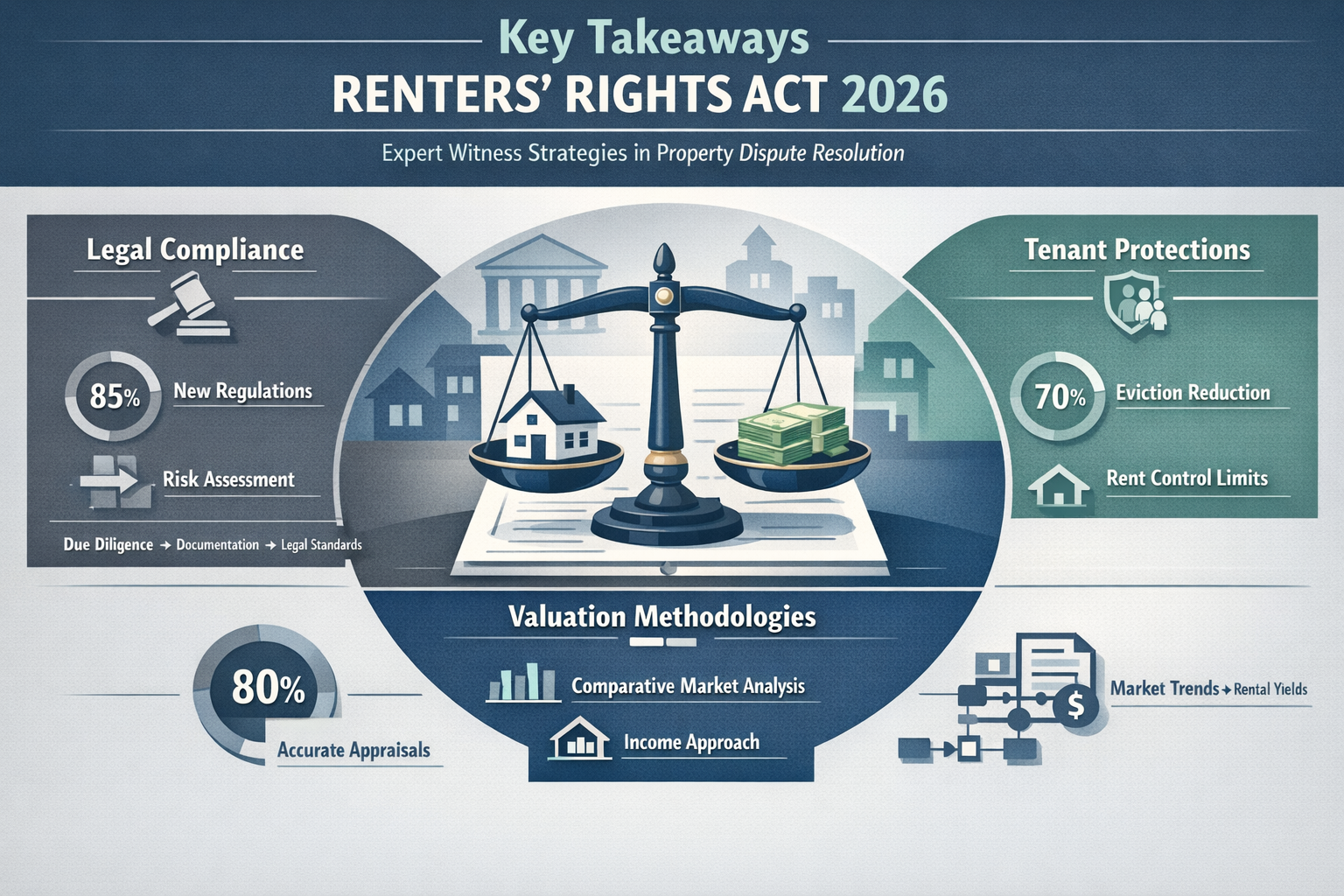
Key Takeaways
- Section 21 abolishment requires expert witnesses to recalibrate property valuations considering reduced landlord flexibility and increased tenant security
- RICS Red Book standards must be adapted to incorporate new tenant protection variables when determining market rent and property values
- Ombudsman claim disputes demand expert testimony on reasonable rent levels that reflect both market conditions and legislative restrictions
- Rent review challenges now involve complex assessments of comparable properties under identical tenant protection frameworks
- Documentation standards for expert witnesses have intensified, requiring comprehensive evidence trails linking valuations to post-2026 market conditions
Understanding the Renters' Rights Act 2026 Impact on Property Litigation
The End of Section 21: Litigation Implications
The removal of Section 21 evictions represents the most significant change to private rental sector legislation in decades. Expert witnesses must now understand that landlords can only regain possession through specific grounds outlined in the Housing Act 1988 (as amended). This restriction fundamentally affects property valuations in dispute scenarios.
Key litigation changes include:
- 🏛️ Increased tribunal hearings for possession claims
- 📊 Greater scrutiny of rent increase justifications
- ⚖️ Enhanced burden of proof for landlord claims
- 📝 Mandatory ombudsman membership creating new dispute channels
- 🔍 Stricter evidential requirements for market rent determinations
For chartered surveyors in London and across the UK, this means expert witness appointments now require deeper analysis of how tenant protections affect property values. The traditional comparable method must be adjusted to reflect that all comparable properties now operate under identical protection frameworks.
New Grounds for Expert Witness Appointments
The 2026 Act has created several litigation scenarios requiring expert valuation testimony:
| Dispute Type | Expert Witness Role | Key Considerations |
|---|---|---|
| Rent Review Challenges | Determine market rent under new protections | Comparable analysis with protection parity |
| Ombudsman Claims | Assess reasonable rent levels | Balance market conditions with tenant rights |
| Possession Ground Disputes | Value impact of restricted eviction rights | Quantify investment risk premium |
| Lease Renewal Terms | Fair rent determination | Account for extended security provisions |
| Damage vs. Wear Assessment | Property condition valuation | Distinguish tenant liability under new standards |
Expert witnesses providing testimony on Expert Witness Strategies for Renters' Rights Act 2026 Disputes: Valuing Properties Under New Tenant Protections must demonstrate how these factors materially affect property valuations while maintaining RICS compliance.
Ombudsman Scheme Integration
The mandatory Private Rented Sector Ombudsman scheme creates a new forum for disputes that previously escalated to court proceedings. Expert witnesses must now prepare reports suitable for ombudsman review, which operates with different procedural rules than traditional litigation.
Critical ombudsman considerations:
- Reports must be accessible to non-legal professionals
- Valuation methodologies require clear explanation
- Time constraints are typically tighter than court proceedings
- Remedies focus on fair outcomes rather than strict legal precedent
- Tenant rights receive enhanced consideration in decision-making
This shift demands expert witnesses develop dual competencies: technical valuation expertise and the ability to communicate complex property concepts to ombudsman adjudicators without legal training.
Expert Witness Strategies for Renters' Rights Act 2026 Disputes: RICS-Compliant Valuation Methodologies
Adapting the Red Book for Enhanced Tenant Protections
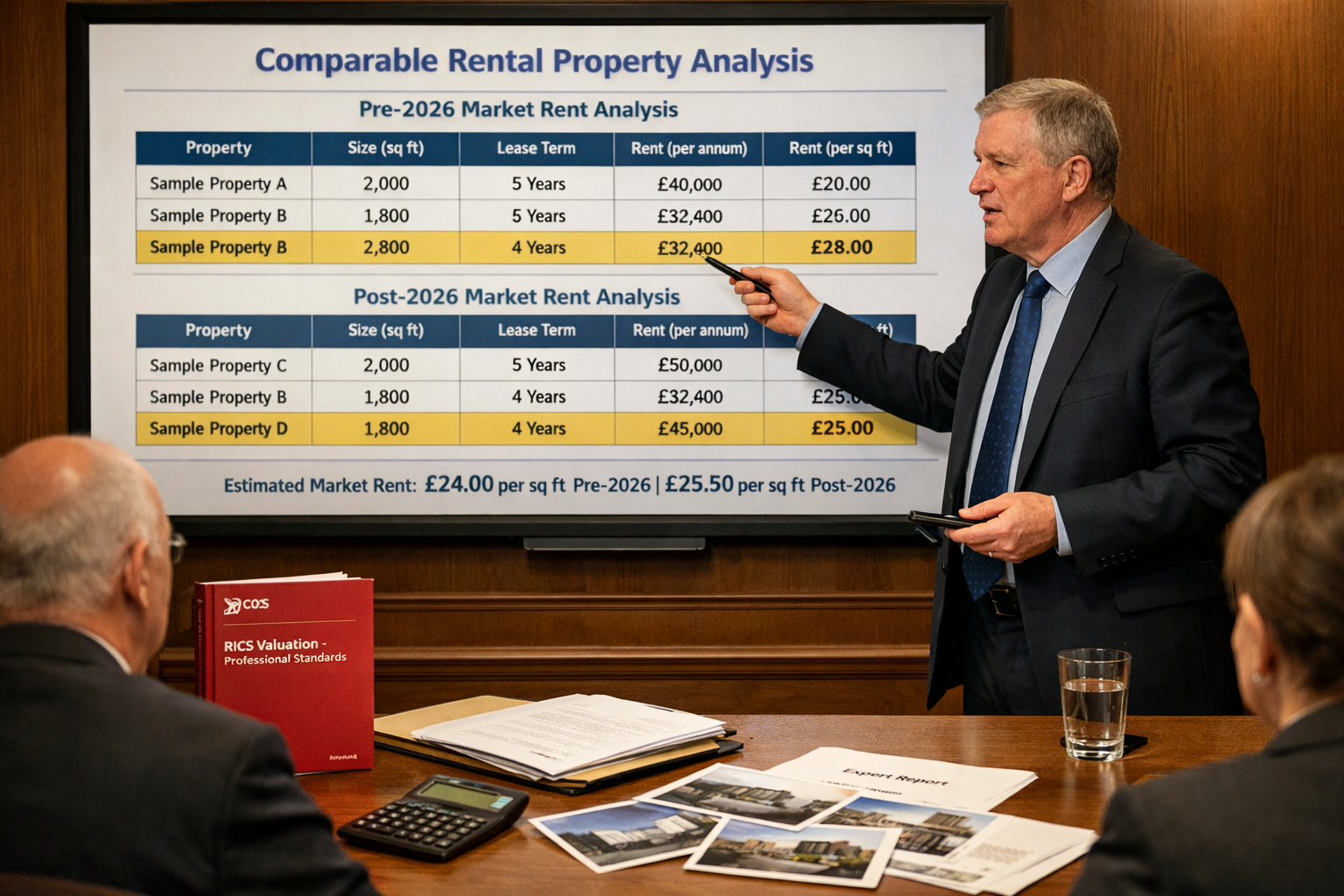
The RICS Valuation – Global Standards (Red Book) remains the foundation for expert witness property valuations, but application requires careful adaptation for post-2026 disputes. Expert witnesses must explicitly address how tenant protections affect market value and market rent determinations.
Enhanced Red Book considerations include:
- Market Value Adjustments: Quantifying the impact of restricted possession grounds on investment value
- Comparable Selection: Ensuring all comparables operate under identical tenant protection frameworks
- Assumptions and Special Assumptions: Clearly stating how Section 21 abolishment affects valuation premises
- Departures: Documenting any necessary departures from standard methodology due to legislative changes
When preparing valuations for disputes, expert witnesses should reference established building survey methodologies while incorporating the additional layer of tenant protection analysis. This dual approach ensures both technical accuracy and legal relevance.
Rent Review Challenge Strategies
Rent review disputes under the 2026 Act require expert witnesses to demonstrate market rent levels while accounting for enhanced tenant security. The traditional Section 13 notice procedure remains, but challenges increasingly involve detailed expert testimony on reasonable rent levels.
Effective rent review strategies:
- Comparable Analysis: Identify 5-8 comparable properties with similar tenant protection profiles
- Market Trend Documentation: Demonstrate rent movements in the specific locality post-2026 implementation
- Protection Premium Quantification: Calculate any market adjustment for enhanced tenant security
- Condition Assessment: Link property condition to justified rent levels using Level 2 or Level 3 survey standards
- Investment Yield Analysis: Show how restricted eviction grounds affect landlord return expectations
"Expert witnesses must now demonstrate that proposed rents reflect not just property characteristics, but the entire regulatory framework governing the tenancy. The days of simple comparable analysis are over." — RICS Guidance Note on Post-2026 Valuations
Ombudsman Claim Valuation Techniques
Ombudsman disputes typically involve claims that rent levels are unreasonable or that landlords have failed to maintain properties to standards justifying current rents. Expert witnesses must prepare concise, accessible reports that address these specific allegations.
Key ombudsman report elements:
📋 Executive Summary: One-page overview of valuation conclusions accessible to non-specialists
🔢 Market Rent Analysis: Clear presentation of comparable evidence with location mapping
🏠 Property Condition Assessment: Photographic evidence linking condition to rent justification
📊 Rent Reasonableness Opinion: Direct statement on whether current rent aligns with market and property condition
⚖️ Remedial Recommendations: If rent is excessive, suggested fair rent level with supporting rationale
For properties requiring detailed condition assessment, expert witnesses should consider commissioning comprehensive building surveys to support their valuation opinions with objective structural and maintenance evidence.

Practical Implementation of Expert Witness Strategies for Renters' Rights Act 2026 Disputes
Evidence Gathering and Documentation Standards
The enhanced scrutiny of landlord-tenant disputes under the 2026 Act demands rigorous evidence collection by expert witnesses. Courts and ombudsmen expect comprehensive documentation trails linking valuation conclusions to objective market data.
Essential evidence components:
- Comparable Property Database: Minimum 8-10 comparables with detailed specifications, rent levels, and tenancy terms
- Market Research: Local authority housing data, rental market reports, and regional trend analysis
- Photographic Evidence: Comprehensive property condition documentation with date-stamped images
- Inspection Notes: Detailed records of property visits including measurements and condition observations
- Regulatory Compliance: Documentation of property's compliance with tenant protection requirements
- Correspondence Records: All communications with instructing parties maintaining expert independence
Expert witnesses should maintain detailed records similar to those used in party wall matters, where comprehensive documentation is essential for dispute resolution. This systematic approach ensures defensibility under cross-examination or ombudsman questioning.
Addressing Tenant Protection Variables in Valuations
The most challenging aspect of Expert Witness Strategies for Renters' Rights Act 2026 Disputes: Valuing Properties Under New Tenant Protections involves quantifying how specific tenant protections affect property values. Expert witnesses must develop defensible methodologies for these adjustments.
Protection variable analysis framework:
| Protection Element | Valuation Impact | Quantification Method |
|---|---|---|
| Section 21 Abolishment | Reduced landlord flexibility | Yield adjustment (typically 0.25-0.5%) |
| Extended Notice Periods | Increased void risk | Rent adjustment for extended notice cost |
| Mandatory Ombudsman | Compliance costs | Annual cost amortization |
| Enhanced Repair Standards | Maintenance obligations | Condition-adjusted rent comparison |
| Restricted Rent Increases | Revenue predictability | Cash flow modeling with constrained increases |
These adjustments must be supported by market evidence rather than theoretical calculations. Expert witnesses should reference actual transaction data showing how investors have priced these protections into acquisition decisions and rent determinations.
Cross-Examination Preparation and Report Defense
Expert witnesses providing testimony on post-2026 disputes must anticipate challenges to their valuation methodologies, particularly regarding how tenant protections have been incorporated into their analysis.
Common cross-examination challenges:
❓ "How do you know Section 21 abolishment affects this specific property's value?"
- Response Strategy: Reference comparable sales data showing pre/post-2026 yield differences and investor sentiment surveys
❓ "Aren't you just speculating about market impacts of new legislation?"
- Response Strategy: Present transaction evidence, rental market data, and professional guidance demonstrating actual market responses
❓ "Why should enhanced tenant protections reduce property value when they benefit society?"
- Response Strategy: Distinguish between policy merits and objective market valuation, emphasizing duty to reflect actual market behavior
❓ "Your comparables don't perfectly match the subject property—how reliable is your opinion?"
- Response Strategy: Explain adjustment methodology and demonstrate how differences have been accounted for in analysis
Preparation should include reviewing similar cases heard by tribunals and ombudsmen, understanding common objections, and developing clear, concise responses that maintain expert credibility while remaining accessible to non-specialists.
Integration with Broader Property Services
Expert witness work on tenancy disputes often intersects with other surveying services. Comprehensive strategies may require coordination with related specializations:
- Investment valuation services for portfolio-level impact assessment
- Capital gains valuations when disputes involve property disposals
- Right to buy valuations where social housing intersects with private rental sector
- Building condition surveys to support rent reasonableness opinions
This integrated approach ensures expert opinions are supported by comprehensive property analysis rather than isolated valuation exercises.
Technology and Data Resources for Expert Witnesses
Modern expert witness practice increasingly relies on technology platforms and data resources to support valuation opinions:
Essential tools and resources:
💻 Property Database Platforms: CoStar, EGi, Rightmove data services for comparable evidence
📱 Inspection Technology: Digital measurement tools, photographic documentation systems, drone surveys for complex properties
📊 Data Analysis Software: Statistical tools for rent trend analysis and market modeling
📚 Legal Research Platforms: Access to tribunal decisions and ombudsman determinations
🗺️ GIS Mapping: Location analysis tools for comparable property identification
Expert witnesses must balance technology adoption with maintaining the personal judgment and professional expertise that gives their testimony credibility. Technology supports but never replaces expert opinion.
Fee Structures and Engagement Terms
The complexity of post-2026 disputes affects expert witness fee structures. Typical engagements now involve:
- Initial case review: £500-£1,200 for preliminary assessment
- Detailed expert report: £2,500-£6,000 depending on property complexity
- Ombudsman hearing attendance: £1,500-£2,500 per day
- Court testimony: £2,000-£4,000 per day plus preparation time
- Additional consultations: £200-£350 per hour
Transparent engagement terms should specify scope limitations, particularly regarding the expert's duty to the court/ombudsman rather than the instructing party. This independence is fundamental to expert witness credibility.
Future Developments and Emerging Trends
Anticipated Litigation Patterns
As the 2026 Act matures, certain dispute patterns are emerging that will shape expert witness practice:
Projected trends:
- Increased rent review challenges as tenants test market rent determinations under new protections
- Possession ground disputes requiring expert testimony on landlord circumstances and property condition
- Retrospective rent adjustment claims through ombudsman channels
- Portfolio valuation disputes for investment property transactions
- Insurance claim complications involving tenant-caused damage assessment
Expert witnesses should develop specialized knowledge in these emerging areas to maintain competitive advantage and provide superior client service.
Professional Development Requirements
RICS and other professional bodies are developing continuing professional development (CPD) requirements specific to post-2026 tenancy disputes. Expert witnesses should prioritize:
- Legislative update training on Renters' Rights Act implementation
- Ombudsman procedure familiarization through scheme-specific guidance
- Tribunal practice courses addressing procedural differences from traditional litigation
- Valuation methodology workshops on incorporating tenant protection variables
- Expert witness skills development focusing on report writing and testimony delivery
Maintaining current knowledge through professional development ensures expert opinions reflect best practice and current market understanding, critical for credibility in dispute resolution forums.
Market Adaptation and Valuation Evolution
The rental property market continues adapting to enhanced tenant protections, requiring expert witnesses to monitor and incorporate these changes into their methodologies:
Observable market adaptations:
- Institutional investor entry increasing professional management standards
- Rent levels stabilizing as market prices in tenant protections
- Property condition improvements as landlords compete for quality tenants
- Longer average tenancy durations reducing turnover costs
- Increased demand for professional property management services
Expert witnesses must distinguish between short-term market disruption following legislative change and long-term equilibrium conditions. Valuations should reflect sustainable market conditions rather than temporary adjustment periods.
Conclusion
The Renters' Rights Act 2026 has fundamentally transformed the landscape for Expert Witness Strategies for Renters' Rights Act 2026 Disputes: Valuing Properties Under New Tenant Protections, requiring surveyors to develop sophisticated methodologies that account for enhanced tenant security while maintaining RICS-compliant valuation standards. The abolishment of Section 21 evictions, mandatory ombudsman scheme participation, and strengthened tenant protections create complex litigation scenarios demanding expert testimony that balances market realities with legislative requirements.
Successful expert witnesses in this evolving field must master multiple competencies: traditional valuation expertise, detailed understanding of tenancy legislation, effective communication with non-specialist adjudicators, and rigorous evidence documentation standards. The integration of tenant protection variables into property valuations requires defensible methodologies supported by market data rather than theoretical speculation.
Actionable Next Steps
For property professionals seeking to develop expert witness capabilities in post-2026 tenancy disputes:
✅ Enhance legislative knowledge through specialized CPD on Renters' Rights Act provisions and implementation
✅ Develop ombudsman familiarity by reviewing published determinations and understanding procedural differences from court proceedings
✅ Build comparable databases specific to post-2026 rental properties with detailed tenant protection profiles
✅ Refine report writing skills to produce accessible, comprehensive expert opinions suitable for diverse audiences
✅ Establish quality assurance processes ensuring all valuations meet enhanced documentation standards required for dispute resolution
✅ Network with legal professionals specializing in landlord-tenant disputes to understand litigation strategy and expert witness expectations
The demand for qualified expert witnesses in this specialized area will continue growing as the 2026 Act generates increased litigation and ombudsman claims. Property professionals who develop robust Expert Witness Strategies for Renters' Rights Act 2026 Disputes: Valuing Properties Under New Tenant Protections will find significant opportunities to provide valuable services while contributing to fair dispute resolution in the transformed rental sector.
For comprehensive property valuation services that incorporate these evolving standards, consider consulting experienced chartered surveyors who understand both traditional methodologies and the nuanced implications of enhanced tenant protections in the current legislative environment.