

Property transaction volumes are rebounding sharply in 2026, but with this recovery comes unprecedented pressure on surveyors to identify hidden structural problems before they derail deals or trigger costly litigation. Recent data shows buyers are using survey findings more aggressively than ever, demanding price reductions for even minor defects as market confidence remains fragile.[3] For surveyors, the stakes have never been higher: miss a concealed defect, and professional indemnity claims follow swiftly.
Building Surveys for Properties with Latent Defects: Advanced Detection Protocols for 2026 Market Recovery and Increased Transaction Volume represents a critical shift in how property professionals approach inspection work. As transaction activity accelerates, surveyors must balance thoroughness with efficiency, deploying systematic methodologies and sensor technology to uncover problems that traditional visual inspections miss entirely.
Key Takeaways
- 🔍 Enhanced detection protocols using thermal imaging, moisture meters, and remote sensing technology are now essential for identifying latent defects in 2026's recovering property market
- 📋 New survey standards effective February 23, 2026, require comprehensive documentation of discrepancies, verbal statements, and easement identification to protect all transaction parties[1][2]
- ⚖️ Liability protection demands systematic inspection methodologies and detailed reporting as buyers increasingly leverage survey findings for price negotiations[3]
- 🏘️ Complex property types including period buildings, conversions, and properties with previous alterations require specialized detection approaches for subsidence, damp, and concealed structural issues
- 💼 Market recovery dynamics mean higher transaction volumes but also greater scrutiny, requiring surveyors to work faster without compromising detection quality
Understanding Latent Defects in Building Surveys for 2026 Market Conditions
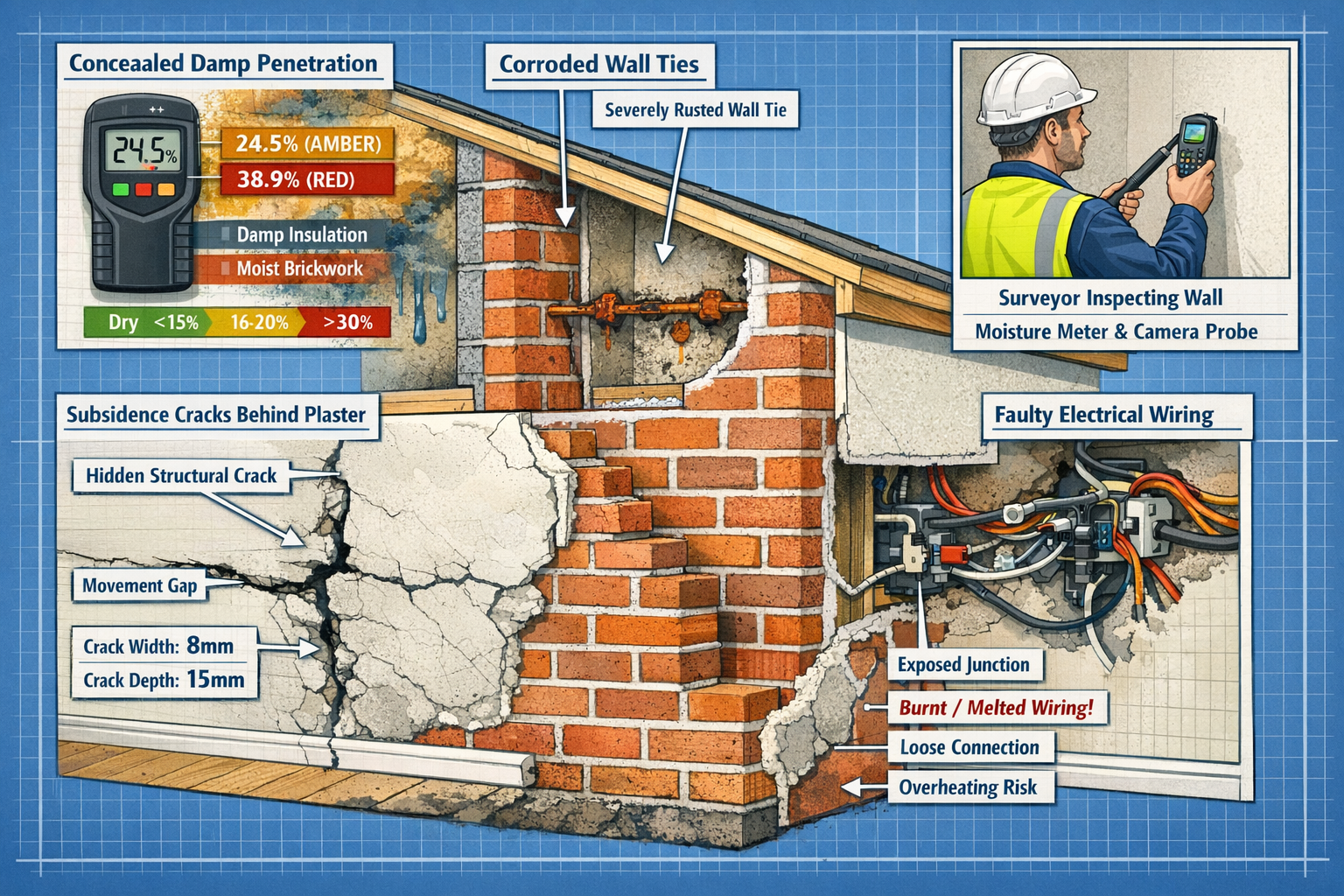
Latent defects represent the most challenging category of property problems: structural or material failures that aren't visible during standard inspections but will manifest over time. Unlike patent defects (obvious issues like cracked render or missing tiles), latent problems hide behind finished surfaces, beneath floor coverings, or within wall cavities.
Common Categories of Latent Defects
Structural Movement Issues 🏗️
- Progressive subsidence concealed by recent redecoration
- Foundation settlement masked by cosmetic repairs
- Lintel failure hidden behind plasterwork
- Roof spread with no visible external indicators
Moisture and Damp Penetration 💧
- Cavity wall tie failure allowing water ingress
- Concealed plumbing leaks within floor voids
- Rising damp treated superficially but not remediated
- Condensation problems within insulated cavities
Building Services Defects ⚡
- Outdated electrical installations behind walls
- Corroded pipework within concrete floors
- Inadequate drainage systems below ground level
- Asbestos-containing materials in hidden locations
Previous Alteration Problems 🔨
- Unauthorised structural modifications
- Inadequate support for removed walls
- Non-compliant building work concealed by finishes
- Poor-quality repairs covered during redecoration
The 2026 market recovery has intensified focus on these issues. With transaction volumes increasing, buyers face greater competition but remain cautious after recent market volatility. This creates a paradox: properties move faster, yet buyers demand more comprehensive due diligence. Understanding what types of building surveys are there becomes essential for selecting appropriate inspection depth.
Why Latent Defects Matter More in 2026
The current market environment creates unique challenges:
| Market Factor | Impact on Latent Defect Detection |
|---|---|
| Increased Transaction Speed | Less time for comprehensive investigations |
| Buyer Caution | Higher scrutiny of survey findings |
| Price Sensitivity | Minor defects trigger major negotiations |
| Litigation Risk | Professional indemnity claims rising |
| Regulatory Changes | New standards demand better documentation[1][2] |
Surveyors working on Level 3 full building surveys must now employ advanced detection methods as standard practice rather than optional extras. The question isn't whether to use technology-enhanced inspection protocols, but which combinations deliver optimal results for specific property types.
Advanced Detection Protocols for Building Surveys: Technology and Methodology
Modern latent defect detection requires systematic integration of traditional surveying skills with advanced sensor technology. The protocols outlined here reflect current best practice for Building Surveys for Properties with Latent Defects: Advanced Detection Protocols for 2026 Market Recovery and Increased Transaction Volume.
Thermal Imaging Technology
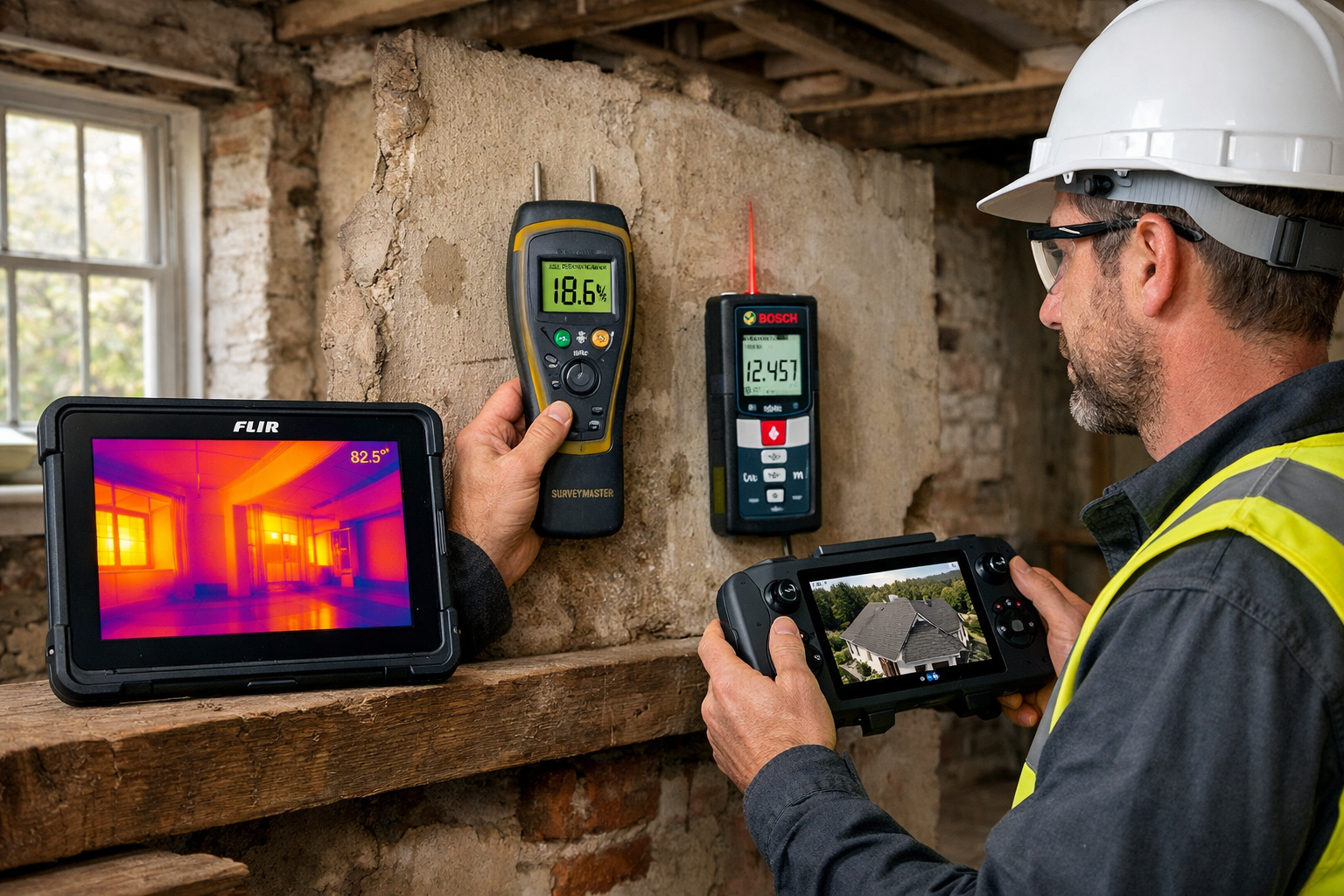
Infrared thermography has evolved from specialist tool to essential equipment for comprehensive building surveys. Thermal cameras detect temperature differentials that indicate:
- Hidden moisture intrusion: Cold spots reveal water penetration behind surfaces
- Insulation defects: Heat loss patterns expose missing or damaged insulation
- Air leakage paths: Temperature variations show unsealed penetrations
- Electrical hotspots: Overheating circuits indicate potential fire hazards
- Structural anomalies: Temperature differences reveal concealed voids or alterations
Best Practice Protocol:
- Conduct thermal surveys during temperature differential periods (early morning or evening)
- Ensure minimum 10°C difference between internal and external temperatures
- Document ambient conditions affecting readings
- Combine thermal data with moisture meter verification
- Photograph both thermal and visible light images for comparison
Moisture Detection Systems
Accurate moisture measurement prevents misdiagnosis of damp problems. Modern protocols employ multiple detection methods:
Non-Invasive Meters
- Radio frequency (RF) meters scan deeper into substrates
- Capacitance meters measure moisture without surface penetration
- Ideal for initial screening across large areas
Invasive Pin Meters
- Provide precise moisture content readings at specific depths
- Essential for confirming RF meter findings
- Allow measurement within wall cavities via small probe holes
Calcium Carbide Testing
- Laboratory-grade accuracy for disputed cases
- Measures actual moisture content by weight
- Used when legal disputes require definitive evidence
Understanding building pathology principles ensures correct interpretation of moisture readings within different construction materials and environmental contexts.
Remote Sensing and Aerial Survey Methods
The 2026 ALTA/NSPS survey standards now explicitly address non-ground-based surveying methods, requiring prior client discussion before implementation.[2] These technologies include:
Drone-Based Inspection 🚁
- High-resolution photography of roofs, chimneys, and upper elevations
- Thermal imaging of roof coverings detecting moisture penetration
- 3D photogrammetry creating detailed elevation models
- Access to dangerous or inaccessible areas without scaffolding
Mobile Laser Scanning
- Rapid 3D capture of entire building exteriors
- Precise measurement of structural movement over time
- Integration with BIM (Building Information Modelling) systems
- Comparison against original plans revealing alterations
Rectified Orthophotography
- Geometrically corrected aerial images for accurate measurement
- Historical comparison revealing settlement or movement
- Documentation of site context and easement locations
These methods complement rather than replace traditional ground-based inspection. The key advantage: they reveal problems in locations where physical access proves difficult, dangerous, or destructive to finishes.
Systematic Inspection Methodology
Technology only delivers value when deployed within structured inspection protocols:
1. Pre-Survey Research Phase
- Review title documents, planning records, and building control approvals
- Identify known defect patterns for property type and age
- Research local ground conditions and flooding history
- Examine previous survey reports if available
2. External Envelope Assessment
- Systematic elevation-by-elevation inspection
- Drainage testing and CCTV surveys where indicated
- Thermal imaging of external walls
- Drone survey of roof coverings and high-level elements
3. Internal Structural Inspection
- Room-by-room assessment with moisture meter screening
- Thermal imaging of suspect areas
- Floor level surveys detecting movement
- Ceiling void inspections where accessible
4. Services and Installation Review
- Electrical installation condition assessment
- Heating system inspection and efficiency testing
- Drainage flow testing
- Water pressure and quality checks
5. Specialist Investigation Triggers
Certain findings during initial survey work demand specialist follow-up:
- Structural engineer referral: Significant cracking, movement, or alterations
- Damp specialist: Persistent moisture readings requiring invasive investigation
- Electrical contractor: Outdated installations requiring detailed testing
- Arboricultural consultant: Tree-related subsidence concerns
- Environmental consultant: Suspected contamination or asbestos
Knowing which building survey you need helps clients understand when comprehensive Level 3 surveys with advanced detection protocols prove essential versus more basic inspection levels.
Implementing Building Surveys for Properties with Latent Defects: Practical Application and Risk Management
The theoretical framework for advanced defect detection means nothing without effective implementation. This section addresses practical application of Building Surveys for Properties with Latent Defects: Advanced Detection Protocols for 2026 Market Recovery and Increased Transaction Volume across different property scenarios.
Property-Specific Detection Strategies
Different building types present unique latent defect risks requiring tailored approaches:
Period Properties (Pre-1919) 🏛️
These buildings demand particular attention to:
- Structural movement: Lime mortar joints, timber frame settlement, foundation adequacy
- Hidden alterations: Removed chimneys, blocked fireplaces, concealed structural changes
- Damp issues: Bridged damp-proof courses, failed tanking, rising damp
- Roof defects: Common pitched roof defects including spread, sagging purlins, and inadequate bracing
Detection Protocol:
- Extended moisture surveys of all external walls
- Thermal imaging to identify concealed chimneys and flues
- Floor level surveys across multiple rooms
- Roof void inspection for structural adequacy and alterations
Converted Properties 🔄
Flats created from larger houses, barn conversions, and commercial-to-residential changes present specific risks:
- Inadequate sound insulation between units
- Shared services with unclear maintenance responsibilities
- Fire safety deficiencies in means of escape and compartmentation
- Building regulation compliance for conversion work
Detection Protocol:
- Review building control completion certificates
- Inspect party wall construction and fire stopping
- Verify adequate sound insulation installation
- Check emergency egress routes and fire door specifications
Modern Properties (Post-2000) 🏘️
Recent construction isn't immune to latent defects:
- New-build snagging issues concealed by developers
- Cavity wall insulation problems causing damp penetration
- Modern methods of construction with limited long-term performance data
- Energy efficiency shortfalls versus design specifications
Detection Protocol:
- Thermal imaging to verify insulation continuity
- Air tightness testing where energy performance disputed
- Review NHBC or warranty documentation
- Check for incomplete snagging rectification
Enhanced Documentation Requirements Under 2026 Standards
The revised ALTA/NSPS standards effective February 23, 2026, impose significant new documentation obligations that UK surveyors should adopt as best practice.[1][2][5]
Comprehensive Discrepancy Notes 📝
Surveyors must now provide detailed explanations when discrepancies arise between:
- Recorded boundary information and physical observations
- Title documents and actual site conditions
- Measured distances and deed descriptions
- Historical plans and current property configuration
This requirement protects surveyors from liability while providing clients with transparent information about property uncertainties.
Verbal Statement Documentation
Any verbal statements by property owners, occupants, or neighbours regarding:
- Boundary disputes or agreements
- Easement usage or restrictions
- Historical alterations or problems
- Informal arrangements affecting the property
Must be documented on survey reports, even when unverified. This creates a comprehensive record protecting all parties in subsequent disputes.
Easement Identification Clarity
Survey reports must explicitly state whether easements are:
- ✅ Shown on the survey with precise location
- ❌ Cannot be located on the ground
- 📄 Blanket easements without specific location
- 🔍 Illegible in source documents
- ⭕ Do not affect the surveyed property
This clarity prevents post-transaction disputes about access rights, services, and restrictions.
Liability Protection Through Systematic Reporting
With buyers increasingly using survey findings to negotiate house prices down, surveyors face pressure from multiple directions. Robust reporting protocols provide essential protection:
Essential Report Components:
-
Limitations of Inspection Statement
- Areas not accessed and reasons why
- Finishes preventing full inspection
- Recommendations for specialist investigation
- Scope boundaries clearly defined
-
Photographic Evidence
- Dated, captioned images of all significant defects
- Thermal images with corresponding visible light photos
- Measurement data overlaid on images
- Comparative images showing defect progression
-
Risk Assessment and Prioritisation
- Urgent defects requiring immediate attention
- Significant defects affecting value or safety
- Maintenance items for future attention
- Observations not constituting defects
-
Cost Guidance
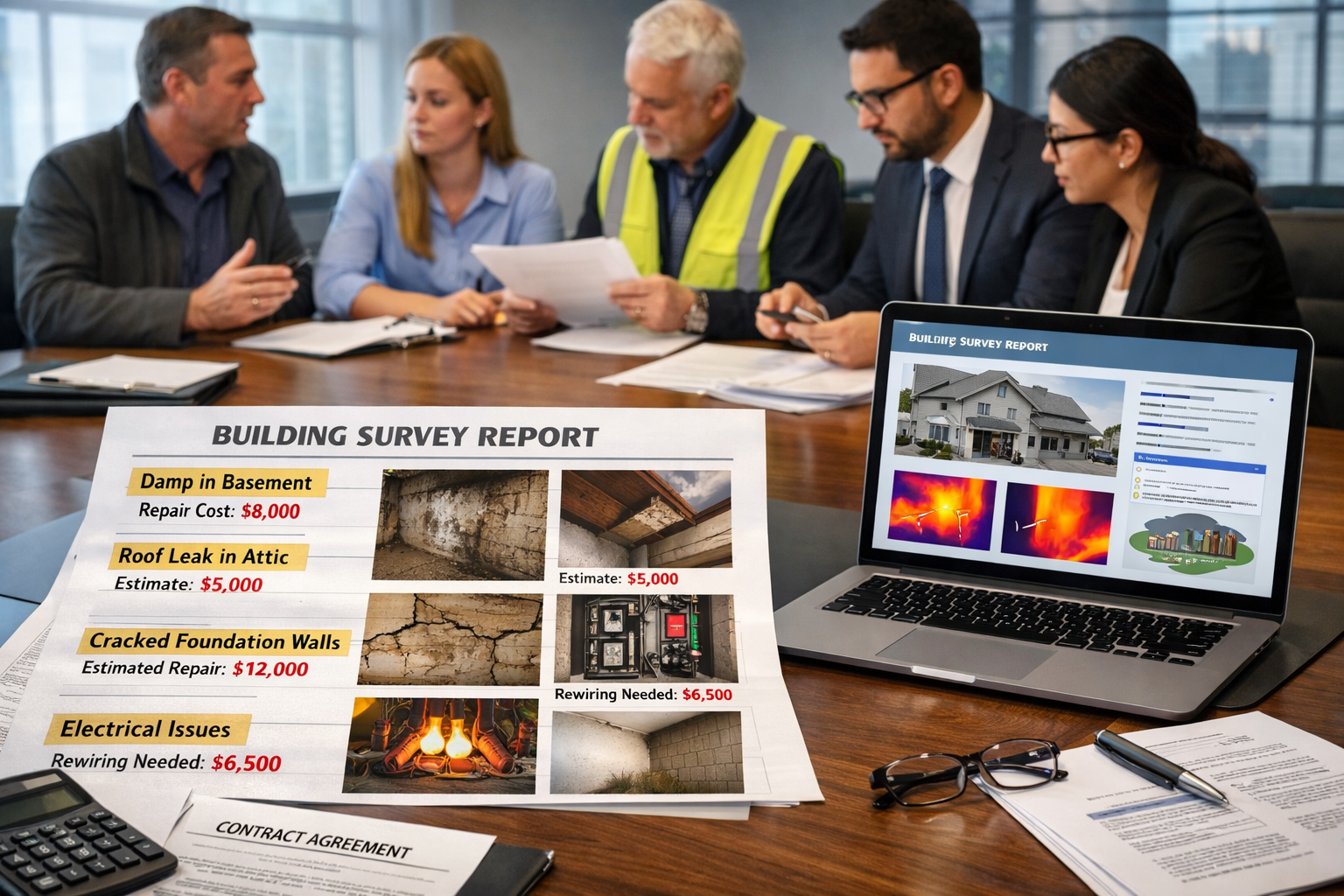
- Realistic repair cost ranges for identified defects
- Recommendations for competitive quotations
- Allowances for contingencies in complex repairs
- Distinction between essential and desirable works
-
Specialist Referral Recommendations
- Clear triggers for structural engineer involvement
- Damp specialist referral criteria
- Electrical testing requirements
- Environmental investigation needs
Managing Client Expectations in High-Volume Markets
The 2026 market recovery creates operational challenges: more surveys required in shorter timeframes while maintaining quality standards. Effective client communication becomes essential:
Pre-Survey Briefing
- Explain survey scope and methodology
- Discuss property-specific risk factors
- Clarify limitations of visual inspection
- Set realistic timescales for report delivery
During Survey Communication
- Provide preliminary verbal feedback on significant findings
- Discuss need for additional investigations
- Manage expectations about report content
- Explain technology being deployed and why
Post-Survey Support
- Offer clarification calls to discuss report findings
- Provide guidance on obtaining specialist quotes
- Advise on negotiation strategies with sellers
- Remain available for surveyor-to-surveyor discussions with buyers' solicitors
Understanding the complete condition survey report process helps clients appreciate the value delivered through comprehensive latent defect detection protocols.
Integration with Transaction Process
Advanced detection protocols deliver maximum value when properly integrated into the broader property transaction:
Timing Considerations ⏰
- Schedule surveys allowing time for follow-up investigations
- Coordinate with mortgage valuation requirements
- Allow report review before exchange deadlines
- Build contingency for specialist referrals
Multi-Party Coordination
- Share findings appropriately with solicitors, mortgage lenders, and clients
- Facilitate specialist access for follow-up investigations
- Coordinate with sellers' agents regarding access requirements
- Support negotiation process with objective technical information
Post-Survey Action Planning
- Prioritise defects requiring pre-purchase resolution
- Identify items suitable for retention or price adjustment
- Plan phased remediation for acceptable defects
- Establish monitoring protocols for ongoing issues
For properties requiring preparation before sale, understanding how to prepare your property for market helps sellers address latent defects proactively rather than reactively during negotiations.
Conclusion
Building Surveys for Properties with Latent Defects: Advanced Detection Protocols for 2026 Market Recovery and Increased Transaction Volume represents more than technological advancement—it reflects fundamental evolution in professional surveying practice. As transaction volumes rebound throughout 2026, the pressure to detect hidden defects efficiently while maintaining thoroughness has never been more acute.
The integration of thermal imaging, moisture detection systems, and remote sensing technology with systematic inspection methodologies provides surveyors with unprecedented capability to identify problems that traditional visual surveys miss entirely. However, technology alone doesn't guarantee success. Structured protocols, comprehensive documentation meeting the enhanced 2026 standards, and clear client communication remain equally essential.
Actionable Next Steps for Property Professionals
For Surveyors:
- ✅ Invest in thermal imaging and advanced moisture detection equipment
- ✅ Develop property-type-specific inspection protocols
- ✅ Adopt enhanced documentation standards ahead of regulatory requirements
- ✅ Establish specialist referral networks for complex investigations
- ✅ Implement systematic CPD covering new detection technologies
For Property Buyers:
- ✅ Commission Level 3 building surveys for older, altered, or complex properties
- ✅ Ensure surveyors deploy advanced detection technology as standard
- ✅ Allow adequate time for comprehensive investigation and specialist referrals
- ✅ Use survey findings strategically in price negotiations
- ✅ Plan remediation budgets based on professional cost guidance
For Property Sellers:
- ✅ Consider pre-sale surveys identifying latent defects before marketing
- ✅ Address significant defects proactively to avoid transaction collapse
- ✅ Maintain comprehensive records of repairs and alterations
- ✅ Disclose known issues transparently to manage buyer expectations
- ✅ Obtain specialist reports for known problem areas
For Legal Professionals:
- ✅ Recommend appropriate survey levels based on property characteristics
- ✅ Review survey reports thoroughly before exchange
- ✅ Ensure clients understand implications of identified defects
- ✅ Coordinate specialist investigations when surveys recommend them
- ✅ Build adequate contingency into transaction timescales
The 2026 market recovery presents both opportunity and challenge. Properties are transacting faster, but buyers demand greater certainty about condition and value. Surveyors who embrace advanced detection protocols, systematic methodologies, and enhanced documentation standards will not only protect themselves from liability but also deliver exceptional value to clients navigating an increasingly complex property market.
The question isn't whether to adopt these advanced approaches—it's how quickly you can implement them effectively. In a market where hidden defects can derail transactions or trigger costly litigation, comprehensive latent defect detection has evolved from competitive advantage to professional necessity.
References
[1] Alta Surveys Revised 2026 – https://www.bvna.com/needs/alta-surveys-revised-2026
[2] 2026 Alta Survey Standards Updates – https://www.hklaw.com/en/insights/publications/2026/03/2026-alta-survey-standards-updates
[3] Building Survey Market Sentiment In Early 2026 Navigating Regional Price Divergence And Buyer Uncertainty – https://nottinghillsurveyors.com/blog/building-survey-market-sentiment-in-early-2026-navigating-regional-price-divergence-and-buyer-uncertainty
[4] Why Alta Surveys Matter In Commercial Real Estate – https://mcsteen.com/why-alta-surveys-matter-in-commercial-real-estate/
[5] Effective February 23 2026 Changes In The Minimum Standard Detail Requirements For Alta Nsps Land Title Surveys – https://www.lewisrice.com/publications/effective-february-23-2026-changes-in-the-minimum-standard-detail-requirements-for-alta-nsps-land-title-surveys