

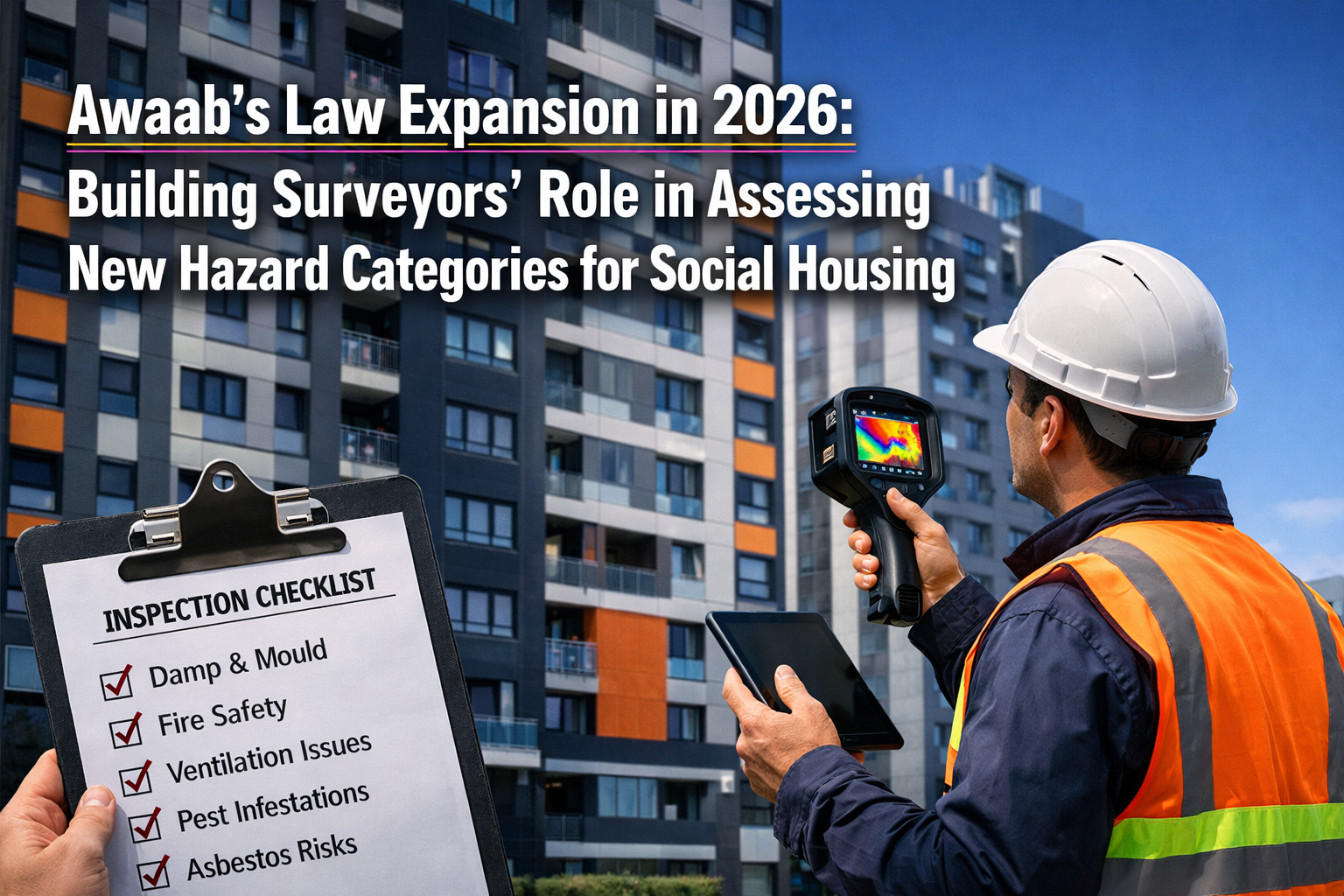
The tragic death of two-year-old Awaab Ishak from prolonged exposure to mould in his family's social housing flat shocked the nation and sparked a fundamental shift in how England regulates housing safety. Now, as 2026 unfolds, the legislation bearing his name enters its most ambitious phase yet. Awaab's Law Expansion in 2026: Building Surveyors' Role in Assessing New Hazard Categories for Social Housing represents a watershed moment for the sector, demanding that building surveyors evolve their inspection protocols to identify and assess six critical hazard categories affecting approximately 4.5 million social homes across England[4].
Phase 2 of Awaab's Law, which came into effect in 2026, extends mandatory statutory response timeframes beyond damp and mould to encompass excess cold and heat, fire safety risks, electrical hazards, falls associated with stairs and baths, structural instability and collapse, and domestic hygiene and sanitation issues[1][2]. For building surveyors working in the social housing sector, this expansion requires a complete transformation of assessment capabilities, reporting standards, and hazard recognition training.
Key Takeaways
- 🏢 Phase 2 expands coverage to six major hazard categories including temperature extremes, fire safety, electrical risks, falls, structural issues, and hygiene concerns—all with mandatory response timeframes for social landlords[1][2]
- 📊 4.5 million social homes across England (2.9 million housing association properties and 1.6 million council homes) now fall under Phase 2 compliance requirements[4]
- 🔍 Building surveyors must broaden assessment capabilities beyond damp and mould to recognize diverse HHSRS hazards during routine inspections and repair visits[1]
- ⚖️ Non-compliance carries significant penalties including enforcement orders, tenant compensation, legal cost coverage, and potential rent loss if properties become uninhabitable[4]
- 📅 Phase 3 arrives in 2027 extending coverage to nearly all Housing Health and Safety Rating System (HHSRS) hazards except overcrowding[3][5]
Understanding the Evolution of Awaab's Law and Its 2026 Expansion
From Tragedy to Legislative Action
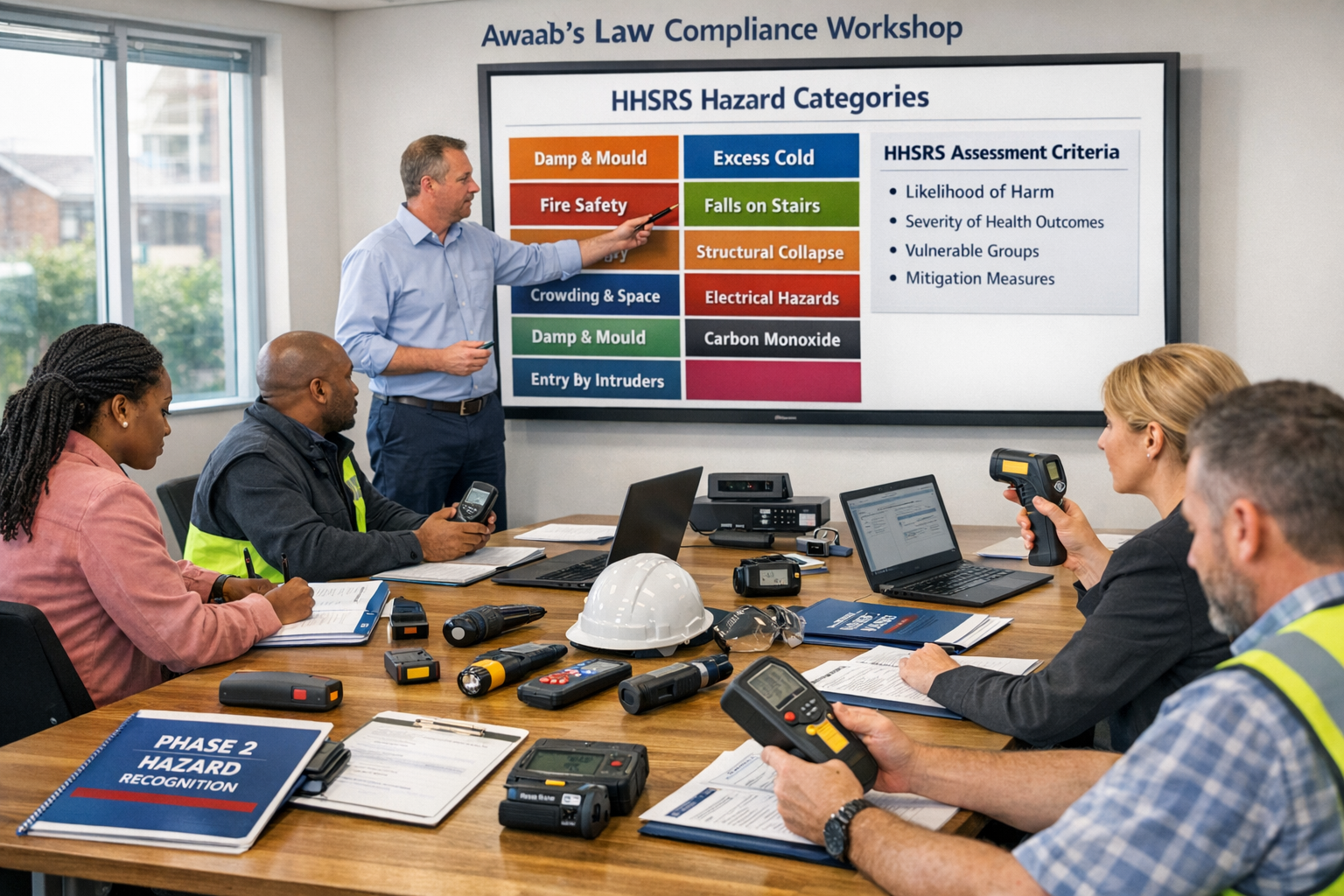
The Social Housing (Regulation) Act 2023 received Royal Assent in July 2023, proposed as an amendment following Awaab Ishak's death in December 2020[4]. The legislation established a phased implementation approach, beginning with Phase 1 on October 27, 2025, which covered only damp, mould, and fungal growth alongside emergency hazards requiring 24-hour response[2][4].
Phase 2 in 2026 represents the most substantial expansion, introducing six additional prescribed hazard categories that align directly with the Housing Health and Safety Rating System (HHSRS)—a risk-based evaluation tool introduced under the Housing Act 2004[4]. This alignment ensures consistent assessment standards across local councils and social landlords, creating a unified framework for identifying and addressing housing health threats.
The Six New Hazard Categories in Phase 2
The 2026 expansion requires social landlords and their surveying teams to assess and remediate the following hazard categories within statutory timeframes:
-
Excess Cold and Excess Heat ❄️🔥
- Temperature-related health risks affecting vulnerable tenants
- Inadequate heating systems or insulation
- Properties susceptible to overheating in summer months
-
Fire Safety 🔥
- Inadequate fire detection and alarm systems
- Compromised escape routes and emergency exits
- Flammable materials and fire spread risks
-
Electrical Hazards ⚡
- Faulty wiring and outdated electrical installations
- Exposed cables and damaged outlets
- Inadequate earthing and circuit protection
-
Falls Associated with Stairs, Baths, and Level Surfaces 🚶
- Defective or missing handrails
- Slippery surfaces and trip hazards
- Poor lighting in circulation areas
-
Structural Instability and Collapse 🏗️
- Compromised load-bearing elements
- Foundation movement and subsidence
- Deteriorating structural components
-
Domestic Hygiene, Sanitation, and Food Safety 🧼
- Inadequate bathroom and kitchen facilities
- Pest infestations and drainage issues
- Contaminated water supplies
Building Surveyors' Expanded Assessment Responsibilities Under Awaab's Law
Evolving Inspection Protocols for Multiple Hazard Recognition
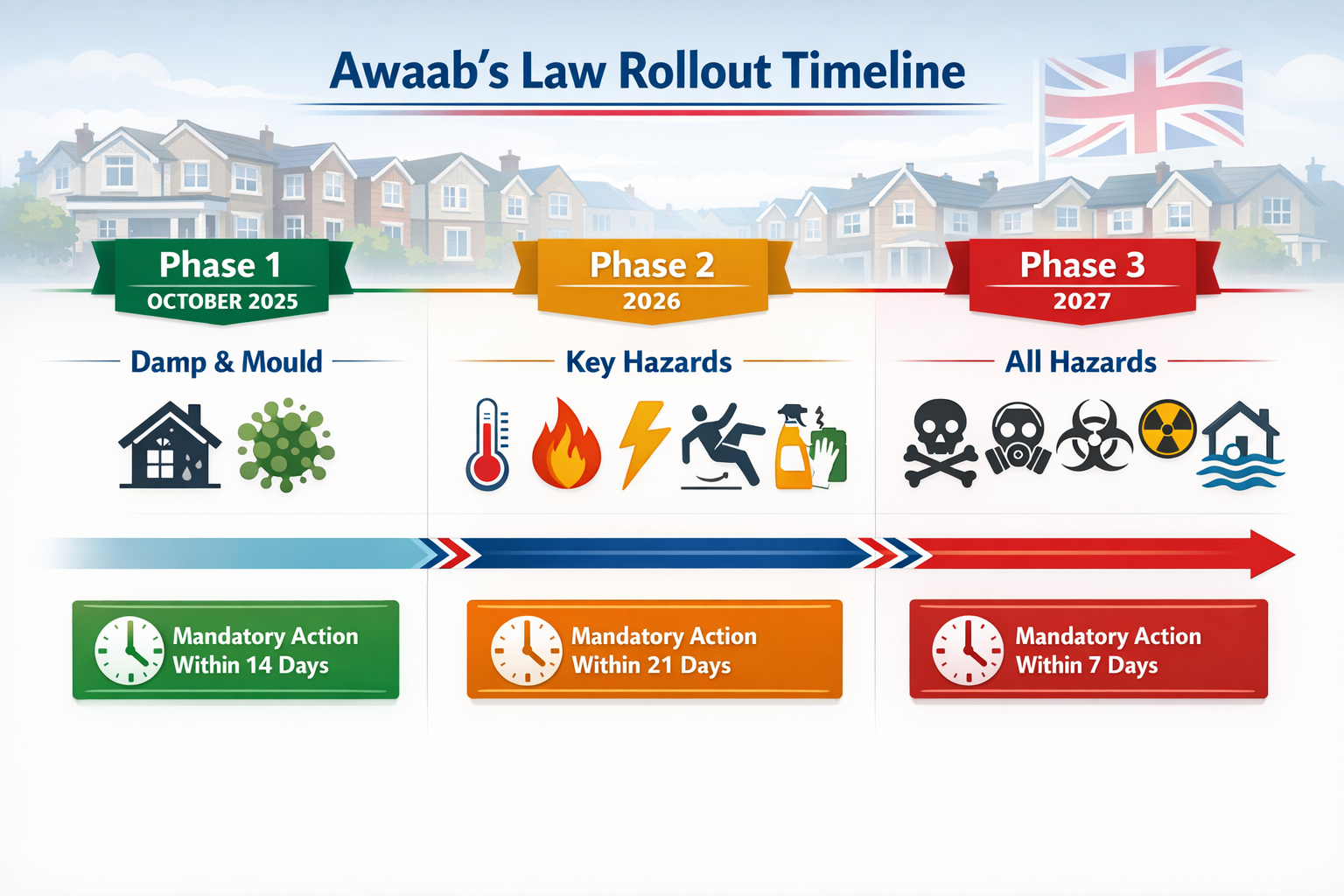
The Awaab's Law Expansion in 2026: Building Surveyors' Role in Assessing New Hazard Categories for Social Housing demands that surveyors fundamentally transform their approach to property assessment. Traditional building survey methodologies focused primarily on structural integrity and maintenance issues must now incorporate systematic hazard identification across all six Phase 2 categories[1].
Key changes to inspection protocols include:
- Thermal assessment capabilities: Surveyors must now evaluate heating system adequacy, insulation effectiveness, and ventilation performance to identify excess cold or heat risks
- Fire safety evaluation: Inspections must assess fire detection systems, escape route integrity, and compartmentation effectiveness
- Electrical system scrutiny: Visual inspection of electrical installations, identification of outdated wiring, and recognition of shock and fire risks
- Falls hazard identification: Systematic assessment of stairways, bathrooms, and floor surfaces for trip hazards, inadequate lighting, and missing safety features
- Structural integrity verification: Enhanced focus on load-bearing elements, foundation stability, and deterioration patterns that could indicate collapse risk
- Hygiene and sanitation standards: Evaluation of kitchen and bathroom facilities, drainage systems, and pest control measures
The Person-Centred Assessment Approach
Awaab's Law mandates a person-centred approach to hazard assessment, requiring surveyors to evaluate risks based on "the relevant knowledge" that a "reasonable lessor" would have regarding tenant health and circumstances—not generic property standards alone[4]. This means surveyors must consider:
- Vulnerable occupant factors: Elderly residents, young children, disabled tenants, and those with respiratory conditions face heightened risks from certain hazards
- Household composition: Families with multiple children may face greater falls risks; elderly single occupants may be more susceptible to temperature extremes
- Reported health concerns: Tenant complaints about cold, breathing difficulties, or mobility challenges must inform hazard severity assessments
This approach requires surveyors to go beyond checklist-based inspections and apply professional judgment that accounts for actual occupant vulnerability[6].
Transforming Repair Data into Compliance Intelligence
One of the most significant shifts in surveying practice involves analyzing everyday repair data as compliance intelligence[1]. Building surveyors must now recognize when minor repairs indicate wider HHSRS hazards that trigger mandatory investigation and remediation protocols.
Examples of repair-to-hazard connections include:
| Repair Request | Potential HHSRS Hazard | Required Assessment |
|---|---|---|
| Broken thermostat | Excess cold | Full heating system evaluation and thermal performance assessment |
| Flickering lights | Electrical hazards | Complete electrical installation inspection |
| Loose handrail | Falls hazards | Comprehensive stairway and circulation area assessment |
| Cracked wall | Structural collapse | Structural engineer referral and stability evaluation |
| Blocked drain | Hygiene/sanitation | Drainage system investigation and pest control assessment |
| Smoke alarm battery replacement | Fire safety | Full fire detection system audit and escape route verification |
This intelligence-driven approach requires areas of further investigation to be identified promptly and escalated appropriately, transforming reactive maintenance into proactive hazard management.
Training, Technology, and Implementation Strategies for Surveyors
Essential Training Requirements for Phase 2 Compliance
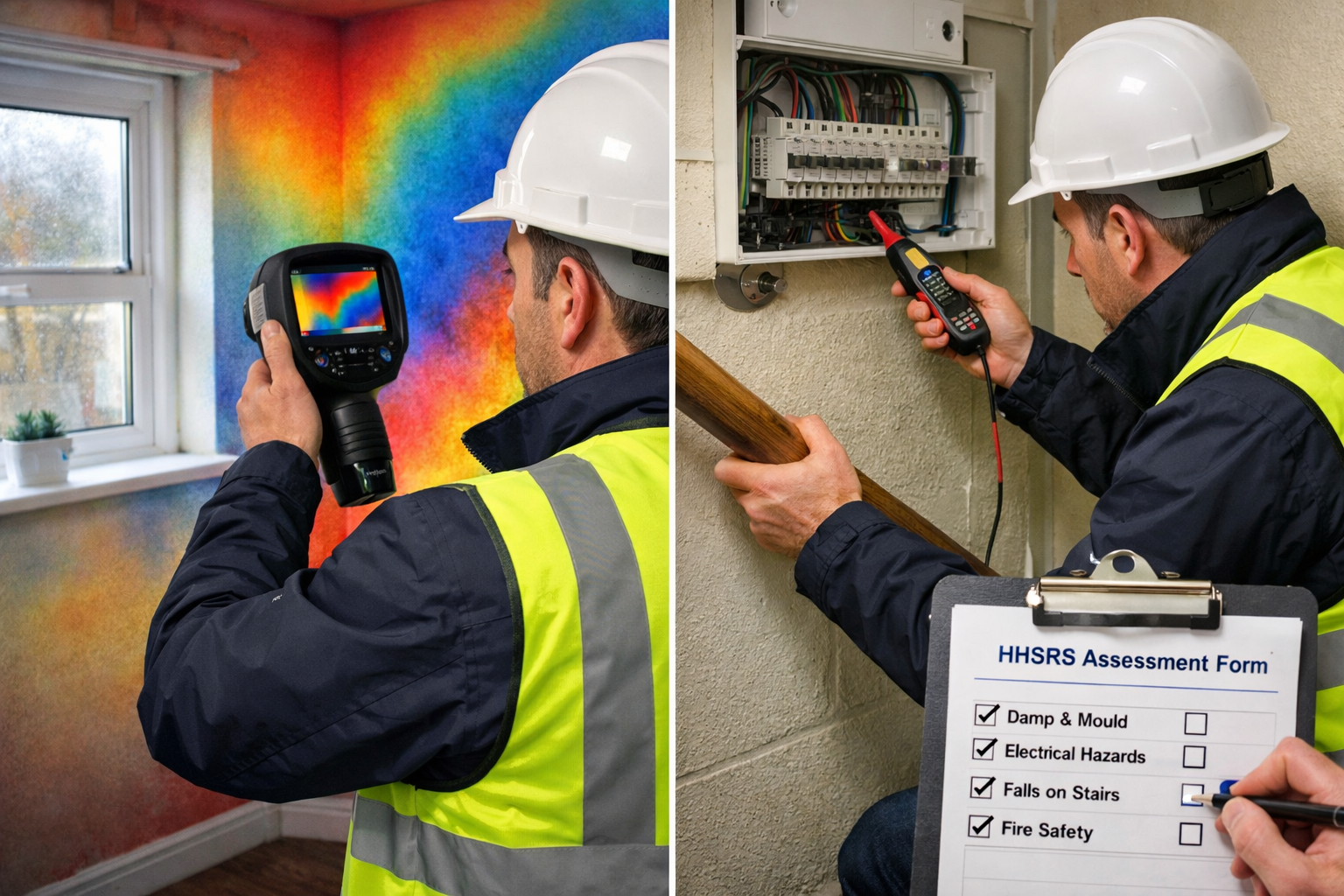
The Awaab's Law Expansion in 2026: Building Surveyors' Role in Assessing New Hazard Categories for Social Housing necessitates comprehensive training programs for frontline staff, surveyors, and contractors[1]. Social landlords must ensure their surveying teams receive targeted instruction on:
Core competency areas:
- HHSRS methodology: Deep understanding of the Housing Health and Safety Rating System's risk assessment framework
- Hazard recognition across all six categories: Visual identification skills for temperature, fire, electrical, falls, structural, and hygiene hazards
- Statutory timeframe requirements: Clear knowledge of investigation and remediation deadlines for each hazard category
- Person-centred assessment techniques: Methods for incorporating tenant vulnerability factors into hazard severity evaluations
- Documentation and reporting standards: Consistent recording of hazard findings and compliance with audit requirements
Many organizations are partnering with professional bodies like RICS (Royal Institution of Chartered Surveyors) and specialist training providers to deliver accredited Awaab's Law compliance courses[6]. These programs combine classroom instruction with practical site assessments to build real-world hazard recognition capabilities.
Technology Solutions for Enhanced Hazard Detection
Modern surveying technology plays a crucial role in identifying Phase 2 hazards effectively. Building surveyors are increasingly deploying:
- Thermal imaging cameras: Identify cold spots, heat loss, and insulation deficiencies that contribute to excess cold hazards
- Electrical testing equipment: Non-invasive circuit testing and voltage detection tools for identifying electrical risks
- Moisture meters and hygrometers: Continue to be essential for damp and mould assessment from Phase 1
- Digital inspection platforms: Mobile apps that guide surveyors through HHSRS-compliant assessment protocols and ensure consistent documentation
- Drone survey technology: Enables safe inspection of roof structures, high-level facades, and other difficult-to-access areas where structural hazards may exist
These technological tools enhance surveyors' ability to identify hazards that might be missed during visual inspection alone, providing objective data to support professional judgments[7].
Implementing Systematic Compliance Frameworks
Social landlords are developing systematic frameworks to ensure consistent Phase 2 compliance across their portfolios. Effective implementation strategies include:
1. Risk-Based Portfolio Prioritization
- Categorize properties by age, construction type, and known vulnerability factors
- Prioritize assessments of high-risk properties (older stock, previous hazard reports, vulnerable tenant populations)
- Develop inspection schedules that ensure all properties receive Phase 2 assessments within reasonable timeframes
2. Integrated Inspection Protocols
- Combine Phase 1 (damp/mould) and Phase 2 (six additional categories) assessments into single comprehensive inspections
- Use standardized assessment templates that cover all prescribed hazards systematically
- Ensure maintenance inspections incorporate hazard recognition protocols
3. Clear Escalation Pathways
- Establish procedures for referring complex hazards to specialist consultants (structural engineers, electrical contractors, fire safety experts)
- Define decision-making authority for remediation prioritization and resource allocation
- Create sourcing extra advice protocols for borderline cases
4. Tenant Communication Systems
- Develop clear reporting channels for tenants to raise hazard concerns
- Implement acknowledgment and investigation timeframe notifications
- Provide regular updates on remediation progress
Statutory Timeframes, Penalties, and Compliance Obligations
Understanding Mandatory Response Deadlines
Awaab's Law establishes strict statutory timeframes for social landlords to investigate and remediate prescribed hazards. While specific deadlines vary by hazard severity and category, the legislation generally requires:
- Emergency hazards: 24-hour response and immediate action to make safe[2]
- Serious hazards: Investigation within 14 days and remediation plan within specified timeframes
- Other prescribed hazards: Investigation and remediation schedules aligned with HHSRS risk ratings
Building surveyors play a critical role in the initial hazard identification and severity assessment that triggers these statutory clocks. Accurate initial assessment is essential—underestimating hazard severity can lead to compliance failures, while overestimating can strain remediation resources unnecessarily[6].
Financial and Legal Consequences of Non-Compliance
Non-compliance with Awaab's Law carries significant penalties that create direct financial liability for social landlords who fail to meet inspection and remediation timescales[4]:
- Housing Ombudsman enforcement orders: Mandatory remediation with external oversight
- Tenant compensation payments: Financial awards for residents affected by hazard-related health impacts
- Coverage of tenant legal costs: Reimbursement of legal expenses for tenants pursuing complaints
- Loss of rental income: If properties become uninhabitable due to unaddressed hazards, landlords cannot collect rent
- Reputational damage: Public reporting of compliance failures and regulatory intervention
- Potential criminal prosecution: In cases of severe negligence leading to tenant harm
These consequences underscore the critical importance of building surveyors' accurate hazard identification and timely reporting. Surveyors serve as the first line of defense against compliance failures, making their expanded assessment capabilities essential to organizational risk management.
Documentation and Audit Trail Requirements
Robust documentation practices are essential for demonstrating compliance with Awaab's Law. Building surveyors must maintain comprehensive records including:
- Detailed inspection reports: Documenting all hazards identified, assessment methodology, and severity ratings
- Photographic evidence: Visual documentation of hazard conditions at time of inspection
- Tenant interaction records: Notes from conversations about health concerns, hazard reports, and vulnerability factors
- Specialist referral documentation: Records of cases escalated to structural engineers, electrical contractors, or other experts
- Remediation tracking: Timeline documentation showing investigation, planning, and completion of hazard remediation
- Follow-up inspection reports: Verification that remediation work has effectively addressed identified hazards
These records serve multiple purposes: demonstrating regulatory compliance, supporting insurance claims, defending against tenant complaints, and providing data for continuous improvement of hazard management systems[7].
Preparing for Phase 3 and Long-Term Compliance Strategy
What Phase 3 Brings in 2027
Phase 3, scheduled for 2027, will extend coverage to nearly all HHSRS hazards except overcrowding[3][5]. This final expansion will add additional prescribed hazards including:
- Asbestos and manufactured mineral fibres exposure
- Biocides and chemical contamination
- Carbon monoxide and fuel combustion products
- Lead contamination
- Radiation exposure
- Uncombusted fuel gas risks
- Volatile organic compounds
- Crowding and space deficiencies
- Entry by intruders
- Lighting inadequacies
- Noise exposure
Building surveyors should begin preparing now for these additional assessment requirements by familiarizing themselves with HHSRS evaluation criteria for all 29 hazard categories. Organizations that establish robust Phase 2 compliance frameworks in 2026 will find Phase 3 implementation significantly more manageable[7].
Building a Culture of Proactive Hazard Management
The most successful social housing providers are moving beyond minimum compliance toward proactive hazard management cultures that prioritize tenant safety and wellbeing. This cultural shift involves:
Strategic approaches include:
- Preventive maintenance programs: Regular inspections and maintenance that address potential hazards before they develop into serious risks
- Tenant education initiatives: Helping residents understand how to identify and report hazards early
- Data analytics: Using portfolio-wide hazard data to identify systemic issues and target preventive investments
- Cross-functional collaboration: Breaking down silos between surveying, maintenance, asset management, and tenant services teams
- Continuous improvement: Regular review of hazard management processes and outcomes to refine assessment and remediation protocols
For building surveyors, this cultural evolution means transitioning from reactive inspectors to strategic advisors who help organizations anticipate and prevent hazard development across their portfolios.
Integration with Broader Social Housing Reforms
Awaab's Law operates within a broader context of social housing regulatory reform. Building surveyors should understand how Phase 2 compliance intersects with:
- Consumer Standards: The Regulator of Social Housing's enhanced consumer standards emphasizing tenant safety and quality
- Building Safety Act: New requirements for higher-risk buildings and building safety management
- Decent Homes Standard: Ongoing requirements for property condition and amenity standards
- Energy Performance Standards: Increasing focus on thermal efficiency and decarbonization
Effective surveyors integrate these various regulatory requirements into comprehensive assessment protocols that address multiple compliance obligations simultaneously, creating efficiency and reducing inspection burden on tenants[6].
Organizations working on community housing projects must ensure that new developments and refurbishment programs incorporate Awaab's Law requirements from the design stage, preventing hazards rather than remediating them after occupation.
Conclusion: Embracing the Surveyor's Expanded Role in Protecting Social Housing Tenants
The Awaab's Law Expansion in 2026: Building Surveyors' Role in Assessing New Hazard Categories for Social Housing represents both a significant challenge and a profound opportunity for the surveying profession. As Phase 2 implementation progresses throughout 2026, building surveyors have moved to the forefront of efforts to protect the health and safety of 4.5 million social housing residents across England.
The expansion from damp and mould to six additional hazard categories—excess temperatures, fire safety, electrical risks, falls hazards, structural instability, and hygiene concerns—demands that surveyors develop new competencies, adopt advanced assessment technologies, and embrace person-centred evaluation approaches that consider tenant vulnerability alongside property condition.
Actionable Next Steps for Building Surveyors and Social Housing Providers
For individual building surveyors:
- ✅ Complete Awaab's Law compliance training covering all Phase 2 hazard categories and HHSRS assessment methodology
- 🔧 Acquire or familiarize yourself with assessment technologies including thermal imaging, electrical testing equipment, and digital inspection platforms
- 📋 Review and update inspection protocols to incorporate systematic assessment of all six Phase 2 hazard categories
- 🤝 Develop specialist referral networks with structural engineers, electrical contractors, and fire safety consultants for complex cases
- 📚 Begin preparing for Phase 3 by studying HHSRS criteria for additional hazards scheduled for 2027 implementation
For social housing organizations:
- 🎯 Conduct gap analysis of current surveying capabilities against Phase 2 requirements
- 💼 Invest in comprehensive training programs for all frontline staff, surveyors, and contractors
- 📊 Implement portfolio risk assessment to prioritize inspections of high-risk properties and vulnerable tenant households
- 🔄 Establish integrated compliance frameworks that address Phase 1, Phase 2, and broader regulatory requirements systematically
- 💻 Deploy technology solutions that enhance hazard detection capabilities and ensure consistent documentation
- 📞 Strengthen tenant communication systems to encourage early hazard reporting and provide transparency about remediation timelines
The legacy of Awaab Ishak demands nothing less than a fundamental transformation in how the social housing sector identifies and addresses health and safety hazards. Building surveyors, as the professionals responsible for assessing property condition and recognizing risks, carry a special responsibility in this transformation. By embracing expanded assessment capabilities, adopting person-centred evaluation approaches, and committing to continuous professional development, surveyors can ensure that no family faces the preventable tragedy that sparked this legislative reform.
The 2026 expansion of Awaab's Law is not merely a compliance obligation—it is an opportunity to elevate professional standards, protect vulnerable residents, and demonstrate the essential value that skilled building surveyors bring to social housing management. As Phase 3 approaches in 2027, organizations that invest now in robust hazard assessment capabilities will be well-positioned to meet future requirements while fulfilling their fundamental duty of care to the communities they serve.
References
[1] Awaabs Law Phase 2 Is Coming What Social Landlords Need To Know About Additional Hazard Compliance In 2026 – https://www.mobysoft.com/resources/blogs/awaabs-law-phase-2-is-coming-what-social-landlords-need-to-know-about-additional-hazard-compliance-in-2026/
[2] Awaabs Law Is Here The Surveyors Guide For Compliance – https://www.surventrix.com/blog/awaabs-law-is-here-the-surveyors-guide-for-compliance
[3] Awaabs Law – https://www.procurementhub.co.uk/news/awaabs-law/
[4] Awaabs Law Comes Into Force What Does It Mean For Construction – https://www.trowers.com/insights/2025/november/awaabs-law-comes-into-force-what-does-it-mean-for-construction
[5] Awaabs Law Timeline – https://www.glplaw.com/2026/01/23/awaabs-law-timeline/
[6] Awaabs Law What Property Managers And Surveyors Must Know – https://www.howdengroup.com/uk-en/awaabs-law-what-property-managers-and-surveyors-must-know
[7] Awaabs Law Phase 2 What It Covers And What Housing Providers Should Be Doing Now – https://www.madetech.com/blog/awaabs-law-phase-2-what-it-covers-and-what-housing-providers-should-be-doing-now/