

England's property market is experiencing a dramatic resurgence in 2026, with transaction volumes surging toward the 1.2 million mark—levels not seen since before 2020. This high-velocity market brings unprecedented opportunities for buyers, but also significant risks for those who rush through purchases without proper due diligence. As properties change hands at an accelerating pace, Level 3 RICS Surveys for 1.2M+ Transaction Surge: Spotting Risks in England's High-Volume 2026 Market have become essential tools for protecting investments worth hundreds of thousands of pounds. 🏠
The combination of increased market activity, regional price variations, and persistent structural concerns in England's aging housing stock means that comprehensive property inspections are no longer optional—they're critical. With buyer demand fluctuating and economic uncertainty creating pressure to move quickly, understanding when and how to deploy the most thorough survey available could save purchasers from catastrophic financial mistakes.

Key Takeaways
- Transaction volumes are approaching 1.2 million in 2026, creating a fast-paced market where thorough property inspections become crucial for risk mitigation
- Level 3 surveys cost between £630-£1,500+ depending on property value, but provide comprehensive structural analysis that can identify repair costs running into tens of thousands of pounds [1]
- Regional market divergence is significant in 2026, with London prices down 40% while other areas show stability, requiring location-specific risk assessment [2]
- Survey completion times extend up to a full day for Level 3 inspections, demanding careful scheduling in competitive bidding situations [1]
- Forward-looking market sentiment remains cautiously optimistic, with 33% of surveyors expecting price growth over 12 months despite near-term volatility [2]
Understanding Level 3 RICS Surveys in England's 2026 Property Landscape
What Makes Level 3 Surveys Essential for High-Volume Markets
Level 3 RICS surveys, formerly known as full structural surveys or building surveys, represent the most comprehensive property inspection available to buyers in England. These detailed assessments provide in-depth analysis of property condition with specific estimates of repair costs, making them particularly valuable during periods of high transaction volume when buyers face pressure to make rapid decisions [1].
The structure of a Level 3 full building survey differs fundamentally from less comprehensive alternatives. While Level 1 condition reports offer basic assessments and Level 2 HomeBuyer Reports provide moderate detail, Level 3 surveys involve exhaustive examination of accessible areas including:
- Structural elements: foundations, walls, roofs, chimneys, and load-bearing components
- Building fabric: brickwork, render, timber frames, and external cladding
- Services: electrical systems, plumbing, heating, and drainage (where visible)
- Internal conditions: damp, condensation, ventilation, and insulation
- External features: outbuildings, boundary walls, and drainage systems
According to RICS guidelines, these surveys are specifically recommended for large properties, older buildings (typically pre-1900), run-down homes, or unusual constructions where hidden defects are more likely [1]. In 2026's surging market, this category encompasses a substantial portion of England's housing stock, particularly in regions with Victorian and Edwardian terraced housing.
The 2026 Market Context: Why Volume Matters
The anticipated surge toward 1.2 million transactions in 2026 represents a significant recovery from the subdued market conditions of recent years. However, this volume brings specific challenges that make comprehensive surveys more critical than ever.
Buyer enquiry data from February 2026 showed concerning trends, with new buyer interest weakening to a net balance of -26%, down from -15% in January [2]. This decline indicates that while overall transaction volumes remain elevated, buyer confidence is fragile and heavily influenced by macroeconomic factors including interest rate concerns and economic uncertainty.
The regional picture adds further complexity. London property prices showed a net balance of -40% in February 2026, representing the steepest decline among English regions, while the South East recorded -24% and East Anglia -26% [2]. This divergence means that buyers in different regions face vastly different risk profiles, with some markets showing signs of stress that could indicate underlying property condition issues being masked by pricing pressures.
For those wondering which building survey they need, the high-volume 2026 market creates a compelling case for the most thorough option available. When properties are moving quickly and multiple bidders compete for the same homes, the temptation to skip comprehensive inspections increases—precisely when they're most needed.
Critical Risk Factors in England's 2026 High-Volume Property Market
Structural Defects Most Commonly Missed in Fast-Paced Transactions
The pressure of a high-volume market creates conditions where serious structural issues can be overlooked or minimized. Level 3 surveys are specifically designed to identify these problems before they become the buyer's financial burden.
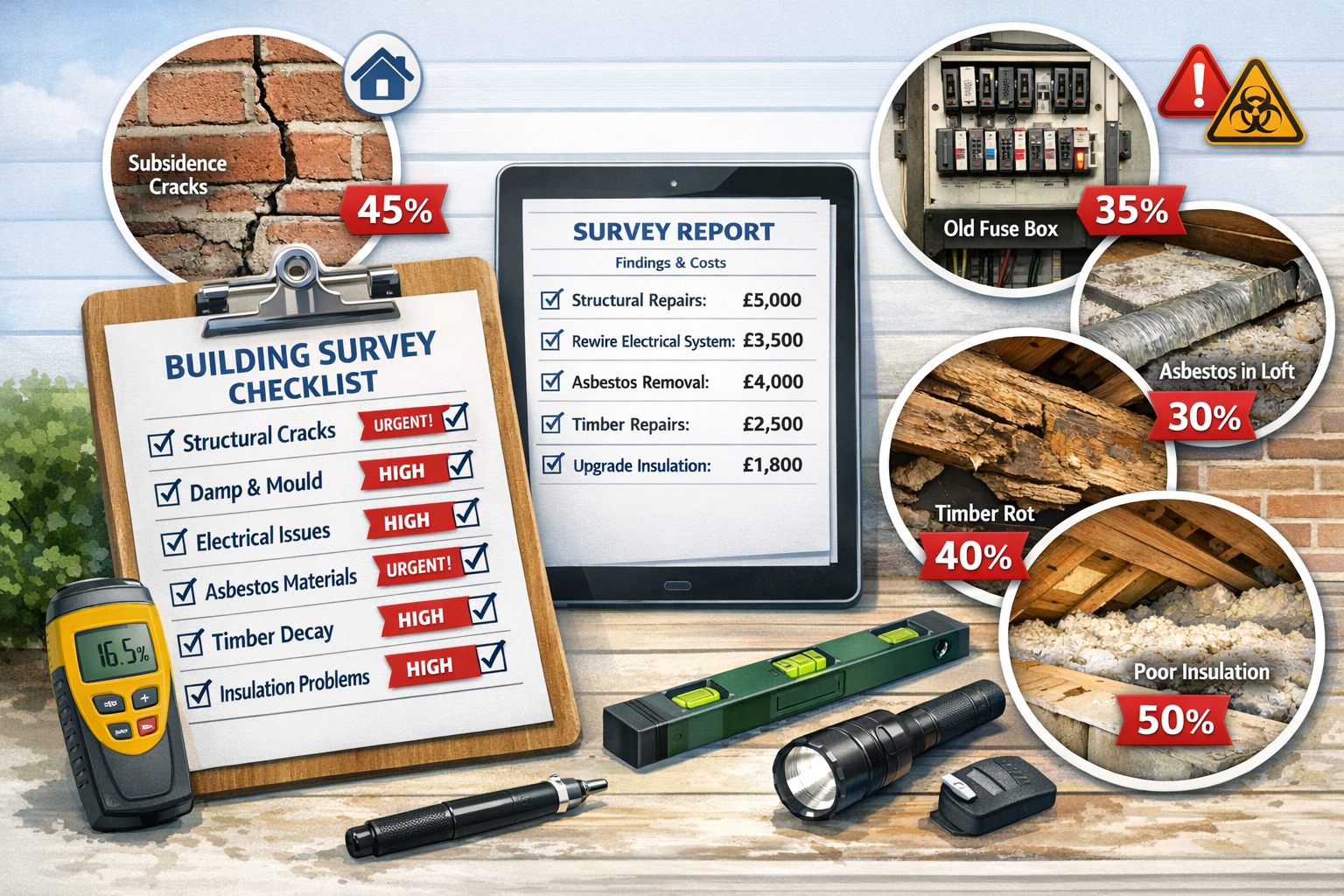
Subsidence and foundation movement remain among the most expensive defects to remedy, with repair costs frequently exceeding £10,000-£50,000 depending on severity. In England's clay-rich soil regions, particularly across the South East and London, subsidence affects thousands of properties annually. Level 3 surveys examine:
- Crack patterns in walls (vertical, horizontal, or diagonal)
- Door and window frame distortion
- Floor level variations
- External ground level changes
- Drainage and tree root proximity
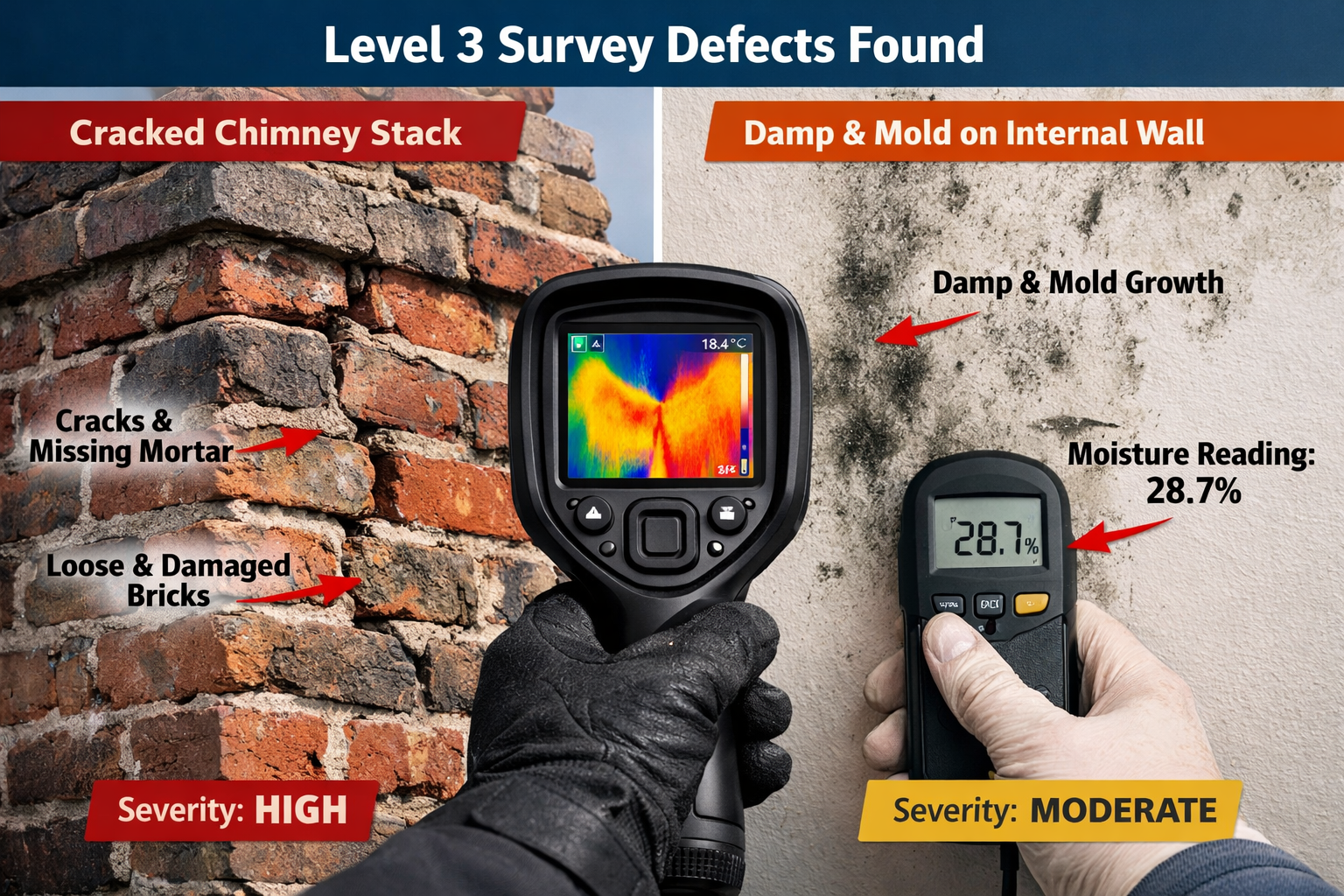
Damp and water penetration represent another critical risk category. The comprehensive nature of Level 3 surveys means surveyors use moisture meters and thermal imaging to detect:
- Rising damp from failed damp-proof courses
- Penetrating damp through walls and roofs
- Condensation issues from poor ventilation
- Hidden leaks in plumbing or roofing
Understanding how to prevent and remove damp and mould growth becomes crucial once these issues are identified, as remediation costs can range from £500 for minor repairs to £5,000+ for comprehensive damp-proofing systems.
Roof condition is frequently underestimated by buyers viewing properties from ground level. Level 3 surveys include detailed roof inspections (where safely accessible) examining:
- Tile or slate condition and lifespan
- Roof timber integrity and signs of rot
- Flashing and valley condition
- Chimney stack stability
- Gutter and downpipe effectiveness
A full roof replacement on a typical three-bedroom house can cost £5,000-£12,000, making this one of the most significant potential expenses a survey might reveal.
Electrical, Plumbing, and Service Risks in Older Properties
England's housing stock includes millions of properties built before modern building regulations, creating substantial service-related risks that Level 3 surveys are designed to identify.
Electrical systems in properties built before 1980 often require complete rewiring. Warning signs that Level 3 surveyors document include:
- Outdated fuse boxes without RCD protection
- Cloth-covered wiring (pre-1960s)
- Insufficient socket provision
- Non-compliant consumer units
- Absence of recent electrical safety certificates
Complete rewiring of a three-bedroom house typically costs £3,000-£6,000, representing a substantial unexpected expense for buyers who skip comprehensive surveys.
Plumbing and heating systems also present significant risks, particularly in properties with:
- Lead pipework (common pre-1970)
- Outdated boilers beyond their 15-year lifespan
- Inadequate central heating systems
- Poor water pressure or supply issues
- Drainage problems or collapsed sewers
The detailed nature of what's included in a Level 3 survey means these service issues are documented with specific recommendations and cost estimates, allowing buyers to negotiate purchase prices or budget for necessary upgrades.
Valuation Adjustments and Negotiation Leverage
One of the most valuable aspects of Level 3 RICS surveys in the 2026 high-volume market is the negotiation leverage they provide. When surveys identify significant defects, buyers gain concrete evidence to support price reductions or requests for seller remediation.
Typical valuation adjustments based on survey findings include:
| Defect Type | Estimated Repair Cost | Typical Price Reduction |
|---|---|---|
| Minor damp issues | £500-£2,000 | £1,000-£3,000 |
| Roof repairs (partial) | £2,000-£5,000 | £3,000-£7,000 |
| Rewiring (complete) | £3,000-£6,000 | £4,000-£8,000 |
| Subsidence (moderate) | £10,000-£25,000 | £15,000-£35,000 |
| Roof replacement | £5,000-£12,000 | £7,000-£15,000 |
In fast-moving markets, sellers may be more willing to negotiate when presented with professional survey evidence, particularly if they're concerned about losing momentum and having to re-market the property. The cost of a Level 3 survey (£630-£1,500+) [1] becomes negligible compared to the potential savings achieved through informed negotiation.
For buyers considering properties that may need extra specialist advice, Level 3 surveys often recommend additional investigations by structural engineers, damp specialists, or drainage experts, providing a roadmap for comprehensive due diligence.
Practical Implementation: Deploying Level 3 Surveys in Fast-Moving 2026 Transactions
Timing and Scheduling Considerations
The comprehensive nature of Level 3 surveys means they require up to a full day to complete [1], compared to just one hour for Level 1 surveys and up to four hours for Level 2 HomeBuyer Reports. This extended timeframe creates scheduling challenges in competitive markets where buyers feel pressure to move quickly.
Optimal survey timing strategies include:
- Pre-offer surveys: In extremely competitive situations, some buyers commission surveys before making offers, though this carries risk if the offer isn't accepted
- Subject-to-survey offers: Making offers explicitly conditional on satisfactory survey results protects buyers while allowing quick initial commitment
- Expedited scheduling: Working with surveyors who offer priority booking (often at premium rates) to reduce delays
- Parallel processing: Arranging surveys immediately upon offer acceptance while mortgage applications proceed simultaneously
Understanding how long a building survey takes helps buyers plan realistic timelines that balance thoroughness with market competitiveness.
Cost-Benefit Analysis for Different Property Types
Level 3 survey costs vary significantly based on property value and complexity. Pricing typically follows these ranges [1]:
- £100,000-£249,000 properties: £630-£800
- £250,000-£499,000 properties: £800-£1,000
- £500,000-£1,000,000 properties: £1,000-£1,500
- £1,000,000+ properties: £1,500+ (often significantly higher)
The value proposition becomes clear when considering potential defect costs. A £1,000 survey that identifies £15,000 in necessary roof repairs provides a 15:1 return on investment through negotiated price reductions or informed purchase decisions.
Property types where Level 3 surveys offer maximum value:
- ✅ Pre-1900 Victorian and Georgian properties: High likelihood of structural issues, outdated services, and hidden defects
- ✅ Properties with visible defects: Cracks, damp stains, or structural movement warrant comprehensive investigation
- ✅ Unusual constructions: Non-standard building methods, conversions, or architectural peculiarities
- ✅ Properties requiring renovation: Buyers planning major works need detailed condition baselines
- ✅ High-value purchases: The proportional cost of surveys decreases as property values increase
For comparison, buyers might consider what's included in a Level 2 survey for newer or well-maintained properties where comprehensive structural analysis may be unnecessary.
Regional Variations and Local Risk Factors Across England
The 2026 market's regional divergence means survey priorities vary significantly across England. London and the South East, despite showing price weakness with -40% and -24% net balances respectively [2], contain large stocks of Victorian and Edwardian properties where Level 3 surveys are essential.
Key regional considerations include:
- London: Focus on subsidence in clay soil areas, conversion quality in flats, and historic building defects
- South East: Coastal properties require marine exposure assessments, while inland areas face subsidence risks
- East Anglia: Agricultural buildings converted to residential use need specialist evaluation
- North West and Yorkshire: Industrial heritage properties and stone construction require specific expertise
- South West: Coastal erosion, flood risk, and holiday home maintenance standards
Buyers can find chartered surveyors in specific locations who understand regional risk factors and common defect patterns.
Interpreting Survey Results and Making Informed Decisions
Level 3 RICS surveys categorize defects using a traffic light system that helps buyers prioritize issues:
- 🔴 Condition Rating 3 (Urgent): Serious defects requiring immediate attention or significant repair costs
- 🟠 Condition Rating 2 (Moderate): Defects needing repair or replacement but not immediately urgent
- 🟢 Condition Rating 1 (Satisfactory): No repair currently needed
The survey report includes detailed cost estimates for remedial works, allowing buyers to:
- Assess total financial commitment: Purchase price plus necessary repairs
- Prioritize urgent vs. deferred maintenance: Understanding what must be addressed immediately
- Plan renovation timelines: Sequencing works logically (see renovation order guidance)
- Negotiate effectively: Using specific survey findings as evidence for price adjustments
- Budget accurately: Avoiding post-purchase financial surprises
Decision frameworks based on survey findings:
- Proceed with confidence: Minor issues (Rating 1-2) with manageable costs
- Renegotiate price: Significant defects (Rating 3) with costs exceeding 5-10% of purchase price
- Request seller remediation: Urgent safety issues or structural concerns
- Walk away: Catastrophic defects with repair costs approaching or exceeding price reduction limits
For properties showing concerning patterns, buyers might need expert witness reports if disputes arise or litigation becomes necessary.
Integration with Mortgage and Insurance Requirements
Level 3 surveys serve dual purposes in 2026's transaction surge: protecting buyers while satisfying lender requirements. Mortgage providers increasingly require comprehensive surveys for properties that fall outside standard lending criteria, including:
- Properties built before 1900
- Non-standard construction (timber frame, concrete, etc.)
- Properties with known defects or previous structural work
- Homes in flood zones or subsidence-prone areas
Survey findings directly impact mortgage valuations and insurance availability. Serious structural issues may result in:
- Reduced mortgage offers (lower loan-to-value ratios)
- Requirement for retention (lender holds back funds until repairs completed)
- Higher insurance premiums or exclusions
- Inability to obtain buildings insurance until defects remedied
Understanding what's covered under home insurance helps buyers assess the full financial implications of survey findings.
Market Outlook and Strategic Timing for 2026 Surveys
Forward-Looking Sentiment and Transaction Volume Projections
Despite near-term volatility, longer-term market sentiment remains cautiously optimistic for England's property sector in 2026. RICS data shows that while near-term price expectations fell to -18% in February 2026 (down from -6% in January), 12-month expectations remained positive at +33% net balance [2].
This divergence between short-term caution and medium-term optimism creates strategic opportunities for buyers who conduct thorough due diligence. Properties purchased during periods of market uncertainty often represent better value, particularly when comprehensive surveys identify negotiation opportunities that anxious sellers may accept.
Sales expectations show similar patterns, with agreed sales remaining subdued at -12% net balance in February 2026, yet +17% of surveyors anticipate sales growth over the next 12 months [2]. This suggests that transaction volumes will continue recovering toward the 1.2 million target, maintaining competitive pressure that makes thorough surveys essential.
Seasonal Patterns and Optimal Survey Scheduling
England's property market exhibits strong seasonal patterns that affect both transaction volumes and survey availability. Spring and early summer (March-June) traditionally see peak activity, creating:
- Increased competition for surveyor appointments
- Longer wait times for survey completion
- Premium pricing for expedited services
- Greater pressure on buyers to move quickly
Autumn (September-November) represents a secondary peak, while winter months (December-February) typically see reduced activity. Strategic buyers might leverage quieter periods to:
- Secure faster survey appointments
- Negotiate better survey pricing
- Conduct more thorough property inspections in less competitive conditions
- Take time for comprehensive decision-making without market pressure
The February 2026 RICS data showing weakened buyer enquiries at -26% [2] suggests that winter 2026 may offer opportunities for patient buyers to conduct thorough due diligence without the frenzy of peak season competition.
Balancing Speed and Thoroughness in Competitive Bidding
The tension between comprehensive due diligence and competitive market dynamics represents one of the greatest challenges for buyers in 2026's high-volume market. Strategies for balancing these competing priorities include:
- Pre-approval preparation: Having mortgage approval, solicitors instructed, and surveyor contacts established before house hunting begins
- Rapid response protocols: Working with surveyors who offer 48-72 hour turnaround for initial inspections
- Conditional offer strategies: Making competitive offers explicitly subject to satisfactory survey results
- Desktop research: Conducting preliminary checks (planning history, flood risk, local authority searches) before formal surveys
- Tiered survey approaches: Beginning with Level 2 surveys for initial assessment, upgrading to Level 3 if concerns emerge
For buyers considering new build properties, different survey considerations apply, though comprehensive inspections remain valuable even for recently constructed homes.
Conclusion
Level 3 RICS Surveys for 1.2M+ Transaction Surge: Spotting Risks in England's High-Volume 2026 Market represent an essential investment for buyers navigating one of the most dynamic property markets in recent years. As transaction volumes approach pre-2020 highs, the combination of competitive pressure, regional price variations, and England's aging housing stock creates a perfect storm where comprehensive due diligence becomes critical.
The evidence is compelling: Level 3 surveys costing £630-£1,500+ [1] routinely identify defects requiring repairs of £10,000-£50,000 or more, providing negotiation leverage that far exceeds the survey investment. In a market where buyer enquiries show volatility (-26% in February 2026) [2] but longer-term sentiment remains positive (+33% expecting price growth over 12 months) [2], informed buyers who conduct thorough inspections gain significant advantages.
Actionable Next Steps for Buyers in 2026
- Assess your property type: Determine whether your target properties fall into categories where Level 3 surveys are essential (pre-1900, visible defects, unusual construction)
- Budget appropriately: Include survey costs (£630-£1,500+) and potential repair expenses in your total purchase budget
- Establish surveyor relationships: Contact qualified RICS surveyors before beginning serious house hunting to understand availability and turnaround times
- Develop negotiation strategies: Prepare to use survey findings as evidence for price reductions, understanding typical adjustment ranges for common defects
- Plan timing strategically: Consider seasonal patterns and market conditions when scheduling viewings and surveys
- Integrate with other due diligence: Coordinate surveys with mortgage applications, legal searches, and insurance inquiries for efficient transaction management
- Review survey reports thoroughly: Take time to understand condition ratings, cost estimates, and prioritization of remedial works before making final purchase decisions
The 2026 market surge creates both opportunities and risks. Buyers who invest in comprehensive Level 3 RICS surveys position themselves to capitalize on opportunities while avoiding the catastrophic financial mistakes that can result from rushed purchases in competitive markets. In a landscape where properties change hands rapidly and regional variations create complex risk profiles, thorough professional inspection remains the cornerstone of sound property investment.
References
[1] How Much Does A House Survey Cost – hoa.org.uk
[2] Uk Residential Survey February 2026 – rics.org